Back
Bandol & Cassis Wine Regions: Provence's Coastal Gems

Bandol & Cassis Wine Regions: Provence's Coastal Gems

March 5, 202628 min read

Bandol & Cassis Wine Regions: Provence's Coastal Gems

Most visitors to Provence arrive for the lavender fields, the hilltop villages, the rosé. They drink light pink wine at a café, gaze at a sunlit vineyard, and leave with a vague impression of a region that produces pleasant but unchallenging wine. What they miss are two of the most distinctive appellations in southern France — and two of the most distinctive in the country, full stop.

Bandol and Cassis sit on the Mediterranean coast between Marseille and Toulon, separated by roughly 30 kilometres of limestone cliffs, fishing harbours, and terraced vines. They could not be more different in character: Bandol produces some of France's longest-lived red wines, built around the Mourvèdre grape in a way that nowhere else in the world quite replicates. Cassis produces white wine so specific to its territory — a tiny 200-hectare AOC carved into limestone bluffs above the calanques — that locals insist it barely exists in enough quantity to export, yet somehow manages to be the traditional partner for Marseille's bouillabaisse.

Neither appellation is unknown among serious wine drinkers. Both are consistently undervalued relative to what they deliver. For wine travellers willing to venture beyond the rosé clichés, they represent the best combination of genuine originality, extraordinary scenery, and manageable scale in all of Provence.

Bandol Wine Region — Mourvèdre's Mediterranean Home

Geography

The Bandol AOC covers approximately 1,500 hectares of vineyard land in the Var département, east of Marseille on the French Riviera coast. The appellation circles the town of Bandol and encompasses eight communes: Bandol, Sanary-sur-Mer, Saint-Cyr-sur-Mer, La Cadière-d'Azur, Le Castellet, Le Beausset, Ollioules, and Évenos.

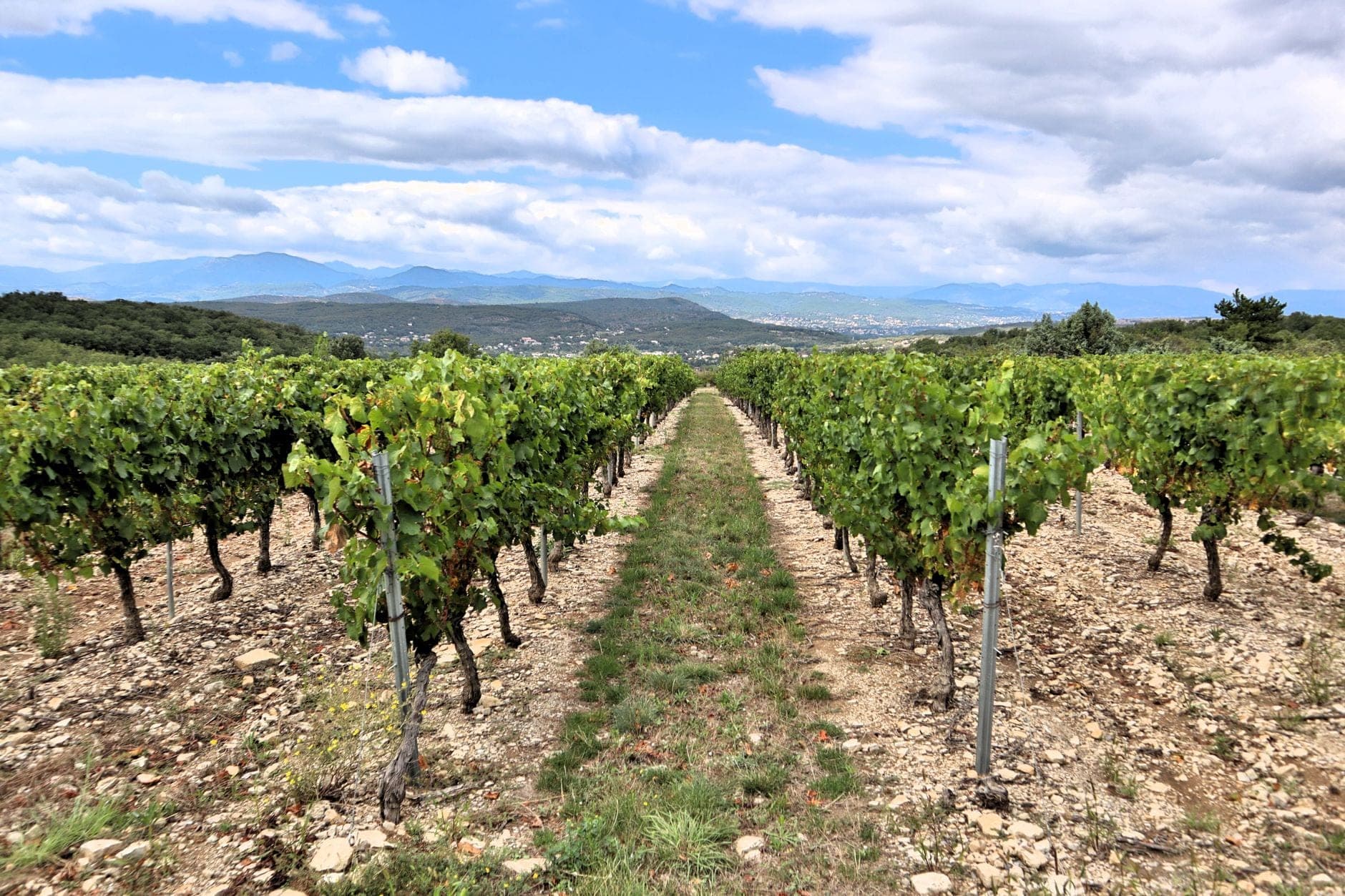
The vineyards do not follow a simple hillside pattern. They are carved into a series of terraced slopes — called restanques — facing south and southwest toward the sea. The terracing is substantial: in some areas, three or four levels of dry-stone walls hold small parcels of vine in place on gradients that would otherwise be impossible to cultivate. This labour-intensive landscape is one reason Bandol wine is more expensive than its neighbours and one reason the character of the wines is so markedly different from flat-plain Provençal appellations.

The sea is never far away. Most vineyards lie within 10 kilometres of the coast, and the maritime influence — moderating summer heat, preventing frost, driving the morning humidity that the vines absorb before the afternoon mistral evaporates it — is fundamental to how Mourvèdre ripens here in a way it cannot elsewhere.

Climate and Soils

Bandol experiences a classic Mediterranean climate: hot, dry summers; mild, wet winters; and roughly 3,000 hours of sunshine per year. The mistral wind, which blows down from the north with particular intensity in the Rhône corridor, reaches Bandol in a gentler form, filtered and moderated by the limestone hills behind the coast. Its effect here is drying and cooling rather than punishing — it prevents the fungal disease pressure that would otherwise be a problem in the summer humidity, and it helps concentrate the grapes in the weeks before harvest.

The soils are predominantly siliceous limestone (calcaire bleu) with clay and sand components. The limestone provides mineral structure and drainage, which is critical for Mourvèdre — a grape that will stagnate in heavy, waterlogged soils. The rocky, free-draining nature of the Bandol terroir forces the vine's roots deep, which is part of why the wines here develop the complexity and depth that Mourvèdre produces in flat-land situations rarely achieves.

Mourvèdre: Why It Thrives Here and Nowhere Else as Well

Mourvèdre is one of the oldest grape varieties in the western Mediterranean, likely originating in Spain (where it is known as Monastrell) and brought to Provence by Greek traders millennia ago. In most of the world, it plays a supporting role: a blending grape in Châteauneuf-du-Pape, a small-percentage addition in southern Rhône blends, a secondary variety in California field blends. In Bandol, it is the point.

AOC regulations require a minimum of 50% Mourvèdre in Bandol red wines — the actual figure at most serious estates runs to 80-95%. The grape is late-ripening, which is the key to the Bandol story. Mourvèdre is among the last red varieties to reach maturity anywhere it is grown, and it requires specific warmth — not just sun, but sustained warmth through the autumn months — to ripen fully without green or vegetal flavours. The Bandol terroir, with its south-facing slopes, limestone heat retention, and proximity to a sea that stays warm through October, provides that sustained warmth in a way that very few other wine regions can match.

When Mourvèdre ripens fully in Bandol, it produces wines of remarkable depth: dark-fruited, savoury, meaty, with a mineral backbone and a structural integrity that allows decades of development. When it does not ripen fully — as happens in cooler vintages elsewhere, or in cooler parts of the southern Rhône — the result is a harsh, jammy, or vegetal wine that explains why the variety is rarely used as a lead grape.

Grenache and Cinsault appear in the blend at most estates, typically providing fruit accessibility in youth. They are the support cast. The Mourvèdre is the performance.

Bandol Red Wine

Bandol red is required by AOC regulations to age for a minimum of 18 months in oak before release. In practice, most traditional estates age their wines considerably longer — Château Pradeaux commonly holds wines for three or four years before release, sometimes more for their Cuvée Longue Garde. The oak used is predominantly older, large-format (the flavour contribution is minimal — this is ageing for oxygen integration and tannin management, not vanilla and toast).

The flavour profile of a young Bandol red is distinctive: dark plum and blackberry, black olive, garrigue herbs (thyme, rosemary, lavender), leather, tobacco, and an underpinning mineral note that comes from the limestone. The tannins are substantial and require time — a well-made Bandol from a good vintage needs at least eight to ten years from harvest before it enters its first expressive phase, and the best wines will develop for 20-30 years. Opening a bottle of Domaine Tempier Bandol Rougeat five years of age is technically legal but aesthetically wasteful.

Serious collectors treat Bandol reds with the same cellaring respect as northern Rhône Syrah or Tuscan Sangiovese. The comparison most often made is with Châteauneuf-du-Pape — they share a southern French register — but Bandol has a structure, a maritime salinity, and a Mourvèdre specificity that makes the best examples entirely their own thing.

Bandol Rosé

Bandol produces more rosé than red wine by volume, and it is the style most commonly exported and encountered. This is not compromise rosé. Bandol rosé — typically a blend of Mourvèdre, Grenache, and Cinsault, made by direct pressing — is fuller-bodied, more structured, and more complex than most Provençal pink wine. The Mourvèdre contributes a savoury, almost meaty quality and a dark fruit depth unusual in rosé.

These wines can age. A Bandol rosé from a serious estate does not need to be drunk the summer it is released, and good examples develop interestingly over three to five years. This is not true of most rosé anywhere in the world. For wine drinkers who have dismissed rosé as a warm-weather aperitif, Bandol rosé is consistently the wine that changes their mind.

Bandol White

White wine accounts for a small proportion of Bandol production, made primarily from Clairette and Bourboulenc with contributions from Ugni Blanc, Marsanne, and Sauvignon Blanc. The wines are typically full-bodied, with good acidity, herbal notes, and a distinctive almond bitterness on the finish that seems to come directly from the limestone and garrigue of the Var.

They are not widely exported and are best encountered at the estate or in local restaurants, where they make an excellent match for the fish and shellfish of the Provençal coast. Production is small enough that they rarely appear in international wine retail.

Best Domaines in Bandol

Domaine Tempier

The reference estate of Bandol and arguably the most important producer in the history of Provençal wine. Founded in 1834 and revived in 1936 by Lucien Peyraud, Domaine Tempier became Bandol's defining estate when Lulu Peyraud — with her husband and later her sons — established the reputation for uncompromising, long-ageing Mourvèdre reds that defined what Bandol could be. The American wine writer Richard Olney and the late Kermit Lynch, the Berkeley importer who brought Tempier to the United States, helped turn it into a cult estate internationally.

The domaine operates biodynamically today, farming about 30 hectares of old vines across several single-vineyard parcels. The cuvées La Tourtine, Cabassaou, and La Migoua each express distinct terroir within the appellation. The basic Bandol rouge is already a serious wine; the single-vineyard bottlings are extraordinary and need serious cellaring.

Visits are by appointment only. Tasting fees are typically EUR 15-25 per person for a structured flight. Book well in advance — the domaine is in demand from visiting wine professionals and enthusiasts from across the world. Website: domainetempier.com

Château Pibarnon

High-altitude Bandol. Where most appellation vineyards lie at 50-150 metres above sea level, Château Pibarnon's vines climb to 300 metres on an exposed plateau above La Cadière-d'Azur. The higher position brings cooler temperatures, longer maturation, and what many critics consider a more elegant, finely-structured expression of Mourvèdre than the lower-altitude estates.

The estate is run by the de Saint-Victor family, who purchased it in 1978 and converted what was then a half-abandoned property into one of Bandol's most respected addresses. The views from the estate across the limestone ridges toward the sea are extraordinary, and the chai is architecturally impressive by any standard.

The red wine is their signature — complex, mineral, persistently age-worthy. The rosé is consistently one of the appellation's best. Tasting rooms are open for visits, typically EUR 10-20 per person with an appointment. Website: pibarnon.fr

Château Pradeaux

The most traditional estate in Bandol, and for many traditionalists, the best. The Portalis family has farmed the estate continuously since 1752, and winemaking here operates on a time-scale that is almost entirely alien to the modern wine industry. Pradeaux ages their wines in large oak foudres for a minimum of three to four years before release; their top Cuvée Longue Garde is held for five or more. By the time a bottle of Pradeaux reaches the market, it is already approaching what would be a first-drink window at most other estates.

The wines are dark, dense, Mourvèdre-dominant (typically 95% or above), and structured in a way that seems to laugh at the passage of time. At 10 years, they are beginning to open. At 20 years, they are often magnificent. At 30 years — if you can find them — they belong in the conversation with the great long-ageing reds of France.

Visits are limited and the estate does not court tourism. Contact in advance and accept that access may require patience. The experience of tasting aged Pradeaux in its own cellar, poured by a member of the family, is one the French wine world does not offer on a tourist schedule. Tasting fees when visits are possible are typically EUR 10-15.

Moulin des Costes / Bunan

The Bunan family operates two estates in Bandol — Moulin des Costes and Mas de la Rouvière — producing wines across the full spectrum of the appellation: red, rosé, and white. Where Tempier and Pradeaux are reference points for purists, the Bunan estates offer an accessible entry point to Bandol: the wines are approachable younger, the tasting room is properly organised for visitors, and the price points span a range that allows exploration without major commitment.

The Moulin des Costes red is consistently a reliable, fairly-priced representation of what Bandol does with Mourvèdre. The Charriage cuvée represents the estate's more serious ambitions. The rosé is among the appellation's most widely distributed.

Visits are welcome without appointment during regular hours, though booking ahead is advisable in summer. Tasting fees are typically EUR 8-15 per person. Website: bunan.com

Domaine de la Suffrène

The value option among serious Bandol producers. Cédric Gravier farms around 40 hectares across six different terroir types within the appellation, a diversity that he often blends to balance the vintage's character rather than pursuing maximum concentration. The resulting wines are approachable, honest, and reasonably priced by Bandol standards — the basic red typically around EUR 15-20 ex-cellar.

Suffrène's rosé is a reliable annual purchase for those who want good Bandol rosé without the premium of the top estates. The red wines benefit from patience, but they don't demand the decade-plus cellaring of Pradeaux or the top Tempier cuvées.

Visits are open to the public, typically without appointment needed during business hours. Tasting fees are typically EUR 5-10. Website: domainedelasuffrene.com

Cassis Wine Region — Rare White Wine from the Calanques

Geography

Cassis AOC is one of the smallest appellations in France: approximately 200 hectares under vine, contained within a bowl of dramatic white limestone cliffs that drop into the Mediterranean east of Marseille. The town of Cassis — a proper fishing village that became fashionable without losing its identity — sits at the mouth of this bowl, with vineyards climbing the hillsides behind and around it.

The defining geographical feature is the calanques: deep, narrow inlets carved by ancient rivers through the limestone cliffs, now flooded by the sea. The Calanques National Park borders the appellation to the west; the vines grow on the cliffs above and between these inlets, on steep, terraced ground that requires hand-harvesting in almost every parcel. This is not scenic backdrop — the calanques are why the Cassis terroir is what it is. The white limestone reflects heat onto the vines from below while the sea moderates temperature from the south. The aspect, the soils, and the maritime microclimate combine in a configuration that is genuinely unreplicable.

What Makes Cassis White Wine Special

Cassis Blanc is a blend, most commonly built around Marsanne, Clairette, and Ugni Blanc, with Bourboulenc, Doucillon, Pascal Blanc, and Sauvignon Blanc permitted in smaller proportions. No single grape dominates. The proportions vary by estate and vintage. What the wines have in common is a combination of characteristics that is hard to find elsewhere in French white wine.

They are full-bodied without being heavy — the combination of limestone soils and sea air produces wines with genuine density and weight but also a freshness and a mineral quality that prevents any sense of flatness or flabbiness. The flavour profile typically includes white flowers (acacia, broom), ripe stone fruit (white peach, nectarine), anise, and a pronounced minerality with a salty, iodine finish that locals describe as a taste of the sea itself. It is not a subtle description, but tasting a well-made Cassis Blanc beside the calanques makes it feel precisely accurate.

The wines have good ageing potential — better than most white Provence. A serious Cassis Blanc from a good estate can develop interestingly over five to eight years, taking on complexity and gaining in richness without losing freshness. This sets them apart from generic Provençal whites, which are generally made for immediate consumption.

Why Cassis White Is Rare

The 200-hectare AOC is not large enough to supply substantial export demand, and Cassis white wine is perennially difficult to find outside France. Local tradition partly explains this: Cassis has a centuries-old relationship with Marseille's restaurant culture, and a significant proportion of annual production is absorbed by the city's bouillabaisse restaurants before it can be bottled and shipped anywhere.

The steep, terraced vineyards limit mechanisation, which keeps yields low and production costs high. Cassis Blanc is not cheap for a white wine from Provence — typically EUR 15-30 at the cellar — but this reflects real scarcity and real production effort rather than marketing positioning.

If you visit the region and encounter a good Cassis Blanc by the glass, drink it there. The opportunity to ship it home reliably is limited.

Cassis Rosé and Red

Cassis rosé is produced in larger volumes than the white and is the appellation's most commercially accessible wine. It shares the weight and structure of good Bandol rosé but tends toward a slightly lighter, more floral expression. Worth trying in context; less of a revelation than the white.

Cassis red is made from Mourvèdre, Grenache, Carignan, and Cinsault, and it is the least known of the three colours. Production is small, the wines are rarely exported, and they lack the concentration and ageing potential of Bandol red. They are pleasant, appropriately Mediterranean wines best consumed with a plate of grilled fish or a daube in a local restaurant — which is precisely where you will most often encounter them.

The Food Pairing Tradition: Cassis White and Bouillabaisse

Bouillabaisse — the Marseille fish stew made from rockfish, saffron, fennel, and whatever the fishing boats bring in — is paired with Cassis Blanc so consistently and so emphatically by Marseille's serious restaurants that the pairing has achieved the status of local law. Food writers have documented it, chefs insist on it, and the relationship between the two is one of those genuinely coherent food-wine pairings where each makes the other more itself.

The connection is logical: Cassis white is full enough to match the rich, olive oil-based rouille and the intensity of the saffron broth; the mineral salinity of the wine echoes the sea character of the fish; the wine's freshness cuts through the fat and brings your palate back for the next mouthful. A white wine with less structure would be overwhelmed; a more tannic or oaky wine would clash with the delicacy of the fish.

If you are eating bouillabaisse in a serious Marseille restaurant, order Cassis Blanc. If the restaurant does not have Cassis Blanc on the list, that is information worth having.

Best Domaines in Cassis

Clos Sainte-Magdeleine

The most famous and most dramatic estate in Cassis, with vineyards growing on the clifftops directly above the calanques, at elevations where the sea views are vertiginous and the exposure to marine air is total. The estate has been producing wine for centuries — the name references a medieval hermitage that stood on the property — and the terroir here, on the steepest, most limestone-intensive parcels of the appellation, produces wines with a mineral precision and a saline finish that represents Cassis at its most distinctive.

The white is the reference bottle: Marsanne-dominant, full-bodied, with the characteristic white flower and sea-salt signature. The rosé is also excellent. Bottles are sold at the estate and in Marseille's better wine shops; finding them elsewhere requires effort.

Visits to the estate are possible but require advance arrangement. The winery's cellar door overlooks the calanques and is one of the more extraordinary tasting settings in French wine. Tasting fees are typically EUR 10-20 per person. Website: closstemaggdeleine.com

Domaine du Bagnol

A well-established village estate with vineyards across several terroir types within the Cassis AOC, Domaine du Bagnol produces reliable, representative wines at relatively approachable prices. The white is consistently good — a textbook expression of the Cassis style without the extreme scarcity and premium of Clos Sainte-Magdeleine.

The rosé is the estate's largest-volume wine, and it represents honest, food-friendly pink wine rather than a profound statement. The domaine welcomes visitors and is accessible without the difficulty of booking the most prestigious estates. Tasting fees are typically EUR 8-15.

Château de Fontcreuse

A historic estate on the outskirts of Cassis town, Château de Fontcreuse has nineteenth-century origins and a substantial production for the appellation — around 300,000 bottles per year, which represents meaningful scale within the small Cassis AOC. The wines are well-made and consistent, and the estate is one of the more visitor-friendly operations in the appellation, with a proper tasting room and English-speaking staff available during peak season.

The white wine flagship is the estate's strength: properly Cassis in character, with the stony, floral, maritime quality that defines the appellation. The rosé is reliable. The winery runs organised tastings and is a practical choice for visitors who want a structured introduction to Cassis wine without the difficulties of accessing smaller estates. Tasting fees are typically EUR 10-20. Website: fontcreuse.com

Visiting Bandol vs. Cassis — Key Differences

The two appellations are separated by approximately 30 minutes by car along the coast road between Marseille and Toulon. This proximity makes it natural to combine them in a single trip, but they are genuinely different experiences.

Bandol town is a proper small port with a broad promenade, a marina full of leisure boats, and a pedestrianised centre of shops and restaurants. It functions as a mild resort town — pleasant, not spectacular, entirely liveable. The wine culture here is diffuse: the best estates are spread across the eight communes of the appellation, most of them in the villages inland from the coast (Le Castellet, La Cadière-d'Azur) rather than in the town itself. You visit Bandol the wine region, not Bandol the village.

Cassis is more dramatic and more touristy. The village centre — painted boats, a small port, limestone cliffs rising on three sides — is genuinely beautiful in a way that has attracted artists and visitors since Dufy and Matisse painted here in the early twentieth century. In summer, it fills with day-trippers from Marseille; in shoulder season, it belongs more to itself. The calanques accessible on foot or by boat from Cassis are among the most spectacular coastal landscapes in France. You visit Cassis the place as much as Cassis the wine — the two are inseparable.

The winery experience differs accordingly. Bandol estates tend to be agricultural properties in the hills — working farms with tasting rooms, not showpieces. Cassis estates are smaller, more intimate, and often located at positions where the scenery is as much part of the visit as the wine.

When to visit: Summer brings crowds to Cassis and fills the coastal roads. The shoulder seasons — May to June and September to October — offer the same weather with significantly fewer tourists. October is harvest time across both appellations, which adds energy to winery visits but means winemakers are busy. For unhurried cellar visits, September is ideal for Bandol and May is ideal for Cassis.

How to Plan a Bandol and Cassis Wine Trip

Base Yourself in Marseille or Toulon

Marseille is the natural base for this trip: France's second city and largest Mediterranean port, with a genuinely distinctive character (rough around certain edges, magnificently alive in others), excellent restaurants, and good transport connections. Both appellations are within 30-45 minutes by car from the city centre. Marseille also has the bonus of being the birthplace of bouillabaisse — visiting the restaurant Chez Fonfon or Le Miramar for a proper version is as relevant to understanding Cassis white wine as any winery visit.

Toulon works as an alternative base, particularly if your programme focuses on Bandol estates in the eastern part of the appellation. It is a substantial naval city without Marseille's tourist infrastructure, but accommodation is cheaper and the mood is less busy.

Aix-en-Provence, 30 kilometres north, is a more comfortable tourist base but adds 20-30 minutes to winery drives in both directions.

2-Day Itinerary

Day 1 — Cassis and the Coast

Morning: Drive into Cassis early, before the day-tripper traffic from Marseille builds. Take the boat tour of the calanques (1 hour, typically EUR 15-25 per person) before the wind picks up in the afternoon. Visit Clos Sainte-Magdeleine (advance booking essential) for a tasting on the clifftop. Lunch in Cassis — the port restaurants all serve the local catch.

Afternoon: Château de Fontcreuse tasting (no appointment needed). Walk the vineyard trail above the town, where the path crosses several parcels of old vine. Drive to the Calanque d'En Vau on foot if energy allows (2 hours return — remarkable).

Evening: Return to Marseille. Dinner on the Vieux-Port or in the Noailles neighbourhood.

Day 2 — Bandol Estates

Morning: Drive to Le Castellet (the medieval hilltop village at the centre of the Bandol appellation — worth an hour on foot). Pre-booked visit to Château Pibarnon, which combines one of the best tastings with some of the most dramatic views in the appellation.

Afternoon: Domaine Tempier or Château Pradeaux, depending on which appointment you secured. Both require advance booking; Pradeaux in particular. Lunch at a Bandol village restaurant (La Cadière-d'Azur has several options in the EUR 20-35 range).

Evening: Drive along the coast road from Bandol to Marseille. Stop at Sanary-sur-Mer, the most architecturally intact of the coastal villages, for a pre-dinner aperitif.

Transport

A car is essential. Public transport connects Marseille to Bandol town and to Cassis by TER train (roughly 30-40 minutes each, about EUR 5-8 one-way), but winery locations within the appellation require a car. Taxis exist in both towns but are expensive for winery-hopping across hilly terrain.

Important: Drink volume, not alcohol. Both appellations sit in hills that do not have flat, straight roads. Designate a driver or arrange a tour. Several operators in Marseille offer guided wine day trips to Bandol and Cassis, handling transport and bookings, typically EUR 80-150 per person including tastings.

Combining with Other Provence Wine Regions

Bandol and Cassis are the most distinctive stops, but the broader Provence wine picture includes:

Palette AOC (15 minutes from Aix-en-Provence): A tiny, ancient appellation dominated by Château Simone, which has produced wine continuously since the sixteenth century. The reds and whites are distinctive and age-worthy. Worth a visit if you are based in Aix.

Côtes de Provence: The vast production appellation covering most of Provence's rosé. Les Baux-de-Provence and Coteaux d'Aix-en-Provence offer more interesting sub-zones. The rosé is reliable throughout. Visit for scenery and context rather than revelation.

See our guide to planning a wine tour for broader logistics around organising multi-region visits.

Food and Wine in Bandol and Cassis

Bouillabaisse

The undisputed centerpiece of Marseille's culinary culture and the wine that belongs beside it. Bouillabaisse is not a stew you make at home — the traditional version requires a specific selection of rockfish (rascasse, grondin, saint-pierre, congre, baudroie) that are only available from fishing boats in the Gulf of Lion, served in a specific way (fish and broth separately, rouille on croutons), at a minimum of two people per order. A proper bouillabaisse in a serious Marseille restaurant costs EUR 50-80 per person. It is worth it.

The wine: Cassis Blanc. The pairing is not a suggestion.

Provençal Cuisine More Broadly

The Bandol and Cassis coastal area sits at the border between the fish-focused cooking of the littoral and the more inland, herb-heavy Provençal tradition. Both are represented on local menus.

DishBandol PairingCassis Pairing
BouillabaisseBandol Blanc (if serving fish)Cassis Blanc (traditional choice)
Grilled sea bream or bassCassis Blanc (classic)
Daube de boeuf (beef braised in wine)Bandol Rouge (5+ years)
Grilled lamb with herbsBandol Rouge
Tapenade and Provençal mezzeBandol RoséCassis Rosé
Aioli (Friday ritual in Marseille)Bandol BlancCassis Blanc

Best Restaurants

In and near Bandol:

La Maison des Vins (Bandol) — The Conseil Interprofessionnel des vins du Bandol operates a tasting room and restaurant in the town centre that offers the best curated selection of appellation wines by the glass and bottle. Not a restaurant in the full sense, but an essential stop.

Restaurant René Blanc (La Cadière-d'Azur) — The village of La Cadière at the heart of the appellation has several good restaurants. René Blanc specialises in locally-sourced Provençal cooking with a wine list that covers the appellation's estates comprehensively. Expect EUR 30-50 per person.

In Cassis:

La Villa Madie — A two-Michelin-star restaurant above the calanques, with a terrace overlooking the sea and a wine list built around Cassis wines in their natural context. The tasting menu runs EUR 120-200 per person — a special occasion destination. Reserve months in advance.

Le Poisson d'Argent — A more accessible option on the port serving fresh fish simply prepared. The Cassis white by the carafe accompanies grilled fish in the way it has been doing here for generations. EUR 25-40 per person. No reservations, arrive early.

When to Visit

SeasonWeatherConditionsRecommendation
**March-April**12-18°C, some rainBud break, vineyards awakeningQuiet, green, affordable. Fewer estates open for full visits.
**May-June**18-24°C, warm eveningsPre-season; estates accessibleExcellent choice — good weather, before tourist crowds, wineries in full operation
**July-August**28-35°C, dryPeak summer; crowded coastal roadsBeautiful but demanding. Book everything in advance. Avoid driving the coast on weekends.
**September**22-28°C, cooling nightsHarvest begins (late September)The best month for winery visits — harvest energy, mature vineyards, still warm
**October**16-22°C, autumn lightHarvest in full swingActive, rewarding for serious wine visitors; call ahead as winemakers are occupied
**November-February**8-14°C, occasional rainOff-seasonMany estates close or reduce hours. Marseille is good off-season; coast is quiet.

The case for September: Harvest in Bandol typically runs from late September through early October, later than most of Provence because Mourvèdre is the last red variety to ripen. Cassis harvest runs slightly earlier. Visiting in the third week of September means you will encounter winemakers at the peak of their engagement with the land, vineyards still carrying fruit, and the possibility (at receptive estates) of watching the grapes come in. The coastal weather in September is reliably warm without July's oppressiveness, and the tourist crowds that descend on the calanques all summer have largely retreated.

Frequently Asked Questions

Q: What is Bandol wine known for?

A: Bandol is known above all for its red wine, which must contain a minimum of 50% Mourvèdre grape and must age at least 18 months in oak before release. These are some of the most age-worthy red wines made in southern France — dense, structured, and capable of developing for 20-30 years in a good cellar. Bandol rosé is the most widely exported wine from the appellation, and it is significantly fuller-bodied and more complex than typical Provençal pink wine.

Q: What grape variety is Bandol known for?

A: Mourvèdre. The variety is grown across the Mediterranean and in parts of California, but Bandol is the place where it consistently achieves its greatest expression as the dominant grape in a red wine blend. The particular combination of warm-but-not-hot climate, south-facing limestone terraces, and maritime air allows Mourvèdre to ripen fully in a way that produces wines of exceptional depth and longevity.

Q: Is Cassis wine hard to find outside France?

A: Yes, genuinely. The Cassis AOC is approximately 200 hectares — tiny by any standard — and a large proportion of production is consumed locally, particularly by Marseille's restaurant trade. The wines do appear in specialist wine merchants in major European cities and occasionally in the United States and United Kingdom, but availability is inconsistent. The best opportunity to drink Cassis white is in the town itself or in Marseille.

Q: What food goes with Cassis white wine?

A: Bouillabaisse is the traditional and definitive pairing — the relationship between the two is embedded in Marseille food culture at an almost institutional level. More broadly, Cassis Blanc pairs well with any white fish, shellfish, sea urchin, and dishes incorporating aioli or olive oil. The wine's weight and minerality make it versatile with the seafood-heavy Provençal coastal cuisine. It does not pair well with heavy meat dishes or rich cream sauces.

Q: How long can you age Bandol red wine?

A: The best Bandol reds from top estates and good vintages can age for 20-30 years, occasionally more. The minimum recommended drinking window for a serious Bandol rouge is 8-10 years after harvest. Estates like Château Pradeaux and Domaine Tempier (top cuvées) produce wines that are often at their best between 15 and 25 years. Even the more accessible estates like Bunan and Suffrène benefit from 5-7 years of cellaring before first opening.

Q: Can you visit Bandol and Cassis on the same day trip from Marseille?

A: Yes, and it is a natural pairing — the two appellations are about 30 minutes apart by car along the coast, and both are 30-45 minutes from Marseille. A well-organised day trip could include a morning visit to one Cassis estate, lunch in Cassis, an afternoon visit to a Bandol estate, and an evening return to Marseille. Two days allows more unhurried visits and time for the calanques.

Q: How does Bandol rosé differ from other Provençal rosé?

A: The Mourvèdre grape gives Bandol rosé a body, structure, and flavour complexity that most Provençal rosé from the Côtes de Provence appellation does not have. Where standard Provence rosé is light, pale, and designed for early drinking, Bandol rosé is fuller-bodied, often darker in colour (ranging from pale salmon to deeper copper), and capable of ageing for three to five years. The flavour profile includes dark fruit, garrigue herbs, and a savoury quality unusual in pink wine.

Q: What is the difference between Bandol AOC and Côtes de Provence?

A: Bandol is a small, tightly regulated appellation with specific Mourvèdre requirements and mandatory ageing rules. Côtes de Provence is a large, diverse appellation covering most of Provence's wine production. The comparison is roughly equivalent to the difference between a specific village AOC in Burgundy and the broader Bourgogne regional appellation — Bandol has a specific identity and higher production standards; Côtes de Provence covers a wider range of styles and qualities. Côtes de Provence rosé can be excellent, but it is a fundamentally different product from Bandol rouge.

More Provence Wine Guides

Last Updated: March 2026

Author: WineTravelGuides Editorial Team

Book Your Bandol & Cassis Wine Regions: Provence's Coastal Gems Wine Country Stay

Compare prices on hotels, vineyard B&Bs, and vacation rentals near the best wineries in Bandol & Cassis Wine Regions: Provence's Coastal Gems.

Search Hotels on Booking.com

Categories

Region GuideWine Regions