Douro Valley Wine Region Guide: Tours, Quintas & River Cruises from Porto
Plan your Douro Valley wine trip: the best quintas to visit, how to get there from Porto, river cruise options, port wine tastings, and where to stay.
Douro Valley Wine Region Guide: Tours, Quintas & River Cruises from Porto
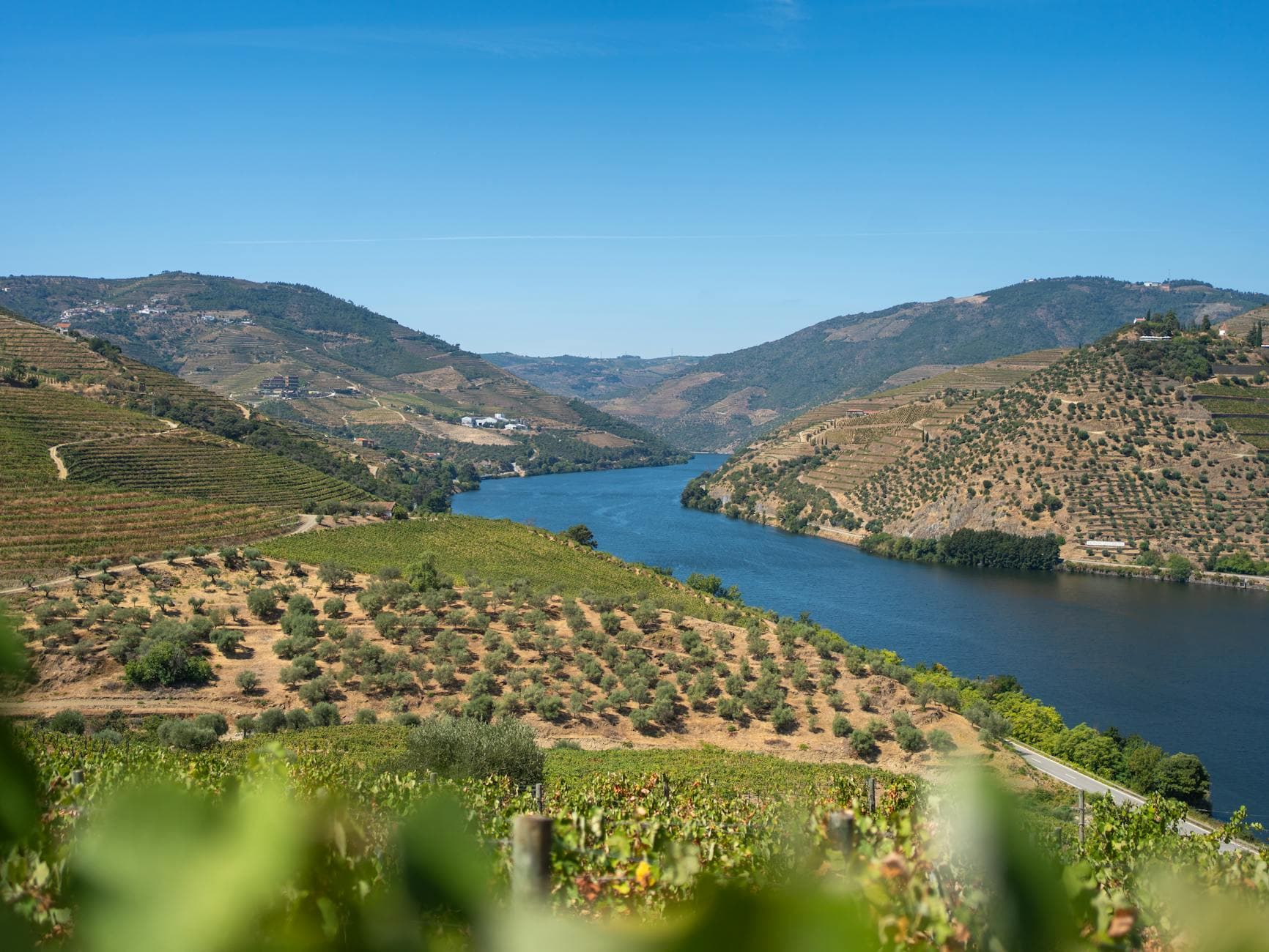
The Douro Valley is where port wine was born — and where it still makes the most sense. The terraced vineyards carved into steep schist hillsides above the Douro River have been producing wine for over 2,000 years, and the landscape itself earned UNESCO World Heritage status in 2001.
But the Douro has changed. Twenty years ago, this was almost exclusively port country. Today, the region's winemakers are turning out serious still reds and whites that rival anything from the Iberian Peninsula. Visitors who come expecting only tawny and ruby leave with bottles of bone-dry Touriga Nacional and crisp white blends they didn't know existed.
The valley stretches roughly 100 km east from Porto into the dry, hot interior of northern Portugal. Most visitors base themselves in or around Pinhão or Peso da Régua, the two main towns along the river. You can day-trip from Porto — plenty of people do — but staying at least two nights gives you time to slow down, visit smaller quintas, and watch the light shift across the terraces at sunset.
This guide covers how to plan a Douro trip whether you have one day or five: which quintas to visit, how to get there, what it costs, and the honest trade-offs between driving yourself, joining a tour, and taking a river cruise.
Quick Facts
| Detail | Info |
|---|---|
| **Country** | Portugal |
| **Key Grapes** | Touriga Nacional, Tinta Roriz (Tempranillo), Touriga Franca, Tinta Barroca, Rabigato, Viosinho |
| **Wine Styles** | Port (tawny, ruby, LBV, vintage, white), still reds, still whites, rosé, moscatel |
| **Best Months** | May–June, September–October |
| **Nearest City** | Porto (approx. 120 km / 2 hours by car to Pinhão) |
| **Tasting Costs** | EUR 10–30 (~USD 11–33) per person at most quintas |
| **UNESCO Status** | Alto Douro Vinhateiro, inscribed 2001 |
| **DOC Sub-Regions** | Baixo Corgo, Cima Corgo, Douro Superior |
Wine & Terroir
The Douro is defined by extremes. Summer temperatures regularly push past 40°C in the upper valley. Rainfall is scarce east of the Marão mountain range, which blocks Atlantic moisture. The soils are predominantly schist — a flaky, layered rock that forces vine roots deep into the hillside searching for water. These stressed vines produce small, intensely concentrated grapes.
The Grapes
Port wine traditionally blends from dozens of indigenous varieties, but a handful dominate. Touriga Nacional is the prestige grape — deep colour, firm tannins, floral aromatics. Touriga Franca is the workhorse, planted more widely, contributing structure and perfume. Tinta Roriz (the local name for Tempranillo) adds fruit and accessibility. Tinta Barroca softens the blend. For whites, Rabigato and Viosinho are increasingly bottled as single varietals, producing wines with sharp acidity and citrus character.
Port vs. Still Wines
Port still accounts for the bulk of Douro's reputation, but the economics have shifted. Port production is tightly regulated by the Instituto dos Vinhos do Douro e Porto (IVDP), which sets annual limits on how much wine each property can fortify. The surplus — and it's often high-quality surplus — goes into still wine production. This is why the Douro's still reds have improved so dramatically since the early 2000s.
White port deserves special mention. Served chilled with tonic water and a sprig of mint, it's the unofficial aperitif of Porto's riverside bars. Most quintas offer it as a welcome drink before a tasting.
The Three Sub-Regions
Baixo Corgo (westernmost) is the coolest and wettest — good for lighter wines and white port. Cima Corgo, centred on Pinhão, produces the most prestigious port wines and is where most visitors spend their time. Douro Superior (easternmost) is the hottest, driest, and least developed — increasingly interesting for bold still reds.
Best Quintas and Wineries to Visit
The Douro has hundreds of quintas, but access varies widely. Some require advance booking weeks ahead; others welcome walk-ins. Here are eight worth your time, ranging from flagship estates to smaller family operations.
Quinta do Crasto (Ferrão)
One of the Douro's most respected estates, perched high above the river between Régua and Pinhão. Crasto is known for its still reds — the Reserva Old Vines bottling is excellent — and for its olive oil. Tastings run EUR 15–25 (~USD 16–27) depending on the tier. The terrace views alone justify the visit. Book at least a week in advance during summer.
Quinta da Pacheca (Lamego)
Pacheca has leaned hard into wine tourism, adding a wine barrel hotel (yes, you sleep inside a giant barrel) and a well-run restaurant. The wines are solid mid-range, and the tasting experiences are well-organized for groups. Standard tastings start at EUR 12 (~USD 13). It's one of the easier quintas to visit without a car, as it's close to Peso da Régua. Good for first-time visitors who want a polished experience.
Quinta do Vallado (Peso da Régua)
A Douro institution since 1716, now run by the Ferreira family. Vallado produces both port and still wines, and their Adelaide bottling (a premium still red) consistently scores well. The estate has a modern wine hotel with a pool overlooking the vineyards. Tastings from EUR 15 (~USD 16). The winery building, designed by architect Álvaro Siza Vieira, is striking — all sharp angles against the old stone quinta.
Quinta do Bomfim (Pinhão)
Owned by the Symington family (of Graham's and Dow's fame), Bomfim sits right on the river in Pinhão. It's one of the most accessible quintas — you can walk there from the train station. The focus is port, with tastings that walk you through the styles from white through to aged tawny. EUR 10–20 (~USD 11–22). The self-guided vineyard trail is a nice touch if you want to stretch your legs between tastings.
Quinta do Seixo (Valença do Douro)
The Douro showpiece of Sandeman, the brand with the iconic caped silhouette. Seixo is modern and purpose-built for visitors, with a sleek tasting room and panoramic terrace. Port-focused tastings from EUR 12 (~USD 13). It handles bus tours efficiently, so if you want a quieter visit, go early morning or late afternoon.
Quinta de la Rosa (Pinhão)
A family-owned estate with a more personal feel than the bigger names. La Rosa produces excellent vintage ports and a growing range of still wines. Their restaurant serves traditional Douro cooking with estate wines. Tastings from EUR 10 (~USD 11). The rooms at the quinta are reasonably priced for an overnight stay — around EUR 120–160 (~USD 132–176) per night.
Quinta do Noval (near Pinhão)
Home to Nacional, one of the most celebrated (and expensive) vintage ports in the world, made from ungrafted pre-phylloxera vines. You won't taste Nacional on a standard visit, but the regular lineup is excellent. Tours and tastings by appointment only — book well ahead. Expect to pay EUR 20–30 (~USD 22–33) for a premium tasting.
Quinta do Pôpa (Tabuaço)
A smaller, family-run operation that's a good counterpoint to the big houses. Stéphane Ferreira makes approachable wines with personality. The atmosphere is relaxed, and Stéphane or his team often lead tastings personally. EUR 10–15 (~USD 11–16). Worth the detour if you want to see how the newer generation of Douro winemakers operates.
Getting There and Getting Around
From Porto by Car
The most flexible option. Take the A4 motorway east, then the IP4 towards Vila Real. The drive to Peso da Régua takes about 90 minutes; Pinhão is another 30 minutes beyond that. Be warned: once you leave the motorway, the roads are narrow and winding. The N222, which runs along the north bank of the Douro from Peso da Régua to Pinhão, is regularly cited as one of Portugal's most scenic roads — and one of its most demanding. Take it slowly, especially if you've been tasting.
The Douro Line Train
The CP train from Porto São Bento to Peso da Régua takes about 2 hours 15 minutes and costs roughly EUR 13 (~USD 14) one way. From Régua, a smaller regional train continues to Pinhão (30 minutes, EUR 3.50 / ~USD 4). The Douro Line follows the river almost the entire way and is one of Europe's great rail journeys. Downside: limited departures per day (3–4), and you'll need taxis or pre-arranged transfers to reach quintas once there.
River Cruises
Day cruises from Porto typically run EUR 60–90 (~USD 66–99) per person, including lunch and a quinta visit. Douro Azul is the largest local operator. Multi-day cruises (Viking, AmaWaterways, CroisiEurope) spend 5–8 days on the river, covering the full valley from Porto to the Spanish border and back. These start around EUR 1,500 (~USD 1,650) per person. The trade-off: river cruises are comfortable and scenic but lock you into a fixed itinerary with limited time at each stop.
Organized Day Tours
Numerous operators run day tours from Porto for EUR 80–150 (~USD 88–165) per person, usually covering 2–3 quintas with lunch included. This is the easiest option if you don't want to drive after wine tastings — a real consideration on Douro roads.
When to Visit
May–June (Spring)
Warm but not oppressive — daytime highs around 25–30°C. The valley is green, wildflowers are in bloom, and the vines are in full leaf. This is the most comfortable time for walking between vineyards and outdoor tastings. Late June starts getting hot.
September–October (Harvest / Vindima)
This is the Douro at its most alive. Harvest typically runs from mid-September through early October, depending on the year. Some quintas offer vindima experiences where visitors can participate in grape picking and foot-treading in granite lagares. These are popular and book out months ahead — if this interests you, start enquiring by June.
The downside: the valley is at its busiest. Roads are crowded with tractors and trucks. Accommodation prices peak.
July–August (Summer)
Hot. Interior Douro temperatures regularly exceed 40°C in July and August. If you visit in summer, schedule quinta visits for morning (before 11:00) or late afternoon (after 16:00). Carry water. Many smaller quintas reduce their visiting hours. The upside: fewer tour groups than in September.
November–March (Off-Season)
Quiet, cooler, and some quintas close or operate reduced hours. The landscape turns austere — bare vines, grey skies. If you don't mind the cold, it's the cheapest time to visit, and you'll have the major estates largely to yourself.
Where to Stay
Pinhão
The heart of Douro wine tourism. Most quintas are within a 20-minute drive. The town itself is small — a train station, a handful of restaurants, a few shops. Accommodation ranges from wine estate hotels (Quinta de la Rosa, Vintage House Hotel on the riverfront) to guesthouses. Expect EUR 100–250 (~USD 110–275) per night for a decent double room in season.
Peso da Régua
Larger and more practical than Pinhão, with supermarkets, pharmacies, and more restaurant options. Less scenic, but better connected by train and closer to the motorway. A good base if you're splitting time between the Baixo and Cima Corgo sub-regions. Hotels run EUR 70–150 (~USD 77–165) per night.
Lamego
A proper town on the south bank, set back from the river. The Sanctuary of Nossa Senhora dos Remédios — a Baroque church atop a monumental staircase — is worth the climb. Lamego has more dining options than Pinhão and a slightly more local feel, less geared entirely toward wine tourists. Also home to Quinta da Pacheca and its barrel hotel. Hotels from EUR 60–120 (~USD 66–132).
Wine Hotels (Splurge)
If the budget allows, staying at a quinta hotel is the best way to experience the valley. Six Senses Douro Valley in Samodães is the top-end option — a restored 19th-century manor with a spa, multiple restaurants, and prices to match (from EUR 400+ / ~USD 440+ per night). Quinta do Vallado's wine hotel is a more accessible luxury option.
Practical Tips
- Book small quintas ahead. The big names (Bomfim, Seixo, Pacheca) handle walk-ins. Smaller estates like Noval and Pôpa require appointments — sometimes days or weeks in advance.
- Designate a driver or hire one. The roads are steep, narrow, and winding. After three or four tastings, you don't want to be navigating hairpin bends above the river. Local drivers cost roughly EUR 150–200 (~USD 165–220) for a full day.
- Bring water and sun protection. This sounds obvious, but the Douro interior is significantly hotter than Porto. There's very little shade between quintas.
- Don't try to visit more than three quintas in a day. Tasting fatigue is real. Two quintas plus a long lunch at a third is the right pace.
- Learn the port styles before you go. Knowing the difference between ruby, tawny, LBV, colheita, and vintage port will make your tastings far more rewarding. Tasting room staff will take you more seriously, too.
- The N222 is scenic but slow. Allow extra time for any drive along the river road. It's single-lane in places, with blind corners and occasional tractors. Don't rush it.
- Pack wine properly for travel. If you're buying bottles to bring home, read our guide to shipping wine internationally before you stock up. Portuguese customs are straightforward, but airline baggage limits are not.
Frequently Asked Questions
Q: Can I do the Douro Valley as a day trip from Porto?
A: Yes, and many people do. A day trip gives you time for 2–3 quinta visits with lunch. But you'll spend 3–4 hours in the car round-trip. If you can spare two nights, stay in Pinhão or Régua — the pace is completely different.
Q: Do I need to speak Portuguese to visit quintas?
A: No. Nearly all quintas that accept visitors offer tastings in English. Staff at the major estates are multilingual. At very small family operations, basic Portuguese helps but isn't essential.
Q: Is the Douro Valley worth visiting outside harvest season?
A: Absolutely. Harvest (September–October) is atmospheric, but spring is arguably more comfortable for visiting. The wines taste the same year-round. Off-season (November–March) is quiet but still rewarding if you call ahead.
Q: What should I wear for quinta visits?
A: Smart casual is fine everywhere. Avoid flip-flops if you'll be walking through vineyards — the schist paths are uneven. For more detail, check our wine tasting dress code guide.
Q: How much should I budget per day in the Douro?
A: A rough daily budget: EUR 15–25 for tastings (2–3 quintas), EUR 25–40 for lunch, EUR 80–200 for accommodation. Transport costs vary — a rental car runs EUR 30–50/day, while a private driver is EUR 150–200. Total: EUR 150–300 (~USD 165–330) per person per day, mid-range.
Q: Are river cruises worth it?
A: They're a comfortable way to see the valley, especially for travellers who don't want to drive. The trade-off is flexibility — you visit the quintas on the cruise itinerary, not necessarily the ones you'd choose yourself. Day cruises from Porto are good value; multi-day cruises are a different (and more expensive) category entirely.
Related Guides
- Portugal Wine Regions Overview — All of Portugal's key wine regions in one guide
- Best European Wine Regions to Visit in Spring 2026 — Where to go when the weather's right
- How to Ship Wine Home from Abroad — Customs, packaging, and carrier options
- What to Wear to a Wine Tasting — Dress codes demystified


Wines of Douro Valley Wine Region Guide: Tours, Quintas & River Cruises from Porto
Key grape varieties and wine styles produced in the region
Primary Grape Varieties
Wine Styles
Ready to visit Douro Valley?
Build your personalised day-by-day itinerary — choose your travel style and trip length, get accommodation and tour picks per day, and email it to yourself to take along.
Upcoming Wine Festivals in Portugal
See all festivalsHidden Gems Nearby
Discover more hidden gemsHerdade do Esporão
Alentejo, Portugal
A complete wine tourism destination in the Alentejo with a restaurant, museum, and amphora wines — yet almost unknown outside Portugal.
Touriga Nacional · Aragonez · Antão Vaz
Quinta do Vallado
Douro Valley, Portugal
A 300-year-old Douro estate with a stunning modern wine hotel, making table wines that rival the best in Portugal — yet overshadowed by the port houses.
Touriga Nacional · Tinta Roriz · Port
Quinta dos Roques
Dão, Portugal
A Dão pioneer making some of Portugal's most elegant reds in a region that's a fraction of the price and crowds of the Douro.
Touriga Nacional · Encruzado · Tinta Roriz
Book Your Douro Valley Wine Country Stay
Compare hotels, vineyard B&Bs and rentals across Booking, Airbnb and more in one search.
Compare stays near the vineyardsStay22
Plan Your Douro Valley Wine Region Guide: Tours, Quintas & River Cruises from Porto Trip
Estimate your Douro Valley Wine Region Guide: Tours, Quintas & River Cruises from Porto trip cost
Budget calculator with accommodation, food, wine, and transport estimates.
Try itCompare Douro Valley Wine Region Guide: Tours, Quintas & River Cruises from Porto with other regions
Side-by-side comparison of cost, climate, wine styles, and more.
Try itWhen to visit Douro Valley Wine Region Guide: Tours, Quintas & River Cruises from Porto
Harvest dates, peak season, and the best months for wine travel.
Try itThis page contains affiliate links. We may earn a commission at no extra cost to you.