Douro Valley vs Alentejo
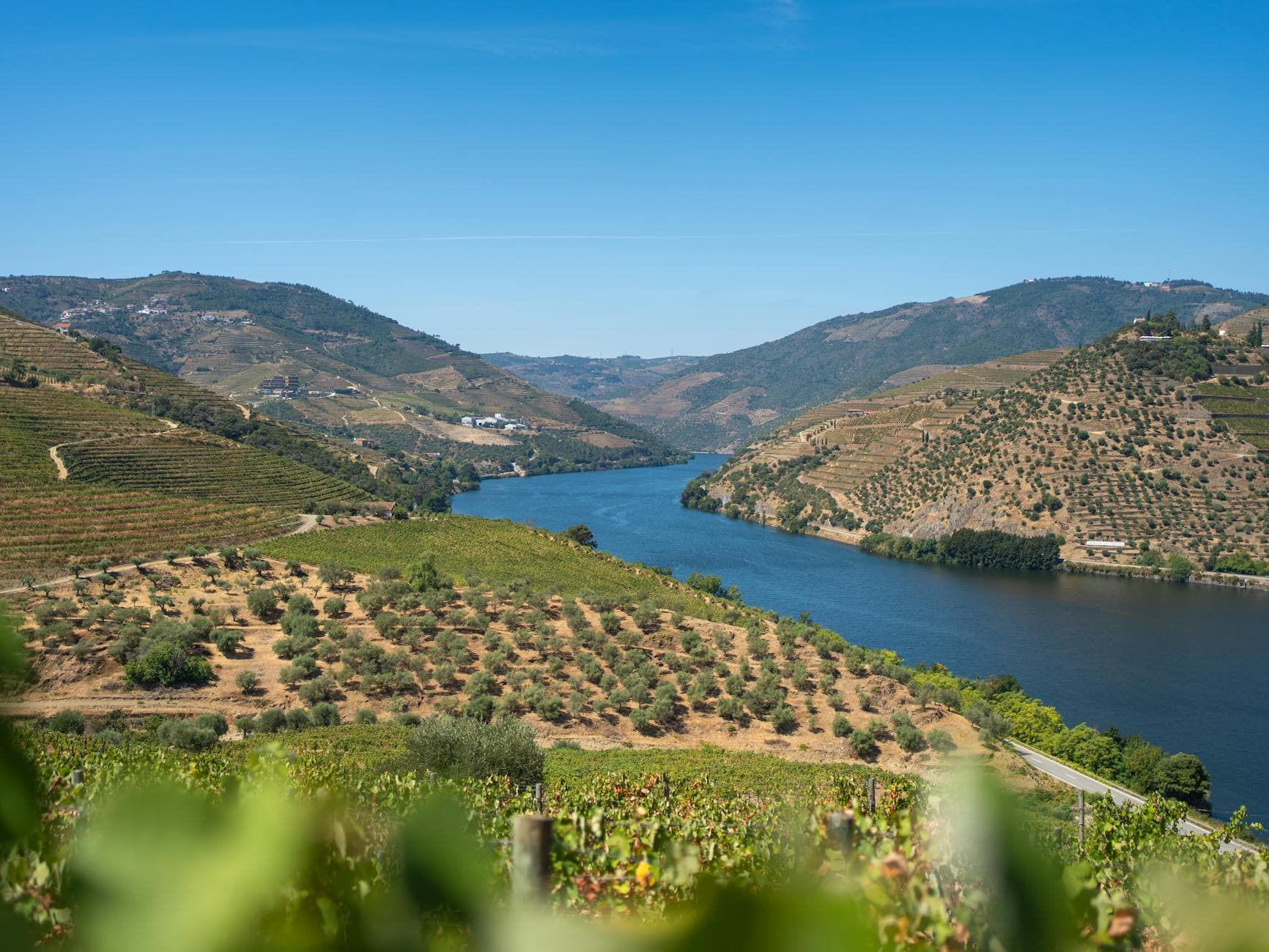
The Douro is dramatic terraced vineyards on steep river slopes. Alentejo is vast, flat, sun-baked plains. Both make superb wine. Here's how to choose.
Portugal has become one of Europe's most exciting wine travel destinations over the past decade, and two regions have led the charge for international visitors: the Douro Valley and Alentejo. They could hardly be more different in character. The Douro is one of the most dramatic wine landscapes on earth — near-vertical schist terraces carved above a winding river, 100km from the Atlantic. Alentejo is the opposite: vast, flat, burnished ochre plains dotted with cork oaks and whitewashed villages, stretching from the Spanish border to within striking distance of Lisbon.
The Douro Valley: Drama, Port, and Table Wine Renaissance

The Douro is first and foremost the home of Port. For three centuries, the valley's quintas (wine estates) have produced the fortified wines that built Portugal's wine export economy: Vintage Port, LBV, Tawny, Colheita. The major Port houses — Taylor's, Graham's, Quinta do Crasto, Ramos Pinto — have their lodges in Vila Nova de Gaia, across the river from Porto, but their vineyards and production are in the valley.
The Douro also produces extraordinary unfortified table wines. Douro reds from indigenous varieties — Touriga Nacional, Touriga Franca, Tinta Roriz (Tempranillo) — are among Portugal's most complex and sought-after wines. Niepoort's Redoma, Quinta do Crasto's Reserva, and Prats & Symington's Chryseia compete with anything Portugal produces.
Douro Valley accommodation: budget ~€40/night, mid-range ~€100/night, luxury ~€280/night. Tastings: budget €5, mid-range €15. The UNESCO-listed landscape, the Douro cruise from Porto (2 nights, deeply recommended), and the quintessentially Portuguese quintas make this one of Europe's must-see wine destinations.
Alentejo: Space, Heat, and Portugal's Most Versatile Wine Region
Alentejo ('beyond the Tagus') covers roughly a third of Portugal's mainland landmass, making it the country's most expansive wine region. The landscape is austere — hot summers (35–40°C regularly), low rainfall, endless plains punctuated by the occasional fortified hilltop town (Évora, Estremoz, Monsaraz). This is not a landscape that says 'wine' immediately, but beneath the cork oaks and cistus scrub, the soils produce remarkably complex reds.
Alentejo wine is dominated by native varieties — Aragonês (same as Rioja's Tempranillo), Trincadeira, and Alicante Bouschet — producing wines that are typically richer, fuller-bodied, and rounder than Douro reds, with generous fruit and a warm, earthy character. White Alentejo (Antão Vaz, Arinto, Roupeiro) can be excellent — especially from higher-altitude sub-regions like Portalegre, where cooler conditions add freshness and tension.
Alentejo accommodation is Portugal's best value for quality: budget ~€35/night, mid-range ~€85/night. Tastings: budget €3, mid-range €12. Pousadas — historic government-run hotels in converted castles, convents, and palaces — are found throughout Alentejo and represent extraordinary heritage accommodation at reasonable prices.
Experience: Which Feels More Spectacular

The Douro Valley wins on raw drama. Flying into Porto, taking the A4 eastward and then dropping into the valley for the first time — the scale of the terraced schist slopes, the river 100 metres below, the quintas clinging to the hillsides — is genuinely breathtaking. Nothing quite prepares you for it. The Douro cruise (Pinhão to Porto, or the reverse) is one of Portugal's great experiences: two days on a rabelo boat watching the landscape change from Douro Superior's extreme rockiness to the gentler slopes near Régua.
Alentejo has a different, quieter beauty. The medieval hilltop city of Évora (UNESCO World Heritage, Roman temple intact) is one of Portugal's most remarkable towns. Monsaraz at sunset, on a hilltop above the Alqueva reservoir, is unforgettable. The Alentejo plain at golden hour — cork oaks casting long shadows, a silence broken only by sheep — has a meditative quality that wine tourists rushing from cellar to cellar rarely find.
Combining Both: The Portugal Wine Circuit
Porto and the Douro Valley, then Évora and Alentejo, is a natural and manageable circuit of five to seven days. Porto for two nights (Port lodges, Foz do Douro, Francesinha sandwiches), then drive or train up the Douro to Pinhão (two nights), then south via Viseu or directly to Évora (one and a half hours from Pinhão to Évora by road). This itinerary covers two of Portugal's four UNESCO wine landscapes and two of its three major red wine regions (Vinho Verde in the northwest rounds out the trio).
Best Time to Visit

Douro: late September to October for harvest. The valley transforms — grape pickers on the slopes, the smell of fermenting must, the quintas open for harvest visitors. Spring (April–May) is beautiful with wildflowers and milder temperatures. Avoid July and August in the upper Douro — temperatures regularly hit 40°C.
Alentejo: spring (March–May) is the best time — the plains are green, temperatures are perfect, and the poppies create a blood-red landscape. Autumn (September–October) is also excellent. High summer is brutally hot; Alentejo is regularly the hottest place in Europe in July.
The Verdict
Choose the Douro Valley if:
- Dramatic landscape and photography are central to your trip — the Douro is one of the world's most photogenic wine regions
- Port wine is on your agenda: Vintage Port, Tawny, LBV at source
- You want to combine with Porto, one of Europe's best short-break cities
- You prefer cool, complex red wine styles with fresh acidity
- A river cruise is on your bucket list
Choose Alentejo if:
- Value is important: Alentejo offers the best cost-to-experience ratio in Portuguese wine travel
- History and architecture matter — Évora, Monsaraz, and the Pousada network are extraordinary
- You want space, silence, and a more meditative travel experience
- Fuller-bodied, generous reds are your preference
- You are already based in Lisbon — Alentejo is 90 minutes away; the Douro requires a separate trip north
See our Douro guide for detailed quintas and cruise logistics. Use /tools/compare to compare costs and wine styles between these two Portuguese wine regions.
Ready to visit Alentejo?
Build your personalised day-by-day itinerary — choose your travel style and trip length, get accommodation and tour picks per day, and email it to yourself to take along.
Upcoming Wine Festivals in Portugal
See all festivalsHidden Gems Nearby
Discover more hidden gemsHerdade do Esporão
Alentejo, Portugal
A complete wine tourism destination in the Alentejo with a restaurant, museum, and amphora wines — yet almost unknown outside Portugal.
Touriga Nacional · Aragonez · Antão Vaz
Quinta do Vallado
Douro Valley, Portugal
A 300-year-old Douro estate with a stunning modern wine hotel, making table wines that rival the best in Portugal — yet overshadowed by the port houses.
Touriga Nacional · Tinta Roriz · Port
Quinta dos Roques
Dão, Portugal
A Dão pioneer making some of Portugal's most elegant reds in a region that's a fraction of the price and crowds of the Douro.
Touriga Nacional · Encruzado · Tinta Roriz
Book Your Alentejo Wine Country Stay
Compare hotels, vineyard B&Bs and rentals across Booking, Airbnb and more in one search.
Compare stays near the vineyardsStay22 · We may earn a commission
Plan Your Douro Valley vs Alentejo — Portugal's Two Great Wine Regions Trip
Estimate your Douro Valley vs Alentejo — Portugal's Two Great Wine Regions trip cost
Budget calculator with accommodation, food, wine, and transport estimates.
Try itCompare Douro Valley vs Alentejo — Portugal's Two Great Wine Regions with other regions
Side-by-side comparison of cost, climate, wine styles, and more.
Try itWhen to visit Douro Valley vs Alentejo — Portugal's Two Great Wine Regions
Harvest dates, peak season, and the best months for wine travel.
Try itThis page contains affiliate links. We may earn a commission at no extra cost to you.