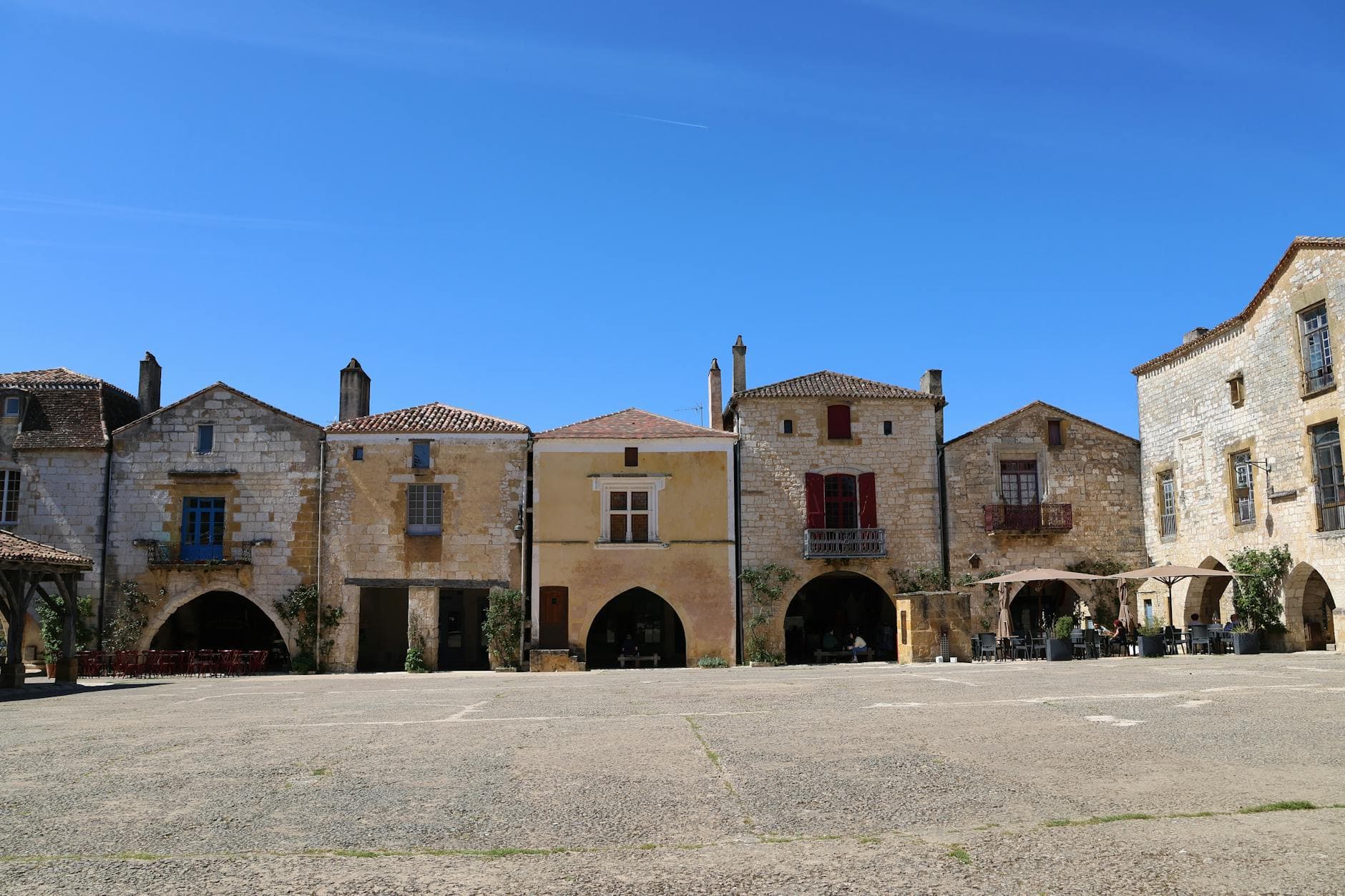
Gascony Wine Guide: Côtes de Gascogne, Madiran & Basque Country Wine Travel
Gascony produces some of France's most distinctive wines — crisp Côtes de Gascogne whites, powerful Madiran reds, and rare Basque Irouléguy. Discover the best wine experiences in this underrated region.
Gascony Wine Guide: Côtes de Gascogne, Madiran & Basque Country Wine Travel
Gascony is the part of France that the rest of France eats. Duck confit, foie gras, cassoulet, black Périgord truffles, Agen prunes, Armagnac brandy: the southwest is France's larder, and it has been filling that role for centuries. The wine here is less celebrated than Bordeaux or Burgundy, which makes it one of the country's better-kept secrets for visitors who know where to look.
The region runs from the Garonne river roughly south to the Pyrenees, covering the Gers department and parts of the Hautes-Pyrénées and Pyrénées-Atlantiques. The terrain is mostly rolling hills covered in sunflowers and maize in summer, with scattered vineyard parcels that produce more distinctive wines than their modest profile suggests. The climate is Atlantic-influenced: warm summers with the heat moderated by altitude as you head south toward the mountains, winters cold enough to keep viticulture honest.
This guide covers the full wine landscape: the everyday Côtes de Gascogne whites, the powerful Madiran reds, the white wines of Pacherenc du Vic-Bilh, the brandy country of Armagnac, and the remote Basque vineyards of Irouléguy. For the broader context of South West France, including Cahors and Bergerac, see our South West France wine guide.
Côtes de Gascogne: The Everyday Wine of Gascony
The Côtes de Gascogne is an IGP (Indication Géographique Protégée) rather than an AOC, which means it operates outside the full appellation framework. The rules are looser, the yields are higher, and the wines are made to be drunk young rather than aged. None of this is a criticism. These wines fill a role that most wine regions ignore: genuinely fresh, aromatic, and affordable whites that pair naturally with food and disappear easily on a summer evening.
The dominant grapes are Colombard, Ugni Blanc, Gros Manseng, and Petit Manseng. Colombard, which also ends up in Armagnac, is the backbone of most commercial Côtes de Gascogne: it has naturally high acidity, tropical fruit aromas (passion fruit, guava), and produces clean, refreshing wine when handled carefully. Ugni Blanc is blander and largely provides volume and alcohol without complicating the flavour profile. The Manseng varieties, when included in the blend, add weight and richness.
Domaine de Tariquet, run by the Grassa family since the 1980s, is the region's most important producer in volume terms and has done more than any other estate to establish Côtes de Gascogne as an international wine category. By adopting temperature-controlled fermentation and picking for freshness rather than sugar, they broke from the tradition of heavy, oxidative whites that had made the area's wine unremarkable. A visit to the estate in Eauze is informative even if you have little specific interest in the wine: the scale of the operation (over 1,000 hectares of vines, one of France's largest family-owned estates) and the efficiency of the cellar are genuinely impressive.
Other producers worth seeking out include Domaine du Tariquet's Classique, Château de Pellehaut in Montréal-du-Gers, and the cooperative at Plaimont Producteurs, which works with several appellations across the region and is one of the more visitor-friendly operations in south-western France, with a tasting cellar near Saint-Mont that covers the full range from Côtes de Gascogne through to Madiran and Pacherenc.
The scale of the Côtes de Gascogne's white wine production should not obscure the fact that a handful of producers have worked hard to raise the ceiling. Domaine d'Uby, based near Cazaubon in the Bas-Armagnac area, has pioneered Tannat rosé alongside the standard white range, and their Viognier-Colombard blend demonstrates what the region can do when producers experiment with less obvious grape combinations. The wine is not AOC — it cannot be, under the current rules — but IGP status gives freedom that some producers are using productively.
Madiran: The Serious Red of the South West
Forty kilometres south of Condom and east of Pau, the hills rise gently into clay-limestone plateau country. This is Madiran territory: one of France's most uncompromising red wine appellations, built entirely on the Tannat grape.
Tannat has levels of tannins and polyphenols that most winemakers in other regions would consider a problem. In Madiran, they are the point. A young Madiran can be almost unapproachably tannic — dark, dense, with dark cherry and leather flavours buried under a structure that requires years to integrate. A well-made Madiran at ten years or more is a different proposition: the tannins soften into silk, the fruit emerges, and a mineral, almost meaty depth develops that is unlike any other French red wine.
Alain Brumont is the figure most associated with Madiran's modern revival. Working from Château Bouscassé (his family's estate) and Château Montus (which he acquired and transformed from the late 1980s onward), Brumont pursued low yields, concentrated extraction, and extended oak ageing at a time when the appellation was struggling to find buyers. His single-vineyard Montus Cuvée Prestige became a benchmark wine that attracted international attention and pulled the appellation's reputation upward. Other producers of note include Domaine Labranche-Laffont (biodynamic, more precise style) and Domaine Berthoumieu.
The rules specify that Tannat must represent 40% to 100% of any Madiran wine, with Cabernet Franc, Cabernet Sauvignon, and Fer Servadou as blending options. Minimum ageing requirements apply. A technique called micro-oxygenation, which gradually introduces small amounts of oxygen into fermenting wine to soften Tannat's tannins without heavy-handed oak treatment, was developed in Madiran in the early 1990s by Patrick Ducournau and is now used throughout the wine world.
Pacherenc du Vic-Bilh: The Forgotten White Wine
Within the same geographic zone as Madiran, a separate appellation called Pacherenc du Vic-Bilh produces white wines that deserve far more attention than they receive. The name means "posts in a row" in old Gascon, a reference to the palissage vine training method used historically.
Pacherenc is made from Arrufiac, Courbu, Petit Manseng, and Gros Manseng. It comes in both dry (sec) and sweet (doux) styles. The dry version is aromatic and full-bodied, quite different from the lighter Côtes de Gascogne whites. The sweet version, harvested late into autumn, can be outstanding: rich and complex, with the Petit Manseng's thick skins concentrating sugar while retaining enough acidity to keep the wine fresh.
Alain Brumont also makes Pacherenc at his properties, and it is worth tasting alongside the Madiran reds. The Brumont Pacherenc du Vic-Bilh Sec and the sweet versions labelled Jardins de Bouscassé are usually available at the estate. The combination of powerful reds and complex whites from the same producer and the same appellation zone makes Madiran-Pacherenc one of South West France's most interesting single-stop visits.
Armagnac Country: Brandy Distilleries and Condom
Condom, a town that English visitors find briefly amusing to say aloud, is the capital of the Armagnac brandy region and a practical base for exploring Gascony wine country. It has a fine Gothic cathedral, good restaurants, weekly markets, and accommodation ranging from chambres d'hôtes to small hotels.
Armagnac divides into three sub-zones: Bas-Armagnac in the west (sandy, boulbène soils that produce the most delicate and prized spirits), Armagnac Ténarèze in the centre around Condom (heavier soils, more tannic spirits), and Haut-Armagnac in the east (chalky soils, now producing relatively little). Bas-Armagnac, centred on towns like Nogaro and Eauze, has the highest prices and most serious estates.
The production method differs from Cognac in important ways. Armagnac uses a column still (alambic Armagnac) that performs a single distillation, producing a spirit with more congeners — the flavour compounds that give aged brandy its complexity. Cognac uses a pot still with double distillation, producing a cleaner, more delicate spirit. Armagnac spends its time in Gascon oak (black oak from the local Monlezun forest), which imparts different flavours from the Limousin and Tronçais oak used for Cognac. The result is typically more rustic and individual than Cognac, less polished but with more character — and it can age beautifully for 40, 50, or more years in cask.
For distillery visits, Domaine Boingnères near Labastide d'Armagnac (run by Martine Lafitte, whose work with single vintage releases has attracted serious attention) and Château de Briat near Préchac are good starting points. Château Castarède, the oldest registered Armagnac house, offers visits near Lavardac. The Ecomusée de l'Armagnac in Labastide d'Armagnac provides good context on production history.
Vintage Armagnac — bottled from a single year rather than blended — is the category that distinguishes the best producers. Finding a bottle from the year of a significant birthday or anniversary is a tradition that persists partly because the spirit ages gracefully for decades. Prices are considerably lower than equivalent vintage Cognac.
Irouléguy: Basque Country Wine
At the Spanish border, as the Pyrenees rear up on both sides and the road narrows to a single track over mountain passes, lies the Irouléguy appellation. It is the smallest in South West France: a cluster of vineyards around the villages of Saint-Étienne-de-Baïgorry and Irouléguy itself, south of Saint-Jean-Pied-de-Port, in country that feels more like northern Spain than mainstream France.
Basque culture, language, and identity are deeply rooted here. The wine reflects it. Red Irouléguy is made from Tannat, Cabernet Franc, and Cabernet Sauvignon: dark, herbal, with a mountain austerity that separates it from warmer-climate South West reds. White Irouléguy is made from Courbu, Gros Manseng, and Petit Manseng: aromatic but structured, with a herbal edge. Rosé is also produced.
Most of the appellation's production comes through the Cave d'Irouléguy cooperative, which was instrumental in preserving local viticulture when most small growers lacked the resources to produce independently. A handful of individual estates now operate outside the cooperative. Domaine Arretxea, farmed biodynamically by Michel and Thérèse Riouspeyrous on steep terraced slopes above the Nive valley, produces some of the appellation's most individual wines. Domaine Ilarria, run by the Hillau family, has also developed a following among natural wine enthusiasts.
The surrounding territory is excellent for walking: the GR10 long-distance footpath passes through the area, the Aldudes valley offers dramatic scenery, and Saint-Jean-Pied-de-Port itself is one of France's prettiest medieval towns. As the traditional starting point for the Camino de Santiago de Compostela — the pilgrimage route that crosses the Pyrenees into Spain at Roncevaux — it has good infrastructure for visitors at all price levels.
For practical tips on what to wear to tastings and how to prepare for visiting small family estates, read our wine tasting dress code guide.
The experience of visiting Irouléguy is quite different from anywhere else in South West France. The cooperative is professional and welcoming; the independent domaines are often personal affairs where the winemaker will walk you through vineyards on a 40-degree slope before opening a bottle at a kitchen table. Bring cash, be patient with language barriers (Basque is spoken here alongside French), and allow more time than you think you need.
Food and Wine Pairing in Gascony
Gascony's food tradition is built on duck fat, preserved meats, and rich sauces: the exact culinary opposite of a delicate Alsatian Riesling or a light Burgundy Pinot Noir. The local wines match the local food in weight and character.
Côtes de Gascogne whites with duck or goose dishes: The crisp acidity of a Colombard-based Gascogne white cuts through the richness of duck confit or magret de canard (duck breast). It is not a complex pairing but it works precisely because both the wine and the food are uncomplicated and direct.
Madiran with cassoulet: The bean and sausage casserole known as cassoulet (made with duck confit, Toulouse sausage, and white beans, cooked slowly for hours) needs a tannic, structured red to stand up to it. Madiran, with its Tannat backbone, does not get overwhelmed. A mature Madiran from a good producer is the traditional match.
Armagnac with foie gras: Serving Armagnac alongside foie gras, either as a digestif immediately after or as part of the course itself, is a Gascon tradition. A Sauternes or Monbazillac works with the foie gras sweet wines of the region, but an old Armagnac as a pairing for terrine de foie gras is a more distinctly local experience.
Pacherenc du Vic-Bilh Doux with local cheeses: The sweet Pacherenc, with its apricot and honey notes, works well with strong sheep's milk cheeses from the Pyrenees (Ossau-Iraty, Ardi Gasna). Sweet wine with strong cheese is a French tradition the English have never quite absorbed but should.
Irouléguy rosé with pintxos: In the Basque country, the local rosé — lighter and more mineral than a Provence style — pairs naturally with the pintxos (Basque tapas) served in the bars of Saint-Jean-Pied-de-Port and the surrounding villages. This is the wine for when you want something red but the food is too delicate for full-weight Tannat.
Pacherenc sec with piperade: Piperade, the Basque dish of tomatoes, onions, and green peppers cooked down with ham and scrambled egg, is one of the region's everyday dishes and needs something fresh and aromatic to go with it. A dry Pacherenc du Vic-Bilh or a Jurançon Sec has the right acidity and weight.
Older Armagnac with dark chocolate: In Gascony, the end of a serious meal often involves Armagnac rather than dessert wine. A 20-year Bas-Armagnac alongside a piece of dark chocolate (70% or more) is one of those combinations where the interaction improves both components.
Getting There
Nearest airports: Pau-Pyrénées Airport serves the southern Gascony area with connections from Paris-Orly and a few other French cities. For the Armagnac zone and northern Gascony, Toulouse-Blagnac Airport is more practical, with connections from across Europe. Bordeaux-Mérignac is another option for the northern reaches of the region.
Train: Tarbes and Pau are on the main SNCF network from Paris Montparnasse via TGV (Paris to Pau takes around five hours, with a change). Bayonne, at the Atlantic end of the Pyrenees, is on the TGV from Paris and serves as a gateway to the Basque appellation of Irouléguy (about 50 minutes by road from Saint-Jean-Pied-de-Port).
By road: From Toulouse, the A64 motorway runs southwest toward Tarbes and Pau. The N21 north from Tarbes through Auch reaches Armagnac country in under two hours. Gascony is large enough that a car is essential for any serious wine touring; public transport between smaller wine villages is infrequent or non-existent.
Best route: Toulouse north on the N21 to Auch, then west to Condom and the Armagnac zone; south through the Gers toward Vic-Bilh and Madiran; continue south to Pau for Jurançon; then east to the Pyrenean border for Irouléguy. Return to Toulouse via the A64. This circuit takes four to five days at a reasonable pace. For guidance on planning the structure of the trip, see our guide to planning a wine tour and the broader South West France wine overview.
Accommodation: Condom and Auch both have reasonable hotel options for mid-range budgets. For the southern appellations, Pau is a city with a full range of accommodation including business hotels and boutique options near the château. Saint-Jean-Pied-de-Port has numerous gites and small hotels catering to Camino pilgrims, which means good availability and generally reasonable prices even at short notice outside high summer. Booking ahead is still advisable in July and August.
Frequently Asked Questions
What wines are made in Gascony?
Gascony produces several distinct wine styles: crisp, aromatic whites under the Côtes de Gascogne IGP (made from Colombard, Ugni Blanc, and Gros Manseng); powerful, tannic reds from the Madiran AOC (Tannat-based); dry and sweet whites from Pacherenc du Vic-Bilh; and Armagnac brandy. The Basque Country appellation of Irouléguy, at the southern edge of the region, produces red, white, and rosé.
Is Armagnac better than Cognac?
Armagnac and Cognac are different rather than one being better than the other. Armagnac is single-distilled, tends to be more individual and rustic in character, and can be exceptional at long ages. Cognac is double-distilled, more consistent, and generally more polished. Armagnac is less expensive and more varied; Cognac has greater international recognition. Which you prefer depends on what you want from a brandy.
What is the Tannat grape?
Tannat is a red grape variety grown primarily in South West France (Madiran, Irouléguy) and Uruguay, where it became the national grape variety after being brought by Basque immigrants in the 19th century. It has unusually high levels of tannins and polyphenols, producing wines that are deeply coloured, structured, and capable of long ageing. At its best, Madiran from Tannat rivals many more famous French reds for complexity and longevity.
What food does Gascony produce?
Gascony is one of France's great food regions: duck and goose products (foie gras, confit de canard, magret, rillettes), black Périgord truffles, Agen prunes (used in desserts and savoury dishes), Toulouse sausage, cassoulet, and Armagnac brandy. Oysters from Arcachon Bay are nearby. The cuisine is rich, meaty, and built for cold weather — not aligned with modern dietary trends, but exceptional.
How do I get to Irouléguy?
Irouléguy is most easily reached from Saint-Jean-Pied-de-Port, which is connected by a local SNCF train line from Bayonne (about 1 hour). Bayonne is on the TGV network from Paris (3.5 hours). By road from Paris, the journey is around seven hours. From Toulouse or Pau, Irouléguy is two to three hours by road through the foothills.
What does Côtes de Gascogne wine taste like?
At its best, Côtes de Gascogne is fresh, aromatic, and crisp: citrus, tropical fruit (passion fruit, pineapple), and a clean finish. It is not a complex wine but it is a reliable one at the price point, well-suited to warm weather and light food. The Colombard grape provides the backbone; Gros Manseng in the blend adds weight and complexity.
When is the best time to visit Gascony for wine?
September and October are peak season for wine tourism in Gascony: harvests are underway (Côtes de Gascogne whites typically picked in August-September, Madiran reds in October), the weather is warm but not extreme, and most estates are receiving visitors. Spring (April-May) is also pleasant if you want to avoid crowds. Armagnac distilling season runs roughly November through March, when the travelling stills move from estate to estate — this is the only time you can watch distillation in progress.


Book Your Gascony Wine Guide: Côtes de Gascogne, Madiran & Basque Country Wine Travel Wine Country Stay
Compare hotels, vineyard B&Bs and rentals across Booking, Airbnb and more in one search.
Compare stays near the vineyardsStay22
Plan Your Gascony Wine Guide: Côtes de Gascogne, Madiran & Basque Country Wine Travel Trip
Estimate your Gascony Wine Guide: Côtes de Gascogne, Madiran & Basque Country Wine Travel trip cost
Budget calculator with accommodation, food, wine, and transport estimates.
Try itCompare Gascony Wine Guide: Côtes de Gascogne, Madiran & Basque Country Wine Travel with other regions
Side-by-side comparison of cost, climate, wine styles, and more.
Try itWhen to visit Gascony Wine Guide: Côtes de Gascogne, Madiran & Basque Country Wine Travel
Harvest dates, peak season, and the best months for wine travel.
Try itThis page contains affiliate links. We may earn a commission at no extra cost to you.