How to Read a Wine Label — European & New World Guide
Wine labels are confusing — but once you crack the code, they tell you almost everything about what's inside. Here's how to read them.
A wine label is a compressed data set. Every element — the appellation name, the classification tier, the vintage year, the producer — communicates something meaningful about what's in the bottle. Once you understand the logic of each major wine-producing country, labels become readable in seconds rather than baffling in minutes.
French Labels: AOC and the Terroir System

France organises wine by place, not by grape variety. The AOC (Appellation d'Origine Contrôlée) — now officially AOP (Appellation d'Origine Protégée) under EU law, though the old term persists on labels — defines specific geographical zones with legally mandated rules about which grape varieties can be grown, maximum yields, minimum alcohol levels, and aging requirements.
The hierarchy runs from broad to narrow. "Bourgogne" is the regional appellation covering all of Burgundy. "Côte de Nuits" is a sub-regional appellation within Burgundy. "Gevrey-Chambertin" is a village-level appellation. "Gevrey-Chambertin Premier Cru" means a specific named vineyard within the village classified as first growth. "Chambertin Grand Cru" is a single vineyard classified at the top tier — the name stands alone without the village name.
The narrower the appellation, the stricter the rules and generally the higher the quality and price. On a Burgundy label, the words "Mise en Bouteille au Domaine" mean bottled by the grower — a quality signal, as it excludes the négociant middleman. In Bordeaux, "Mis en Bouteille au Château" means the same thing.
Bordeaux labels typically show the château name in the largest font, the vintage year, the appellation (e.g., "Saint-Estèphe"), and the classification if applicable ("Grand Cru Classé en 1855").
Italian Labels: DOC, DOCG, and the Confusion

Italy's system mirrors France's in structure but is notoriously complex in practice. DOC (Denominazione di Origine Controllata) and DOCG (the "G" stands for "e Garantita" — guaranteed) are the quality tiers. DOCG is theoretically higher, though in practice some DOC wines are far better than neighbouring DOCGs.
The real complexity is that Italy has over 350 DOC/DOCG zones, many with sub-zones, and producers often use both the zone name and the grape variety on the label. "Barolo" is a DOCG in Piedmont — the label shows the zone name, not the Nebbiolo grape. "Chianti Classico" tells you the zone (the historical Chianti zone between Florence and Siena) and the tier (Classico is a step above plain Chianti).
"Superiore" and "Riserva" on Italian labels indicate additional aging — generally 24–36 months for Riserva depending on the appellation. "Classico" in most Italian appellations refers to the historical heartland zone, not a quality classification. "IGT" (Indicazione Geografica Tipica) is the lower tier — but it's also where the "Super Tuscans" live, since wines like Sassicaia originally couldn't qualify for DOC status because they used non-traditional varieties like Cabernet Sauvignon.
Spanish Labels: DO, Reserva, and Gran Reserva
Spain's system centres on DO (Denominación de Origen) and DOCa (the highest tier, currently only Rioja and Priorat hold this status). The appellation name dominates the label — you'll see "Rioja", "Ribera del Duero", "Priorat", or one of Spain's 70+ other DOs prominently displayed.
Spain is unusual in that aging classifications appear on the label and carry legal definitions. "Joven" or no aging term means the wine was bottled young with minimal oak. "Crianza" requires a minimum of two years aging, including six months in oak for reds. "Reserva" requires three years total, with at least one in oak. "Gran Reserva" requires five years, with at least 18 months in oak — and is only produced in exceptional vintages by top producers.
These are minimum requirements. A producer can exceed them and still only label the wine "Crianza." In Rioja specifically, "Rioja Alta" and "Rioja Alavesa" are sub-zones considered to produce more elegant, structured wines than the hotter "Rioja Oriental" (formerly Rioja Baja).
German Labels: The Ripeness Pyramid
German wine labels are the most information-dense — and for many travellers, the most bewildering. Germany classifies by the ripeness level of the grapes at harvest, not by geography (though geography matters for top wines via the VDP classification).
The Prädikatswein system runs from driest-and-lightest to sweetest-and-most-concentrated: Kabinett, Spätlese, Auslese, Beerenauslese (BA), Trockenbeerenauslese (TBA), and Eiswein. These terms appear prominently on the label. "Trocken" means dry — a Spätlese Trocken is made from ripe late-harvest grapes but fermented to dryness. "Halbtrocken" or "Feinherb" means off-dry. Without either modifier, the wine may be semi-sweet.
The grape variety (Riesling, Spätburgunder, Grauburgunder, etc.) and the village plus vineyard name round out the label. "Wehlener Sonnenuhr Riesling Spätlese" translates as: Wehlener (village of Wehlen) + Sonnenuhr (the named vineyard, "Sundial") + Riesling (grape) + Spätlese (ripeness level).
New World Labels: Variety First
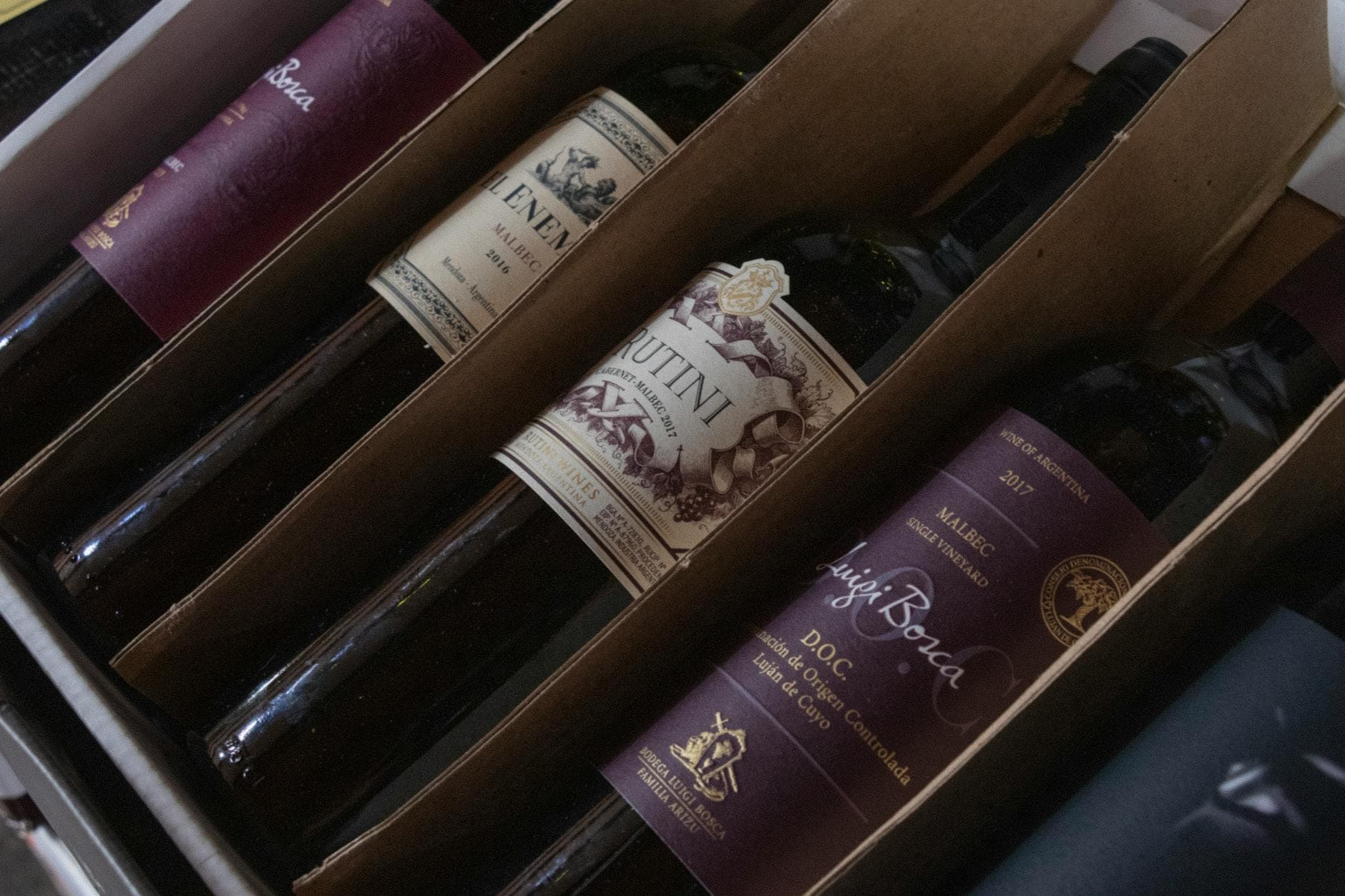
New World wine countries — the United States, Australia, New Zealand, Chile, Argentina, South Africa — put the grape variety front and centre. A Napa Valley Cabernet Sauvignon label will show the producer name, the grape variety, and the appellation (AVA — American Viticultural Area). The vintage year is mandatory on any wine with an appellation claim.
"Estate Bottled" on a US label means the winery grew the grapes and made the wine itself — equivalent to "Mis en Bouteille au Domaine" in France. "Reserve" has no legal definition in the US, Australia, or most New World countries — it's purely a marketing term. "Old Vine" similarly has no legal definition, though in Barossa Valley it's typically used for vines over 35 years, with "Ancestor Vine" for 100+ year old vines.
Australian GI (Geographical Indication) zones range from huge — "South Eastern Australia" covers most of the continent — down to specific sub-regions like "Coonawarra" or "Eden Valley". The more specific the GI, the more regulated the growing conditions. "Single Vineyard" wines, common in New Zealand's Marlborough and Central Otago, indicate a single estate block rather than a blended appellation wine.
Book Your How to Read a Wine Label — European & New World Guide Wine Country Stay
Compare hotels, vineyard B&Bs and rentals across Booking, Airbnb and more in one search.
Compare stays near the vineyardsStay22
Plan Your How to Read a Wine Label — European & New World Guide Trip
Estimate your How to Read a Wine Label — European & New World Guide trip cost
Budget calculator with accommodation, food, wine, and transport estimates.
Try itCompare How to Read a Wine Label — European & New World Guide with other regions
Side-by-side comparison of cost, climate, wine styles, and more.
Try itWhen to visit How to Read a Wine Label — European & New World Guide
Harvest dates, peak season, and the best months for wine travel.
Try itThis page contains affiliate links. We may earn a commission at no extra cost to you.