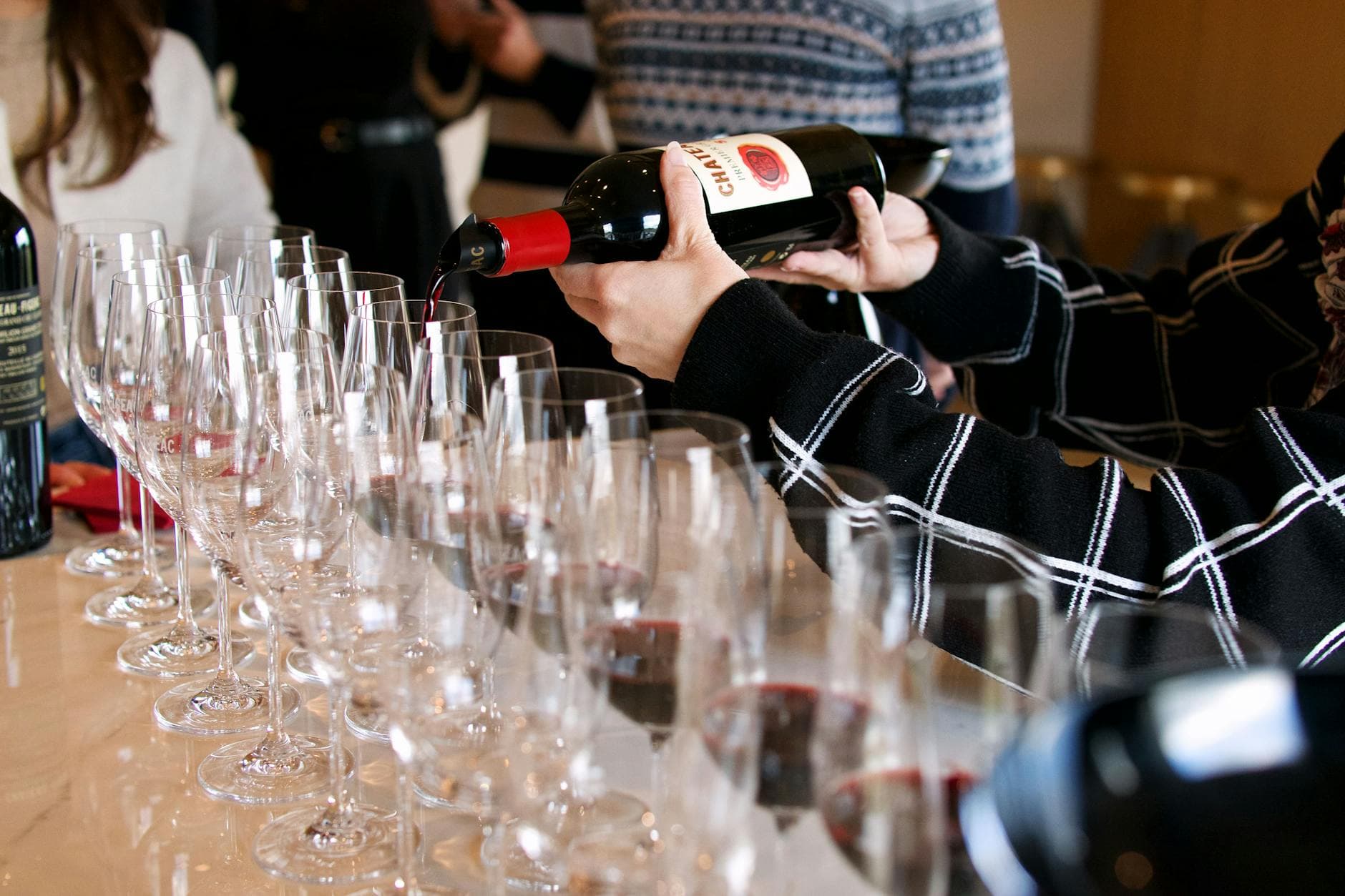
How to Taste Wine Like a Professional
Professional wine tasters follow a specific method that reveals far more than casual sipping. Here's the complete technique, step by step.
Professional wine tasters — sommeliers, critics, buyers, winemakers — apply a systematic method that strips out subjectivity and focuses on observable, describable characteristics. It's not about using intimidating vocabulary. It's about slowing down and paying attention in a structured sequence. Anyone can learn it in a single tasting session.
The WSET Systematic Approach to Tasting

The Wine & Spirit Education Trust (WSET), whose courses are taken by hundreds of thousands of wine professionals globally, formalised a systematic approach to tasting (SAT) that has become the industry standard. It covers five dimensions: appearance, nose, palate, conclusions, and quality assessment.
Appearance: What the Glass Tells You Before You Smell Anything
Hold the glass at a 45-degree angle against a white background — a napkin, menu, or white wall. Look at three things: intensity (is the colour deep and opaque or pale and translucent?), colour (what exact hue?), and clarity (is it bright and clear, or cloudy?).
Colour gives real information. White wines deepen in colour as they age — a very pale lemon-green suggests a young, crisp wine; deep golden amber suggests either significant age or oak treatment or botrytis. Red wines lose colour with age — a young Syrah is dense purple-black; an old Pinot Noir may be translucent brick-orange at the rim. "Legs" (the droplets that run down the glass after swirling) indicate alcohol and glycerol content, not quality.
Nose: The Most Information-Dense Phase

The nose accounts for roughly 80% of what we perceive as flavour. Start with a brief first impression before swirling — this captures the most volatile compounds. Then swirl for 10 seconds and nose again. You'll often get completely different information.
Smell in two stages. First sniff: broad categories (fruit? floral? earthy? oaky?). Second sniff: specific descriptors. Work from the lightest compounds (fresh fruit, flowers) down to heavier ones (earth, oak, animal). A useful mental shorthand is to ask: primary (fruit, flowers — the grape itself), secondary (yeast-related — bread, biscuit, yoghurt from fermentation), or tertiary (developed — leather, tobacco, truffle, petrol from aging).
Two characteristics to actively note: condition (is the wine clean and sound, or are there faults like vinegar, wet cardboard, or nail polish?) and development (youthful primary fruit, or aged tertiary complexity?).
Palate: The Structural Analysis
Take a generous sip — enough to coat your entire mouth. The structural elements of a wine are acid, tannin, alcohol, and sweetness. These are the scaffolding. Flavour compounds are the decoration on the scaffolding.
Acidity: How much does your mouth water? High acidity makes you salivate immediately. Low acidity leaves the wine feeling flat or "flabby." Acidity is a preservative — high-acid wines age longer. Riesling and Champagne are benchmarks for high acidity. Viognier and Grenache Blanc are examples of lower acidity.
Tannins (reds only): Tannins come from grape skins, seeds, and oak. They create the drying, grippy sensation on your gums and cheeks. High tannin: young Barolo, Cabernet Sauvignon, Nebbiolo. Low tannin: Pinot Noir, Gamay. Tannin softens with age, which is why old Barolos that were astringent in youth become silky.
Alcohol: The warming sensation in your throat and chest. Check whether it's "in balance" — does it integrate with the other elements, or does it feel hot and aggressive? Alcohol above 15% can dominate thin wines but can integrate beautifully in a rich, concentrated Barossa Shiraz.
Body: The texture and weight of the wine in your mouth. Light-bodied (like water), medium-bodied (like semi-skimmed milk), or full-bodied (like cream). Body correlates with alcohol and extract.
How to Spit Politely

Spitting is not optional if you're visiting multiple wineries. Each swallowed mouthful of wine contains meaningful alcohol — two or three flights in, your palate is compromised and you're legally unfit to drive.
The technique: take the sip, assess, then purse your lips and project firmly into the spittoon. Avoid dribbling (tilt the spittoon slightly toward you first, so you have a larger target area). If there's no spittoon visible, ask — it will be provided. Experienced tasting room staff don't judge. They'd rather you spit than drive drunk out of their car park.
Writing a Tasting Note
A useful tasting note covers: colour + intensity, nose aromas (three to five specific descriptors), palate structure (acidity, tannins, body, finish length), and a one-sentence quality or value assessment. "Deep ruby, aromas of blackcurrant, cedar, and dark chocolate, medium-high tannins, long mineral finish, excellent" is a complete note. You don't need paragraph-long poetry.
Keep a tasting notebook — physical or digital (Vivino and Delectable are popular apps). Even rough notes made immediately after tasting are invaluable when you're standing in a wine shop six months later trying to remember whether you preferred the Péby Faugères to the Angélus.
Book Your How to Taste Wine Like a Professional Wine Country Stay
Compare hotels, vineyard B&Bs and rentals across Booking, Airbnb and more in one search.
Compare stays near the vineyardsStay22
Plan Your How to Taste Wine Like a Professional Trip
Estimate your How to Taste Wine Like a Professional trip cost
Budget calculator with accommodation, food, wine, and transport estimates.
Try itCompare How to Taste Wine Like a Professional with other regions
Side-by-side comparison of cost, climate, wine styles, and more.
Try itWhen to visit How to Taste Wine Like a Professional
Harvest dates, peak season, and the best months for wine travel.
Try itThis page contains affiliate links. We may earn a commission at no extra cost to you.