Alsace Weekend Wine Itinerary (2026) — 2 Days from Strasbourg or Basel
Strasbourg or Basel weekend escape — Riquewihr, Kaysersberg, Hugel walk-in tasting, and the Brand Grand Cru at Turckheim.
Last reviewed May 2026
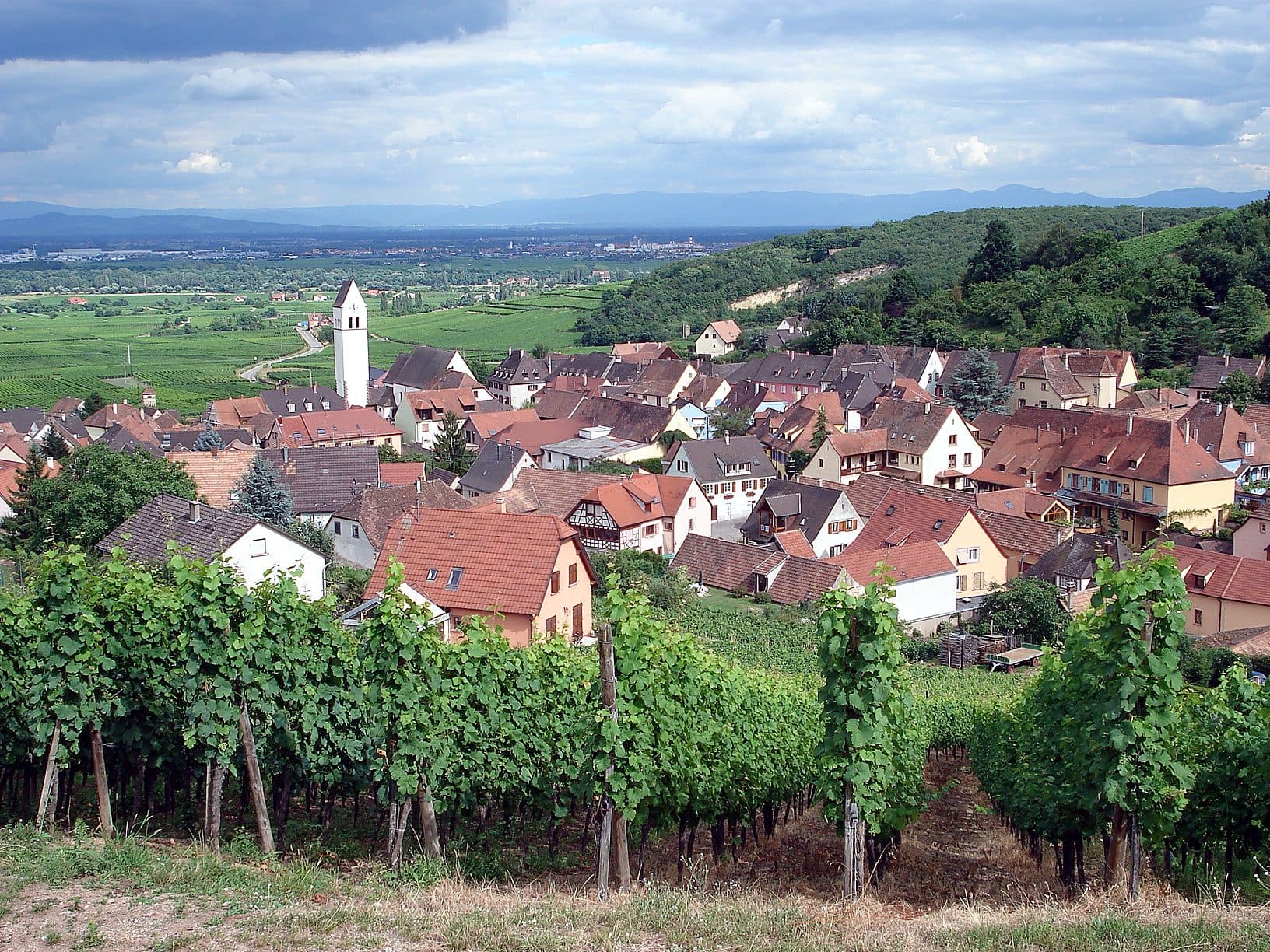
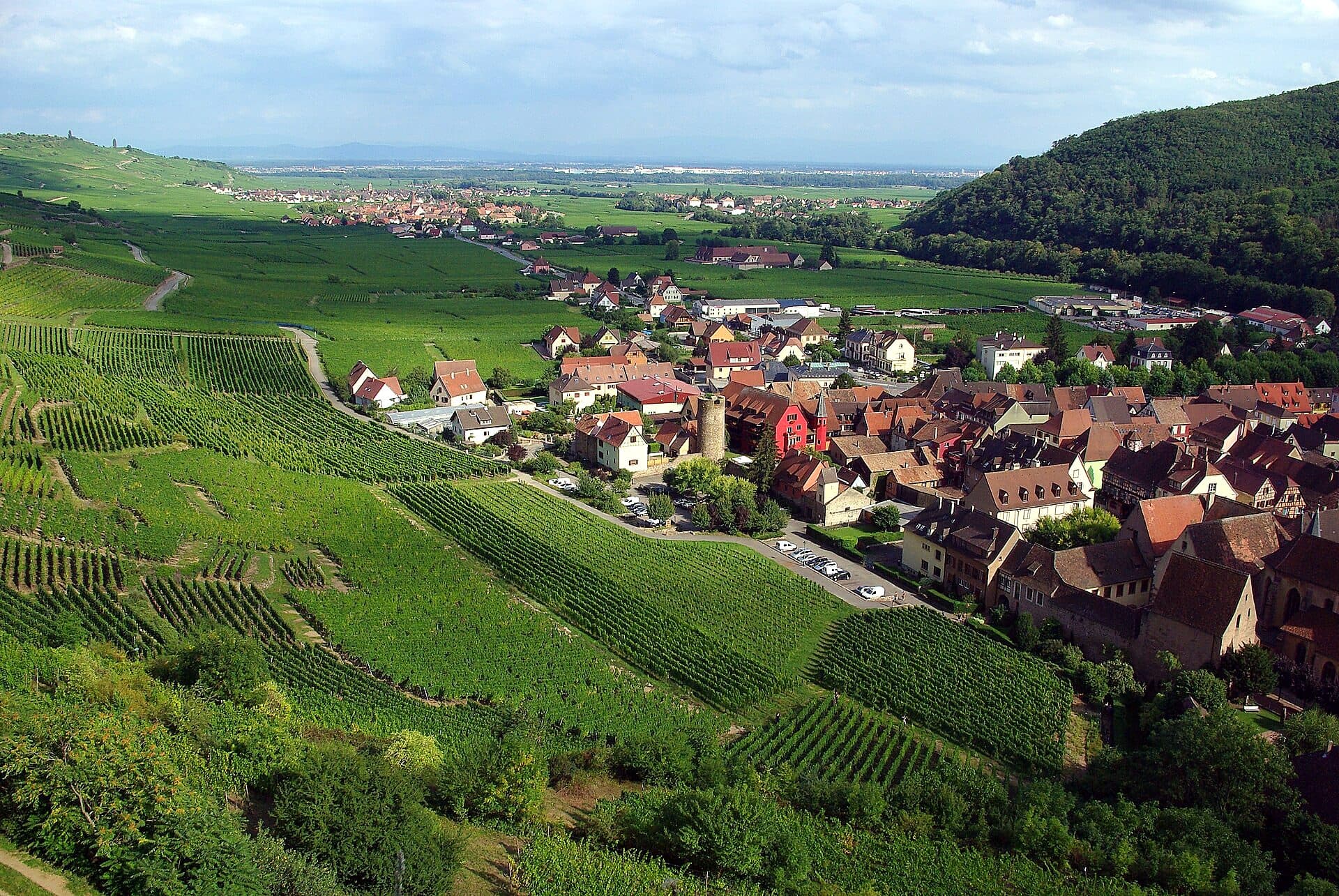
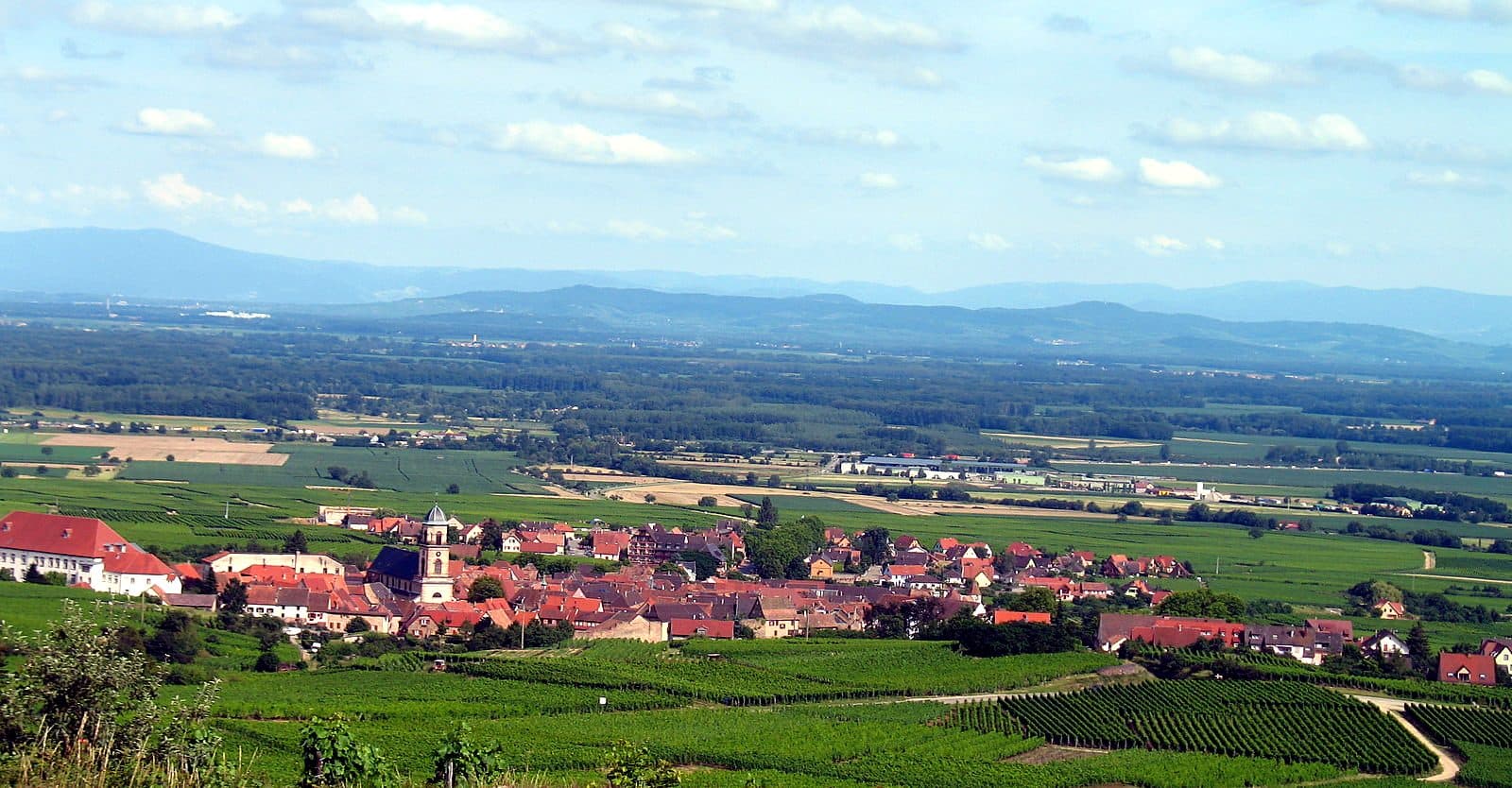
Alsace is one of Europe's most accessible wine weekends — 40 minutes from Basel EuroAirport, 50 minutes by road from Strasbourg, and within two hours of Stuttgart, Frankfurt, and Zurich. The core of the Route des Vins between Riquewihr and Turckheim is compact enough that a weekend visitor can cover the most celebrated villages, taste at one or two serious estates, and understand the main Alsace grape varieties without needing to drive more than 30 kilometres from base. This itinerary anchors both nights in Riquewihr or Kaysersberg — two of the most intact medieval wine villages in France and the natural focal points of any short Alsace trip. The Hugel cellar in Riquewihr is open for walk-in visitors without an appointment, making it the practical anchor for Day 1. Domaine Weinbach in Kaysersberg and Zind-Humbrecht in Turckheim both require appointments; if secured, they transform a good weekend into an excellent one. Budget roughly €180–€280 per person per day for a village hotel, cellar door tastings, and regional meals.
- Length
- Weekend (2 days)
- Best for
- Strasbourg or Basel weekend escape into Alsace wine villages
- Cost estimate
- From €180–€280 per person per day (village hotel, 2 cellar door visits, regional meals)
- Sub-regions
- Riquewihr · Schoenenbourg Grand Cru · Kaysersberg · Clos des Capucins · Turckheim · Brand Grand Cru · Eguisheim
Deliberately skipping: Northern Alsace (Ribeauvillé, Bergheim, Barr, Andlau), Southern route (Rouffach, Thann, Rangen Grand Cru), Colmar city centre (day-trip possible from base), Dambach-la-Ville and Bas-Rhin villages. See the longer itineraries if you want to fit these in.
Book ahead
- Domaine Weinbach (Kaysersberg) — email 2–3 weeks ahead via weinbach.com. Appointments are limited; mornings on weekdays are easier to secure than weekends in peak season.
- Zind-Humbrecht (Turckheim) — appointment required via zind-humbrecht.com. If you cannot secure this appointment, the Brand Grand Cru vineyard above Turckheim is walkable from the village and still worth the stop.
- Hugel (Riquewihr) — no appointment needed. The cellar door on rue du Général de Gaulle is open daily (except Sunday mornings out of season); walk in and ask for the full range including any current VT or SGN on offer.
Day 1 — Riquewihr + Kaysersberg
Base: Riquewihr or KaysersbergStrasbourg to Riquewihr: 75 min. Basel EuroAirport to Riquewihr: 45 min. Riquewihr to Kaysersberg: 10 min west.
- Morning
- Drive into Riquewihr in the late morning — from Strasbourg it is 75 minutes south via A35 and D83; from Basel EuroAirport it is 45 minutes north via A35. Park outside the village walls (cars are largely excluded from the old town) and walk the rue du Général de Gaulle from the lower gate to the Dolder tower at the top. The Hugel family cellar is on the main street with a prominent sign; walk in for a tasting of the full range — Classic Riesling, Gewurztraminer, and Pinot Gris at the entry level, through to Jubilee and the rare Vendanges Tardives if you ask. Hugel's reliability and walk-in access make it the correct first tasting on a short Alsace trip.
- Afternoon
- After lunch in Riquewihr (the village has several restaurants on the main street), walk up through the Dolder gate and follow the vineyard track north to see the Schoenenbourg Grand Cru above the town — 20 minutes on foot, with a view across the central route that places the geography clearly. Then drive 10 minutes west to Kaysersberg. If the Domaine Weinbach appointment is confirmed, the domaine sits at the village edge behind the walled Clos des Capucins — the former Capuchin monastery enclosure is one of Alsace's most distinctive wine sites, and the Faller family's Riesling and Gewurztraminer are among the most precise bottles the region produces. Without an appointment, Kaysersberg village itself is worth 90 minutes: the fortified bridge over the Weiss, the ruined castle above, the 13th-century church, and the half-timbered streets are in excellent condition.
- Evening
- Return to your base in Riquewihr or stay in Kaysersberg for the night. Both villages have several restaurants serving the regional standard (choucroute garnie, tarte flambée, baeckeoffe) with Alsace wine lists. Book a table in advance during high season (July–August) and the Christmas market period (late November to December).
Day 2 — Turckheim + Eguisheim
Base: Depart from Colmar or via Basel/StrasbourgRiquewihr to Turckheim: 15 min southeast. Turckheim to Eguisheim: 20 min south. Eguisheim to Colmar: 10 min north. Colmar to Basel EuroAirport: 40 min south.
- Morning
- Drive 15 minutes southeast from Riquewihr to Turckheim — a smaller village with a well-preserved town gate (the Porte de France) that most Route des Vins visitors skip in favour of the more photographed centres further north. Zind-Humbrecht's cellar is at the base of the Brand Grand Cru; if you have an appointment, Olivier Humbrecht MW offers the most detailed terroir explanation you will encounter anywhere on the Route des Vins, with wines to match. Without an appointment, park in the village and walk up the vineyard road to the Brand Grand Cru — the granite soils and steep gradient are visible from the path, and the view back over Turckheim toward Colmar is the best landscape perspective available without driving to the Vosges ridge above.
- Afternoon
- Drive 20 minutes south from Turckheim to Eguisheim — the circular medieval village voted France's favourite in 2013 and one of the clearest examples of how Alsace wine villages are built literally inside their vineyards. Walk the inner ring (10 minutes, no map needed — it's a circle), visit the Léon Beyer cellar in the village centre (open without appointment; the family has made wine here since 1580 and the Riesling is classically structured in the Alsace dry style), and look up at the Grand Cru Eichberg and Pfersigberg surrounding the village on three sides. From Eguisheim, Colmar is 10 minutes north — a practical stop for lunch or onward departure, with a train to Strasbourg every 30 minutes from Colmar station.
- Evening
- Depart from Colmar (10 min from Eguisheim) — train to Strasbourg (30 min), drive to Basel EuroAirport (40 min south), or continue to any onward destination. If time allows before departure, the Petite Venise quarter of Colmar old town is a 15-minute walk from Colmar station and worth the stop.
Frequently asked
Is this a viable day trip from Strasbourg or does it need a full weekend?
Riquewihr alone is a viable day trip from Strasbourg — 75 minutes each way, with Hugel's walk-in tasting and the village on foot filling a comfortable five to six hours. But the day-trip format means rushing, and the point of Alsace wine country is not to rush. A one-night stay in Riquewihr or Kaysersberg — waking up inside a 16th-century wine village with the vineyards starting at the garden wall — is one of the most straightforward upgrades available in French wine tourism. The quality of the village hotels has improved noticeably in recent years; rooms at La Couronne in Riquewihr or the Chambard in Kaysersberg are not budget options but are worth the upgrade if the trip is a treat rather than a quick reconnaissance.
Can I cycle between the villages on a weekend trip?
Yes, and it is a genuinely good option for the central section covered here. Riquewihr to Kaysersberg is about 10 kilometres with a slight uphill approach to Kaysersberg; Riquewihr to Turckheim is about 12 kilometres mostly flat; Turckheim to Eguisheim is about 10 kilometres. A full loop — Riquewihr → Kaysersberg → Turckheim → Eguisheim → back to Riquewihr via Colmar — is about 40 kilometres and achievable in a day without being exhausted. E-bikes can be rented in Colmar and Riquewihr and are strongly recommended for the Kaysersberg approach. The Route du Vin cycling path runs parallel to the main road through this section; it is well signposted and separated from traffic for most of the distance.
What Alsace wine should I buy to take home from a weekend trip?
The wines that are hardest to find outside France and most worth the cellar-door purchase are Vendanges Tardives and Sélection de Grains Nobles (VT and SGN) — the late-harvest and noble-rot dessert wines that are only made in exceptional years and are often not exported at all. Hugel's current VT Riesling or Gewurztraminer is the most accessible way to acquire one at the cellar door. For dry wines that travel well, a Riesling Grand Cru from any of the estates on this itinerary will age 10–20 years; current drinking vintages are 2018, 2017, and 2015. Crémant d'Alsace (the regional sparkling wine, made by méthode traditionnelle) is widely available, affordable, and underrated — buy a case for the price of two bottles of Champagne.
What are the Christmas markets like in these villages?
The Alsace Christmas markets are legitimately exceptional — not just a tourist marketing claim. Riquewihr, Kaysersberg, and Eguisheim all run their own village markets from late November through Christmas Eve, with the scale appropriate to each village rather than imported wholesale. Kaysersberg's market is generally rated the most atmospheric — small, in the medieval main street, with mulled Pinot Gris (Glühwein on the German pattern but with Alsace grapes) rather than generic vin chaud. Riquewihr's is larger and more commercial but still within a medieval village context that makes it feel earned. The trade-offs are cold temperatures (0–5°C, frost likely), shorter daylight hours, and accommodation that fills much faster than summer. Book 6–8 weeks ahead for a December weekend in any of these three villages.
Want to customise this itinerary?
Use the trip planner to mix-and-match days, or read the full Alsace guide.
New Guides, Straight to Your Inbox
Get notified when we publish new wine travel guides — region deep-dives, hidden gems, and planning tools.
No spam. Unsubscribe anytime. We respect your privacy.
This page contains affiliate links. We may earn a commission at no extra cost to you.