10 Days in Portugal Wine Country — Douro, Alentejo, Vinho Verde
Portugal packs remarkable wine diversity into a small country. This 10-day itinerary covers its three most distinctive regions — all different in style and scenery.
Portugal is one of the world's most underrated wine destinations. A country smaller than the state of Indiana produces over 250 native grape varieties found nowhere else on earth — including Touriga Nacional, Alvarinho, Arinto, and Baga. Wine tourism infrastructure has improved dramatically in the last decade: Douro quinta (estate) stays, Alentejo wine hotels, and eco-lodges in the Vinho Verde region have made self-guided touring genuinely comfortable.
This 10-day itinerary focuses on three distinct terroirs: the steep, schist terraces of the Douro Valley (and the Port lodges of Gaia), the sun-baked granite-and-clay plains of Alentejo, and the granite-soiled, pergola-trained vineyards of Vinho Verde. Budget: €100/day mid-range, accommodation €50–90/night.
Days 1–3 — Porto and the Douro Valley

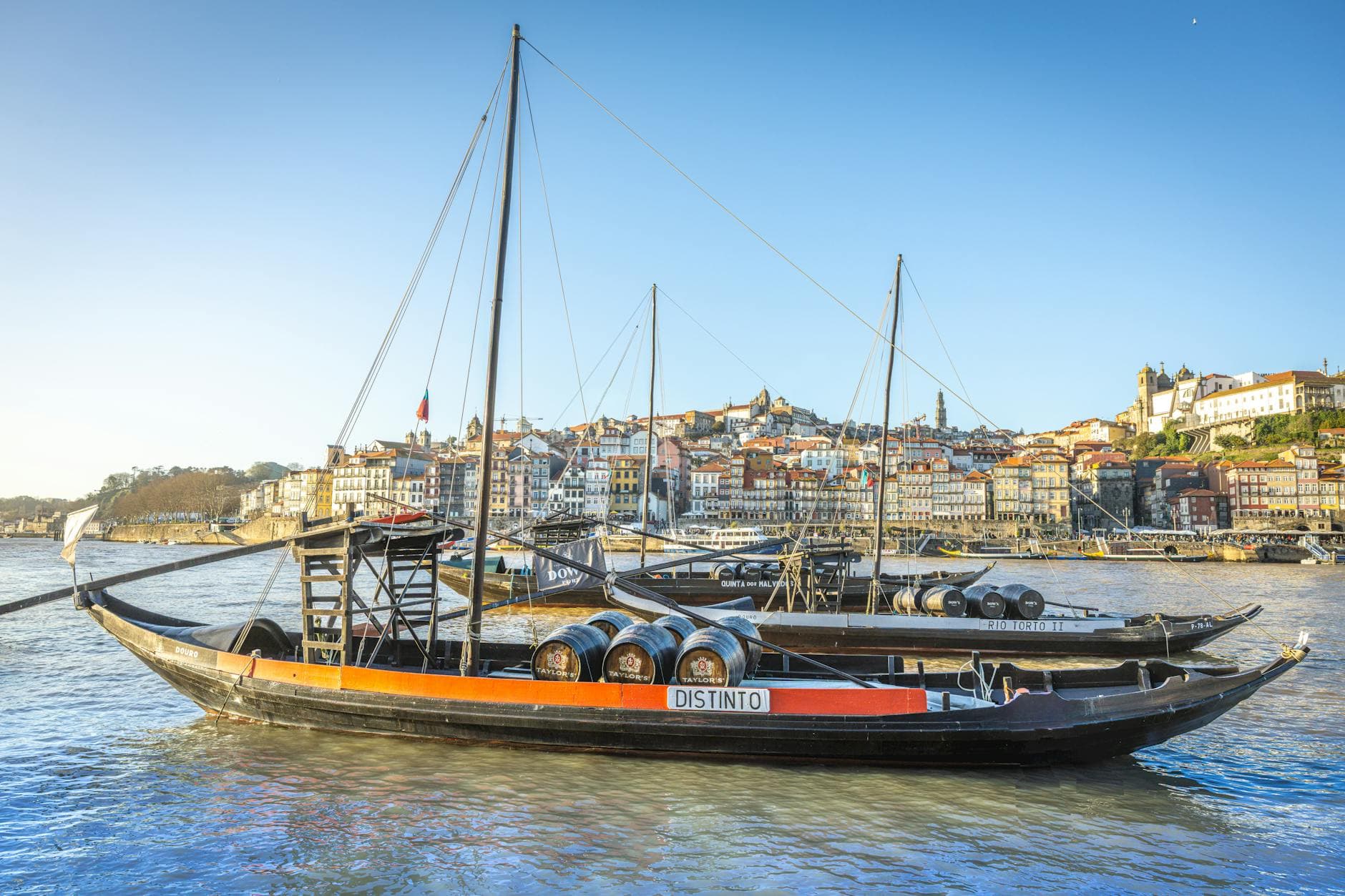
Fly into Porto (OPO) — one of Europe's most charming wine cities and a UNESCO World Heritage site. The historic Ribeira waterfront, lined with wine lodges (called "lodges" rather than bodegas) across the Gaia river bank, is one of the world's great wine tourism settings. Book at least one Port lodge tour on Day 1: Ramos Pinto on Avenida Ramos Pinto, Gaia, offers an excellent guided museum and tasting (€12–15) that explains Port's history and the LBV, Tawny, and Vintage classification system.
Day 2: Drive east along the N108/IP4 towards the Douro Valley — 2 hours to the heart of the Upper Douro. The viewpoint at Casal de Loivos above Pinhão village is one of Portugal's most photographed landscapes: an amphitheatre of terraced schist vineyards falling 400 metres to the Douro river below. Quinta do Crasto near Régua is one of the most visitor-friendly quintas in the valley — their tasting (€15–25) covers dry table wines (the Reserva is exceptional) and a vintage Port. The restaurant terrace overlooking the river is perfect for lunch.
Day 3: Drive deeper into the valley to the Douro Superior. Quinta da Nacional (formerly known as Quinta Nacional) in São João da Pesqueira makes dry Douro reds alongside their Port — the Nacional Reserva is one of the DOC's best examples of restrained, mineral Touriga Nacional. In the afternoon, book a Douro River cruise from Pinhão — various operators run 90-minute cruises through the deepest schist gorges for €15–25 per person.
Days 4–6 — Alentejo: The Cork Plains
Drive or take the train from Porto to Évora (4.5 hours by train via Lisbon, or 4 hours by car on the A1). Évora is the historic capital of the Alentejo region — a walled Roman city with an intact 2nd-century temple in the town centre. It makes an ideal base for three nights.
Alentejo is a hot, flat region of cork oak forests, sunflower fields, and expansive wine estates. The cork oaks are extraordinary — harvested every nine years by hand, the stripped trees turn deep red before re-barking. The wines are powerful and fruit-driven: Trincadeira, Aragonez (Tempranillo), and Alicante Bouschet are the dominant red varieties, producing wines of 14–15% alcohol with plush tannins.
Day 4: Herdade do Esporão near Reguengos de Monsaraz is the showpiece estate of the Alentejo — 700 hectares of vines, olive groves, and Montado (cork oak forest). Their guided tour (€15–20) is one of the most comprehensive in Portugal, ending with a tasting of the Reserva red and their biodynamic Defesa range. The on-site restaurant uses estate produce and has an outstanding wine list.
Day 5: Drive east to Herdade do Mouchão near Mourão — one of the oldest continuously operating estates in Portugal, established 1901 by an Anglo-Portuguese family. The Don Luís and Tonel wines are made from centenarian vines and aged in ancient 600-litre toneis (large casks). This is the traditional Alentejo style before international varieties arrived.
Day 6: Cortes de Cima near Vidigueira, founded by Danish-American couple Hans and Carrie Jørgensen, makes one of the Alentejo's most ambitious wines — the Chaminé is the entry level, the Cortes de Cima is the flagship Syrah-dominated blend. Their organic and biodynamic approach is unusual in a region that often relies on irrigation. Evening return to Évora for dinner at Botequim da Mouraria — a six-table wine bar that seats 20 and has one of Alentejo's best curated lists.
Days 7–9 — Vinho Verde: Minho and the Green Wine Country

Drive north from Évora to the Minho region (6 hours via Lisbon, or fly Lisbon–Porto and drive 1 hour north to the Vinho Verde zone). The landscape transformation is total: from the baked Alentejo flatlands to the lush, Atlantic-drenched hills of the Minho valley, where granite walls divide smallholdings and vines are trained high on pergolas to allow vegetables to grow underneath.
Vinho Verde is named for its fresh, youthful character rather than its colour — the region produces red, white, and rosé. The dominant white variety is Alvarinho (known as Albariño in Spain), which produces the most complex and age-worthy wines of the DO. The base Vinho Verde whites — light, slightly sparkling, with brisk acidity — are best consumed young and cold with seafood.
Day 7: Arrive in the Monção and Melgaço sub-zone, the heartland of Alvarinho production. Palácio da Brejoeira is the region's most prestigious estate — a neoclassical palace surrounded by Alvarinho vines that has been producing wine since the 1780s. The Alvarinho is Portugal's most famous expression of the variety and sells out quickly each vintage. Book a guided visit (€20–30) well in advance.
Day 8: Quinta de Soalheiro has been instrumental in the modern Alvarinho revival — their single-vineyard expressions and the Primeiras Vinhas old vine Alvarinho are benchmark wines. The quinta is in Melgaço, the northernmost corner of Portugal, across the Minho river from Spain. Anselmo Mendes is the most celebrated independent winemaker in the region — his Muros Antigos and Contacto Alvarinho wines show the range from early-drinking to serious barrel-aged complexity.
Day 9: Explore the broader Vinho Verde zone. Drive south to Amarante for Quinta da Aveleda — one of the region's largest estates and the producer of the ubiquitous Casal Garcia brand, but also of very serious single-quinta Alvarinho and Loureiro in their premium range. The estate gardens are a Portuguese heritage site. Return to Porto for the final night.
Day 10 — Porto: Final Day and Departure
Spend the morning in Vila Nova de Gaia for a second lodge experience — Niepoort (independent and experimental), Graham's (the most tourist-friendly, great views from the Rua do Agro terrace), or the World of Wine museum complex (WOW) which has 10 separate museums covering Port wine, Portuguese culture, and gastronomy within one campus (€12–25 per museum). Fly home from Porto in the afternoon or evening.
Budget Breakdown (10 Days, Mid-Range)

- Accommodation: €50–90/night (€500–900 total)
- Wine tastings: €10–25 per visit (€200–500 total)
- Meals: €25–50/day (€250–500 total)
- Car rental + fuel: €400–700 for 10 days
- Train Porto–Évora: €35–60
- Total: approx €1,385–2,660 per person
Practical Tips
- Portugal is the best-value wine destination in Western Europe. Budget travellers can do excellently here.
- Most quintas require advance booking for private visits but have walk-in cellar doors.
- Drive on the right — same as most of Europe. Tolls are extensive on motorways; carry a credit card.
- Port wine: buy single-quinta Vintage or LBV directly from quintas for better prices than export markets.
- Full regional guides: Douro | Alentejo | Vinho Verde
Wines of 10 Days in Portugal Wine Country — Douro, Alentejo, Vinho Verde
Key grape varieties and wine styles produced in the region
Primary Grape Varieties
Wine Styles
Ready to visit Portugal?
Build your personalised day-by-day itinerary — choose your travel style and trip length, get accommodation and tour picks per day, and email it to yourself to take along.
Upcoming Wine Festivals in Portugal
See all festivalsHidden Gems Nearby
Discover more hidden gemsHerdade do Esporão
Alentejo, Portugal
A complete wine tourism destination in the Alentejo with a restaurant, museum, and amphora wines — yet almost unknown outside Portugal.
Touriga Nacional · Aragonez · Antão Vaz
Quinta do Vallado
Douro Valley, Portugal
A 300-year-old Douro estate with a stunning modern wine hotel, making table wines that rival the best in Portugal — yet overshadowed by the port houses.
Touriga Nacional · Tinta Roriz · Port
Quinta dos Roques
Dão, Portugal
A Dão pioneer making some of Portugal's most elegant reds in a region that's a fraction of the price and crowds of the Douro.
Touriga Nacional · Encruzado · Tinta Roriz
Book Your Portugal Wine Country Stay
Compare hotels, vineyard B&Bs and rentals across Booking, Airbnb and more in one search.
Compare stays near the vineyardsStay22
Plan Your 10 Days in Portugal Wine Country — Douro, Alentejo, Vinho Verde Trip
Estimate your 10 Days in Portugal Wine Country — Douro, Alentejo, Vinho Verde trip cost
Budget calculator with accommodation, food, wine, and transport estimates.
Try itCompare 10 Days in Portugal Wine Country — Douro, Alentejo, Vinho Verde with other regions
Side-by-side comparison of cost, climate, wine styles, and more.
Try itWhen to visit 10 Days in Portugal Wine Country — Douro, Alentejo, Vinho Verde
Harvest dates, peak season, and the best months for wine travel.
Try itThis page contains affiliate links. We may earn a commission at no extra cost to you.