 Photo: Marek Ślusarczyk (Tupungato) Photo portfolio / Wikimedia Commons
Douro Valley Wine Region Guide
Plan your Douro Valley wine trip — tastings from €15, river cruises €70–130, harvest grape stomping in September, 90 min from Porto Airport (OPO).
Key takeaways
- Three distinct sub-zones shape everything: Baixo Corgo (cooler, lighter wines, western end near Régua), Cima Corgo (the prestige heartland around Pinhão — greatest Ports and unfortified reds), and Douro Superior (hot and arid, stretching east toward Spain, historically where Barca Velha was made). A 3-day visit works best based in or near Pinhão, which sits at the centre of the best quintas.
- Port is made in the Douro but aged across the river in Vila Nova de Gaia — the suburb of Porto where the big lodge houses (Graham's, Sandeman, Taylors, Ramos Pinto) mature their stocks in 60,000-litre wooden vats. Most lodge visits need no car and take 45–90 minutes. The wine region itself requires a car; the Douro train from Porto reaches Régua and Pinhão but stops at towns, not quintas.
- The Linha do Douro rail line from Porto to Tua (via Régua and Pinhão) is both a practical connection and one of Europe's most scenic train journeys. The section from Régua to Tua, cutting through steep gorge walls above the river, is particularly dramatic. The train does not reach most quintas — combine train for the scenery with a hire car for the tastings.
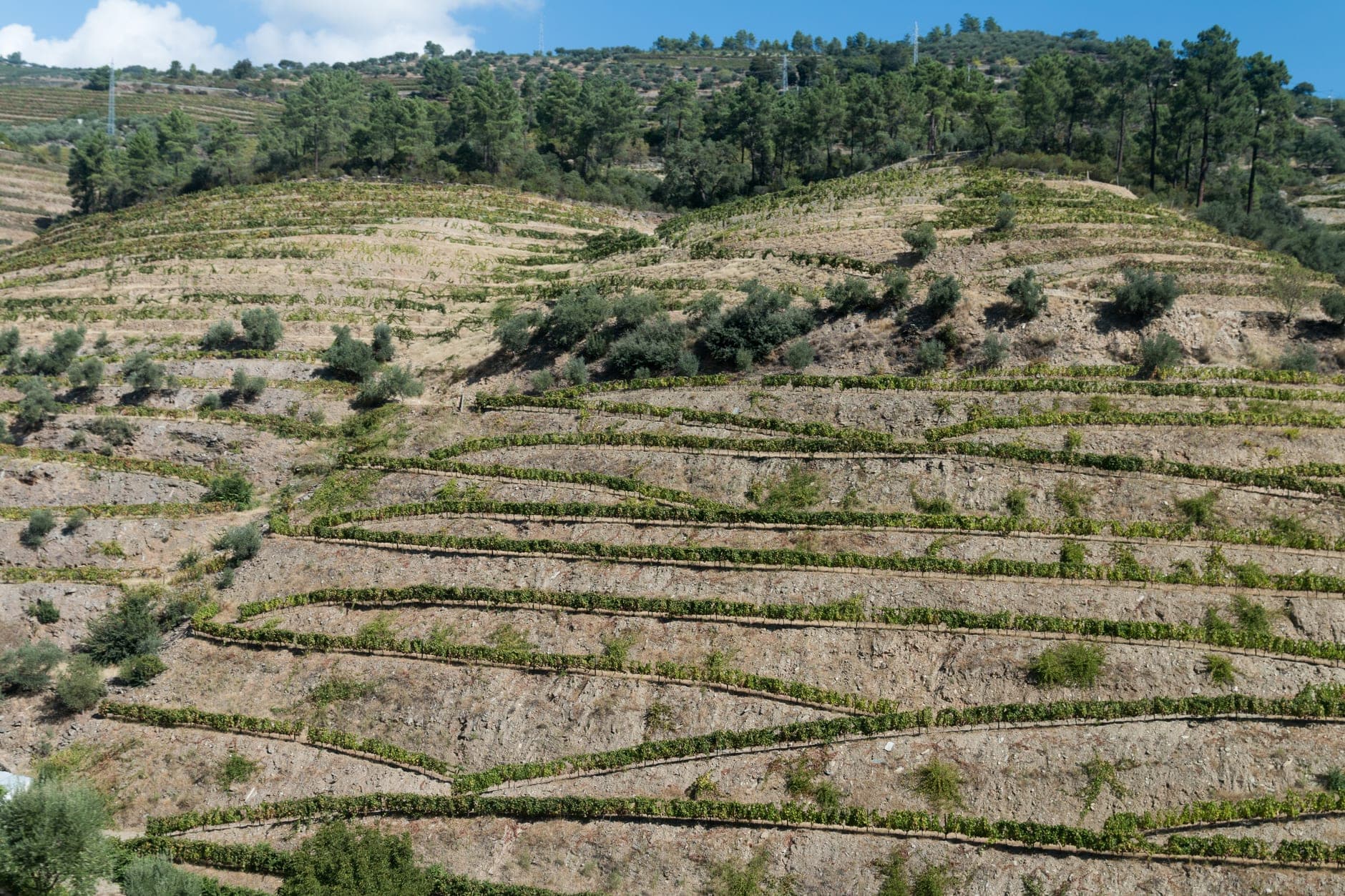
- Harvest (vindima) runs mid-September to mid-October and is the most spectacular time to be in the valley. Pickers work near-vertical schist terraces by hand — mechanisation is impossible on most of the Douro's slopes — and many quintas welcome visitors to watch and occasionally join. Accommodation in the valley books out weeks ahead during vindima; reserve early if visiting in this window.
Where to Stay in Douro Valley
Make the most of your Douro Valley wine trip by staying in the heart of wine country. From luxurious vineyard estates to cozy B&Bs, find the perfect accommodation near world-class wineries.
Top areas to stay
- Pinhão€€-€€€
Surrounded by famous quintas, stunning tile-decorated train station
- Peso da Régua€-€€
Douro Museum, riverside town, good transport links
- Vila Nova de Gaia€€
Port wine lodges across from Porto, easy day trips up the valley
Quinta stays often include wine tastings — check what's included when booking
We may earn a commission
Stay22
Compare Booking, Airbnb, Hotels.com and more in one search
Editorial pick
Best chateaux to visit in Douro Valley — top 10 picks 2026
Read the listicle →
Sample itinerary
3 days in Douro Valley — full day-by-day plan
Read the itinerary →
Vineyard hotels
Vineyard hotels in Douro Valley — 10 estates where you can stay
Read the guide →
Plan your visit: Plan your Douro Valley trip — free printable planner with quinta visits and river logistics.
Douro Valley Region Map
Discover Portugal's Wine Paradise
The Douro Valley, a UNESCO World Heritage site, is Portugal's premier wine region. Known for its stunning terraced vineyards and world-class Port wines, this picturesque area offers a blend of rich history, exceptional gastronomy, and unforgettable wine experiences.
Towns and Villages
Explore charming riverside settlements that capture the essence of the Douro:
- Pinhão: The heart of Port wine production, featuring beautiful azulejo-tiled train station
- Peso da Régua: The region's main town, home to the Douro Museum
- Lamego: Known for its baroque Sanctuary of Nossa Senhora dos Remédios
- Favaios: Famous for its sweet Moscatel wine
Wine Producers
Visit these renowned wineries for tastings and tours:
- Quinta do Crasto: Offers panoramic views and award-winning wines

- Quinta do Noval: Known for its rare "Nacional" vintage port
- Quinta da Roêda: Croft's flagship property with excellent visitor facilities
- Quinta das Carvalhas: One of the region's largest estates with diverse wine experiences
Smaller Producers
Don't miss these boutique wineries for a more intimate experience:
- Quinta do Pôpa: Family-run estate offering personalized tours
- Quinta de la Rosa: Produces both Port and table wines, with on-site accommodation
Accommodations
Stay at these wine-themed hotels for an immersive experience:
- Six Senses Douro Valley: Luxury resort with an extensive wine program
- The Vintage House Hotel: Riverside property in Pinhão with a wine academy
- Quinta Nova Luxury Winery House: Boutique hotel surrounded by vineyards
Budget-Friendly Options
Daily Costs — Douro Valley
Full calculator →💡 Take the historic train from Porto along the river — scenic and cheap
For more affordable stays, consider:
- Quinta de Marrocos: Family-run guesthouse with wine tastings
- Casa do Visconde de Chanceleiros: Charming country house with vineyard views
Dining
Savor local cuisine paired with Douro wines at these restaurants:
- DOC: Michelin-starred restaurant by chef Rui Paula, offering riverside dining
- Castas e Pratos: Modern Portuguese cuisine in a converted railway warehouse
- Rabelo Restaurant: Traditional dishes with panoramic views at Quinta do Crasto
- Terraçu's: Rustic regional fare in Pinhão
Local Specialties
Try these regional dishes:
- Bacalhau à Lagareiro: Roasted cod with olive oil and garlic
- Cabrito Assado: Roasted kid goat
- Bôla de Lamego: Meat-filled bread
Wine Shops & Bars
Explore these establishments to taste and purchase local wines:
- Quevedo Port Wine Shop (Peso da Régua): Offers tastings and a wide selection of Ports
- Garrafeira do Peso (Peso da Régua): Well-stocked wine shop with knowledgeable staff
- Wine Quay Bar (Porto): Riverside bar with an extensive Douro wine list
- Vinologia (Porto): Intimate wine bar specializing in small-production Ports
Tasting Tips
Book tastings in advance during peak season. Many shops offer shipping services for purchases.
Other Shops
Find local products and souvenirs at these stores:
- Loja Quinta do Bomfim (Pinhão): Sells regional specialties and wine-related items
- A Loja da Quinta (Pinhão): Offers artisanal products from Quinta de la Rosa
- Mercado Municipal de Peso da Régua: Local market for fresh produce and regional products
Local Crafts
Look for handmade linens, ceramics, and cork products as unique souvenirs.
Attractions
Visit these sites to enhance your Douro Valley experience:
- Douro Museum (Peso da Régua): Learn about the region's wine history and culture
- São Leonardo da Galafura Viewpoint: Offers breathtaking views of the valley
- Mateus Palace (Vila Real): Baroque mansion with beautiful gardens
- Douro River Cruises: Take a boat trip to see the vineyards from the water
Outdoor Activities
Enjoy hiking, kayaking, or cycling through the vineyards for an active wine country experience.
Events
Plan your visit around these wine-related events:
- Festa das Vindimas (September): Harvest celebrations in various towns
- Porto Wine Fest (June): Large wine tasting event in Porto
- Douro Film Harvest (September): Film festival combining cinema and wine
- São João Festival (June): Porto's biggest street party, featuring local wine and food
Seasonal Activities
Monthly Climate — Douro Valley
Full explorer →Participate in grape stomping during harvest season (September-October) for a hands-on wine experience.
Appellations
Understand the region's wine classifications:
- Porto DOC: Fortified wines, including Ruby, Tawny, and Vintage Ports
- Douro DOC: Table wines, both red and white
- Moscatel do Douro DOC: Sweet fortified Muscat wines
Sub-Regions
The Douro Valley is divided into three sub-regions: Baixo Corgo, Cima Corgo, and Douro Superior, each with distinct characteristics.
Grape Varieties
Vine Cycle — Douro Valley
Full calendar →The Douro in harvest is one of wine's great spectacles. UNESCO-listed terraced vineyards turn golden, and traditional foot-treading in granite lagares still happens at premium quintas. River cruises run during harvest season.
The Douro Valley is home to numerous indigenous grape varieties. Touriga Nacional and Touriga Franca are the region's star red grapes, known for their rich flavors and aging potential.
Other important red varieties include:
- Tinta Roriz (Tempranillo)
- Tinta Barroca
- Tinto Cão
For white wines, look out for:
- Viosinho
- Rabigato
- Gouveio
Main Wine Styles
The Douro Valley is renowned for its Port wines, ranging from Ruby to Tawny and Vintage. Dry red and white table wines have gained prominence in recent years.
Key wine styles include:

- Port: Ruby, Tawny, Late Bottled Vintage (LBV), Vintage
- Douro DOC reds: Full-bodied, intense wines
- Douro DOC whites: Fresh, mineral-driven wines
Food Specialties
Bacalhau (salt cod) dishes are ubiquitous in the region. Try the local Cozido à Portuguesa, a hearty meat and vegetable stew.
Other local specialties:
- Alheira (smoked sausage)
- Bôla de Lamego (meat-filled bread)
- Queijo da Serra (sheep's milk cheese)
Drives & Walks
The N222 route from Pinhão to Régua offers stunning vineyard views. For hiking enthusiasts, the Paiva Walkways provide a thrilling riverside trail.
Recommended drives and walks:
- Pinhão to Provesende scenic drive
- São Leonardo da Galafura viewpoint hike
- Foz Côa Archaeological Park trails
Itineraries
3-Day Wine Lovers' Tour
Day 1: Explore Porto and visit Port wine lodges in Vila Nova de Gaia.

Day 2: Drive to Pinhão, visit Quinta do Bomfim, and take a river cruise.
Day 3: Tour Quinta Nova and enjoy a wine tasting lunch at DOC Restaurant.
5-Day Douro Valley Adventure
Day 1-2: Porto city and Port wine experience.
Day 3-4: Explore Peso da Régua and Pinhão, visit wineries.
Day 5: Day trip to the historic town of Lamego.
Getting There & Around
The Porto Airport serves as the main gateway to the Douro Valley. From Porto, you can:
- Drive: Rent a car for flexibility (2-3 hours to Pinhão)
- Train: Scenic route along the Douro River (2.5-3 hours to Pinhão)
- River Cruise: Leisurely journey with stunning views (1-2 days)
Within the region, a rental car offers the most freedom to explore wineries and viewpoints.
Best Time to Visit
September to October is ideal for wine enthusiasts, coinciding with the harvest season.
Consider these seasonal highlights:
- Spring (March-May): Mild weather, blooming vineyards
- Summer (June-August): Warm, dry days perfect for outdoor activities
- Fall (September-November): Harvest festivities, beautiful foliage
- Winter (December-February): Quieter, cooler period for Port tasting
Sustainability Efforts
Many Douro wineries are adopting organic and biodynamic practices. Look for certifications like:
- Symington Family Estates: Mission 2025 sustainability program
- Quinta do Vale Meão: Integrated crop management
- Niepoort: Organic vineyard conversion
Support eco-friendly accommodations like Quinta de La Rosa, which uses solar energy.
Language Tips
While English is widely spoken in tourist areas, learning a few Portuguese phrases can enhance your experience:
- "Obrigado/a" - Thank you (male/female)
- "Por favor" - Please
- "Saúde" - Cheers
- "Vinho tinto/branco" - Red/white wine
Wine terms: "Quinta" means wine estate, "Adega" refers to a winery or cellar.
Further Resources
Enhance your Douro Valley wine knowledge with these resources:
- Instituto dos Vinhos do Douro e do Porto - Official regulatory body
- Taylor's Port Wine School - Online Port education
- Visit Portugal: Douro - Tourism information
Download the Douro Wine Tourism app for on-the-go winery information and booking.
The Three Douro Sub-Zones: Where to Base Your Trip
The Douro Valley divides into three distinct sub-zones, each with its own climate, soil character, and wine personality. Understanding the difference matters not just for what you drink, but where you base yourself — the journey between them takes over an hour by car along some of Europe's most spectacular vineyard roads.
Baixo Corgo — The Western Gateway
The westernmost sub-zone is the greenest and coolest, receiving more Atlantic rainfall than the other two. Wines from Baixo Corgo tend toward lighter, more aromatic profiles — less concentrated than the classic Douro style, with higher acidity and earlier-drinking character. This is where you find the town of Peso da Régua, the region's administrative hub and the host of the Festa das Vindimas harvest festival each September. It's also the most accessible zone from Porto, making it the obvious first stop on any Douro trip. If you only have a day, base yourself here.
Cima Corgo — The Heart of the Douro
Centred on Pinhão — the small river town with the famous azulejo-tiled train station — Cima Corgo is where the Douro's reputation was built. The schist soils here are deep and free-draining, forcing vines to drive roots metres into the rock to find moisture. Temperatures swing dramatically between day and night, concentrating flavour in ways no irrigated vineyard can replicate. The great names cluster here: Quinta do Crasto, Quinta do Noval, Quinta de la Rosa, Niepoort's Quinta do Napoles, and Graham's Quinta dos Malvedos. If you're spending three or more days in the Douro, Pinhão is where you should sleep.
Douro Superior — The Wild East
The easternmost zone, stretching toward the Spanish border, is the driest, most extreme, and least visited. Summer temperatures regularly exceed 40°C. The wines are correspondingly intense — structured, powerful, and built to age for decades. Quinta do Vale Meão, the estate that produces one of Portugal's most sought-after reds (Meandro do Vale Meão retails around €25, the flagship well above €60), sits here. So does Quinta do Crasto's Douro Superior fruit for its flagship wines. Most visitors skip this zone — which is precisely why it's worth the drive. Book 2–4 weeks ahead for Vale Meão; smaller estates like Quinta do Portal welcome visitors with less notice.
Grape Varieties: What You're Actually Drinking
The Douro authorises over 80 grape varieties, but five red grapes do the heavy lifting. Touriga Nacional is the prestige grape — small-berried, intensely perfumed with violets and dark cherry, it provides the aromatic backbone of the region's finest ports and table wines. In still reds, it typically makes up 20–40% of a blend, adding lift and complexity that stops the wines feeling heavy. Expect to pay €15–25 for a serious Touriga Nacional-dominant Douro tinto.
Touriga Franca is the workhorse — more productive than Touriga Nacional, with bold blackberry fruit and smooth tannins. It makes up the largest proportion of most Douro blends, giving body and consistency. Tinta Roriz (the same grape as Tempranillo in Spain) brings savoury, earthy notes and generous fruit, and tends to be harvested first — by early September in warm years. Tinta Barroca, used mostly in port blending, adds sweetness and softness. Tinto Cão is the rare old-timer, barely planted but producing wines of extraordinary finesse when you find it.
White wines from the Douro deserve more attention than they get. Gouveio, Malvasia Fina, and Rabigato produce whites with mineral tension and citrus freshness — the result of those same extreme diurnal temperature swings that concentrate the reds. Niepoort's Redoma Branco and Quinta da Pellada's whites are benchmarks worth seeking at tastings. Pair Douro whites with the region's bacalhau dishes; they're built for it.
Tasting Room Guide: Quintas Worth Your Time
The Douro has strong wine tourism infrastructure, but it is not Napa — you cannot simply drive from tasting room to tasting room without a plan. Many quintas require advance booking, a few require a minimum group size, and the roads between them are steep and winding. More than two tastings in a day is ambitious. More than two glasses while driving is illegal (0.5g/L BAC limit in Portugal — strictly enforced). Consider booking a guided tour if you want to cover more than one quinta.
Grand Estate Tier
Quinta do Crasto (Cima Corgo) is the most visitor-friendly of the major quintas. Tastings start at around €20 for four wines — their reserve tinto and white are the ones to focus on. Book 1–2 weeks ahead in summer; walk-ins occasionally possible in spring. The infinity pool overlooking the Douro (for guests staying in their cottages at around €250/night) is one of the region's great views. Opens daily 10:00–17:00.
Quinta de la Rosa (Pinhão, Cima Corgo) produces both port and table wines and offers three tasting packages from €15 (four wines) to €45 (premium with cheese pairing). They have on-site accommodation from €100/night, making it an excellent base. Book online via their website — in harvest season, all slots fill 3–4 weeks ahead. This is one of the few quintas where you can easily combine a tasting with a riverside walk and a good lunch at their restaurant.
Quinta do Vale Meão (Douro Superior) requires planning but pays off. Tastings are by appointment only, typically 2–4 weeks advance booking, and run €30–50 depending on the format. The estate is remote — 40 minutes east of Pinhão — but the wines, made by Francisco Olazabal Jr., are among Portugal's finest. If you're serious about Douro table wine rather than port, this is the non-negotiable visit.
Mid-Range Family Producers
Quinta do Vallado (Peso da Régua area) is one of the region's better-known walk-in options — open daily 10:00–18:00 with tastings from €20 for four wines. The estate has been in the Ferreira family for over 200 years and produces some of the most consistent Douro reds at their price point (€12–18 retail). Their entry-level Douro tinto at the tasting room is under-priced given the quality. No appointment needed outside harvest season.
Quinta Nova (Cima Corgo) combines a well-run winery with a serious hotel (from €180/night) and restaurant. Tastings run €20–35 depending on which wines you want to include. It's a smoother, more curated experience than the average quinta — which makes it ideal for non-wine partners who want comfort alongside the viticulture. They're reliably open to bookings at 1–2 weeks' notice year-round.
The Under-the-Radar Pick
Luis Seabra Vinhos is what happens when a former Niepoort winemaker decides to make wines purely on his own terms. Tiny production, sourced from old-vine parcels across the Douro and Dão. Tastings are free and by appointment only — email ahead, be flexible with dates, and you'll likely get Luis himself walking you through the wines. The whites, in particular, are among the Douro's most distinctive. This is the visit that wine-literate visitors remember most.
Harvest Season and Grape Stomping: The September Spectacle
From roughly September 5th to October 15th, the Douro undergoes its annual transformation. The terraced vineyards turn gold and amber, temperatures remain high (28–33°C during the day, dropping sharply at night), and the quintas come alive with the organised chaos of harvest. This is the region at its most visceral — the smell of fermenting grapes, the noise of teams working before dawn on near-vertical schist slopes, the singular sight of lagares full of purple must.
The traditional grape treading — foot pressing in granite lagares — survives at premium quintas primarily as an experience for visitors and a way of making small quantities of the finest port. Quinta do Seixo (Sandeman), Quinta da Teta, and Quinta do Crasto are among those that offer lagar treading experiences during harvest. Spots fill quickly: book directly with the quinta 4–6 weeks ahead, not through a tour operator. The festival's public sessions at the Festa das Vindimas do Douro in Peso da Régua (mid-September, free entry) are an alternative, but the quota fills instantly — check the Câmara Municipal de Peso da Régua website for registration.
If you cannot get a lagar slot, harvest season still offers rewards most visitors miss. Walk-in tastings often include barrel samples not yet on the market. Quinta lunches — informal harvest meals for vineyard workers — can sometimes be joined by prior arrangement. River cruises run throughout September with the added spectacle of terraced slopes mid-harvest. The harvest calendar tool on this site shows Touriga Nacional coming in around September 10–October 5, with Tinta Roriz typically finishing earliest, by late September.
Douro River Cruises: The Definitive Way to See the Terraces
No photograph adequately prepares you for the scale of the UNESCO-listed terraced vineyards seen from the river. The schist walls rise 200 metres from the water in places, tier upon tier, with the occasional white quinta building catching the afternoon light. The river itself is wide and slow through the valley — dammed at multiple points — which means cruises are smooth even for those who don't usually enjoy boats.
Day cruises from Porto to Pinhão and back run approximately €70–€130 per person and take 8–10 hours including stops at one or two quintas. These typically depart from the Ribeira waterfront in Porto at 08:00–09:00. If you're already in Pinhão or Régua, shorter sector cruises (2–3 hours, €30–€50) operate from those towns. Multi-day cruises aboard small river vessels — effectively floating hotels — range from €800–€2,500 per person for 3–7 nights and are the premium way to see the valley at leisure, with guided quinta visits built into each day.
For the best light and temperatures, take the cruise heading east (upstream) in the morning and return downstream in the afternoon. September cruises during harvest season are the most atmospheric — book at least 3–4 weeks ahead. The GetYourGuide widget on this page shows current day cruise availability with live pricing; Viator typically has slightly different operators, so it's worth checking both for your dates.
Getting There and Getting Around
Getting There
Porto Airport (OPO) is your gateway. The airport sits about 90 minutes by car from Pinhão at the heart of the Douro, or 15 minutes from Porto city centre where you'll likely spend your first night. Ryanair, easyJet, Wizz Air, and TAP Air Portugal all serve OPO with direct routes from London (Heathrow, Gatwick, Stansted, Luton), Amsterdam, Paris CDG, Frankfurt, Madrid, and Dublin. Budget fares from London start around €40–€60 return with enough lead time.
The Douro Line train from Porto's Campanhã station to Pinhão is one of Europe's genuinely great rail journeys — 3 hours of river valley scenery for around €10–12 one way. The track hugs the Douro for most of its length, cutting through tunnels, crossing stone viaducts, and stopping at stations tiled with azulejos depicting local scenes. Trains run 4–5 times daily; the 08:00 departure from Campanhã puts you in Pinhão by midday. Book via CP (Comboios de Portugal) — seats do sell out in summer and harvest season.
By car from Porto to Pinhão takes 90–120 minutes via the A4 motorway (toll road, around €5) and then the IC5 through rolling hills. The A4 route is faster; the EN108 river road is slower but more scenic. For a day trip versus a longer stay: a day trip from Porto to the Douro is possible but rushed — you'll spend 3 hours in transit and have limited time at quintas. If wine is your reason for coming, two nights minimum in Pinhão or Régua allows a proper experience.
Getting Around
A rental car is close to essential if you want flexibility to visit multiple quintas. Most estates sit off narrow roads not served by public transport, and rideshare is essentially non-existent outside Porto. Budget €40–60/day for a small automatic from Porto Airport — book in advance in summer. The N222 road between Pinhão and Régua is rated one of the world's most scenic drives; do it in daylight with a full tank.
If you prefer not to drive — sensible given the tasting schedule — guided tours from Porto are the practical solution. Full-day Douro tours run €70–130 per person and typically include transport, two quinta visits with tastings, a river cruise, and lunch. These tours show up in the GetYourGuide and Viator widgets on this page; they're a better value than the sum of their parts given the logistics they handle. Portugal's drink-driving limit is 0.5g/L (0.05% BAC) — stricter than the UK — and enforcement is active, particularly on return routes to Porto on weekend evenings.
A Three-Day Douro Valley Itinerary
Three days is the minimum to do the Douro properly. This skeleton covers the essential experiences — adjust for your pace, budget, and whether harvest season applies. For a personalised itinerary based on your exact dates and interests, the trip planner at /tools/trip-planner/douro-valley generates a day-by-day plan including specific quinta recommendations.
Day 1 — Porto and the Port Lodges
Arrive into Porto, check into the Ribeira or Gaia waterfront, and spend your afternoon in Vila Nova de Gaia — the town directly across the river from Porto's historic centre, where the great port houses (Taylor's, Graham's, Ramos Pinto, Sandeman) age their wine in stone lodges. Most lodges charge €10–20 for a tour and tasting with same-day or walk-in access. This is the context-setting visit: you understand what port is, where it comes from, and what you're about to see upstream. Evening: dinner in the Ribeira neighbourhood, focus on the bacalhau à Gomes de Sá or the francesinha if you want to eat like a local.
Day 2 — The Scenic Train to Pinhão
Take the 08:00 Douro Line train from Porto Campanhã to Pinhão (3 hours, €10–12, book ahead). Arrive midday, check into Quinta de la Rosa or The Vintage House Hotel, then walk or taxi to one pre-booked quinta in the afternoon — Quinta de la Rosa itself works well as it's metres from the train station. In the evening, arrange a short river cruise from Pinhão or drive the N222 toward Régua at sunset. If you're in September, you'll see harvest teams working the slopes as you drive.
Day 3 — Into the Douro Superior
Rent a car for the day (or hire a driver) and head east into the Douro Superior. The pre-booked appointment at Quinta do Vale Meão is the anchor of the day — allow 2 hours. The drive back via the river road offers views the morning train couldn't show you. If you've timed it for September, ask any quinta you visit whether harvest lunch is available: informal, long, and usually extraordinary. Return to Porto or continue south toward Lisbon. Total driving for Day 3: approximately 220km round trip from Pinhão.
Douro Valley Wine Travel: Frequently Asked Questions
Is the Douro Valley worth visiting?
Unambiguously yes — it is one of the world's most dramatic wine regions by any measure. The UNESCO-listed terraced vineyards, the river, the quintas, and the wines themselves combine into an experience that rivals Champagne or Burgundy for the serious wine traveller, at roughly half the price. Portugal's cost advantage means you eat and sleep better here for less money than most comparable wine regions.
How many days do you need in the Douro Valley?
Three days minimum for a proper wine-focused trip covering at least Cima Corgo with time for the train journey, two quinta visits, and a river cruise. Five days if you want to reach the Douro Superior and spend time in Porto's port lodges as well. A day trip from Porto is possible but leaves you with only 4–5 hours in the valley — enough for one quinta and a riverside lunch, not much more.
What wines is the Douro Valley known for?
Port wine — the fortified wine aged in the lodges of Vila Nova de Gaia — built the Douro's global reputation. But since the 1990s, unfortified 'Douro DOC' table wines have emerged as world-class reds. Made from the same grape varieties (Touriga Nacional, Touriga Franca, Tinta Roriz), these are bold, structured, and age-worthy — think somewhere between northern Rhône and Bordeaux. Douro white wines, still underrated internationally, are increasingly important.
When is the best time to visit the Douro Valley?
April–June for mild temperatures, wildflowers on the terraces, and thinner crowds. September–October for harvest season — the most atmospheric time but also the hottest and busiest at quintas. July and August are scorchingly hot (34°C+) and peak-priced. March is the contrarian's choice: cool, uncrowded, quinta access easier, and spring bud-break on the vines makes for striking photography.
Can you do the Douro Valley as a day trip from Porto?
Yes, but it's a compromise. The train takes 3 hours each way — a day trip means 6 hours in transit for 4–5 hours in the valley. Guided day tours from Porto (€70–130 via GetYourGuide or Viator) are better value for day-trippers: they handle transport, include a river cruise and two quinta tastings, and you arrive back in Porto without having driven. But nothing replaces sleeping in Pinhão and waking to the valley in morning light.
How much does a Douro Valley wine tour cost?
Guided day tours from Porto run €70–130 per person including transport, tastings at two quintas, lunch, and usually a river cruise section. Private quinta tastings booked independently cost €15–50 depending on the estate and number of wines. A full-day private Douro experience at a top quinta (vineyard walk, cellar tour, private tasting, lunch) runs €120–250 per person. Budget travellers can visit smaller quintas independently for €15–20 and spend under €60/day in total.
What is the difference between port wine and Douro table wine?
Port is a fortified wine: grape spirit is added mid-fermentation to halt the process, leaving residual sugar and boosting alcohol to 19–22%. It's always sweet (except for dry white and dry tawny styles) and always aged in lodges in Vila Nova de Gaia. Douro DOC table wine is made like any unfortified red or white — fermented to dryness, lower alcohol (13–15%), aged in the winery. They use the same grapes, grown in the same vineyards, but are completely different styles of wine.
Do Douro Valley wineries require reservations?
It depends on the estate. Quinta do Vallado and Quinta de la Rosa welcome walk-ins outside harvest season. The port lodges in Vila Nova de Gaia (Taylor's, Graham's, Ramos Pinto) generally accept walk-ins year-round. Quinta do Crasto and Quinta Nova benefit from 1–2 weeks' advance booking in summer. Quinta do Vale Meão and Luis Seabra Vinhos require appointments by email, typically 2–4 weeks ahead. In September and October during harvest, book everything as far ahead as possible.
Practical Information: Budgets, Tipping, and What First-Timers Get Wrong
Daily budgets in the Douro are among the most reasonable of any serious wine region. Budget travellers spending carefully — hostel or guesthouse, lunch at a tasco, one walk-in quinta tasting, train transport — can manage on €60/day. A mid-range trip (boutique quinta accommodation, one restaurant dinner, one guided tasting) runs €100–150/day. Luxury — five-star quinta hotels, premium tastings, private guides, fine dining — is €300–400/day, still cheaper than comparable Burgundy or Napa experiences.
Tipping: 5–10% at restaurants is appreciated but not expected — service charge is rarely included automatically. At quintas, tipping is not expected. Currency: euros throughout; card payments are widely accepted even at smaller quintas, but carry €20–30 cash for roadside cafes and market purchases. Language: Portuguese is the local tongue, but English is spoken at virtually every quinta and most restaurants in the tourist corridor. Three phrases worth having: 'Obrigado/a' (thank you, male/female), 'Por favor' (please), and 'Saúde!' (cheers).
The rookie mistake most first-timers make: booking their accommodation in Porto and planning to day-trip the Douro. The logistics force rushed visits and eliminate the experience of the valley at dawn and dusk — when the light on the terraces is extraordinary and the quintas are quieter. Two nights in Pinhão or Régua costs more than Porto hotels, but it transforms the trip from a checked box to a remembered experience.
Day Trip from Porto vs Staying Overnight: The Verdict
Porto is 2 hours 15 minutes from Pinhão by car under normal conditions, and 2 hours from Régua. A day trip from Porto yields two to three quinta visits and a lunch, with four to five hours of driving to bracket them. On that schedule you are arriving at estates mid-morning when coach tours are also arriving, and leaving before the late-afternoon light makes the terraced schist valleys look like what the postcards promise. You will have seen the Douro. You will not have experienced it.
Two nights based in Pinhão or at a quinta guesthouse changes the calculation substantially. Morning appointments at most quintas run from 9am — before tour groups are bused in from Porto — and serious estates like Graham's Quinta dos Malvedos and Niepoort's Quinta de Napoles routinely book only midweek morning slots, which are impractical on a day-trip schedule. An evening on the river at Pinhão, watching the rabelo boats in fading light with a glass of white Port, is not a thing you can engineer into a day trip. The Douro is a wine region where the landscape is the experience — dinner on a quinta terrace with 200m of schist terraces below you, lit golden at 8pm in July, is the reason people return. Day trips are sampler visits. The real Douro requires two to three nights minimum, and the return trip is almost universal among people who give it that time.
Planning Your Quinta Visits: A Quick Reference
Six quintas cover the main visit styles across the valley. Quinta do Crasto (Cima Corgo, near Ferradosa) is among the most visitor-friendly in the Douro — a public tasting room, walk-in access, and a terrace overlooking some of the valley's most photographed terraced schist. Quinta da Romaneira (Cima Corgo, between Pinhão and Ferradosa) is a large estate with a hotel on site, regular cruise-ship stops, and the easiest walk-in access of any major quinta — the scale means they absorb drop-in visitors well. Quinta do Portal (between Sabrosa and Figueira de Castelo Rodrigo, Cima Corgo) is a mid-size estate with reliable online booking via their website; the Moscatel Galego tasting is a consistent highlight and access is straightforward. Ramos Pinto Quinta de Ervamoira (Douro Superior, near Foz Côa) is unusual for combining a full Port wine visit with a Roman archaeological site on the property — book two weeks ahead at minimum and note that it is a longer drive east than most visitors plan for.
Graham's Quinta dos Malvedos (Symington family, Cima Corgo above Tua) is the estate where serious collectors aim. It is accessible primarily by boat trip from Pinhão — the river approach through the gorge is part of the experience — and requires a minimum six-week advance booking, often longer in peak season. Niepoort Quinta de Napoles (Baixo Corgo, near Mesão Frio) is the smallest and most idiosyncratic on this list; Dirk Niepoort is one of the Douro's iconoclast winemakers and the estate reflects that, but it is appointment-only with limited slots and not suited to casual visits. For full profiles of ten visitable quintas with booking contacts and logistics, see /best-wineries/douro-valley.
The Linha do Douro: Portugal's Most Scenic Train Ride
The Linha do Douro runs from Porto Campanhã station east to Pocinho near the Spanish border, passing through Régua (approximately 2 hours from Porto) and Pinhão (2 hours 30 minutes). Trains run four to five times daily in each direction; tickets are available at the station desk or via the Comboios de Portugal (CP) app, and the Régua–Pinhão leg is cheap — under €4 in regional class. The route requires no advance booking except in high summer, when weekend trains fill with leisure passengers.
The section between Régua and Tua is the most spectacular segment. The track cuts through narrow gorges high above the river where there is no parallel road — the views are physically impossible to reach by car. The train tilts around bends above the water, the gorge walls rising steeply on both sides. This section alone justifies the train for any visitor who cares about landscape. Practical caveat: the train is useful for scenery and orientation, not for reaching most quintas. Estates are on dirt tracks climbing 100 to 200 metres above the valley floor from the stations, and few estates are within walking distance. The working approach is to take the train to Régua or Pinhão for the experience and orientation, then hire a car from Régua for the quinta circuit the following day.
Pinhão station is worth a stop independent of the train journey. The station walls are lined with 24 azulejo tile panels depicting the traditional harvest cycle — grape picking, cooperage, and rabelo boat transport on the Douro — painted in the early twentieth century and among the best-preserved decorative tilework on any railway station in Portugal. Allow 20 minutes on the platform to view them properly. The station is a five-minute walk from the centre of Pinhão village.
Cycling the Douro: E-Bike Routes
The Douro Valley is not flat. Schist terraces rise steeply from the river and most quinta approach roads climb 100 to 200 metres above the valley floor. Standard road cycling between multiple quintas in a single day is impractical — the ascents are demanding and afternoon tasting visits on standard bikes are a poor combination. E-bikes change this significantly. E-bike rental is available in Pinhão through Douro Bike and several local rental shops; expect to pay €35 to €50 per day. The valley floor road, the N222 on the south bank of the river, runs along the river between some of the lower-lying estates and is manageable on e-bike without significant climbing.
The N222 was named Portugal's best road by a 2011 drive.com award, which has turned it into something of a pilgrimage route for motorcycles and sports cars in peak season — particularly on summer weekends. Early morning is the best window for cycling it before traffic builds. The Via Douro cycleway follows part of the river on quieter sections. The most practical e-bike circuit from Pinhão: ride south bank to Quinta do Portal (relatively flat riverside section, approximately 8km each way), return by transfer or taxi arranged with the quinta. This gives you one estate visit, the riverside landscape, and avoids the main N222 traffic peaks.
Cellar Visit Practicalities: What to Bring
Quinta cellars in the Douro are carved into the schist hillsides and maintain a year-round temperature of 14 to 16°C regardless of conditions outside. The Douro Valley surface temperature in July and August regularly reaches 40°C or above — a drop of 25 degrees when you step inside is a genuine physical shock, particularly after a morning walking terraces. Bring a light layer even in summer: a scarf, a thin jacket, or a linen shirt over a t-shirt is sufficient. Layering is the practical approach year-round since the cellar temperature does not change between January and August.
Footwear matters. Cellar floors at working quintas are often wet slate or cut stone, steep in places, and sometimes uneven. Flat rubber or leather soles are fine; high heels or smooth-soled dress shoes are impractical on cellar stairs and occasionally unsafe. The same temperature rule applies to the Gaia lodges opposite Porto — Vila Nova de Gaia is the traditional ageing location for Port, and the lodge cellars are kept at 16°C regardless of season. Visitors often arrive in summer casual dress and find themselves cold within ten minutes. The cellars are also not stroller-friendly in the traditional lodge buildings; narrow stone stairs and low doorways are common.
River Cruise vs Self-Drive: Which Is Better?
Seven-day river cruises between Porto and Barca d'Alva near the Spanish border operate on purpose-built cruise vessels — AMA Waterways, Viking River Cruises, and Douro Azul are the main operators. Itineraries stop at Régua, Pinhão, Ferradosa, and occasionally smaller landings depending on the vessel. The case for a cruise is straightforward: the landscape is the product. You see the gorges from the water level, pass through the five river locks (each a 15 to 20 minute engineering spectacle), and are deposited at the correct stops without having to navigate winding mountain roads after tasting. Onboard wine programming varies by operator — AMA typically has the most structured wine education component.
The limitation of cruises is access depth. Quinta visits on cruise itineraries are typically group tastings at estates that have invested in coach infrastructure — not wrong, but limited in scope and timed around vessel departure windows rather than the estate's own appointment calendar. You cannot book your own 9am appointment at Quinta do Crasto, arrange a private barrel-room session at Niepoort, or stay at Quinta de la Rosa's guesthouse on the hill above the river. Self-drive gives you full flexibility: access to quintas not on cruise itineraries, the ability to stay at quinta guesthouses (Romaneira, Quinta de la Rosa, the Vintage House Hotel in Pinhão), and control over timing and pace. The trade-off is the driving — winding mountain roads with steep drops require full concentration and do not pair sensibly with afternoon tasting sessions. A designated non-drinking driver, or careful pacing with e-bike or transfer arrangements for tasting days, is the practical solution.
The verdict: for a first Douro visit, a cruise is the better introduction — the landscape is experienced in full and the logistics are handled. For a second visit, or for wine collectors who want appointment access to specific estates at their own pace, self-drive is the only approach that works. The two modes are not in competition; they serve different trip objectives.
Best for
- Port wine enthusiastsThe Douro is the only place in the world where Port is produced, from a strict demarcated zone established in 1756 — the world's first legally bounded wine region. Visiting the quintas where grapes are grown and fermentation begins, then the Gaia lodges where the wine matures for years in oak, gives a complete picture of a wine style that no other region replicates. The centenary Colheita Ports (single-vintage tawnies from Niepoort or Ramos Pinto) can only be tasted in context here.
- River cruise visitorsThe Douro is consistently ranked one of Europe's most spectacular river cruise itineraries — schist terraces rising hundreds of metres from the water, whitewashed quintas visible from the boat, and five UNESCO World Heritage tributaries converging near Foz Côa. Seven-night cruise itineraries typically include Porto, Régua, Pinhão, and the Spanish border at Barca d'Alva, with winery stops. The landscape is the thing; the wine is the bonus.
- Collectors of serious unfortified redsIn the past 30 years, Douro table wines — dry reds from Touriga Nacional, Touriga Franca, and Tinta Roriz — have emerged as some of Portugal's most internationally acclaimed wines. Quinta do Crasto's Reserva Old Vines, Niepoort's Redoma, and the wines of Quinta do Vale D. Maria sit comfortably alongside the world's best. A visit to the Douro is the only way to taste these against the landscape that produced them and meet the producers making them.
- Adventure-minded wine travellersNo other wine region combines schist terrace hiking, river boat trips on traditional rabelo vessels, train journeys through gorges, and quinta stays with this density. A 5-day itinerary can include the Foz Côa Palaeolithic rock art (30,000-year-old carvings in a UNESCO site, 90 minutes from Pinhão), a boat trip from Pinhão to Tua, the dramatic Linha do Douro train, and nights in working quintas. The Douro is a wine trip and a landscape trip simultaneously.
Getting There
OPO — Porto (Francisco Sá Carneiro)
90min drive
Scenic Douro Line train from Porto to Pinhão (3h); one of Europe's great rail journeys
goodCar rental recommended
Where to Eat
Portuguese — Duriense
- €€€
DOC — Rui Paula
fine dining
- €€€
Castas e Pratos — Quinta da Pacheca
winery restaurant
Where to Stay in Douro Valley
- Pinhão€€-€€€
Surrounded by famous quintas, stunning tile-decorated train station
- Peso da Régua€-€€
Douro Museum, riverside town, good transport links
- Vila Nova de Gaia€€
Port wine lodges across from Porto, easy day trips up the valley
Quinta stays often include wine tastings — check what's included when booking
Stay22
We may earn a commission
Tours & Experiences
Douro Valley, Portugal
Douro Valley wine cruise
Cruise the Douro River with stops at 2 quintas for Port and table wine tastings
Porto Port wine lodge tour
Walk between famous Port lodges in Vila Nova de Gaia with tastings
We may earn a commission
Wine Experiences
Visiting Wineries
The Douro Valley has strong wine tourism infrastructure. Porto wine lodges in Vila Nova de Gaia can often accommodate walk-ins. Quinta das Carvalhas, Ramos Pinto, and Quinta do Crasto benefit from advance booking in summer harvest season.
Book ahead: 1–2 weeks in peak season · Top estates: Quinta do Vale Meão: 2–4 weeks. Vila Nova de Gaia lodges: often same-day.
Planning tools & local info
Best for
- Port wine enthusiastsThe Douro is the only place in the world where Port is produced, from a strict demarcated zone established in 1756 — the world's first legally bounded wine region. Visiting the quintas where grapes are grown and fermentation begins, then the Gaia lodges where the wine matures for years in oak, gives a complete picture of a wine style that no other region replicates. The centenary Colheita Ports (single-vintage tawnies from Niepoort or Ramos Pinto) can only be tasted in context here.
- River cruise visitorsThe Douro is consistently ranked one of Europe's most spectacular river cruise itineraries — schist terraces rising hundreds of metres from the water, whitewashed quintas visible from the boat, and five UNESCO World Heritage tributaries converging near Foz Côa. Seven-night cruise itineraries typically include Porto, Régua, Pinhão, and the Spanish border at Barca d'Alva, with winery stops. The landscape is the thing; the wine is the bonus.
- Collectors of serious unfortified redsIn the past 30 years, Douro table wines — dry reds from Touriga Nacional, Touriga Franca, and Tinta Roriz — have emerged as some of Portugal's most internationally acclaimed wines. Quinta do Crasto's Reserva Old Vines, Niepoort's Redoma, and the wines of Quinta do Vale D. Maria sit comfortably alongside the world's best. A visit to the Douro is the only way to taste these against the landscape that produced them and meet the producers making them.
- Adventure-minded wine travellersNo other wine region combines schist terrace hiking, river boat trips on traditional rabelo vessels, train journeys through gorges, and quinta stays with this density. A 5-day itinerary can include the Foz Côa Palaeolithic rock art (30,000-year-old carvings in a UNESCO site, 90 minutes from Pinhão), a boat trip from Pinhão to Tua, the dramatic Linha do Douro train, and nights in working quintas. The Douro is a wine trip and a landscape trip simultaneously.
Getting There
OPO — Porto (Francisco Sá Carneiro)
90min drive
Scenic Douro Line train from Porto to Pinhão (3h); one of Europe's great rail journeys
goodCar rental recommended
Where to Eat
Portuguese — Duriense
- €€€
DOC — Rui Paula
fine dining
- €€€
Castas e Pratos — Quinta da Pacheca
winery restaurant
Where to Stay in Douro Valley
- Pinhão€€-€€€
Surrounded by famous quintas, stunning tile-decorated train station
- Peso da Régua€-€€
Douro Museum, riverside town, good transport links
- Vila Nova de Gaia€€
Port wine lodges across from Porto, easy day trips up the valley
Quinta stays often include wine tastings — check what's included when booking
Stay22
We may earn a commission
Tours & Experiences
Douro Valley, Portugal
Douro Valley wine cruise
Cruise the Douro River with stops at 2 quintas for Port and table wine tastings
Porto Port wine lodge tour
Walk between famous Port lodges in Vila Nova de Gaia with tastings
We may earn a commission
Wine Experiences
Visiting Wineries
The Douro Valley has strong wine tourism infrastructure. Porto wine lodges in Vila Nova de Gaia can often accommodate walk-ins. Quinta das Carvalhas, Ramos Pinto, and Quinta do Crasto benefit from advance booking in summer harvest season.
Book ahead: 1–2 weeks in peak season · Top estates: Quinta do Vale Meão: 2–4 weeks. Vila Nova de Gaia lodges: often same-day.
Explore Wine Regions in Douro Valley (Portugal)
Alto Douro Wine Travel Guide (Douro Valley, Portugal)
Explore Alto Douro, a UNESCO World Heritage wine landscape — terraced Port vineyards, river cruises, and quinta stays fr
Baixo Corgo Wine Travel Guide (Douro Valley, Portugal)
Baixo Corgo, the westernmost subregion of Portugal's Douro Valley, offers a captivating blend of historic vineyards and
Best Time to Visit Douro Valley
June-September
September-October
High in summer, moderate in spring/fall
Average Monthly High (°C)
Moderate (600mm/year)Wines of Douro Valley
Key grape varieties and wine styles produced in the region
Primary Grape Varieties
Wine Styles
Food & Dining in Douro Valley
Portuguese — DurienseMust-Try Dishes
- Bacalhau à Gomes de Sá
- Francesinha
- Alheira de Mirandela
Where to Eat
- €€€
DOC — Rui Paula
Michelin-starred riverside restaurant by chef Rui Paula with stunning Douro views in Folgosa
- €€€
Castas e Pratos — Quinta da Pacheca
Dining at one of the Douro's most iconic quintas, known for its wine barrel hotel suites
Book DOC and Yeatman well ahead. Smaller quintas welcome walk-ins outside harvest season.
Where to stay in the vineyard
Sleep among the vines — our pick of vineyard hotels and estate stays in Portugal.
View Portugal vineyard hotelsUpcoming Wine Festivals in Portugal
See all festivalsHidden Gems Nearby
Discover more hidden gemsHerdade do Esporão
Alentejo, Portugal
A complete wine tourism destination in the Alentejo with a restaurant, museum, and amphora wines — yet almost unknown outside Portugal.
Touriga Nacional · Aragonez · Antão Vaz
Quinta do Vallado
Douro Valley, Portugal
A 300-year-old Douro estate with a stunning modern wine hotel, making table wines that rival the best in Portugal — yet overshadowed by the port houses.
Touriga Nacional · Tinta Roriz · Port
Quinta dos Roques
Dão, Portugal
A Dão pioneer making some of Portugal's most elegant reds in a region that's a fraction of the price and crowds of the Douro.
Touriga Nacional · Encruzado · Tinta Roriz
Continue Exploring
Related Guides
Vineyard Hotels in Portugal: 8 Wine Estates Where You Can Stay (2026)
Stay on a working Portuguese wine estate — from L'AND Vineyards' star-gazing Sky Suites in the Alentejo to Six Senses Douro Valley and Relais & Châteaux estates above the Douro. Our guide to 8 vineyard hotels with rooms, wines and what to expect.
How to Visit the Douro Valley — Quintas, Boats, Best Time
The Douro Valley's terraced vineyards dropping to the river are unlike any other wine region. Here's the complete guide to visiting this UNESCO site.
Did You Know?
We’re still gathering facts about Douro Valley. Tell us what makes it special
Ready to visit Douro Valley?
Build your personalised day-by-day itinerary — choose your travel style and trip length, get accommodation and tour picks per day, and email it to yourself to take along.
Plan Your Visit to Douro Valley
Tours & Experiences via GetYourGuide
We may earn a commission
This page contains affiliate links. We may earn a commission at no extra cost to you.