Rioja vs Ribera del Duero
Rioja or Ribera del Duero? Compare Spain's two greatest Tempranillo regions — wines, landscapes, costs, and which to choose for your Spanish wine trip.
Rioja vs Ribera del Duero: Spain's Two Great Red Wine Regions Compared
Both regions are dominated by Tempranillo. Both produce Spain's most internationally recognised red wines. Both have long histories, serious winemakers, and dedicated followers. But Rioja and Ribera del Duero are more different than their shared grape suggests — in landscape, style, culture, and the kind of trip they offer.
If you're planning a Spanish wine journey, this is the comparison that matters most.
Head-to-Head Comparison
| Category | Rioja | Ribera del Duero |
|---|---|---|
| **Primary grape** | Tempranillo (Tinto Fino) + Garnacha, Graciano | Tempranillo (Tinto del País) + Cabernet, Merlot |
| **Wine style** | Elegant, oak-aged, structured but approachable | Powerful, concentrated, age-worthy |
| **Top wines** | Muga Reserva, La Rioja Alta, Vina Tondonia | Vega Sicilia Unico, Pingus, Emilio Moro |
| **Oak approach** | American oak traditional; French oak modern | Mostly French oak, more restrained |
| **Landscape** | River valleys, mountain backdrop, green hills | High plateau (900m), austere, dramatic |
| **Villages** | Haro, Logrono, Laguardia | Peñafiel, Aranda de Duero |
| **Tasting fees** | EUR 10-25 (many free) | EUR 15-35 |
| **Accommodation/night** | EUR 80-200 | EUR 70-180 |
| **Car needed?** | Yes | Yes |
| **Best season** | April-June, September-October | May-June, September-October |
| **Walk-in friendly?** | Yes, widely | Partially — appointments help |
| **International recognition** | Very high | High but more connoisseur-focused |
| **Nearest airport** | Bilbao (BIO) or Logrono (RJL, small) | Madrid (MAD) or Valladolid (VLL) |
| **Nearest major city** | Logrono (Rioja), Bilbao (1hr) | Burgos (1hr), Valladolid (1hr) |
The Wines
Rioja
Rioja's classification system is one of the most useful in wine: Crianza (minimum 2 years ageing, 6 months oak), Reserva (minimum 3 years, 1 year oak), and Gran Reserva (minimum 5 years, 18 months oak). This gives you a clear framework for what to expect in terms of complexity and price.
The wines range from fresh, fruit-forward Crianzas — perfect with tapas — to Gran Reservas that can age for 20+ years and develop extraordinary complexity. The traditional style uses American oak, giving wines vanilla and coconut notes alongside the cherry and leather of aged Tempranillo. Modern producers use more French oak and shorter maceration for purer, more internationally styled wines.
Rioja also produces good white wine from Viura (Macabeo) — both crisp modern styles and oaked traditional styles that can rival white Burgundy in weight and complexity.
Best value bottles: Rioja Crianza (EUR 8-15), Rioja Reserva (EUR 15-30), white Rioja from Lopez de Heredia (EUR 20-35).
Ribera del Duero
Ribera del Duero sits at 900 metres above sea level on the Castilian plateau — Spain's harshest wine country. The altitude means extreme diurnal temperature variation: scorching days and cold nights that slow ripening and preserve acidity. The result is wines with intense colour, powerful concentration, and remarkable structure.
The grape is Tempranillo here called Tinto del País (local country grape), often blended with small amounts of Cabernet Sauvignon, Merlot, or Malbec. Many producers use French oak almost exclusively, and wines tend toward a darker, more powerful profile than classic Rioja — think black fruits, graphite, tobacco, and serious tannins.
Vega Sicilia Unico, Spain's most famous wine and one of the world's most coveted, comes from here. Pingus, from Danish winemaker Peter Sisseck, commands three-figure prices globally. But there are many excellent producers at accessible prices: Emilio Moro, Pesquera, Cillar de Silos, Bodegas Arzuaga.
Best value bottles: Ribera del Duero Roble (EUR 10-18), Ribera del Duero Crianza (EUR 15-28), Pesquera Crianza (EUR 25-40).
The Landscapes
Rioja
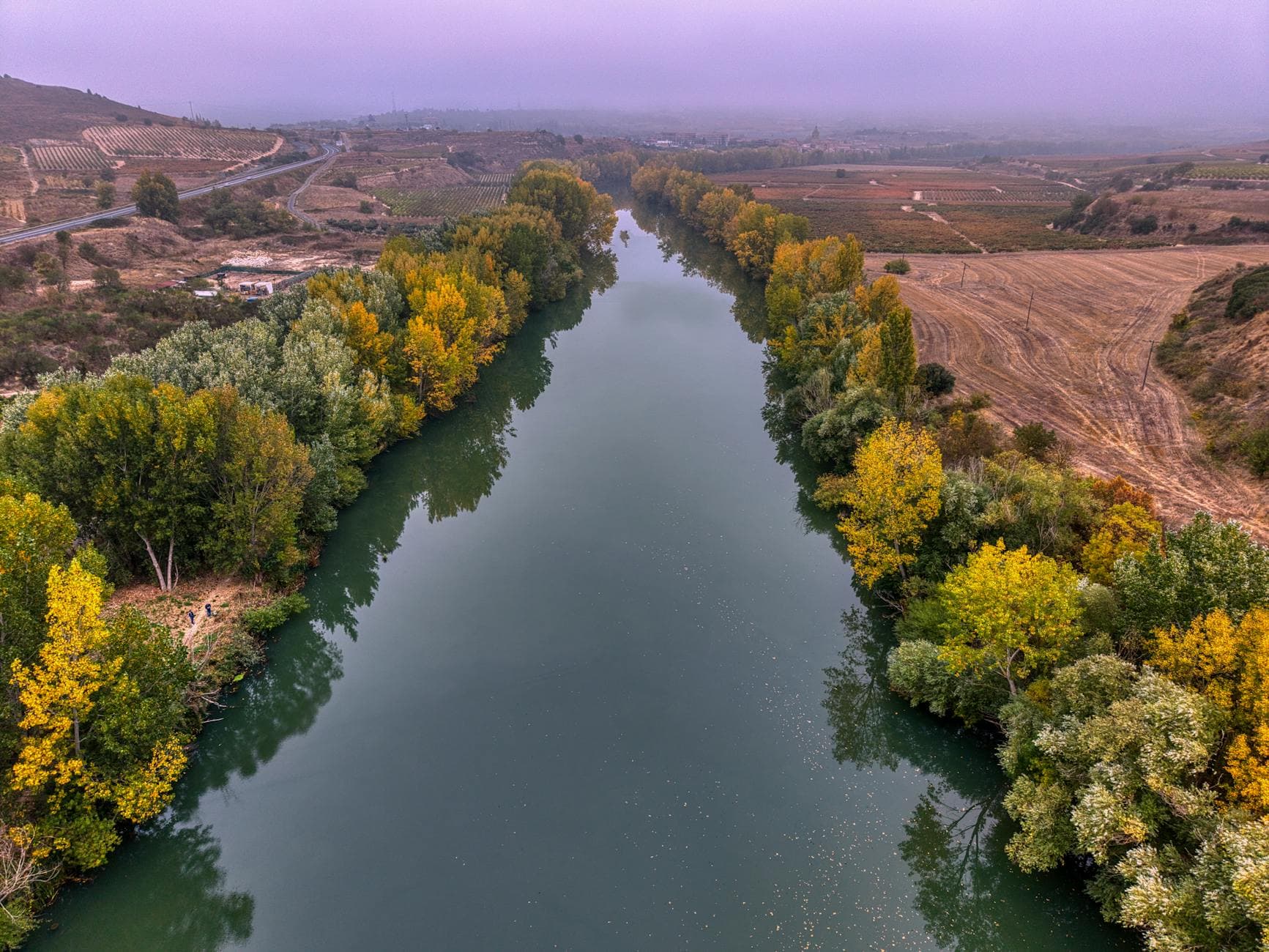
Rioja follows the Ebro River and its tributary valleys, with vineyards running from the foothills of the Sierra Cantabria down to the wide valley floor. The landscape is varied and often beautiful: medieval villages perched on hilltops (Laguardia is spectacular), the Ebro threading through its valley, and the looming wall of the Sierra to the north providing both a dramatic backdrop and protection from Atlantic weather.
The three sub-zones — Rioja Alta, Rioja Alavesa, and Rioja Oriental — each have their own character. Alta and Alavesa are cooler and produce more elegant wines; Oriental is warmer and more Garnacha-focused.
Logrono, the regional capital, is a genuinely enjoyable city with one of Spain's best tapas cultures — the Calle Laurel is famous across Spain. Haro, the traditional wine capital, hosts the extraordinary Batalla del Vino (Wine Battle) festival each June.
Ribera del Duero
Ribera is more austere. The Duero (Douro in Portugal) River cuts through a high plateau of brown, grey, and ochre — dramatic but stark compared to Rioja's green valleys. The landscape has a severe beauty that suits the region's powerful wines. Medieval castles crown ridgelines; the 13th-century Castle of Peñafiel, now a wine museum, is the region's icon.
The villages are smaller and less tourist-developed than Rioja's. Aranda de Duero is the largest town and a decent base; it also has ancient underground medieval cellars (bodegas) carved directly into the rock beneath the streets — some date to the 13th century, and guided tours (EUR 5-8) take you through tunnels that once stored thousands of barrels. Peñafiel is the wine capital, dominated by its 10th-century castle stretching 200 metres along a ridge. The castle houses the Museo Provincial del Vino (EUR 6), which traces the history of Ribera winemaking from Roman times through the modern era.
Access & Logistics
Rioja
The easiest approach is Bilbao airport, with connections across Europe, then 1 hour by road to Haro or Logrono. Logrono itself has a small airport (useful for connections to Madrid). Rioja has well-developed wine tourism infrastructure: a Rioja Wine Route app, signposted driving routes, English-speaking guides at many bodegas, and a range of accommodation from rural casas to boutique hotels.
Many wineries welcome walk-ins or same-day bookings. The Frank Gehry-designed Marques de Riscal hotel in Elciego is a destination in itself — architectural icon, Michelin-starred restaurant, and excellent tasting experiences. Ysios Winery's Santiago Calatrava-designed cellar is another architectural landmark.
Ribera del Duero
Access is via Madrid (2 hours by road) or Valladolid (1 hour). The region has less developed wine tourism than Rioja — fewer English-language resources, fewer wineries with drop-in tastings, and less tourist accommodation density. This is changing: Vega Sicilia has a visitor programme, and many producers have built smart modern visitor centres.
Driving is essential; the region stretches for 115km along the Duero. Renting a car in Valladolid or Madrid and self-driving is the standard approach.
Food
Rioja
Rioja sits at the crossroads of Basque and Navarrese cooking traditions, and the food is extraordinary. Chuletillas al sarmiento (tiny lamb chops grilled over vine cuttings) are the regional obsession -- you eat them with your hands and they taste of smoke and rosemary. Pimientos del piquillo (roasted red peppers stuffed with cod or meat), patatas a la riojana (potato and chorizo stew), and pochas (fresh white beans) round out the hearty local table.
Logrono's Calle Laurel is one of Spain's great tapas streets -- 50+ bars crammed into a few blocks, each with a specialty. Mushroom caps at Bar Soriano, garlic prawns at Bar Angel, and Rioja Crianza by the glass for EUR 2-3. San Sebastian, 90 minutes north, has more Michelin stars per capita than almost any city on earth.
Ribera del Duero
Ribera's food is Castilian -- austere, meat-centred, and deeply satisfying. Lechazo asado (roast suckling lamb slow-cooked in a wood-fired clay oven) is the must-eat dish. Aranda de Duero claims to have the best lechazo in Spain, and restaurants like Meson de la Villa have been roasting it for generations.
Morcilla de Burgos (blood sausage with rice and spices) from nearby Burgos is another regional treasure. Manchego and aged Castellano cheeses pair perfectly with Ribera reds.
Costs
| Category | Rioja | Ribera del Duero |
|---|---|---|
| Entry-level bottle | EUR 8-15 (Crianza) | EUR 10-18 (Roble) |
| Premium bottle | EUR 15-40 (Reserva/Gran Reserva) | EUR 20-50 (Crianza/Reserva) |
| Tasting fee | EUR 10-25 (many free) | EUR 15-35 |
| Lunch for two | EUR 30-60 | EUR 25-50 |
| Hotel/night | EUR 80-200 | EUR 70-180 |
| **Daily total (mid-range)** | **EUR 150-300** | **EUR 130-280** |
Ribera is slightly cheaper for accommodation and dining but more expensive per bottle at equivalent quality. Rioja's wine tourism infrastructure means more options at every price point. Both regions are significantly cheaper than visiting Bordeaux or Burgundy.
Which Should You Choose?
Choose Rioja if:
- You're new to Spanish wine and want the best infrastructure and variety
- You love exploring village life and historic wine towns
- You prefer wines with more elegance and complexity over raw power
- You want to combine wine with culture (San Sebastian is 1.5 hours from Haro — one of the world's great food cities)
- You're visiting Spain for the first time and want a well-rounded experience
Choose Ribera del Duero if:
- You love powerful, concentrated red wines with serious ageing potential
- You're an enthusiast who researches producers and books ahead
- You're drawn to austere, dramatic landscapes and a frontier feeling in wine country
- You want to explore a region that connoisseurs rate highly but fewer tourists visit
- You're specifically interested in Spain's very best red wines (Vega Sicilia, Pingus)
Or do both: Madrid → drive to Ribera del Duero (2 hrs) for 2 nights → drive to Rioja (3 hrs via Burgos and Haro) for 2-3 nights → fly home from Bilbao. This 5-6 day route gives you Spain's two great Tempranillo regions in one trip.
FAQ
Q: Which makes better wine — Rioja or Ribera del Duero?
A: They make different wine. Rioja at its best is elegant, complex, and supremely food-friendly. Ribera at its best is powerful, concentrated, and age-worthy. Vega Sicilia Unico is often called Spain's greatest wine. Both regions have iconic producers and genuine quality at all price points.
Q: Is Rioja easier to visit?
A: Yes. Rioja has better wine tourism infrastructure — signposted routes, English-speaking bodegas, more accommodation choices, and walk-in friendly estates. Ribera rewards more planning.
Q: What's the best time to visit?
A: September and October for harvest; May-June for pleasant weather and open vineyards. Both regions are cold in winter (Ribera especially, at 900m altitude). Avoid mid-August — many smaller producers close.
Q: How far apart are the two regions?
A: About 3-3.5 hours by car. A logical road trip combines both in one 5-7 day trip from Madrid or Bilbao.
Q: What food pairs with each region?
A: Rioja: lamb chops (chuletillas), roast suckling pig, Pintxos in the Basque style, Manchego cheese. Ribera: roast lechazo (suckling lamb), cocido castellano, aged Castilian cheeses.
Q: Can I visit both regions without a car?
A: Rioja is partially accessible by bus from Logrono and Haro, but reaching most bodegas requires driving. Ribera has almost no useful public transport. Both regions are best explored by car. Guided wine tours from Bilbao cover Rioja (EUR 80-130/day), and from Madrid cover Ribera (EUR 100-150/day).
Q: Which has better value wines to bring home?
A: Both offer exceptional value. Rioja Gran Reserva (EUR 20-35 at the bodega) is among the best-aged wine you can buy anywhere at that price. Ribera Crianza (EUR 15-28) offers concentration and structure that would cost twice as much from Bordeaux. Buy both.


Wines of Rioja vs Ribera del Duero: Spain's Two Great Red Wine Regions Compared
Key grape varieties and wine styles produced in the region
Primary Grape Varieties
Wine Styles
Ready to visit Ribera del Duero?
Build your personalised day-by-day itinerary — choose your travel style and trip length, get accommodation and tour picks per day, and email it to yourself to take along.
Upcoming Wine Festivals in Spain
See all festivalsHidden Gems Nearby
Discover more hidden gemsClos Mogador
WTG PickPriorat, Spain
One of Priorat's founding five estates, perched on terrifying slate terraces that you can walk through with the winemaker himself.
Grenache · Carignan · Syrah
Envínate
WTG PickCanary Islands, Spain
Pre-phylloxera vines on a volcano at 1,700 metres — Spain's most exciting young winemakers in the most unlikely of locations.
Listán Negro · Listán Blanco
Bodegas Forjas del Salnés
Galicia, Spain
Single-vineyard Albariños that prove this grape belongs in the conversation with great white Burgundy, from a quiet Galician village.
Albariño
Book Your Ribera del Duero Wine Country Stay
Compare hotels, vineyard B&Bs and rentals across Booking, Airbnb and more in one search.
Compare stays near the vineyardsStay22
Plan Your Rioja vs Ribera del Duero: Spain's Two Great Red Wine Regions Compared Trip
Estimate your Rioja vs Ribera del Duero: Spain's Two Great Red Wine Regions Compared trip cost
Budget calculator with accommodation, food, wine, and transport estimates.
Try itCompare Rioja vs Ribera del Duero: Spain's Two Great Red Wine Regions Compared with other regions
Side-by-side comparison of cost, climate, wine styles, and more.
Try itWhen to visit Rioja vs Ribera del Duero: Spain's Two Great Red Wine Regions Compared
Harvest dates, peak season, and the best months for wine travel.
Try itThis page contains affiliate links. We may earn a commission at no extra cost to you.