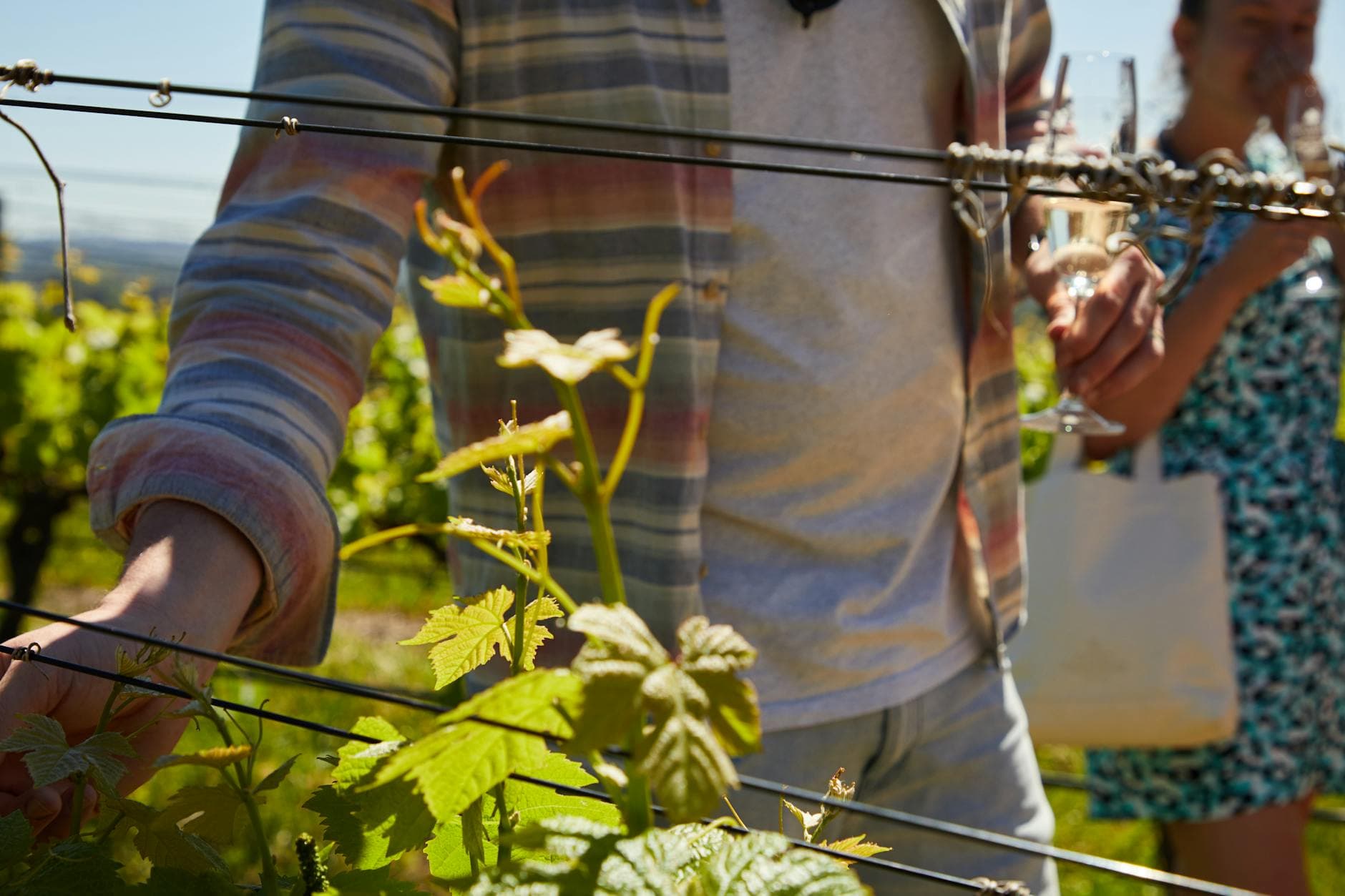
 Photo: Tim Durand / Pexels
Understanding Wine Tasting Notes: A Practical Guide for Beginners
How to read and write wine tasting notes without pretension: what the terms actually mean, how to develop your palate, and why it matters when you're travelling.
Understanding Wine Tasting Notes: A Practical Guide for Beginners
Tasting Notes Are a Tool, Not a Performance
You're standing in a tasting room somewhere in Tuscany or the Willamette Valley, and the person behind the counter says something like: "You'll notice dark cherry on the nose, medium tannins, and a long finish with hints of tobacco." Your instinct is to nod along, take a sip, and say "yeah, that's nice."
That's fine. Nobody's grading you. But here's the thing: tasting notes aren't there to make you feel stupid. They're a shorthand — a practical language that helps you remember what you tasted, tell someone what you like, and figure out what to order next. Once you understand the vocabulary, you stop guessing and start choosing.
This guide breaks down the core terms, walks you through the tasting process, and gives you a simple framework for writing your own notes. No pretension. No memorizing flavour wheels. Just the working knowledge you need to get more out of every glass, especially when you're travelling through wine country and tasting dozens of wines across multiple days and regions. If you want the full rundown on how to behave in a tasting room, see our wine tasting etiquette guide.
The Core Vocabulary: 10 Terms You'll Hear Everywhere
Every tasting note, whether it's scrawled on a napkin or printed on a tech sheet, draws from the same basic vocabulary. Here are the ten terms that cover about 90% of what you'll encounter.
1. Tannins
Tannins are the drying, gripping sensation you feel on your gums, tongue, and the inside of your cheeks. Think of the feeling you get from strong black tea or biting into an unripe banana. Tannins come from grape skins, seeds, and stems — and sometimes from oak barrels.
When someone says a wine has "firm tannins," they mean that drying grip is strong. "Silky tannins" means it's there but smooth. "Green tannins" means it tastes harsh and unripe. White wines have very low tannins because the juice spends less time in contact with the skins.
2. Acidity
Acidity is the sharpness or tartness that makes your mouth water. Bite into a green apple or squeeze lemon juice onto your tongue — that's acidity. In wine, it provides structure and freshness. A wine with high acidity tastes crisp and lively. A wine with low acidity can taste flat or flabby.
Cool-climate wines (think Chablis, Riesling from the Mosel, Sauvignon Blanc from Marlborough) tend to have higher acidity than warm-climate wines. This is one of the key differences you'll notice when comparing wines across regions. Our Old World vs New World guide goes deeper into how climate shapes style.
3. Body
Body describes how heavy or light the wine feels in your mouth. The easiest comparison: skim milk is light-bodied, whole milk is medium, and cream is full-bodied. Body comes from alcohol, sugar, and extract (all the dissolved stuff in the wine).
A Muscadet is light-bodied. A Malbec from Mendoza is full-bodied. Most Merlots sit in the middle. Body isn't better or worse — it's just a description. But knowing what body you prefer helps you communicate with pourers and avoid wines that won't suit your taste.
4. Finish
The finish is what happens after you swallow (or spit). How long do the flavours linger? Does anything new appear? A "long finish" means the taste stays with you for 15-30 seconds or more. A "short finish" means it disappears quickly. Generally, more complex wines have longer finishes — but a clean, short finish isn't a flaw in a simple everyday wine.
Pay attention to what you taste on the finish. Sometimes the best part of a wine only shows up after you've swallowed it.
5. Nose
The nose is simply the smell of the wine. "On the nose, I'm getting citrus and wet stone" means "when I smell it, I detect citrus and wet stone." About 80% of what you perceive as flavour actually comes through your nose, so this matters more than most people realize.
6. Palate
The palate is what you taste and feel when the wine is in your mouth. Tasting notes often separate "nose" from "palate" because they can be quite different. A wine might smell like strawberries but taste more like cherries with a peppery kick.
7. Dry
Dry means "not sweet." That's it. A dry wine has had most or all of its sugar converted to alcohol during fermentation. The vast majority of table wines — your Cabernet Sauvignon, Pinot Grigio, Tempranillo, Chardonnay — are dry. When someone says a wine is "bone dry," they mean there's zero perceptible sweetness.
Confusion happens because people associate fruit flavours with sweetness. A wine can taste like ripe peaches and still be completely dry. The fruitiness comes from aromatic compounds, not residual sugar.
8. Sweet
A sweet wine has noticeable residual sugar — sugar that wasn't converted during fermentation. This ranges from "off-dry" (a tiny hint of sweetness, like many Rieslings and Moscatos) all the way to dessert wines like Sauternes or ice wine, which can have sugar levels comparable to maple syrup.
Sweet doesn't mean bad, and it doesn't mean cheap. Some of the most expensive wines in the world are sweet. But it's a style preference, and knowing where you stand on the dry-to-sweet spectrum saves you from ordering something you won't enjoy.
9. Fruit-Forward
A fruit-forward wine puts fruit flavours front and centre. You taste the berries, the citrus, the stone fruit before you taste anything else. New World wines (Australia, California, Chile, Argentina) tend to be more fruit-forward than Old World wines (France, Italy, Spain), which often lead with earth, minerals, or structure.
This is probably the single most useful concept when you're choosing wines in a tasting room. If someone asks what you like and you say "fruit-forward reds" or "not too fruit-forward, I prefer something more earthy," you've instantly narrowed the field.
10. Minerality
Minerality is the most debated term in wine. It describes a non-fruit, non-earth, almost stony or chalky quality. Think of licking a wet river rock (or just imagine it). Chablis is the classic example — that flinty, shell-like quality underneath the citrus.
Scientists argue about whether minerality actually comes from minerals in the soil. The jury is out. But the sensation is real, and you'll encounter the term constantly in tasting notes for white wines and certain reds from volcanic or limestone soils.
The Tasting Process: Look, Swirl, Sniff, Sip, Assess
You don't need to perform a ceremony every time you pick up a glass. But following a basic sequence helps you actually notice what's in the wine rather than just gulping it down. This takes about 30 seconds per wine once you get used to it.
Look. Tilt the glass against a white surface. Note the colour and clarity. Young reds are deep purple; older ones fade toward garnet and brick. Young whites are pale; older ones turn gold. Opacity matters too — a wine you can't see through (like a young Malbec) is telling you something different from one that's nearly transparent (like a Pinot Noir).
Swirl. Keep the glass on the table if you're nervous about spilling. Give it three or four small circles. This releases aromatic compounds. The "legs" or "tears" that run down the glass afterward tell you about alcohol and sugar content, but not quality.
Sniff. Stick your nose right into the glass — don't be shy about it. Take a couple of short sniffs. What do you get first? Fruit? Flowers? Earth? Spice? Don't overthink it. If it smells like apples, write "apples." If it smells like a barn, write "barn." You're building a personal vocabulary, not auditioning.
Sip. Take enough wine to coat your whole mouth. Let it sit for a moment. Swish it gently (not like mouthwash — just enough to reach all parts of your tongue). Notice the texture, the weight, the acidity, the tannins. Then either swallow or spit.
Assess. What's the finish? Is it long or short? Do the flavours change? Did you like it? Would you buy a bottle? This last part — your honest reaction — is the most important line in any tasting note.
For detailed guidance on the social side of tasting rooms — spitting, tipping, asking questions — see our wine tasting etiquette guide.
Common Descriptors Decoded
Tasting notes use a lot of words that sound vague until you know what they're pointing to. Here are the ones you'll see most often, and what they actually refer to.
Earthy
The wine has flavours or aromas that remind you of soil, forest floor, mushrooms, wet leaves, or truffles. Common in Old World reds, especially Burgundy (Pinot Noir), Barolo (Nebbiolo), and aged Rioja (Tempranillo). Earthiness usually comes from the grape variety, terroir, or aging. It's not a flaw — many wine drinkers actively seek it out.
Oaky
The wine spent time in oak barrels, and you can taste it. Oak adds vanilla, toast, caramel, coconut, baking spice (cinnamon, clove), or a smoky quality. New oak barrels impart more flavour than old ones. American oak tends toward coconut and dill. French oak leans toward vanilla and spice.
If a tasting note says "heavily oaked," expect those barrel flavours to dominate. "Lightly oaked" means they're in the background. "Unoaked" means no barrel influence at all — the wine was fermented and aged in stainless steel or concrete.
Buttery
Most commonly applied to Chardonnay. Buttery wines have a rich, creamy texture and flavours reminiscent of butter, cream, or butterscotch. This comes from malolactic fermentation — a process where sharp malic acid (green apple acid) converts to softer lactic acid (milk acid). Not all Chardonnays are buttery. Cool-climate, unoaked Chardonnay (like Chablis) is the opposite: lean, acidic, mineral.
Jammy
The wine's fruit character is so ripe and concentrated it reminds you of cooked fruit or jam rather than fresh fruit. Common in warm-climate Zinfandel, Grenache from hot vintages, and Shiraz from the Barossa Valley. Jammy isn't an insult, but it does tell you the wine is rich and ripe — possibly with higher alcohol.
Herbaceous
You detect green, plant-like aromas: bell pepper, freshly cut grass, herbs, green bean, or jalapeño. Sauvignon Blanc from the Loire Valley often shows green pepper and grass. Cabernet Franc can be herby. Some Cabernet Sauvignon from cooler sites has a green bell pepper note from a compound called pyrazine.
A little herbaceousness adds complexity. A lot of it can mean the grapes were underripe.
Floral
The wine smells like flowers. Viognier smells like honeysuckle. Gewurztraminer smells like rose and lychee. Muscat smells like orange blossom. Nebbiolo often has a distinct rose petal and tar combination. Floral aromatics are especially common in aromatic white grape varieties and some Italian reds.
How to Write Your Own Tasting Notes
Forget the elaborate scoring systems. You need a framework that's fast enough to use in a tasting room where you're trying six wines in 30 minutes. Here's a three-line system that works:
Line 1 — What I see. Colour and clarity. Example: "Deep ruby, almost opaque."
Line 2 — What I smell. Your first impressions on the nose. Example: "Black cherry, vanilla, a little smoke."
Line 3 — What I taste + my verdict. Flavour, structure, and whether you liked it. Example: "Medium body, smooth tannins, cherry and dark chocolate. Long peppery finish. Would buy. 4/5."
That's it. You can do this on the Notes app on your phone. You can scrawl it on the tasting menu. The format doesn't matter. What matters is that three weeks later, when you're trying to remember which Barolo you loved at that estate outside Alba, you can actually look it up.
Some people add a fourth line for context: price, food pairing ideas, or what they'd compare it to. That's useful, but optional. The three-line version covers what you need.
If you want to practise this approach across multiple wines in one sitting, understanding how wine flights work gives you a structured way to taste and compare.
Why This Matters When You're Travelling
At home, tasting notes are a nice-to-have. When you're travelling through wine country, they become genuinely useful. Here's why.
Communicating Your Preferences
You walk into a tasting room in the Douro Valley. The pourer speaks enough English to help you but doesn't have time for a long conversation. If you can say "I prefer medium-bodied reds with good acidity and not too much oak," you've just saved yourself from tasting four wines you won't enjoy. That vocabulary — body, acidity, oak — comes directly from understanding tasting notes.
This works everywhere. In Burgundy, in Mendoza, in the Barossa. Wine professionals worldwide use the same core terms. Learning them gives you a shared language.
Remembering What You Liked
On a five-day wine trip, you might taste 40 to 60 wines. By day three, they start blurring together. Without notes, you'll get home and stare at your credit card statement wondering which bottle you ordered for shipping and whether it was actually the one you loved or the one from the next table.
Three lines per wine. It takes 20 seconds. Future you will be grateful.
Comparing Across Regions
This is where tasting notes get genuinely interesting. You taste Pinot Noir in Burgundy, then Central Otago, then the Willamette Valley. Your notes reveal patterns: the Burgundy was earthy with red fruit and high acidity; the Otago was darker, riper, with more body; the Oregon was somewhere in between. Now you're not just drinking — you're learning how the same grape expresses itself in different places. That's the whole point of wine travel.
If you're thinking about your first dedicated wine trip, our planning guide walks you through the logistics.
Building Your Palate: A Progressive Strategy
Your palate isn't fixed. It develops through deliberate practice. Here's a strategy that works for travellers.
Phase 1: Same Grape, Different Regions
Pick one grape variety — Chardonnay is a good starting point because it's grown everywhere — and taste it from at least three different places. California Chardonnay (rich, oaky, ripe fruit), Chablis (lean, mineral, green apple), and Burgundy village-level (somewhere in between). Write notes for each. You'll start to see how region and winemaking shape the final product.
This exercise works with any major grape: Cabernet Sauvignon (Napa vs Bordeaux vs Coonawarra), Pinot Noir (Burgundy vs Oregon vs New Zealand), Riesling (Alsace vs Mosel vs Clare Valley).
Phase 2: Different Grapes, Same Region
Once you're comfortable with how one grape changes across regions, flip it. Go to a single region and taste its range. In Bordeaux, try a Merlot-dominant wine from the Right Bank and a Cabernet-dominant wine from the Left Bank. In the Rhone, compare Syrah from the North with Grenache blends from the South.
This teaches you what grape variety actually tastes like, separated from terroir and climate.
Phase 3: Blind Tasting (Low Stakes)
You don't need to be a Master Sommelier. Just have a friend pour two wines into identical glasses without telling you which is which. Write your notes. Guess which is which. You'll be wrong sometimes. That's the point — it forces you to actually taste rather than just reading the label and confirming your expectations.
Phase 4: Revisit Your Notes
After a few months of writing notes, read back through them. You'll notice your vocabulary has expanded. You'll see patterns in what you prefer. Maybe you consistently rate high-acid whites above everything else. Maybe you keep writing "too much oak" on California Chardonnays. These patterns are your palate talking, and they make future wine choices — at home or abroad — much easier.
Red Flags: When Wine Is Faulty
Not every bad experience is a matter of taste. Sometimes wine is genuinely faulty, and knowing the difference saves you from dismissing a wine (or a winery) unfairly.
Cork Taint (TCA)
What it smells like: wet cardboard, damp basement, musty newspaper. If you open a bottle and it smells like a soggy box that's been sitting in a garage, it's probably corked. The compound responsible is called TCA (2,4,6-trichloroanisole), and it can be present in tiny amounts that just mute the fruit, or in large amounts that make the wine smell actively unpleasant.
Cork taint affects roughly 2-5% of wines sealed with natural cork. It's not the winemaker's fault. It's not dangerous. But the wine won't taste right. In a tasting room, you can politely mention it and they'll pour you a fresh glass from a different bottle.
Oxidation
What it smells like: bruised apple, sherry-like nuttiness (when it shouldn't be there), stale flatness. A little oxygen exposure during aging is deliberate and adds complexity. Too much means the wine has gone past its prime or wasn't stored properly. White wines are more vulnerable than reds.
Signs: the colour has turned brown (amber in whites, brick-brown in reds), the fruit flavours are gone, and there's a stale, flat quality.
Heat Damage (Cooked Wine)
What it smells like: stewed fruit, a jammy quality that doesn't match the wine's style, sometimes a slightly sweet, port-like character in a wine that should be dry. Heat damage happens when wine is stored or shipped in high temperatures.
Signs: the cork may be pushed slightly out of the bottle. The wine tastes like cooked fruit rather than fresh fruit. Wines that have been sitting in a hot warehouse, a car boot, or a shop window are candidates for heat damage.
When You Just Don't Like It
Not every wine you dislike is faulty. Some wines are made in styles you don't prefer, and that's completely legitimate. You're allowed to not enjoy a highly-rated Barolo because you find the tannins too aggressive. You're allowed to think a famous Sauternes is too sweet. Your palate, your preferences.
The skill is distinguishing between "this wine has a problem" and "this wine isn't for me." Faults are specific and identifiable. Preference is personal. Both are valid reasons to move on to the next glass.
FAQ
Q: Do I need to use fancy language in my tasting notes?
A: No. Use whatever words make sense to you. If a wine smells like your grandmother's cherry pie, write "grandmother's cherry pie." The purpose of tasting notes is to help you remember and communicate. Technical vocabulary is useful when talking to wine professionals, but your personal notes should be in your own language.
Q: How many wines should I taste before I start seeing improvement?
A: Most people notice a significant difference after tasting 20-30 wines with deliberate attention. That doesn't mean 30 separate occasions — a flight of five wines at a single tasting room counts. The key is paying attention and writing notes, not just drinking. After three or four tasting room visits where you're actively practising, the vocabulary starts coming naturally.
Q: Is it rude to write notes during a tasting?
A: Not at all. Many tasting rooms provide paper and pencils for exactly this purpose. Using your phone is equally fine. Winery staff are used to it and generally interpret note-taking as genuine interest, which tends to get you better service and more detailed explanations.
Q: What's the difference between aroma and bouquet?
A: Technically, "aroma" refers to smells that come from the grape variety itself — fruit, floral, and herbaceous notes. "Bouquet" refers to smells that develop during winemaking and aging — oak, toast, leather, tobacco, earth. In casual use, most people use "aroma" or "nose" for everything. Don't worry about the distinction unless you're studying for a sommelier exam.
Q: Can I develop my palate without travelling to wine regions?
A: Yes, but travelling accelerates it dramatically. At home, you can practise with comparative tastings: buy three different Sauvignon Blancs from three different countries and taste them side by side. But visiting the region where the wine is made adds context that you simply can't get from a bottle alone — the soil, the climate, the culture, the food pairings. It's the difference between reading about a place and actually being there. When you're ready to make that jump, our first wine trip planning guide covers the practical logistics.
Q: Should I trust numerical wine scores (90 points, 95 points, etc.)?
A: Scores are one data point, not gospel. A 92-point wine from a critic whose palate aligns with yours is useful information. A 92-point wine from a critic who prefers full-bodied reds when you prefer light-bodied whites is less useful. Scores also can't tell you whether a wine matches the food you're eating or the mood you're in. Use them as a rough filter, but trust your own notes over someone else's number.
Q: What's the minimum equipment I need to practise tasting at home?
A: A set of clear, tulip-shaped wine glasses (not tumblers — you need to be able to swirl and sniff), a white surface for checking colour (a sheet of paper works), and a notebook or phone for notes. That's it. You don't need decanters, aerators, or specialised stemware to start. Spend your money on diverse wines, not accessories.


Book Your Understanding Wine Tasting Notes: A Practical Guide for Beginners Wine Country Stay
Compare hotels, vineyard B&Bs and rentals across Booking, Airbnb and more in one search.
Compare stays near the vineyardsStay22
Plan Your Understanding Wine Tasting Notes: A Practical Guide for Beginners Trip
Estimate your Understanding Wine Tasting Notes: A Practical Guide for Beginners trip cost
Budget calculator with accommodation, food, wine, and transport estimates.
Try itCompare Understanding Wine Tasting Notes: A Practical Guide for Beginners with other regions
Side-by-side comparison of cost, climate, wine styles, and more.
Try itWhen to visit Understanding Wine Tasting Notes: A Practical Guide for Beginners
Harvest dates, peak season, and the best months for wine travel.
Try itThis page contains affiliate links. We may earn a commission at no extra cost to you.