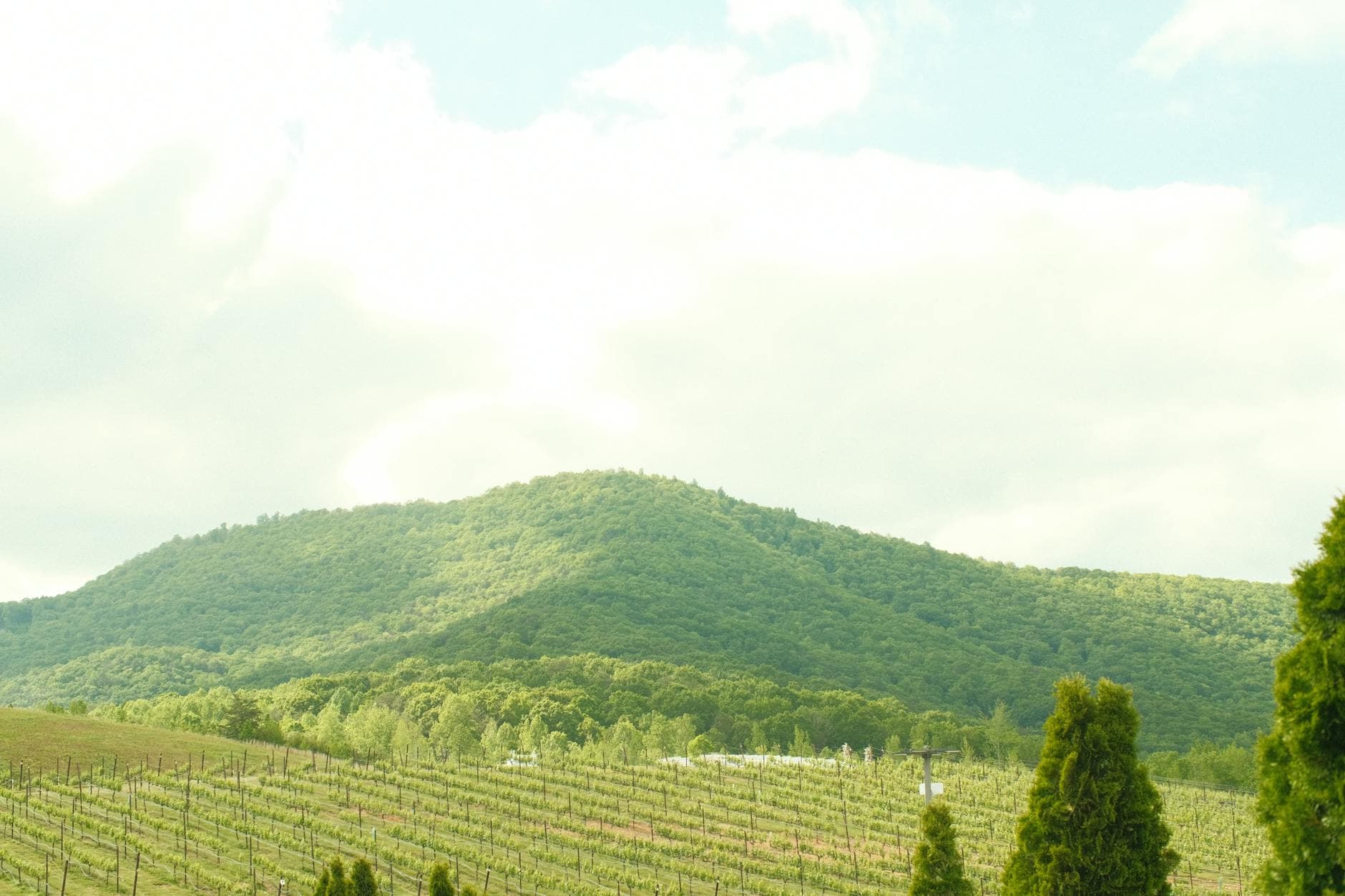
 Photo: Line Knipst / Pexels
Where to Stay in Kakheti, Georgia: Complete 2026 Guide
Find the best places to stay in Georgia's Kakheti wine region — the oldest winemaking region on Earth. From hilltop Sighnaghi to the regional capital Telavi, discover where to base your trip to explore qvevri wines, amber wines, and the Alazani Valley.
Planning a trip to Kakheti?
Compare hotels, vineyard B&Bs and rentals across Booking, Airbnb and more in one search.
Georgia does not have 8,000 years of winemaking tradition—it has 8,000 years of archaeological proof. Ceramic vessels stained with Vitis vinifera residue, excavated from Neolithic sites south of Tbilisi, date to roughly 6000 BC, making the eastern Georgian region of Kakheti the oldest confirmed winemaking territory on Earth. The technique that defined those early wines—fermenting grape juice with skins, stems, and seeds inside large clay vessels buried underground—still defines Georgian winemaking today. These vessels, called qvevri, were inscribed on the UNESCO Intangible Cultural Heritage list in 2013. The wines they produce, particularly the skin-contact whites made from Rkatsiteli grapes, carry a deep amber colour and tannic grip that has earned the name "amber wine" (though Georgians simply call it white wine made in the traditional way). The red grape Saperavi, Georgia's other flagship variety, produces dark, acidic, age-worthy wines unlike anything from Western Europe.
Kakheti stretches across the Alazani Valley in eastern Georgia, framed by the snow-capped Greater Caucasus to the north and the Gombori Range to the west. The valley floor is flat and fertile, planted thick with vines; the foothills hold monasteries, fortified towns, and family cellars that have been producing wine continuously for centuries. Georgian wine culture is inseparable from the supra—a ritualised feast led by a tamada (toastmaster) with structured rounds of toasts, polyphonic singing, and food that keeps arriving until you surrender. Wine here is not a beverage; it is the organising principle of social life. About 70% of Georgia's total wine production comes from Kakheti, and the region's combination of ancient tradition, distinct winemaking method, and unfamiliar grape varieties makes it genuinely unlike any other wine destination.
Best Areas to Stay in Kakheti at a Glance:
- For charm and views: Sighnaghi — hilltop walled town, Alazani Valley panorama, restaurants, walkable
- For central access and services: Telavi — regional capital, fortress, transport hub
- For wine history: Tsinandali — Chavchavadze estate, peaceful village, museum and vineyards
- For serious wine: Kvareli — Kindzmarauli zone, large wineries, monastery access
- For urban comfort: Tbilisi — natural wine bars, restaurants, 1.5-hour drive to vineyards
Best Areas to Stay for Wine Tasting
Sighnaghi
Sighnaghi sits on a ridge above the Alazani Valley at roughly 800 metres elevation, enclosed by an 18th-century defensive wall with 28 watchtowers. Georgians call it the "City of Love" because its wedding registry operates 24 hours a day. The town is small—perhaps 2,500 residents—but it has become Kakheti's most visited destination, with cobblestone streets, colourful wooden balconies, a handful of wine bars, and a view across the valley floor to the high Caucasus that justifies the trip on its own. The Bodbe Monastery, where Saint Nino (who brought Christianity to Georgia in the 4th century) is buried, is a ten-minute drive downhill.
Why wine lovers choose Sighnaghi:
- Alazani Valley panorama from the town walls—best at sunrise
- Most restaurant and wine bar options in Kakheti
- Walkable town centre; no car needed within Sighnaghi itself
- Several small family wineries (marani) within a 15-minute drive
- Year-round tourism infrastructure—open when smaller villages are quiet
Price range: GEL 80–350 / $30–130 per night
Best for: First-time visitors to Georgia, couples, photographers, those arriving without a car
Wine access: A few tasting rooms in town (Pheasant's Tears has a Sighnaghi restaurant and wine bar). The real cellars are 15–30 minutes away in surrounding villages—Tsinandali, Velistsikhe, Anaga. Hotel owners will arrange transport or recommend drivers. The annual Kakheti wine festival is held nearby.
Trade-off: Sighnaghi is the most tourist-facing town in Kakheti. Prices run higher than elsewhere in the region. The town is perched above the valley floor, so reaching vineyards and wineries requires descending and driving. Midweek outside summer, it can feel emptied out.
Where to stay: Kabadoni Boutique Hotel in the heart of town, or Vigor Hotel, a family-run guesthouse where guests can try the owners' homemade wine.
Telavi
The regional capital of Kakheti, Telavi (population ~20,000) sits in the centre of the wine zone with practical advantages no other town offers. Banks, pharmacies, a proper bazaar, shared taxis (marshrutkas) to Tbilisi, and more accommodation choices than anywhere else in the region. The Batonis Tsikhe fortress, residence of the Kakhetian kings, dominates the town centre and houses a museum. An 800-year-old plane tree in the fortress grounds is among the oldest in Europe. Telavi is not as picturesque as Sighnaghi, but it is a working town rather than a display case, and its central position makes every corner of Kakheti reachable within 30–40 minutes.
Why wine lovers choose Telavi:
- Central location—equidistant to Tsinandali, Kvareli, Sighnaghi, Alaverdi
- Most services in the region: ATMs, shops, medical, marshrutka station
- Batonis Tsikhe fortress and museum for non-wine days
- Multiple accommodation tiers—budget to mid-range
- Telavi Wine Cellar and Shumi winery are on the town's outskirts
Price range: GEL 50–250 / $18–95 per night
Best for: Self-drive visitors touring multiple sub-regions, those wanting a practical base, budget travellers
Wine access: Shumi winery (modern facility with tours, tastings, and a vine nursery) is 5 minutes from the centre. Teliani Valley, one of Georgia's largest commercial producers, is headquartered nearby. Smaller family operations in surrounding villages are all within a short drive. Wine shops in the bazaar sell local bottles at cellar-door prices.
Trade-off: Less atmospheric than Sighnaghi. The town itself has limited nightlife and dining compared to Tbilisi. Accommodation leans functional rather than charming.
Where to stay: The Communal Telavi, with rooftop Caucasus views and a restaurant pairing Kakhetian fare with local wine, or the family-run Neli and Zaal Guest House.
Tsinandali
The village of Tsinandali, 8 km from Telavi, is best known for the Tsinandali Estate—the former home of 19th-century aristocrat, poet, and winemaker Prince Alexander Chavchavadze, who introduced European winemaking techniques to Georgia. The estate is now a museum surrounded by formal gardens, with a wine cellar holding bottles dating to 1814 and a tasting room pouring Tsinandali's signature blended white (Rkatsiteli and Mtsvane). The Tsinandali appellation itself produces some of Kakheti's most refined whites. The village is quiet, green, and set among vineyards—a contrast to the busier towns.
Why wine lovers choose Tsinandali:
- Chavchavadze Estate museum and historic wine cellar (1814 vintages)
- Tsinandali appellation—quality white wines (Rkatsiteli-Mtsvane blends)
- Peaceful village setting among vineyards
- 8 km from Telavi's services
- Tsinandali Festival (classical music, late September) draws international performers
Price range: GEL 60–300 / $22–115 per night
Best for: Wine history enthusiasts, those who want vineyard quiet with Telavi nearby, culture-and-wine visitors
Wine access: The Chavchavadze Estate tasting room is the main attraction. Several family marani in the village and surrounding area offer private tastings—ask your host to arrange. Shumi winery is a 10-minute drive.
Trade-off: Limited accommodation—mostly guesthouses and one or two small hotels. No restaurants to speak of (eat in Telavi). Very quiet after dark.
Where to stay: Tsinandali Estate, a Radisson Collection hotel on the historic estate with its own biodynamic vineyard and a 5-star spa.
Kvareli
Kvareli is wine-production territory. The town lies in the northeast of the Alazani Valley, within the Kindzmarauli appellation—a micro-zone famous for its naturally semi-sweet red wines made from Saperavi grapes. The Kvareli Wine Tunnel, a 7.7 km Soviet-era underground storage facility carved into the Caucasus foothills, stores millions of litres and is open for tours. Kindzmarauli Corporation and several other large producers are headquartered here. The town itself is modest, but it puts you in the heart of Kakheti's red wine country, and the Alaverdi Monastery—an 11th-century cathedral with monks who still make qvevri wine—is 25 minutes south.
Why wine lovers choose Kvareli:
- Kindzmarauli appellation—Georgia's most famous semi-sweet red zone
- Kvareli Wine Tunnel (7.7 km underground, tours and tastings)
- Kindzmarauli Corporation winery and tasting hall
- Close to Alaverdi Monastery (working monastery, monks make qvevri wine)
- Surrounded by Saperavi vineyards on the valley floor
Price range: GEL 40–200 / $15–75 per night
Best for: Red wine enthusiasts, those interested in large-scale Georgian wine production, monastery visits
Wine access: Excellent for big-production wineries. Kindzmarauli Corporation offers formal tours. The Kvareli Wine Tunnel is a Soviet industrial spectacle worth seeing regardless of the wine. Graneli, Khareba (which has its own tunnel winery nearby), and several family producers operate in the area. For small-batch qvevri wine, visit the monks at Alaverdi—their wine is made in buried qvevri inside the monastery compound and sold in unmarked bottles.
Trade-off: The town has less charm than Sighnaghi or Tsinandali. Accommodation is basic. Restaurants are few. The emphasis here is on production scale rather than boutique intimacy.
Where to stay: Eclipse Winery Boutique Hotel, set inside a working vineyard at the foot of the Caucasus, or Kvareli Lake Resort, with every room facing the lake or hills.
Tbilisi
Georgia's capital is not in Kakheti, but it is only 90 minutes by car from Sighnaghi and two hours from Telavi—and it has become one of the world's most interesting cities for natural wine. The Vera and Sololaki districts are dense with wine bars pouring qvevri-made wines by the glass: Vino Underground (the original natural wine bar, founded by a collective of small producers), g.Vino, Ghvino's Khidi, Wine Gallery. Tbilisi's restaurant scene serves modern Georgian cooking at prices that remain remarkably low by European standards. Staying in Tbilisi and day-tripping to Kakheti is a legitimate strategy, especially if you prefer urban comfort.
Why wine lovers choose Tbilisi:
- Georgia's best restaurant and natural wine bar scene
- Vino Underground, g.Vino, and 20+ wine-focused bars
- International flight connections (Tbilisi airport)
- Old Town, sulfur baths, Narikala Fortress for non-wine days
- Day trips to Kakheti are straightforward by car or organised tour
Price range: GEL 80–600 / $30–225 per night
Best for: Wine bar culture, those combining Kakheti with city exploration, short trips, visitors without a car (join a tour)
Wine access: Outstanding in the city itself—more qvevri wines available by the glass in Tbilisi's wine bars than in most Kakhetian towns. Wine shops (8000 Vintages, Vinotel) stock hundreds of Georgian labels. Organised day tours to Kakheti run daily (GEL 80–150 / $30–55 per person, typically visiting 2–3 wineries plus lunch).
Trade-off: You are 1.5–2 hours from the vineyards. Day trips limit you to 2–3 winery visits. You miss the experience of sleeping in a vineyard village, waking to Caucasus views, and drinking with a family in their cellar at midnight.
Where to stay: The Blue Fox Hotel, a restored 17th-century mansion in the Old Town, or Qarvasla Hotel, set inside a 19th-century caravanserai.
Types of Accommodation
Family Guesthouses & Marani Stays (GEL 40–120 / $15–45 per night)
The most authentic way to experience Kakheti. A marani is a traditional Georgian wine cellar, and many families who run guesthouses also make their own qvevri wine in the yard. Expect to be fed more than you can eat (breakfast and dinner often included in the price), offered homemade wine from a plastic jug, and treated as a guest in the fullest Georgian sense of the word. Rooms are simple—clean beds, shared or private bathrooms, possibly erratic hot water. The hospitality is not.
Best for: Budget travellers, solo visitors, anyone who wants to understand Georgian wine culture from the inside
Boutique Hotels (GEL 150–400 / $55–150 per night)
A small but growing category, concentrated in Sighnaghi and Telavi. Restored traditional houses with wooden balconies, modern bathrooms, and curated interiors. Some have rooftop terraces with valley views. Service is personal—the owner is usually on-site and doubles as concierge, driver, and wine guide.
Best for: Couples, comfort-seeking travellers, those who want character without roughing it
Wine Estate Stays (GEL 200–500 / $75–190 per night)
A handful of larger wineries offer on-site accommodation—Chateau Mere in Telavi, Schuchmann Wines in Kisiskhevi, and Lopota Lake Resort near Napareuli. These combine vineyard settings with restaurant dining, organised tastings, and spa facilities. They are the closest thing Kakheti has to the estate-hotel model common in Tuscany or Napa.
Best for: Wine-focused travellers who want a self-contained estate experience
Tbilisi Hotels (GEL 80–600 / $30–225 per night)
The full range, from Old Town hostels to international-brand hotels. The Stamba Hotel (converted Soviet printing house), Rooms Hotel, and Hotel Wyndham are top-tier. Mid-range boutique options cluster in the Vera and Sololaki neighbourhoods, close to wine bars and restaurants.
Best for: Urban-base visitors, business travellers, those combining Kakheti with Tbilisi sightseeing
When to Visit Kakheti
Spring (April–May)
Wildflowers carpet the Alazani Valley floor. Vineyards are green, the Greater Caucasus peaks are still snow-covered, and the combination is Kakheti at its most photogenic. Temperatures are comfortable (15–25°C). Wineries are open but not crowded.
Summer (June–August)
Hot—temperatures regularly hit 35°C on the valley floor. Vineyards are lush but the heat can make daytime winery visits draining. Mornings and evenings are pleasant. Tbilisi is stifling in July–August; the Kakhetian foothills are slightly better.
Harvest / Rtveli (September–October)
The best time. Rtveli is the Georgian grape harvest, and in Kakheti it is both agricultural event and cultural festival. Families pick grapes, crush them by foot (or machine), and load qvevri for fermentation. Visitors who time it right can participate. Temperatures drop to 20–28°C, light is golden, and the Caucasus backdrop sharpens in the autumn air. Book accommodation well ahead—this is peak season.
Winter (November–March)
Quiet and cold (0–8°C on the valley floor, snow in the mountains). Most guesthouses remain open, and wineries receive visitors by arrangement. The supra culture continues regardless of season—Georgians feast year-round. Lower prices and almost no other tourists.
| Month | Weather | Crowds | Prices | Highlights |
|---|---|---|---|---|
| Jan–Feb | Cold, 0–5°C | Very low | Lowest | Snow-covered Caucasus, empty cellars, winter supras |
| Mar–Apr | Mild, 10–20°C | Low | Low–Medium | Spring wildflowers, vineyards budding, clear mountain views |
| May–Jun | Warm, 20–30°C | Medium | Medium | Green valley, outdoor dining, comfortable touring weather |
| Jul–Aug | Hot, 28–37°C | Medium | Medium–High | Long days, heat on valley floor, cooler in the hills |
| Sep–Oct | Warm, 18–28°C | High | Highest | Rtveli harvest, golden light, foot-crushing, qvevri loading |
| Nov–Dec | Cool, 2–10°C | Low | Low | Late autumn colour, quiet villages, off-season rates |
Insider Tips for Kakheti Wine Travel
- Understand qvevri winemaking — A qvevri is an egg-shaped clay vessel (holding 500–3,000 litres) buried in the ground up to its rim. Grape juice, skins, stems, and sometimes seeds go in together. The qvevri is sealed with a stone lid and beeswax, and the wine ferments and ages underground for 5–6 months. The earth maintains a stable temperature. When the qvevri is opened, the skins and sediment (called chacha before it becomes brandy) have settled to the bottom. This is not a gimmick or a revival—families in Kakheti have been making wine this way without interruption for millennia.
- The amber wine question — Georgian skin-contact white wines have a deep amber-gold colour because the grape skins remain in contact with the juice during fermentation (unlike Western white winemaking, where skins are removed immediately). Western writers often call these "orange wines," but many Georgian winemakers resist the term—to them, this is simply how white wine is made. Whatever you call it, expect tannin, texture, and dried fruit character that has more in common with light reds than with Chardonnay.
- Know the key producers — Pheasant's Tears (John Wurdeman, an American painter who married into Georgian wine; tasting room and restaurant in Sighnaghi). Iago's Wine (Iago Bitarishvili, Chardakhi village; pure qvevri Chinuri, one of Georgia's most celebrated single wines). Orgo (Kakha Berishvili, organic qvevri wines, Sighnaghi area). Alaverdi Monastery (monks making qvevri wine inside an 11th-century cathedral compound). Shumi (modern winery with vine museum, outside Telavi). Teliani Valley (large-scale, widely exported, Telavi). Kindzmarauli Corporation (Kvareli, major producer of semi-sweet Kindzmarauli). Château Mukhrani (technically not Kakheti—west of Tbilisi—but worth a detour for its French-influenced estate).
- Supra feast etiquette — If you are invited to a supra (and you will be), know the structure. The tamada (toastmaster) leads the evening. Toasts follow a rough sequence: to God, to Georgia, to the deceased, to parents, to children, to peace, to the host. You are expected to drink with each toast—wine, not water. You may be offered a drinking horn (kantsi) that cannot be set down until emptied. Pace yourself. Refusing food is a greater insult than refusing wine, but both are difficult. Say "gaumarjos" (cheers) with eye contact.
- Chacha is not optional — Chacha is Georgia's grape brandy, distilled from the pomace (skins, stems, seeds) left after winemaking. Every family makes it. It ranges from 40% to 65% alcohol, from rough to remarkably smooth. You will be offered it at breakfast. The proper response is to accept. Homemade chacha is almost always better than commercial bottlings.
- Churchkhela is the original energy bar — Strings of walnuts or hazelnuts dipped repeatedly in thickened grape juice (tatara/pelamushi), then dried. They hang from market stalls across Kakheti like candles. Each region uses different grapes—Kakhetian churchkhela tends to be dark (Saperavi juice). Buy them fresh from roadside vendors, not in plastic packaging. They keep for weeks and pair well with wine.
- Transport: marshrutkas and hired drivers — Marshrutkas (shared minivans) run from Tbilisi's Samgori metro station to Telavi and Sighnaghi several times daily (GEL 10–15 / $4–6, 2–2.5 hours). Within Kakheti, marshrutkas connect major towns but schedules are loose and stops are not always marked. Hiring a driver for a full day of winery visits (GEL 100–150 / $37–55) is the practical choice. Your guesthouse host will know someone. Agree on the price, itinerary, and number of stops before departing.
- Bring empty luggage space — Georgian wine is difficult to find outside Georgia, and what is exported tends to be the commercial brands. The bottles you taste at a family marani—unlabelled qvevri wines, single-vineyard Saperavi, homemade chacha—cannot be bought anywhere else. Buy at the cellar. Prices are strikingly low: GEL 10–30 ($4–11) for bottles that would cost $30–60 in a Western wine shop, if they existed there at all.
Book Your Kakheti Wine Country Stay
Ready to visit the oldest wine region on Earth? Browse curated wine country stays—from Sighnaghi hilltop guesthouses to Alazani Valley estate stays, hand-picked for wine lovers.
Kakheti gives you something no other wine region can: wine made the way humans have always made it, in vessels buried in the ground, using grapes that grow nowhere else, served at a table where strangers become family before the second toast. The Caucasus mountains fill the horizon, the churchkhela hangs from the rafters, and the tamada is already on his feet. You just have to show up.
More Wine Travel Guides
- Where to Stay in Tokaj Wine Country
- Where to Stay in Transylvania
- Where to Stay in Douro Valley
- Where to Stay in Tuscany
Word Count: ~2,100
Last Updated: March 2026
Author: WineTravelGuides Editorial Team


Ready to visit Kakheti?
Build your personalised day-by-day itinerary — choose your travel style and trip length, get accommodation and tour picks per day, and email it to yourself to take along.
Upcoming Wine Festivals in Georgia
See all festivalsHidden Gems Nearby
Discover more hidden gemsBook Your Kakheti Wine Country Stay
Compare hotels, vineyard B&Bs and rentals across Booking, Airbnb and more in one search.
Compare stays near the vineyardsStay22
Plan Your Where to Stay in Kakheti, Georgia: Complete 2026 Guide Trip
Estimate your Where to Stay in Kakheti, Georgia: Complete 2026 Guide trip cost
Budget calculator with accommodation, food, wine, and transport estimates.
Try itCompare Where to Stay in Kakheti, Georgia: Complete 2026 Guide with other regions
Side-by-side comparison of cost, climate, wine styles, and more.
Try itWhen to visit Where to Stay in Kakheti, Georgia: Complete 2026 Guide
Harvest dates, peak season, and the best months for wine travel.
Try itThis page contains affiliate links. We may earn a commission at no extra cost to you.