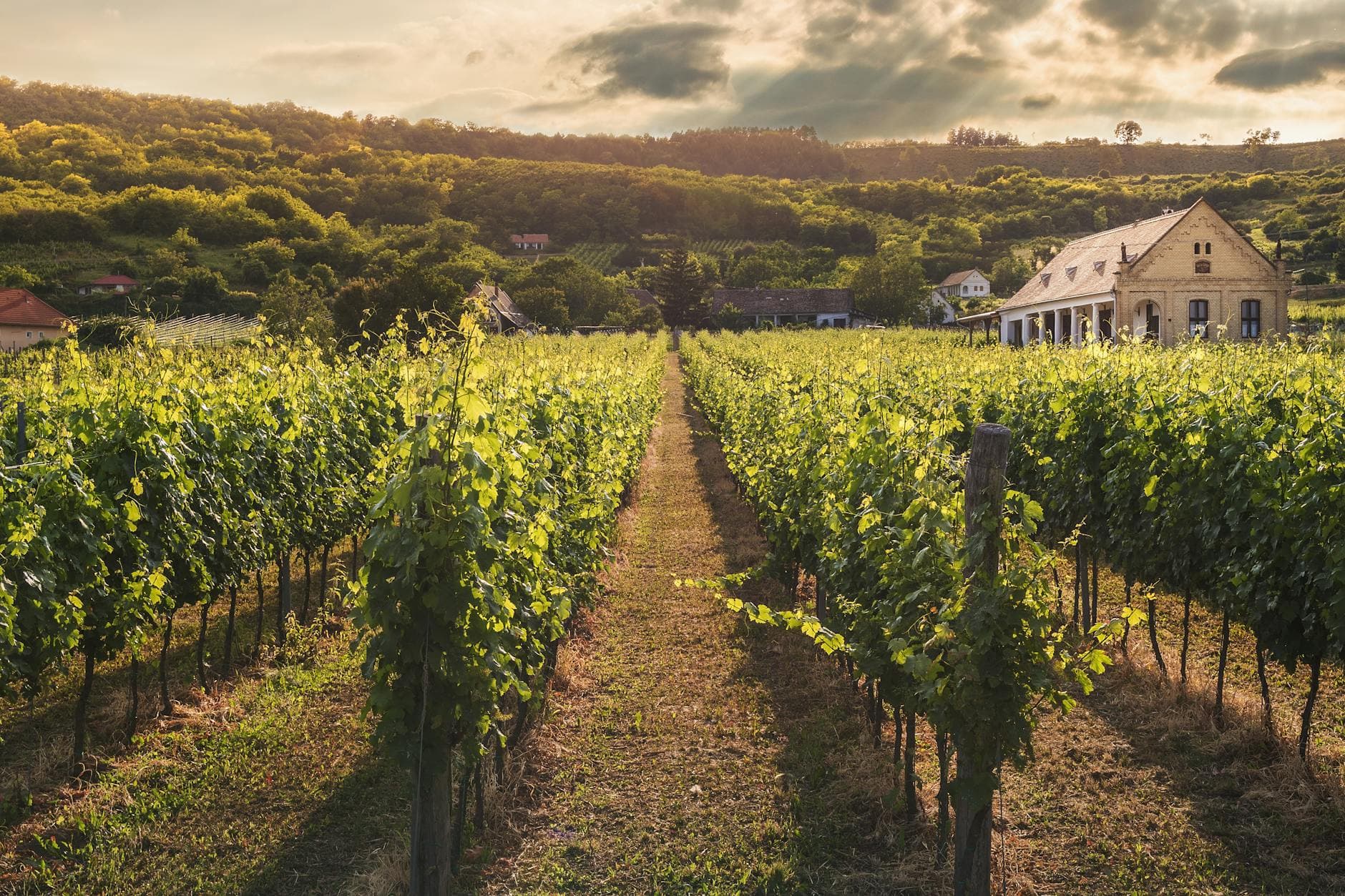
 Photo: Irene Constantino / Pexels
Where to Stay in Tokaj Wine Country: Complete 2026 Guide
Find the best places to stay in Hungary's Tokaj wine region. From the historic town of Tokaj at the river confluence to the cellar villages of Mád and Tarcal, discover where to base your trip to this UNESCO World Heritage wine region.
Planning a trip to Tokaj?
Compare hotels, vineyard B&Bs and rentals across Booking, Airbnb and more in one search.
Tokaj-Hegyalja holds a distinction no other wine region on Earth can claim: it was the world's first classified vineyard system, established by royal decree in 1737, nearly a century before Bordeaux drew its own map. The region earned UNESCO World Heritage status in 2002 for its cultural landscape of vineyards, cellars, and villages stretching across the Zemplén Hills in northeast Hungary. Its signature wine, Tokaji Aszú—made from botrytized Furmint grapes shrivelled by noble rot—was called the "Wine of Kings, King of Wines" by Louis XIV of France, who served it at Versailles. The volcanic soils (rhyolite, andesite, zeolite-rich tuff) and the morning fogs generated by the confluence of the Bodrog and Tisza rivers create conditions for Botrytis cinerea that winemakers elsewhere can only hope for.
But Tokaj in 2026 is not the same place it was twenty years ago. A new generation of producers has revived the region's dry Furmint wines—racy, mineral-driven whites with the weight and texture to stand beside top Chablis or Riesling Grosses Gewächs. Estates that once made only sweet Aszú now bottle single-vineyard dry Furmint from classified first-growth plots (dűlős). The village of Mád has become a pilgrimage site for natural wine enthusiasts. Infrastructure has improved but remains modest: this is not Napa or Tuscany. You will find family-run guesthouses, converted manor stays, and honest village restaurants rather than resort hotels—which is exactly the point.
Best Areas to Stay in Tokaj at a Glance:
- For access and atmosphere: Tokaj town — river confluence, restaurants, compact walking town
- For serious wine: Mád — village heart of the region, greatest concentration of top producers
- For quiet and views: Tarcal — hilltop châteaux, vineyard panoramas, fewer visitors
- For off-grid discovery: Tállya & Erdőbénye — artisan producers, natural wine scene, remote calm
- For culture and history: Sárospatak — Rákóczi Castle, thermal baths, university town
Best Areas to Stay for Wine Tasting

Tokaj Town
The town that gave the region its name sits at the exact point where the Bodrog flows into the Tisza. This confluence is why Tokaji Aszú exists—the rivers generate autumn fogs that coat the grapes with noble rot. Tokaj is the most accessible base: a compact town with a handful of restaurants, a few wine bars, and direct cellar access along the main street and in the hillside tunnels carved into volcanic tuff. The town's Great Synagogue (1890) and waterfront promenade add non-wine interest.
Why wine lovers choose Tokaj town:
- Confluence of Bodrog and Tisza rivers—the source of noble rot conditions
- Walking-distance cellars along Bem József utca and the hillside
- Most dining options in the region (still modest—5–6 restaurants)
- Bus and train connections to Budapest (2.5 hours by car, 3 hours by train)
- Annual Tokaj Wine Festival (early June) is held here
Price range: HUF 15,000–45,000 / €38–115 per night
Best for: First-time visitors, those arriving by public transport, weekend trip from Budapest
Wine access: Rákóczi Cellar (historic 600-metre tunnel system open for tours), Tokaj Oremus town shop, several small producers with tasting rooms on the main street. The Tokaj Tavern wine bar pours 30+ local wines by the glass.
Trade-off: The town itself is small and can feel quiet midweek outside festival season. The top estates (Szepsy, Disznókő, Royal Tokaji) are 10–20 minutes away by car. Limited nightlife.
Where to stay: Tokajvár Hotel (in the town centre, opened 2014) and Vaskó Panzió Borpince (a family-run guesthouse with its own wine cellar) are two named options.
Mád
If Tokaj has a beating heart for serious wine, it is Mád. This small village (population ~2,000) in the centre of the Tokaj-Hegyalja region is home to more top-tier producers per square kilometre than anywhere else in Hungary. Its surrounding dűlős (classified vineyard plots) include some of the most prized names in Hungarian wine: Nyulászó, Szent Tamás, Úrágya, Betsek. The village has been revitalised by a wave of investment—old cellars restored, tasting rooms opened, a village square brought back to life.
Why wine lovers choose Mád:
- Highest concentration of top producers in the region
- Home to Szepsy (Hungary's most acclaimed winemaker), Royal Tokaji, Disznókő nearby
- Village square with tasting rooms, a wine bar, and the Mád Furmint Festival (July)
- Walking access to first-growth classified vineyards
- Authentic working wine village—no tourist veneer
Price range: HUF 12,000–50,000 / €30–130 per night
Best for: Dedicated wine enthusiasts, those visiting multiple producers, natural wine fans
Wine access: Outstanding. István Szepsy's estate is here. Royal Tokaji's cellar is a short drive. Disznókő (owned by AXA Millésimes) is on Mád's outskirts. Gróf Degenfeld has a cellar and restaurant. Barta, Demeter, Holdvölgy, and several smaller producers all operate from the village or its immediate surroundings.
Trade-off: Limited accommodation options—mostly guesthouses and a few small hotels. Only 2–3 restaurants. No public transport to speak of; a car is essential. Can feel very quiet outside harvest season.
Where to stay: Madi Kuria Hotel — a converted historic bank near the Royal Tokaji Wine Company — is the named standout in the village.
Tarcal
Perched on higher ground between Tokaj town and Mád, Tarcal offers vineyard views that the valley-floor villages cannot match. Château Dereszla, one of the region's most visitor-friendly estates, is based here with tastings, a restaurant, and accommodation in a restored 18th-century manor. The village is quieter than Mád, with a more residential feel, but it sits on several important classified vineyards and has easy road access to the rest of the region.
Why wine lovers choose Tarcal:
- Château Dereszla—cellar tours, tastings, restaurant, and rooms all on site
- Elevated position with views across vineyards and the Zemplén Hills
- Quieter than Tokaj town or Mád, with a genuine village pace
- Easy driving access to both Tokaj (10 min) and Mád (15 min)
- Andrássy Residence Wine & Spa nearby for a premium stay
Price range: HUF 10,000–60,000 / €25–155 per night
Best for: Those who want a château estate experience, couples, visitors who prefer peace over bustle
Wine access: Château Dereszla is the anchor—tours of their volcanic tuff cellars are among the region's best. Grand Tokaj (the large cooperative) has a base here. Several family producers sell direct. A short drive reaches Mád and Tokaj town.
Trade-off: Very limited dining outside estate restaurants. Almost no shops or services. A car is mandatory.
Where to stay: Gróf Degenfeld Castle Hotel (a 5-star property with a spa) and Andrássy Kúria & Spa are two named options.
Tállya & Erdőbénye
These two villages on the western edge of the Tokaj-Hegyalja appellation are where the region's independent, artisan, and natural wine movement is concentrated. Tállya has a ruined Rákóczi castle and several young producers experimenting with skin-contact Furmint and minimal-intervention winemaking. Erdőbénye, tucked into a narrow valley, hosts the Bor Bemutató (Wine Show) festival and has a cluster of small-batch winemakers working in traditional gönci barrels. If Mád is Tokaj's Pauillac, Tállya and Erdőbénye are its Jura.
Why wine lovers choose Tállya & Erdőbénye:
- Centre of Hungary's natural wine movement
- Young, experimental producers (Pendits, Kikelet, Bott Pince)
- Fewer visitors—genuine off-the-beaten-path wine travel
- Erdőbénye's cellar row (Pincészet) is carved into hillside tuff
- Tállya's Rákóczi ruins and forested Zemplén Hills for hiking
Price range: HUF 8,000–30,000 / €20–78 per night
Best for: Natural wine enthusiasts, adventurous travellers, those avoiding tourist infrastructure entirely
Wine access: Direct cellar-door visits with producers who rarely export. Erdőbénye's annual wine show draws winemakers from across the region. Patricius (one of Tokaj's larger quality estates) is based in Tállya.
Trade-off: Genuinely remote. No restaurants worth mentioning—hosts may cook for you or you drive to Mád/Tokaj for dinner. Accommodation is basic (village guesthouses, private rooms). Zero public transport.
Where to stay: Barka Galéria Hotel és Étterem (a renovated historic building with a spa) and Bohém Borklub Panzió (with its own attached winery) are two named options in Tállya.
Sárospatak
Sárospatak is not technically a wine village, but it is the most interesting town within striking distance of the vineyards—and it makes a strong case as a cultural base. The Rákóczi Castle (one of Hungary's finest Renaissance fortresses), a thermal bath complex, a Reformed College with a 500-year history, and a proper town centre with restaurants and cafés give it substance that the wine villages lack. It sits at the northern edge of the Tokaj region, 25 minutes from Mád by car.
Why wine lovers choose Sárospatak:
- Rákóczi Castle—Hungary's most important Renaissance fortress
- Vegarda thermal spa complex (outdoor pools, year-round)
- More dining and accommodation options than any wine village
- Bodrog River waterfront and parkland
- Reformed College and library (founded 1531) for non-wine days
Price range: HUF 12,000–40,000 / €30–105 per night
Best for: History and culture lovers, families, those who want urban comfort with vineyard day trips
Wine access: A few wine bars in town pour Tokaj wines. The real cellars are 20–30 minutes south by car. Treat Sárospatak as a base for driving excursions rather than walk-to-cellar access.
Trade-off: You are outside the vineyard zone. Every tasting visit requires a car. The town's own wine scene is limited to retail shops and bars rather than producer cellars.
Where to stay: Hotel Bodrog Wellness & Elix Spa is the named standout in the town centre.
Types of Accommodation
Wine Estate Stays (HUF 20,000–60,000 / €50–155 per night)
Staying on a working wine estate is the definitive Tokaj experience. Several producers have restored historic manor houses or cellar buildings into guest accommodation. Expect tastings with the winemaker, cellar tours by candlelight through tuff tunnels, and breakfasts featuring local honey, fresh bread, and pálinka (fruit brandy).
What to expect:
- Rooms in or adjacent to a working winery
- Private tastings arranged by the estate
- Cellar tours of volcanic tuff tunnel systems
- Traditional Hungarian breakfast included
- Personal attention—often hosted by the winemaker's family
Best for: Wine-focused travellers who want direct producer access
Village Guesthouses (HUF 8,000–25,000 / €20–65 per night)
The backbone of Tokaj accommodation. Family-run vendégházak (guesthouses) in every wine village offer clean, simple rooms, hearty breakfasts, and hosts who know every cellar door in the region. Furnishings tend toward practical rather than stylish, but the value is outstanding.
What to expect:
- Clean, basic rooms with private bathroom
- Generous Hungarian breakfast (eggs, sausage, bread, cheese, peppers)
- Local knowledge and informal vineyard recommendations
- Garden seating, sometimes with vineyard views
- Cash payment often preferred
Best for: Budget travellers, repeat visitors, those comfortable with modest amenities
Château Hotels (HUF 40,000–90,000 / €105–235 per night)
A small number of historic properties have been converted into full-service hotels. Andrássy Residence Wine & Spa (near Tarcal) is the region's flagship luxury stay. Château Dereszla offers château accommodation with its own cellars and restaurant. Gróf Degenfeld in Tarcal combines a manor house hotel with an active winery.
What to expect:
- Restored historic architecture (18th–19th century manors)
- On-site restaurant with regional cuisine and Tokaj wine lists
- Spa or wellness facilities at top properties
- Curated tasting programmes and vineyard excursions
- Formal service in an otherwise informal region
Best for: Special occasions, couples, comfort-first travellers
Budget Pensions (HUF 5,000–15,000 / €13–40 per night)
Panzió (pension) accommodation is available in Tokaj town and Sárospatak. These are no-frills rooms—often above a restaurant or in a converted family home—that serve as a cheap bed for a night or two. Breakfast may or may not be included.
What to expect:
- Basic rooms, shared or private bathrooms
- Central locations in town
- Minimal services—reception may not be staffed
- Nearby restaurants for meals
- Functional, not atmospheric
Best for: Solo travellers, backpackers, those spending budget on wine rather than accommodation
When to Visit Tokaj
Spring (April–May)
Vineyards leaf out across the volcanic hillsides. Producers begin opening tasting rooms for the season. Weather is mild and pleasant, with few visitors. A good time for hiking in the Zemplén Hills.
Summer (June–August)

Warm days, long evenings, full festival season. The Tokaj Wine Festival (early June) and Mád Furmint Festival (July) are the year's marquee events. Temperatures can push 35°C in July–August. Book accommodation ahead for festival weekends.
Harvest Season (September–November)
The most rewarding time to visit. Furmint harvest runs from late September; botrytized Aszú grapes are picked selectively through October and into November as noble rot develops. Vineyards turn gold and copper against the volcanic hills. Cellar activity is at its peak—producers are busy but welcoming.
Winter (December–March)
Most tasting rooms close or operate by appointment only. The region is quiet and cold (temperatures regularly below freezing). Some cellars offer winter visits—the constant 10–12°C temperature in tuff tunnels makes them comfortable year-round. Accommodation prices drop significantly.
| Month | Weather | Crowds | Prices | Highlights |
|---|---|---|---|---|
| Jan–Feb | Cold, -3–4°C | Very low | Lowest | Cellar visits by appointment, winter quiet |
| Mar–Apr | Mild, 8–17°C | Low | Low–Medium | Vineyards wake up, hiking season begins |
| May–Jun | Warm, 18–27°C | Medium | Medium–High | Wine festivals, green vineyards, outdoor dining |
| Jul–Aug | Hot, 22–35°C | Medium–High | High | Mád Furmint Festival, long summer evenings |
| Sep–Oct | Warm, 12–24°C | Medium | Medium–High | Harvest, noble rot developing, autumn colours |
| Nov–Dec | Cool, 0–8°C | Low | Low | Late Aszú picking, cellar warmth, off-season rates |
Insider Tips for Tokaj Wine Travel
- Understand the Aszú puttonyos system — Tokaji Aszú was historically graded from 3 to 6 puttonyos (the number of baskets of botrytized grapes added to a base wine barrel). Since 2013, Hungarian law requires all Tokaji Aszú to meet the former 5-puttonyos minimum (120g/L residual sugar). Anything labelled Aszú today is rich, concentrated, and expensive. Below that, look for Szamorodni (Szraz for dry, Édes for sweet)—an underrated entry point.
- The dry Furmint revolution is real — Twenty years ago, Tokaj made almost exclusively sweet wines. Today, dry and off-dry Furmint accounts for the majority of production at many estates. These wines—mineral, textured, often with a faint smoky character from volcanic soils—are among Europe's most exciting whites. Ask producers for single-vineyard (dűlő) bottlings to taste the terroir differences between plots.
- Know the key producers — István Szepsy (the godfather of modern Tokaj, Mád), Royal Tokaji (British-founded, revived first-growth vineyards), Disznókő (AXA Millésimes, polished Aszú), Oremus (Vega Sicilia's Tokaj project), Patricius (Tállya, consistent quality at fair prices), Dobogó (small, biodynamic, in Mád), Holdvölgy (modern winery, striking architecture). Most welcome visitors, but call ahead—this is not a walk-in culture.
- Explore the volcanic tuff cellars — Tokaj's underground cellar systems, carved into volcanic tuff rock over centuries, maintain a constant 10–12°C temperature and are coated with a thick black mould called Cladosporium cellare that thrives on alcohol vapour. The Rákóczi Cellar in Tokaj town (600m of tunnels), Ungváry Cellar in Sárospatak, and the cellars beneath Mád's village streets are all visitable. Bring a layer—it is cool and damp underground regardless of season.
- Pair Tokaji Aszú with foie gras — The classic pairing, borrowed from the wine's long French connection. Duck and goose liver production is a Hungarian tradition, and foie gras appears on menus throughout the region. The sweetness, acidity, and botrytis character of Aszú cuts through the richness of the liver. Also try Aszú with blue cheese, aged Trappista, or walnut strudel.
- Budapest is 2.5 hours by car — The drive from Budapest follows the M3 motorway northeast. InterCity trains run to Tokaj town (about 3 hours) but are infrequent, and once in the region, public transport between villages is limited. Rent a car in Budapest or at Debrecen airport (1.5 hours south). A designated driver or taxi arrangement is necessary for tasting days.
- Visit the Zemplén Hills for non-wine days — The forested Zemplén range rises directly behind the vineyards and offers marked hiking trails, castle ruins (Boldogkőváralja, Regéc), and the kind of unhurried Hungarian countryside that rarely appears in guidebooks. Sárospatak and Sátoraljaújhely are good trailheads. The hills also explain Tokaj's terroir—volcanic geology, altitude variation, and the wind patterns that dry grapes after autumn fog.
- Prices are remarkably low — Tokaj remains one of Europe's great wine travel bargains. A cellar tasting of 5–6 wines (including Aszú) typically costs HUF 3,000–8,000 (€8–21). A full meal with wine at a village restaurant rarely exceeds HUF 8,000 (€21) per person. Bottles of excellent dry Furmint retail for HUF 3,000–6,000 (€8–16) at the cellar door. Compare this to Burgundy, Tuscany, or Napa and the value is extraordinary.
Book Your Tokaj Wine Country Stay
Ready to explore Hungary's historic wine kingdom? Compare wine country stays on Stay22—from Mád village guesthouses to Tarcal château estates. Stay22 compares prices across Booking, Airbnb, Hotels.com and more in one search.
Compare Tokaj stays on Stay22 →
Tokaj gives you what most famous wine regions have lost: world-class wine at honest prices, working villages that have not been polished for tourists, and cellars where the winemaker pours your glass and tells you about the vintage themselves—all set against a volcanic landscape that has produced extraordinary wine since before Bordeaux was classified.
More Wine Travel Guides
- Where to Stay in Wachau Valley
- Where to Stay in Burgundy
- Where to Stay in Douro Valley
- Where to Stay in Mosel Valley
Word Count: ~1,850
Last Updated: March 2026
Author: WineTravelGuides Editorial Team
Ready to visit Tokaj?
Build your personalised day-by-day itinerary — choose your travel style and trip length, get accommodation and tour picks per day, and email it to yourself to take along.
Upcoming Wine Festivals in Hungary
See all festivalsHidden Gems Nearby
Discover more hidden gemsBook Your Tokaj Wine Country Stay
Compare hotels, vineyard B&Bs and rentals across Booking, Airbnb and more in one search.
Compare stays near the vineyardsStay22
Plan Your Where to Stay in Tokaj Wine Country: Complete 2026 Guide Trip
Estimate your Where to Stay in Tokaj Wine Country: Complete 2026 Guide trip cost
Budget calculator with accommodation, food, wine, and transport estimates.
Try itCompare Where to Stay in Tokaj Wine Country: Complete 2026 Guide with other regions
Side-by-side comparison of cost, climate, wine styles, and more.
Try itWhen to visit Where to Stay in Tokaj Wine Country: Complete 2026 Guide
Harvest dates, peak season, and the best months for wine travel.
Try itThis page contains affiliate links. We may earn a commission at no extra cost to you.