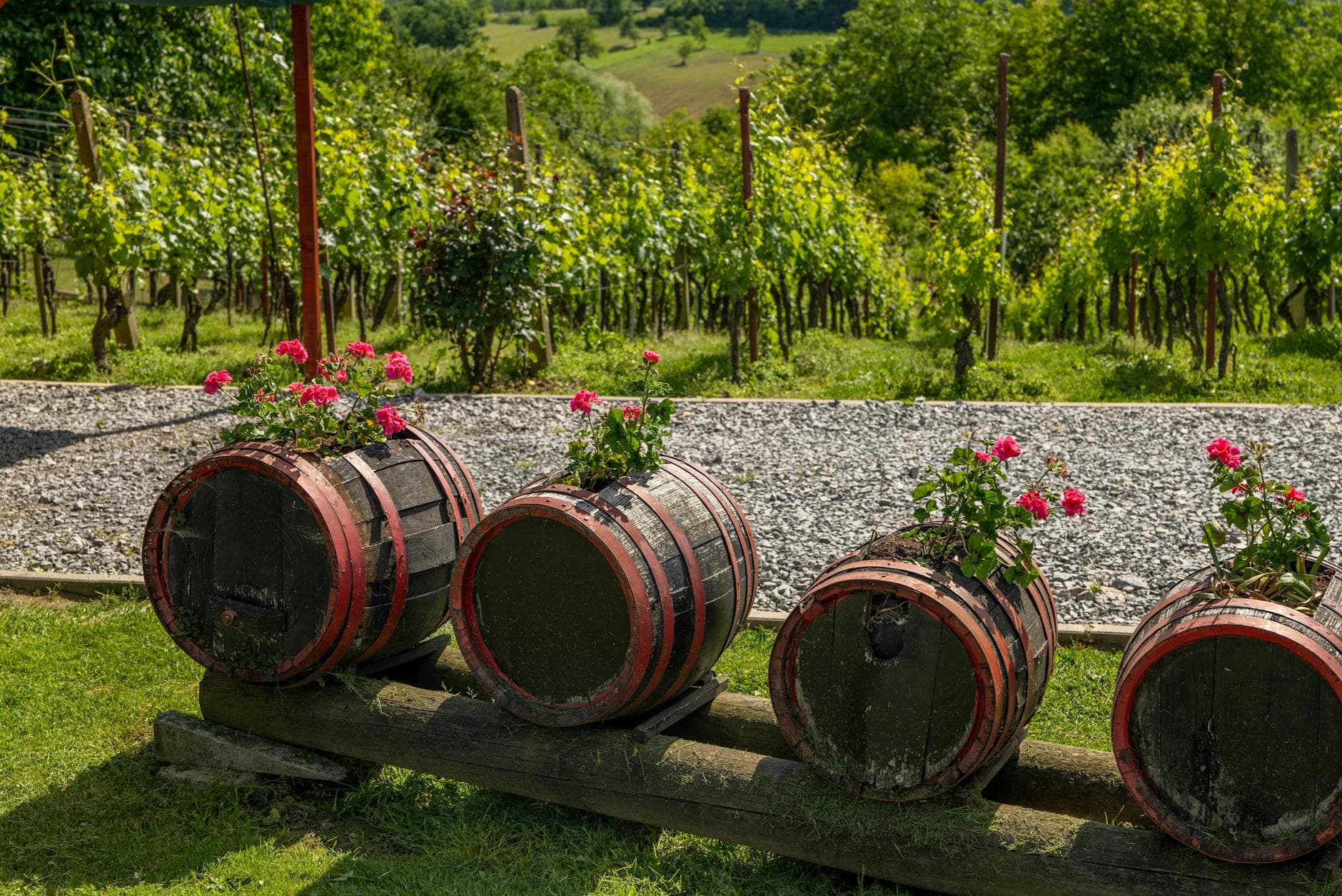
 Photo: Tim Mossholder / Pexels
Where to Stay in Transylvania Wine Country: Complete 2026 Guide
Find the best places to stay in Transylvania for wine lovers. From medieval Sighișoara to the Târnave Valley heartland, discover where to base yourself for tasting Fetească Albă, Fetească Regală, and Romania's finest cool-climate whites.
Planning a trip to Where to Stay in Transylvania Wine Country: Complete 2026 Guide?
Compare hotels, vineyard B&Bs and rentals across Booking, Airbnb and more in one search.
Transylvania is a word that conjures castles and vampires, but the real story here is wine. Romania is the sixth-largest wine producer in Europe and the thirteenth globally, and Transylvania — the high plateau ringed by the Carpathian Mountains — produces some of the country's most distinctive bottles. The cool-climate vineyards of the Târnave, Lechința, and Alba Iulia wine areas sit at 300–500m elevation, where cold nights preserve acidity and coax intense aromatics from indigenous grapes you won't find anywhere else: Fetească Albă (a crisp, floral white), Fetească Regală (a crossing of Fetească Albă and Grasa de Cotnari, giving wines with peach and elderflower), and Fetească Neagră (a dark-skinned red with plum, black pepper, and surprising structure). These are not international varieties wearing a Romanian label — they are grapes that evolved here over centuries.
Beyond the wines, Transylvania holds one of Europe's densest collections of medieval heritage. Seven UNESCO-listed Saxon fortified churches dot the rolling hills between Sighișoara and Sibiu, built by German settlers (Transylvanian Saxons) who arrived in the 12th century and left behind a cultural footprint visible in every village square, church tower, and farmhouse gable. The star fortress at Alba Iulia is among the finest Vauban-style citadels in Eastern Europe. Sighișoara's medieval citadel — the birthplace of Vlad III (the historical Dracula) — is one of the last continuously inhabited medieval walled towns on the continent. Pair this with some of the lowest travel costs in the EU, and Transylvania offers something no established wine region can match: genuine discovery without the crowds or the price tags.
Best Areas to Stay in Transylvania Wine Country at a Glance:
- For medieval atmosphere: Sighișoara — UNESCO citadel, Dracula birthplace, tourist-friendly base
- For wine + history: Alba Iulia — star fortress, gateway to Jidvei and Târnave wineries
- For city comforts: Brașov — best restaurants, Bran Castle access, Carpathian mountain setting
- For the wine heartland: Târnave Valley / Blaj — Jidvei estate, vineyard immersion, rural quiet
- For authentic rural life: Biertan / Saxon Villages — fortified churches, Saxon guesthouses, no crowds
Best Areas to Stay for Wine Tasting
Sighișoara
Sighișoara's medieval citadel sits on a hill above the Târnava Mare river, its coloured houses, cobblestone alleys, and 14th-century Clock Tower preserved almost exactly as the Saxon merchants left them. Vlad Dracul (father of the infamous Vlad the Impaler) lived here in the 1430s — the house still stands on the main square and now operates as a restaurant. The citadel is a UNESCO World Heritage Site and one of the most intact medieval fortified towns in Europe. For wine travellers, Sighișoara works as a central base: the Târnave wine region begins 30 minutes west, the Saxon fortified church circuit radiates outward in every direction, and the town itself has enough restaurants, cafés, and guesthouses to sustain a comfortable multi-day stay.
Why wine lovers choose Sighișoara:
- UNESCO-listed medieval citadel — walk cobblestone streets inside 500-year-old walls
- Central location between Târnave wineries (west), Lechința (north), and Saxon villages (south)
- Best-developed tourist infrastructure in rural Transylvania — ATMs, pharmacies, car rental
- Direct train connections from Bucharest (4.5–5 hours) and Cluj-Napoca (3 hours)
- Restaurants in the citadel serve Romanian wines by the glass — try Casa cu Cerb or Casa Vlad Dracul
- September Medieval Festival draws performers, craftspeople, and local wine vendors
Price range: €30–120/night (150–600 RON)
Best for: First-time visitors to Transylvania, history lovers, those wanting a comfortable base with services
Wine access: Moderate. No major wineries within the town itself, but Jidvei (Romania's largest estate) is 45 minutes west. Liliac Winery near Lechința is about an hour north. Several restaurants stock good Romanian wine lists, and small wine shops in the lower town carry local bottles.
Trade-off: Not inside the wine country — you'll need a car to reach vineyards. The citadel gets busy with day-trippers between 10am and 3pm in summer, though evenings are quiet.
Where to stay: The Heritage Boutique Hotel Sighișoara, near the fortified churches, or Fronius Residence, in the medieval citadel.
Alba Iulia
Alba Iulia is a mid-sized city built around one of the most spectacular fortresses in Eastern Europe: a seven-pointed Vauban star fortress completed in 1738, with massive bastions, underground passages, and a ceremonial gate where a daily changing-of-the-guard takes place. The city holds deep symbolic weight for Romanians — this is where the 1918 unification of Romania was declared. For wine travellers, Alba Iulia matters because the Târnave wine region's southern gateway starts here, with Jidvei's massive estate (Romania's single-largest vineyard — over 2,500 hectares under vine) just 40 minutes northeast. The city also sits on the Alba Iulia DOC, a smaller appellation producing both whites and reds.
Why wine lovers choose Alba Iulia:
- Star fortress is extraordinary — walk the bastions at sunset with almost no one else around
- Closest city to Jidvei, Crama Ceptura's Transylvanian operations, and smaller Târnave producers
- More urban amenities than any village base — proper hotels, restaurants, supermarkets
- The Orthodox cathedral and Catholic cathedral stand side by side inside the fortress
- Wine bars in the fortress serve regional bottles — try Pub 13 or Restaurant Medieval
Price range: €35–130/night (170–650 RON)
Best for: Wine-and-history travellers, those who prefer a city base with modern comforts, couples
Wine access: Good. Jidvei's cellar and visitor centre is a straightforward 40-minute drive northeast. Domeniul Bogdan (organic/biodynamic wines) is near Miniș but distributes across Transylvania. Several Alba Iulia restaurants carry strong Romanian wine selections.
Trade-off: Less picturesque than Sighișoara or the Saxon villages outside the fortress walls. The modern city beyond the fortress is functional rather than charming. You'll still need a car for wine country.
Where to stay: Hotel Transilvania, inside the Alba Carolina Citadel, or Carolina Heritage, a short walk from the historic gate.
Brașov
Brașov is the largest and most cosmopolitan city in Transylvania, set dramatically in a valley between mountain ridges with the Hollywood-style "BRAȘOV" sign on Tampa Mountain visible from the old town. The Council Square (Piața Sfatului) is surrounded by Baroque merchant houses, and the Black Church — the largest Gothic church between Vienna and Istanbul — dominates the skyline. Bran Castle (marketed as "Dracula's Castle") is 30 minutes south. Brașov isn't a wine town by nature, but it has the best restaurant scene in Transylvania, the most international transport connections, and works as a gateway if you're combining wine touring with Carpathian hiking or castle visits.
Why wine lovers choose Brașov:
- Best dining in Transylvania — Sergiana (traditional Romanian), Bistro de l'Arte (European), La Ceaun
- Strong wine bar scene — Vinoteca Brașov and Wine & Dine stock serious Romanian selections
- Gateway to Bran Castle and Peleș Castle (Sinaia) for non-wine day trips
- Cable car up Tampa Mountain for panoramic views across the Carpathian foothills
- Easy access from Bucharest (2.5 hours by car, 2.5–3 hours by train)
- Best hotel quality in the region — international-standard properties from €50/night
Price range: €40–180/night (200–900 RON)
Best for: Travellers combining wine with broader Transylvania tourism, food lovers, those arriving from Bucharest, families
Wine access: Limited for vineyard visits — Târnave and Lechința are 2+ hours away. However, Brașov's wine bars and restaurants offer the best curated tasting experience in the region without driving. Several shops specialise in Romanian wine.
Trade-off: Far from the actual vineyards. Brașov is a city experience, not a wine country experience. Use it as a start/end point, not your only base.
Where to stay: Radisson Blu Aurum Hotel, at the entrance to the Old Town with views over the rooftops, or Casa Wagner, a family-run heritage hotel in the historic centre.
Târnave Valley / Blaj
This is where Transylvania's wine actually comes from. The Târnave DOC — centred on the confluence of the Târnava Mare and Târnava Mică rivers near the small city of Blaj — produces the majority of Transylvania's white wines. Jidvei, Romania's largest single-estate winery, dominates the landscape: rows of vines stretch to the horizon across gently rolling hills, punctuated by the estate's modern winery complex and its medieval Bethlen-Haller Castle (now a tasting venue and event space). Smaller producers like Nachbil, Crama Jelna, and Liliac (technically in the Lechința sub-region to the north) are within reach. Blaj itself is a quiet Transylvanian town — the historic centre of Romanian Uniate Greek Catholic culture — with a cathedral, a seminary, and not much tourism infrastructure.
Why wine lovers choose the Târnave Valley:
- You're inside the vineyards — no driving to "get to wine country" because you're already there
- Jidvei's visitor centre offers structured tastings, cellar tours, and the Bethlen-Haller Castle experience
- Fetească Albă and Fetească Regală grown here reach their aromatic peak — floral, mineral, high-acid
- Cost of living is lower than anywhere else on this list — meals under €8, bottles from €3
- Genuine rural Romania — horse carts on the roads, shepherds with flocks, no tour buses
Price range: €20–70/night (100–350 RON)
Best for: Serious wine travellers, those who want vineyard immersion over city comforts, budget-conscious visitors
Wine access: Excellent. Jidvei is the anchor, but smaller cellars in surrounding villages sell direct. The valley produces almost exclusively white wines — Fetească Albă, Fetească Regală, Sauvignon Blanc, Muscat Ottonel, and some Pinot Gris. If you want reds, you'll need to look elsewhere (Miniș-Măderat or Dealu Mare in Wallachia).
Trade-off: Very limited accommodation — mostly pensions (guesthouses) with basic amenities. Few restaurants; you'll eat at your pension or at Jidvei's estate restaurant. No nightlife. Limited English spoken. A car is essential.
Where to stay: Castel Haller, a restored 16th-century castle surrounded by vineyards in Cetatea de Baltă, or Traube Medias, a wine-focused hotel with its own accessible vineyard.
Biertan / Saxon Villages
Biertan's fortified church is the poster image of Saxon Transylvania: a massive 15th-century Gothic church encircled by three rings of defensive walls, perched on a hill above a village of painted houses and cobblestone lanes. It held the seat of the Evangelical Lutheran Bishop of Transylvania for 300 years. The surrounding cluster of Saxon villages — Richiș, Copșa Mare, Mălâncrav, Viscri (famously championed by King Charles III) — offers an immersion into a way of life that has changed remarkably little in centuries. Guesthouses run by Saxon descendants or Romanian families offer simple rooms, home-cooked meals, and an unfiltered experience of rural Transylvania.
Why wine lovers choose the Saxon villages:
- UNESCO-listed fortified churches — Biertan, Viscri, Valea Viilor, Dârjiu are all within 30 minutes of each other
- Viscri guesthouses (including Prince Charles's own property) serve home-produced wine and țuică (plum brandy)
- Authentic agritourism — meals use ingredients from the garden, meat from the farm, wine from the cellar
- Photography and walking are the primary activities; no commercial tourism infrastructure
- Mălâncrav has a restored Saxon manor (Apafi Manor) with cultural programmes and local wine tastings
- The most affordable accommodation in Transylvania — €15–50/night with meals included
Price range: €15–60/night (75–300 RON), often including breakfast and dinner
Best for: Slow travellers, photographers, those seeking authenticity over comfort, cultural tourists, budget travellers
Wine access: Informal. No commercial wineries in the immediate villages, but families produce their own wine (often from Fetească Albă or hybrid varieties) and serve it with meals. For structured winery visits, Jidvei is 30–45 minutes west and Liliac is about an hour north.
Trade-off: Very basic facilities — shared bathrooms in some guesthouses, intermittent hot water, limited Wi-Fi. Roads between villages can be unpaved. No restaurants, shops, or ATMs in most villages. You need a car, a sense of adventure, and realistic expectations about comfort.
Where to stay: Pensiunea Oppidum, an 1800s guesthouse beside the Biertan fortress, or Villa Rihuini, a sustainable eco guesthouse in nearby Richiș.
Types of Wine Country Accommodation in Transylvania
Saxon Guesthouses (€15–60/night / 75–300 RON)
The defining Transylvanian accommodation. Saxon-style farmhouses with thick stone walls, painted wooden gates, interior courtyards, and rooms furnished with traditional textiles and tile stoves. Many are in UNESCO-listed villages like Viscri, Biertan, or Mălâncrav. The host family cooks dinner (often included in the price) from their own garden — expect soups, sarmale (stuffed cabbage rolls), polenta, fresh cheese, and home-made wine or țuică. The Mihai Eminescu Trust and Fundația ADEPT help maintain a network of quality guesthouses across the Saxon villages.
Best for: Travellers who value cultural authenticity over amenities, slow travel, extended rural stays.
Boutique Hotels (€60–180/night / 300–900 RON)
A small but growing category. Properties like Casa Wagner (Sighișoara), Casa Chitic (Brașov), and Fronius Residence (Sighișoara) blend historic architecture — vaulted cellars, exposed timber, Saxon stone — with modern bathrooms, good mattresses, and curated wine lists. Alba Iulia's fortress is developing boutique options inside the star fortification walls. These are the best option for travellers who want character and comfort without roughing it.
Best for: Couples, wine-and-history travellers, those who want a proper wine list at dinner.
Rural Pensions / Pensiuni (€20–70/night / 100–350 RON)
Romania's pension system is the backbone of rural tourism. A pensiune is a family-run guesthouse, rated 1–5 daisies (margarete) by the national tourism authority. Most wine-country pensions are 2–3 daisies: clean private rooms, home-cooked breakfast (often included), and a host who knows every local winemaker and church. In the Târnave Valley and around Lechința, pensions are often the only accommodation option. Quality varies — look for those with recent reviews mentioning cleanliness and food.
Best for: Budget travellers, solo visitors, those touring by car who need a different base each night.
City Hotels (€40–180/night / 200–900 RON)
Brașov, Sibiu, and Cluj-Napoca offer full-service hotels with international standards — concierge, room service, fitness centres, professional wine bars. In Brașov, properties like the Aro Palace or Hotel & Spa & Aquapark & Wellness & Conference Centre Marami range from grand to modern. Sibiu's old town has several excellent options within the medieval walls. These make sense as start/end points or for travellers who want to taste Romania's best wines by the glass rather than driving vineyard roads.
Best for: First-time visitors, families, business travellers, those arriving by air (Sibiu has a small international airport).
When to Visit Transylvania
High Season (June–September)
Warm days (22–30°C), long evenings, and the busiest period for Sighișoara, Brașov, and the Saxon churches. Sighișoara's Medieval Festival (late July) fills the citadel with performers, vendors, and period costumes. Harvest begins in late September — a genuinely exciting time to visit wineries, though few estates run formal harvest experiences yet.
Shoulder Season (April–May, October)
Spring wildflower meadows around the Saxon villages are spectacular — Transylvania has some of the last unploughed hay meadows in Europe, with orchid and gentian species long extinct elsewhere. October brings autumn colour across the Carpathian foothills and the year's new wines arriving at cellars. Fewer tourists, lower prices, cool but comfortable weather.
Winter (November–March)
Cold (often below 0°C in January/February), with snow across the highlands. Christmas markets in Brașov and Sibiu are growing in popularity. Most rural guesthouses close or operate on request only. Wineries reduce visiting hours but don't close entirely. Budget travellers will find the lowest rates of the year.
| Month | Weather | Crowds | Prices | Highlights |
|---|---|---|---|---|
| Jan–Feb | Cold, -5 to 3°C | Very low | Lowest | Snow-covered citadels, winter quiet |
| Mar–Apr | Cool, 5–14°C | Low | Low | Spring wildflowers, bud break in vineyards |
| May–Jun | Warm, 15–25°C | Medium | Medium | Wildflower meadows, long days, outdoor dining |
| Jul–Aug | Hot, 22–30°C | Highest | Highest | Sighișoara Medieval Festival, castle tourism peak |
| Sep | Warm, 16–24°C | High | Medium–high | Grape harvest, wine festivals, warm evenings |
| Oct | Mild, 8–16°C | Medium | Medium | Autumn colour, new wines, quiet villages |
| Nov | Cool, 2–8°C | Low–medium | Low–medium | Christmas markets open late November |
| Dec | Cold, -2 to 5°C | Medium | Medium | Christmas markets peak, mulled wine, snow |
Insider Tips for Transylvania Wine Country
- Learn the Fetească family. Three grapes, three different wines. Fetească Albă (white maiden) gives light, floral, mineral whites — think Pinot Grigio with more personality. Fetească Regală (royal maiden) is a uniquely Romanian crossing, producing aromatic whites with peach and elderflower. Fetească Neagră (black maiden) is the serious red — dark fruit, spice, and tannin that ages well. Order all three side by side to understand what makes Romanian wine distinct from everything else in Europe.
- Visit the anchor producers. Jidvei is unavoidable — 2,500+ hectares, Romania's largest estate, with a visitor centre, the medieval Bethlen-Haller Castle for tastings, and wines ranging from €3 table whites to €15 reserve bottles. Liliac (Lechința) is the quality benchmark — a smaller estate with an Austrian-Romanian team producing precise, modern wines. Nachbil (also Lechința) does clean, varietally pure whites. Domeniul Bogdan (near Miniș but distributed across Transylvania) is the organic/biodynamic pioneer. Crama Jelna makes good-value Târnave whites.
- Combine wine with the fortified church trail. Seven Saxon fortified churches hold UNESCO World Heritage status, and dozens more are scattered across the hills. Plan a driving route that links Biertan, Viscri, Valea Viilor, and Dârjiu with wine stops at Jidvei or Liliac. The churches are free or charge a small donation (5–10 RON), and you'll often have the custodian unlock the door just for you.
- Carry cash in villages. Card payment is standard in Brașov, Sighișoara, and Alba Iulia, but most Saxon village guesthouses, rural pensions, and small wine cellars operate on cash only. ATMs exist in every town but not in villages. Withdraw RON before heading into the countryside. Budget roughly 150–250 RON/day (€30–50) for accommodation and meals in rural areas.
- Try țuică before judging it. Romania's plum brandy is distilled in nearly every rural household. Good țuică — double-distilled, aged in mulberry wood — is a refined spirit with fruit complexity and a clean finish. Bad țuică will burn your throat and your morning. In Saxon villages, your host will pour it as a welcome drink. Sip slowly, compliment it, and mean it.
- Fly into Sibiu or Cluj, not just Bucharest. Bucharest to Sighișoara is a 4.5–5 hour drive. Sibiu's airport (SBZ) receives Wizz Air and Lufthansa flights and puts you 90 minutes from the Târnave Valley. Cluj-Napoca (CLJ) is Transylvania's largest airport with more connections, 2.5 hours from the wine region. Renting a car at either airport is cheaper than at Bucharest and cuts hours off your travel.
- Understand Romanian wine classifications. DOC-CMD (with geographic and grape restrictions) is the top tier, equivalent to France's AOC. DOC-CT is a step below. IG (Indicație Geografică) is the broadest regional designation. Look for "Târnave" or "Lechința" on labels — these are the Transylvanian appellations. The system is modelled on EU Protected Designation of Origin rules and is still maturing, so small-producer quality can outpace its classification.
- Respect the pace. Romanian hospitality in rural Transylvania follows its own clock. Your guesthouse host will want to feed you, pour you drinks, and tell you stories. Dinners at pensions are communal, long, and generous. Trying to rush through three winery appointments in a day misses the point. Book fewer stops, stay longer at each, and let the afternoon unfold.
Book Your Transylvania Wine Country Stay
Transylvania is one of the last genuinely undiscovered wine regions in Europe — a place where you can taste indigenous grape varieties that grow nowhere else, sleep in medieval citadels and Saxon farmhouses, and spend less in a week than you would in a weekend in Burgundy or Tuscany. Browse curated wine country stays, from fortress boutique hotels in Sighișoara to vineyard pensions in the Târnave Valley, all selected for wine travellers.
Romania's wine story is being written right now, not polished for export. Go before the rest of Europe catches on.
More Transylvania Wine Travel Guides
- Transylvania Wine Region Overview
- Sighișoara Guide
- Romania Wine Regions
- Transylvania Fortified Church & Wine Trail Itinerary
- Transylvania vs Tokaj Comparison
Word Count: ~2,200
Last Updated: March 2026
Author: WineTravelGuides Editorial Team


Book Your Where to Stay in Transylvania Wine Country: Complete 2026 Guide Wine Country Stay
Compare hotels, vineyard B&Bs and rentals across Booking, Airbnb and more in one search.
Compare stays near the vineyardsStay22
Plan Your Where to Stay in Transylvania Wine Country: Complete 2026 Guide Trip
Estimate your Where to Stay in Transylvania Wine Country: Complete 2026 Guide trip cost
Budget calculator with accommodation, food, wine, and transport estimates.
Try itCompare Where to Stay in Transylvania Wine Country: Complete 2026 Guide with other regions
Side-by-side comparison of cost, climate, wine styles, and more.
Try itWhen to visit Where to Stay in Transylvania Wine Country: Complete 2026 Guide
Harvest dates, peak season, and the best months for wine travel.
Try itThis page contains affiliate links. We may earn a commission at no extra cost to you.