The Alsace Wine Route: 3-Day Road Trip from Strasbourg to Colmar
Drive the Alsace Wine Route in 3 days. Day-by-day road trip itinerary from Strasbourg to Colmar covering Riesling, Pinot Gris, and Gewurztraminer producers along the 170km Route des Vins d'Alsace.
The Alsace Wine Route: 3-Day Road Trip from Strasbourg to Colmar
The Alsace Wine Route (Route des Vins d'Alsace) is 170km of perfectly organised wine travel: a single road running south from Strasbourg to Thann along the foothills of the Vosges, connecting 70 villages and hundreds of domaines. The signposting is excellent, the villages are fairytale-pretty, the wine is some of France's most distinctive, and three days is exactly the right length for the road.
Alsace makes wine in a style you will not find anywhere else in France. Its Germanic heritage (the region changed hands between France and Germany four times between 1871 and 1945) shows in the grape varieties — Riesling, Gewurztraminer, Pinot Gris, Pinot Blanc — and in the tall, slender bottle shape. But the cooking is unmistakably French, and the combination of German-influenced wine with French food creates some of the most satisfying pairings in European gastronomy.
Budget estimate: EUR 150-280/day per person (mid-range). Alsace is more affordable than Burgundy or Bordeaux, with good mid-range hotel and restaurant options throughout.
Best time: May-June (green vines, ideal weather). September-October for harvest and the golden Vosges foliage. The Christmas markets in Strasbourg and Colmar (late November-December) run alongside the wine route and the combination is excellent.
Before You Go

Getting there: Strasbourg Entzheim Airport serves Paris connections and direct European routes. Alternatively, TGV from Paris Est to Strasbourg takes 1h46. Rent a car in Strasbourg — the wine route is entirely car-dependent.
Key grapes to understand:
- Riesling: Alsace's finest grape. Dry, mineral, high-acid. Ages magnificently.
- Gewurztraminer: Aromatic, rose petal and lychee. Pairs with Alsatian choucroute.
- Pinot Gris: Rich, smoky, textured. The food wine of the region.
- Pinot Blanc: The everyday wine. Crisp, clean, reliable.
- Crémant d'Alsace: Sparkling, made by méthode traditionnelle. Excellent value.
Booking: Most Alsace domaines accept walk-in visitors (unlike Burgundy), but calling ahead for larger estates is courteous. The smaller family domaines often welcome visitors without notice — look for open gates and chalkboard signs saying "dégustation" (tasting).
Day 1: Strasbourg to Obernai — The Northern Route
Morning — Strasbourg
Spend your first morning in Strasbourg before heading south. The Grande Île (historic island centre) is a UNESCO World Heritage Site: the Gothic cathedral, the Petite France district with its half-timbered houses, and the Alsatian Museum on Rue du Vieux-Marché-aux-Poissons are all worth time.
Wine point: Visit Cave des Hospices de Strasbourg (1 Place de l'Hôpital) — one of France's oldest wine institutions, dating to 1395, still producing wines from their charitable foundation vineyards. The basic Pinot Blanc is excellent value; ask about older vintages of their Grand Cru Zotzenberg Sylvaner.
Late Morning — Molsheim
Drive 20km south to Molsheim, gateway to the northern wine villages. The town itself has a good small market on Tuesdays. The Bugatti factory museum is here if you need a non-wine break (Bugatti was founded in Molsheim in 1909).
Lunch — Rosheim or Obernai
Winstub S'Rosemer in Rosheim does excellent tarte flambée (Alsatian flatbread with fromage blanc, onion, and lardons) and a very good selection of local Pinot Blanc and Riesling by the carafe. This is the essential Alsace lunch.
Afternoon — Obernai and the Grands Crus
Obernai is the most visited town on the northern route and justifiably so — the flower-hung half-timbered houses around Place du Marché are the visual archetype of Alsatian architecture. The town has several good wine caves (shops) on the main square selling wines from surrounding producers.
Drive the loop south through Bourg-Bruche and Barr (the capital of the northern Riesling zone). Domaine Klipfel in Barr does a good tour of their caves and tastings of their Grand Cru Kirchberg de Barr Riesling — one of the northern route's best.
Evening — Andlau
Stay overnight in or near Andlau, a small village with three Grand Cru vineyards and one of the most underrated restaurant scenes on the northern route. Domaine Marc Kreydenweiss in Andlau produces biodynamic Rieslings of extraordinary precision and welcomes visitors with advance notice.
Dinner — Auberge des Châteaux, Orschwiller
The auberge's kitchen uses local produce — Munster cheese from the Vosges, river trout, Alsatian charcuterie — in classic regional preparations. The wine list covers the northern route producers in depth. Order the coq au Riesling (chicken braised in Riesling) and a bottle of Trimbach Cuvée Frédéric Émile from the list.
Day 2: Ribeauvillé to Kaysersberg — The Heart of the Route
This is the best day: the central section of the wine route contains the highest concentration of Grand Cru vineyards, the most celebrated producers, and the most beautiful villages.
Morning — Ribeauvillé
Ribeauvillé sits below three medieval châteaux and produces some of the finest Rieslings and Gewurztraminers on the route. Trimbach — the most internationally known Alsace producer — is based here. Their Clos Sainte-Hune Riesling is one of France's most age-worthy whites; their accessible Riesling Réserve Personnelle is the wine to buy.
Walk the Grand Rue, visit the wine cooperative (Cave de Ribeauvillé — the oldest cooperative in France, founded in 1895), and stop at Domaine Sipp-Mack for a focused tasting of the village's Grands Crus: Gloeckelberg, Kirchberg de Ribeauvillé, and Osterberg each show different aspects of the region's limestone and sandstone terroir.
Late Morning — Riquewihr
Riquewihr is the most perfectly preserved medieval wine village in Alsace and, as a consequence, the most visited. Arrive before 11am to beat coach tours. The village is contained within its 16th-century walls; every building is half-timbered and flower-covered. The Musée de la Communication en Alsace (in the 16th-century Dolder tower) has exhibits on regional history.
Wine stop: Hugel et Fils, one of Alsace's oldest family producers (since 1639), runs a tasting room in the village. Their Jubilee range — Riesling, Gewurztraminer, Pinot Gris — represents excellent quality at the serious mid-range.
Lunch — Winstub du Sommelier, Bergheim
Bergheim is a quieter village 3km east of Riquewihr, surrounded by its own medieval walls. Winstub du Sommelier does the full roster of Alsatian classics — choucroute garnie (sauerkraut with assorted charcuterie), baeckeoffe (slow-baked meat and potato casserole), and tarte flambée — with a wine list focused exclusively on local producers. The house Gewurztraminer, served in a ceramic pitcher, is ideal with the rich charcuterie.
Afternoon — Kaysersberg and Zellenberg
Kaysersberg is the birthplace of Albert Schweitzer and one of the loveliest villages on the route — the fortified bridge over the Weiss river, the castle ruins, and the flowers cascading from every window create a scene that feels almost fictional. The village is also home to Albert Boxler, one of Alsace's most respected producers of Riesling and Pinot Gris; their Brand Grand Cru wines are worth seeking.
Domaine Weinbach at Kaysersberg's Clos des Capucins is an essential visit: the estate has been run by the Faller family (now the sisters Laurence and Catherine) since 1898 and produces Gewurztraminer, Riesling, and Pinot Gris of the highest level. Book ahead — they receive visitors by appointment and the tastings are detailed and generous.
Evening — Ammerschwihr
A quieter stop than Kaysersberg, Ammerschwihr was heavily bombed in 1944 and rebuilt in a simpler vernacular. But the wine is excellent: it is the home village of Kuehn, whose Grand Cru Kaefferkopf Gewurztraminer is one of the region's most characterful wines.
Dinner — La Vieille Forge, Kaysersberg
One of the best restaurants in Kaysersberg: roasted duck with mirabelle plum and a selection of Alsatian farmhouse cheeses (Munster, Langres, Brie de Meaux) to finish. The wine list leans heavily on Kaysersberg and Ribeauvillé producers.
Day 3: Colmar, Eguisheim & the Southern Route

Morning — Colmar
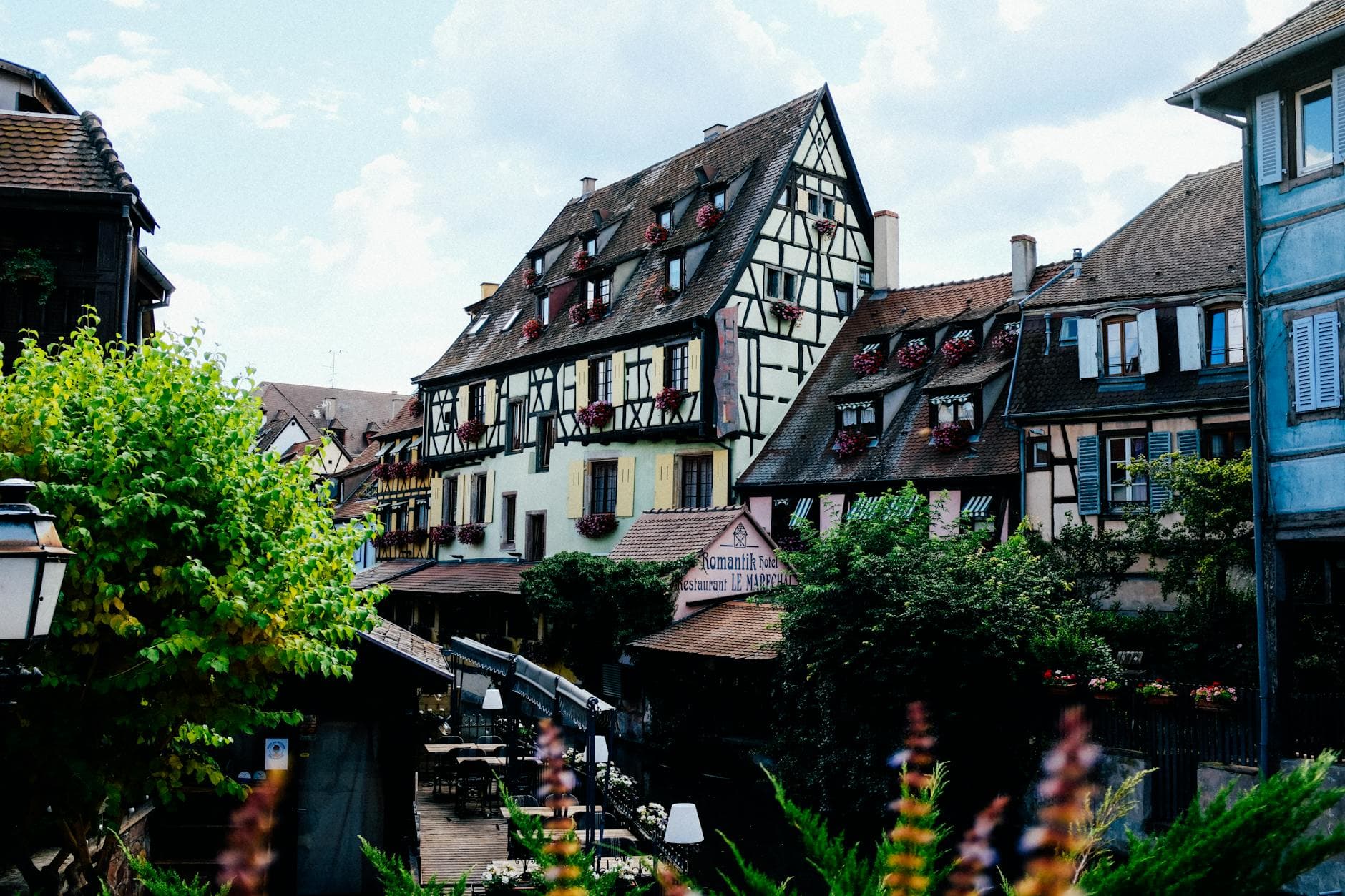
Colmar is the capital of the wine route and one of Alsace's most beautiful cities. The Petite Venise district (canals, flower-covered quays, half-timbered facades) is the most photographed scene in Alsace. Arrive early — the canals are at their best before the tourist boats start at 9am.
Musée Unterlinden (1 Rue d'Unterlinden) is one of the finest regional museums in France — the Isenheim Altarpiece by Matthias Grünewald, displayed here since 1850, is one of the great works of Northern Renaissance painting and worth the trip to Colmar on its own.
Wine point: Colmar's covered market (Marché Couvert) has excellent wine stalls. Buy a bottle of Crémant d'Alsace to drink with the cheese you pick up at the cheese counter.
Late Morning — Eguisheim
Eguisheim (8km south of Colmar) is consistently voted France's favourite village and the claim is defensible. The circular medieval centre, organised around a 13th-century castle, is remarkably well-preserved. The Grand Cru Eichberg and Pfersigberg vineyards produce some of the finest Gewurztraminer and Pinot Gris in Alsace.
Domaine Léon Beyer is the most significant producer here and one of Alsace's great names for Riesling and Gewurztraminer. They do not use Grand Cru classification (a philosophical position about appellation boundaries) but their Comtes d'Eguisheim wines are among the longest-lived in the region.
Lunch — La Cave du Vigneron, Eguisheim
A classic winstub in the village centre, run by a local family. The cheese plate — Munster fermier with caraway seeds and potatoes — is the essential Alsace cheese course and comes with a glass of Gewurztraminer by tradition (the pairing is uncanny).
Afternoon — Rouffach and Thann (southern terminus)
The southern section of the route (Rouffach south to Thann) is less visited but the Grand Cru Vorbourg (Rouffach) and Rangen de Thann (Thann) produce some of Alsace's most distinctive wines. Zind-Humbrecht in Turckheim is the most important estate on the southern route and one of the greatest winemakers in France — Olivier Humbrecht MW produces profoundly mineral, site-specific Rieslings and Gewurztraminers. Book well ahead.
Final Wine Shop — Cave du Vigneron, Colmar
Return to Colmar for final purchases. The Cave du Vigneron (Rue des Tanneurs) and the Cave d'Alsace (Rue des Marchands) both stock excellent selections across the route. Good picks to take home: any Trimbach Cuvée Frédéric Émile Riesling (drink in 5-15 years), Zind-Humbrecht Rangen de Thann (exceptional age-worthy white), and any late-harvest Gewurztraminer (Sélection de Grains Nobles if budget allows — these are among the world's great sweet wines).
Dinner — JY'S, Colmar
Jean-Yves Schillinger's Michelin-starred restaurant is the finest table in Colmar. The tasting menu is creative without losing its Alsatian anchor — the foie gras preparations are reliably excellent, and the wine list is the most comprehensive on the route. A fitting close to three days on the road.
Essential Alsace Vocabulary
| French | Meaning |
|---|---|
| Dégustation | Wine tasting (often free or low-cost) |
| Cave | Wine cellar or wine shop |
| Vendange tardive | Late harvest — luscious, off-dry to sweet |
| Sélection de Grains Nobles (SGN) | Noble rot sweet wine (Alsace's finest) |
| Grand Cru | Top 51 classified vineyard sites |
| Winstub | Traditional Alsatian wine tavern |
| Crémant d'Alsace | Sparkling wine, méthode traditionnelle |
Practical Tips
Route navigation: The Route des Vins d'Alsace is signposted throughout. Download the official app (Route des Vins d'Alsace) before leaving.
Village parking: All villages have free or low-cost parking outside the historic walls. Do not try to drive into medieval centres.
Picnic culture: Alsace is excellent for wine picnics — buy bread, cheese, charcuterie, and a bottle of Pinot Blanc from a cave and eat in the vineyards. This is entirely normal and encouraged.
Wine weight: Alsace wines, especially late-harvest and Grand Cru, are heavy bottles. Pack accordingly or ship home.
FAQs
Is Alsace wine dry or sweet?
Most Alsace wine is dry. Vendange tardive is off-dry to medium-sweet. Sélection de Grains Nobles is the only genuinely sweet style. Labels often do not specify sweetness level — ask at the domaine.
Is the wine route good without a car?
Partially — Strasbourg, Obernai, Ribeauvillé, and Colmar are train-connected. But the villages between them require a car or cycling (the terrain is flat and cycling is excellent).
What is the price range for tastings?
Many small domaines taste for free. Larger producers charge EUR 5-20 for a structured tasting. Grand Cru tastings at top estates run EUR 20-50.
What food pairs best with Alsace wine?
Riesling with river trout, crayfish, or sushi-grade fish. Gewurztraminer with Munster cheese, foie gras, or Thai food (an unexpected but genuine pairing). Pinot Gris with roast pork, goose, or mushroom dishes. Crémant with charcuterie or tarte flambée.
Can I visit in winter?
Yes — the Christmas markets (late November to late December) are extraordinary, the vineyards are quiet, and the strudel-and-mulled-wine atmosphere of the half-timbered villages is at its most atmospheric.

Wines of The Alsace Wine Route: 3-Day Road Trip from Strasbourg to Colmar
Key grape varieties and wine styles produced in the region
Primary Grape Varieties
Wine Styles
Ready to visit Alsace?
Build your personalised day-by-day itinerary — choose your travel style and trip length, get accommodation and tour picks per day, and email it to yourself to take along.
Upcoming Wine Festivals in France
See all festivalsHidden Gems Nearby
Discover more hidden gemsDomaine de la Bongran
WTG PickBurgundy, France
A Burgundy rebel who makes Chardonnay on their own terms, far from the tourist trail of Beaune and Puligny.
Chardonnay
Domaine Huet
WTG PickLoire Valley, France
World-class Chenin Blanc with no queues, no hype, just pure Loire magic in a village setting.
Chenin Blanc
Mas de Daumas Gassac
Languedoc, France
Grand cru quality at a fraction of Bordeaux prices, in a wild, beautiful valley most tourists never find.
Cabernet Sauvignon · Rosé · White Blend
Book Your Alsace Wine Country Stay
Compare hotels, vineyard B&Bs and rentals across Booking, Airbnb and more in one search.
Compare stays near the vineyardsStay22
Plan Your The Alsace Wine Route: 3-Day Road Trip from Strasbourg to Colmar Trip
Estimate your The Alsace Wine Route: 3-Day Road Trip from Strasbourg to Colmar trip cost
Budget calculator with accommodation, food, wine, and transport estimates.
Try itCompare The Alsace Wine Route: 3-Day Road Trip from Strasbourg to Colmar with other regions
Side-by-side comparison of cost, climate, wine styles, and more.
Try itWhen to visit The Alsace Wine Route: 3-Day Road Trip from Strasbourg to Colmar
Harvest dates, peak season, and the best months for wine travel.
Try itThis page contains affiliate links. We may earn a commission at no extra cost to you.