Best Wineries in California: Napa, Sonoma, Paso Robles & Beyond
The definitive guide to California's best wineries across Napa Valley, Sonoma, Paso Robles, and other top regions. Where to taste, what to expect, and how to plan your visit.
California produces roughly 80% of all American wine. That number alone hints at the scale of what's here — but it doesn't tell you why a trip through California's wine country tends to become a habit rather than a one-off holiday.
The state runs 900 miles from north to south. Within that stretch you'll find coastal fog banks that cool Pinot Noir grapes to perfection, inland valleys where Cabernet builds structure on dry-farmed hillside benchland, and high-altitude sites that push aromatic whites into unexpected territory. No other wine state packs this much climatic and geological variety into one jurisdiction.
For a traveler deciding where to go, that variety is both the appeal and the challenge. Do you base yourself in Napa Valley for a long weekend of blue-chip Cabernet experiences? Head to Sonoma County for a more dispersed, lower-key circuit through a dozen different sub-regions? Drive south to Paso Robles for Rhône blends and a fraction of the crowd? Or string several regions together on a proper road trip?
This guide gives you the full picture. It covers California's three flagship wine regions in detail, introduces five smaller regions that reward the curious traveler, and provides practical planning advice on timing, logistics, and what to expect at the cellar door — all so you can make an informed choice rather than defaulting to whatever appears first in a search result.
California Wine Country at a Glance
The table below compares the major California wine regions on the variables that matter most when you're deciding where to spend your time and money.
| Region | Key Grapes | Style | Best For |
|---|---|---|---|
| Napa Valley | Cabernet Sauvignon, Merlot, Chardonnay | Full-bodied, structured, cellar-worthy | Special occasion tastings, luxury experiences |
| Sonoma County | Pinot Noir, Chardonnay, Zinfandel, Cabernet | Wide range; cooler to warmer styles | Variety seekers, relaxed multi-day trips |
| Paso Robles | Syrah, Grenache, Cabernet, Zinfandel | Bold, warm-climate Rhône and Bordeaux styles | Adventurous palates, value, fewer crowds |
| Santa Barbara County | Pinot Noir, Chardonnay, Syrah | Cool-climate, aromatic, elegant | Wine geeks, Pinot specialists |
| Lodi | Zinfandel, Petite Sirah, Viognier | Old-vine intensity, approachable price points | Value hunters, Zinfandel enthusiasts |
| Sierra Foothills | Zinfandel, Barbera, Syrah | Rustic, high-altitude, heritage character | Off-the-beaten-path exploration |
| Temecula | Syrah, Grenache, Chardonnay, Viognier | Warm-climate Mediterranean styles | Day trips from San Diego or LA |
| Livermore Valley | Chardonnay, Petite Sirah, Cabernet | Full-bodied, historic character | Bay Area day trips, history buffs |
Napa Valley — The Pinnacle of California Wine
Napa Valley occupies a narrow strip of land roughly 30 miles long and five miles wide at its widest point. The numbers seem modest until you realize that the valley floor, the mountain flanks, and the hill districts each produce wine that tastes as though it came from entirely different places. The western slopes catch afternoon shade and marine influence from San Pablo Bay; the eastern side runs hotter, building riper fruit profiles. Benchland sites in sub-AVAs like Oakville and Rutherford produce the structured Cabernet Sauvignon that established Napa's international reputation at the 1976 Paris Tasting — and the valley has never stopped trading on that credibility.
Tasting in Napa is a polished, appointment-driven experience. Most estates require reservations, tasting fees typically run in the $40–100 range per person (with some library or seated experiences pushing higher), and the production values at the cellar door — architecture, hospitality, food pairings — are consistently high. That's a feature if you're treating wine tourism as a luxury experience, and worth budgeting for accordingly.
The trade-off is density. In peak season (harvest, summer weekends), the main corridor through Yountville, Oakville, and Rutherford is busy, and the wine itself commands premium prices partly because Napa's brand supports them. Go on a weekday in late winter or early spring if you want more space and more attentive pours.
For the full breakdown of specific wineries to visit across Napa's different districts and price tiers, see our full Napa Valley guide.
Sonoma — Diversity Across 18 Sub-AVAs
Sonoma County is roughly 50% larger than Napa Valley by land area, but it holds a different kind of complexity. Where Napa is organized around a single valley and one dominant grape, Sonoma sprawls across 18 American Viticultural Areas — from the cool Pacific-facing cliffs of the Sonoma Coast to the warm, dry benchland of Alexander Valley. The range of grapes that thrive here is correspondingly wide: cool-site Pinot Noir and Chardonnay along the coast and in the Russian River Valley, Zinfandel on the Dry Creek benchland, Cabernet in Alexander Valley, and pockets of Syrah and Grenache scattered through the Carneros and Bennett Valley AVAs.
The character of wine tasting in Sonoma is generally more relaxed than in Napa. Reservations are still advisable at popular estates, but the atmosphere at many smaller producers is closer to a drop-in conversation than a choreographed hospitality experience. Tasting fees tend to run lower on average — typically $25–60 at most estates — and the density of tourists, while real in high season, allows for longer, quieter stretches between stops.

Healdsburg serves as a useful base: it sits within easy driving distance of Dry Creek, Alexander Valley, and the southern Russian River Valley. Sebastopol and Occidental are better bases if you're prioritizing coastal Pinot. The county's size means that a thorough exploration takes at least three days, and four is more comfortable.
The stylistic breadth here is unmatched anywhere in California. If you want to move from a bracing coastal Chardonnay before lunch to an age-worthy Dry Creek Zinfandel in the afternoon, Sonoma makes that possible without ever crossing a county line. See our full Sonoma guide for curated winery picks across the county's different sub-regions.
Paso Robles — The Rhône Rangers' Heartland
Paso Robles sits in San Luis Obispo County, roughly midway between Los Angeles and San Francisco on the US 101 corridor. For decades it operated as wine country's overlooked middle child — producing credible Cabernet at lower price points, but rarely attracting the critical attention that Napa commanded. That changed when producers started working seriously with Rhône varieties, particularly Syrah, Grenache, Roussanne, and Viognier.
The region now has a strong identity built around Rhône-style blends, and a handful of estates — Tablas Creek (the original champion of Rhône varieties in the region), Saxum, Booker, and L'Aventure — have built national reputations. The underlying geology helps: the Westside of Paso Robles, with its calcareous soils and marine influence from the Templeton Gap, produces Syrah and Grenache with a savory, mineral quality that's distinct from warmer-climate Rhône production elsewhere in the state.
The overall vibe in Paso skews casual. Tasting rooms tend to be welcoming and unpretentious, fees are typically $20–40 at most producers, and the crowds — while growing — have not yet reached Napa-in-August intensity. The town of Paso Robles itself is a workable base with a compact downtown, good food options, and enough hotel inventory that last-minute bookings are usually possible outside harvest season.
Paso also produces strong Cabernet and Zinfandel on the Eastside's warmer benchland, so visitors don't need to be Rhône devotees to find interesting work here. The region's 2026 move to recognize its sub-AVAs more formally has added useful structure for visitors trying to understand style differences across the appellation.
For specific winery recommendations organized by style and location, see our full Paso Robles guide.
Beyond the Big Three — More California Wine Regions to Explore
Most travel coverage of California wine begins and ends with Napa, Sonoma, and Paso Robles. That's understandable — the three regions are large, well-resourced, and easy to navigate. But California has producing regions scattered from the Oregon border to San Diego County, and several of them reward the traveler who's willing to deviate from the obvious circuit.
Santa Barbara County
Santa Barbara County's wine geography is determined by a geological anomaly: the Santa Ynez Mountains run east–west rather than north–south, which means valleys cut through them channel Pacific air directly inland. The result is one of the coolest wine-growing climates in Southern California, capable of producing Pinot Noir and Chardonnay with the kind of aromatic precision you'd expect from Burgundy or the Willamette Valley.

The Sta. Rita Hills AVA, at the western end of the Santa Ynez Valley, is the coolest and most fog-affected sub-region. Producers like Brewer-Clifton, Melville, and Sanford have built the appellation's reputation on structured, long-lived Pinot Noir. Further east, the Santa Ynez Valley itself is warmer, better suited to Rhône varieties and Bordeaux grapes.
Santa Barbara wine country gained wider public attention after the 2004 film Sideways introduced millions of viewers to the back roads around Los Olivos and Solvang. The region has evolved considerably since then — more serious producers, more defined sub-AVAs — but it retains an approachable, unhurried quality that distinguishes it from the bigger northern regions.
The Foxen Canyon Road corridor north of Santa Maria is particularly worth a half-day detour for the density of good producers along a single stretch of road.
Lodi
Lodi sits in the Sacramento–San Joaquin Delta, roughly equidistant between San Francisco and Sacramento. It doesn't get much tourism relative to its wine production, which is enormous — the region supplies a significant proportion of grapes to large California producers — but the best of what it makes under its own label is undervalued.
The selling point is old-vine Zinfandel. Lodi has some of the oldest continuously producing Zinfandel vineyards in North America: head-trained vines planted in the 1880s and 1890s that survived Prohibition by producing sacramental wine. These ancient vines produce low yields of intensely concentrated fruit, and the best Lodi Zinfandels — from producers like Michael David Winery, Jessie's Grove, and Turley Wine Cellars (which sources fruit here) — show a depth and structure that more recent plantings can't replicate.
Tasting fees in Lodi are generally lower than in the prestige regions, and the area's Delta breezes moderate temperatures enough to prevent the baked, jammy style that mediocre warm-climate Zinfandel can produce. It's a strong choice for a wine-curious day trip from San Francisco if you want to move well outside the standard Napa/Sonoma circuit.
Sierra Foothills
California's Sierra Foothills wine country occupies the western slopes of the Sierra Nevada range, running through El Dorado, Amador, Calaveras, and Tuolumne counties at elevations between 1,000 and 3,000 feet. The region's history is tied to the Gold Rush: Italian and Dalmatian miners planted Zinfandel and Barbera in the 1850s, and some of those original plantings survive today.
The wines here carry a distinctive high-altitude, rustic character — Zinfandel with earthy, peppery notes quite different from the fruit-forward Paso style; Barbera with firm acidity that works well at the dinner table; and some surprisingly accomplished Syrah from newer plantings at elevation.
The Amador County wine trail around the town of Shenandoah is the most established tourist circuit in the region. It's a three-hour drive from San Francisco or two hours from Sacramento, which makes it viable as a weekend destination rather than a day trip. Expect fewer amenities than the coastal regions, but also fewer crowds and a more authentic, small-producer atmosphere.
Temecula
Temecula wine country sits in Riverside County, about 60 miles north of San Diego and 90 miles from Los Angeles. It functions primarily as a Southern California escape destination — a place to spend a weekend in wine country without the long drive north — rather than a world-class fine wine producing region. That framing matters when setting expectations.
The climate is warmer and drier than the coastal regions, making Syrah, Grenache, Tempranillo, and Viognier the most successful varieties. A handful of producers make wine that would stand alongside credible examples from anywhere in California; many more cater to the event-tourism market (weddings, corporate retreats, weekend packages) and their wines reflect that orientation.
Travelers who want a comfortable weekend in pleasant surroundings with good hospitality infrastructure will find Temecula's Rancho California Road corridor easy to navigate and enjoyable. Those seeking to benchmark against California's best-known regions may come away underwhelmed.
Livermore Valley
Livermore Valley is the wine region you pass on the way to Napa if you're driving east from the Bay Area on Interstate 580, which is part of the reason most Bay Area residents don't think of it as a destination. That's a mistake, particularly for anyone with an interest in wine history.
The Wente family planted Chardonnay cuttings in Livermore in the 1880s that became the foundation stock for a significant portion of California's Chardonnay plantings through the 20th century. The valley's soils are gravelly and well-drained, producing full-bodied whites and reds that age well. Wente Vineyards, still family-owned after five generations, offers a compelling combination of old-vineyard access, a working winery tour, and one of the few genuine connections to California's pre-Prohibition wine history.
For Bay Area residents, Livermore's proximity — an hour from San Francisco on public transit to the Livermore BART station — makes it a practical choice for a spontaneous half-day wine visit when the full Napa circuit isn't feasible.
5 Must-Visit Wineries Outside Napa, Sonoma, and Paso
The three flagship regions dominate most California wine itineraries, but the following five producers in other parts of the state are worth specific detours.
1. Hitching Post Wines — Santa Maria Valley
Hitching Post was making serious Pinot Noir from Santa Barbara County vineyards long before Sideways made it famous. The winery is associated with the Hitching Post restaurant in Buellton, where winemaker Frank Ostini has been pairing his wine with Santa Maria-style barbecue since the early 1980s. The Highliner Pinot Noir, sourced primarily from the Sanford & Benedict Vineyard in Sta. Rita Hills, shows what cool-site Santa Barbara Pinot Noir looks like at its most complete: structured, aromatic, with a savory edge that sets it apart from fruit-forward northern California styles. Visits require advance planning — this is a working winery attached to a working restaurant — but the combination of food and wine context is genuinely instructive.
2. Stolpman Vineyards — Santa Ynez Valley
Stolpman farms a large estate in the Ballard Canyon sub-AVA of the Santa Ynez Valley, a site that has proven unusually well-suited to Rhône varieties. The estate Syrah is among the most talked-about expressions of the variety in California: deep-colored, peppery, with a mineral backbone from the calcareous soils. Stolpman has also experimented with carbonic maceration on Sangiovese (the "Love You Bunches" bottling) and pays serious attention to farming practices. The tasting room in Los Olivos makes for a logical stop on the Santa Ynez Valley circuit.
3. Michael David Winery — Lodi
The Phillips family has farmed in Lodi since 1869, and Michael David Winery represents their current wine operation alongside a farm stand and restaurant on the estate. The winery is probably best known for the Earthquake Zinfandel, which performs well above its price point and gives a clear demonstration of what Lodi old-vine fruit can produce. The estate also makes Petite Sirah, Cabernet, and a range of varietals under the 7 Deadly Zins label. For visitors who want to understand why Lodi matters beyond its role as a bulk-wine supplier, Michael David is the most accessible starting point.
4. Amador Foothill Winery — Amador County, Sierra Foothills
Amador Foothill Winery was one of the early Amador County estates that helped establish the Shenandoah Valley as a serious wine appellation in the 1980s. The focus is on Zinfandel from old-vine Amador fruit and on Italian varieties (Sangiovese, Barbera, Aglianico) that are well-suited to the region's climate and elevation. The property is small and family-run, which means you're likely to speak with someone who actually knows the vineyards when you visit. It's an hour's drive from Sacramento in Gold Rush country — the combination of history, landscape, and wine makes for a compelling overnight destination.
5. Doffo Winery — Temecula
Doffo is one of the more focused producers in Temecula, with an emphasis on single-vineyard and estate wines rather than the event-hospitality model that dominates many of the valley's producers. The Zinfandel, Syrah, and Cabernet Franc show genuine winemaking ambition, and the motorcycle collection in the barrel room adds an unexpected visual element to the tasting experience. For visitors to Southern California who want to explore what Temecula can actually produce at its upper end, Doffo is the clearest evidence that the region has more depth than its resort-destination reputation suggests.
How to Plan a California Wine Country Road Trip
California's scale makes it easy to underestimate the driving distances between regions. Planning your routing carefully prevents wasted time on the freeway at the expense of time in tasting rooms.
Routing logic by pairing:

The most natural pairing is Napa Valley with Sonoma County. The two regions share a border, and you can drive between downtown Napa and central Sonoma in about 45 minutes via Highway 12. A four-day trip combining two days in Napa and two in Sonoma is manageable without feeling rushed. Base yourself in Napa town for the Napa days (central location, walkable dining), then shift to Healdsburg or Santa Rosa for Sonoma.
Paso Robles combines logically with the Santa Barbara County wine country to the south. The two regions are about an hour apart via US 101, and the stylistic contrast — warm Rhône-focused Paso Robles versus cooler coastal Santa Barbara — makes for an interesting progression. Three days in Paso plus two in Santa Ynez/Sta. Rita Hills is a workable circuit. Add a night in San Luis Obispo between them if you want a larger-town base.
For a longer California wine road trip covering multiple regions, the most natural driving direction is north-to-south from the Bay Area: start in Livermore or Lodi (day 1), continue to Paso Robles (day 2–3), then drop into Santa Barbara County (day 4–5) before ending in Los Angeles. This keeps the driving incremental and progressive rather than requiring backtracking.
Driving times between major regions:
- San Francisco to Napa: 1 hour (without traffic; up to 2 hours on Friday afternoons)
- Napa to Sonoma (Healdsburg): 1 hour 15 minutes
- San Francisco to Paso Robles: 3.5 hours
- Paso Robles to Santa Barbara wine country (Los Olivos): 1 hour 15 minutes
- San Francisco to Lodi: 1 hour 30 minutes
- Los Angeles to Temecula: 1.5 hours
Designated driver planning:
None of this works without a plan for sober driving. Groups of four or more can often rotate the responsibility across a day's tastings. Pairs may find it more realistic to use car services or wine-country-specific transport for at least one high-intensity tasting day, particularly in Napa where fees and pours are larger. Most Napa and Sonoma towns have Uber/Lyft coverage; rural Paso Robles and the Foothills have limited rideshare availability, so a hired driver or tour operator makes more sense there.
California Wine Tasting Tips
A few practical points that apply across all California wine regions:
Reservations are generally required, particularly in Napa Valley and at popular Sonoma estates. Attempting to walk in on a weekend without a booking at a well-known producer will often result in disappointment. Book at least two to four weeks ahead for Saturday visits during harvest (September–November) and in summer. Off-season weekday visits often allow same-day booking.
Tasting fees are the norm everywhere in California, including at small family producers. The era of free tastings has effectively ended in the premium regions. Budget accordingly: $40–80 per person per stop is realistic in Napa, $20–50 in Sonoma, $15–40 in Paso Robles and other regions. Fees are sometimes applied against a bottle purchase, sometimes not — check individual winery policies when booking.
Pacing is everything. Two to three stops per day is the practical limit if you're doing 45-minute to one-hour tastings at each. Four stops is possible but leaves little margin for lingering somewhere good. Six stops in a day is what people regret.
Spit buckets exist for a reason. Using them at most stops allows you to stay functional through a full day's tasting and to actually evaluate what's in the glass rather than accumulating a general impression of wine. Nobody at a professional tasting room will notice or care.
Food integration is worthwhile. Many California tasting rooms now offer food pairings — cheese, charcuterie, or full seated meals — either included in the tasting fee or available for an additional charge. These experiences tend to slow the pace in a useful way and give context to the wines that a straight flight of pours doesn't provide.
For a deeper briefing on how to conduct yourself at the cellar door and get the most from each visit, see our wine tasting etiquette guide. For help structuring a multi-day wine tour from scratch, our wine tour planning guide walks through the logistics step by step.
When to Visit California Wine Country
California's wine regions have distinct seasonal personalities, and timing your visit correctly can significantly affect the experience.
| Season | Conditions | Pros | Cons |
|---|---|---|---|
| Spring (March–May) | Mild, green vineyards, wildflowers | Fewer crowds, lower prices, beautiful scenery | Some producers have limited hours in early spring |
| Summer (June–August) | Warm to hot, especially inland | Long days, full hospitality season open | Peak crowds, peak prices, heat stress on tasting palate |
| Harvest (September–October) | Warm days, cool nights, active fermentations | Vineyards at their most dramatic, harvest events | Busiest period of the year; book everything well ahead |
| Winter (November–February) | Cool, often rainy, dormant vines | Quietest period, lowest prices, most attentive tastings | Some smaller producers close or reduce hours; Napa can get muddy |
For most first-time visitors, late September through October offers the ideal combination of beautiful conditions and active winery life — harvest is underway, producers are energized, and the light on the vineyards in the late afternoon is exceptional. The trade-off is that this is also the most expensive and most crowded window.

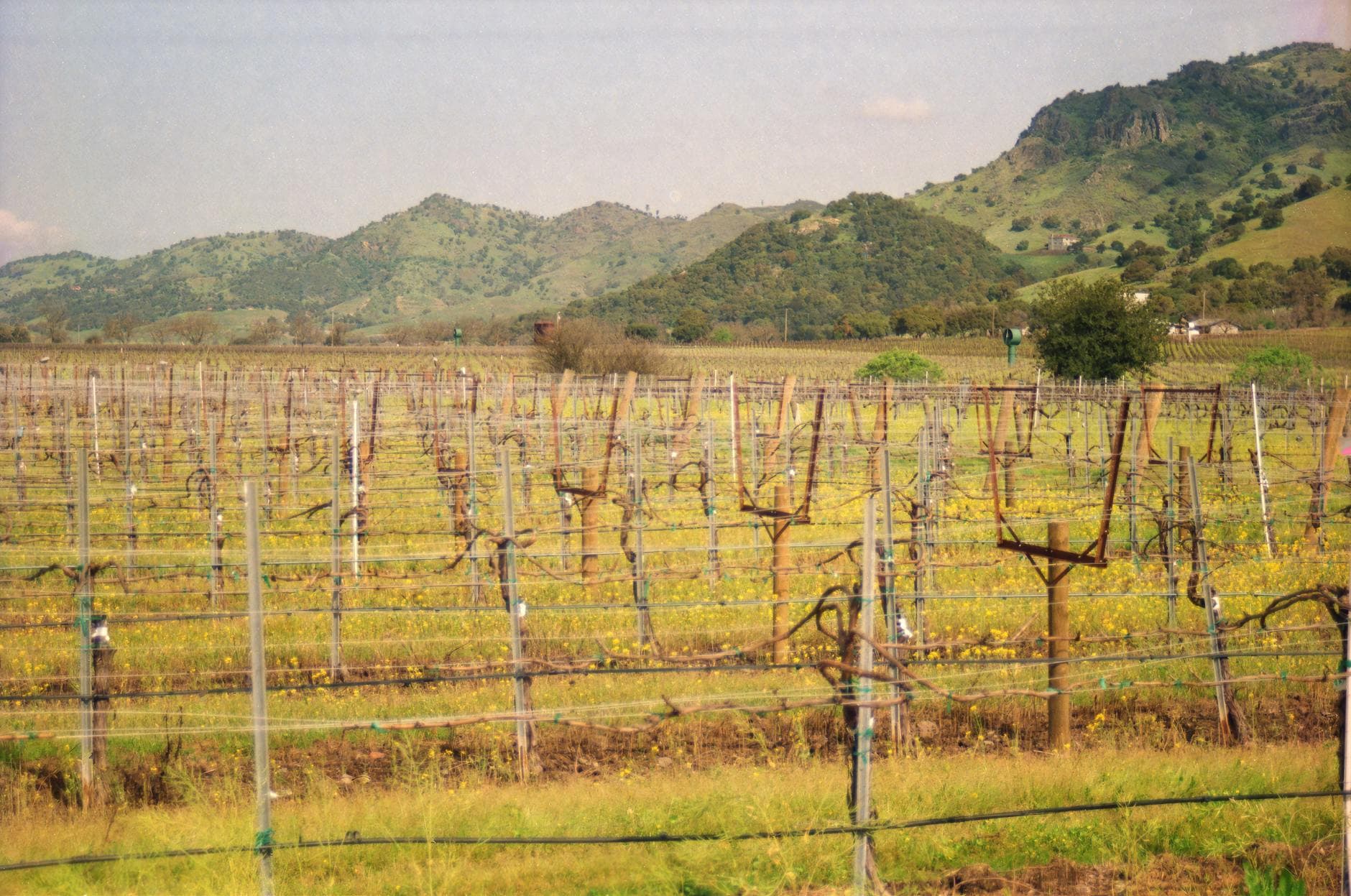
March and April are an underrated alternative: the valley floors are green and mustard-covered, crowds are modest, and many producers are more generous with cellar access and conversation than they will be in peak season.
The holiday week between Christmas and New Year is worth mentioning specifically — it's surprisingly busy in Napa and Sonoma as Bay Area residents use the break for wine country visits. If you want quiet tastings in that window, head to Paso Robles or the Foothills instead.
FAQs
Q: What is the best wine region in California for a first-time visitor?
A: Napa Valley is the default choice for first-time visitors primarily because of its name recognition and the consistent quality of its hospitality infrastructure. However, if you're traveling as a couple or small group on a moderate budget, Sonoma County often produces a more varied and less expensive day. Napa is the place to splurge on one or two exceptional experiences; Sonoma suits a more exploratory approach across several different stops.
Q: How much does wine tasting cost in California?
A: Fees vary considerably by region and producer. In Napa Valley, tastings typically cost $40–100 per person at most estates, with some premium seated experiences running higher. Sonoma generally runs $25–60. Paso Robles and Santa Barbara county tend to fall in the $15–40 range. Some small producers in Lodi and the Sierra Foothills still charge nominal fees or none at all. Fees are often credited against a bottle purchase.
Q: Do I need to make reservations for wine tasting in California?
A: Yes, in most cases. Napa Valley requires advance reservations at virtually all notable producers, and many Sonoma estates have moved to appointment-only models. In Paso Robles, Santa Barbara, and other regions, walk-ins are more feasible at smaller producers, but a reservation still improves your odds of getting the tasting you want. Book two to four weeks ahead for weekend visits in peak season.
Q: When is harvest season in California wine country?
A: Harvest timing varies by region and grape variety, but most California harvest activity runs from late August (early-ripening whites, some coastal Pinot Noir) through late October (late-ripening Cabernet Sauvignon in Napa). The peak activity period — when most estates are pressing and fermenting — falls in September and October. This is both the most photogenic time to visit and the busiest. Coastal regions like Sta. Rita Hills and the Sonoma Coast tend to harvest later than inland warmer regions.
Q: Can you visit California wine country without a car?
A: Napa Valley is the most viable without a car: the Vine bus service connects Napa town to Yountville and several wineries along Highway 29, and the region has good rideshare coverage. Sonoma County is more difficult — its sprawl makes point-to-point connections impractical on public transit. For Paso Robles, Santa Barbara wine country, and the Sierra Foothills, a car or hired transport is effectively essential. Wine country tour operators run guided day trips from San Francisco and Los Angeles to most major regions if you prefer not to drive.
Q: What is the difference between Napa Valley and Sonoma wine?
A: The short version: Napa is dominated by Cabernet Sauvignon and built around a strong single-region identity; Sonoma spans 18 sub-AVAs and produces a much wider range of grapes and styles. Napa Cabernet tends to be powerful, structured, and age-worthy — it's what established California's international fine wine reputation. Sonoma produces equally serious Pinot Noir and Chardonnay from its cooler coastal sub-regions, Zinfandel from Dry Creek Valley, and Cabernet from Alexander Valley. In practice, Napa is a deeper destination if Cabernet is your primary interest; Sonoma rewards variety-seekers.
Q: What wines is California most famous for?
A: Napa Valley Cabernet Sauvignon is California's most internationally recognized wine style, largely on the strength of the 1976 Paris Tasting results and the subsequent decades of investment in Napa benchland estates. Sonoma Coast and Russian River Valley Pinot Noir has built a strong second reputation, particularly with critics and collectors interested in cool-climate styles. Zinfandel — particularly old-vine examples from Dry Creek Valley, Lodi, and the Sierra Foothills — represents California's most historically distinct contribution to global wine culture, as the grape is effectively an American speciality.
Q: How many days do you need to visit California wine country properly?
A: The honest answer depends on what you mean by "properly." Napa Valley alone rewards two to three days if you want to move through different sub-regions (Carneros, Yountville, Oakville, Rutherford, St. Helena, Calistoga) without rushing. Sonoma County needs three to four days to cover its geographic and stylistic range meaningfully. For a multi-region California wine road trip, allow at least five to seven days to cover two or three regions without the itinerary feeling like a logistics exercise. If you have only one day, pick one region and do two or three thoughtfully chosen stops rather than trying to cover ground.
Ready to visit California?
Build your personalised day-by-day itinerary — choose your travel style and trip length, get accommodation and tour picks per day, and email it to yourself to take along.
Upcoming Wine Festivals in United States
See all festivalsHidden Gems Nearby
Discover more hidden gemsMontinore Estate
Willamette Valley, United States
America's largest Demeter-certified biodynamic estate, hiding in plain sight with Pinot Noir that punches way above its price.
Pinot Noir · Pinot Gris · Riesling
Ravines Wine Cellars
WTG PickFinger Lakes, United States
A French-trained winemaker producing America's most underrated Rieslings on a glacial lake that most wine lovers have never visited.
Riesling · Cabernet Franc · Pinot Noir
Barboursville Vineyards
Virginia, United States
Thomas Jefferson's vision of Virginia wine fulfilled — world-class Bordeaux blends and Italian varieties on a historic plantation most oenophiles overlook.
Bordeaux Blend · Vermentino · Nebbiolo
Book Your California Wine Country Stay
Compare hotels, vineyard B&Bs and rentals across Booking, Airbnb and more in one search.
Compare stays near the vineyardsStay22
Plan Your Best Wineries in California: Napa, Sonoma, Paso Robles & Beyond Trip
Estimate your Best Wineries in California: Napa, Sonoma, Paso Robles & Beyond trip cost
Budget calculator with accommodation, food, wine, and transport estimates.
Try itCompare Best Wineries in California: Napa, Sonoma, Paso Robles & Beyond with other regions
Side-by-side comparison of cost, climate, wine styles, and more.
Try itWhen to visit Best Wineries in California: Napa, Sonoma, Paso Robles & Beyond
Harvest dates, peak season, and the best months for wine travel.
Try itThis page contains affiliate links. We may earn a commission at no extra cost to you.