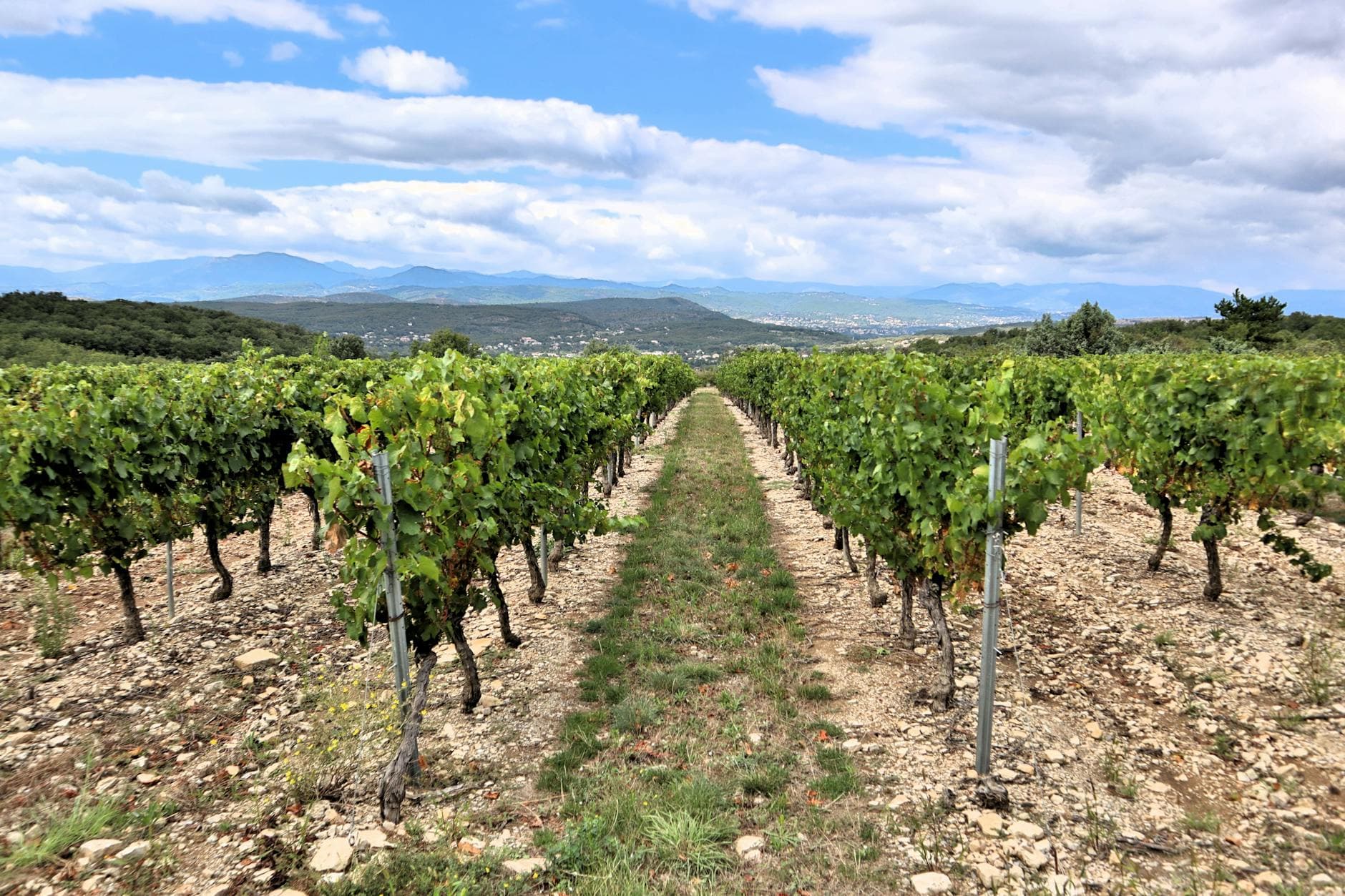
 Photo: El Capra / Pexels
Bordeaux vs Burgundy
Bordeaux vs Burgundy: Which French Wine Region Should You Visit?
France has dozens of wine regions, but two tower above the rest. Bordeaux, sprawling along the Gironde estuary in the southwest, produces more fine wine than anywhere else on earth. Burgundy, a narrow ribbon of vineyards stretching south from Dijon, makes wines of such precision and individuality that a single vineyard row can separate a EUR 20 bottle from a EUR 2,000 one.
Both regions are bucket-list destinations. Both will reshape how you think about wine, food, and the French countryside. But they offer fundamentally different experiences -- different scales, different wines, different price points, and different rhythms of daily life.
This guide compares everything you need to know so you can choose the region that matches the trip you actually want to take. And if you cannot choose, there is a 7-day itinerary at the end that combines both.
Head-to-Head Comparison

| Category | Bordeaux | Burgundy |
|---|---|---|
| **Primary grapes** | Cabernet Sauvignon, Merlot, Sauvignon Blanc, Semillon | Pinot Noir, Chardonnay |
| **Signature wines** | Medoc, Saint-Emilion, Pomerol, Sauternes | Gevrey-Chambertin, Vosne-Romanee, Meursault, Chablis |
| **Wine style (reds)** | Structured blends, dark fruit, cedar, long-lived | Single-variety, elegant, red fruit, earthy, terroir-driven |
| **Wine style (whites)** | Crisp Sauvignon Blanc, rich Semillon blends, sweet Sauternes | World-class Chardonnay (Chablis to Puligny-Montrachet) |
| **Landscape** | Flat to gently rolling, grand chateaux, river estuaries | Steep hillside vineyards, stone villages, compact and intimate |
| **Tasting fees** | EUR 5-30 (many chateaux by appointment only) | EUR 10-40 (domaines often welcome walk-ins) |
| **Accommodation/night** | EUR 70-250 (city hotels to chateau stays) | EUR 80-300 (village guesthouses to boutique hotels) |
| **Dinner for two** | EUR 50-120 | EUR 60-150 |
| **Car needed?** | Essential for Left Bank; possible without for Saint-Emilion | Essential for Cote d'Or; possible without for Beaune town |
| **Walk-in friendly?** | Rarely -- most chateaux require appointments | More relaxed, but top domaines need appointments |
| **Best season** | May-June, September-October | May-June, September-October |
| **Nearest airport** | Bordeaux-Merignac (BOD) | Lyon-Saint Exupery (LYS), Dijon (DIJ seasonal) |
| **Train access** | Excellent -- Paris to Bordeaux in 2h by TGV | Excellent -- Paris to Dijon/Beaune in 1h40 by TGV |
| **International recognition** | Extremely high (global brand, luxury market) | Very high among wine enthusiasts (connoisseur destination) |
| **Tourist density** | Moderate-high in city; low in rural appellations | Low-moderate (except Beaune during November wine auction) |
| **Budget-friendliness** | More accessible -- excellent wines under EUR 15 | Harder on a budget -- village wines start at EUR 15-25 |
The Wines
This is the category that drives most decisions, and the two regions could hardly be more different. Bordeaux is built on blends, power, and scale. Burgundy is built on single varieties, finesse, and the obsessive mapping of individual vineyard plots.
Bordeaux: The Art of the Blend
Bordeaux is the largest fine wine region in France, producing roughly 600 million bottles per year across 60 appellations. The wines are almost always blends, and the two banks of the Gironde estuary produce distinctly different styles.
Left Bank (Medoc, Pauillac, Margaux, Saint-Julien, Saint-Estephe) is dominated by Cabernet Sauvignon -- structured, tannic, dark-fruited wines built around grand chateaux with centuries of history. The Classified Growths of 1855 remain the aristocracy of Bordeaux, but the Cru Bourgeois chateaux offer outstanding Cabernet-dominant blends at EUR 10-25 -- serious, age-worthy wines that are far easier to visit than the famous names.
Right Bank (Saint-Emilion, Pomerol, Fronsac) is Merlot country -- rounder, plusher, and more immediately approachable. Saint-Emilion is the most visitor-friendly appellation in all of Bordeaux: a UNESCO-listed medieval village with dozens of chateaux offering tours within walking or cycling distance.
White Bordeaux deserves more attention than it receives. The dry whites of Pessac-Leognan are crisp and undervalued. Sauternes and Barsac produce some of the world's greatest sweet wines -- a half-bottle at the cellar door costs EUR 12-30 and makes a remarkable gift to bring home.
Best value bottles at cellar door: Cru Bourgeois Medoc (EUR 10-25), Saint-Emilion Grand Cru (EUR 15-35), Entre-Deux-Mers white (EUR 6-12), Sauternes half-bottles (EUR 12-30).
Burgundy: Terroir Above All
Burgundy takes the opposite approach. Where Bordeaux blends grapes, Burgundy uses just two -- Pinot Noir for reds and Chardonnay for whites -- and lets the vineyard speak. The entire system is built on terroir: a single hillside may contain a Grand Cru, several Premier Crus, and multiple village-level vineyards, each producing detectably different wine despite being separated by only a few metres of soil.
The Cote de Nuits, running south from Dijon through Gevrey-Chambertin, Chambolle-Musigny, Vosne-Romanee, and Nuits-Saint-Georges, is red wine territory of the highest order. Pinot Noir here is translucent, perfumed, and layered with red fruit, earth, and spice. Grand Cru bottles are among the most expensive wines in the world, but village-level wines cost EUR 20-45 and deliver genuine Burgundian character.
The Cote de Beaune is where Burgundy's whites shine. Meursault produces rich, buttery Chardonnay. Puligny-Montrachet reaches the summit of white winemaking -- mineral, precise, and hauntingly complex. Even village-level white Burgundy costs EUR 18-35, but the quality justifies the premium.
Further south, the Cote Chalonnaise and Maconnais offer more affordable entry points. To the north, Chablis produces steely, flinty Chardonnay with no oak influence, starting at EUR 10-15.
Best value bottles at cellar door: Bourgogne Rouge (EUR 10-18), Cote Chalonnaise village wines (EUR 12-22), Chablis (EUR 10-18), Macon-Villages (EUR 8-14).
The Verdict on Wine
Bordeaux rewards breadth. You can taste Cabernet-dominant reds, Merlot-driven reds, dry whites, sweet whites, rose, and sparkling Cremant -- all in one region. Burgundy rewards depth. You will taste Pinot Noir and Chardonnay, and you will learn that those two grapes are capable of infinite variation depending on where they are planted. If variety excites you, choose Bordeaux. If the idea of tasting the same grape from five adjacent vineyards and understanding why each tastes different captivates you, Burgundy is your destination.
The Landscape and Experience
Bordeaux: Grand Estates and a Vibrant City
Bordeaux the city is a genuine metropolitan destination. Its 18th-century limestone centre is a UNESCO World Heritage site, with excellent restaurants, wine bars, the Cite du Vin wine museum, and a lively riverfront. You can base yourself in the city and make day trips to the surrounding wine country -- unusual for a major wine region.
The Left Bank Medoc stretches north along a flat, gravelly peninsula. The landscape is understated -- no dramatic hillsides, but grand chateaux with manicured grounds. Visiting requires appointments booked days or weeks in advance. The Medoc works best as a self-drive day trip, stopping at two or three chateaux.
Saint-Emilion, on the Right Bank, is medieval and photogenic, perched on a limestone plateau riddled with underground cellars. You can walk, taste, eat, and explore on foot. For a first visit to Bordeaux wine country, Saint-Emilion is the single best place to start.
Sauternes is quieter and more contemplative, with gentle pastoral landscapes and welcoming winemakers.
Burgundy: Intimate, Ancient, and Unhurried
Burgundy has no city to anchor your visit -- Beaune (population 22,000) is the regional hub, small enough to walk across in twenty minutes. But what a town: medieval ramparts, the spectacular Hospices de Beaune, dozens of wine shops, and a Saturday market that ranks among France's best. Beaune is the perfect base for the Cote d'Or.
The Route des Grands Crus runs 60 km from Dijon to Santenay -- one of the great wine drives in the world. A narrow road winds through stone villages, each with domaines where the winemaker may personally pour your tasting. The scale is intimate: where a Bordeaux chateau might produce 250,000 bottles per year, a Burgundy domaine might produce 15,000. You are tasting in someone's cellar, often from barrels, with the person who made the wine.
Cycling the Cote d'Or is increasingly popular. The gently rolling terrain is manageable for moderate cyclists, and several operators rent electric bikes from Beaune. A morning ride through the Grands Crus vineyards followed by a long village lunch is one of the finest days available to any wine traveller.
Food and Dining
Bordeaux
Bordeaux's food culture is built on the Atlantic coast and the Gironde estuary. Expect:
- Oysters from Arcachon -- briny, sweet, and perfect with a glass of cold Entre-Deux-Mers white
- Entrecote bordelaise -- ribeye steak in a shallot and red wine reduction, the quintessential Bordeaux pairing
- Canele -- small, caramelised pastries flavoured with rum and vanilla, baked in copper moulds
- Lamprey a la bordelaise -- a traditional dish of lamprey braised in red wine (an acquired taste, but deeply regional)
- Duck and foie gras -- the Dordogne influence reaches into Bordeaux's eastern appellations
The city of Bordeaux has a strong restaurant scene ranging from Michelin-starred fine dining to casual wine bars serving charcuterie and natural wines. The Marche des Capucins is the city's food hall -- excellent for a morning browse with coffee and oysters.
Burgundy
Burgundy's cuisine is richer, heartier, and more sauce-driven. This is the region that gave classical French cooking many of its foundations:
- Boeuf bourguignon -- beef braised slowly in red Burgundy with mushrooms, onions, and lardons
- Coq au vin -- chicken braised in wine, another Burgundian classic
- Oeufs en meurette -- poached eggs in a red wine reduction, a signature starter
- Escargots de Bourgogne -- snails in garlic and parsley butter, served sizzling in their shells
- Epoisses -- a pungent, creamy washed-rind cheese that is one of France's greatest (and most aromatic)
- Gougeres -- cheese choux pastry puffs, served warm as an aperitif
Beaune and the surrounding villages have an excellent density of restaurants for a small area. Many offer prix fixe menus at EUR 25-45 that represent remarkable value for the quality. How to Plan a Wine Tour covers booking strategies for pairing meals with vineyard visits.
Budget Reality
This is where the two regions diverge sharply, and it matters for planning.
Bordeaux Is More Accessible for Budget Travellers

Bordeaux's sheer size works in the budget traveller's favour. With thousands of chateaux producing millions of bottles, there is abundant supply at every price point. You can drink outstanding Bordeaux -- wines that would impress any dinner table -- for EUR 8-20 per bottle. A three-night trip based in Bordeaux city, visiting Saint-Emilion and one or two Medoc chateaux, can be done well for EUR 150-200 per day including accommodation, meals, tastings, and transport.
The city itself has hostels, budget hotels, and a good tram network. Many wine bars pour excellent glasses for EUR 4-8. Supermarkets stock local wines at cellar-door prices. A picnic of cheese, bread, charcuterie, and a bottle of Cru Bourgeois Medoc costs under EUR 20 for two people.
For more tips on keeping costs down, see our Budget Wine Travel Guide.
Burgundy Skews Premium
Burgundy is a smaller region with lower production volumes, and the classification system concentrates prestige (and price) in a way that affects the entire visitor experience. Village-level reds start at EUR 15-25. Premier Crus run EUR 30-80. Grand Crus are EUR 80 and up -- often far, far up. Even Bourgogne-level wines (the entry tier) cost EUR 10-18, which is roughly what a good Cru Bourgeois Bordeaux costs.
Accommodation in Beaune and the wine villages is rarely cheap, especially during the November auction weekend at the Hospices de Beaune. Budget travellers should look at Dijon (15 minutes north by train, with lower hotel prices and a larger city offering more options) or the Cote Chalonnaise (south of Beaune, quieter and more affordable).
A three-night Burgundy trip based in Beaune runs closer to EUR 200-280 per day. It is not prohibitively expensive, but it is consistently 30-40% more than an equivalent Bordeaux trip.
Budget Comparison Summary
| Expense | Bordeaux (budget) | Burgundy (budget) |
|---|---|---|
| Accommodation (per night) | EUR 70-120 | EUR 90-150 |
| Tasting (per visit) | EUR 5-15 | EUR 10-25 |
| Lunch for two | EUR 25-45 | EUR 30-55 |
| Dinner for two | EUR 50-90 | EUR 60-110 |
| Bottle to take home | EUR 8-20 | EUR 15-35 |
| Daily budget (mid-range) | EUR 150-200 | EUR 200-280 |
Who Should Choose Bordeaux
Bordeaux is the right choice if you:
- Want a city base. Bordeaux city offers culture, nightlife, restaurants, and museums alongside wine country access.
- Prefer variety. Reds, whites, sweet wines, rose, sparkling -- Bordeaux does it all.
- Are a first-time wine traveller. The Cite du Vin museum provides an excellent educational foundation. Saint-Emilion is welcoming and walkable.
- Travel on a tighter budget. More affordable wines, wider accommodation range, lower daily costs.
- Love blended wines. If Cabernet-Merlot blends are your style, you are visiting the source.
- Are arriving by train. Paris to Bordeaux in two hours by TGV, with no car needed for the first day or two.
Who Should Choose Burgundy
Burgundy is the right choice if you:
- Obsess over terroir. No region on earth demonstrates the impact of specific vineyard sites more clearly.
- Love Pinot Noir or Chardonnay. These two grapes reach their absolute peak in Burgundy.
- Prefer intimate experiences. Small domaines, personal tastings, barrel samples poured by the winemaker.
- Value quiet and atmosphere. Burgundy's stone villages and vineyard lanes are profoundly peaceful.
- Enjoy cycling. The Cote d'Or is ideal for bike-based wine touring.
- Already know Bordeaux. If you have visited Bordeaux, Burgundy is the natural next step -- a deeper, more contemplative experience.
- Are a food lover. Burgundy's cuisine is among the richest and most satisfying in France. Pair Wine Tasting Etiquette knowledge with a domaine visit and a long Burgundian lunch.
Decision Matrix
Use this quick-reference matrix to guide your choice based on what matters most to you.
| Priority | Choose Bordeaux | Choose Burgundy |
|---|---|---|
| **Budget** | Tighter budget, more value | Comfortable budget, willing to pay more |
| **Wine preference** | Cabernet blends, variety, sweet wines | Pinot Noir, Chardonnay, terroir expression |
| **Travel style** | City + countryside combination | Village-based, immersive, slow travel |
| **Experience level** | First wine trip, general interest | Serious wine lover, repeat visitor |
| **Group type** | Couples or mixed-interest groups | Dedicated wine enthusiasts |
| **Time available** | Weekend break (3 days minimum) | Midweek trip (4 days ideal) |
| **Season flexibility** | Year-round (city offers rainy-day options) | Best April-October (countryside focus) |
| **Transport** | Train + occasional taxi viable | Car or bike essential |
| **Photography** | Grand chateaux, city architecture | Vineyard hillsides, stone villages |
| **Souvenirs** | Affordable bottles to fill a case | Fewer, more precious bottles |
Can You Do Both? A 7-Day France Wine Itinerary
If you have a full week, you do not need to choose. Bordeaux and Burgundy are connected by the TGV high-speed train network (via Paris or Lyon), and a 7-day itinerary combining both is one of the great wine trips in the world.
Day 1: Arrive in Bordeaux
Settle into your hotel in the city centre. Spend the afternoon at the Cite du Vin -- the best wine museum in France. Your ticket includes a glass of wine in the panoramic tasting room on the top floor, with views across the Garonne. Evening: dinner in the Chartrons district with a flight of local wines and Arcachon oysters.
Day 2: Saint-Emilion
Take the 40-minute train to Saint-Emilion (or drive). Explore the UNESCO-listed village, visit two or three chateaux (most accept visitors with 24-48 hours' notice), and lunch in the village square. Afternoon: cycle through the surrounding vineyards or visit the underground galleries.
Day 3: Medoc or Sauternes
Option A -- Medoc: Drive the D2 wine route through Margaux, Pauillac, and Saint-Estephe. Book two chateau visits in advance.
Option B -- Sauternes: Visit Chateau Guiraud (Premier Cru, walk-ins welcome) and one or two smaller sweet wine estates.
Evening: farewell dinner in Bordeaux city.
Day 4: Travel Day -- Bordeaux to Burgundy

Morning TGV to Paris (2 hours), then onward to Beaune or Dijon (1 hour 40 minutes). Arrive in Beaune late afternoon. Walk the ramparts and visit the Hospices de Beaune -- the 15th-century hospital with its famous polychrome-tiled roof. Dinner at a Beaune bistro: order the oeufs en meurette.
Day 5: Cote de Beaune
Rent a car or electric bike. Ride south through Pommard, Volnay, Meursault, and Puligny-Montrachet -- the white wine heartland of Burgundy. Visit two or three domaines (many welcome walk-ins on weekday mornings). Lunch in Meursault with the local Chardonnay.
Day 6: Cote de Nuits
Drive or cycle north along the Route des Grands Crus through Nuits-Saint-Georges, Vosne-Romanee, Chambolle-Musigny, and Gevrey-Chambertin. Stop at the Chateau du Clos de Vougeot, the medieval walled vineyard built by Cistercian monks. Book one or two domaine tastings in advance -- appointments are necessary for top producers. If time permits, continue to Dijon for the covered market and a moutarderie visit.
Day 7: Departure
Browse Beaune's wine shops for bottles to bring home -- many offer international shipping. Take the TGV to Paris, or continue to Lyon for a flight home. If departing from Lyon, a meal at a traditional bouchon is the perfect finale.
Practical Travel Tips
Getting There
- Bordeaux: Direct flights to Bordeaux-Merignac (BOD) from London, Amsterdam, and other European hubs. TGV from Paris-Montparnasse takes 2 hours.
- Burgundy: Fly to Lyon-Saint Exupery (LYS) and take the train to Beaune (1 hour 20 minutes). Or TGV from Paris-Gare de Lyon to Dijon (1 hour 40 minutes) or Beaune (2 hours 15 minutes direct, or change at Dijon).
When to Visit
Both regions are best visited May through June and September through October. Spring offers mild weather and fewer crowds. Autumn brings harvest activity and golden light.
July and August are hot (especially Bordeaux) and many Burgundy domaines take holiday in August. November in Burgundy centres on the Hospices de Beaune wine auction (third Sunday of November) -- spectacular but accommodation books out months ahead. Winter is quiet in both regions.
Booking Tastings
- Bordeaux: Always book ahead. Most chateaux require appointments, especially in the Medoc and Pomerol. Saint-Emilion is more relaxed. The Bordeaux tourist office offers organised tours for those who prefer not to self-drive.
- Burgundy: Many domaines in the Cote de Beaune welcome walk-ins, but calling ahead is always courteous. In the Cote de Nuits, top producers require appointments. Beaune's numerous wine shops (cavistes) offer tastings without appointments -- an excellent low-pressure way to explore.
For a complete planning framework, see our How to Plan a Wine Tour guide.
Language
French is essential in both regions, though more English is spoken in Bordeaux city and at larger chateaux. In Burgundy's smaller domaines, a few phrases of French go a long way -- the effort is always appreciated.
Transport
A rental car is the most flexible option for both regions. Bordeaux's vineyards are spread across a large area, making a car essential for serious exploration. Burgundy's Cote d'Or is more compact and increasingly popular by electric bike.
Be mindful of France's strict drink-driving laws (0.05% blood alcohol limit). Use a designated driver, spit during tastings, or book a guided tour with transport included.
The Final Word
Bordeaux and Burgundy are not rivals -- they are two expressions of what makes French wine culture the most revered in the world. Bordeaux is grand, generous, and immediately rewarding. Burgundy is precise, intimate, and endlessly layered. Bordeaux gives you range. Burgundy gives you depth.
If you are planning your first French wine trip, Bordeaux is the easier entry point: more affordable, more varied, and anchored by a city that is a destination in its own right. If you have tasted enough wine to know that Pinot Noir and Chardonnay are your compass points, or if you crave the kind of quiet, immersive experience where a winemaker opens a dusty bottle in a 12th-century cellar and pours you something that changes your understanding of a grape, Burgundy is waiting.
And if you have seven days, do both. It is one of the finest wine journeys in Europe, and the contrast between the two regions -- grand versus intimate, blends versus terroir, city versus village -- makes each one more vivid for having experienced the other.
For more French wine country inspiration, explore our Alsace Wine Route Guide -- France's third great wine road and a natural addition to any Burgundy itinerary.
Planning your trip? Start with our How to Plan a Wine Tour guide for step-by-step booking advice, and read Wine Tasting Etiquette before your first chateau visit.
Wines of Bordeaux Vs Burgundy
Key grape varieties and wine styles produced in the region
Primary Grape Varieties
Wine Styles
Ready to visit Bordeaux?
Build your personalised day-by-day itinerary — choose your travel style and trip length, get accommodation and tour picks per day, and email it to yourself to take along.
Upcoming Wine Festivals in France
See all festivalsHidden Gems Nearby
Discover more hidden gemsDomaine de la Bongran
WTG PickBurgundy, France
A Burgundy rebel who makes Chardonnay on their own terms, far from the tourist trail of Beaune and Puligny.
Chardonnay
Domaine Huet
WTG PickLoire Valley, France
World-class Chenin Blanc with no queues, no hype, just pure Loire magic in a village setting.
Chenin Blanc
Mas de Daumas Gassac
Languedoc, France
Grand cru quality at a fraction of Bordeaux prices, in a wild, beautiful valley most tourists never find.
Cabernet Sauvignon · Rosé · White Blend
Book Your Bordeaux Wine Country Stay
Compare hotels, vineyard B&Bs and rentals across Booking, Airbnb and more in one search.
Compare stays near the vineyardsStay22
Plan Your Bordeaux Vs Burgundy Trip
Estimate your Bordeaux Vs Burgundy trip cost
Budget calculator with accommodation, food, wine, and transport estimates.
Try itCompare Bordeaux Vs Burgundy with other regions
Side-by-side comparison of cost, climate, wine styles, and more.
Try itWhen to visit Bordeaux Vs Burgundy
Harvest dates, peak season, and the best months for wine travel.
Try itThis page contains affiliate links. We may earn a commission at no extra cost to you.