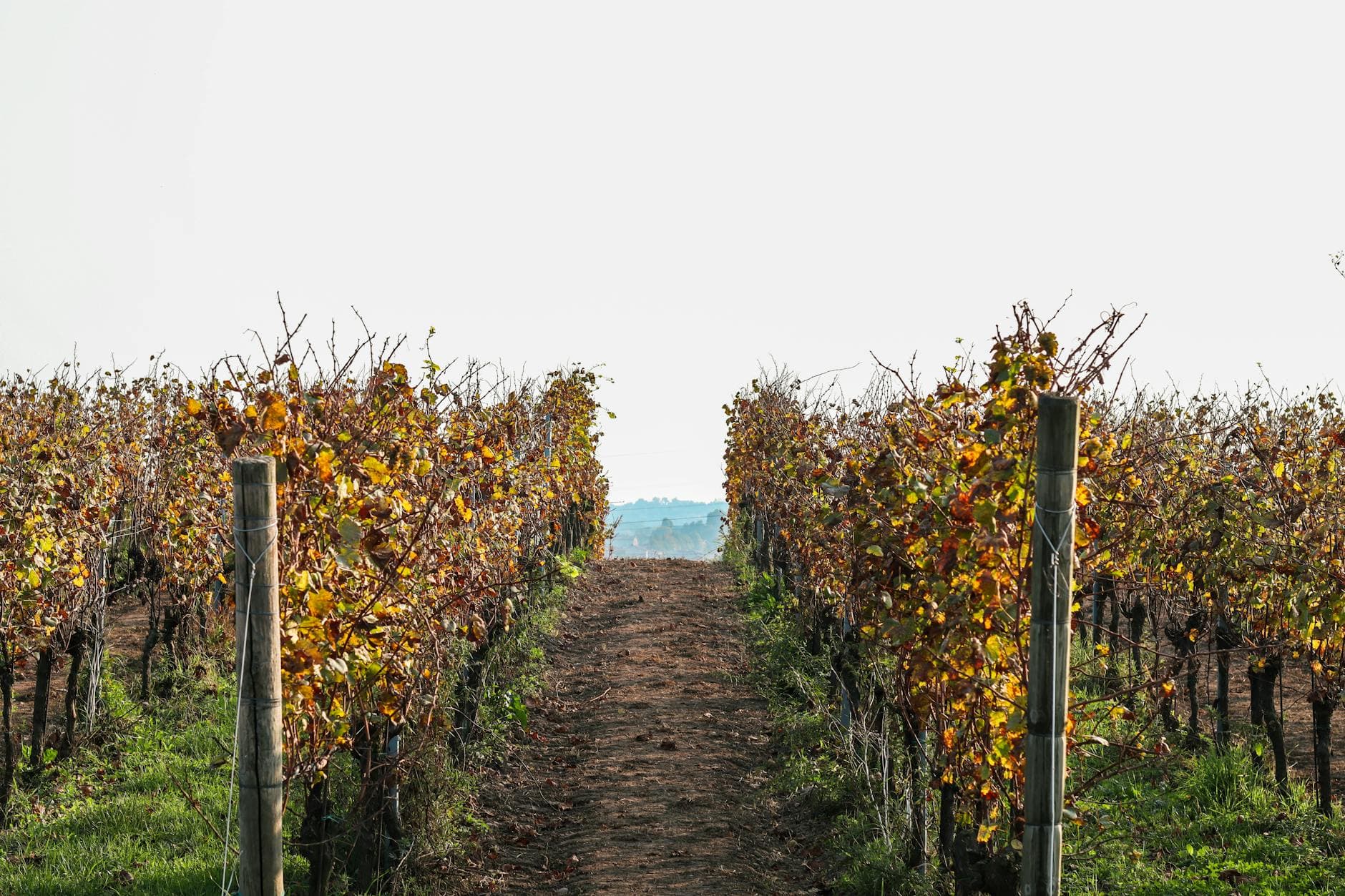
Douro Valley vs Alentejo
Douro Valley or Alentejo? Compare Portugal's two greatest wine regions: terraced river valleys vs rolling cork oak plains, port wine vs bold Alicante Bouschet, and which fits your trip.
Douro Valley vs Alentejo: Which Portuguese Wine Region Should You Visit?
Portugal has two wine regions that pull visitors in completely different directions. The Douro Valley, carved deep into the north by the Douro River, produces port wine and increasingly serious dry reds from steep terraced vineyards. Alentejo, sprawling across the sun-baked south, turns out generous, fruit-forward reds from flat plains dotted with cork oaks and olive trees.
They share a country but almost nothing else — not the landscape, not the grape varieties that dominate, not the pace, not the price tag, and not the kind of trip they deliver.
This guide puts them side by side with actual costs, real logistics, and a straight answer on which one fits your trip. If you're planning a wine-focused trip to Portugal, this is where to start.
Side-by-Side Comparison
| Category | Douro Valley | Alentejo |
|---|---|---|
| **Size** | 250,000 hectares (UNESCO-demarcated) | 300,000+ hectares |
| **Number of wineries open to visitors** | ~120 | ~80 |
| **Signature grapes** | Touriga Nacional, Touriga Franca, Tinta Roriz, Tinta Barroca | Alicante Bouschet, Trincadeira, Aragonez, Antao Vaz |
| **Known for** | Port wine, dry reds, white blends | Bold reds, cork production, olive oil |
| **Tasting fees** | €10–€25 per person | €5–€15 per person |
| **Hotel prices (mid-range)** | €120–€250/night (€130–€270 USD) | €80–€160/night (€87–€175 USD) |
| **Vibe** | Dramatic, historic, structured | Relaxed, rural, unhurried |
| **Best for** | Port lovers, river views, luxury stays | Budget-conscious travelers, food-and-wine combos, off-the-radar exploring |
| **Nearest airport** | Porto (OPO) — 90 min drive | Lisbon (LIS) — 90 min drive |
| **Ideal trip length** | 3–4 days | 3–5 days |
| **Peak season** | June–September | April–June, September–October |
Wine Styles
Douro Valley: Port, Then Everything Else
The Douro's identity was built on port wine — fortified, sweet, aged in lodges downriver in Vila Nova de Gaia. That legacy still defines the region. Visiting Quinta do Crasto or the Symington family estates (Graham's, Dow's, Cockburn's) means tasting tawny ports aged 10, 20, or 40 years alongside late-bottled vintages and single-quinta declarations. Port is the reason these terraces exist.
But the Douro's quiet revolution over the past two decades has been in dry reds. Producers like Niepoort and Quinta do Vallado now make still wines from the same grapes — Touriga Nacional, Touriga Franca, Tinta Roriz — that compete with anything in southern Europe. These are structured, mineral-driven reds with dark fruit and a persistent grip from the schist soils. The best ones age 10–15 years without fading.
The white wines are worth attention too. Dry whites from Rabigato, Viosinho, and Gouveio grapes tend to be crisp and aromatic, a sharp contrast to the heavy reds. Niepoort's Redoma Branco has become a benchmark.
Expect tastings to be formal and educational. Most quintas walk you through their vineyard classification system (the Douro grades vineyards from A to F based on altitude, exposure, and soil) and explain the difference between ruby and tawny port production. Tasting flights are curated, usually four to six wines, and the staff know their stuff.
Alentejo: Big Reds, Few Rules
Alentejo makes wine that is easy to like on the first sip. The reds are ripe, fruit-forward, and warm — often 14% alcohol or higher. Alicante Bouschet, a grape that barely registers in the rest of Europe, thrives here and produces wines with deep colour and a fleshy, almost jammy quality. Trincadeira adds spice and acidity. Aragonez (the local name for Tempranillo) fills out blends.
The region's flagship estates are large by European standards. Herdade do Esporao covers over 700 hectares and operates as a small village unto itself, with olive oil production, a restaurant, and an art collection alongside the winery. Adega Cartuxa, run by the Eugenia de Almeida Foundation near Evora, produces Pera-Manca — a wine that sells for over €100 a bottle and has a cult following in Portugal.
Smaller producers are pushing the region forward. Susana Esteban, originally from Spain, makes minimal-intervention wines that have drawn critical praise for their restraint in a region known for power. Her wines prove Alentejo can do finesse, not just muscle.
White wines here lean on Antao Vaz, which produces full-bodied, aromatic whites with stone fruit and a waxy texture. They drink well young and pair with the region's seafood (Alentejo stretches to the coast along the Alentejo Litoral).
Tastings in Alentejo are less formal than the Douro. Many estates combine wine with food — cheese, bread, olive oil, cured meats — and the atmosphere skews toward long, lazy afternoons rather than structured educational visits.
Experience and Atmosphere
Douro Valley: Vertical Drama
The Douro is a landscape that earns its UNESCO World Heritage status through sheer physical improbability. Vineyards climb near-vertical slopes along the river, held in place by dry stone walls called socalcos that took centuries to build. Standing at a miradouro (lookout point) above the river bend at Pinhao, you can see the terraces stretching in every direction, layered like an enormous staircase.
The river itself is central to the experience. Rabelo boats — flat-bottomed vessels once used to transport port barrels downstream — line the waterfront towns. River cruises range from one-hour sightseeing trips to week-long voyages from Porto to the Spanish border. The cruises are popular with an older demographic, and the Douro in peak summer can feel more resort than rural.
Towns like Pinhao and Peso da Regua serve as bases, though they're small — a few restaurants, a train station, and not much else after dark. The luxury end is well served: Quinta da Pacheca has a wine barrel hotel (you sleep inside a giant barrel), Six Senses Douro Valley occupies a restored 19th-century manor, and several quintas offer high-end rooms with valley views.
The downside: the Douro concentrates visitors along one river corridor, and during July and August, the popular quintas get booked out weeks ahead. The roads are narrow and winding. Driving requires attention.
Alentejo: Horizontal Calm
Alentejo is the opposite in almost every way. The terrain is flat or gently rolling, the sky is enormous, and the population density is the lowest in Portugal. Cork oaks dot the plains like parasols. In spring, wildflowers carpet the ground; in summer, the landscape turns golden-brown and the heat hits 40°C.
The towns carry real weight. Evora, the regional capital, is a UNESCO World Heritage Site with a Roman temple, a medieval cathedral, and a bone chapel (Capela dos Ossos) built from the bones of 5,000 monks. Monsaraz, a walled hilltop village overlooking the Alqueva reservoir, is one of the most striking small towns in Portugal. Estremoz and Vila Vicosa offer marble palaces and quiet squares.
Wine estates in Alentejo often double as rural retreats. Herdade dos Grous has a hotel, restaurant, riding stables, and a swimming pool alongside its vineyards. Monte da Ravasqueira combines wine production with a carriage museum and equestrian centre. These are places where you can spend a full day without needing to drive anywhere.
The Alentejo coast — the Rota Vicentina — is an hour's drive from the inland wine estates and offers some of the least developed beaches in western Europe. Combining wine country with a few days on the coast is a natural pairing that the Douro can't match.
Cost Comparison
Alentejo is meaningfully cheaper than the Douro across every category.
Accommodation
- Douro mid-range: €120–€250/night (€130–€270 USD). A decent quinta room with breakfast runs €150 (€163 USD). Luxury options like Six Senses start above €400 (€435 USD).
- Alentejo mid-range: €80–€160/night (€87–€175 USD). Estate hotels like Herdade dos Grous charge €110–€140 (€120–€153 USD) including breakfast. Budget options (rural guesthouses) exist for €50–€70 (€54–€76 USD), which is rare in the Douro.
Tastings
- Douro: €10–€25 per tasting, typically four to six wines. Premium port tastings (20+ year tawnies) can reach €35–€50 (€38–€54 USD).
- Alentejo: €5–€15 per tasting, often including food pairings. Some smaller estates still pour free if you buy a bottle.
Meals
- Douro: A lunch at a good restaurant in Pinhao or Regua runs €20–€35 (€22–€38 USD) per person with wine. Quinta restaurants attached to luxury hotels charge €40–€60 (€44–€65 USD).
- Alentejo: Regional restaurants serve generous portions of migas, acorda, and grilled black pork for €12–€20 (€13–€22 USD) per person. Even upscale estate restaurants stay under €35 (€38 USD).
Daily Budget Estimate
| Budget Level | Douro Valley | Alentejo |
|---|---|---|
| **Budget** | €130–€170/day (€142–€185 USD) | €80–€120/day (€87–€130 USD) |
| **Mid-range** | €200–€300/day (€218–€327 USD) | €130–€200/day (€142–€218 USD) |
| **Luxury** | €400+/day (€435+ USD) | €250–€350/day (€272–€381 USD) |
Per person, based on double occupancy, including accommodation, two tastings, meals, and transport.
The gap matters most for longer trips. A five-day Alentejo trip at mid-range costs roughly the same as three days in the Douro.
Best For
Choose the Douro Valley if:
- Port wine is on your list. The Douro is where port is made. Tasting 40-year tawny at the estate where the grapes were grown is an experience Alentejo simply cannot offer.
- You want dramatic scenery as the centrepiece. The terraced river valley is one of Europe's most striking wine landscapes. Photography alone justifies the trip.
- You're combining with Porto. The Douro is 90 minutes from Porto by car or a scenic three-hour train ride. A Porto city break plus Douro wine days is one of the strongest short trips in Europe.
- Luxury matters. The high-end hotel scene in the Douro is more developed, with converted manor houses and design hotels that cater to a polished travel experience.
Choose Alentejo if:
- You want wine plus food plus coast. Alentejo combines wine estates, some of Portugal's best regional cooking, and an unspoiled coastline within a compact area.
- Budget is a factor. Lower prices across the board make Alentejo a better choice for week-long trips or group travel.
- You prefer a slower, less structured pace. Tastings are informal, crowds are thin (even in summer), and the rhythm of the region rewards wandering.
- You're already in Lisbon. Same drive time as Porto-to-Douro, but Alentejo gets fewer international tourists, so availability is easier.
Do both if:
You have seven or more days in Portugal. Fly into Lisbon, spend three days in Alentejo, drive north (four hours or take a domestic flight LIS–OPO), and finish with three days in the Douro before departing from Porto. This north-south split covers the full range of Portuguese wine and avoids backtracking.
Practical Differences
Getting There
- Douro Valley: Fly into Porto (OPO). Drive east on the A4 motorway — 90 minutes to Peso da Regua, two hours to Pinhao. The CP train from Porto Sao Bento follows the river and is one of Portugal's finest rail journeys, though it's slow (2.5–3 hours to Pinhao) and runs infrequently.
- Alentejo: Fly into Lisbon (LIS). Drive southeast on the A6 — 90 minutes to Evora, two hours to Monsaraz. No useful rail connections for wine touring; a car is essential.
Getting Around
A rental car is necessary in both regions. Public transport exists in the Douro (trains along the river, some bus connections), but accessing individual quintas requires driving. In Alentejo, there is no public transport worth mentioning between estates.
Douro roads are narrow, steep, and winding — GPS sometimes routes you onto single-track lanes clinging to hillsides. Alentejo roads are straight, flat, and empty. If driving confidence is a concern, Alentejo is the easier region.
Time Needed
- Douro minimum: Two full days (three nights). One day for river-side tastings, one for the upper Douro (Cima Corgo).
- Alentejo minimum: Two full days (three nights). One for Evora and nearby estates, one for the countryside (Monsaraz, Reguengos de Monsaraz area).
- Ideal for both: Three to four days per region gives enough time to explore beyond the obvious stops. Refer to our Douro Valley wine region guide for a detailed day-by-day itinerary.
The Verdict
If you're visiting Portugal for the first time and have fewer than five days for wine, go to the Douro. The combination of port wine history, the UNESCO river landscape, and easy access from Porto makes it the stronger single-region trip. The scenery alone carries the visit, and tasting port at source — at Quinta do Crasto or Quinta do Vallado — gives you something you cannot replicate anywhere else in the world.
If you've already done the Douro, or if you have a week and want variety, Alentejo is the more rewarding second region. The food is arguably better (Alentejo cooking is rustic, pork-heavy, and generous), the costs are lower, and the lack of crowds means you'll have long conversations with winemakers instead of following a tour group through a tasting room.
For spring 2026 specifically, Alentejo has an edge — the wildflower season (March through May) transforms the plains, and several estates, including Herdade do Esporao and Monte da Ravasqueira, have expanded their visitor programmes this year. See our best European wine regions for spring 2026 for more seasonal picks.
One non-negotiable for either region: check what to wear to wine tastings before you pack. Both regions are more casual than Bordeaux or Napa, but showing up in beach clothes to a formal port tasting will get you looks.
FAQ
Can you visit both the Douro Valley and Alentejo in one trip?
Yes, with at least seven days. The drive from Evora (Alentejo) to Peso da Regua (Douro) is roughly four hours via the A1 and A4 motorways. Alternatively, drive from Alentejo to Lisbon, take a short domestic flight to Porto, and continue to the Douro by car or train. The regions are different enough that combining them avoids repetition.
Which region is better for a first-time wine traveller?
Alentejo. The wines are approachable, the tastings are informal, and the flat terrain makes logistics simple. The Douro's port wine tradition can feel dense if you're new to wine — understanding the difference between a colheita and a late-bottled vintage requires some background. Alentejo lets you ease in.
Is the Douro Valley worth it if I don't like port wine?
Yes. The Douro's dry reds and whites have improved enormously, and most quintas now offer tasting flights focused entirely on still wines. Niepoort, Quinta do Vallado, and Quinta do Crasto all make dry wines that stand on their own. That said, port tastings are hard to avoid entirely — if sweet wine is not your thing, ask for dry white port (served chilled as an aperitif), which might change your mind.
What is the best time of year to visit Alentejo for wine?
April through June and September through October. Summer (July–August) brings temperatures above 40°C, which makes outdoor tastings uncomfortable and limits sightseeing. Harvest season (September) is the most exciting time to visit if you want to see winemaking in action, but book estates early — visitor slots fill up.
Do I need to book tastings in advance in both regions?
In the Douro, yes — always book at least two to three days ahead, especially from June through September. Walk-ins are possible at a few larger estates but unreliable. In Alentejo, booking 24 hours ahead is usually sufficient, and smaller estates sometimes accept same-day visits. Herdade do Esporao and Adega Cartuxa require advance booking regardless of season.
How do wine prices compare between the two regions?
Alentejo wines offer better value at the entry level. A good bottle from Esporao or Herdade dos Grous costs €8–€15 at the estate. Comparable quality Douro reds start at €12–€20. At the top end, both regions reach €50–€100+ (Pera-Manca from Cartuxa, Niepoort Charme from the Douro), but the everyday drinking wines from Alentejo stretch a budget further.
Related Guides
- Portugal Wine Travel Guide — full country overview covering all major regions
- Douro Valley Wine Region Guide — detailed itineraries, estate profiles, and booking tips
- Best European Wine Regions for Spring 2026 — seasonal picks across the continent
- What to Wear to Wine Tastings — dress code guidance for every type of estate


Wines of Douro Valley vs Alentejo: Which Portuguese Wine Region Should You Visit?
Key grape varieties and wine styles produced in the region
Primary Grape Varieties
Wine Styles
Ready to visit Douro Valley?
Build your personalised day-by-day itinerary — choose your travel style and trip length, get accommodation and tour picks per day, and email it to yourself to take along.
Upcoming Wine Festivals in Portugal
See all festivalsHidden Gems Nearby
Discover more hidden gemsHerdade do Esporão
Alentejo, Portugal
A complete wine tourism destination in the Alentejo with a restaurant, museum, and amphora wines — yet almost unknown outside Portugal.
Touriga Nacional · Aragonez · Antão Vaz
Quinta do Vallado
Douro Valley, Portugal
A 300-year-old Douro estate with a stunning modern wine hotel, making table wines that rival the best in Portugal — yet overshadowed by the port houses.
Touriga Nacional · Tinta Roriz · Port
Quinta dos Roques
Dão, Portugal
A Dão pioneer making some of Portugal's most elegant reds in a region that's a fraction of the price and crowds of the Douro.
Touriga Nacional · Encruzado · Tinta Roriz
Book Your Douro Valley Wine Country Stay
Compare hotels, vineyard B&Bs and rentals across Booking, Airbnb and more in one search.
Compare stays near the vineyardsStay22
Plan Your Douro Valley vs Alentejo: Which Portuguese Wine Region Should You Visit? Trip
Estimate your Douro Valley vs Alentejo: Which Portuguese Wine Region Should You Visit? trip cost
Budget calculator with accommodation, food, wine, and transport estimates.
Try itCompare Douro Valley vs Alentejo: Which Portuguese Wine Region Should You Visit? with other regions
Side-by-side comparison of cost, climate, wine styles, and more.
Try itWhen to visit Douro Valley vs Alentejo: Which Portuguese Wine Region Should You Visit?
Harvest dates, peak season, and the best months for wine travel.
Try itThis page contains affiliate links. We may earn a commission at no extra cost to you.