Photo by Kristina Kutleša on Pexels
Weinfest der Mittelmosel — Bernkastel-Kues
Best for
Going to Weinfest der Mittelmosel — Bernkastel-Kues?
Free printable weekend plan — 3-day schedule, nearby hotels for the festival window, one winery worth a detour, and where to eat in Mosel.
Five days of Mosel Riesling celebration in Germany's most picturesque wine town, where the half-timbered Marktplatz sets a fairy-tale backdrop for three stages of live music and wines from 20+ top Mosel estates. The coronation of a new wine queen, a grand Sunday procession through the medieval alleyways, and floating wine boats on the Mosel make this the Mosel's most theatrical festival.
~200,000 visitors
Frankfurt (FRA) — 150 km / Luxembourg (LUX) — 90 km
Annual, 5 days in early September (Thu–Mon) 2026
Free
The Weinfest der Mittelmosel in Bernkastel-Kues is the most photogenic wine festival in Germany — five days of Mosel Riesling celebration in early September staged in the medieval half-timbered Marktplatz of Bernkastel, with three live-music stages, more than twenty top Mosel estates pouring, the coronation of a new wine queen, a grand Sunday procession through the medieval alleyways, and floating wine boats on the Mosel river that runs through the centre of the town. The attendance reaches two hundred thousand across the five days.
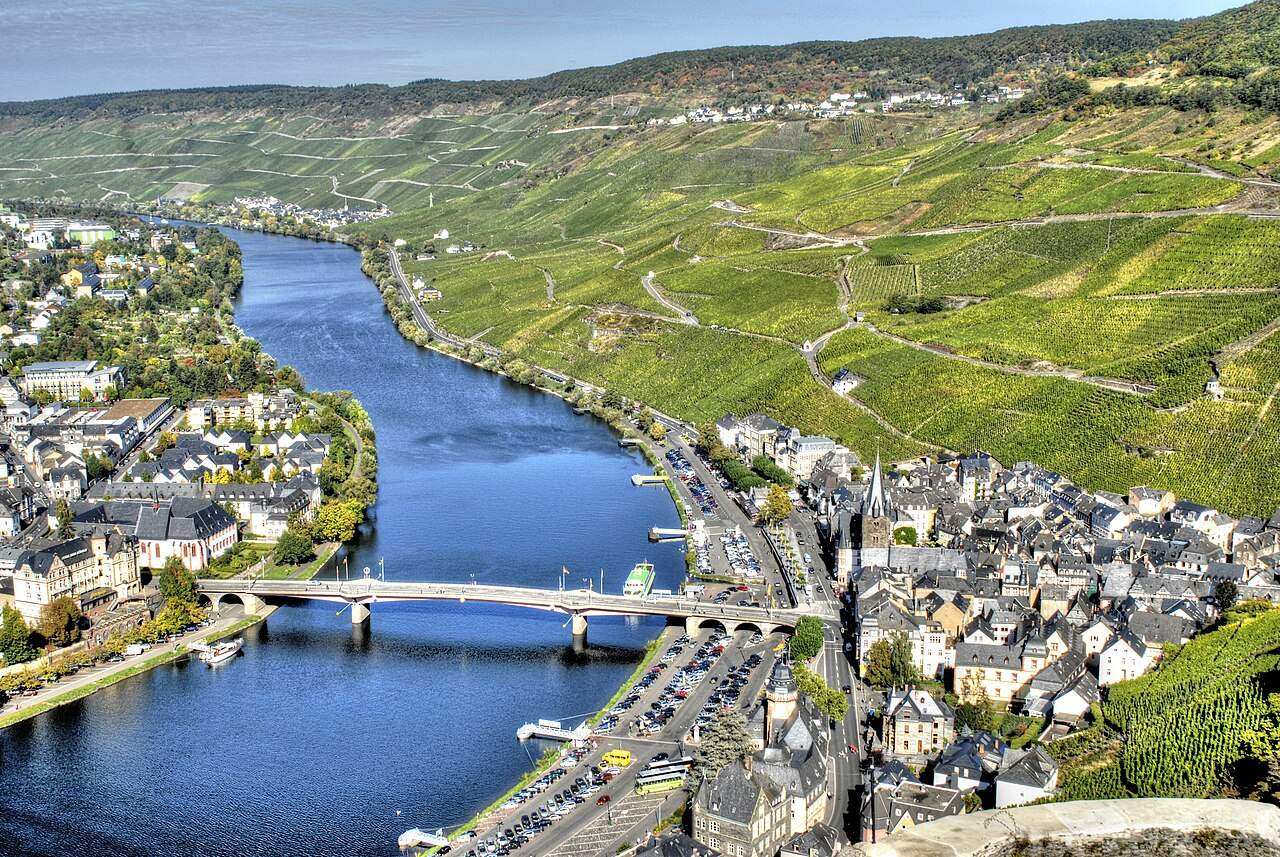
Bernkastel-Kues is the picture-postcard town of the Mosel — a fairy-tale medieval village built into the steep curve of the river beneath the ruins of Landshut Castle on the hillside above. The festival is the year's most concentrated single window when the town itself becomes the venue, and the combination of the village, the river, and the surrounding steep vineyards above the water is one of the most distinctive festival settings in European wine.
Why the Mosel matters in German wine
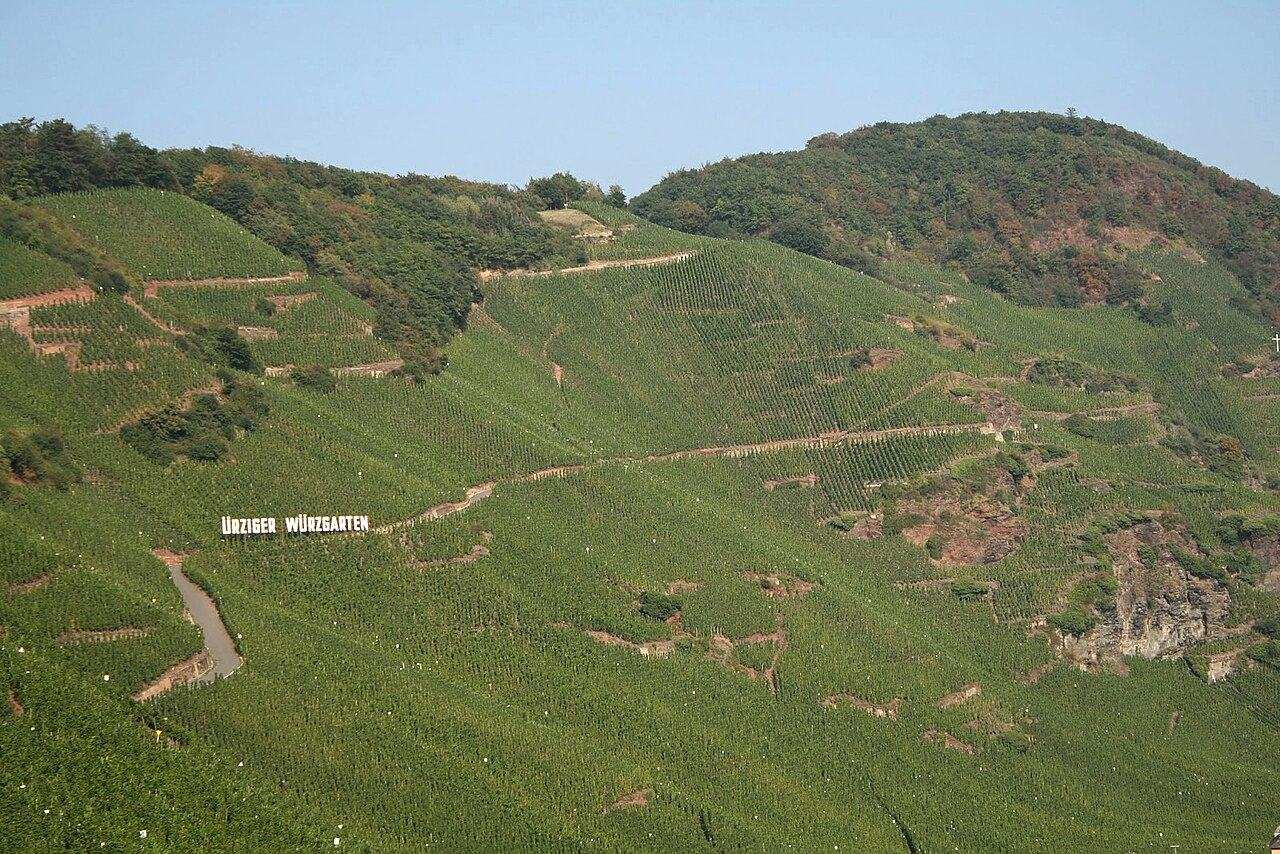
The Mosel is Germany's most internationally celebrated wine region and the spiritual home of German Riesling. The valley runs roughly two hundred and forty kilometres from the French border at Perl down to the confluence with the Rhine at Koblenz, with the vineyards planted on the steep slate slopes that rise directly from the river. The Middle Mosel section around Bernkastel — between Trittenheim downstream and Zell upstream — contains the densest concentration of internationally recognised vineyard sites: Wehlener Sonnenuhr, Graacher Himmelreich, Bernkasteler Doctor, Erdener Treppchen, Ürziger Würzgarten.
The leading producer cohort — Joh. Jos. Prüm, Egon Müller (slightly outside the Middle Mosel proper, in the Saar), Markus Molitor, Fritz Haag, Dr. Loosen, Selbach-Oster, Reichsgraf von Kesselstatt — produces some of the most respected white wines in the world. The Middle Mosel Rieslings are known for their distinctive combination of low alcohol, high natural acidity, mineral character from the slate soils, and the ability to age for decades. The festival is the year's most concentrated public-facing tasting opportunity across the regional producer mix.
The Marktplatz and the festival format
The Bernkasteler Marktplatz is a small medieval square at the centre of the historic town, surrounded on all sides by half-timbered houses dating from the fifteenth and sixteenth centuries and dominated by the Renaissance-era town hall on its northern edge. During the festival the square becomes the central venue: the producer stands are arranged around its perimeter, the main music stage occupies one side, and the central space remains open for the procession routes and the gathering crowds. The compact scale of the medieval square is the festival's defining feature — visitors stand close to the producers, the conversations are unhurried, and the atmosphere is closer to a serious village wine evening than to a fairground.
The festival is genuinely free to enter — no wristband, no ticketed access, no gate. Wine is bought by the glass at the individual producer stands at festival-friendly prices (typically a few euros per glass). The wine queen coronation on the opening Saturday and the Sunday grand procession through the alleyways are the two major public ceremonies, both held in and around the Marktplatz. The floating wine boats on the Mosel river — pontoon platforms anchored along the riverbank with wine producers pouring on board — are the festival's most distinctive single feature and the visual centerpiece of most photographs of the event.
How the five days work
The festival runs Thursday through Monday in early September. The Thursday opening is quiet and is the day most easily handled without a hotel reservation; the Friday is the build-up day; Saturday and Sunday are the peak attendance with the wine queen coronation on Saturday evening and the procession on Sunday afternoon. The Monday closing is the wind-down day, and like most major German wine festivals, is the day that locals tend to attend in the relaxed mode that the weekend crowds make impossible.
The wine stand at the foot of Landshut Castle, above the town on the hillside, opens during the festival evenings and is widely regarded as offering the single best view of the festival from above — the river, the medieval town, the floating wine boats, and the surrounding vineyard slopes all visible at once at sunset. The walk up to the castle from the Marktplatz takes about twenty minutes on the marked path; the descent is significantly faster and the castle wine stand operates until late in the evening.
Where to stay and the Bernkastel vs Kues split
Bernkastel-Kues is technically a unified town spanning both banks of the Mosel — Bernkastel on the eastern bank (the medieval half-timbered side) and Kues on the western bank (the more modern residential side, connected by the central bridge). The festival is concentrated entirely on the Bernkastel side; staying in Bernkastel proper, even at a small inn on the Marktplatz itself, is the most atmospheric option and dramatically more convenient for the late-evening festival activities. Kues is the cheaper alternative for visitors who book late, with the bridge crossing a five-minute walk into the festival grounds.
Frankfurt Airport (FRA) is one hundred and fifty kilometres east of Bernkastel-Kues and is the major international gateway; Luxembourg Airport (LUX) is ninety kilometres west and is the closer option for visitors coming from western Europe. The drive from either airport runs through the Mosel valley along the river and is itself one of the most scenic approaches to a European wine region. Hotel inventory in Bernkastel is fully booked many months in advance for the festival weekend; booking by April for the September event is realistic, and later than June the alternative is to stay in surrounding Mosel villages — Traben-Trarbach (twenty minutes downstream), Piesport (twenty minutes upstream), or Trier (forty minutes upstream, the larger Roman city at the head of the Middle Mosel section).
Pair the festival with the wider Mosel
The Middle Mosel section of the river is concentrated enough that a serious cellar-visit programme requires nothing more than a few days based in Bernkastel. The leading estates — Joh. Jos. Prüm in Wehlen (across the river from Bernkastel), Selbach-Oster in Zeltingen (upstream), Markus Molitor in Haus Klosterberg (just outside the town), Dr. Loosen in Bernkastel itself — are all within fifteen minutes by car and most will receive serious visitors by appointment around the festival weekend.
The natural shape of a Mosel trip built around the festival is to arrive Wednesday or Thursday before the opening, attend the festival Thursday through Sunday, and use the Monday and Tuesday for cellar visits at the producers flagged during the festival. The wider Mosel — the Lower Mosel (Untermosel) section near the confluence with the Rhine, the Saar tributary south of Trier, the Ruwer further south still — extends the cellar geography across a full week. Our Mosel guide has the cellar door logistics and a recommended trip plan built around the festival.
Never miss a wine festival — get our monthly alerts.
No spam. Unsubscribe anytime.
Where it is
Bernkastel-Kues, Germany
Official Website
Visit the official site for tickets, schedules, and the latest updates.
Visit WebsiteExplore the wine region:
Mosel Wine Guide →Book Your Mosel Wine Country Stay
Compare prices on hotels, vineyard B&Bs, and vacation rentals near the best wineries in Mosel.
Search Hotels on Booking.comMore Wine Festivals
Festivals around the same time
Within two weeks of Weinfest der Mittelmosel — Bernkastel-Kues — plan a single trip with multiple stops.
Hidden Gems Nearby
Discover more hidden gemsWeingut Oekonomierat Rebholz
WTG PickPfalz, Germany
Pfalz's most intellectually rigorous producer — dry Riesling and Pinot Noir Grosses Gewachs from the Sudliche Weinstrasse that challenge Mosel and Burgundy benchmarks.
Riesling · Pinot Noir · Chardonnay
Weingut von Winning
Pfalz, Germany
Historic Deidesheim estate making some of Germany's most precise single-vineyard Rieslings — the grand Weingut building and gardens are an event in themselves.
Riesling · Pinot Gris · Pinot Noir
Weingut Juliusspital
WTG PickFranken, Germany
A 500-year-old charitable wine foundation beneath the streets of Wurzburg — the baroque cellar tour is one of Germany's most extraordinary wine experiences.
Silvaner · Riesling · Pinot Noir
Frequently asked questions
When is Weinfest der Mittelmosel — Bernkastel-Kues held?
Annual, 5 days in early September (Thu–Mon)
Where does Weinfest der Mittelmosel — Bernkastel-Kues take place?
Weinfest der Mittelmosel — Bernkastel-Kues is held in Bernkastel-Kues, Germany.
How much does it cost to attend Weinfest der Mittelmosel — Bernkastel-Kues?
Free entry.
How many people attend Weinfest der Mittelmosel — Bernkastel-Kues?
~200,000 visitors attend each edition.
What's the nearest airport to Weinfest der Mittelmosel — Bernkastel-Kues?
The nearest airport is Frankfurt (FRA) — 150 km / Luxembourg (LUX) — 90 km.
Who is Weinfest der Mittelmosel — Bernkastel-Kues best for?
Best for couples, wine enthusiasts and adventurous.