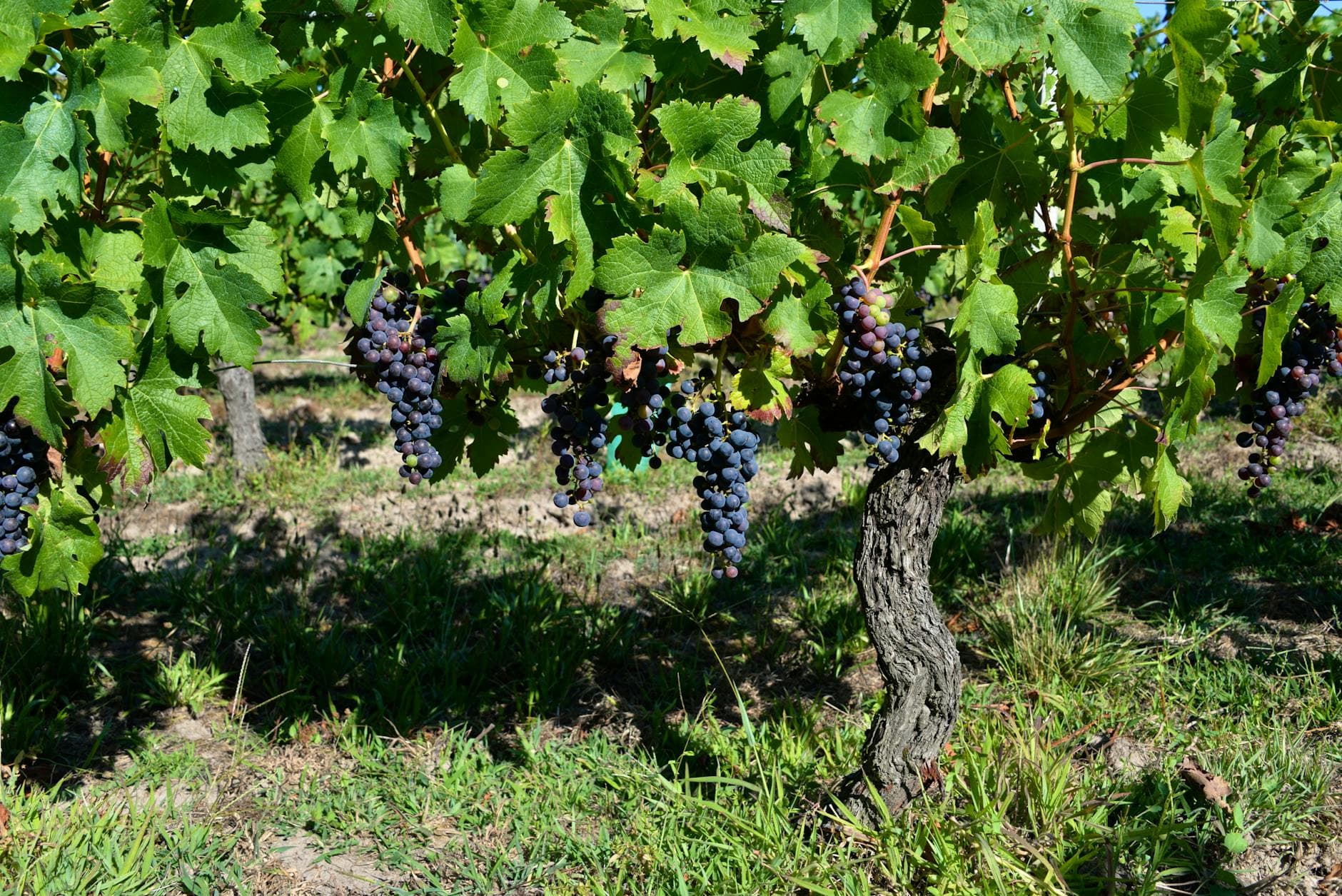
France vs Italy for Wine Travel
France has the reputation. Italy has the passion. Both are wine paradise — but they offer completely different experiences. Here's how to choose.
Ask any serious wine collector which country produces the world's greatest wines and the room will split. France built the global framework — appellation laws, classification systems, the very vocabulary of fine wine. Italy ignored most of that framework, trusted its 350+ native grape varieties, and produced some of the most exciting bottles of the last four decades. Visiting both countries reveals not just different wines but fundamentally different relationships with wine culture.
This is a practical comparison for travellers who want to decide where to go first — or how to balance a trip that includes both.
Wine Styles: Philosophy and Approach

French wine is primarily about terroir — the idea that place determines flavour above all else. A Burgundy producer will tell you they are the conduit for what the Côte de Nuits expresses; their job is to get out of the way. This philosophy produces wines of precision, restraint, and transparency. French reds are typically leaner and more structured in youth than their New World counterparts. French whites, from Chablis to Condrieu, tend toward mineral and tension over fruit.
Italian wine starts with variety. Italy has more distinct native grape varieties under commercial cultivation than any other country — estimates range from 350 to over 500. Producers lean into regional identity aggressively. Nebbiolo in Barolo tastes nothing like Sangiovese in Brunello, which tastes nothing like Nerello Mascalese on Etna. Italian wines are often more expressive, higher in acidity, and more food-centric than French equivalents. The concept of terroir exists in Italy but it sits alongside — rather than above — an obsession with varietal character.
- France: restraint, precision, terroir-first philosophy, classification-heavy system
- Italy: expressiveness, variety-driven, higher acidity, food pairing is integral
- Both produce wines built to age — but France's top wines often need longer cellaring
- Value for money: Italy consistently punches above its weight in the €15–40 range
Top Regions Compared
France's Big Three
Bordeaux (budget accommodation ~€65/night, mid-range ~€160) is the world's most famous wine region by reputation — the château system, the 1855 classification, Cabernet-Merlot blends of extraordinary complexity. Burgundy (budget ~€75/night, mid ~€180) is where Pinot Noir and Chardonnay reach their highest expression; Grand Cru prices are astronomical but village-level wines are accessible. Champagne (budget ~€70/night, mid ~€170) is unique: a sparkling wine region built on blending, house style, and centuries of brand equity.
Italy's Big Three
Tuscany (budget ~€60/night, mid ~€155) anchors Italian wine tourism with Chianti Classico, Brunello di Montalcino, and the dramatic Crete Senesi landscape. Piedmont (budget ~€60/night, mid ~€150) is Italy's most serious fine wine region — Barolo and Barbaresco (both 100% Nebbiolo) produce wines that rival top Burgundy for complexity and longevity. Veneto (budget ~€55/night, mid ~€135) offers more accessible entry points: Valpolicella, Amarone, and the Soave and Prosecco hills of Conegliano-Valdobbiadene.
Cost Comparison

Italy is consistently 15–25% cheaper than France at equivalent quality levels. This gap is most pronounced in accommodation and restaurants; wine at source is often similarly priced at the top end (Grand Cru Burgundy and Barolo DOCG both command serious premiums), but the everyday and mid-range experience is notably better value in Italy.
- Accommodation: Italy mid-range ~€100–160/night; France mid-range ~€130–180/night
- Tastings: Italy free to €15 at many estates; France €15–40 at similar tier
- Meals: Italy €55–70/person (excellent three-course); France €70–85/person
- Transport: broadly similar — both benefit from renting a car in wine regions
The best-value wine travel in Europe right now is Piedmont, Etna, and southern Italian regions like Campania (Taurasi) and Basilicata (Aglianico del Vulture). These offer world-class wine at prices that feel almost embarrassingly reasonable.
Food Scene
Both countries offer world-class food, but the philosophy differs in ways that affect your wine trip. In France, wine and food have a formal relationship: the right wine with the right dish, matching regional traditions, service protocol observed. Three-star restaurants are temples. Even a village bistrot takes its wine list seriously. The food is excellent, the ritual is part of the experience.
In Italy, food is more spontaneous and more central. Wine is almost always ordered to match what you're eating — not the other way around. A Barolo producer will expect you to be eating tajarin al ragù with it. Amarone demands braised beef. Chianti Classico belongs with bistecca. The food-wine integration in Italian dining regions (particularly Piedmont, which has the world's highest concentration of Michelin stars per capita outside Tokyo) is intimate and instinctive rather than formal.
For pure sensory pleasure across a week, Italy is harder to beat: eating casually and cheaply remains extraordinary in a way that France's casual dining doesn't always match.
Transport and Logistics
Both countries have excellent high-speed rail between major cities, making multi-region trips viable without a car. Paris to Dijon (Burgundy gateway) is 1.5 hours by TGV. Paris to Reims (Champagne) is 45 minutes. Milan to Turin (Piedmont gateway) is 45 minutes. Florence to Bologna (En route to Verona/Veneto) is 35 minutes.
Within wine regions, a car is essential in both countries — particularly in Burgundy's village-scattered Côte d'Or, Barolo's hilltop towns, and Tuscany's dispersed cantinas. Italian country roads are more chaotic; French road signage is better.
Combining Paris + Burgundy + Bordeaux in France, or Milan + Piedmont + Tuscany in Italy, are both realistic two-week itineraries on reasonable budgets.
Language Barrier

English is widely spoken in both countries' wine tourism scenes, particularly at mid-to-upper tier producers who export. However, France tends toward more formal service that can feel cold if your French is limited. Italy is generally more relaxed — even without Italian, conversations flow, gestures substitute, and a genuine enthusiasm for their region breaks through any language gap. If you are travelling without language skills, Italy is the more forgiving destination.
The Verdict
Choose France if:
- Pinot Noir and Chardonnay from Burgundy are your benchmarks — nothing else comes close
- You want Champagne at source: the Grandes Maisons cellars and grower-producer experience is unmatched
- You value formality and structure in your wine tourism experience
- Bordeaux is on your bucket list — the estates, the Médoc, the Right Bank châteaux
- You want the country that invented the world's wine language
Choose Italy if:
- You want more variety: from Nebbiolo to Nerello, Sangiovese to Vermentino
- Value matters: equivalent or better experiences at lower cost across the board
- Food is as important as wine — Italian cuisine-wine integration is unparalleled
- You prefer warmth and spontaneity over formality in hospitality
- You want to discover regions still off the mass tourist radar (Etna, Campania, Le Marche)
The honest answer for most serious wine travellers: go to both. But if you have to choose one trip first, go to Italy. It is more generous — with value, with warmth, with variety. You can spend a lifetime exploring it. France, at its best, will still be there.
Wines of France vs Italy for Wine Travel — A Practical Comparison
Key grape varieties and wine styles produced in the region
Primary Grape Varieties
Wine Styles
Ready to visit France?
Build your personalised day-by-day itinerary — choose your travel style and trip length, get accommodation and tour picks per day, and email it to yourself to take along.
Upcoming Wine Festivals in France
See all festivalsHidden Gems Nearby
Discover more hidden gemsDomaine de la Bongran
WTG PickBurgundy, France
A Burgundy rebel who makes Chardonnay on their own terms, far from the tourist trail of Beaune and Puligny.
Chardonnay
Domaine Huet
WTG PickLoire Valley, France
World-class Chenin Blanc with no queues, no hype, just pure Loire magic in a village setting.
Chenin Blanc
Mas de Daumas Gassac
Languedoc, France
Grand cru quality at a fraction of Bordeaux prices, in a wild, beautiful valley most tourists never find.
Cabernet Sauvignon · Rosé · White Blend
Book Your France Wine Country Stay
Compare hotels, vineyard B&Bs and rentals across Booking, Airbnb and more in one search.
Compare stays near the vineyardsStay22
Plan Your France vs Italy for Wine Travel — A Practical Comparison Trip
Estimate your France vs Italy for Wine Travel — A Practical Comparison trip cost
Budget calculator with accommodation, food, wine, and transport estimates.
Try itCompare France vs Italy for Wine Travel — A Practical Comparison with other regions
Side-by-side comparison of cost, climate, wine styles, and more.
Try itWhen to visit France vs Italy for Wine Travel — A Practical Comparison
Harvest dates, peak season, and the best months for wine travel.
Try itThis page contains affiliate links. We may earn a commission at no extra cost to you.