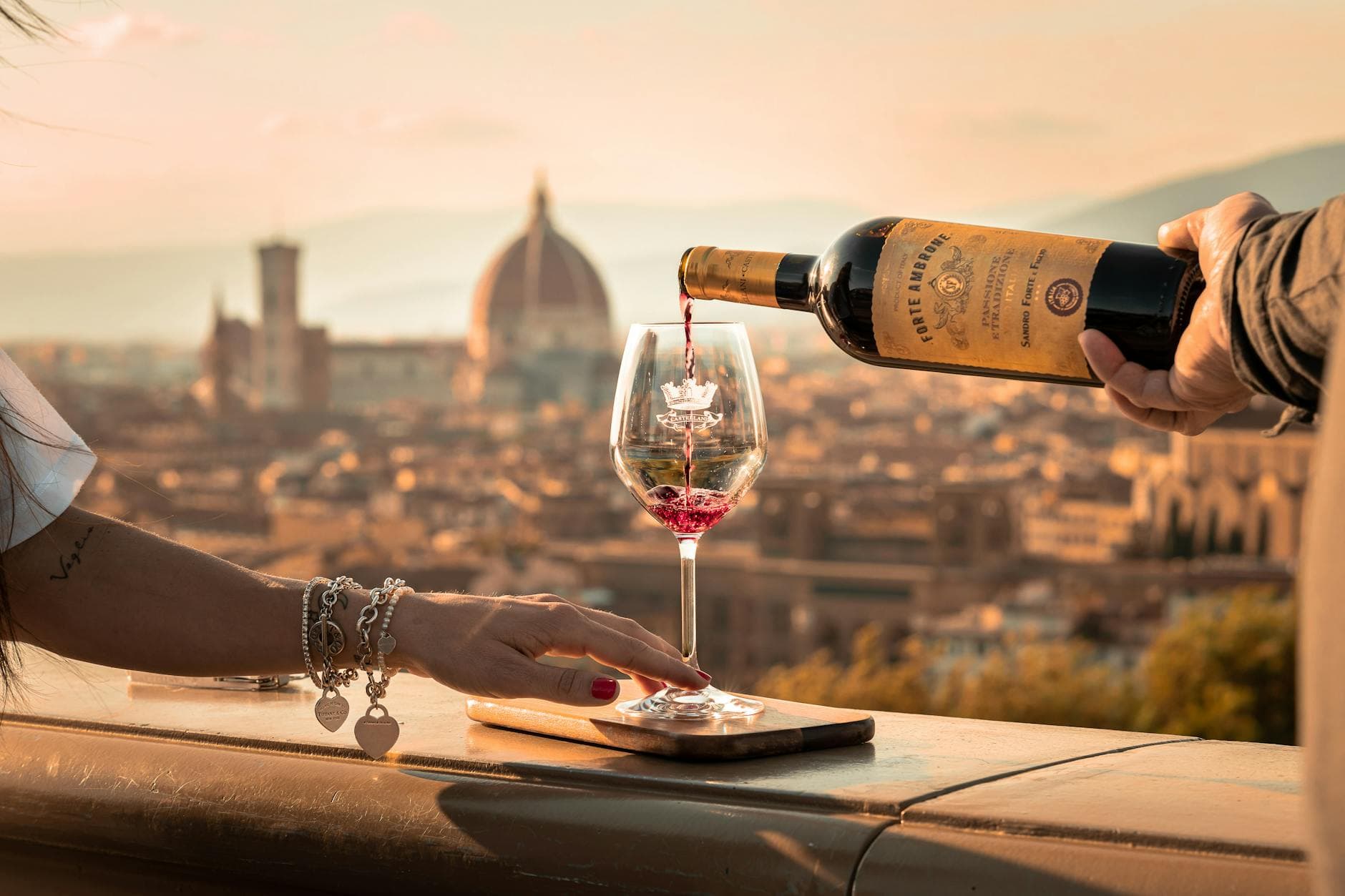
How to Visit Tuscany Wine Country — Chianti, Brunello, Montepulciano
Tuscany is far more than Chianti. Here's how to build a wine trip that covers the best of Chianti Classico, Montalcino, and Montepulciano.
Most wine travellers to Tuscany focus on the stretch between Florence and Siena — the Chianti Classico zone — and miss the fact that 80 kilometres south, around the medieval hill town of Montalcino, lies one of Italy's greatest and most age-worthy wines. And 30 kilometres east of Montalcino sits Montepulciano, producing Vino Nobile from Sangiovese on a volcanic plateau that gives an entirely different character. A properly planned Tuscany wine trip covers all three zones in a week without feeling rushed.
Chianti Classico: The Historic Heart

The Chianti Classico DOCG zone runs between Florence and Siena, covering roughly 7,200 hectares. The designation "Classico" distinguishes it from the broader Chianti DOC that extends across much of central Tuscany. Key villages within Chianti Classico — Greve in Chianti, Panzano in Chianti, Radda in Chianti, Gaiole in Chianti — each have a distinct microclimate and character, and each has its cluster of resident producers.
The classification system within Chianti Classico now has three tiers: basic Chianti Classico (current vintage, at least 80% Sangiovese, 12 months aging), Riserva (older vintage, minimum 24 months aging), and Gran Selezione (single vineyard or best barrel selection, minimum 30 months aging, released after 36–48 months from harvest). The Gran Selezione tier, created in 2014, produces Tuscany's most ambitious and age-worthy Chianti expressions — look for Gran Selezione from Fontodi, Isole e Olena, Castello di Ama, and Badia a Coltibuono.
Visit logistics: Chianti Classico is an hour south of Florence by car. Most producers offer tastings with advance booking. Tasting fees range from €15 (cooperative and mid-sized estates) to €40–60 (prestigious single-estate producers with cellar tours). The Enoteca del Chianti Classico in Greve in Chianti is the region's wine showcase — comprehensive selection, professional staff, and no appointment needed.
Montalcino and Brunello

Brunello di Montalcino is made from Sangiovese Grosso (locally called Brunello) grown on the south-facing slopes around the hill town of Montalcino, 80km south of Siena. It's one of Italy's most age-worthy wines — DOCG law requires a minimum of five years aging before release (six for Riserva), and the best examples need 15–25 years of cellaring to show their best.
The Montalcino production zone is relatively small (roughly 3,500 hectares under vine) and divided informally into north and south. Northern producers (closer to the Crete Senesi) tend toward more elegant, aromatic styles. Southern producers (closer to the coast, warmer, more Mediterranean influence) produce richer, fuller-bodied wines. The main estates welcoming visitors: Biondi-Santi (the historic founding estate, booking essential and access somewhat restricted), Banfi (the largest producer, full tourist infrastructure), Il Poggione, Fattoria dei Barbi, and Casanova di Neri.
Rosso di Montalcino, made from Brunello declassified to a DOC category, is released after just one year of aging — it's the accessible, younger expression of the same vineyards and often extraordinary value at €15–25 per bottle. Taste both on any Montalcino visit.
Montepulciano and Vino Nobile
The town of Montepulciano sits on a volcanic plateau 600 metres above sea level, 30km east of Montalcino. Vino Nobile di Montepulciano (the wine's name, confusingly, does not include the grape — it's made from Prugnolo Gentile, a clone of Sangiovese, not the Montepulciano grape of Abruzzo) is structured and complex, with the volcanic soils adding a mineral quality absent in most Chianti Classico.
Key producers: Poliziano (particularly the Asinone single-vineyard Vino Nobile), Avignonesi (a large, professionally run estate with excellent tours), Contucci (the historic cantina carved into the town's underground tufa cellars — the tour alone is worth the trip). Tasting fees are generally €10–25 with tours. The town itself is magnificent — a Renaissance hill town with Sangallo-designed streets, and the dramatic cantina wine shops lining the main street where you can taste directly before committing to a case.
Building the Itinerary
A practical five-day Tuscany wine itinerary: Day 1–2 in Chianti Classico (base in Greve or Radda, two to three cellar visits per day). Day 3: drive south via Siena (stop for lunch — the Osteria Le Logge has superb local food and wine list) to Montalcino. Day 4: Montalcino producers. Day 5: morning in Montepulciano, drive back to Florence.
For detailed guides to each of these zones and specific producer recommendations, see our Tuscany wine region guide on WineTravelGuides.
Ready to visit Tuscany?
Build your personalised day-by-day itinerary — choose your travel style and trip length, get accommodation and tour picks per day, and email it to yourself to take along.
Upcoming Wine Festivals in Italy
See all festivalsHidden Gems Nearby
Discover more hidden gemsLa Stoppa
Emilia-Romagna, Italy
A natural wine icon in a forgotten corner of Emilia, producing orange wines and skin-contact whites that are pilgrimages for the in-the-know.
Barbera · Bonarda · Malvasia
Edoardo Valentini
Abruzzo, Italy
Italy's most reclusive great estate — no website, no marketing, produces the country's most legendary Trebbiano, and sells most grapes to neighbors.
Trebbiano · Montepulciano · Cerasuolo
Gravner
WTG PickFriuli Venezia Giulia, Italy
The birthplace of the modern orange wine movement — Gravner's qvevri cellar in a Slovenian border village is wine's most important pilgrimage.
Ribolla Gialla · Orange Wine
Book Your Tuscany Wine Country Stay
Compare hotels, vineyard B&Bs and rentals across Booking, Airbnb and more in one search.
Compare stays near the vineyardsStay22
Plan Your How to Visit Tuscany Wine Country — Chianti, Brunello, Montepulciano Trip
Estimate your How to Visit Tuscany Wine Country — Chianti, Brunello, Montepulciano trip cost
Budget calculator with accommodation, food, wine, and transport estimates.
Try itCompare How to Visit Tuscany Wine Country — Chianti, Brunello, Montepulciano with other regions
Side-by-side comparison of cost, climate, wine styles, and more.
Try itWhen to visit How to Visit Tuscany Wine Country — Chianti, Brunello, Montepulciano
Harvest dates, peak season, and the best months for wine travel.
Try itThis page contains affiliate links. We may earn a commission at no extra cost to you.