 Photo: Angela Llop / Wikimedia Commons
Priorat Wine Region Guide
Priorat's llicorella slate yields intense Grenache and Carignan from ultra-low-yield vines. Discover Spain's most collectible, age-worthy wine region.
Key takeaways
- Rental car is non-negotiable — no public transport connects Barcelona to the wine villages (Gratallops, Torroja, Porrera). Allow 2 hours each way from Barcelona. Falset is the largest town and the practical base.
- Best months: May–June and September. July–August heat (often 38–42°C) is severe and some small estates reduce hours. Avoid mid-September harvest weeks — visit slots tighten sharply.
- Founding estates (Álvaro Palacios, Clos Mogador, Terroir al Límit) take 6–12 visitors per slot by appointment only. Book 3–4 weeks ahead minimum. Scala Dei (oldest estate, Cartoixa ruins) is more flexible in season.
- Priorat is one of only two Spanish DOCa — alongside Rioja. The signature is Grenache and Carignan grown on llicorella (black slate) soils, giving mineral intensity not found elsewhere in Spain. Entry-level wines start at €20; top cuvées €80–€300+.
Where to Stay in Priorat
Make the most of your Priorat wine trip by staying in the heart of wine country. From luxurious vineyard estates to cozy B&Bs, find the perfect accommodation near world-class wineries.
Top areas to stay
- Gratallops€€
Central to most top producers including Álvaro Palacios
- Porrera€-€€
Quiet village with old Garnacha vines and incredible terrace views
- Falset€
Largest town in the area, more amenities and restaurants
Very limited accommodation — book well ahead as there are few hotels
Stay22
Compare Booking, Airbnb, Hotels.com and more in one search
Editorial pick
Best chateaux to visit in Priorat — top 10 picks 2026
Read the listicle →
Sample itinerary
3 days in Priorat — full day-by-day plan
Read the itinerary →
Plan your visit: Plan your Priorat trip — free printable planner with Garnacha estates and village logistics.
Discover Priorat: A Wine Lover's Paradise in Catalonia
Nestled in the heart of Catalonia, Priorat is a wine region renowned for its powerful red wines and breathtaking landscapes. This rugged, mountainous area offers a unique blend of world-class wines, charming villages, and rich history.
Wine Regions
Towns and Villages
Priorat's picturesque villages are scattered across steep hillsides and valleys. Gratallops serves as the unofficial capital of Priorat wine production, while Falset is the largest town and commercial center.
- Porrera: Known for its well-preserved medieval architecture
- Escaladei: Home to the ruins of the Carthusian monastery that introduced winemaking to the region
- Poboleda: A charming village surrounded by vineyards and olive groves
Wine Producers
Priorat boasts some of Spain's most prestigious wineries. Many offer tours and tastings, providing insight into the region's unique terroir and winemaking techniques.
- Alvaro Palacios: Pioneering winemaker known for his L'Ermita wine
- Clos Mogador: Family-run winery producing highly regarded red blends
- Mas Doix: Specializing in old-vine Garnacha and Cariñena
- Clos Figueras: Offers wine tours, tastings, and a restaurant with panoramic views
Accommodations
Priorat offers a range of accommodations, from rustic guesthouses to luxury wine hotels. Many properties are set within vineyards, providing stunning views and immersive wine experiences.
- Terra Dominicata: Luxury hotel and winery in a restored monastery
- Hotel-Hostal Sport: Family-run hotel in Falset with an excellent restaurant
- Cal Llop: Boutique hotel in Gratallops with a cozy wine bar
Dining
Priorat's cuisine perfectly complements its robust wines. Local restaurants showcase traditional Catalan dishes using fresh, seasonal ingredients.
- Brots Restaurant: Michelin-starred dining in Poboleda
- El Celler de l'Aspic: Modern Catalan cuisine in Falset
- La Cooperativa: Rustic local fare in a historic building in Porrera
Wine Shops & Bars
Priorat offers numerous wine shops and bars where visitors can sample and purchase local wines. These establishments provide an excellent opportunity to explore the region's diverse offerings.
- Vinum Priorat (Falset): A well-stocked wine shop with an extensive selection of local wines
- La Vinícola (Gratallops): Cozy wine bar featuring flights of Priorat wines
- Celler Cecilio (Gratallops): Family-run winery with a tasting room and shop
- Vins i Olis del Priorat (Falset): Specializes in local wines and olive oils
Other Shops

While wine dominates the shopping scene, Priorat also offers local artisanal products and souvenirs.
- Cooperativa Falset-Marçà: Sells local wines, olive oils, and nuts
- La Botiga de Scala Dei: Offers regional products and handicrafts
- Formatgeria Mateo (Falset): Artisanal cheese shop
Attractions
Beyond wine, Priorat boasts stunning landscapes and historical sites. Visitors can explore ancient monasteries, hike through vineyards, and discover charming villages.
- Cartoixa d'Escaladei: Ruins of a 12th-century Carthusian monastery
- Siurana: Medieval village perched on a cliff with panoramic views
- Serra de Montsant Natural Park: Offers hiking trails and rock climbing
- Falset Castle: 12th-century fortress with a wine interpretation center
Events
Priorat hosts several wine-related events throughout the year, celebrating the region's viticultural heritage.
- Fira del Vi (Falset Wine Fair): Held annually in May, showcasing local wines
- Festa de la Verema (Harvest Festival): Celebrated in various villages in September
- Tast amb Llops (Gratallops): Wine tasting event held in June
- Nit de les Garnatxes (Night of Grenache): Celebrates Grenache wines in August
Appellations
Priorat's wines are classified under two main appellations, each with its distinct characteristics and regulations.
- DOQ Priorat: The highest quality designation, known for powerful red wines
- DO Montsant: Surrounds Priorat, producing excellent wines at more accessible prices
The DOQ Priorat appellation covers 12 villages, including Gratallops, Porrera, and Escaladei. Wines must be made from at least 60% Garnacha and/or Cariñena grapes.
HTML
Grape Varieties
Vine Cycle — Priorat
Full calendar →Priorat is tiny and rugged — expect steep terraced vineyards accessible only on foot or by mule. Many producers offer hands-on harvest experiences. The slate soil and old-vine Garnacha create wines of extraordinary intensity.
Priorat is known for its powerful red wines made primarily from Garnacha (Grenache) and Cariñena (Carignan) grapes. These varieties thrive in the region's harsh climate and slate soils.
Other important varieties include:
- Cabernet Sauvignon
- Syrah
- Merlot
- Cabernet Franc
- Pinot Noir (in smaller quantities)
White grape varieties, though less common, include Garnacha Blanca, Macabeo, and Pedro Ximénez.
Priorat White Wines — A Growing Niche
Priorat is roughly 95% red wine by production, and the reputation is built entirely on Garnacha and Cariñena grown on llicorella slate. Whites are a tiny but growing fraction of the DOQ, and they are worth seeking out precisely because the same mineral, saline edge that defines the reds runs through them. The varieties permitted under DOQ rules for white production include Garnacha Blanca, Chenin Blanc, Macabeo, Picapoll Blanco, Viognier, and Xarel-lo. Most of the white production comes from old co-planted vines found in otherwise red-variety blocks, which keeps volumes very small.
The llicorella soils give Priorat whites a character quite unlike any other Spanish white — not the citrus freshness of Rias Baixas Albariño, nor the buttery weight of Rioja Viura, but something closer to a mineraldriven, textured Burgundy with a distinct saline finish. Barrel fermentation is common among the serious producers, adding further weight. Named estates to ask about: Mas d'en Compte Blanc (a blend of Chenin Blanc and Macabeo; one of the region's most discussed whites), Cims de Porrera Blanc (estate-grown Garnacha Blanca from Porrera's higher-altitude plots), and Scala Dei Cartoixà Blanc (Garnacha Blanca from the oldest estate in the DOQ). These wines are rarely seen in export markets and often sell out at the cellar door. When visiting any estate that makes whites, ask specifically — they will not always be poured as part of the standard tasting unless you request them.
Main Wine Styles
Priorat wines are characterized by their intensity, high alcohol content, and complex flavors. The main styles include:

- Bold, full-bodied red blends
- Single-varietal Garnacha or Cariñena wines
- Rich, structured white wines
- Limited production of rosé wines
Many Priorat wines have excellent aging potential, developing complexity over time.
Food Specialties
Priorat's cuisine complements its robust wines. Local specialties include:
- Escalivada: Roasted vegetables, often served with anchovies
- Calçots: Grilled spring onions with romesco sauce
- Coca de recapte: A savory flatbread topped with vegetables
- Arròs de muntanya: Mountain-style rice with meat and vegetables
- Local cheeses and cured meats
Many restaurants in the region offer wine pairings with traditional dishes.
Drives & Walks
Explore Priorat's dramatic landscapes through scenic drives and walks:
Drives:
- Falset to Gratallops: A winding road through vineyards and olive groves
- La Vilella Baixa to La Morera de Montsant: Spectacular mountain views
Walks:
- Siurana: Hike to this historic village perched on a cliff
- Montsant Natural Park: Numerous trails for all levels
- GR 174: A long-distance trail circling the Priorat region
Many wineries offer guided walks through their vineyards, providing insights into local viticulture.
Itineraries
Plan your Priorat wine adventure with these suggested itineraries:
3-Day Wine Immersion:
- Day 1: Explore Falset, visit Castell del Vi, and tour nearby wineries
- Day 2: Drive to Gratallops, visit iconic producers like Álvaro Palacios
- Day 3: Explore Porrera and Torroja del Priorat, ending with a tasting at Clos Mogador
5-Day Priorat Experience:
- Days 1-2: Follow the 3-day itinerary
- Day 3: Hike in Montsant Natural Park, visit the Carthusian Monastery of Scala Dei
- Day 4: Explore Siurana, enjoy lunch with panoramic views

- Day 5: Visit smaller, family-run wineries in La Vilella Baixa and La Vilella Alta
Customize these itineraries based on your interests and preferred pace of travel.
Getting There & Around
The closest major airport to Priorat is Barcelona-El Prat Airport, about 150 km away. From there, you can:
- Rent a car (recommended for flexibility)
- Take a train to Falset, the main town in Priorat
- Book a private transfer or join a guided tour
Within Priorat, a car is essential for exploring wineries and villages. Many roads are narrow and winding, so drive cautiously.
How Many Days Should You Spend in Priorat?
The minimum is two nights and three days to cover the core triangle: Gratallops, Porrera, and the Scala Dei estate near Escaladei. That gives you one morning at a winery on each of two full days, plus time to walk between villages and eat at La Cooperativa in Porrera or the restaurants in Gratallops. Four to five days is the better structure if you want to add a Montsant day-trip (immediately adjacent, a different wine appellation and character) or the Tarragona Roman ruins to the south — both are under an hour from Gratallops by car.
A weekend trip from Barcelona is technically feasible — it is about a two-hour drive each way — but it is rushed. A weeknight arrival on Thursday followed by two full days gives you the minimum to visit three or four wineries without feeling like a race. The appointment culture here is the binding constraint: you cannot arrive unannounced and expect to be received at the serious estates. Most require reservations two to three weeks in advance, and many cap daily appointment slots at six to ten visitors. Plan for a maximum of two to three winery visits per day, bearing in mind that the Catalan long lunch (roughly 13:00 to 16:00) closes most tasting rooms in the early afternoon. Book your tastings first, then build the rest of the itinerary around them.
Best Time to Visit
Monthly Climate — Priorat
Full explorer →The ideal times to visit Priorat are spring (April-June) and fall (September-November). These seasons offer:
- Pleasant temperatures for outdoor activities
- Beautiful vineyard landscapes
- Harvest activities in fall
Summer can be hot, while winter is quiet with some wineries closed to visitors.
Sustainability Efforts
Priorat is increasingly focusing on sustainable wine production. Look for wineries practicing:
- Organic and biodynamic farming
- Water conservation techniques
- Use of solar energy
Many producers, like Mas Martinet and Clos Mogador, are leaders in sustainable viticulture.
Language Tips
Catalan is the primary language in Priorat, but Spanish is also widely spoken. Key wine-related phrases:
- "Vi negre" - Red wine
- "Vi blanc" - White wine
- "Tast de vins" - Wine tasting
- "Salut!" - Cheers!
Learning a few basic phrases can enhance your experience with local winemakers.
Further Resources
For more information on Priorat wines and travel:
Consider purchasing a detailed wine map of Priorat for your visit.
Why Priorat Wines Are Expensive — The Terraced Vineyard Story
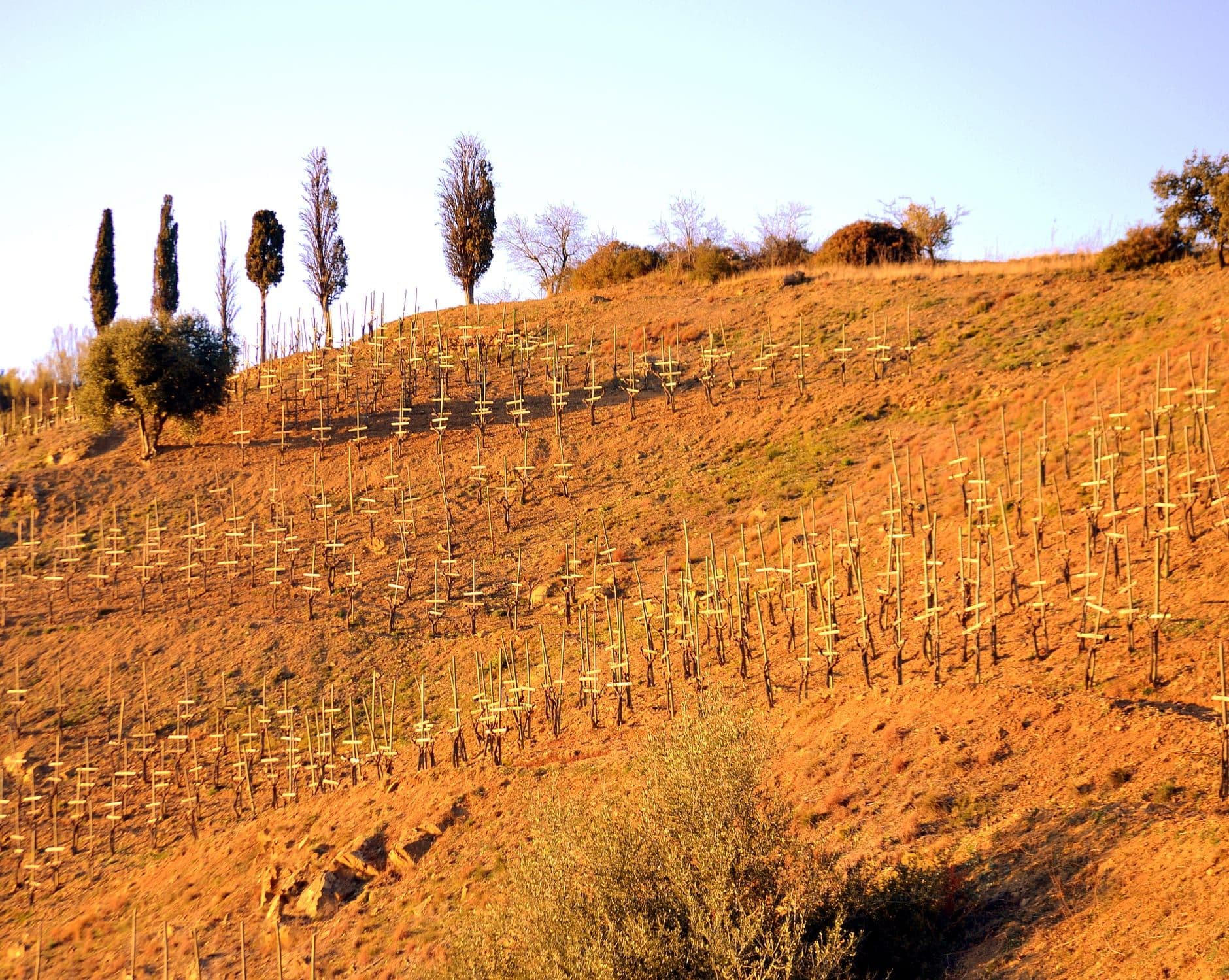
Stand at the edge of almost any Priorat vineyard and you will understand quickly why the wine costs what it does. Most plots sit on slopes of 35 to 65 degrees — angles at which a tractor cannot operate and a wheeled vehicle cannot safely travel. On the steepest historic parcels, the harvest is still brought down by mule, just as it was a century ago. Every grape is hand-picked into small baskets, carried to the lane, and loaded manually.
The yields tell the rest of the story. The average Priorat vineyard produces 15 to 20 hectolitres per hectare. Bordeaux averages around 50 hl/ha; parts of the Languedoc push 80. The old Garnacha and Cariñena bush vines that define the region can be 60 to 100 years old, producing as little as 300 to 500 grams of fruit per vine per year. Álvaro Palacios’ flagship L’Ermita comes from a two-hectare parcel that yields around 500 to 700 bottles in total — approximately one bottle per vine.
Entry-level Priorat starts at around €15 a bottle. The prestige bottles — L’Ermita, Clos Mogador Manyetes, Finca Dofí — reach €200 to €900 at release and considerably more at auction. This is not margin capture; it is the arithmetic of heroic viticulture.
If you visit in September, you will see pickers working the terraces with baskets — a working harvest scene that has not changed much in generations. It is among the most vivid things you can witness in European wine country, and it is a direct answer to the question on every visitor’s mind when they look at a wine list in Falset.
Llicorella — The Slate Soil That Makes Priorat’s Wines Unique
Pick up any stone from a roadside verge in Priorat and look closely. The dark blue-grey rock splits along fine parallel layers like pages in a book. This is llicorella — a laminated slate and quartz schist that is unique to the Priorat basin and neighbouring Montsant. It is poor in nutrients, retains almost no moisture, and is essentially the worst agricultural soil imaginable. It is also the geological reason Priorat wine tastes like no place else on earth.
Forced to search deep for water, vine roots penetrate 15 to 20 metres into fissures in the rock, absorbing trace minerals — iron, magnesium, manganese — that express themselves in the wine as that distinctive dark mineral quality, somewhere between graphite and dried slate. The low nutrient content keeps yields tiny and concentrates everything the vine does produce. The dark colour of the schist absorbs solar heat during the day and radiates it gently through the night, giving warm but measured ripening rather than the scorching heat-spike you get on exposed sandstone.
Not all of Priorat is llicorella. The outer villages — Bellmunt del Priorat, El Molar, the lower slopes near the Ebro — sit on more clay-dominant soils, which is why wines from those areas tend to be lighter and more approachable young. The core zone around Gratallops, Porrera, and Poboleda has the highest llicorella concentration, and the wines from here have a density and mineral spine that sets them apart. When you next pick up a fragment of that dark slate on a vineyard walk, you are holding the explanation for a €90 bottle of Clos Mogador.
Priorat’s DOQ — Spain’s Rarest Wine Designation
Priorat is one of only two DOQ (Denominació d’Origen Qualificada) regions in all of Spain. The other is Rioja. In Castilian Spanish the equivalent term is DOCa — Denominación de Origen Calificada — and you will see both used on labels depending on whether the winery is communicating in Catalan or Spanish. The DOQ designation sits above the standard DO tier and carries stricter requirements: maximum yields of 8 tonnes per hectare for red wines, minimum alcohol of 13.5% for red bottlings, mandatory regional bottling, and regular quality audits by the regulatory body. Priorat achieved this status internationally in 2009, capping decades of effort by the small group of producers who rebuilt the region from near-abandonment in the 1980s.
In 2019, the regulatory body introduced a Burgundy-inspired sub-classification system that goes further than almost any other Spanish appellation. The three tiers are: Vi de Vilas (village wines — grapes from a single defined village, named on the label); Vinya Classificada (classified single-vineyard wines — specific parcels meeting additional requirements); and Gran Vinya Classificada (grand cru equivalent — Spain’s rarest and most age-worthy category). Only a handful of parcels have been awarded Gran Vinya Classificada status, and bottles carrying this designation represent the highest formal classification any Spanish red wine can currently achieve.
When buying wine in Priorat — at a cellar, in Falset’s wine shops, or at Vinum in Porrera — look for Vi de Vila on the label as a quality signal. It tells you the grapes came from a single village and met yield and terroir criteria that basic DOQ wines do not require. For serious bottles, ask specifically whether the wine carries Vinya Classificada or Gran Vinya Classificada status. The DOQ Priorat regulatory body publishes the full list of classified parcels on its official website if you want to research before you visit.
The Two Priorat Valleys: Where to Go
Priorat covers 1,730 hectares across tight mountain terrain, but the producing zone splits roughly into two valley systems that behave very differently — in terms of wine style, village character, and practical logistics. Most visitors and guides treat the region as a single entity, but knowing the distinction will shape where you spend your two or three days.
The Southern Arc: Gratallops, Lloar, Bellmunt
Gratallops is the undisputed centre of modern Priorat. A village of around 200 people, it sits at the heart of the llicorella belt and within a few kilometres of most of the region’s marquee estates: Clos Mogador, the Álvaro Palacios holdings, Mas Doix, and most of the wineries that built Priorat’s international reputation from the 1990s onwards. The village has a small square, a couple of restaurants, and a handful of accommodation options — enough to use as a base for two nights without needing a car for inter-village transit. In the southern arc, the soils have the highest llicorella concentration and the wines tend toward density, structure, and that mineral edge that defines the appellation’s character. Bellmunt del Priorat and El Molar, slightly further south and lower in altitude, have more clay in the soil mix and produce wines that are lighter and more accessible young.
The Northern Zone: Porrera, Poboleda, Cornudella
The northern villages sit higher and cooler. Porrera (around 400 to 450 metres elevation) and Poboleda are associated with some of the most elegant Priorat being produced today — wines with a slightly more lifted character alongside the expected density. La Cooperativa in Porrera is one of the best-value lunch options in the region: a working cooperative-origin restaurant where you will eat regional food with a very good Priorat list. Cornudella de Montsant sits on the border with DO Montsant and offers access to both appellations in the same drive. From Porrera you can reach Siurana in around 20 minutes — not a wine village, but one of Catalonia’s most dramatic medieval settings, a clifftop hamlet above a gorge. It makes a natural afternoon addition to a northern-valley winery morning.
If you only have one day, the southern arc gives you more winery density in a smaller area — Gratallops as hub, Bellmunt or Lloar as an afternoon detour. With two days, add a northern-valley morning and end at Siurana before heading back. Falset, 20 minutes east, serves as the region’s administrative centre and has the most accommodation, a good wine shop (Calaix de Sastre), and the nearest train station.
Getting to Priorat — and Around It
There is no public transport into Priorat’s wine villages. A car is not just recommended — for visiting multiple cellars, it is the only practical option. The inter-village distances are short on a map but the mountain roads are narrow and slow, and a drive from Gratallops to Porrera takes around 20 minutes. You will also need to time visits around Catalan lunch breaks: most cellars close from 13:00 to 16:00, and booking one morning slot and one late-afternoon slot on the same day is the realistic maximum for two visits. Plan for no more than two or three winery visits in a day.
By Car from Barcelona and Tarragona
From Barcelona, take the A-2 or AP-2 motorway south toward Tarragona, then the N-420 or T-702 toward Falset and into the DOQ. Journey time is 1 hour 45 minutes to 2 hours depending on traffic. From Tarragona, the drive is around 45 minutes. Reus airport (REU), served by Ryanair from the UK and Northern Europe, is 30 minutes from Gratallops — often overlooked by travellers who default to Barcelona El Prat, and considerably more convenient if it serves your origin.
By Train — and What to Expect at Falset Station
Barcelona’s Estació de Sants to Marçà-Falset station takes approximately 2 hours on Rodalies or regional rail, at around €12 each way. Falset station is unstaffed — there is no taxi rank, though local taxi numbers are posted at the station. The walk into Falset town takes about 20 minutes. From Falset, you will need a taxi or arranged transfer to reach the wine villages. The train works well for a Falset-based visit with pre-arranged winery pick-ups or a guided tour that includes hotel collection; it is awkward for independent multi-village itineraries.
Guided Tours from Barcelona
Private day tours from Barcelona run from around €375 per person; small-group options from approximately €195. These typically include hotel pickup, transport, two or three winery visits, and lunch. For first-time visitors who want the logistics handled, they are genuinely good value given the complexity of the region. Check the tour widgets on this page for current availability from Viator and GetYourGuide.
When to Visit — and When to Avoid
Avoid July and August if you can — heat is intense and many family-run cellars reduce visits or close entirely. Easter week sees heavy Catalan domestic tourism, with accommodation booked out months ahead. December 25 to January 7 is a near-complete shutdown across most producers. The best windows are late April to early June (mild weather, vines greening), and late September to October (harvest season — the most atmospheric time in the region, when you will see picking underway on the terraces). Mondays are generally the quietest day for winery visits; weekends bring more competition for appointment slots. Arrive in Gratallops before 11am on peak weekends to secure parking in the village centre.
Best Wineries to Visit in Priorat
Around 30 to 50 percent of Priorat producers accept visitors at all, and almost none accept walk-ins. The region’s tiny scale — most estates are family operations with one or two people running the cellar — means tasting room staffing is not permanent. Book four to six weeks ahead for peak season visits, and confirm your slot a few days before arrival. Below are estates with reliable visitor programmes.
Clos Mogador — René Barbier (Gratallops)
René Barbier is one of the five founders who created the modern Priorat appellation in the late 1980s. Clos Mogador — a blend of Garnacha, Cariñena, and small proportions of international varieties from terraced llicorella vineyards outside Gratallops — is the estate’s icon wine. Visits are by appointment only and require around three to four weeks’ lead time. Small-group guided tastings. Worth the effort for the context alone: you will be visiting the original Priorat.
Vall Llach (Porrera)
Founded partly by the Catalan singer Lluís Llach, Vall Llach is among the more visitor-accessible estates in the northern valley. They run a regular visitor programme with tastings available most weeks — book two weeks ahead and expect to pay around €20 to €30 for a guided tasting with wines. The setting in Porrera’s upper village is excellent and the proximity to La Cooperativa restaurant makes this an easy combination for a morning visit and local lunch.
Ferrer Bobet (Porrera)
One of Priorat’s newer-generation estates, Ferrer Bobet has a modern cellar with notably good architecture — one of the more designed spaces in the region. Tasting fee around €25; book one to two weeks ahead. Flagship wines are the Ferrer Bobet Selecció Especial and Vinyes Velles (old-vine Cariñena and Garnacha from Porrera).
Mas Doix (Poboleda)
A family-run estate specialising in old-vine Garnacha and Cariñena, with Doix Costers de Vinyes Velles as its flagship. Appointment required; allow around two weeks’ lead time; tastings around €25. The estate sits in Poboleda in the northern arc and is often combined with a Porrera visit the same morning.
Celler Cecilio (Gratallops)
One of the few producers in Gratallops village itself where you can show up without a prior appointment during open hours. An approachable entry point to Priorat — the wines are honest and the location means you can walk there from wherever you are staying in the village.
Clos Figueras (Gratallops)
Christopher Cannan’s estate is one of the very few in Priorat that combines winery visit, on-site restaurant, and B&B accommodation. This makes it practical as a stay-and-taste destination rather than just a tasting stop. Appointment required for cellar visits; the restaurant operates on a more flexible basis. See the accommodation section on this page for the stay details.
A Note on Álvaro Palacios
Álvaro Palacios — producer of L’Ermita and Finca Dofí, Priorat’s most internationally recognised wines — does not accept public visits. Access is by personal introduction only. This is worth knowing before you plan your itinerary around a Palacios visit.
Where to Stay in Priorat: Winery Accommodation
Priorat is small. Gratallops has a permanent population of around 200 people, and the total accommodation capacity across the wine villages is genuinely limited. Book four to eight weeks ahead for peak season — harvest in late September and early October, and summer weekends — or you will end up staying in Falset or Tarragona and driving in. Both work fine; Gratallops-based accommodation is simply a better experience.
Trossos del Priorat (Gratallops area)
A working winery with boutique hotel rooms, breakfasts, and picnic supplies — no full restaurant on site, but the closest thing to a proper wine-country stay near the Gratallops winery cluster. The combination of morning vineyard walks, a full Priorat breakfast, and a lineup of winery appointments is the natural structure for a two-night Priorat trip.
Clos Figueras (Gratallops)
Christopher Cannan’s estate has a small number of B&B rooms alongside the winery and its on-site patio restaurant — one of the very few places in Priorat where you can eat dinner without getting in a car. Particularly useful if you plan an evening in the region rather than just a day trip.
Cal Compte — Terroir al Limit (Torroja del Priorat)
A B&B run by the Terroir al Limit team in the village of Torroja del Priorat, in the northern valley. Spanish meals centred on paella; a more rustic experience than Trossos or Clos Figueras but well-positioned for northern-valley winery access — Porrera, Poboleda, and Cornudella are all within 15 minutes.
Falset and Tarragona as Fallback Bases
Falset (20 minutes east) is the administrative capital of the Priorat comarca and has several hotels and rural accommodation options at lower price points. It also has the nearest train station and the best wine shop in the immediate area (Calaix de Sastre). Tarragona, 45 minutes away, works as an overflow base in peak summer when Priorat books out entirely — Roman heritage city, excellent seafood, and an easy morning drive into the wine country each day.
Best for
- Serious oenophilesPriorat is one of Spain's only two DOCa. Álvaro Palacios's L'Ermita and Clos Mogador's flagship Manyetes command €100–€300+ at source. Visiting the estate where these wines are made — and tasting barrel samples — is a rare privilege.
- Adventurous palatesLlicorella (black slate-schist) gives Priorat's Grenache a mineral austerity found nowhere else in Spain. If you've only tasted Rhône-style Grenache, the comparison is revelatory. Terroir al Límit and Mas Martinet are the clearest expression.
- Catalonia road-trippersPriorat pairs naturally into a Catalonia circuit: Tarragona's Roman amphitheatre (1 hr), Penedès Cava country on the return (Gramona, Raventós i Blanc, 1.5 hr), and the Barcelona–Priorat–coast route fits a 4–5 day self-drive.
- Small-production huntersTerroir al Límit, Celler Vall Llach, and Mas d'en Gil each produce fewer than 15,000 bottles and are rarely found in export markets. Buying at source after a visit is often the only reliable way to acquire them.
Getting There
REU — Reus
40min drive
No practical train access; drive from Barcelona or Reus
noneCar rental recommended
Where to Eat
Spanish — Catalan
- €€€€
El Celler de Can Roca
fine dining
- €€€
Clos Mogador — Cal Blay
winery restaurant
Where to Stay in Priorat
- Gratallops€€
Central to most top producers including Álvaro Palacios
- Porrera€-€€
Quiet village with old Garnacha vines and incredible terrace views
- Falset€
Largest town in the area, more amenities and restaurants
Very limited accommodation — book well ahead as there are few hotels
Stay22
Tours & Experiences
Priorat, Spain
Priorat terroir discovery
Explore llicorella slate vineyards and taste at 2-3 top estates
Priorat vineyard hiking trail
Hike through terraced vineyards to hilltop hermitage with wine picnic
Wine Experiences
Visiting Wineries
Priorat is a remote, low-production region where most top producers (Clos Mogador, Alvaro Palacios) work by appointment only. Some village cooperatives are more accessible. Plan your visit carefully given limited accommodation and transport options.
Book ahead: 2–4 weeks
Planning tools & local info
Best for
- Serious oenophilesPriorat is one of Spain's only two DOCa. Álvaro Palacios's L'Ermita and Clos Mogador's flagship Manyetes command €100–€300+ at source. Visiting the estate where these wines are made — and tasting barrel samples — is a rare privilege.
- Adventurous palatesLlicorella (black slate-schist) gives Priorat's Grenache a mineral austerity found nowhere else in Spain. If you've only tasted Rhône-style Grenache, the comparison is revelatory. Terroir al Límit and Mas Martinet are the clearest expression.
- Catalonia road-trippersPriorat pairs naturally into a Catalonia circuit: Tarragona's Roman amphitheatre (1 hr), Penedès Cava country on the return (Gramona, Raventós i Blanc, 1.5 hr), and the Barcelona–Priorat–coast route fits a 4–5 day self-drive.
- Small-production huntersTerroir al Límit, Celler Vall Llach, and Mas d'en Gil each produce fewer than 15,000 bottles and are rarely found in export markets. Buying at source after a visit is often the only reliable way to acquire them.
Getting There
REU — Reus
40min drive
No practical train access; drive from Barcelona or Reus
noneCar rental recommended
Where to Eat
Spanish — Catalan
- €€€€
El Celler de Can Roca
fine dining
- €€€
Clos Mogador — Cal Blay
winery restaurant
Where to Stay in Priorat
- Gratallops€€
Central to most top producers including Álvaro Palacios
- Porrera€-€€
Quiet village with old Garnacha vines and incredible terrace views
- Falset€
Largest town in the area, more amenities and restaurants
Very limited accommodation — book well ahead as there are few hotels
Stay22
Tours & Experiences
Priorat, Spain
Priorat terroir discovery
Explore llicorella slate vineyards and taste at 2-3 top estates
Priorat vineyard hiking trail
Hike through terraced vineyards to hilltop hermitage with wine picnic
Wine Experiences
Visiting Wineries
Priorat is a remote, low-production region where most top producers (Clos Mogador, Alvaro Palacios) work by appointment only. Some village cooperatives are more accessible. Plan your visit carefully given limited accommodation and transport options.
Book ahead: 2–4 weeks
Explore Wine Regions in Priorat
El Lloar Wine Travel Guide (Priorat, Spain)
Nestled in the heart of Priorat, El Lloar offers a unique wine experience. This small village, with its steep slopes and
Gratallops Wine Travel Guide (Priorat, Spain)
Gratallops, a small village in Catalonia's Priorat wine region, offers a captivating blend of rugged landscapes and worl
Porrera Wine Travel Guide (Priorat, Spain)
Tiny Porrera punches above its weight in Spain's most intense wine region. Old-vine Garnacha, llicorella slate soils, ar
Best Time to Visit Priorat
June-September
September-October
Low — a remote and rugged region
Average Monthly High (°C)
Low (450mm/year)Wines of Priorat
Key grape varieties and wine styles produced in the region
Primary Grape Varieties
Wine Styles
Food & Dining in Priorat
Spanish — CatalanMust-Try Dishes
- Romesco sauce
- Pa amb tomàquet (bread with tomato)
- Escalivada (grilled vegetables)
Where to Eat
- €€€€
El Celler de Can Roca
Three Michelin stars in nearby Girona (day-trip), consistently ranked among the world's best restaurants
- €€€
Clos Mogador — Cal Blay
Cellar door dining at one of Priorat's founding estates, Grenache and Carignan with local charcuterie
Priorat is a very small region — restaurant options are limited. Book ahead even for village restaurants in summer.
Where to stay in the vineyard
Sleep among the vines — our pick of vineyard hotels and estate stays in Spain.
View Spain vineyard hotelsUpcoming Wine Festivals in Spain
See all festivalsHidden Gems Nearby
Discover more hidden gemsClos Mogador
WTG PickPriorat, Spain
One of Priorat's founding five estates, perched on terrifying slate terraces that you can walk through with the winemaker himself.
Grenache · Carignan · Syrah
Envínate
WTG PickCanary Islands, Spain
Pre-phylloxera vines on a volcano at 1,700 metres — Spain's most exciting young winemakers in the most unlikely of locations.
Listán Negro · Listán Blanco
Bodegas Forjas del Salnés
Galicia, Spain
Single-vineyard Albariños that prove this grape belongs in the conversation with great white Burgundy, from a quiet Galician village.
Albariño
Continue Exploring
Popular in Spain
Did You Know?
We’re still gathering facts about Priorat. Tell us what makes it special
Ready to visit Priorat?
Build your personalised day-by-day itinerary — choose your travel style and trip length, get accommodation and tour picks per day, and email it to yourself to take along.
Plan Your Visit to Priorat
This page contains affiliate links. We may earn a commission at no extra cost to you.