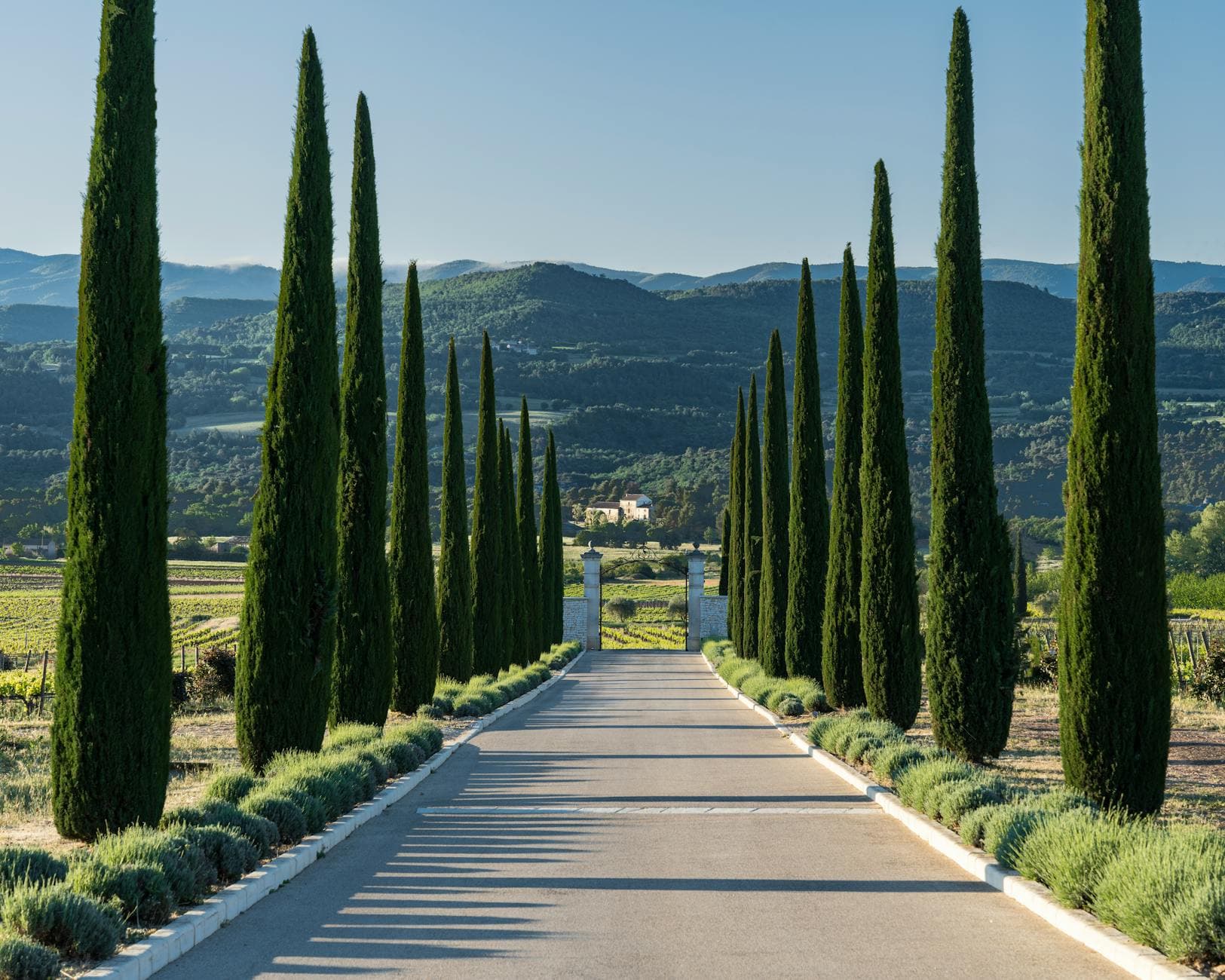
Provence Wine Region: The Complete Guide to Rosé, Wineries & Wine Travel
Provence Wine Region: The Complete Guide to Rosé, Wineries & Wine Travel
Introduction

Provence is France's oldest wine region. When Greek sailors from Phocaea founded Massalia — modern Marseille — around 600 BC, they brought vines with them. The Romans expanded the plantings across the south. By the time Bordeaux and Burgundy were making wine, Provence had been at it for six centuries.
Today, Provence is known for one thing above almost all others: pale, dry rosé. The region produces approximately 145 million bottles per year, roughly 90% of it rosé, and that rosé has become one of the defining wine trends of the past fifteen years. The distinctive pale salmon-pink color, the bone-dry style, the crisp finish designed for Mediterranean food and summer heat — it landed in the right place at the right moment.
That dominance can obscure how much else is happening here. Bandol makes some of France's most age-worthy red wines from Mourvèdre. Cassis produces exceptional whites from Marsanne and Clairette that are almost impossible to find outside the region. The tiny Palette appellation near Aix-en-Provence has a single estate that has made wine since the 1830s and produces bottles unlike anything else in France.
Provence covers a large and varied territory — from the limestone mountains north of Aix to the coastal calanques of Cassis, from the Rhône delta near Arles to the Italian border above Nice. Understanding its appellations and producers helps enormously in deciding where to go and what to drink.
Provence Wine Appellations
Provence has eight wine appellations (AOCs), ranging from the vast Côtes de Provence to the tiny Palette. Each has a distinct character shaped by soil, climate, and the grape varieties permitted.
Côtes de Provence (AOC)
The largest appellation, covering roughly 20,000 hectares across the Var department and parts of Bouches-du-Rhône. Côtes de Provence stretches from the hills above Nice in the east to Saint-Tropez on the coast, and northwest toward Aix-en-Provence. The geographic diversity is considerable — coastal sites influenced by the sea, limestone plateaus at altitude, and river valleys with clay-limestone soils.
Rosé represents over 80% of Côtes de Provence production. The permitted varieties are Grenache, Cinsault, Mourvèdre, Syrah, and Tibouren — plus small amounts of Cabernet Sauvignon (capped at 30%), Carignan, and in some zones, Rolle (Vermentino) for whites.
Quality within the appellation varies widely. A basic Côtes de Provence rosé from a large cooperative can be competent but unremarkable. An estate-bottled wine from a focused producer on the Sainte-Victoire plateau or the Londe hills is a different category entirely.
Côtes de Provence Sub-Zones
Three geographic sub-zones carry their own labels within the Côtes de Provence AOC:
Côtes de Provence Sainte-Victoire — The hills east of Aix-en-Provence beneath Mont Sainte-Victoire, Cézanne's obsessive subject. Limestone and clay soils at elevation (300-500m) produce structured, mineral rosés with better acidity than lower-altitude zones. Often considered Côtes de Provence's best sub-zone.
Côtes de Provence La Londe — Near Toulon, close to the Mediterranean. Maritime influence brings morning fog and cooling afternoon breezes. Produces rosés with pronounced mineral character.
Côtes de Provence Pierrefeu — The Massif des Maures foothills. Schist-dominant soils.
Bandol (AOC)
Bandol is Provence's most serious red wine appellation, and one of France's most distinctive. It sits on terraced limestone hillsides west of Toulon, facing the Mediterranean. The appellation's rules require at minimum 50% Mourvèdre in red wines, aging for 18 months in wood before release.
Mourvèdre is a demanding variety — it needs heat to ripen fully and produces dense, tannic wines in youth that can age for 15-25 years. In Bandol's warm, chalky terroir it reaches a richness and complexity rarely achieved elsewhere. The classic Bandol rouge at ten years is one of Provence's great wine experiences: still firm, deeply colored, with notes of garrigue (wild thyme, rosemary, lavender), leather, and dark fruit.
Bandol rosé — made primarily from Mourvèdre blended with Grenache and Cinsault — is the appellation's other pillar. More structured and copper-tinted than standard Provence rosé, with a texture that holds up to grilled fish and bouillabaisse. Bandol blanc (Clairette, Ugni Blanc, Bourboulenc) is small in volume but can be very good.
The town of Bandol itself, a fishing port turned resort, has a pleasant old harbor worth an evening. The appellation covers the communes of Bandol, Castellet, La Cadière-d'Azur, and several surrounding villages.
Coteaux d'Aix-en-Provence (AOC)
A large appellation centered on Aix-en-Provence, extending north and east through varied hill country. Rosé and red wines dominate. The permitted varieties include Cabernet Sauvignon alongside the traditional southern varieties, which produces a somewhat different style — more structured, cooler-feeling rosés than coastal Côtes de Provence.
The northern reaches of the appellation, where estates sit at higher elevation on limestone and clay, produce particularly good reds. Château Vignelaure, one of Provence's pioneering estates (founded by George Brunet who previously owned Château La Lagune in Bordeaux), made the case for blending Cabernet with Mourvèdre and Grenache in the 1970s.
Les Baux-de-Provence (AOC)
A small appellation in the Alpilles mountains, southwest of Aix-en-Provence. Les Baux-de-Provence has become an organic and biodynamic stronghold — the appellation rules now require organic certification from all producers, making it France's first fully organic AOC (achieved in 2020).
The landscapes here are dramatically different from coastal Provence: limestone rock formations, medieval villages perched on cliff edges, olive groves, and vineyards. Domaine de Trévallon, one of the most respected estates in all of Provence, operates outside the AOC (its Cabernet content exceeds permitted levels) but is located here.
Cassis (AOC)
Not to be confused with the blackcurrant liqueur (cassis), this small appellation east of Marseille is the exception to Provence's rosé dominance. Cassis makes its name on white wine — particularly from Marsanne, Clairette, Ugni Blanc, and Bourbelenc. The whites are full-bodied, aromatic, and often mineral, shaped by the limestone calanques rising directly above the vineyards.
Cassis white wine and the local bouillabaisse are one of the region's classic pairings. The combination of a bowl of saffron-scented fish stew and a chilled Cassis blanc in a portside restaurant in the village is as specific a Provençal experience as exists.
The calanques themselves — narrow fjord-like inlets cut into white limestone, accessible by boat or on foot — are one of the most beautiful landscapes in France and make Cassis an excellent destination independent of wine.
Palette (AOC)
The smallest appellation in Provence — fewer than 50 hectares. Palette sits on limestone and clay east of Aix-en-Provence, in a natural amphitheater sheltered from the mistral. Virtually the entire appellation is controlled by a single estate: Château Simone, which has been in the same family since the 1830s.
Château Simone's wines — red, white, and rosé — are unlike anything else in Provence. The estate grows a wide range of varieties including some that no longer exist elsewhere (Manosquin, Castet), ages wines in large old foudres, and produces bottles of extraordinary longevity. The white Palette can age for fifteen years; the red for thirty. They're expensive and allocation is limited, but no serious exploration of Provence wine is complete without them.
Coteaux Varois en Provence (AOC)
An inland appellation in the Var, at higher elevation and with a more continental climate than coastal zones. Cooler nights mean wines with better natural acidity. Often underpriced relative to quality. Less known internationally than Côtes de Provence or Bandol.
Provence Rosé: Why It's Different
The pale color of Provence rosé is not accidental or decorative — it's a deliberate stylistic choice with specific technical roots.
Most rosé in the world is made by one of two methods. The saignée method ("bleeding") draws off juice from a red wine fermentation after a few hours of skin contact — the longer the contact, the darker the juice. The resulting rosé has more color, more tannin, and more body. This is how many New World rosés are made, and it's a byproduct of red wine production rather than a primary goal.
Provence rosé is made exclusively by direct pressing — the grapes are pressed immediately after harvest, with minimal or no skin contact. Only the gentle first-press juice is used (the free-run and light press fractions). This produces a very pale, delicately colored juice that ferments to a light, dry, crisp wine. No saignée. The pale color is evidence of technique, not dilution.
Grape varieties in Provence rosé blend typically include:
- Grenache: The most widely planted variety in Provence. Provides red fruit character (strawberry, watermelon), natural high alcohol, and roundness. The backbone of most blends.
- Cinsault: Gives freshness, floral aromatics, and lower alcohol. A key contributor to the light, delicate style. Particularly common in older Provence rosé blends.
- Mourvèdre: Adds structure, dark fruit, and the distinctive garrigue quality. More prominent in Bandol rosé than standard Côtes de Provence.
- Syrah: Contributes body, black pepper notes, and color depth. Used in moderate amounts.
- Tibouren: A variety found almost exclusively in Provence, particularly in the Var. Produces light, aromatic, early-drinking rosé with distinctive salty mineral character. Rarely seen as a varietal wine; usually blended.
The Provence pale color vs other rosé styles: Provence-style pale rosé became a global trend starting around 2008-2010 when the category exploded. Many wines from other regions now mimic the pale color without replicating the technique — they're made by saignée or blending, then adjusted to look paler. The color itself isn't the point; the direct press technique and the varieties used produce a specific flavor profile that pale imitation rosé from elsewhere doesn't replicate.
Food pairings: Provence rosé is designed for Mediterranean food. Grilled fish (sea bream, sea bass, mullet), aioli and crudités, bouillabaisse, ratatouille, niçoise salad, grilled vegetables, fresh chevre, and simple charcuterie. The acidity and freshness cut through oil; the fruit character matches the natural sweetness of summer vegetables. It's not a wine for heavy winter food — don't pair it with braised meat or aged cheese.
Price: Provence rosé costs more than equivalent-quality rosé from elsewhere. Yield restrictions, hand harvest requirements in many estates, and the labor-intensive direct press approach all push costs up. The top estates also benefit from significant brand recognition that commands premiums. A basic Côtes de Provence at €12-15 is reasonable value; Whispering Angel from Château d'Esclans at €25-30 is partly a fashion premium; the top cuvées from Domaine Ott or single-estate Bandol rosé at €40-60 represent genuine quality.
Best Wineries to Visit in Provence
Château d'Esclans (La Motte, Var)
More than any other estate, Château d'Esclans is responsible for Provence rosé's global moment. Sacha Lichine (son of Alexis Lichine, the Bordeaux writer and négociant) purchased the estate in 2006, hired Patrick Léon (who had worked at Mouton Rothschild), and set about making rosé with the ambition of a classified growth. The flagship wine, Whispering Angel, became the wine that restaurants worldwide chose as their house Provence rosé. Garrus, the single-vineyard prestige cuvée, commands prices previously unimaginable for rosé.
The winery and visitor center are architecturally impressive — renovated château buildings set in forested hills. Tastings are conducted properly, not as an afterthought. Estate: La Motte in the Var, about 50km from Saint-Tropez.
Domaine Ott (Multiple Sites)
Founded in 1896 by Marcel Ott, who came to Provence from Alsace and immediately recognized the potential of the land, Domaine Ott has three estates: Château Romassan (Bandol), Clos Mireille (La Londe coastal zone), and Château de Selle (Côtes de Provence). All three produce wines considered benchmarks by regional standards.
Clos Mireille deserves particular attention: a coastal estate between Toulon and Saint-Tropez, one of the few in Provence making white wine of genuine ambition (Rolle, Sémillon), alongside exceptional rosé. The estate is recognized by its skittle-shaped bottles, a house signature since the 1930s.
Domaine Ott was acquired by Champagne Louis Roederer in 2004, which brought investment while preserving the estate's direction. Tastings are available by appointment at the estates.
Château Miraval (Correns, Var)
Brad Pitt and Angelina Jolie purchased Miraval in 2012 in partnership with the Perrin family of Château Beaucastel fame. The wine attracted attention for reasons beyond quality initially, but the Perrins brought serious winemaking credentials, and Miraval rosé quickly established itself as a genuinely good Côtes de Provence Sainte-Victoire expression.
The Pitt-Jolie divorce has generated lengthy legal proceedings since 2021, but the wine continues to be produced. The estate itself — a château with recording studio, olive groves, and extensive vineyards — sits in the remote Var interior near Correns, one of France's fully organic villages. Visits are limited.
Domaine de Trévallon (Saint-Étienne-du-Grès, Les Baux)
Eloi Dürrbach founded Trévallon in 1973 in the Alpilles, planting Cabernet Sauvignon and Syrah in roughly equal proportions — a blend that defied Provençal convention. The wines became critically celebrated through the 1980s. When AOC Les Baux-de-Provence rules capped Cabernet content, Trévallon declined to adjust and was declassified to Vin de Pays des Bouches-du-Rhône (now IGP). It remains so.
This classification bureaucracy has not reduced the estate's reputation. Trévallon rouge and blanc are two of southern France's most distinctive wines — the red with 15-20 years' aging potential, structured and aromatic; the white (Marsanne and Roussanne) full-bodied and mineral. Production is small and allocation is difficult. The estate is outside Saint-Étienne-du-Grès near Les Baux-de-Provence village.
Château Simone (Palette AOC, Meyreuil)
The estate exists on its own terms. The Rougier family has owned Château Simone since the 1830s and has changed little. Old vines, ancient varieties alongside better-known ones, long macerations, aging in large old wooden foudres. The white Palette is the most compelling wine — full-bodied, nutty, mineral, with extraordinary aging potential. The red needs a decade minimum. The rosé is unlike any other Provence rosé in existence.
Visiting Château Simone is not a standard winery tourism experience. They do not have a visitor center. Contact in advance and approach with respect for a family enterprise that operates entirely on its own schedule. Located in Meyreuil, about 10km east of Aix-en-Provence.
Domaine Richeaume (Puyloubier, Côtes de Provence Sainte-Victoire)
A biodynamic estate on the southern slopes of Mont Sainte-Victoire, founded in 1972 by German philosopher Henning Hoesch and now managed by his son Sylvain. Richeaume was organic before it was fashionable in Provence and produces notably structured wines — a Syrah of real weight and grip, rosé with substance, a Cabernet-based cuvée called Tradition that ages well.
The estate grows its own vegetables and keeps livestock, living closer to a genuine domaine in the historical sense than most wine estates in the region. Visits by appointment; the cellar and vineyard are worth seeing.
Château La Coste (Le Puy-Sainte-Réparade, Coteaux d'Aix-en-Provence)
Château La Coste is simultaneously a working wine estate and one of France's most ambitious art and architecture parks. The Irish-owned estate has commissioned permanent installations from Renzo Piano, Jean Nouvel, Frank Gehry, Alexander Calder, Tadao Ando, Louise Bourgeois, and dozens of other artists and architects. Walking the estate is a genuinely impressive experience — sculptures and pavilions appear unexpectedly along trails through the vineyards.
The wine is competent Coteaux d'Aix rosé and red, not the primary reason to go. The restaurant is good. The combination of art, landscape, architecture, and wine makes La Coste unlike any other destination in Provence. Priced accordingly — entry to the art trail is charged separately from wine tasting.
Château Pibarnon (La Cadière-d'Azur, Bandol)

Purchased by Henri de Saint-Victor in 1977 and now managed by his son Eric, Pibarnon sits at the highest elevation in the Bandol appellation — 300m on a limestone plateau above the coast. The altitude produces wines with naturally better acidity than lower-elevation Bandol, and the Mourvèdre here develops remarkable complexity.
Pibarnon rouge needs at least eight years before it opens. At fifteen, it's one of the wines that justifies Bandol's reputation — aromatic garrigue, structured dark fruit, tannins that have softened to silk. The estate also makes excellent rosé (copper-colored, generous) and a small amount of white. La Cadière-d'Azur is a beautiful hilltop village worth visiting in its own right.
Clos Sainte-Magdeleine (Cassis)
Perched above the calanques between Marseille and Cassis, Clos Sainte-Magdeleine makes what many consider the finest Cassis blanc. The estate is on south-facing limestone terraces with direct Mediterranean views. The white wine — principally Marsanne with Clairette, Ugni Blanc, and Sauvignon — is full-bodied, saline, and mineral in a way that reflects the limestone and sea air directly.
Production is small and the wine rarely appears outside the region. A visit to the estate followed by bouillabaisse at a Cassis port restaurant is a near-perfect Provençal afternoon.
Mas de la Dame (Les Baux-de-Provence)
A biodynamic estate in the Alpilles, producing rosé, red, and white wines from organically farmed vineyards. The estate has been certifiably organic since 1999 and adopted biodynamic practices subsequently. Mas de la Dame also produces olive oil — the estate's olive groves are as important to its identity as the vines.
The location, directly below the medieval village of Les Baux-de-Provence (itself worth a half-day), makes this an easy visit to incorporate into an Alpilles itinerary. The wines are fairly priced for the quality level.
Château Revelette (Jouques, Coteaux d'Aix-en-Provence)
An estate in the Durance Valley northeast of Aix, farmed organically by German winemaker Peter Fischer since 1985. Revelette makes consistently good value Coteaux d'Aix-en-Provence rosé and red, plus a small quantity of ambitious wines under the Le Grand Blanc and Le Grand Rouge labels that exceed the appellation in ambition. Peter Fischer is one of the region's quiet innovators — less famous than Esclans or Trévallon, but worth seeking out.
Domaine de la Citadelle (Ménerbes, Luberon AOC)
Technically in the Luberon AOC rather than Provence proper, but within easy reach of Aix-en-Provence and very much part of the wider Provence wine landscape. The estate in the Luberon hilltop village of Ménerbes — made famous by Peter Mayle's A Year in Provence — also houses an extraordinary private corkscrew museum (the Musée du Tire-Bouchon) with over 1,000 corkscrews from the 17th century onward. An eccentric institution worth an hour.
The wines are good Luberon rosé and red at accessible prices — the estate offers more for the tourist dollar than many Côtes de Provence properties.
The Provence Wine Route
The Route des Vins de Provence is a sign-posted circuit connecting major wine estates and villages through the Var department and Bouches-du-Rhône. It runs roughly from Aix-en-Provence eastward to Fréjus, with branches to the coast. Driving it without a planned itinerary is a reasonable option in June or September when roads are manageable; in July and August, coastal sections are gridlocked.
Aix-en-Provence to Sainte-Victoire Loop (half day)
Start in Aix-en-Provence. Drive east on the D17 toward Puyloubier (Domaine Richeaume), continuing to Pourrières and Trets under the south face of Mont Sainte-Victoire. This is Côtes de Provence Sainte-Victoire territory — the estates here are smaller and less tourist-oriented than coastal ones. Afternoon return to Aix along the N7.
Bandol and Cassis Coastal Route (full day)
Toulon → La Cadière-d'Azur (Château Pibarnon) → Bandol town (harbor, lunch) → La Ciotat → Cassis (Clos Sainte-Magdeleine, calanques walk, dinner). Allow a full day. The D559 coast road is beautiful but slow in summer.
Alpilles and Les Baux Loop (half day from Aix)
West from Aix on the A54 to Saint-Rémy-de-Provence, then south through the Alpilles to Les Baux-de-Provence village, east through Saint-Étienne-du-Grès (Trévallon) and Mas de la Dame. The Alpilles are one of the most beautiful landscapes in France — white limestone ridges, olive groves, the village of Baux on its crag. The light in this area is what Cézanne and Van Gogh were painting.
Luberon extension
Ménerbes (Domaine de la Citadelle) is 45 minutes north of Aix. Easy to combine with an Alpilles day.
Getting to Provence Wine Country
By train: TGV from Paris Gare de Lyon to Aix-en-Provence TGV is 3 hours, with trains running throughout the day. TGV to Marseille runs at similar times from Paris. Nice is 5.5 hours from Paris or 3.5 hours from Lyon. Avignon TGV (good for the Alpilles and western Provence) is 2.5 hours from Paris.
By air: Marseille-Provence Airport and Nice Côte d'Azur Airport are both well-served from across Europe and from North America (seasonal direct flights). Marseille is better placed for Bandol, Cassis, and western Provence; Nice for the Var and eastern estates.
Car hire is essential. Wine estates are not on public transit routes. The TER regional train network connects coastal towns, but wineries sit outside them. Rent a car at the airport or at Aix-en-Provence or Marseille city centers. Roads in the Var interior are good; coastal roads in summer are slow.
Within Provence: The A8 autoroute runs from Aix-en-Provence to Nice. Departmental roads (D-roads) connect the wine villages. GPS is necessary — signage is inconsistent between châteaux.
Best Time to Visit
Spring (April-June): Genuinely the best weather window. Wildflowers in the garrigue, lavender still weeks away from bloom, road and restaurant crowding not yet at summer levels. Wineries are transitioning from cellar work to preparation for the growing season and are generally accessible for visits. Provence rosé is available from the most recent harvest (the previous August-September).
Early summer (June): The last calm window before August. Lavender blooms in late June in the Luberon and Plateau de Valensole. Temperatures are warm but not oppressive. Roads are manageable.
July-August: Peak season. The autoroute from Marseille to Nice operates as a car park. Accommodation prices double or triple. The region is full of people who want to be there, which changes the character of every interaction. If this is your only window, book accommodation and restaurant tables 2-3 months ahead. Winery visits are busiest; expect shorter, more performative tastings.
Harvest (mid-August to early September): Provence harvests earlier than most French regions — the southern heat accelerates ripening. The energy of harvest season is present, though the timing means harvest and summer crowds overlap briefly. Grève in the heat is genuinely unpleasant; an estate visit starting at 8am before the day heats up is much better.
Autumn (October-November): The regional favorite. Summer visitors have gone. Restaurant reservations are again possible without a month's notice. The light shifts to the golden quality that made Provence famous to painters. Truffle season begins in November in the Luberon and Var — fresh truffle and a good Bandol rouge is a specific pleasure. Estate visits are more relaxed; winemakers have time to talk.
Winter (December-March): Quiet, cold, occasionally wet. The mistral wind can make outdoor activity unpleasant. But truffle markets in towns like Richerenches and Carpentras (slightly north of Provence proper) are extraordinary, and the region's restaurants are at their most interesting feeding locals rather than tourists.
Food and Wine in Provence
The cuisine of Provence is built on olive oil, tomatoes, garlic, herbs, and Mediterranean fish. It's one of the world's more wine-friendly food traditions — almost everything pairs naturally with the local wines.
Classic Provence pairings:
- Bouillabaisse + Cassis blanc: The great Marseille fish stew, properly made with rascasse, grondin, Saint-Pierre, vive, and other local rockfish, matches the saline mineral character of Cassis white. This is the pairing.
- Grilled sea bass (loup de mer) + Bandol rosé: The weight and texture of Bandol rosé handles the richness of oily grilled fish better than a lighter Côtes de Provence.
- Daube provençale + Bandol rouge: The slow-braised beef stew with olives, herbs, and orange peel is Provence's great winter dish. It needs a wine with age and structure — Bandol rouge at ten years old is ideal.
- Tapenade and aioli + any good Provence rosé: The classic aperitif spread — olive paste, garlic mayonnaise, raw vegetables — is the rosé context. Simple, fresh, direct.
- Pissaladière + Côtes de Provence rosé: The Niçois onion tart with anchovy and olives. Strong flavors that match the fruit and acid of rosé.
Where to eat in Provence wine country:
Aix-en-Provence's old town has numerous restaurants of quality — the market streets around the Hôtel de Ville on Tuesday, Thursday, and Saturday mornings are particularly lively. Les Baux-de-Provence village has limited but excellent options. Cassis port has straightforward fish restaurants along the quai that serve what came off the boat that morning. Avoid the tourist-facing places on the main square in Les Baux; the villages of Saint-Rémy-de-Provence, Eyguières, and Rognes have reliable local options where you'll encounter winemakers rather than tourists.
Frequently Asked Questions
What wine is Provence known for?
Provence is best known for rosé — pale, dry, crisp rosé made from Grenache, Cinsault, Mourvèdre, and Syrah. The region produces around 90% of France's rosé AOC wine, and Provence rosé has become a global category benchmark since the mid-2000s. Beyond rosé, Bandol makes exceptional long-lived reds from Mourvèdre, and Cassis makes some of France's most distinctive white wines.
Is Provence rosé worth the price?
The best estate-bottled Provence rosé — from producers like Domaine Ott, Château Simone, Château Pibarnon, or Clos Sainte-Magdeleine — is worth the price because the wines genuinely deliver quality: complex aromatics, mineral texture, and structure that improves over two to four years. The high-volume international brands (Whispering Angel and similar) carry a fashion premium on top of their real quality. A basic Côtes de Provence at €12-18 from a serious estate offers straightforward value. Paying over €30 for a supermarket Provence rosé purely because of the name on the label is a different calculation.
What is the best Provence wine?
That depends on what you mean by "best." The most acclaimed individual bottles come from Domaine de Trévallon (red, age-worthy, occasionally brilliant), Château Simone (white and red, unlike anything else in France), and the finest single-vineyard expressions from Domaine Ott and Château Pibarnon. For rosé specifically, Domaine Ott's Clos Mireille, Château Pibarnon, and Clos Sainte-Magdeleine are consistently exceptional.
What grape varieties are used in Provence rosé?
The primary varieties are Grenache (backbone, red fruit, body), Cinsault (freshness, floral aromatics, lower alcohol), Mourvèdre (structure, garrigue character, dark fruit), Syrah (body, pepper, depth), and Tibouren (a Provence-specific variety adding light aromatic and saline character). Carignan and Cabernet Sauvignon are also permitted in smaller amounts. Rolle (Vermentino) appears in some white blends. Most Provence rosé is a blend of at least three varieties.
When should I visit Provence for wine?
April through June and October through November are the optimal windows — good weather without summer crowds, and wineries that have time for proper visitor engagement. Harvest (mid-August to early September) is rewarding but overlaps with peak tourist season. July and August are feasible but require advance booking for everything. Winter is very quiet, which some travelers prefer.
How many wine appellations does Provence have?
Eight: Côtes de Provence (including three geographic sub-zones: Sainte-Victoire, La Londe, and Pierrefeu), Bandol, Coteaux d'Aix-en-Provence, Les Baux-de-Provence, Cassis, Palette, Coteaux Varois en Provence, and Pierrevert (the most northern and least visited).
Can you visit Château Miraval?
Château Miraval is not a standard open-for-tastings winery. Visits are limited and typically require advance arrangement. The estate's wines are available through specialist wine merchants and at good Provence restaurants; the primary experience of Miraval wine is through the glass rather than the cellar. The ongoing legal dispute over the estate's ownership has not disrupted wine production but may affect visitor access in the near term.
What food pairs best with Provence rosé?
Provence rosé was designed for Mediterranean food: grilled fish (sea bass, sea bream, mullet), aioli and raw vegetables, tapenade, pissaladière, ratatouille, niçoise salad, fresh goat cheese, simple charcuterie, and grilled chicken or rabbit. The acidity and freshness cut through olive oil-based dishes; the fruit character matches summer vegetables. Avoid heavy, sauce-based, or smoked meats — the wine is too delicate to handle them.
Planning Your Provence Wine Trip
For a focused wine trip, base yourself in one of three locations depending on your priorities:
Aix-en-Provence: Excellent infrastructure, good restaurants, easy access to Sainte-Victoire estates, Palette AOC (Château Simone 10km away), and day trips to Les Baux and the Alpilles. The most convenient base for a wide Provence wine circuit.
Bandol or La Cadière-d'Azur: For a coastal trip focused on Bandol and Cassis wines. Easy day access to Cassis, Marseille, and the calanques. Quieter than Aix and closer to the specific estates.
Saint-Rémy-de-Provence or Les Baux area: For the Alpilles landscape, organic estates, and Trévallon. More rural and less convenient for coastal destinations, but with a distinct character.
For a three-day focused Provence wine trip, a reasonable structure is: Day 1 in Aix and Sainte-Victoire (Richeaume, Palette, market morning); Day 2 to Bandol, Cassis, and the coast (Pibarnon, Clos Sainte-Magdeleine, lunch in Cassis); Day 3 in the Alpilles (Les Baux village, Mas de la Dame, Trévallon if accessible).
Further reading on planning wine trips in France:
- How to Plan a Wine Tour
- Bandol and Cassis Wine Guide
- Wine Tasting Dress Code
- Bordeaux Wine Region Guide for comparison with another French wine destination

Wines of Provence Wine Region: The Complete Guide to Rosé, Wineries & Wine Travel
Key grape varieties and wine styles produced in the region
Primary Grape Varieties
Wine Styles
Ready to visit Provence?
Build your personalised day-by-day itinerary — choose your travel style and trip length, get accommodation and tour picks per day, and email it to yourself to take along.
Upcoming Wine Festivals in France
See all festivalsHidden Gems Nearby
Discover more hidden gemsDomaine de la Bongran
WTG PickBurgundy, France
A Burgundy rebel who makes Chardonnay on their own terms, far from the tourist trail of Beaune and Puligny.
Chardonnay
Domaine Huet
WTG PickLoire Valley, France
World-class Chenin Blanc with no queues, no hype, just pure Loire magic in a village setting.
Chenin Blanc
Mas de Daumas Gassac
Languedoc, France
Grand cru quality at a fraction of Bordeaux prices, in a wild, beautiful valley most tourists never find.
Cabernet Sauvignon · Rosé · White Blend
Book Your Provence Wine Country Stay
Compare hotels, vineyard B&Bs and rentals across Booking, Airbnb and more in one search.
Compare stays near the vineyardsStay22
Plan Your Provence Wine Region: The Complete Guide to Rosé, Wineries & Wine Travel Trip
Estimate your Provence Wine Region: The Complete Guide to Rosé, Wineries & Wine Travel trip cost
Budget calculator with accommodation, food, wine, and transport estimates.
Try itCompare Provence Wine Region: The Complete Guide to Rosé, Wineries & Wine Travel with other regions
Side-by-side comparison of cost, climate, wine styles, and more.
Try itWhen to visit Provence Wine Region: The Complete Guide to Rosé, Wineries & Wine Travel
Harvest dates, peak season, and the best months for wine travel.
Try itThis page contains affiliate links. We may earn a commission at no extra cost to you.