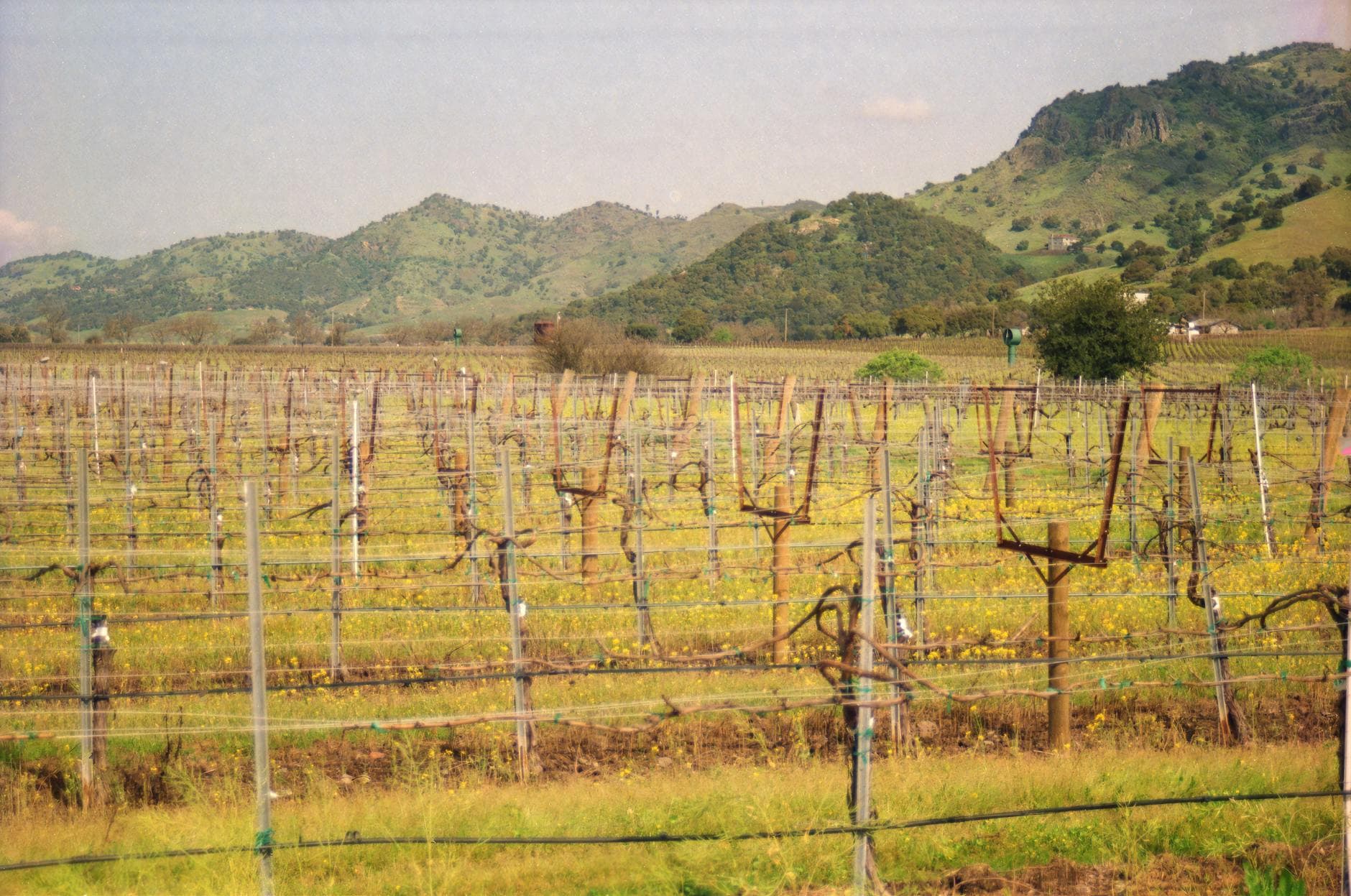
Tain-l'Hermitage & Hermitage: The Rhône's Most Legendary Wines
Tain-l'Hermitage & Hermitage: The Rhône's Most Legendary Wines
A single granite hill rising above the Rhône River has been producing wine since Roman times. Today, it gives its name to one of France's most serious appellations and some of its most expensive Syrah. The town at its base — Tain-l'Hermitage — is a compact, unpretentious place with a market square, a world-famous chocolate factory, and a handful of négociant cellars that have shaped the way the world thinks about Northern Rhône wine.
This is not a wine region built on spectacle or easy access. Hermitage AOC covers just 136 hectares. Production is limited. Top bottles from producers like Jean-Louis Chave or Chapoutier's single-parcel releases sell for hundreds of euros. But Crozes-Hermitage — the surrounding appellation — offers much of the same granite terroir character at a fraction of the price. And the town itself, midway between Valence and Lyon, makes a logical stop on any wine tour of the Rhône Valley.
This guide covers everything you need to plan a visit: the appellations, the key vineyard parcels, the best producers to tour and taste at, when to go, and what the wines actually taste like.
Where is Tain-l'Hermitage?
Tain-l'Hermitage sits on the left (eastern) bank of the Rhône River in the Drôme department, roughly 80 kilometres south of Lyon and 20 kilometres north of Valence. Directly across the river, connected by an old suspension bridge, is the town of Tournon-sur-Rhône in the Ardèche department.
This stretch of the Rhône is where the Northern Rhône wine zone reaches its heart. The appellations here — Hermitage, Crozes-Hermitage, Saint-Joseph — sit within a narrow corridor along the river. The landscape shifts sharply from flat alluvial valley floor to steep granite slopes as you move away from the water, and it is on those slopes that the most important vines grow.
The broader Northern Rhône wine region extends further north along the river to include Cornas, Saint-Péray, Crozes-Hermitage's scattered villages, and, further still, Condrieu and Côte-Rôtie near the town of Ampuis. Tain-l'Hermitage is the geographic and commercial centre of this zone.
The town itself has a population of around 5,000. It is small, functional, and entirely oriented around wine and chocolate. The Valrhona factory — one of the most respected couverture chocolate producers in the world — occupies a significant portion of the town centre. Chapoutier's flagship cellar is a two-minute walk from the railway station.
The Appellations Explained
Hermitage AOC
Hermitage is the headline appellation and the reason the town exists on wine maps. The AOC is granted exclusively to vineyards on the hill directly behind the town: a single south-facing granite slope of 136 hectares, shaped like a broad amphitheatre and protected from northerly winds by the hill's own mass.
For red wines, Hermitage must be Syrah — minimum 85%, with up to 15% white Marsanne or Roussanne permitted as a historical allowance, though most serious producers bottle their reds as 100% Syrah. Red Hermitage is one of the longest-lived wines in France. Bottles from great vintages — 1978, 1990, 2003, 2010 — can drink well past 30 years.
For whites, the appellation uses Marsanne, typically blended with small proportions of Roussanne. White Hermitage ages unusually well, going through a closed, waxy phase in mid-life before opening into a complex, honeyed, almost oxidative style after a decade or more in bottle.
Production is small: around 600,000 bottles per year across all producers. Prices reflect scarcity. Entry-level Hermitage from major négociants typically starts around €40–60 per bottle; single-parcel wines from Chapoutier or Chave range considerably higher.
Crozes-Hermitage AOC
Crozes-Hermitage surrounds the Hermitage hill without touching it. The appellation covers approximately 1,600 hectares across 11 communes, making it the Northern Rhône's largest appellation by volume. Reds are Syrah-dominant; whites use Marsanne and Roussanne.
The quality range is wide. At the top end, estates farming the granitic soils closest to the Hermitage hill — particularly in the Larnage and Gervans sub-zones — produce wines that approach Hermitage in concentration and structure. More basic Crozes from alluvial valley soils is lighter, earlier-drinking, and better value than it is exceptional.
Crozes is the appellation where Tain's Cave Cooperative — Cave de Tain — does the most work in terms of volume, producing roughly 30% of the appellation's output. For visitors, it is also the most accessible entry point into the region's wines.
Saint-Joseph AOC
Saint-Joseph occupies the right (western) bank of the Rhône, across the river from Tain in the Ardèche. The appellation stretches 60 kilometres from Condrieu in the north to Guilherand-Granges near Valence in the south — an unusually long, discontinuous zone of granite slopes and plateaux.
Saint-Joseph reds are Syrah, with up to 10% Marsanne and Roussanne permitted. Whites, made from Marsanne and Roussanne, are often very good: more forward and aromatic than Hermitage white, with lower prices. Jean-Louis Chave's Saint-Joseph "Offerus" is one of the most-discussed value white wines in the Rhône.
The appellation's size and diversity mean quality varies considerably. Wines from producers like Gonon, Coursodon, and Chave represent the serious tier; much of what is bottled under the Saint-Joseph label is serviceable but unremarkable.
The Hermitage Hill: Terroir and Named Parcels
The hill of Hermitage — locally called Le Coteau de l'Hermitage — is not large. You can walk its full width in 45 minutes. But within those 136 hectares, soil types, aspect, and drainage vary enough that producers have long identified distinct parcels, each with its own character.
The dominant geology is granite, but it is not uniform. The hill has a complex structure of decomposed granite (gneiss) interspersed with heavier clay in some lower sectors and purer, sandier granitic soils higher up. The south-facing aspect maximises sun exposure during the growing season, while the hill's height and orientation provide shelter from the cold north winds that can damage vines elsewhere in the valley.
The main named parcels:
Le Méal sits at the eastern end of the hill at mid-slope. It has deep, sandy granitic soils over a rocky base and tends to produce wines with weight and roundness — rich dark fruit, sometimes a darker, more meaty character than the western parcels. Chapoutier's Le Méal Hermitage is one of the most collected wines from this parcel.
Les Bessards occupies the western sector and is generally considered the most prestigious parcel. Pure, decomposed granite with minimal organic matter. Wines from Les Bessards are typically the most structured, austere, and long-lived: tight in youth, requiring years of cellaring to open. Chave, Chapoutier, and Jaboulet all draw from it.
L'Hermite is a small parcel near the chapel at the top of the hill. The soils are thin and extremely well-drained. Wines tend to be more elegant and floral than those from Bessards or Méal, with a lighter structure. Chapoutier produces an extremely limited single-parcel bottling from this site.
Les Greffieux runs along the lower, flatter section of the eastern hill. Heavier soils with more clay retain moisture and produce wines with softer tannins and earlier accessibility than the granitic upper parcels. Chave's white Hermitage draws partly from Greffieux.
Most Hermitage — including all but the most prestigious cuvées — is blended across multiple parcels. The single-parcel wines are generally only produced in good vintages and in very small quantities.
Key Producers to Visit
M. Chapoutier
Chapoutier is the largest landowner in the Hermitage AOC and among the most significant producers in the entire Rhône Valley. The house was founded in Tain in 1808 and has operated continuously on the hill since. Under Michel Chapoutier, who took over in the late 1980s, the estate converted fully to biodynamic viticulture — the whole domaine, not just selected parcels.
The visitor experience at Chapoutier is among the most developed in the Northern Rhône. The cellar and tasting room are on the main avenue in Tain, within walking distance of the train station. Guided tours run regularly (tasting fees and tour pricing are subject to change; check chapoutier.com for current schedules). The range covers Hermitage, Crozes-Hermitage, Saint-Joseph, and wines from other regions of France and Australia.
The flagship wines — Le Pavillon, L'Ermite, Le Méal — are extremely limited and command serious prices. The mid-range Hermitage and Crozes bottlings offer more accessible entry points into the house style.
Paul Jaboulet Aîné
Jaboulet is best known for La Chapelle, a single-vineyard Hermitage sourced primarily from Les Bessards that became, through the 1970s and 1980s, one of the most collected wines in the world. The 1961 La Chapelle is consistently cited in discussions of the greatest wines ever produced in France.
The estate changed hands in 2006, acquired by the Frey family of Château La Lagune in Bordeaux. Quality under the new ownership has been strong, and La Chapelle has recovered much of its earlier reputation. The Jaboulet tasting room in Tain accepts visitors; contact in advance for tours of the historic cellars. The range also includes solid Crozes-Hermitage under the Thalabert label and a wide array of Rhône appellations.
Jean-Louis Chave
Chave is the benchmark producer of Hermitage and one of the most revered domaines in France. The estate has been in continuous family ownership since 1481. Jean-Louis Chave, who runs it today with his father Gérard, is among the most respected voices on Hermitage terroir.
Visiting Chave is not like visiting Chapoutier. The domaine is small, located in the village of Mauves (in Saint-Joseph territory, across the river), and tastings are by appointment only — typically reserved for serious buyers, importers, and those who can demonstrate genuine interest. Casual walk-in visitors are not accommodated.
Chave's Hermitage is a blend of parcels across the hill, assembled each vintage to reflect what Chave considers the most complete expression of the appellation rather than any single site. The estate also produces exceptional Saint-Joseph and, in selected vintages, a special cuvée called Clos Florentin.
For most visitors, Chave wines are more accessible through restaurant wine lists or specialist retailers than through direct cellar visits.
Delas Frères
Delas is a négociant house established in 1835 in Tournon-sur-Rhône, now owned by the Champagne Louis Roederer group since 1977. The estate has vineyard holdings in Hermitage, Cornas, Condrieu, and Côte-Rôtie, while also sourcing purchased fruit for much of its range.
The visitor experience at Delas is organised and accessible. The cellar in Tain (where production moved) runs regular tastings and can accommodate groups. The wines span from entry-level Crozes-Hermitage to high-end single-parcel Hermitage Bessards. Quality across the range has been consistent.
Cave de Tain
The Cave de Tain cooperative was founded in 1933 and now has around 300 member growers farming approximately 1,100 hectares, mostly in Crozes-Hermitage. The cooperative produces roughly 30% of all Crozes-Hermitage by volume, making it the most significant single producer in the appellation.
For visitors, Cave de Tain is one of the easiest entry points in the region. The shop and tasting room on the Route de Larnage is open to walk-in visitors without appointments. The range includes affordable Crozes at multiple quality tiers as well as Hermitage AOC, Saint-Joseph, and Cornas.
The Nobles Rives range and the Granit range represent their quality-focused Hermitage bottlings. Value across the range is solid; these are not the most complex wines in the appellation, but they are honestly made and competitively priced.
Ferraton Père & Fils
Ferraton is a Tain-based estate with approximately 10 hectares under vine, including parcels in Hermitage. The estate has operated in partnership with Michel Chapoutier since 1998; the Ferraton vineyards are farmed biodynamically under Chapoutier's supervision, while the Ferraton family retains independent production and commercial identity.
Ferraton offers tastings by appointment. The wines are less widely distributed than Chapoutier or Jaboulet but worth seeking out: the Hermitage "Le Reverdy" and the Crozes "La Source" represent good value for the appellation. The estate also produces a small amount of Châteauneuf-du-Pape sourced from purchased parcels in the South.
Alain Graillot
Alain Graillot's estate in Pont de l'Isère is one of the most admired in Crozes-Hermitage. Graillot started the domaine in 1985 after a career in agronomy, and rapidly established a reputation for wines that emphasised freshness and precision over weight and extraction. The estate farms biodynamically.
The Graillot Crozes-Hermitage rouge is consistently cited as one of the best values in the Northern Rhône: genuinely complex, with real structure and the ability to age for 8–12 years. A small amount of Hermitage is also produced from purchased parcels.
Tastings are by appointment. The estate does not have a formal visitor infrastructure — this is a working farm cellar, not a wine tourism operation — but the Graillot family is known for being accessible to visitors who approach with genuine interest.
Belle Père & Fils
Belle is a family estate based in Larnage, one of the most highly regarded village zones within Crozes-Hermitage. The domaine farms around 28 hectares across Crozes and a small parcel in Hermitage. Production is split between whites (Marsanne and Roussanne) and reds (Syrah).
Belle's Crozes-Hermitage "Roche Pierre" red is one of the better village-level wines in the appellation: consistent, structured, and well-priced. The estate also makes a Crozes Blanc that shows the appellation's white wine potential without the price of Hermitage. Tastings by appointment.
Tain-l'Hermitage Town
The town rewards a half-day on its own terms.
Valrhona is the most significant draw beyond wine. The chocolate manufacturer, founded in Tain in 1922, is now one of the world's leading suppliers of high-quality couverture chocolate to professional pastry chefs and chocolatiers. The Cité du Chocolat — Valrhona's visitor centre on the Avenue du Président Roosevelt — opened in 2013 and offers guided tours, workshops, and tasting experiences (entry fees apply; advance booking strongly recommended during peak season). The factory shop sells the full range of Valrhona chocolate, including grades and formats not typically available in retail.
The old suspension bridge connecting Tain to Tournon-sur-Rhône is worth crossing for the view back toward the Hermitage hill. The bridge dates to 1847. From the Tournon bank, you can see the full extent of the vineyard slope and understand, in a single glance, why this particular hill became so important.
Market days in Tain run on Wednesday mornings on the Place du Taurobole and Saturday mornings in the town centre — local produce, wine, and the usual mix of a weekly French market.
Restaurants: Maison Gambert on the main avenue is the most-discussed option for a serious lunch. For casual dining, the Tournon side of the river has a broader selection of cafés and bistros along the waterfront.
How to Get to Tain-l'Hermitage
By train: The most practical approach for visitors without a car. TGV services from Paris run to Valence TGV station (approximately 2 hours). From Valence, a regional train (TER) runs to Tain-l'Hermitage station in around 20–25 minutes, with several services per day. Taxis from Valence are also available (roughly 15–20 minutes, subject to traffic). The Tain station is central and walkable to Chapoutier, the Cave de Tain, and the main town area.
By car from Lyon: The A7 autoroute south to the N7 exit for Tain takes approximately 1 hour 20 minutes to 1 hour 45 minutes depending on traffic. Lyon is the obvious base for exploring the full Northern Rhône, with Condrieu, Côte-Rôtie, and Saint-Joseph also reachable as day trips.
By car from Valence: 20–25 minutes north on the N7. Valence has a broader range of hotels than Tain and makes a practical overnight base.
By car from Avignon: The A7 north takes approximately 1 hour 20 minutes to 1 hour 45 minutes. This makes Tain a viable day trip when touring the Southern Rhône — Châteauneuf-du-Pape and Gigondas are within range of a longer Rhône wine itinerary.
Combining with other Northern Rhône appellations: The Northern Rhône appellations run in a continuous chain along the river. From Tain, it is approximately 40 kilometres north to Condrieu and Côte-Rôtie. Cornas is 15 kilometres south. A serious two-day circuit could cover Côte-Rôtie or Condrieu on day one, Tain and Hermitage on day two, with Cornas as a late addition if time permits.
When to Visit
September and October are the most interesting months if you want to see harvest activity. Syrah in the Northern Rhône typically picks in mid-to-late September; Marsanne for whites can run into October. The landscape is at its best — vines in colour, the hill looking its most dramatic.
The Fête de la Syrah takes place in Tain each October (typically the first or second weekend). The event brings together producers from across the Northern Rhône for tastings, vineyard walks, and public events. It is one of the few occasions when normally appointment-only estates open to general visitors, and worth timing a trip around if the schedule aligns. Dates change annually; check the official Tain tourism office website for the current year's programme.
Spring (April–May) is quieter and pleasant for visits. Producers are less pressured than during harvest, and tastings at appointment-based estates are sometimes easier to arrange. The vines are not particularly photogenic at this stage, but the hill is accessible for walking.
July and August bring heat and tourists. Many small producers reduce tasting availability during August (French summer holidays). The Cave de Tain and Chapoutier remain fully operational, but smaller domaines may have limited hours. Book appointments well in advance if visiting in peak summer.
What to Expect from the Wines
Red Hermitage
Red Hermitage from a serious producer and a good vintage is among the most age-worthy red wines in France. In youth — the first five to eight years — it is typically tight and demanding: dark fruit, black olive, smoked meat, cracked black pepper, sometimes a floral violet note. The tannins are real and grip the palate.
With age, the transformation is substantial. After 10–15 years, well-cellared Hermitage from a good vintage opens into something more complex: the fruit shifts from raw blackberry and plum toward dried fruit, leather, and umami; the pepper and smoke integrate; the texture becomes more fluid. The greatest bottles — Chave's Cuvée Cathelin in exceptional years, Chapoutier's Le Pavillon, Jaboulet's La Chapelle — can hold and evolve for 30 years or more.
If you are buying Hermitage to drink in the near term, target wines from warmer, more accessible vintages (2015, 2017, 2020) and decant generously. Cooler vintages (2014, 2019) reward patience.
White Hermitage
White Hermitage is arguably France's most misunderstood serious white wine. Made primarily from Marsanne — often with a small proportion of Roussanne — it goes through a phase roughly between four and twelve years of age when it shuts down: waxy, heavy, unrevealing. Many bottles are drunk too young or too late because of this.
At its best — drunk young (under three years) or matured (over twelve) — white Hermitage is remarkable. Young versions show almond blossom, fresh apricot, and a creamy texture. With extended age, the wine moves toward honeyed richness, beeswax, roasted nuts, and lanolin. The Marsanne grape lacks the aromatic intensity of Viognier or the acidity of Riesling, but in this specific site it produces whites of unusual weight and complexity.
Crozes-Hermitage vs Hermitage vs Saint-Joseph
The practical question for most buyers is where to spend their money.
Hermitage is the summit — in quality and price. Expect to pay €40+ for entry-level négociant Hermitage and €80–200+ for estate-grown wines from serious producers. The investment is justified if you have the cellar patience, but these wines need time.
Crozes-Hermitage offers the best value entry into the region's granite Syrah character. From producers like Alain Graillot, Belle, or Cave de Tain's upper range, Crozes at €15–30 per bottle delivers genuine Northern Rhône character — the olive, the pepper, the structure — without requiring a decade of cellaring. The best Crozes will age 8–12 years; everyday Crozes is often better at 3–6 years.
Saint-Joseph sits between the two in most respects. Reds are typically lighter and more accessible than Hermitage but can be serious from top producers. Whites from Marsanne and Roussanne can be excellent — often more overtly aromatic than Hermitage white and better value at equivalent ages.
FAQs
Q: Is it worth visiting Hermitage if I can't afford the top wines?
A: Yes. The Cave de Tain and Chapoutier both offer accessible tastings where you can try well-made Crozes-Hermitage and Saint-Joseph for reasonable tasting fees. The hill itself is open to walk; the village, the market, and the Valrhona visitor centre all stand independently of wine spending. A visit built around a cave cooperative tasting, a walk up the hill, and lunch in Tain or Tournon is entirely satisfying without buying a single Hermitage bottle.
Q: Do you need to book producer visits in advance?
A: For most small and medium estates, yes — appointments are required and should be arranged by email at least a week in advance, preferably more. Chapoutier, Delas, and Cave de Tain all operate tasting rooms with walk-in capacity, but even these can be busy in September and October. During harvest, call ahead regardless of what the website says.
Q: What is the difference between Hermitage and Crozes-Hermitage?
A: Hermitage AOC is confined to the single hill directly behind Tain: 136 hectares of granite slopes with a specific south-facing aspect. Crozes-Hermitage covers the surrounding 1,600 hectares of varied terrain — some similar granite slopes, some heavier alluvial soils. Hermitage has tighter regulations, lower yields (in practice if not always in law), and much higher prices. The best Crozes drinks well within a few years of release; Hermitage typically needs 8–15 years minimum.
Q: Is Hermitage wine really worth the price?
A: At the level of top producers in good vintages, yes — if you are comparing it to equivalent benchmark wines from Burgundy or Bordeaux. A bottle of Chave or Chapoutier Le Pavillon Hermitage at €80–120 is cheaper than a comparable-quality Côte de Nuits premier cru. If you are comparing it to everyday drinking wine, the value proposition is different: Crozes-Hermitage from Graillot or Cave de Tain at €20–25 delivers the character of the terroir without requiring a cellar investment.
Q: How does Northern Rhône Syrah differ from Australian Shiraz?
A: Same grape, very different wine. Northern Rhône Syrah — particularly from Hermitage — tends toward savouriness over fruit: smoked meat, black olive, white pepper, dried herbs. Tannins are firm, acids are present, alcohol is typically in the 12.5–14% range. Australian Shiraz from warm regions (Barossa, McLaren Vale) tends toward riper, darker fruit, higher alcohol, and more obvious oak. Cooler Australian regions (Yarra Valley, Clare Valley) produce Shiraz closer in style to Northern Rhône. The Old World vs New World wine guide covers this comparison in more detail.
Q: Can you walk through the Hermitage vineyard?
A: Yes. The hill is accessible on foot from the town. A path runs from the base of the slope up through the vineyard parcels to the chapel and viewing point at the top — one of the few places in the Northern Rhône where you can walk through the vines without trespassing. The climb takes around 20–30 minutes to the top. The view from the chapel over the Rhône and Tournon is the best reason to do it even if the wine is not your primary interest.
Q: What other appellations can I combine with a Tain visit?
A: Cornas (15km south on the N7) is a short drive and an appellation that shares much of Hermitage's granite character at generally lower prices — Clape, Allemand, and Voge are the key names. Condrieu (40km north) is the source of the Northern Rhône's great Viognier whites, worth visiting if white wine is of interest. Côte-Rôtie (45km north, near Ampuis) is the other claim to Northern Rhône greatness — Syrah with co-fermented Viognier from dramatic hillside terraces. A two-day itinerary could cover Tain and Cornas on day one, Condrieu and Côte-Rôtie on day two. See the how to plan a wine tour guide for building a complete Rhône itinerary.
Q: When is the Fête de la Syrah and how do I attend?
A: The Fête de la Syrah takes place in Tain-l'Hermitage each autumn, typically the first or second weekend of October. The event is open to the public and brings together Northern Rhône producers — including some who do not normally receive visitors — for tastings, guided walks, and cellar open days. Tickets are required for some events and are available through the official website in advance. The festival coincides roughly with the end of harvest, which adds to the atmosphere but also means some producers are busy; it is worth checking individual estate participation before assuming access.
For more wine travel planning in France, see our guides to wine regions across France and the best wineries in France. General guidance on visiting cellars and tasting rooms is covered in our wine tasting etiquette guide.


Book Your Tain-l'Hermitage & Hermitage: The Rhône's Most Legendary Wines Wine Country Stay
Compare hotels, vineyard B&Bs and rentals across Booking, Airbnb and more in one search.
Compare stays near the vineyardsStay22
Plan Your Tain-l'Hermitage & Hermitage: The Rhône's Most Legendary Wines Trip
Estimate your Tain-l'Hermitage & Hermitage: The Rhône's Most Legendary Wines trip cost
Budget calculator with accommodation, food, wine, and transport estimates.
Try itCompare Tain-l'Hermitage & Hermitage: The Rhône's Most Legendary Wines with other regions
Side-by-side comparison of cost, climate, wine styles, and more.
Try itWhen to visit Tain-l'Hermitage & Hermitage: The Rhône's Most Legendary Wines
Harvest dates, peak season, and the best months for wine travel.
Try itThis page contains affiliate links. We may earn a commission at no extra cost to you.