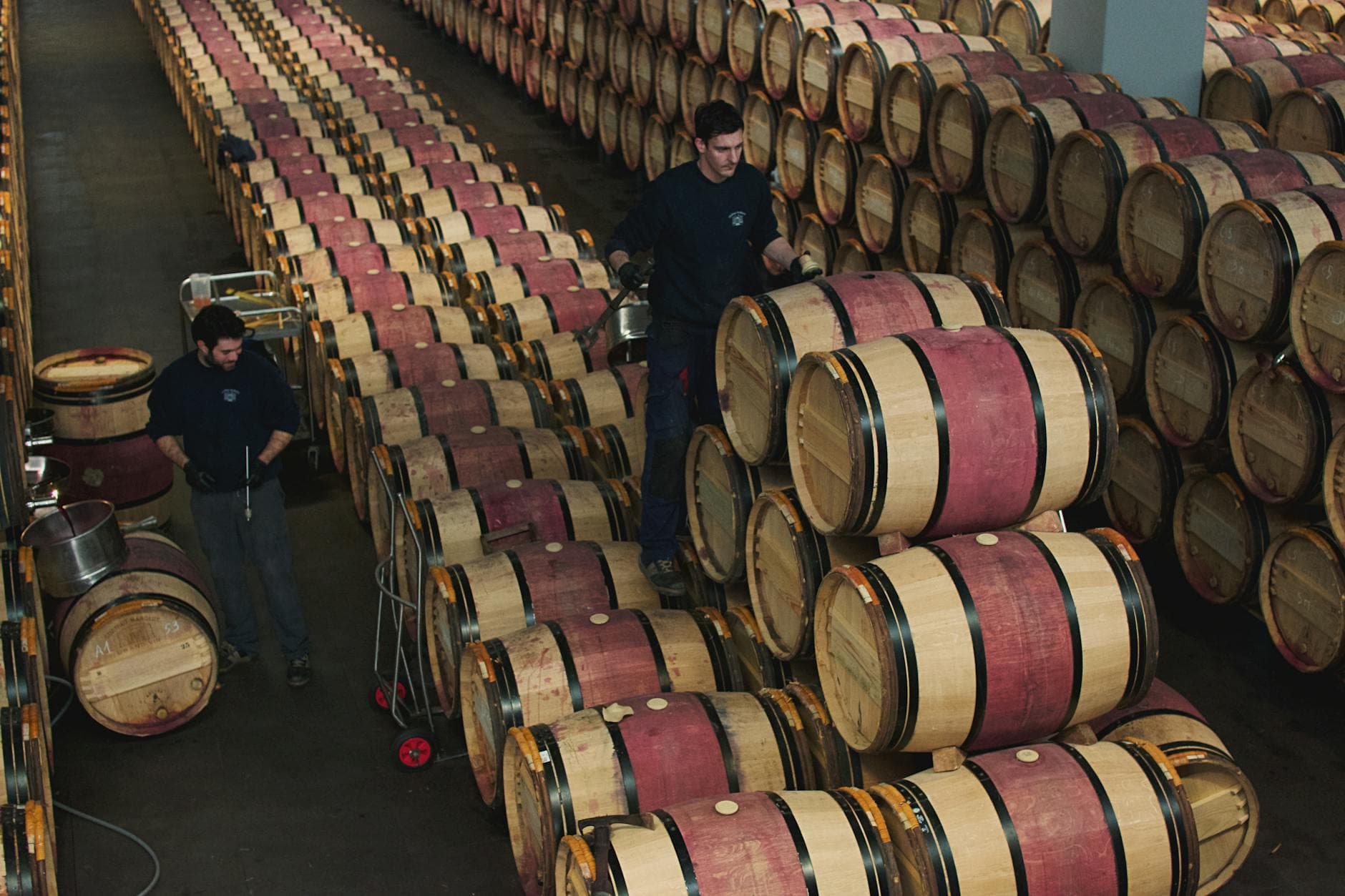
The Most Famous Vineyards in France: Bordeaux, Burgundy, Champagne & More
France's best wineries and châteaux across Bordeaux, Burgundy, Champagne, Alsace, the Loire Valley, and the Rhône. Where to taste, how to visit, and what to expect in each region.
The Most Famous Vineyards in France: Bordeaux, Burgundy, Champagne & More
The most famous vineyards in France are spread across nearly every climatic zone in Western Europe — from the Atlantic-cooled gravels of the Médoc to the sun-scorched schist of the Rhône’s southern reaches. France accounts for ten of the world’s most replicated wine styles and dozens of grape varieties that have been adopted globally, and every serious wine-producing country — California, Australia, Argentina, South Africa — measures itself against it.
The most famous vineyards in France cluster in six major regions, each a wine destination in its own right:
- Bordeaux — the world’s most famous wine region, on the Atlantic-cooled gravels of the Médoc
- Burgundy — where Pinot Noir and Chardonnay reach their peak
- Champagne — a 90-minute TGV from Paris, split between growers and the grand maisons
- Alsace — Germanic architecture and aromatic whites near the German border
- The Loire Valley — France’s garden of wine, stretching 600 kilometres
- The Rhône — granite hillsides in the north to Mediterranean garrigue in the south
What this means for visitors is that a wine trip to France is never a single destination. Bordeaux and Burgundy are an 8-hour drive apart. Champagne is a 90-minute TGV from Paris. Alsace, with its Germanic architecture and aromatic whites, could be a different country entirely. The Loire Valley stretches 600 kilometres. The Rhône alone runs from granite hillsides in the north to Mediterranean garrigue in the south.
This guide covers the six major regions that travellers visit most often, lists real producers worth seeking out in each, and explains how to structure a France wine tour that actually works — whether you have three days or three weeks.
France's Wine Regions at a Glance
| Region | Key Wines | Style | Best For |
|---|---|---|---|
| Bordeaux | Cabernet Sauvignon, Merlot, Sauternes | Full-bodied reds, opulent whites | Grand château visits, serious collectors |
| Burgundy | Pinot Noir, Chardonnay | Elegant, terroir-driven, lighter reds | Grower visits, village exploration |
| Champagne | Chardonnay, Pinot Noir, Pinot Meunier | Sparkling (méthode champenoise) | Cellar tours, prestige house access |
| Alsace | Riesling, Gewurztraminer, Pinot Gris | Aromatic whites, dry to off-dry | Scenic driving, direct estate sales |
| Loire Valley | Muscadet, Sauvignon Blanc, Chenin Blanc, Cabernet Franc | Crisp whites, food-friendly reds | Châteaux, cycling, diverse styles |
| Rhône Valley | Syrah, Grenache, Viognier | Northern power, southern blends | Year-round visiting, price-to-quality |
The table above is a starting point, not a ranking. Champagne produces no serious unfortified red wine. Bordeaux makes almost no Pinot Noir. Each region's identity is shaped by climate, soil, and centuries of refinement — understanding those differences before you arrive makes the tastings themselves significantly more rewarding. Our old world vs new world wine guide covers how these regional identities translate into the glass.
Bordeaux — The World's Most Famous Wine Region
Bordeaux's reputation rests on a paradox: it is simultaneously the most famous wine region in the world and one of the hardest for casual visitors to navigate. More than 6,000 châteaux produce wine across 60 appellations. The 1855 Classification — which ranks 61 estates in a hierarchy of five growths — still dominates the conversation, despite being nearly 170 years old and covering only a fraction of what's produced.
The reality on the ground is more accessible than the reputation suggests. Smaller estates in Saint-Émilion and the Médoc now actively court visitors. The Right Bank, built around Merlot-dominant blends from Saint-Émilion and Pomerol, tends to be warmer in welcome than the Left Bank's Cabernet heartland. And Sauternes, producing the world's most complex sweet whites from botrytis-affected Sémillon, remains one of the best-value wine visits in France.
For a full breakdown of which châteaux to visit, how to book, what tasting fees look like, and how to structure three days in the region, see our dedicated Best Wineries in Bordeaux guide — 15 estates reviewed in detail, from classified First Growths to family-run properties that pour with the winemaker present.
Burgundy — Where Pinot Noir and Chardonnay Reach Their Peak
Burgundy operates on a different logic from Bordeaux. There are no grand blended estates. A single hectare of vineyard — a single climat — can be owned by a dozen different producers, each making a distinct wine from the same patch of limestone-and-clay soil. The hierarchy here is geographical: Grand Cru at the top (33 vineyards), Premier Cru below, then village wines and regional Bourgogne. Understanding this before you visit explains why two bottles with the same village name taste completely different.
The Côte d'Or, the 50-kilometre escarpment running from Dijon south to Santenay, is the epicentre. The northern Côte de Nuits is Pinot Noir country — Gevrey-Chambertin, Morey-Saint-Denis, Chambolle-Musigny, and Vosne-Romanée. The southern Côte de Beaune shifts toward white wine — Meursault, Puligny-Montrachet, Chassagne-Montrachet — though Pommard and Volnay produce serious reds.

Domaine de la Romanée-Conti (Vosne-Romanée)
DRC, as it is universally abbreviated, owns or co-owns eight Grand Cru vineyards including La Romanée-Conti itself — a 1.8-hectare monopole that produces roughly 5,000 bottles annually at prices ranging from €15,000 to €35,000 per bottle at auction. The domaine does not offer public visits or tastings. There is no visitor centre. The only way to taste DRC wines is through restaurant lists or, occasionally, at specialised trade events. It is included here because it anchors the conversation about what Burgundy represents at its most extreme: a single parcel of land, farmed organically since the 1980s, producing wines that collectors from Tokyo to New York will spend a lifetime chasing.
Louis Jadot (Beaune)
One of Burgundy's largest négociants, Louis Jadot owns around 200 hectares of its own vines while also buying fruit from growers across the region. The maison has operated from Beaune since 1859 and offers guided cellar tours with tastings, typically by appointment. Fees run approximately €30–60 depending on the tasting level. The historic Clos des Ursules in Beaune Premier Cru is one of their most visited sites. Jadot is a reliable entry point for visitors who want a structured, English-friendly introduction to how a major Burgundy négociant operates across multiple appellations.
Domaine Leflaive (Puligny-Montrachet)
Among white Burgundy producers, Leflaive is the benchmark. The domaine covers around 24 hectares in Puligny-Montrachet and neighbouring villages, with holdings in Grand Cru vineyards including Le Montrachet, Chevalier-Montrachet, and Bâtard-Montrachet. The estate converted fully to biodynamic farming in the 1990s — ahead of most of Burgundy. Visits require advance arrangement and tend to be reserved for trade and serious collectors, though the domaine has become more open in recent years. The village wines offer an accessible entry to the Leflaive style without requiring auction-level budgets.
Joseph Drouhin (Beaune)
Founded in 1880, Drouhin is one of the more visitor-friendly of the major Beaune négociants. The family's historic cellars beneath central Beaune — partly excavated by the Dukes of Burgundy in the 15th century — are among the most atmospheric in the region and form the centrepiece of their guided tours. Drouhin owns vineyards from Chablis south to the Côte Chalonnaise, with Grand Cru parcels in Musigny, Chambertin, and Montrachet. Tours and tastings are offered regularly; booking at least two weeks ahead in high season is advisable.
Bouchard Père et Fils (Beaune)
Bouchard owns one of the largest private vineyard holdings in Burgundy — 130 hectares — including significant Grand Cru parcels on the Côte de Nuits and Côte de Beaune. Their base, the Château de Beaune, houses cellars with bottles dating back to the 1840s. They offer structured tasting experiences ranging from approachable village-level introductions to vertical flights of their best vineyard designates. The château setting and the depth of the cellar archives make this one of the most complete Burgundy visits available to independent travellers.
Champagne — Growers vs. Grand Maisons
Champagne is the only major French wine region where the wine style is more widely known than the geography. Most people who drink Champagne could not locate Épernay or Reims on a map, and many regular drinkers have never encountered a grower Champagne — wines made by the farmer who grew the grapes rather than a large house that buys from hundreds of growers.
That distinction matters when planning visits. The Grand Maisons — Moët, Veuve Clicquot, Taittinger, Bollinger, Krug — offer polished, professionally managed cellar tours with multilingual guides, well-stocked gift shops, and reliable quality. They are among the most sophisticated visitor operations in French wine. But grower Champagnes (récoltants-manipulants, marked RM on the label) often offer a more personal experience: smaller quantities, stronger sense of place, and the chance to taste wines that never reach export markets.
Moët & Chandon (Épernay)
The most visited wine producer in France and quite possibly the world. Moët's cellars beneath the Avenue de Champagne in Épernay stretch for 28 kilometres and hold around 100 million bottles at any given time. Tours run daily, require no reservation for standard visits (though booking ahead saves time in summer), and cover the history of the house, the méthode champenoise process, and finish with a tasting. The connection to Dom Pérignon — whose statue greets visitors at the entrance — and to Napoleon Bonaparte, who was a personal friend of Jean-Rémy Moët, gives the tour genuine narrative weight. Tasting fees typically run €30–70 depending on which cuvées are included.
Taittinger (Reims)
Taittinger operates from Reims rather than Épernay, which means the cellar tour has an additional layer of history: the chalk galleries beneath the maison are partly the remains of Gallo-Roman chalk quarries and later the cellars of the Abbey of Saint-Nicaise. The house was founded in 1932 and remains one of the few Grand Maisons still in French family hands. The flagship Comtes de Champagne Blanc de Blancs — 100% Chardonnay from Grand Cru villages — is one of the most precise and age-worthy prestige cuvées produced in the region. Tours and tastings are available daily.
Bollinger (Aÿ)
Bollinger occupies a different position in the Champagne hierarchy from Moët or Taittinger: smaller production (around 2.5 million bottles annually versus Moët's estimated 30 million), a higher proportion of estate-grown fruit, extensive reserve wine stocks maintained in old oak, and a house style built around structure and depth rather than immediate freshness. The winery in Aÿ accepts visits by appointment. Bollinger Vieilles Vignes Françaises — produced from two tiny parcels of ungrafted pre-phylloxera Pinot Noir vines — is one of the rarest and most sought-after expressions in all of Champagne.
Champagne Dhondt-Grellet (Cramant)
For visitors interested in grower Champagne, Dhondt-Grellet is one of the most respected small producers in the Côte des Blancs. Based in Cramant, a Grand Cru village whose deep chalk soils produce benchmark Chardonnay, the domaine farms around 5 hectares organically and crafts wines of considerable precision and mineral character. Visits are by appointment and tend to be informal — a conversation with the grower rather than a scripted tour — but offer an insight into Champagne's smaller-scale tradition that the Grand Maisons cannot replicate.
Alsace — Germany's Neighbour, France's Secret
Alsace occupies a narrow strip of land between the Vosges Mountains and the Rhine. It has been French, German, French again, German again, and finally French since 1945 — which explains why the architecture in Riquewihr or Kaysersberg looks Bavarian, why the grape varieties are primarily Germanic, and why the wines taste like nothing else produced in France. The Vosges act as a rain shadow, giving Alsace one of the driest climates in France and long, warm autumns that allow aromatic grapes to ripen fully while retaining fragrance.
The key varieties are Riesling (the noble star — dry, mineral, age-worthy), Gewurztraminer (floral, spicy, sometimes off-dry), Pinot Gris (full-bodied, sometimes honeyed), and Muscat (dry, perfumed, best as an aperitif). Pinot Blanc handles the everyday drinking. The 170-kilometre Route des Vins, running from Marlenheim to Thann, is the organising spine of most visits — a manageable drive connecting the region's most appealing villages and best estates. Our Alsace Wine Route guide covers the full route in detail.

Trimbach (Ribeauvillé)
Trimbach has operated from Ribeauvillé since 1626, making it one of the oldest continuously operating wine families in France. The house is a négociant-grower that manages vineyards across the region while also purchasing from grower partners. Their Riesling Clos Sainte Hune — from a 1.67-hectare parcel within the Rosacker Grand Cru — is considered one of the greatest dry Rieslings produced anywhere in the world. It is not easy to obtain and rarely appears in tastings. But the Trimbach Riesling "Réserve" and "Réserve Personnelle" are widely available and demonstrate the house's commitment to dry, precise, cellaring-worthy wines. Visits to the estate are possible; contact in advance.
Hugel & Fils (Riquewihr)
Hugel is based in Riquewihr, consistently rated among the most beautiful villages in France. Founded in 1639, the family is among Alsace's most active ambassadors internationally. They were instrumental in establishing the Vendange Tardive and Sélection de Grains Nobles categories — late-harvest and botrytis-affected sweet wines that represent Alsace's answer to Sauternes. The estate's cellar in central Riquewihr houses a 1715 wooden wine press and a range of antique equipment; visits can be arranged and often combine the cellar history with tastings across the range. Worth noting: their Jubilée series Rieslings and Gewurztraminers offer serious quality at prices well below equivalent Burgundy.
Domaine Weinbach (Kaysersberg)
Run for decades by the Faller family — and now by Colette Faller's daughters Laurence and Véronique — Weinbach farms 30 hectares organically around the Clos des Capucins, a walled vineyard adjacent to Kaysersberg that has been cultivated since the 17th century. The domaine makes wines across all the main Alsace varieties with a particular reputation for nuanced Riesling and deeply complex Pinot Gris. The estate is one of the more visitor-welcoming of Alsace's serious producers; the tasting room is in the old capuchin monastery building, which adds to the atmosphere.
The Loire Valley — France's Garden of Wine
The Loire is the longest river in France and arguably the most wine-diverse. The 600-kilometre valley produces everything from searingly dry Muscadet near the Atlantic coast to luscious Chenin Blanc in the middle reaches to earthy Cabernet Franc reds in Anjou and Touraine. Sancerre and Pouilly-Fumé — at the eastern end — are among the world's most replicated styles of Sauvignon Blanc. The Loire's defining characteristic, compared to Bordeaux or Burgundy, is freshness: lower alcohol, higher acidity, wines that work exceptionally well with food.
The valley also has a legitimate claim to being France's most historically significant wine region for visitors who are not purely focused on wine. The concentration of Renaissance châteaux — Chambord, Chenonceau, Azay-le-Rideau — along the valley means that even non-wine travellers usually end up here. Pairing the châteaux circuit with winery visits is the most natural itinerary in French wine tourism.
Château de la Ragotière (Muscadet)
Muscadet is produced near Nantes at the western mouth of the Loire, from the Melon de Bourgogne grape. For most of its history it was dismissed as a cheap, neutral white — the wine you drink with moules marinières without thinking about it. The sur lie category changed that: wines aged on their lees for extended periods develop texture, a faint saltiness, and surprising depth. Château de la Ragotière, one of the region's better-known estates, produces a range of Muscadet expressions across different terroirs. The domaine accepts visitors and offers a demonstration of how a single grape variety expresses differently depending on soil and élévage time.
Henri Bourgeois (Sancerre)
Henri Bourgeois is the largest landowner in Sancerre, farming around 70 hectares of Sauvignon Blanc and a smaller area of Pinot Noir for the region's red and rosé wines. The family has operated for five generations and launched a parallel operation in Marlborough, New Zealand (Clos Henri) — an interesting comparison point for visitors curious about how the same grape expresses itself in completely different climates. Their Sancerre La Bourgeoise and the single-vineyard Jadis are the two wines that attract the most attention from serious buyers. The estate near Chavignol offers visits and tastings; appointments are recommended in busy periods.
Domaine Huet (Vouvray)
If there is one producer in the Loire that has definitively established Chenin Blanc as a serious age-worthy grape, it is Domaine Huet. The domaine farms three monopole vineyards — Le Haut-Lieu, Le Mont, and Clos du Bourg — biodynamically, and produces dry, off-dry (demi-sec), and sweet (moelleux) expressions from each, meaning the full range can span nine different wines per vintage. Vouvray's Chenin Blanc is one of the most misunderstood grape varieties in France: in dry years it produces wines with extraordinary tension and longevity; in great late-harvest vintages, sweetness so balanced it reads as savoury. The domaine is highly regarded internationally and visits can be arranged, though supply is limited relative to demand.
The Rhône Valley — Syrah Country and Grenache Blends
The Rhône splits clearly in two. The Northern Rhône — from Vienne south to Valence — is Syrah's spiritual home, grown on narrow terraced granite hillsides above the river. Côte-Rôtie and Hermitage are the apex; Crozes-Hermitage and Saint-Joseph offer equivalent intensity at lower prices. The Northern Rhône also produces Viognier in Condrieu — one of the world's great aromatic whites — and the rare white Hermitage from Marsanne and Roussanne.
The Southern Rhône is warmer, broader, and built around Grenache-based blends. Châteauneuf-du-Pape, with its 13 permitted varieties and distinctive galets roulés (large rounded stones that retain heat), produces wines of considerable weight and complexity. Gigondas, Vacqueyras, and Rasteau offer southern Rhône character at more accessible prices.

M. Chapoutier (Tain-l'Hermitage)
Michel Chapoutier is one of the Rhône's most prominent figures and a vocal advocate for biodynamic viticulture — the maison converted fully in the mid-1990s. Chapoutier manages both négociant and estate production, with Hermitage holdings across the hill's different named parcels (lieux-dits): Le Méal, L'Ermite, Le Pavillon (red), and De l'Orée and Chante-Alouette (white). The Hermitage La Sizeranne is more widely available and represents the house style reliably. The maison in Tain-l'Hermitage has a well-appointed visitor centre and offers tastings daily. It is also one of the better places to understand how Northern and Southern Rhône wines differ in the glass.
Château Rayas (Châteauneuf-du-Pape)
Château Rayas is the most idiosyncratic estate in Châteauneuf-du-Pape and one of the most unusual in all of France. The vineyards are planted with old-vine Grenache at lower density than most Châteauneuf estates, in sandy soils that retain less heat — producing wines of remarkable freshness and elegance that bear little resemblance to the blockbuster Châteauneufs that define the appellation's international reputation. Jacques Reynaud, who ran the estate from the 1970s until his death in 1997, was famously reclusive. The current proprietors maintain an appointment-only policy that is enforced strictly. Rayas is included not as a practical visiting recommendation but as a reference point: understanding what it represents explains why natural and low-intervention winemakers in France and beyond cite it as an inspiration.
Guigal (Ampuis)
Marcel Guigal and his son Philippe run one of the Northern Rhône's most important operations from Ampuis, the village at the base of the Côte-Rôtie. Guigal produces across the entire Rhône spectrum — from entry-level Côtes du Rhône (one of France's most reliable value bottles) to the single-vineyard Côte-Rôtie La Mouline, La Landonne, and La Turque (the "La La Las") that achieve prices comparable to top Burgundy. The estate also produces exceptional Condrieu and Hermitage. Tours of the Guigal facilities in Ampuis are available by appointment and cover both the vinification facilities and the impressive barrel cellar. Given the range of price points, it is possible to taste serious Rhône wine here without committing to prestige bottle prices.
How to Plan a French Wine Tour
France's size means the logistics of a wine tour require more planning than, say, Napa Valley or Marlborough. The good news is that the infrastructure is excellent.
TGV connections: Paris to Bordeaux takes approximately 2 hours on the TGV. Paris to Reims (Champagne) is 45 minutes. Paris to Dijon (Burgundy gateway) is 1 hour 40 minutes. For visitors combining two or three regions, using Paris as a hub and taking day or overnight TGV connections is often faster than renting a car — particularly for Champagne.
Driving the Wine Route: Within a single region, a car is the most practical option, especially for Alsace (where the Route des Vins is best explored at your own pace), the Loire (spread across too large an area for cycling the full length), and the Rhône (where many estates are off the main roads). In Burgundy and Bordeaux, guided tours with a driver allow you to taste freely without worrying about the legal limit — France's blood alcohol limit for driving is 0.5g/L, which is stricter than the UK (0.8g/L) and roughly equivalent to two glasses of wine for most adults.
Combining regions: The most manageable two-region pairings are: Champagne + Paris (easy TGV day trip), Burgundy + Beaujolais (30-minute drive between them), Bordeaux + Périgord/Dordogne (adds non-wine sightseeing), and Alsace + Strasbourg city break. Trying to combine Bordeaux and Burgundy in one trip requires a minimum of 7–8 days and involves significant travel time.
Our how to plan a wine tour guide covers the step-by-step process from region selection to winery booking in more detail.
French Winery Visit Tips
Château visits vs. négociant: In Bordeaux, the distinction is between châteaux (estate producers) and négociants (merchants who buy, blend, and bottle wine from multiple sources). In Burgundy, the equivalent split is domaine (grower) vs. négociant. Both types offer worthwhile visits, but the experience differs: a château or domaine visit usually involves the actual vineyard and cellar where the wine is made; a négociant visit may be more focused on a finished product range and historic cellars than on viticulture.
Dégustation etiquette: The word dégustation means tasting, and it is the French term you will encounter most often. Most estates now charge for tastings — free pours are increasingly rare except at the most commercially oriented cooperatives. It is normal and expected to spit, even if you're not driving; doing so signals seriousness and allows you to taste more wines across a longer visit. Buying a bottle is appreciated after a tasting but is rarely obligatory unless specifically stated.

Language tips: English is widely spoken at the major visitor-focused estates in Bordeaux, Champagne, and Alsace. In Burgundy and the Rhône, especially at smaller domaines, French is often the primary language and a few phrases go a long way. "Avez-vous des visites en anglais?" (Do you have tours in English?) and "Puis-je avoir une dégustation?" (May I have a tasting?) are worth knowing. For wine tasting etiquette more broadly — including how to discuss a wine with a producer, what questions to ask, and when to buy — see our dedicated practical guide.
Booking ahead: Almost all serious estates require reservations, particularly in peak season (July, August, and the October harvest period). Booking 2–4 weeks in advance is the minimum for busy periods; for prestigious Burgundy domaines or small grower Champagne producers, 4–6 weeks is more realistic. Many estates now use online booking systems. For larger commercial operators (Moët, Taittinger, Louis Jadot), same-week bookings are often available.
When to Visit France for Wine
Spring (April–June): The vines are budding and flowering. Vineyards are at their most photogenic in late May and June when the canopy is fully open. Crowds at popular estates are lighter than in summer. Temperatures in Burgundy and Champagne can still be cool in April. This is a good time for focused tasting visits without the summer tourist rush.
Summer (July–August): The busiest period, coinciding with French school holidays and peak European tourism. The major estates in Champagne and Bordeaux can feel like tourist attractions rather than working farms. Alsace's village festivals run through July and August. If you're visiting in summer, booking everything in advance is essential and early-morning visits are cooler and less crowded.
Harvest (September–October): The most atmospheric time to visit wine country anywhere, and France is no exception. The harvest typically runs from mid-September in the Rhône to late October in Champagne (later still in some years). Working estates will be busy, and tastings of finished wines may be abbreviated because the team is in the vineyard, but the visual spectacle of active harvest justifies the timing. October is also when autumn colours are at their peak in Alsace — one of the most genuinely beautiful landscapes in European wine.
Winter (November–February): Underrated for serious tasting visits. Most estates are quiet, and producers often have more time for extended conversations. Champagne's underground cellars are warmer than the surface temperature suggests. Beaune's Hospices de Beaune charity wine auction, held every November, is one of France's major wine calendar events and draws buyers and enthusiasts from around the world. Fewer restaurants are open in smaller village communities, but hotel rates are significantly lower.
FAQs
Q: Which French wine region is best for first-time visitors?
A: Bordeaux and Champagne are the most accessible for first-timers. Both have polished visitor infrastructure at major estates, English-language tours, and wines that are widely familiar. Burgundy is more rewarding but requires more knowledge to navigate — the number of tiny producers and the importance of individual vineyard sites can feel overwhelming without some preparation.
Q: Do French wineries charge for tastings?
A: Most do, particularly at well-known estates. Tasting fees typically range from €10 at smaller domaines to €80 or more for prestige cuvée experiences at Grand Maison Champagne houses. Some cooperatives and entry-level estates still offer free tastings, particularly in Alsace and the Rhône. Always check the estate's website or contact them in advance to confirm current pricing and booking requirements.
Q: Can you visit French wineries without speaking French?
A: Yes, especially at the major visitor-facing estates in Bordeaux, Champagne, and Alsace, where English-language tours are standard. Smaller Burgundy and Loire domaines are less likely to have English-speaking staff, but a few basic French phrases and a willingness to communicate through the wines themselves will take you far. Most producers appreciate the effort regardless of fluency.
Q: What is the difference between a Champagne Grand Maison and a grower Champagne?
A: A Grand Maison (or grande marque) is a large Champagne house that purchases grapes from many growers across multiple villages and blends them to produce a consistent house style year after year. A grower Champagne (typically marked RM on the label, for récoltant-manipulant) is produced by the farmer who grew the grapes from their own vineyards, usually in a single village or small group of villages. Grower wines tend to be more site-specific and can be more expressive of individual terroir; Grand Maison wines offer consistency and accessibility.
Q: How far in advance should you book winery visits in France?
A: For major Champagne houses and Bordeaux châteaux during peak season (July–October), 2–4 weeks minimum. For small Burgundy domaines and grower Champagne producers, 4–6 weeks is more realistic. Châteaux that appear in top international lists or wine guides often have waiting lists for premium tastings — contact them directly as early as possible. Outside peak season, last-minute bookings are often possible at larger estates.
Q: Is it possible to visit multiple French wine regions in one trip?
A: Yes, though the geography requires planning. The most manageable combinations are: Champagne paired with a Paris city stay (45-minute TGV); Bordeaux with a side trip to Saint-Émilion; Burgundy with Beaujolais; or Alsace with Strasbourg. Attempting Bordeaux and Burgundy together requires at least 7–8 days and involves roughly 8 hours of travel between the two. The Rhône is easily combined with a longer southern France itinerary.
Q: When is harvest season in France, and should I visit then?
A: Harvest timing varies by region and vintage, but broadly: the Rhône Valley (late August–September), Bordeaux and Burgundy (mid-September–mid-October), Loire (September–October), Alsace (September–November), and Champagne (September–October). Visiting during harvest is atmospheric and gives access to a working winery at its most active, but estate staff will be busy and some producers limit tasting appointments during this period. Book well in advance if you plan to visit in harvest season.
Q: What is a Premier Cru versus a Grand Cru in Burgundy?
A: Both are quality classifications for individual vineyards (called lieux-dits or climats) in Burgundy, but they operate at different levels. There are around 640 Premier Cru vineyards — the name will appear on the label below the village name (e.g., Meursault Premier Cru Les Charmes). Grand Cru is the highest designation, covering only 33 vineyards that produce wine under their own appellation, without the village name (e.g., simply "Chambertin" or "Le Montrachet"). Grand Cru wines are rarer, more expensive, and longer-lived — but many Premier Cru wines from top producers outperform Grand Crus from lesser names.
Ready to visit France?
Build your personalised day-by-day itinerary — choose your travel style and trip length, get accommodation and tour picks per day, and email it to yourself to take along.
Upcoming Wine Festivals in France
See all festivalsHidden Gems Nearby
Discover more hidden gemsDomaine de la Bongran
WTG PickBurgundy, France
A Burgundy rebel who makes Chardonnay on their own terms, far from the tourist trail of Beaune and Puligny.
Chardonnay
Domaine Huet
WTG PickLoire Valley, France
World-class Chenin Blanc with no queues, no hype, just pure Loire magic in a village setting.
Chenin Blanc
Mas de Daumas Gassac
Languedoc, France
Grand cru quality at a fraction of Bordeaux prices, in a wild, beautiful valley most tourists never find.
Cabernet Sauvignon · Rosé · White Blend
Book Your France Wine Country Stay
Compare hotels, vineyard B&Bs and rentals across Booking, Airbnb and more in one search.
Compare stays near the vineyardsStay22
Plan Your The Most Famous Vineyards in France: Bordeaux, Burgundy, Champagne & More Trip
Estimate your The Most Famous Vineyards in France: Bordeaux, Burgundy, Champagne & More trip cost
Budget calculator with accommodation, food, wine, and transport estimates.
Try itCompare The Most Famous Vineyards in France: Bordeaux, Burgundy, Champagne & More with other regions
Side-by-side comparison of cost, climate, wine styles, and more.
Try itWhen to visit The Most Famous Vineyards in France: Bordeaux, Burgundy, Champagne & More
Harvest dates, peak season, and the best months for wine travel.
Try itThis page contains affiliate links. We may earn a commission at no extra cost to you.