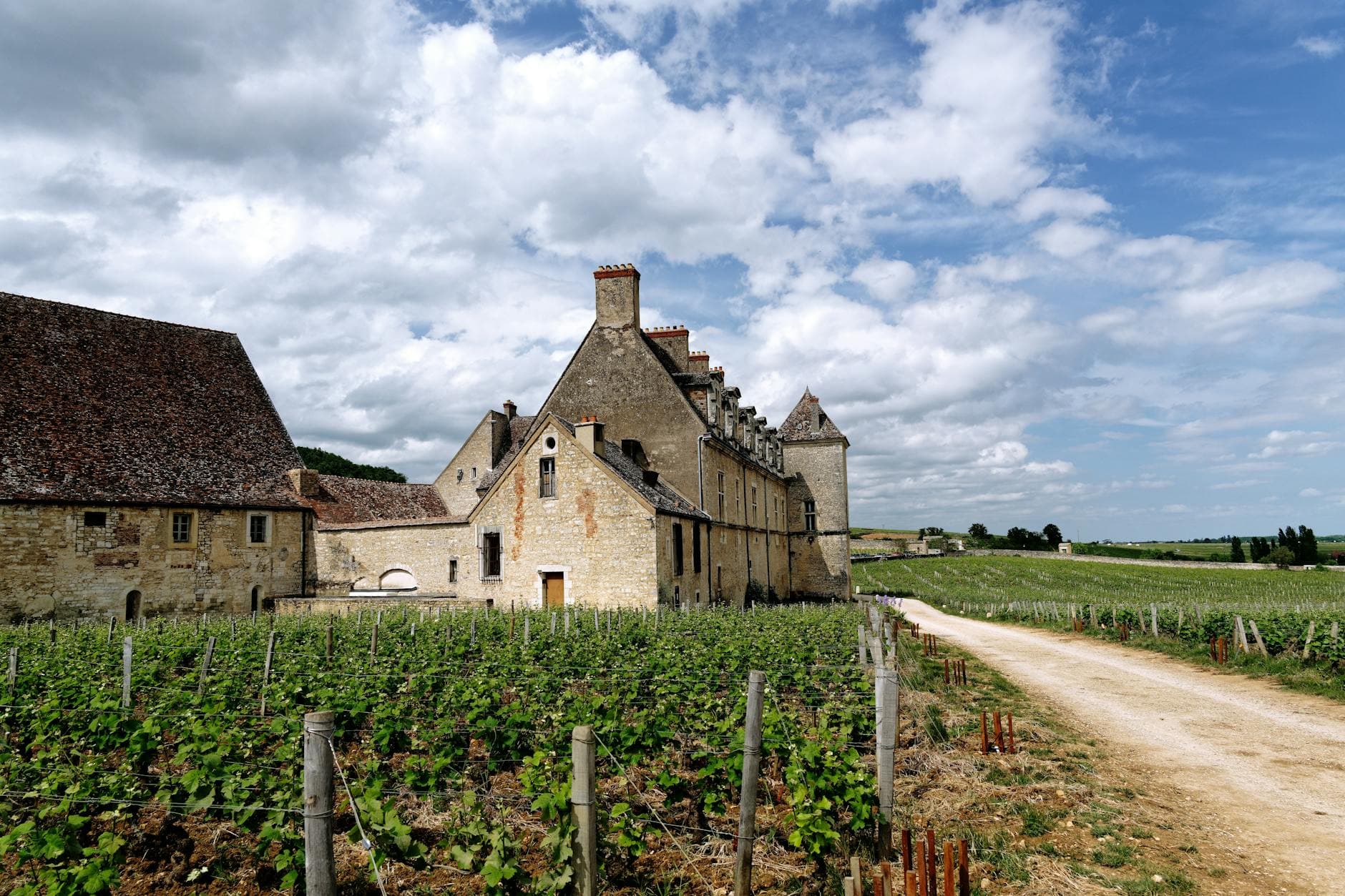
 Photo: Gu Bra / Pexels
Where to Stay in Burgundy Wine Country: Complete 2026 Guide
Find the best places to stay in Burgundy for wine lovers. From Beaune wine hotels to Côte de Nuits domaine stays near Gevrey-Chambertin, discover the perfect base for your Burgundy wine trip.
Planning a trip to Burgundy?
Compare hotels, vineyard B&Bs and rentals across Booking, Airbnb and more in one search.
Burgundy is the most terroir-obsessed wine region on earth. Every vine row matters here. The concept of climat—a single named plot with its own soil, slope, and microclimate—was born in these hills, and UNESCO made it official in 2015 by inscribing the Climats of Burgundy as a World Heritage Site. This is the spiritual home of Pinot Noir and Chardonnay, where monks spent centuries mapping which patch of limestone produces a fundamentally different wine than the one next to it.
That obsession with place makes where you stay genuinely important. Burgundy's greatest vineyards stretch along a narrow strip of hillside between Dijon and Santenay—roughly 60 km of the most valuable agricultural land on the planet. Choose a base in Beaune and you're 15 minutes from white wine royalty in Meursault. Choose Nuits-Saint-Georges and you're surrounded by the Grand Cru reds that collectors fight over. Get it wrong and you'll miss what makes this region unlike anywhere else.
Best Areas to Stay in Burgundy Wine Country at a Glance:
- For the wine capital: Beaune - walkable town, restaurants, central base
- For Grand Cru reds: Nuits-Saint-Georges / Côte de Nuits - Gevrey-Chambertin, Vosne-Romanée
- For great whites: Meursault / Puligny-Montrachet / Côte de Beaune - Chardonnay heartland
- For crisp Chardonnay: Chablis - northern outpost, mineral-driven whites
- For value: Mâcon / Mâconnais - southern Burgundy, Pouilly-Fuissé, affordable
Best Areas to Stay for Wine Tasting

Beaune
Beaune is Burgundy's wine capital and the obvious first base. It's a proper town—not a village—with medieval ramparts, cobblestone streets, excellent restaurants, and more wine shops per square metre than anywhere in France. The Hospices de Beaune (Hôtel-Dieu) is the region's most photographed building, and its annual charity wine auction every November sets prices watched by the global trade.
Why wine lovers choose Beaune:
- Walkable historic centre with dozens of tasting cellars and cavistes
- Best restaurant concentration in Burgundy (Le Jardin des Remparts, Ma Cuisine, Bissoh)
- Central position: 20 min north to Nuits-Saint-Georges, 10 min south to Meursault
- Hospices de Beaune wine auction (third Sunday of November)
- Excellent wine education at the Ecole des Vins de Bourgogne
- Easy TGV connection from Paris (2h 20min to Beaune via Dijon)
Price range: €120–400/night
Best for: First-time Burgundy visitors, shorter stays, those wanting walkable dining and nightlife
Wine access: Walk to négociant cellars (Patriarche, Bouchard Père & Fils, Joseph Drouhin) without a car. Village domaines require a short drive and appointment.
Where to stay: Hostellerie le Cèdre, with a Michelin-starred restaurant and 400-bottle cellar terrace, or Hôtel le Cep, furnished in Louis XIV style in the old town.
Nuits-Saint-Georges / Côte de Nuits
The Côte de Nuits is Grand Cru red wine territory—a narrow golden slope running from Marsannay south to Corgoloin, producing the most expensive Pinot Noir on earth. Nuits-Saint-Georges is the largest town and a practical base, but the real magic lives in the villages strung along the D974: Gevrey-Chambertin, Morey-Saint-Denis, Chambolle-Musigny, Vougeot, Vosne-Romanée.
Why wine lovers choose Côte de Nuits:
- Home to legendary Grand Crus: Chambertin, Musigny, Romanée-Conti, Clos de Vougeot
- Walk or cycle the Route des Grands Crus through the actual vineyards
- Clos de Vougeot château (headquarters of the Confrérie des Chevaliers du Tastevin)
- Smaller, quieter villages with authentic winemaker atmosphere
- Domaine de la Romanée-Conti is here (visits essentially impossible, but you can stand at the vineyard)
Price range: €100–350/night
Best for: Serious Pinot Noir collectors, repeat Burgundy visitors, cyclists
Wine access: Many domaines accept visitors by appointment only—email 2–3 weeks ahead. Some village cavistes offer tastings without appointments. The Imaginarium in Nuits-Saint-Georges is a good introduction.
Trade-off: Fewer restaurants than Beaune. Limited accommodation in the smallest villages. Driving or cycling required between communes.
Where to stay: Douce Nuits, a B&B with onsite tastings, or Hôtel Le Richebourg, with a spa near Vosne-Romanée.
Meursault / Puligny-Montrachet / Côte de Beaune
South of Beaune, the Côte de Beaune is where Burgundy's white wine supremacy lives. Meursault, Puligny-Montrachet, and Chassagne-Montrachet produce the greatest Chardonnays in the world—rich, mineral, age-worthy wines from limestone soils that no other region has replicated.
Why wine lovers choose Côte de Beaune whites:
- Grand Cru white vineyards: Montrachet, Bâtard-Montrachet, Chevalier-Montrachet
- Meursault has a proper village centre with restaurants and tasting cellars
- More welcoming to visitors than the exclusive Côte de Nuits domaines
- Château de Meursault offers walk-in tastings in a spectacular vaulted cellar
- Red wine too: Pommard and Volnay produce excellent Pinot Noir nearby
Price range: €90–300/night
Best for: White wine lovers, those who find the Côte de Nuits too intense or exclusive, couples
Wine access: Château de Meursault and several négociants welcome walk-ins. Most domaines still require appointments, but the tone is warmer and less formal than further north.
Trade-off: Small villages with limited evening dining. Meursault is the most practical base; Puligny-Montrachet is tiny.
Where to stay: COMO Le Montrachet, which arranges Grand Cru vineyard tastings directly, or La Maison de l'Olivier Leflaive, set on the family's own vineyards.
Chablis
Chablis sits 130 km northwest of Beaune—a separate trip, not a day excursion from the Côte d'Or. This is Chardonnay stripped to its essence: no oak (mostly), no richness, just mineral, steel, and oyster-shell purity from ancient Kimmeridgian limestone packed with fossilised seashells.
Why wine lovers choose Chablis:
- Distinctive, mineral-driven Chardonnay unlike anything from the Côte de Beaune
- Compact wine village—walk to producers like William Fèvre, Domaine Laroche, Jean-Marc Brocard
- Grand Cru hillside visible from town (seven plots facing southwest)
- Less expensive and less intimidating than the Côte d'Or
- Close to northern France attractions: 1.5h from Paris by car, easy add-on to a Champagne trip
Price range: €70–220/night
Best for: Chardonnay purists, those combining with Champagne or Paris, budget-conscious wine travellers
Wine access: Several producers offer walk-in tastings in the village. The Chablis wine office organises visits. Grand Cru domaines require appointments.
Trade-off: Limited accommodation and restaurants. You'll see everything in 1–2 days. Completely separate from the rest of Burgundy geographically.
Where to stay: Hostellerie des Clos, 36 rooms with a spa and a Chablis-focused wine list, or the smaller Hôtel du Vieux Moulin with its terrace.
Mâcon / Mâconnais
The Mâconnais is southern Burgundy's underrated gem. Warmer, sunnier, and far cheaper than the Côte d'Or, it produces excellent Chardonnay from appellations like Pouilly-Fuissé (promoted to Premier Cru in 2020), Saint-Véran, and Viré-Clessé. The dramatic Rock of Solutré is the region's landmark.
Why wine lovers choose Mâconnais:
- Outstanding value: top Pouilly-Fuissé costs what a village-level Côte d'Or wine does
- Mâcon is a proper city with restaurants, hotels, and a lively Saturday market
- Warmer climate, greener countryside, more relaxed atmosphere
- Rock of Solutré—a stunning prehistoric site with vineyard panoramas
- Gateway to Beaujolais (Moulin-à-Vent and Morgon are 30 min south)
Price range: €60–180/night
Best for: Budget travellers, road trippers, those combining Burgundy with Beaujolais or Lyon
Wine access: Cooperative cellars and smaller domaines welcome visitors readily. Fewer appointment requirements than the Côte d'Or.
Trade-off: Less prestige. You won't find Grand Cru wines here. The vibe is country France, not fine wine pilgrimage.
Where to stay: Auberge du Paradis, surrounded by vineyards with tastings and a pool, or the 19th-century Hôtel de Bourgogne coaching inn.
Types of Wine Country Accommodation in Burgundy

Domaine Stays (€150–500/night)
Some Burgundy domaines now offer guest rooms or gîtes on the property. You'll wake up in the vineyards, taste with the winemaker, and get access that ordinary visitors don't. These are rare and book out months ahead—Burgundy is a small-production region and most domaines are family operations with limited space.
Best for: Wine enthusiasts wanting immersion. Book 3–6 months ahead for harvest season.
Maisons d'Hôtes (€80–200/night)
Burgundy's chambres d'hôtes are often in beautifully restored stone houses in wine villages. Hosts typically know the local domaines personally and can arrange introductions. Breakfast usually features local cheeses, charcuterie, and sometimes a glass of aligoté.
Best for: Authenticity seekers, couples, those wanting personal wine recommendations from locals.
Wine Hotels (€120–400/night)
Beaune has the best selection: Hôtel Le Cep (historic, central), Hostellerie Le Cèdre (quiet garden), and the five-star Maison Fatien. Outside Beaune, properties are sparser but include converted abbeys and manor houses with vineyard views.
Best for: Comfort-seekers, special occasions, those wanting concierge help with domaine bookings.
Budget & Chain Hotels (€60–120/night)
Beaune, Dijon, and Mâcon all have Ibis, Mercure, and similar chains on their outskirts. Functional, clean, no wine charm—but they free up your budget for bottles instead.
Best for: Budget travellers, drivers who just need a bed, those spending their money on wine rather than rooms.
When to Visit Burgundy
High Season (May–June, September–October)
Best weather and vineyard scenery. Vines are green and lush in early summer; harvest brings golden colours and winemaking energy in autumn. Book domaine visits 3–4 weeks ahead.
Shoulder Season (March–April, November)

March and April are cool but manageable—budburst begins. November brings the Hospices de Beaune auction (third Sunday), the region's biggest annual event: three days of tastings, dinners, and the charity wine sale that sets tone for the vintage's pricing. Hotels book out months ahead for auction weekend.
Winter (December–February)
Cold, grey, quiet. Many domaines close to visitors. But prices drop sharply, Beaune's restaurants stay open, and you'll have the vineyards to yourself.
| Month | Weather | Crowds | Prices | Highlights |
|---|---|---|---|---|
| Jan–Feb | Cold, 2–6°C | Very low | Lowest | Quiet, truffle season |
| Mar–Apr | Cool, 8–14°C | Low–medium | Medium | Budburst, spring tastings |
| May–Jun | Warm, 16–24°C | High | High | Peak weather, flowering |
| Jul–Aug | Hot, 22–28°C | Medium–high | High | French holidays, long days |
| Sep–Oct | Warm, 14–22°C | Highest | Highest | Harvest season |
| Nov | Cool, 5–10°C | Medium spike | High (auction week) | Hospices de Beaune auction |
| Dec | Cold, 2–6°C | Low | Low–medium | Christmas markets in Beaune |
Insider Tips for Burgundy Wine Country
- Drive or cycle the Route des Grands Crus. This signposted road runs from Dijon to Santenay through almost every famous vineyard. By car it takes an hour without stops—but you'll stop constantly. By bike, it's a full day and one of the best cycling routes in Europe.
- Book domaine tastings 2–3 weeks ahead. Burgundy domaines are small family operations, not Napa-style tasting rooms. Most require email appointments. Some (Romanée-Conti, Leroy) don't accept visitors at all.
- Walk the Beaune ramparts. The medieval walls circling Beaune's old town are an easy, free walk that most tourists miss. Best at sunset with a glass from one of the town's many wine bars.
- Use Mâcon as your budget base. If Côte d'Or prices sting (and they will), stay in the Mâconnais and drive north for day trips. You'll save €50–100/night on accommodation and drink outstanding Pouilly-Fuissé for a fraction of Meursault prices.
- Understand the label hierarchy. Regional (Bourgogne) → Village (e.g., Gevrey-Chambertin) → Premier Cru → Grand Cru. This isn't trivia—it determines what you'll pay at every domaine and restaurant.
- Don't skip the négociants. Houses like Louis Jadot, Bouchard Père & Fils, and Joseph Drouhin own vineyards across dozens of appellations. Their Beaune tasting rooms let you compare villages and crus in a single sitting—something individual domaines can't offer.
- Time your trip for the Hospices de Beaune auction if you can. The third weekend of November transforms the town into Burgundy's biggest party: public tastings, gala dinners, vineyard visits, and the barrel auction itself. It's the most atmospheric wine event in France, but book accommodation 4–6 months ahead.
- Chablis deserves its own trip. Don't try to squeeze it into a Côte d'Or visit. It's 90 minutes north with nothing wine-related in between. Pair it with Champagne (1.5 hours east) or Paris (2 hours northwest) instead.
Book Your Burgundy Wine Country Stay
Ready to experience the region that invented terroir? Browse curated wine country stays—from Beaune's best wine hotels to domaine guesthouses in the Côte de Nuits, all hand-picked for wine lovers.
Burgundy rewards those who slow down. Spend a morning walking between Grand Cru plots, an afternoon tasting in a 14th-century cellar, and an evening with coq au vin and a bottle of village Volnay. This region doesn't need to impress you—it already knows what it is.
More Burgundy Wine Travel Guides
- Burgundy Wine Region Overview
- Beaune Guide
- France Wine Regions
- 4 Days in Burgundy Itinerary
- Burgundy vs Bordeaux Comparison
Word Count: ~2,100
Last Updated: March 2026
Author: WineTravelGuides Editorial Team
Ready to visit Burgundy?
Build your personalised day-by-day itinerary — choose your travel style and trip length, get accommodation and tour picks per day, and email it to yourself to take along.
Upcoming Wine Festivals in France
See all festivalsHidden Gems Nearby
Discover more hidden gemsDomaine de la Bongran
WTG PickBurgundy, France
A Burgundy rebel who makes Chardonnay on their own terms, far from the tourist trail of Beaune and Puligny.
Chardonnay
Domaine Huet
WTG PickLoire Valley, France
World-class Chenin Blanc with no queues, no hype, just pure Loire magic in a village setting.
Chenin Blanc
Mas de Daumas Gassac
Languedoc, France
Grand cru quality at a fraction of Bordeaux prices, in a wild, beautiful valley most tourists never find.
Cabernet Sauvignon · Rosé · White Blend
Book Your Burgundy Wine Country Stay
Compare hotels, vineyard B&Bs and rentals across Booking, Airbnb and more in one search.
Compare stays near the vineyardsStay22
Plan Your Where to Stay in Burgundy Wine Country: Complete 2026 Guide Trip
Estimate your Where to Stay in Burgundy Wine Country: Complete 2026 Guide trip cost
Budget calculator with accommodation, food, wine, and transport estimates.
Try itCompare Where to Stay in Burgundy Wine Country: Complete 2026 Guide with other regions
Side-by-side comparison of cost, climate, wine styles, and more.
Try itWhen to visit Where to Stay in Burgundy Wine Country: Complete 2026 Guide
Harvest dates, peak season, and the best months for wine travel.
Try itThis page contains affiliate links. We may earn a commission at no extra cost to you.