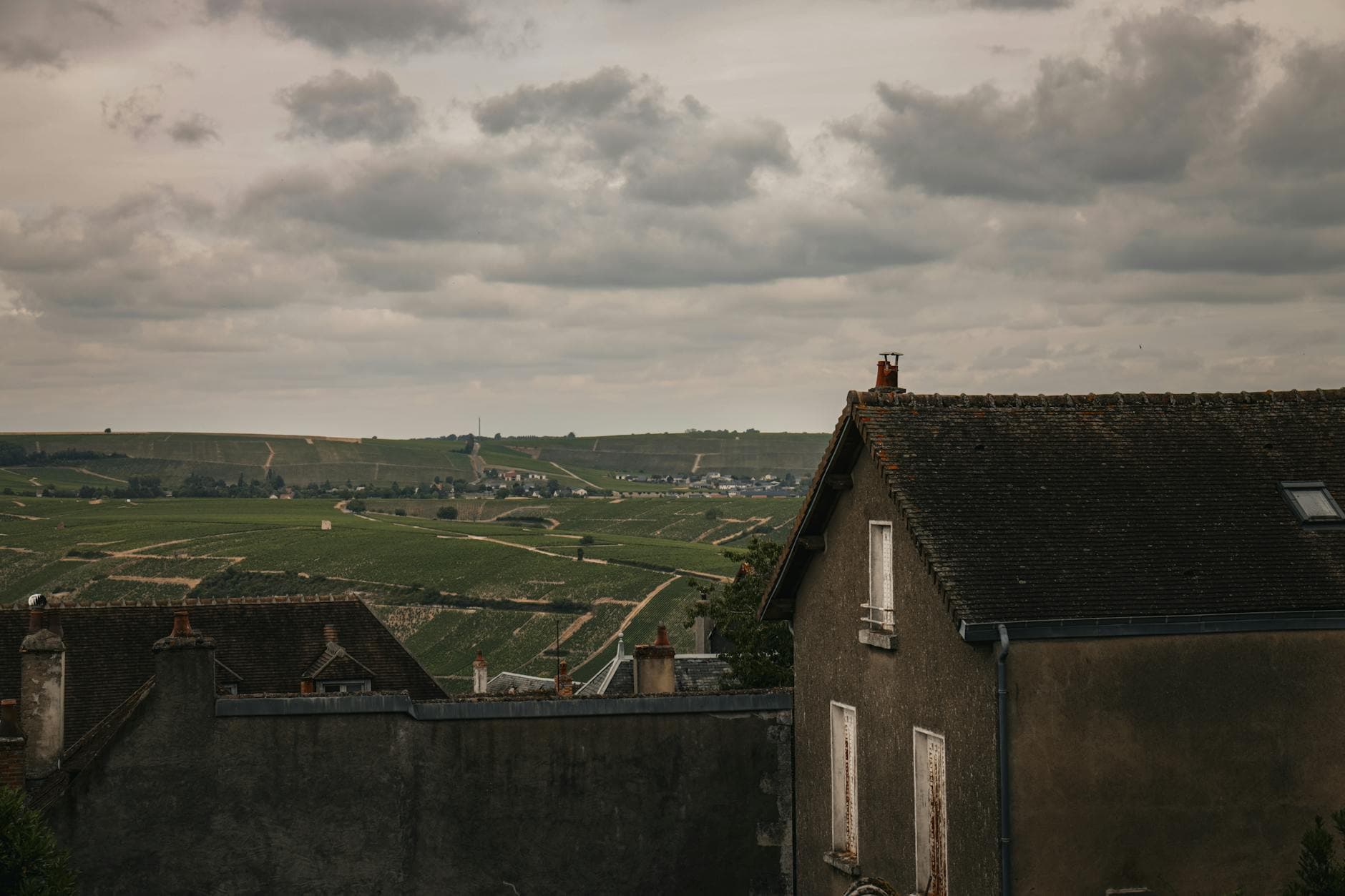
 Photo: Carl-Emil Jørgensen / Pexels
Where to Stay in Loire Valley Wine Country: Complete 2026 Guide
Find the best places to stay in France's Loire Valley for wine lovers. From Saumur troglodyte cave stays to Sancerre hilltop gîtes, discover the perfect base for exploring 800km of Chenin Blanc, Cabernet Franc, and Sauvignon Blanc country.
Planning a trip to Loire Valley?
Compare hotels, vineyard B&Bs and rentals across Booking, Airbnb and more in one search.
The Loire Valley stretches nearly 800 kilometres along France's longest river, from the Atlantic coast near Nantes to the chalk hills of Sancerre in the east. That makes it the most geographically sprawling wine region in France—and the one where your choice of base matters most. Pick the wrong end and you'll spend half your trip on the autoroute instead of in tasting rooms.
What sets the Loire apart from Bordeaux or Burgundy is variety. You'll find bone-dry Muscadet with oysters near the coast, sparkling Crémant aged in troglodyte caves around Saumur, age-worthy Chenin Blanc in Vouvray, some of France's finest Cabernet Franc in Chinon, and the Sauvignon Blanc that put the grape on the map in Sancerre. No single grape dominates, and each sub-region has its own character, cuisine, and price point. The trick is knowing which stretch of the river suits your palate—and your budget.
Best Areas to Stay in Loire Valley at a Glance:
- For sparkling wine & caves: Saumur / Anjou — troglodyte cellars, Crémant de Loire, Cabernet Franc
- For châteaux & Chenin Blanc: Touraine / Amboise — Vouvray, Montlouis, royal architecture
- For red wine: Chinon — medieval town, top Cabernet Franc, affordable
- For Sauvignon Blanc: Sancerre / Pouilly-Fumé — hilltop villages, eastern Loire
- For seafood & Muscadet: Nantes / Pays Nantais — Atlantic end, crisp whites, oyster bars
Best Areas to Stay for Wine Tasting

Saumur / Anjou
Saumur sits on a limestone ridge above the Loire, and that limestone is the story here. Centuries of quarrying carved out vast underground galleries—tufa caves—now used by dozens of producers to age sparkling Crémant de Loire and still Cabernet Franc. The town itself is handsome, with a fairy-tale château and a surprisingly lively restaurant scene for its size.
Why wine lovers choose Saumur:
- Crémant de Loire tastings inside tufa caves (Bouvet-Ladubay, Langlois-Chateau, Gratien & Meyer)
- Saumur-Champigny for serious Cabernet Franc reds (Clos Rougeard, Domaine des Roches Neuves)
- Troglodyte cave accommodation—genuinely unique
- Central Loire position, easy day trips east or west
- Sweet Chenin from Coteaux du Layon and Quarts de Chaume nearby
Price range: €70–250/night
Best for: Sparkling wine fans, cave enthusiasts, couples wanting a characterful base
Wine access: Walk to several cave-cellar producers from town. Saumur-Champigny vineyards within 10-minute drive. Coteaux du Layon 20 minutes south.
Trade-off: Limited dining options compared to Tours. The town is quiet after dark, and some cave cellars close early in winter.
Where to stay: Hôtel Anne d'Anjou (overlooking the Loire, with castle views) and Château La Comtesse de Loire & Spa (a château B&B with its own vineyard) are two named options.
Touraine / Amboise
Touraine is château country—Amboise, Chenonceau, Villandry, and a dozen more royal residences dot this central section of the Loire. But the wine here holds its own. Vouvray, just east of Tours, produces Chenin Blanc in every style: bone-dry, off-dry, sparkling, and late-harvest wines that can age for decades. Across the river, Montlouis-sur-Loire offers similar quality at gentler prices.
Why wine lovers choose Touraine:
- Vouvray Chenin Blanc—world-class and cellar-worthy (Domaine Huet, François Chidaine)
- Montlouis-sur-Loire for under-the-radar Chenin (Jacky Blot, Domaine de la Taille aux Loups)
- Loire châteaux within arm's reach
- Tours has the best restaurant scene in the valley
- Well-connected by TGV from Paris (55 minutes)
Key areas:
- Amboise — Compact royal town, good restaurants, central
- Vouvray — Village above the river, cave cellars carved into hillside
- Tours — Larger city with markets, nightlife, and transport links
Price range: €80–350/night
Best for: First-time Loire visitors, Chenin Blanc lovers, those combining wine and châteaux
Wine access: Vouvray producers line the D46 road along the north bank. Many offer tastings without appointment. Montlouis across the river adds more options.
Trade-off: Tourist traffic around the châteaux can be heavy in summer. Amboise itself is small and pricey for what you get. Tours is more practical but less charming.
Where to stay: Château de Pray (a historic chateau with a Michelin-starred restaurant) and Le Relais d'Amboise (along the Loire, with a spa) are two named options.
Chinon
If you care about red wine, Chinon is your base. This medieval town—birthplace of François Rabelais—sits at the confluence of the Loire and Vienne rivers, surrounded by Cabernet Franc vineyards that produce some of the most elegant reds in the valley. The old town is atmospheric, with a ruined fortress above and tasting rooms tucked into the limestone below.
Why wine lovers choose Chinon:
- France's finest Cabernet Franc (Bernard Baudry, Charles Joguet, Philippe Alliet)
- Medieval old town with honest bistros and cave-bars
- Less touristy and more affordable than Amboise or Saumur
- Nearby Bourgueil and Saint-Nicolas-de-Bourgueil for more Cab Franc
- Walking distance to multiple domaines
Price range: €60–200/night
Best for: Red wine drinkers, budget-conscious travelers, those who prefer authentic over polished
Wine access: Several producers have tasting rooms in the old town's cave-carved cellars. Vineyards begin at the town's edge. Bourgueil is 25 minutes north.
Where to stay: Château du Rivau (a family-owned château with its own gastronomic restaurant) and Hôtel Diderot (ivy-covered, 18th-century) are two named options.
Sancerre / Pouilly-Fumé
The eastern Loire is a different world—closer to Burgundy in feel, with rolling chalk-and-flint hills, small stone villages, and a laser focus on Sauvignon Blanc. Sancerre sits on a hilltop overlooking the river, with vineyards fanning out in every direction. Across the Loire, Pouilly-sur-Loire produces Pouilly-Fumé (not to be confused with Pouilly-Fuissé in Burgundy), often from flinty silex soils that give the wines a distinctive smoky edge.
Why wine lovers choose Sancerre:
- The birthplace of great Sauvignon Blanc (Domaine Vacheron, Henri Bourgeois, François Cotat)
- Hilltop Sancerre village—restaurants, cheese shops, panoramic views
- Pouilly-Fumé across the river (Didier Dagueneau, de Ladoucette)
- Outstanding Crottin de Chavignol goat cheese (made here)
- Quieter, more rural feel than the central Loire
Price range: €80–280/night
Best for: Sauvignon Blanc purists, food-and-wine travelers, those who like hillside villages
Wine access: Vignerons throughout Sancerre and surrounding villages (Bué, Chavignol, Verdigny). Most welcome visitors but calling ahead is wise—these are smaller operations than in Saumur or Vouvray.
Where to stay: FÓLKLORE Boutique Hotel (with its own on-site winery) and Hôtel Le Clos Saint Martin (owned by the winemaking Saget family) are two named options.
Muscadet / Nantes
The western, Atlantic end of the Loire produces Muscadet—a bone-dry white from the Melon de Bourgogne grape that's built for shellfish. The city of Nantes is lively and underrated, with excellent restaurants and an increasingly interesting cultural scene. This isn't postcard Loire country—it's flatter, greener, and more maritime—but the food-and-wine pairing here is arguably the best in the valley.
Why wine lovers choose Nantes:
- Muscadet Sèvre et Maine sur lie with oysters—a perfect match
- Top producers reviving the region's reputation (Domaine de l'Écu, Domaine Luneau-Papin, Guy Bossard)
- Nantes city life—markets, restaurants, Machines de l'île
- Day trips to the Atlantic coast for shellfish
- Lowest prices in the Loire wine corridor
Price range: €55–200/night
Best for: Seafood lovers, city-base travelers, those arriving via Nantes airport
Wine access: Muscadet vineyards are spread south and east of Nantes. A car is essential—producers are scattered across small villages like Clisson, Vallet, and Le Pallet.
Trade-off: Doesn't feel like "wine country"—flat terrain, no hilltop villages or vineyard panoramas. Producers are spread out and some require appointments. Not the Loire experience most first-timers picture.
Where to stay: Sozo Hotel (inside a converted old chapel) and La Pérouse (sleek, white-on-white interiors) are two named options in central Nantes.
Types of Wine Country Accommodation
Château Hotels (€150–500/night)
The Loire has more châteaux per kilometre than anywhere in France, and dozens have been converted into hotels. Quality varies wildly—some are genuinely luxurious with Michelin-starred restaurants; others are faded grande dames trading on architecture alone.
What to expect:
- Historic buildings with period furnishings
- Grounds, gardens, sometimes vineyards
- Restaurant on-site (quality varies)
- Often outside town centres—car needed
- Book well ahead for top properties (Château de Noirieux, Château de Pray)
Best for: Special occasions, couples, luxury travelers
Chambres d'Hôtes (€70–180/night)
France's version of the B&B. In wine country, many are run by vignerons who'll pour you their wines at breakfast and point you to their neighbours' cellars. This is how you get the real Loire—through the people who farm it.
What to expect:
- 2–5 rooms in a private home or converted farm building
- Breakfast included (often excellent—local cheeses, homemade jams)
- Hosts who know the wine scene personally
- Table d'hôte dinner sometimes available (communal meal, often very good)
- French-language hosts common outside tourist centres
Best for: Wine enthusiasts wanting local knowledge, couples, francophiles
Troglodyte Cave Stays (€80–200/night)
Unique to the Loire's tufa limestone belt between Saumur and Vouvray. These are actual cave dwellings carved into cliff faces—cool in summer, warm in winter, and unlike anything you'll find elsewhere in wine country. Some are rustic; others are surprisingly polished with modern kitchens and Wi-Fi.
What to expect:
- Rooms carved from soft limestone
- Naturally regulated temperature (12–14°C year-round without heating)
- Thick walls = absolute silence
- Some are full gîtes with kitchens; others are single rooms
- Concentrated around Saumur, Montsoreau, and Turquant
Best for: Anyone wanting a one-of-a-kind stay, photographers, cave wine enthusiasts
Gîtes & Vacation Rentals (€60–300/night)
Self-catering rentals range from converted farmhouses to modern apartments in town. Gîtes de France rates properties on an épi (wheat ear) system—3 épis and above is reliably comfortable. For longer stays or groups, a well-equipped gîte with a kitchen lets you shop the local markets and cook with Loire ingredients.
What to expect:
- Full kitchen facilities
- More space and privacy than hotels
- Weekly rates often available (and cheaper per night)
- Variable quality—check reviews carefully
- Rural locations common—car essential
Best for: Families, groups, longer stays, self-caterers who want to cook with market produce
When to Visit Loire Valley
High Season (June–September)
What to expect:
- Warm to hot weather (25–35°C in July–August)
- Château tourism peaks in July–August
- Harvest begins mid-September (exciting but producers are busy)
- Higher prices, busier tasting rooms
- Book 3–6 weeks ahead for popular chambres d'hôtes
Best months: September (harvest atmosphere, warm days, thinning crowds) and June (long days, flowers, manageable heat)
Shoulder Season (April–May, October)

What to expect:
- Mild weather, occasional rain
- Lower prices (20–30% below high season)
- Vignerons have more time to talk
- Spring blossoms in April, vendanges tardives (late harvest) in October
- Most properties open
Best value: Late April and October—pleasant weather, uncrowded tasting rooms, shoulder pricing
Winter (November–March)
What to expect:
- Cool and damp (5–10°C)
- Some chambres d'hôtes and small hotels close
- Reduced tasting room hours—call ahead
- Loire Valley Christmas markets (Amboise, Tours)
- Cellar work happening—some vignerons offer barrel tastings by appointment
Pro tip: January–February is pruning season. Serious wine geeks can sometimes arrange vineyard walks with vignerons who are happy for the company.
| Month | Weather | Crowds | Prices | Highlights |
|---|---|---|---|---|
| Jan–Mar | Cool, damp (5–10°C) | Very low | Lowest | Pruning, barrel tastings |
| Apr–May | Mild, spring blooms | Medium | Medium | Gardens at peak, quiet cellars |
| Jun | Warm, long days | Medium-High | High | Solstice, festivals begin |
| Jul–Aug | Hot (30°C+) | Highest | Highest | Château tourism, outdoor dining |
| Sep | Warm, harvest | High | High | Vendange atmosphere, grape picking |
| Oct | Mild, autumn colours | Medium | Medium | Late harvest, mushroom season |
| Nov–Dec | Cooling, rain | Low | Low-Medium | Christmas markets, truffle season |
Insider Tips for Staying in Loire Valley Wine Country
- Pick one or two sub-regions, not the whole valley. The Loire stretches 800km. Trying to cover Muscadet to Sancerre in one trip means motorway time, not wine time. Choose adjacent areas—Chinon + Saumur, or Vouvray + Amboise—and go deep.
- Ride the Loire à Vélo. Over 900km of marked cycling paths follow the river, and many pass directly through vineyards. Rent e-bikes in Saumur or Amboise and cycle between producers—it's flat, scenic, and you won't worry about driving after tastings. Several chambres d'hôtes cater specifically to cyclists.
- Book cave tastings in Saumur. The tufa cave cellars are genuinely impressive—Bouvet-Ladubay offers guided tours through kilometres of underground galleries. Ackerman and Langlois-Chateau are also worth visiting. These are working cellars, not tourist attractions, so bring a layer—it's 12°C underground year-round.
- Don't skip Montlouis-sur-Loire. It sits across the river from Vouvray and produces equally good Chenin Blanc at lower prices with less tourist traffic. Jacky Blot's Domaine de la Taille aux Loups is exceptional. The village itself is quieter and more relaxed than Vouvray.
- Eat rillettes, rillons, and Crottin de Chavignol. Loire cuisine is rustic and pork-heavy in the west, goat-cheese-centric in the east. Rillettes (potted pork) with a glass of chilled Chinon rouge is a perfect Loire lunch. In Sancerre, warm Crottin de Chavignol on salad with a glass of the local white is mandatory.
- Visit during the Salon des Vins de Loire (February, Angers). The region's biggest trade tasting brings hundreds of producers to one venue. It's trade-focused but some events are open to the public, and the town fills with winemakers—restaurant encounters with vignerons are common.
- Learn the appellation hierarchy. Loire wines can be confusing—there are 53 appellations. The ones that matter most for visitors: Vouvray and Montlouis (Chenin Blanc), Chinon and Bourgueil (Cabernet Franc), Sancerre and Pouilly-Fumé (Sauvignon Blanc), Muscadet Sèvre et Maine (Melon de Bourgogne), and Crémant de Loire (sparkling). Start there and branch out.
- The TGV is your friend. Paris to Tours is 55 minutes, Paris to Angers is 90 minutes, and Paris to Nantes is just over two hours. You don't need to rent a car for the whole trip—train to your base town, then rent locally for vineyard days.
Book Your Loire Valley Wine Country Stay
Ready to explore France's most diverse wine region? Browse curated wine country stays—from Saumur troglodyte caves to Sancerre hilltop gîtes, all hand-picked for wine lovers.
Whether you're tasting sparkling Crémant underground in Saumur or sipping Sauvignon Blanc on a Sancerre hilltop, the Loire delivers a wine experience that's distinctly French but refreshingly unpretentious. The châteaux are a bonus.
More Loire Valley Wine Travel Guides
- Loire Valley Wine Region Overview
- France Wine Regions
- Vouvray & Chenin Blanc Guide
- Sancerre & Pouilly-Fumé Guide
Word Count: ~2,400
Last Updated: March 2026
Author: WineTravelGuides Editorial Team
Ready to visit Loire Valley?
Build your personalised day-by-day itinerary — choose your travel style and trip length, get accommodation and tour picks per day, and email it to yourself to take along.
Upcoming Wine Festivals in France
See all festivalsHidden Gems Nearby
Discover more hidden gemsDomaine de la Bongran
WTG PickBurgundy, France
A Burgundy rebel who makes Chardonnay on their own terms, far from the tourist trail of Beaune and Puligny.
Chardonnay
Domaine Huet
WTG PickLoire Valley, France
World-class Chenin Blanc with no queues, no hype, just pure Loire magic in a village setting.
Chenin Blanc
Mas de Daumas Gassac
Languedoc, France
Grand cru quality at a fraction of Bordeaux prices, in a wild, beautiful valley most tourists never find.
Cabernet Sauvignon · Rosé · White Blend
Book Your Loire Valley Wine Country Stay
Compare hotels, vineyard B&Bs and rentals across Booking, Airbnb and more in one search.
Compare stays near the vineyardsStay22
Plan Your Where to Stay in Loire Valley Wine Country: Complete 2026 Guide Trip
Estimate your Where to Stay in Loire Valley Wine Country: Complete 2026 Guide trip cost
Budget calculator with accommodation, food, wine, and transport estimates.
Try itCompare Where to Stay in Loire Valley Wine Country: Complete 2026 Guide with other regions
Side-by-side comparison of cost, climate, wine styles, and more.
Try itWhen to visit Where to Stay in Loire Valley Wine Country: Complete 2026 Guide
Harvest dates, peak season, and the best months for wine travel.
Try itThis page contains affiliate links. We may earn a commission at no extra cost to you.