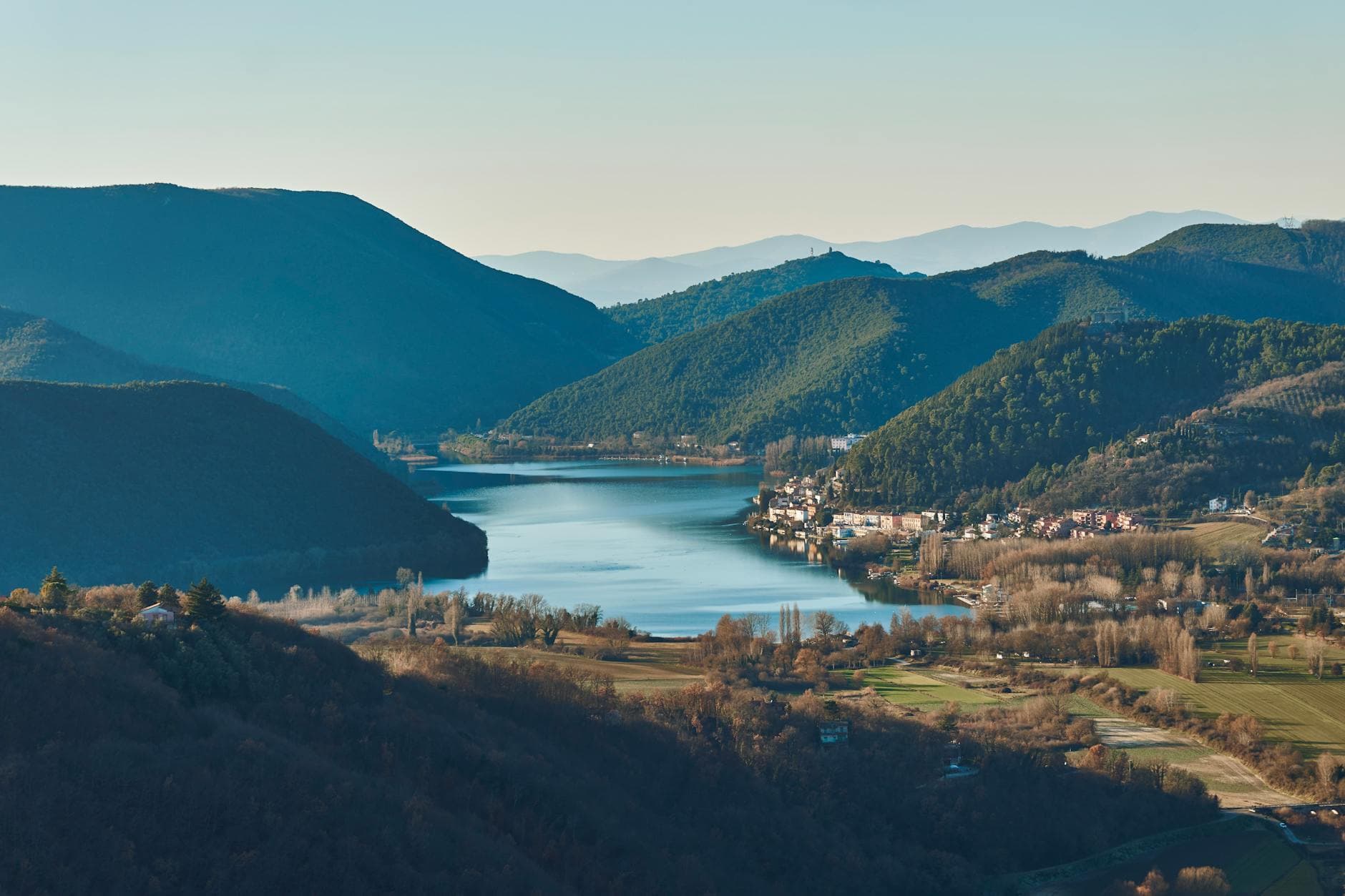
 Photo: Andreas Schnabl / Pexels
Where to Stay in Umbria Wine Country: Complete 2026 Guide
Find the best places to stay in Umbria for wine lovers. From Montefalco Sagrantino estates to Orvieto clifftop hotels, discover the perfect base for exploring Italy's green heart.
Planning a trip to Umbria?
Compare hotels, vineyard B&Bs and rentals across Booking, Airbnb and more in one search.
Umbria is Italy's green heart — the country's only landlocked region, tucked between Tuscany and Le Marche, smaller than most visitors expect and far quieter than its famous neighbour. The wines here are distinct and seriously underrated. Sagrantino di Montefalco is one of Italy's most tannic, deeply structured reds, a grape found almost nowhere else on earth. Orvieto Classico, made primarily from Grechetto and Procanico, produces aromatic whites that have been drunk since Etruscan times. The food matches the wines: black truffles from Norcia and Spoleto, green-gold olive oil pressed from Moraiolo olives, and Castelluccio lentils that carry IGP protection for good reason.
The region is small enough that you can drive from Perugia to Orvieto in 90 minutes, Montefalco to Spoleto in 20. Medieval hilltop towns sit within sight of each other across the Umbrian valley, connected by quiet roads through olive groves and sunflower fields. Assisi draws pilgrims, Perugia draws students and chocolate lovers, and the summer festivals at Spoleto and Umbria Jazz bring international crowds — but for much of the year, you'll share these towns with locals, not tour buses. Prices run 20-40% lower than equivalent Tuscan accommodation, restaurants are less polished but more honest, and producers welcome visitors with a warmth that larger regions have lost. This guide covers the best bases for a wine-focused stay.
Best Areas to Stay in Umbria Wine Country at a Glance:
- For Sagrantino: Montefalco — hilltop capital of Umbria's greatest red
- For whites + dining: Orvieto — dramatic clifftop, Classico wines, strong restaurant scene
- For wine history: Torgiano — Lungarotti wine museum, easy airport access
- For culture + wine: Spoleto — festival town, Trebbiano Spoletino, Roman aqueduct
- For an urban base: Perugia — university city, chocolate capital, restaurants, transport links
Best Areas to Stay for Wine Tasting
Montefalco (Sagrantino Capital)
Montefalco sits on a rounded hilltop in the centre of the Umbrian valley, earning its nickname La Ringhiera dell'Umbria — the Balcony of Umbria. From its circular walls you can see Perugia, Assisi, Spoleto, and on clear days, the Sibillini mountains. The town is tiny (fewer than 6,000 residents) and the wine scene is concentrated: Sagrantino di Montefalco DOCG is produced exclusively in five surrounding comuni. This grape produces one of Italy's most tannic, phenolic reds — massive wines that demand food and reward patience. Montefalco Rosso DOC, a blend of Sangiovese, Sagrantino, and sometimes Merlot, is the everyday alternative and excellent value.
Why wine lovers choose Montefalco:
- Ground zero for Sagrantino — the grape grows almost nowhere else
- Panoramic hilltop views across the entire Umbrian valley
- Small town where you'll recognise faces after two days
- Top producers within a 10-minute drive: Arnaldo Caprai, Antonelli San Marco, Tabarrini, Scacciadiavoli
- The Sagrantino wine route is well-signed and easy to self-drive
- Annual Settimana Enologica (wine week) and harvest festivals in autumn
- Frescoes by Benozzo Gozzoli in the ex-church of San Francesco (now the town museum)
Price range: EUR 80-250/night
Best for: Serious red wine enthusiasts, those wanting a quiet hilltop base, visitors who prefer small towns over cities
Wine access: Outstanding. Most Sagrantino producers are within 5-15 minutes by car and welcome drop-ins with reasonable notice. The Strada del Sagrantino connects estates, olive mills, and restaurants. Several enotecas on Montefalco's main square offer tastings by the glass.
Trade-off: Very limited evening life. A handful of restaurants (good ones, but few choices). No train station — car required. Accommodation options are smaller-scale.
Where to stay: Palazzo Bontadosi (a 15th-century fresco-filled building on the main piazza) and Villa Zuccari (a period country residence) are two named options.
Orvieto (Clifftop City, White Wine Country)
Orvieto sits on a dramatic tufa cliff above the Paglia valley, visible from kilometres away. The Gothic cathedral is one of Italy's finest, the underground tunnels and Etruscan caves are genuinely fascinating, and the restaurant scene is the strongest in Umbria outside Perugia. The surrounding vineyards produce Orvieto Classico DOC — a white wine with genuine history. At its best (particularly from producers like Barberani, Palazzone, and Decugnano dei Barbi), Orvieto Classico Superiore shows real character: almond notes, gentle minerality, and enough weight for the table.
Why wine lovers choose Orvieto:
- Visually dramatic — a clifftop city that stops you in your tracks
- The best dining options in Umbria's wine country
- Orvieto Classico producers are welcoming and appointments are rarely needed
- Underground Orvieto tour reveals Etruscan wine-making caves
- Direct train from Rome (75 minutes) — no car needed for the city itself
- Market day (Thursday and Saturday mornings) is one of Umbria's best
- The Orvieto con Gusto food and wine festival runs each June
Price range: EUR 90-280/night
Best for: White wine lovers, food-focused travellers, visitors arriving by train from Rome, culture seekers
Wine access: Good. Producers are scattered across the hills below the cliff. Barberani, Palazzone, and Castello della Sala (Antinori's Umbrian estate, producing the highly regarded Cervaro della Sala white) are all within 20 minutes. Town enotecas offer walk-in tastings.
Trade-off: 75 minutes from Montefalco — combining Orvieto whites with Sagrantino reds means significant driving or splitting your stay. Tourist foot traffic around the Duomo can feel heavy in summer.
Where to stay: Locanda Palazzone (five-course wine-paired dinners, sweeping hillside views) and Altarocca Wine Resort (adults-only, full spa) are two named options.
Torgiano (Wine Museum, Perugia Gateway)
Torgiano is a quiet village 15 minutes south of Perugia, dominated by one name: Lungarotti. The Lungarotti family built Torgiano's reputation from scratch, and their MUVIT (Museo del Vino di Torgiano) is arguably Italy's best wine museum — a serious collection of wine artefacts, not a vanity project. Torgiano Rosso Riserva DOCG (primarily Sangiovese) was created largely because Lungarotti's Rubesco Riserva Vigna Monticchio proved the area could produce age-worthy reds. The village is small and sleepy, but the proximity to Perugia's airport and city amenities makes it a practical base.
Why wine lovers choose Torgiano:
- MUVIT wine museum is genuinely world-class
- Lungarotti's Le Tre Vaselle hotel doubles as a wine estate base
- 15 minutes from Perugia and its airport (Sant'Egidio)
- Central position — Montefalco (30 min), Assisi (20 min), Spoleto (45 min)
- Olive oil museum (MOO) next door to the wine museum
- Quiet, unhurried, authentically Italian small-village life
- Excellent agriturismos in the surrounding countryside
Price range: EUR 70-200/night
Best for: Wine history buffs, those wanting a central base near the airport, visitors combining multiple Umbrian towns
Wine access: Concentrated around Lungarotti, which offers tours and tastings. Other small producers are emerging but this remains a one-family story. The real advantage is the central location for day-tripping to Montefalco, Orvieto, and Spoleto.
Trade-off: Wine scene is narrow — if you've visited Lungarotti, you've covered most of what Torgiano offers. The village itself has very few restaurants or shops.
Where to stay: Le Tre Vaselle (an on-site winery, full spa) and Boutique Hotel Al Grappolo d'Oro (a renovated 19th-century residence overlooking the vines) are two named options.
Spoleto (Festival Town, Trebbiano Spoletino)
Spoleto is Umbria's most culturally loaded small city. The Ponte delle Torri — a 13th-century aqueduct spanning a gorge 80 metres deep — is one of Italy's most striking pieces of medieval engineering. The Festival dei Due Mondi (Festival of Two Worlds) fills the town with opera, dance, and theatre each June and July. For wine, Spoleto's story is Trebbiano Spoletino — a local white grape unrelated to the ordinary Trebbiano grown elsewhere in Italy. When well made, it produces textured, savoury whites with real ageing potential.
Why wine lovers choose Spoleto:
- Trebbiano Spoletino is a genuine discovery — a white with personality and grip
- The Ponte delle Torri is worth the trip on its own
- Festival dei Due Mondi (late June to mid-July) is world-class
- Elegant small city with good restaurants, cafes, and an active evening scene
- Train station with direct connections to Rome (90 min) and other Umbrian towns
- Only 20 minutes from Montefalco — easy to combine Sagrantino tastings
- Norcia (truffles, salumi, lentils) is 45 minutes east in the Valnerina
Price range: EUR 80-250/night
Best for: Culture-and-wine travellers, festival-goers, visitors who want a livelier town with evening options
Wine access: Trebbiano Spoletino producers are small and scattered — this is not a densely planted wine area. Ask locally for recommendations. The proximity to Montefalco means Sagrantino is a short day-trip. Several good wine bars in the old town.
Trade-off: Not a wine-first destination. If your primary goal is tasting at estates, Montefalco or Orvieto will serve you better. Festival season (late June–July) pushes prices up significantly and accommodation books out.
Where to stay: Palazzo Leti Residenza d'Epoca (a late 13th-century residence with landscaped gardens) and Hotel dei Duchi (overlooking the Roman Theatre) are two named options.
Perugia (Urban Base, University City)
Perugia is Umbria's capital and its only proper city — a hilltop university town of 170,000 with a medieval centre, a respected jazz festival (Umbria Jazz, July), and Italy's most famous chocolate brand (Perugina, makers of Baci). The restaurant scene is the region's best, fuelled by a young student population and a tradition of good eating. As a base for wine travel, Perugia offers something the smaller towns cannot: reliable evening entertainment, diverse dining, and transport connections.
Why wine lovers choose Perugia:
- Strongest restaurant scene in Umbria — everything from student-priced trattorias to serious dining
- Umbria Jazz (July) is one of Europe's top jazz festivals
- Perugina chocolate factory tours and the Casa del Cioccolato museum
- Central position — Torgiano (15 min), Montefalco (40 min), Assisi (25 min)
- Minimetro and escalators connect the hilltop centre to parking and the valley
- Best public transport hub in Umbria
- Corso Vannucci evening passeggiata is classic Italian city life
Price range: EUR 90-300/night
Best for: Those who want city amenities and nightlife, jazz festival visitors, visitors combining wine with urban culture, solo travellers
Wine access: No vineyards in the city, but all major Umbrian wine zones are within an hour's drive. Several wine bars in the centre stock regional producers. Torgiano and its wine museum are 15 minutes away.
Trade-off: City, not countryside — no vineyard views from your window. Traffic and parking in the hilltop centre can be frustrating (use the car parks below and take the escalators up). Accommodation costs run slightly higher than smaller towns.
Where to stay: Borgobrufa Spa Resort (an adults-only spa atop the vineyards, Michelin-starred restaurant) is the named standout just outside the city.
Types of Accommodation
Agriturismo (EUR 60-160/night)
Umbria's agriturismos are the region's strongest accommodation category. These are working farms — olive groves, vineyards, sometimes both — offering guest rooms with home-cooked dinners featuring whatever is growing that week. Unlike Tuscany's heavily marketed agriturismos, Umbrian farm stays tend to be more rustic, more personal, and significantly cheaper. Many Sagrantino producers around Montefalco offer rooms.
What to expect:
- Rooms on working agricultural estates
- Multi-course dinners with estate wine and olive oil (often the best meal of your trip)
- Family-run, with owners who eat with you
- Quiet surroundings — birdsong, not traffic
- Basic but clean rooms; don't expect boutique hotel fit-out
Best for: Authenticity, food, value, couples, families
Hilltop Hotels (EUR 120-350/night)
Umbria's medieval towns have produced a category of small hotels carved from historic buildings — former palazzi, converted convents, restored stone houses. Properties like Palazzo Bontadosi on Montefalco's main square or Hotel La Badia outside Orvieto (a converted 12th-century abbey) combine historic atmosphere with comfortable rooms.
What to expect:
- Stone walls, beamed ceilings, views over rooftops or valleys
- Central locations within walking distance of restaurants and piazzas
- On-site restaurants in many cases
- Smaller scale — typically 10-30 rooms
- Breakfast included, often with local products
Best for: Couples, those who want to be inside a historic town, visitors without a car (in Orvieto or Spoleto)
Monastery Stays (EUR 40-90/night)
Umbria is the land of St Francis and St Benedict. Several active and former monasteries offer guest accommodation — simple rooms, communal meals, and a pace of life that forces you to slow down. The Eremo delle Carceri above Assisi, while not offering overnight stays, sets the tone; actual guest options include convents in Assisi, Spoleto, and near Norcia.
What to expect:
- Simple, clean rooms — often single beds, shared bathrooms
- Curfews in some properties (typically 10-11pm)
- Communal breakfast, sometimes dinner
- Extraordinary settings — hilltop, forested, or within ancient walls
- Silence and stillness as standard
Best for: Solo travellers, budget-conscious visitors, those seeking reflection alongside their wine tasting
City Hotels & B&Bs (EUR 80-250/night)
Perugia, Orvieto, and Spoleto all have conventional hotels and B&Bs ranging from basic to comfortable. These offer the amenities that farm stays and monastery rooms do not: reliable Wi-Fi, private bathrooms, and proximity to restaurants and transport.
What to expect:
- Standard hotel amenities and consistent service
- Walking distance to restaurants, shops, and sights
- Good transport connections (especially in Perugia and Orvieto)
- Less character than agriturismos, more convenience
Best for: Business travellers, short stays, those prioritising transport links and dining access
When to Visit
Spring (April-June)
Wildflowers carpet the Umbrian valley. Castelluccio's famous fiorita (flowering of lentils and wildflowers on the Piano Grande) peaks in late June — one of Italy's most photographed natural events. New Sagrantino vintages are released in spring. The weather is warm without the July-August heat. Spoleto's festival begins late June.
Summer (July-August)
Hot (30-35°C in the valley, cooler in hilltop towns). Umbria Jazz fills Perugia in July. Many Italians holiday in August — some restaurants close, but tourist infrastructure is open. Book Spoleto and Perugia well ahead for festival periods.
Autumn (September-November)
Harvest season. Sagrantino grapes are among the last picked in Italy (mid-to-late October). Black truffle season begins in Norcia and Spoleto from late October. Olive harvest runs November. The light turns golden, crowds thin, and the food is at its peak.
Winter (December-March)
Cold and quiet. Many agriturismos close. But Norcia's black truffles continue through February, and Umbria's towns are atmospheric in winter mist. Accommodation prices drop to their lowest.
| Month | Weather | Crowds | Prices | Highlights |
|---|---|---|---|---|
| Jan-Feb | Cold, 2-8°C | Very low | Lowest | Winter truffles, quiet towns |
| Mar-Apr | Mild, 10-18°C | Low-Medium | Medium | Wildflowers, Sagrantino releases |
| May-Jun | Warm, 20-28°C | Medium | Medium-High | Castelluccio fiorita, Spoleto festival starts |
| Jul-Aug | Hot, 28-35°C | Medium-High | High | Umbria Jazz (Jul), Italian holidays (Aug) |
| Sep-Oct | Warm, 15-25°C | Medium | Medium-High | Grape harvest, truffle season begins |
| Nov-Dec | Cool, 5-12°C | Low | Low-Medium | Olive harvest, black truffles, Norcia markets |
Insider Tips
- Sagrantino's tannins demand food. Don't taste Sagrantino on an empty stomach or without something to eat alongside it. The tannin levels are among the highest of any red grape in the world — higher than Nebbiolo, higher than Tannat. Pair with grilled red meats, aged pecorino, or Norcia's cured pork. The wine transforms when matched correctly.
- Know the key Sagrantino producers. In Montefalco: Arnaldo Caprai (the estate that revived Sagrantino in the 1990s), Antonelli San Marco (organic, elegant style), Tabarrini (powerful, traditional), and Scacciadiavoli (the oldest Sagrantino estate, dating to 1884). All welcome visitors with advance notice — email a few days ahead.
- Orvieto whites are better than their reputation. Mass-market Orvieto killed the brand's image decades ago. Seek out the serious producers: Barberani (Calcaia, a late-harvest dessert wine, is world-class), Palazzone (Campo del Guardiano ages beautifully), and Decugnano dei Barbi. Castello della Sala, Antinori's Umbrian property, produces Cervaro della Sala — one of Italy's finest barrel-fermented whites.
- Umbria is less touristy than Tuscany — book less far ahead. Outside festival periods (Spoleto in late June-July, Umbria Jazz in July), you can often find good accommodation with 2-3 weeks' notice. Autumn harvest season is busy but nothing like Chianti or Montalcino levels.
- Go truffle hunting near Norcia. The Valnerina around Norcia and Spoleto produces exceptional black truffles (tartufo nero) from late October through February. Several farms offer guided truffle hunts with dogs followed by a truffle lunch. Norcia is also Italy's capital of cured pork — the word norcino (pork butcher) comes from the town's name.
- Umbrian olive oil rivals Tuscan. The Moraiolo, Frantoio, and Leccino olives grown around Spoleto, Trevi, and Montefalco produce oil with a peppery kick and distinctive green-gold colour. Several DOP designations protect the quality. Buy directly from producers — most agriturismos press their own.
- Castelluccio lentils are a protected product. The tiny brown-green lentils grown on the Piano Grande plateau above Norcia carry IGP status. They need no soaking, cook quickly, and have a nutty, earthy flavour that works with Sagrantino or a simple drizzle of new-season olive oil. Buy them at Norcia's shops or directly from farms on the plateau.
- Rent a car, but distances are short. Umbria is compact. Perugia to Montefalco is 40 minutes, Montefalco to Spoleto is 20, Perugia to Orvieto is 90. A single tank of fuel will cover a week of wine touring. Trains connect the main cities (Perugia, Spoleto, Orvieto) but vineyards require wheels.
Book Your Umbria Wine Country Stay
Ready to explore Italy's green heart? Browse curated wine country stays — from Montefalco agriturismos to Orvieto clifftop hotels, all selected for wine lovers.
Umbria gives you what Tuscany used to offer two decades ago: world-class wine, remarkable food, medieval towns that haven't been polished for tourists, and prices that don't punish you for choosing Italy. Start in Montefalco for Sagrantino, add Orvieto for whites, and leave time for truffles in Norcia. You won't regret it.
More Umbria Wine Travel Guides
- Umbria Wine Region Overview
- Montefalco & Sagrantino Wine Guide
- Where to Stay in Tuscany Wine Country
- Where to Stay in Piedmont Wine Country
- Italy Wine Regions
Word Count: ~2,400
Last Updated: March 2026
Author: WineTravelGuides Editorial Team


Ready to visit Umbria?
Build your personalised day-by-day itinerary — choose your travel style and trip length, get accommodation and tour picks per day, and email it to yourself to take along.
Upcoming Wine Festivals in Italy
See all festivalsHidden Gems Nearby
Discover more hidden gemsGiuseppe Mascarello e Figlio
WTG PickPiedmont, Italy
One of Barolo's last true traditionalists, producing monopole wines in a garage-sized cellar with zero marketing.
Nebbiolo · Barbera · Dolcetto
Benanti
Sicily, Italy
The original Etna pioneer, predating the volcanic wine hype by decades, with vineyard elevations reaching 1,000 metres.
Nerello Mascalese · Carricante
La Stoppa
Emilia-Romagna, Italy
A natural wine icon in a forgotten corner of Emilia, producing orange wines and skin-contact whites that are pilgrimages for the in-the-know.
Barbera · Bonarda · Malvasia
Book Your Umbria Wine Country Stay
Compare hotels, vineyard B&Bs and rentals across Booking, Airbnb and more in one search.
Compare stays near the vineyardsStay22
Plan Your Where to Stay in Umbria Wine Country: Complete 2026 Guide Trip
Estimate your Where to Stay in Umbria Wine Country: Complete 2026 Guide trip cost
Budget calculator with accommodation, food, wine, and transport estimates.
Try itCompare Where to Stay in Umbria Wine Country: Complete 2026 Guide with other regions
Side-by-side comparison of cost, climate, wine styles, and more.
Try itWhen to visit Where to Stay in Umbria Wine Country: Complete 2026 Guide
Harvest dates, peak season, and the best months for wine travel.
Try itThis page contains affiliate links. We may earn a commission at no extra cost to you.