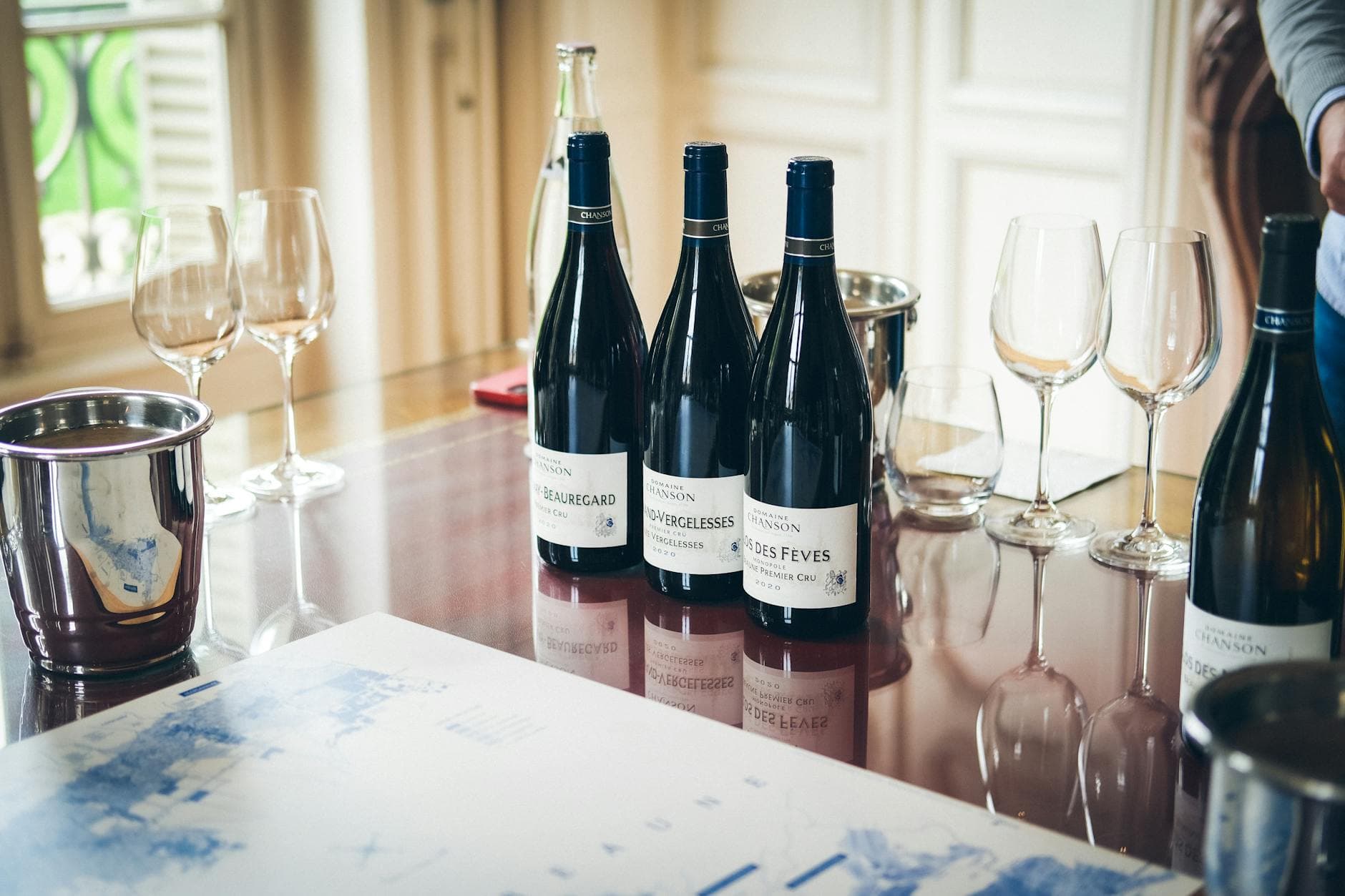
5 Days in Burgundy: Pinot Noir, Premiers Crus & Village Bistros
Plan your ideal 5-day Burgundy wine trip. Day-by-day itinerary covering the Côte de Nuits, Côte de Beaune, Chablis, and the best domaines, restaurants, and villages in France's greatest wine region.
5 Days in Burgundy: Pinot Noir, Premiers Crus & Village Bistros
Burgundy is the most demanding wine region on earth to understand and the most rewarding to visit. Five days lets you cover the essential geography — Chablis in the north, the Côte de Nuits and Côte de Beaune through the centre, and the Mâconnais in the south — without trying to absorb everything at once. The goal is not to taste every appellation. It is to understand why this particular strip of limestone hillside produces wines that have no equivalent anywhere in the world.
Plan to drink well, eat even better, and leave with a notebook full of producers you want to follow for the next decade.
Budget estimate: EUR 200-400/day per person (mid-range). Burgundy is not cheap, but it is less expensive than Bordeaux for comparable quality eating. The wines are where the budget goes.
Best time: May-June for the greenest vineyards and ideal weather. September-October for harvest energy and the chance to see winemakers at work. Avoid August — many small domaines close for summer holidays.
Before You Go
Getting there: TGV from Paris Gare de Lyon to Dijon takes 1h40. Alternatively, fly into Lyon (60 minutes south by train). Renting a car in Dijon is strongly recommended — the vineyards are spread across 60km of hillside and many domaines are not on public transport routes.
Book ahead: Domaine visits need to be arranged by email, typically 2-4 weeks in advance. The serious domaines do not accept walk-ins. Restaurant reservations in Beaune: book at least 2 weeks ahead for the better tables.
What to know about appellations: Burgundy's hierarchy runs Village → Premier Cru → Grand Cru. The geography is hyperlocal — two neighbouring vineyards can produce dramatically different wines. Do not try to memorise the system before you arrive. The domaine visits will teach you more than any reading.
Day 1: Arrival in Dijon — Chablis Day Trip
Base yourself in Beaune (central, best choice) or Dijon for the trip. If arriving by TGV into Dijon, take the morning to explore the city before driving north to Chablis.
Morning — Dijon

Dijon's old centre is excellent for an hour's walk: the Ducal Palace (now the Museum of Fine Arts) contains remarkable Burgundian history, and the covered market (Les Halles) is worth a visit if you arrive before 1pm. Buy cheese — Époisses, aged Comté — for later. This is Burgundy: eating is not separate from wine travel.
Afternoon — Chablis
Chablis is a 75-minute drive northwest of Dijon. The appellation sits on Kimmeridgian limestone and clay — the same geological formation as the Sancerre vineyards of the Loire — and produces Chardonnay with a mineral, almost saline quality that is entirely distinct from the fat, oaky Chardonnays that dominate export markets.
Book a visit to Domaine Raveneau if you can (extremely difficult, tiny production, but they occasionally accommodate visitors by email). More accessible alternatives: Domaine William Fèvre runs good tours and tastings, and Domaine Christian Moreau Père et Fils offers detailed comparisons across their Premier and Grand Cru holdings.
Taste the appellation hierarchy: simple Chablis versus Premier Cru Montée de Tonnerre versus Grand Cru Blanchot. The differences — in texture, mineral intensity, and finish length — are instructive.
Dinner — Bistrot des Grands Crus, Chablis
Stay for dinner in Chablis before driving back south. The Bistrot des Grands Crus (1 rue Jules Rathier) is the best restaurant in town and does Chablis pairings justice — order the oysters (the limestone soils that give Chablis its character once sat under a warm sea, and oysters remain a natural pairing) and the terrine of river fish.
Day 2: Côte de Nuits — Gevrey-Chambertin to Nuits-Saint-Georges
The Côte de Nuits is Pinot Noir's heartland. This 20km stretch of hillside south of Dijon contains more Grand Cru appellations than anywhere else on earth: Chambertin, Musigny, Clos de Vougeot, Romanée-Conti. The villages read like a roll call of the most famous wine names in history.
Morning — Gevrey-Chambertin

Start in Gevrey-Chambertin, the northernmost and largest village of the Côte de Nuits. Domaine Rossignol-Trapet does excellent village-level visits and offers a useful comparison between their Village, Premier Cru, and Grand Cru Chambertin wines. The Grand Cru vineyards directly behind the village are accessible on foot — walk up through the Chambertin vineyard itself, cross into Latricières, and look south over the vine rows toward Morey-Saint-Denis.
Late Morning — Morey-Saint-Denis and Chambolle-Musigny
Drive south through Morey-Saint-Denis (worth a quick stop at Domaine Dujac if they are receiving) to Chambolle-Musigny. Chambolle produces the most perfumed, delicate wines of the Côte de Nuits — floral, silky, and fine in a way that contrasts sharply with Gevrey's power. Domaine Georges Roumier is the benchmark producer but almost impossible to visit. Domaine Ghislaine Barthod is more accessible and produces precise, site-expressive wines.
Lunch — Café de la Paix, Nuits-Saint-Georges
Simple, honest Burgundian bistro cooking. The plat du jour is always worth ordering. Drink a carafe of whatever the house red is — in Nuits-Saint-Georges, even the carafe is likely to be something you cannot find easily at home.
Afternoon — Clos de Vougeot and Vosne-Romanée
Château du Clos de Vougeot is open to visitors without appointment (small entry fee). The 50-hectare Grand Cru vineyard and its medieval château are impressive in scale — it is the single largest Grand Cru in Burgundy. Walk the vineyard and note how the vines at the top (Grand Cru) differ from those at the bottom (which can only claim Village appellation despite being in the same plot).
From Clos de Vougeot, drive through Vosne-Romanée — the village that contains the Romanée-Conti vineyard, producing the world's most expensive wine from about 1.8 hectares of old vines. You cannot taste it (production is around 6,000 bottles per year, allocated entirely through négociants to a global waiting list) but you can stand at the low stone wall and look into the vineyard. The geology is the same as the plot next to it. The difference is 400 years of human observation and selection.
Dinner — L'Alambic, Nuits-Saint-Georges
L'Alambic does serious Burgundian cooking with an outstanding local wine list. The roast guinea fowl with morel mushrooms is a regional classic; the wine list is deep in village-level Nuits at accessible prices.
Day 3: Beaune — The Wine Capital
Beaune is Burgundy's wine capital: the historic centre, the Hospices, the merchant houses, and the best concentration of wine shops anywhere in France. Plan a slower morning and use the afternoon for a domaine visit south of the city.
Morning — Beaune's Old Centre

The Hôtel-Dieu (Hospices de Beaune) is the most photographed building in Burgundy — 15th-century Flemish architecture with a polychrome tile roof — and worth the entry fee for the grand wards and kitchen. The Hospices own some of the finest vineyards in the Côte de Beaune, auctioned annually in November.
Walk the old walls, browse the wine shops along Rue de Lorraine (Athenaeum de la Vigne et du Vin is the best wine bookshop in France), and visit the Marché aux Vins (2 Rue Nicolas Rolin) for a self-guided tasting of 15+ wines using a silver tastevin.
Lunch — Le Bistro de l'Hôtel, Beaune
Chef Christophe Bocquillon's casual annexe to one of Beaune's best hotels. The pressed terrine of foie gras and the roast chicken with Burgundy sauce are the things to order.
Afternoon — Pommard and Volnay
Drive south 10 minutes to the twin villages of Pommard and Volnay — adjacent appellations that demonstrate Burgundy's micro-terroir variation better than anywhere else. Pommard is typically structured, tannic, and age-worthy. Volnay, from almost identical geography, produces wines that are more feminine, floral, and silky.
Domaine de Montille in Volnay accepts visits by appointment and runs comparative tastings across their Volnay and Pommard holdings that make the distinction viscerally clear. Book ahead by email.
Evening — Cave Madeleine, Beaune
Beaune's best wine bar: low-lit, stone-walled, 400+ references, most available by the glass. Arrive at 6pm, order something you have not tasted before from the list (ask for direction — the staff are knowledgeable and willing to guide), and plan your Day 4 visit over a charcuterie plate.
Day 4: Côte de Beaune South — Meursault, Puligny, Chassagne
The southern Côte de Beaune is white Burgundy country. Meursault, Puligny-Montrachet, and Chassagne-Montrachet produce the greatest Chardonnays in the world — wines that can age for 20-30 years and develop complexity that no other white wine region matches.
Morning — Meursault

Meursault is the most village-friendly of the three grandes communes — it has a weekly market, several good restaurants, and a relaxed atmosphere compared to the quieter Puligny and Chassagne. Domaine des Comtes Lafon is the benchmark but very difficult to visit. More accessible: Domaine Rémi Jobard does thoughtful, mineral-driven Meursaults and accepts visitors; Domaine Michelot has a good walk-in cellar.
Taste through the Premier Cru vineyards if you can: Meursault Genevrières, Charmes, and Perrières each have distinct characters — nutty, honeyed, and stony respectively.
Lunch — Le Soufflot, Meursault
Simple village bistro with excellent house Meursault by the carafe. The oeufs en meurette (eggs poached in red wine with lardons and mushrooms) is the essential Burgundy bistro dish.
Afternoon — Puligny-Montrachet and Chassagne-Montrachet
Puligny-Montrachet produces the most refined Chardonnay in Burgundy — the Grand Cru Montrachet itself (shared between Puligny and Chassagne) is the ultimate expression. Domaine Leflaive in Puligny runs one of the best cellar tours in the region — book months ahead, as this is the most sought-after domaine visit in white Burgundy.
In Chassagne, Domaine Marc Morey and Domaine Hubert Lamy both accept visits and offer a contrast between the richer, nuttier style of Chassagne and the more taut, mineral style of Puligny from the same vintage.
Dinner — Restaurant Le Montrachet, Puligny
The restaurant attached to the hotel of the same name does Burgundian classic cooking at the highest level. The wine list is one of the most comprehensive in the Côte de Beaune. Order the roast veal with morel cream sauce and a bottle of Domaine Leflaive Mâcon-Verzé — outstanding value from their entry-level production.
Day 5: Mâconnais and Departure
The Mâconnais is Burgundy's underrated south, producing Chardonnay at a fraction of the Côte de Beaune price. Pouilly-Fuissé and Saint-Véran are the key appellations. This is a good day for a slower pace — a village market, a long lunch, and one domaine visit before heading back to Dijon or Lyon.
Morning — Milly-Lamartine and Cluny
The village of Milly-Lamartine (25 minutes south of Beaune) is Chardonnay's home — the grape is named after the nearby village of Chardonnay, and this area is its heartland. The Romanesque abbey at Cluny (30 minutes further south) is one of the greatest monastic buildings in Europe and worth the detour.
Domaine Visit — Domaine Guffens-Heynen or Domaine Valette
Both produce serious, age-worthy Pouilly-Fuissé at prices far below their quality level. Domaine Guffens-Heynen (Vergisson) is run by Jean-Marie Guffens, one of Burgundy's most opinionated winemakers — visits are informal, illuminating, and occasionally argumentative in the best French tradition.
Lunch — L'Auberge du Paradis, Saint-Amour-Bellevue
Just south of the Mâconnais, this Michelin-starred auberge in the Beaujolais crus zone offers a bridge between Burgundy and Beaujolais. The lunch menu is excellent value; the Moulin-à-Vent and Morgon on the list demonstrate that Beaujolais at its best is not the lightweight wine its reputation suggests.
Return via Beaujolais or direct to Dijon
If time permits, drive back north via the Beaujolais crus (Fleurie, Moulin-à-Vent, Morgon) for a brief stop at a co-operative tasting room. If heading directly to the airport, allow 1h20 from Beaune to Lyon-Saint-Exupéry.
What to Buy
At the domaine: Village-level wines from producers whose Premier Crus you have tasted. Domaine pricing is usually the lowest you will find for serious producers.
At retail (Beaune wine shops): Older vintages from merchants — Athenaeum, Reine Pédauque, and the wine shops along Rue de Lorraine carry back-vintages that are rarely available outside France.
To take home: Burgundy wines are fragile — request proper packaging. Most serious wine shops have individual bottle carriers. Check your airline's rules on wine in checked luggage (typically permitted, but must be securely packed).
Practical Tips
Appointment culture: Burgundy's top domaines operate on appointment-only. Email in French if possible — producers are more responsive. Be specific: "We would like to taste your Village and Premier Cru Gevrey-Chambertin on Tuesday 14 October at 10am."
Driving and tasting: Designate a driver or spit rigorously. The roads between villages are narrow and the police are present during harvest. The domaines understand — they will not judge you for spitting.
The language: Burgundy is not heavily tourist-oriented outside Beaune. Some French is helpful in smaller domaines. Most winemakers will try English if you try French first.
Vintages: 2019, 2020, 2021, and 2023 are the key recent years. 2021 is particularly interesting — a challenging vintage that produced smaller quantities of wines with uncommon freshness and acidity.
FAQs
Do I need to taste Grand Cru wines in Burgundy?
Not necessarily. The most instructive tastings compare Village to Premier Cru — the jump to Grand Cru adds price more than it adds teachable difference for first-time visitors.
Is Burgundy suitable without a car?
The main villages are reachable by the train line between Dijon and Beaune (the Côte d'Or line). But domaine visits in smaller villages require a car.
How many domaine visits should I book per day?
Two maximum — one morning, one afternoon. More than that and your palate and memory both start failing you.
Is Burgundy expensive?
Village eating is very reasonable. The wines are where costs accumulate. Budget EUR 50-100/person for a serious cellar visit with tasting; Grand Cru tastings at top domaines can run EUR 150-300.
What is the best single village to visit if I only have one day?
Beaune for the historic context; Gevrey-Chambertin for red Burgundy; Meursault for white. All three are within 30 minutes of each other.
Ready to visit Burgundy?
Build your personalised day-by-day itinerary — choose your travel style and trip length, get accommodation and tour picks per day, and email it to yourself to take along.
Upcoming Wine Festivals in France
See all festivalsHidden Gems Nearby
Discover more hidden gemsDomaine de la Bongran
WTG PickBurgundy, France
A Burgundy rebel who makes Chardonnay on their own terms, far from the tourist trail of Beaune and Puligny.
Chardonnay
Domaine Huet
WTG PickLoire Valley, France
World-class Chenin Blanc with no queues, no hype, just pure Loire magic in a village setting.
Chenin Blanc
Mas de Daumas Gassac
Languedoc, France
Grand cru quality at a fraction of Bordeaux prices, in a wild, beautiful valley most tourists never find.
Cabernet Sauvignon · Rosé · White Blend
Book Your Burgundy Wine Country Stay
Compare hotels, vineyard B&Bs and rentals across Booking, Airbnb and more in one search.
Compare stays near the vineyardsStay22
Plan Your 5 Days in Burgundy: Pinot Noir, Premiers Crus & Village Bistros Trip
Estimate your 5 Days in Burgundy: Pinot Noir, Premiers Crus & Village Bistros trip cost
Budget calculator with accommodation, food, wine, and transport estimates.
Try itCompare 5 Days in Burgundy: Pinot Noir, Premiers Crus & Village Bistros with other regions
Side-by-side comparison of cost, climate, wine styles, and more.
Try itWhen to visit 5 Days in Burgundy: Pinot Noir, Premiers Crus & Village Bistros
Harvest dates, peak season, and the best months for wine travel.
Try itThis page contains affiliate links. We may earn a commission at no extra cost to you.