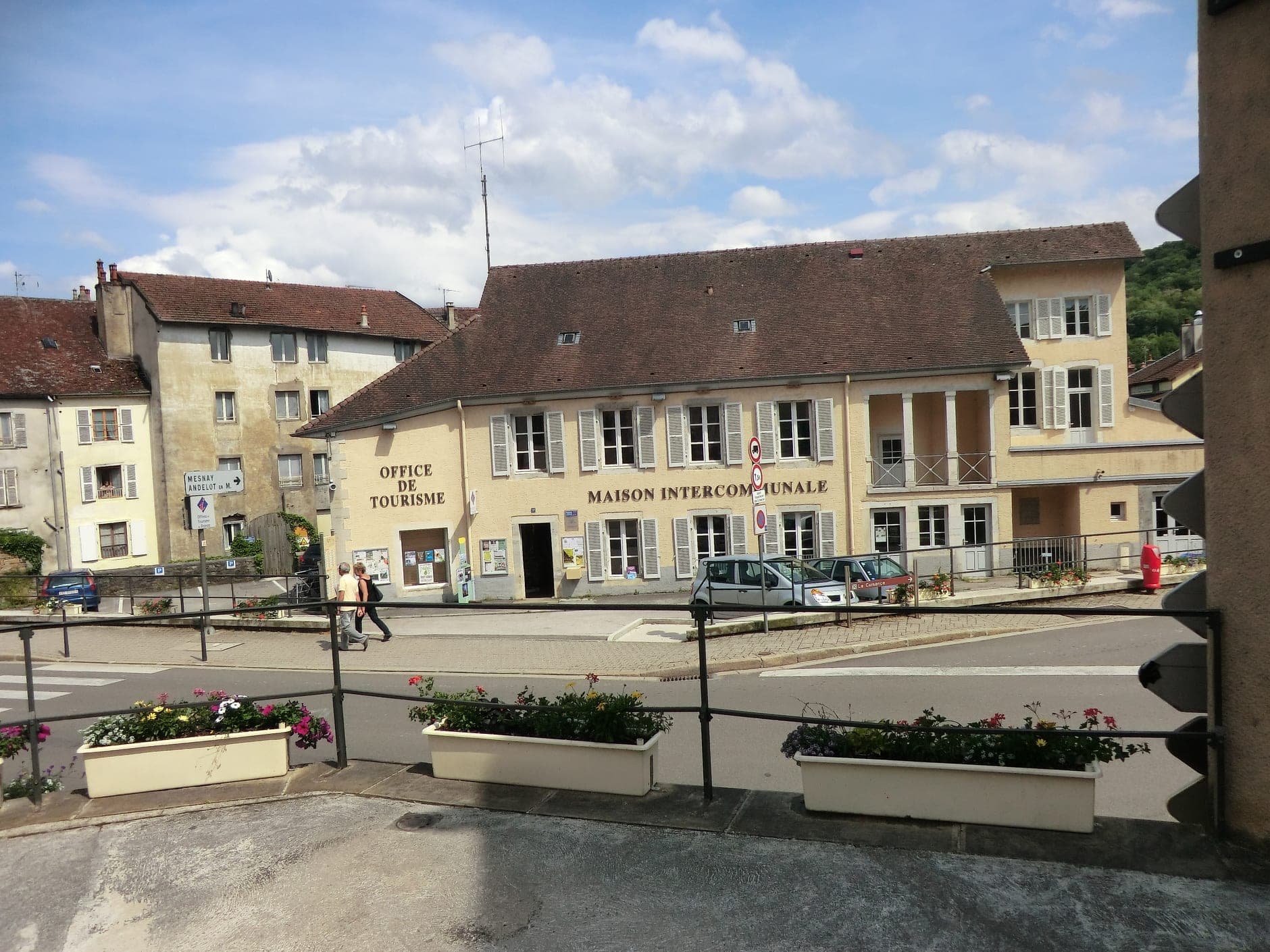
 Photo: Benoît Prieur / Wikimedia Commons
Arbois Wine Travel Guide Wine Region Guide
Vin Jaune, Savagnin, and Comte cheese. Why Arbois in the Jura is the wine lover's alternative to Burgundy — at half the price. Wineries, restaurants, and when to visit.
Where to Stay in Arbois
Make the most of your Arbois wine trip by staying in the heart of wine country. From luxurious vineyard estates to cozy B&Bs, find the perfect accommodation near world-class wineries.
- Hotels near top wineries
- Charming vineyard B&Bs
- Vacation rentals and villas
- Free cancellation on most bookings
Stay22
Compare Booking, Airbnb, Hotels.com and more in one search
Discover Arbois: A Wine Lover's Paradise in Jura, France
France produces wine in dozens of regions, but none of them do what the Jura does. While the rest of the country argues over terroir philosophies and grape varieties that have been studied for centuries, the Jura quietly makes wines that follow rules found nowhere else in the world. A white wine aged for over six years under a veil of yeast in a specially shaped bottle. A red so pale it looks like dark rosé. A sweet wine dried on straw mats until December. These are not curiosities or relics — they are the main event.
The Jura sits in eastern France, a narrow strip of vineyards pressed between the Burgundy plateau to the west and the Swiss border to the east. It is among France's smallest wine regions by production, yet it has attracted some of the country's most devoted wine drinkers, sommeliers, and natural wine producers. Understanding why requires knowing a little about where it is, what grows there, and what it makes.
Where is Arbois?
Arbois is the main wine town in the Jura department, part of the Bourgogne-Franche-Comté administrative region in eastern France. The Jura wine zone runs roughly 80 kilometres north to south, following the western foothills of the Jura mountain range at elevations between 250 and 400 metres. The town of Arbois sits at the northern end of this strip, about 100 kilometres east of Dijon and 45 kilometres south of Besançon.
The position matters for what grows here. The Jura sits far enough east to have a semi-continental climate — cold winters, warm summers with significant day-night temperature variation during the growing season. Rainfall is higher than in Burgundy. The soils shift between blue and grey Lias marls (rich in clay and limestone), red marls, and veins of black schist. The combination of these soil types, the altitude, and the continental climate produces wines with high natural acidity — essential for long ageing — and a minerality that is difficult to replicate elsewhere.
Arbois became France's first-ever AOC (Appellation d'Origine Contrôlée) in 1936, a fact locals are not shy about mentioning. Louis Pasteur, who discovered the role of yeast in fermentation, grew up in Arbois and maintained a vineyard there throughout his life. His work on wine oxidation, conducted largely in the Jura, was published in 1866. The region has a genuine scientific and historical claim to wine history that predates most other appellations.
The broader Jura wine region covers five AOCs: Arbois (the largest by volume), Château-Chalon (vin jaune only), L'Étoile, Crémant du Jura, and Côtes du Jura. Around 2,000 hectares are under vine — roughly one-tenth the size of Burgundy.
Towns and Villages
Arbois itself is a quaint town with cobblestone streets and colorful buildings. Nearby villages worth visiting include:
- Pupillin: Known as the world capital of Ploussard grape
- Poligny: Home to the famous Comté cheese
- Château-Chalon: Perched on a cliff, famous for its Vin Jaune
The Arbois Wine Trail — Route des Vins du Jura
The Route des Vins du Jura runs for roughly 80 kilometres from just south of Arbois to Lons-le-Saunier, passing through most of the region's significant wine villages. It is well-signposted and easy to follow by car. Some sections are accessible by bicycle, particularly around Arbois and the northern portion of the route.
Arbois is the natural starting point — the largest wine town on the route, with a market square lined with wine bars, restaurants, and the tasting room of Henri Maire. The Musée de la Vigne et du Vin d'Arbois (set in Pasteur's former family home at the edge of town) gives historical context before heading out into the vineyards.
Montigny-lès-Arsures is a few kilometres north of Arbois, accessible on a side loop. This compact village surrounded by red marl vineyards is Trousseau country — the terroir here for that variety is considered among the Jura's best. Lornet and the Puffeney estate are both based here.
Pupillin, a small village immediately south of Arbois, has aligned its entire identity with Poulsard. The village cooperative (Fruitière Vinicole de Pupillin) produces honest, affordable Poulsard worth tasting alongside the village's more celebrated independent producers.
Château-Chalon is arguably the most visually striking stop on the entire route. The village sits on a rocky promontory overlooking the vineyards below — the medieval fortifications are intact, the views across the surrounding plateau are long and clear. Only Savagnin grown on approved parcels around the village is entitled to the Château-Chalon AOC for vin jaune. Yields are subject to an annual tasting committee review: if the vintage is deemed insufficient, the AOC declassifies entirely to Côtes du Jura. This has happened several times, including in difficult years like 2012.
Voiteur, below Château-Chalon, and the town of Poligny (centre of Comté cheese production) sit along the middle section of the route. Poligny is surrounded by significant producer estates and is worth a stop both for cheese and wine.
Lons-le-Saunier at the southern end of the route is a larger town with less wine focus but useful as an overnight base if continuing south toward Bresse or the Rhône corridor.
Best Jura Producers to Visit
The Jura's wine zone is compact enough to visit multiple producers in a single day. Cellar door visits are common but require advance booking, especially for smaller domaines. Tasting fees are typically €10–25, sometimes reimbursed against a purchase. The list below covers a range from large visitor-friendly estates to smaller natural wine producers.
Henri Maire — Arbois
Henri Maire is the region's largest producer, with vineyards across multiple Jura appellations and a prominent presence in Arbois town itself (including the Château Montfort). The scale means consistency matters more than exception, but Henri Maire is a practical first port of call for visitors who want a comprehensive introduction to all Jura styles under one roof. Their visitor centre in Arbois town is accessible without prior booking during most of the year.
Domaine Rolet — Arbois
Rolet is a family estate with around 65 hectares of vines, making it one of the larger independent domaines in the Jura. They produce the full range of Jura styles — Poulsard, Trousseau, Savagnin, Chardonnay, vin jaune, vin de paille, and Crémant — with reliable quality across the board. It is a good choice for visitors who want breadth rather than depth from a single visit.
Domaine Jacques Puffeney — Montigny-lès-Arsures
Jacques Puffeney was known as the "Pope of Jura" — a winemaker of such quiet authority that his wines became benchmarks for the entire region over five decades. Puffeney retired in 2014 and sold his domaine to Stéphane Tissot (see below), but the estate continues under his name and philosophy. His Trousseau from Montigny-lès-Arsures parcels and his vin jaune remain reference points. Visiting the village of Montigny-lès-Arsures, a few kilometres north of Arbois, is worthwhile regardless: the compact parcels of red marl and limestone here produce some of the most individual wines in the entire appellation.
Stéphane Tissot (Domaine André & Mireille Tissot) — Arbois
Stéphane Tissot is the most internationally recognised producer in the Jura, and has been central to the region's rise in critical esteem over the past two decades. Working biodynamically across around 50 hectares, Tissot produces single-vineyard wines from named parcels — En Barberon, La Mailloche, Clos de la Tour de Curon among them — alongside the full range of regional styles including vin jaune, vin de paille, and a range of Crémant. His approach to Chardonnay, both ouillé and oxidative, has changed how the variety is understood in the region. Cellar door visits at the estate in Arbois are available by appointment.
Domaine de la Pinte — Arbois
La Pinte was among the first Jura estates to convert to certified organic farming, completing the transition in the 1990s, and is now biodynamic. The domaine covers around 32 hectares on the limestone and blue marl soils that produce some of Arbois' most mineral wines. Their Savagnin and vin jaune are consistently among the appellation's best, and the estate has a working visitor infrastructure that makes appointments relatively straightforward.
Frédéric Lornet — Montigny-lès-Arsures
Lornet works a small parcel of vines in and around Montigny-lès-Arsures with a focus on traditional Jura varieties in both oxidative and ouillé styles. His domaine is small enough that production is limited, but visits are possible by arrangement. The Trousseau from his Montigny parcels is particularly worth seeking out: it is one of the region's clearest demonstrations of how the red marl soils there translate into a particular kind of spiced, earthy red wine.
Jean-François Ganevat — Rotalier
Ganevat is the producer around whom the natural wine world has most enthusiastically organised itself in the Jura. Working from a small estate in Rotalier at the southern end of the wine route, he bottles an extraordinary number of single-parcel cuvées from old vines, managing a dizzying range of varieties and styles with precision and minimal intervention. Allocation is very limited — his wines are often easier to find in Tokyo or London than in Arbois itself — and cellar door sales are extremely restricted. That said, the approach and the wines have had a formative influence on how the entire region presents itself to the world, and visiting the area around Rotalier is worthwhile for the landscape and the concentration of quality producers nearby.
Château d'Arlay — Arlay
Château d'Arlay is one of the oldest working estates in the Jura, with records of wine production on the site dating back centuries. The château itself is open to visitors and sits above the village of Arlay near the southern end of the wine route. The estate produces a full range including Côtes du Jura whites and reds, vin jaune, and their proprietary "Corail" blend. The combination of the historic château, accessible visitor infrastructure, and genuine wine quality makes this one of the more straightforward visits in the region.
Domaine Berthet-Bondet — Château-Chalon
For vin jaune specifically, Berthet-Bondet is among the most consistent producers in the Château-Chalon AOC — the highest-status vin jaune appellation. The domaine sits within the village of Château-Chalon itself (see the section on the wine trail below) and produces Château-Chalon vin jaune alongside Côtes du Jura wines. Visits are by appointment and give access to the cellar where the voile-ageing barrels are kept — an instructive stop if understanding how vin jaune is made is a priority.
Accommodations
Arbois offers a range of accommodations to suit different budgets and preferences:
- Château de Germigney: Luxurious 4-star hotel with a Michelin-starred restaurant
- Hôtel des Cépages: Charming hotel in the town center, perfect for wine enthusiasts
- La Maison d'Eusébe: Cozy bed and breakfast in a renovated 16th-century building
- Camping de la Grange du Dîme: For those seeking a more rustic experience
Dining
Arbois is a gastronomic destination, offering excellent restaurants that pair local wines with regional specialties:
- Le Bistrot des Claquets: Traditional Jura cuisine with an extensive wine list
- La Balance Mets et Vins: Innovative dishes using local ingredients, perfect wine pairings
- Le Grapiot: Located in nearby Pupillin, known for its creative menu and Jura wine selection
- Restaurant Jean-Paul Jeunet: Michelin-starred restaurant offering gourmet Jura cuisine
Don't miss trying local specialties like Comté cheese, Morteau sausage, and chicken with vin jaune and morels.
Wine Shops & Bars
Arbois offers several excellent wine shops and bars for tasting and purchasing local wines:
- La Fruitière Vinicole d'Arbois: A cooperative wine shop featuring a wide selection of Jura wines
- Cave de la Reine Jeanne: Historic wine cellar offering tastings and sales of regional wines
- Le Nez Dans le Vert: Wine bar specializing in organic and biodynamic Jura wines
- La Cave du Comté: Combines wine tasting with local cheese pairings
Other Shops
While in Arbois, explore these local shops for regional specialties:
- Fromagerie Vagne: Artisanal cheese shop featuring Comté and other local cheeses
- La Maison du Comté: Dedicated to all things Comté, including tastings and educational exhibits
- Charcuterie Brelot: Traditional butcher shop offering Morteau sausage and other regional meats
- Arbois Tourisme: Tourist office with local products and souvenirs
Attractions
Beyond wine, Arbois and its surroundings offer various attractions:
- Maison Pasteur: Museum dedicated to Louis Pasteur, who lived and worked in Arbois
- Château Pécauld: Houses the Jura Wine Museum, showcasing the region's winemaking history
- Reculée des Planches: Stunning natural gorge with hiking trails and waterfalls
- Cascades du Hérisson: Series of picturesque waterfalls, perfect for a day trip
Events
Plan your visit around these wine-centric events in Arbois:
- Biou Festival (September): Traditional grape harvest celebration with parades and tastings
- Percée du Vin Jaune (February): Annual festival celebrating the release of new Vin Jaune vintages
- Arbois Wine Fair (July): Showcases local wines and producers
- Christmas Market (December): Features local wines, foods, and crafts
The Percée du Vin Jaune Festival
The Percée du Vin Jaune takes place on the first weekend of February each year in a different Jura wine village, rotating through the appellation annually. It is the region's most significant wine event and the moment when the newest legal vintage of vin jaune — the one that has completed its mandatory 6 years and 3 months of barrel ageing — is opened and released.
The festival is built around the public tapping of the first barrels of the new vintage. Producers pour across multiple outdoor stands in the host village. Attendance typically runs to tens of thousands of visitors across the weekend, drawn from across France and from wine-focused travellers from Switzerland, Germany, and beyond.
Practical logistics matter here. The host village — which has a population of perhaps a few hundred people — is overwhelmed, and accommodation within a 30-kilometre radius books up months in advance. Public transport connections to the host village are typically improved for the weekend but are still limited. Driving is common but requires a designated non-drinking driver or strict glass-count discipline.
Tickets to the festival (typically €20–30 including a tasting glass and a set number of pours) sell out quickly after release in autumn. The exact host village and ticket release date are announced on the festival's official website each September.
The Percée is not primarily aimed at connoisseurs — it is a popular, festive event. But the concentration of producers pouring in one place, the atmosphere of the winter village, and the genuine local pride in the vin jaune release make it one of the more unusual wine experiences available anywhere in France.
Jura Wine Grapes — The Unique Five
The Jura grows five main grape varieties. Two of them are found almost nowhere else in France. Together, they give the region a profile unlike any other French wine zone.
Savagnin
Savagnin is the intellectual centre of the Jura. Geneticists have established that it is a relative of Traminer (and thus a distant ancestor of Gewürztraminer), though it expresses itself very differently here — less aromatic, more austere, with high acidity and a natural affinity for oxidative ageing.
Savagnin is the only grape permitted in Château-Chalon AOC (France's most prestigious vin jaune appellation) and is the primary variety in vin jaune throughout the region. It also appears in "ouillé" (non-oxidative, regularly topped-up) versions that taste closer to a full-bodied, mineral white wine — more accessible than vin jaune, but still distinctly Jura.
Poulsard (Ploussard)
Poulsard — called Ploussard around the village of Pupillin, where it is considered particularly at home — is one of France's lightest red varieties. In the glass it can appear almost orange-red or deep rosé, with very low tannin, high acidity, and flavours that tend toward red fruits, rose petals, and earthy notes. It is a wine that looks fragile but ages with surprising coherence. The village of Pupillin, just south of Arbois, has made Poulsard its identity. Several top producers source their best examples from the red marl soils around the village.
Trousseau
Trousseau is the Jura's deeper, more structured red. Still relatively light by broader French standards, it has more tannin and colour than Poulsard, with dark cherry and peppery notes. DNA profiling has found Trousseau growing in Portugal (as Bastardo) and in parts of Spain, but the Jura remains its spiritual home. Producers like Jacques Puffeney elevated it to cult status through careful, minimal-intervention winemaking.
Chardonnay
Chardonnay is the most widely planted variety in the Jura and appears in two distinct styles: "ouillé" (oxidative influence minimal, fresh and mineral) and aged under the same voile (yeast veil) used for vin jaune. The latter style produces "vin jaune-like" Chardonnay that is not entitled to the vin jaune designation but shares some of its character. Côtes du Jura and Arbois Chardonnay in the ouillé style can be outstanding value for money — tighter and more mineral than many Burgundy equivalents.
Pinot Noir
Pinot Noir has a smaller presence in the Jura, grown mainly in the northern part of the appellation. It rarely achieves the complexity it reaches in Burgundy but contributes to some blended reds and rosés. A few producers make single-variety Jura Pinot Noir worth seeking out, particularly from cooler, higher-elevation parcels.
The Wines of Jura Explained
The Jura's wine styles range from sparkling to bone-dry to late-harvest sweet. The two that have no parallel elsewhere in France are vin jaune and vin de paille.
Vin Jaune — France's Most Unusual White Wine
Vin jaune (yellow wine) is the Jura's most singular creation. Made exclusively from Savagnin, it undergoes a minimum 6 years and 3 months of ageing in old barrels that are deliberately not topped up. As the wine evaporates, a film of yeast called voile (literally: veil) develops on the surface — similar to the flor yeast in Sherry production, though the wines taste nothing alike.
The voile protects the wine from full oxidation while simultaneously transforming it: vin jaune develops flavours of walnut, dried fruits, curry, turmeric, beeswax, and toasted hazelnuts. The colour turns deep gold-yellow, which gives the wine its name. Alcohol typically sits between 14% and 15%.
Vin jaune is sold exclusively in a 62-centilitre bottle called a clavelin — the volume representing what remains after evaporation losses during the mandatory ageing period. This makes pricing comparison with standard 75cl bottles slightly counterintuitive; a €30 clavelin is more expensive per litre than it appears.
The best examples are aged from the top vineyards of Château-Chalon and the best Arbois parcels. Serious vin jaune can be cellared for 50 years or more. Louis Pasteur's 1853 vin jaune was reportedly still drinking well over a century later.
Vin de Paille — The Sweet Rarity
Vin de paille (straw wine) is a sweet wine made by drying harvested grapes — traditionally on straw mats, now more often on wire racks or in wooden crates — for a minimum of six weeks, sometimes until December or January. The drying concentrates sugars dramatically. Fermentation is slow and can take months; residual sugar levels are very high.
The resulting wine is golden amber, intensely sweet, with flavours of dried apricot, honey, orange peel, fig, and baking spices. Alcohol typically reaches 15% or more. The clavelin-adjacent 37.5cl half-bottle format is common. Production volumes are tiny because yields per vine are very low and the process is labour-intensive. Vin de paille can age for decades.
Crémant du Jura
Crémant du Jura is the region's sparkling wine, made by traditional method (second fermentation in bottle, same as Champagne). It uses Chardonnay, Savagnin, Pinot Noir, and Poulsard in various combinations. Quality ranges from simple and fresh to genuinely complex, particularly from producers who apply the same care to their Crémant as they do to their still wines. At current pricing — typically half that of entry-level Champagne — it offers compelling value and is a practical reason to include a Jura wine stop on any wine tour planning itinerary.
L'Étoile Appellation
L'Étoile is a small AOC at the southern end of the Jura wine route, specialising in white wines and vin jaune from Chardonnay and Savagnin. The name comes from fossilised echinoderms (star-shaped marine fossils) found in the distinctive blue-grey marl soils. L'Étoile wines tend toward precision and mineral austerity. The appellation also produces a well-regarded Crémant. With only a handful of producers working within its boundaries, L'Étoile remains relatively obscure even among Jura enthusiasts.
Côtes du Jura
Côtes du Jura is the broad regional appellation covering the full north-south extent of the wine zone. It includes reds, whites, rosés, Crémant, vin jaune, and vin de paille from any of the five permitted varieties. For visitors, Côtes du Jura labels from reliable producers represent the best entry point — the styles are accessible, the pricing is generally fair, and the range of what is available under this designation gives a good survey of what the region can do.
- Macvin du Jura: Fortified wine blending grape must and marc
Jura Food and Wine Pairings
The Jura's food culture and its wine culture are so thoroughly integrated that understanding the region's pairings is practical — not academic.
Comté + Vin Jaune
This is the classic pairing of the region, possibly of all of eastern France. Comté, the great mountain cheese of Franche-Comté, is made from the milk of Montbéliarde cows grazed on the high pastures above the wine zone. An aged Comté (24 or 36 months) develops flavours of toasted nuts, crystallised milk solids, and dried herbs — a near-perfect mirror of the walnut and dried fruit character of vin jaune. The pairing is coherent in the same way a Sauternes-Roquefort pairing is coherent: high-acid sweetness against fat and salt; here, high-acid oxidative complexity against high-fat aged cheese. It works on every level.
Morteau Sausage + Poulsard
Morteau sausage — the smoked pork sausage from the high Jura valleys above Pontarlier — needs a wine with enough acidity to cut through the smoke and fat but light enough not to overwhelm a food that is, fundamentally, about restraint and cold-weather comfort. Poulsard is that wine. Its pale colour signals low tannin; its acidity and red-fruit freshness carry through the richness of the sausage without fighting it.
Coq au Vin Jaune
The Jura's signature dish uses the region's wine as its cooking medium. The vin jaune oxidative character — the walnut and dried fruit notes — deepens dramatically through reduction, creating a sauce of considerable complexity. Morel mushrooms are the traditional accompaniment, grown in the forests above the wine zone in spring. The dish is worth eating at any of Arbois' serious restaurants; Jean-Paul Jeunet's version is the reference.
Bresse Chicken + Savagnin
Poulet de Bresse — arguably France's most celebrated chicken, raised in the flatlands west of Lons-le-Saunier, fed on grain and dairy — is often prepared in cream sauces that demand a wine with both body and acidity. Savagnin in its ouillé (non-oxidative) style, with its distinctive mineral tension and weight, handles cream-based preparations in the same way that Burgundy Chardonnay does, but with a more austere, mineral character that some find more satisfying alongside the chicken's fatty richness.
Drives & Walks
Explore Arbois-Jura's scenic landscapes through picturesque drives and walks. The region offers breathtaking views of vineyards, forests, and mountains.
Scenic Drives
- Route des Vins du Jura: Winding road through charming wine villages
- Belvédère des Quatre Lacs: Panoramic drive overlooking four lakes
Walking Trails
- Sentier des Vignes: Easy walk through Arbois vineyards
- Cascades du Hérisson: Hike featuring stunning waterfalls
Itineraries
Plan your Arbois-Jura adventure with these curated itineraries, designed to showcase the best of the region's wine and culture.
3-Day Wine Explorer
- Day 1: Arbois town exploration and winery visits
- Day 2: Château-Chalon and Vin Jaune tasting
- Day 3: Scenic drive along Route des Vins du Jura
5-Day Jura Immersion
- Days 1-2: Arbois and surrounding wineries
- Day 3: Hike in Cascades du Hérisson
- Day 4: Explore Château-Chalon and L'Étoile
- Day 5: Comté cheese tour and final tastings
Planning Your Visit to Arbois
Getting There
Arbois has no direct rail access from Paris. The most practical approach is:
- By TGV + car: Take the TGV from Paris Gare de Lyon to Dole (around 1h20 — Dole is on the Paris-Basel TGV line), then hire a car for the 25-minute drive south to Arbois. Alternatively, TGV to Besançon (direct from Paris in under 2 hours) and drive south from there, approximately 45 minutes.
- By car from Dijon: Arbois is around 70 kilometres east of Dijon via the N5, approximately 50–60 minutes. This makes Burgundy + Jura a natural pairing for a wine trip — the contrast between the two regions could not be greater.
- From Switzerland: Geneva is around 2 hours by car; Lausanne around 1h45. The Jura wine route sits close to the Swiss border and is a logical add-on to any Geneva or Basel trip.
When to Go
The Jura's wine calendar has two clear peaks:
February — Percée du Vin Jaune: The region's biggest annual wine event (described in full below). The main festivities fall on the first weekend of February. Book accommodation months in advance.
September–October — Harvest: The vineyards are active, the light in the Jura foothills in autumn is excellent, and producers are often more available for informal conversation after the intensity of harvest. Some estates hold harvest open days.
The summer months (June–August) are perfectly pleasant for the wine trail, with longer daylight hours and better weather for driving the vineyard roads. Avoid August if possible — many small producers take annual leave and close for two to four weeks.
Where to Stay
Arbois town itself is the most practical base, with a small but reasonable selection of hotels and chambres d'hôtes. The Jean-Paul Jeunet hotel and restaurant in the centre is the region's most celebrated dining address and has rooms. Smaller chambres d'hôtes scattered through the vineyard villages offer more immersive stays, though transport without a car becomes impractical.
Wine Bars in Arbois Town
Arbois has several wine bars and cave shops where tasting across producers is possible without advance appointments. The Caveau de Bacchus on the central place is one of the oldest and stocks a broad selection of regional wines by the glass. Le Causeur, a more recent addition, takes a natural wine focus and represents the newer generation of Jura producers well.
Best Time to Visit
The ideal times to visit Arbois-Jura are:
- Spring (April-June): Mild weather, fewer crowds
- Fall (September-November): Harvest season, vibrant foliage
Summer offers warm temperatures but can be busy. Winter is suitable for skiing enthusiasts.
Sustainability Efforts
Arbois-Jura embraces eco-friendly winemaking practices:
- Organic viticulture: Many producers use organic or biodynamic methods
- Water conservation: Efficient irrigation systems in vineyards
- Biodiversity: Preservation of local ecosystems and wildlife
Look for certified organic wines and eco-friendly accommodations during your visit.
Language Tips
While English is spoken in tourist areas, knowing some French enhances your experience:
- Wine-related phrases:"Je voudrais goûter ce vin" (I would like to taste this wine)
- "Quelle est la spécialité de la région?" (What is the region's specialty?)
Basic greetings: "Bonjour" (Hello), "Merci" (Thank you), "S'il vous plaît" (Please)
Further Resources
Enhance your Arbois-Jura wine experience with these resources:
- Official tourism website: Jura Tourism
- Wine route information: Jura Wines
- Local events calendar: Arbois Tourism
Consider purchasing a comprehensive Jura wine guide book for in-depth information on producers and vintages.
FAQs
Q: What is the best introduction to Jura wine for someone who has never tried it?
A: Start with a Côtes du Jura Chardonnay in the ouillé (non-oxidative) style — it is minerally, fresh, and straightforward. Then try a Poulsard for the experience of a proper pale red. Once those make sense, move to a Savagnin under the voile influence and finally, when you are ready, a proper vin jaune. Jumping straight to vin jaune without context can be jarring; the nutty, oxidative character is a genuine surprise if you are expecting a conventional white wine.
Q: Is vin jaune the same as Sherry?
A: No, though both involve a yeast veil (flor) during barrel ageing and both develop oxidative characters. Sherry is made in Andalusia from Palomino Fino grapes, is fortified with neutral grape spirit to between 15% and 22% alcohol, and uses a solera blending system. Vin jaune is made from Savagnin in the Jura, is unfortified (alcohol develops naturally, typically 14–15%), and is a single-vintage wine aged in old oak for a minimum of 6 years and 3 months. They are related only in the yeast-veil mechanism; the grapes, terroir, and production philosophy are entirely different.
Q: What is the 62cl clavelin bottle and why does vin jaune come in it?
A: The clavelin is the mandatory bottle format for vin jaune. It holds exactly 62 centilitres — the volume that, on average, remains from one litre of Savagnin after 6+ years of evaporation loss during barrel ageing. Using the clavelin makes the economics of vin jaune production visible in the bottle itself: you are paying for what survived the ageing period. The format was standardised by AOC regulation and is now legally required for all vin jaune production.
Q: How long does vin jaune age?
A: Vin jaune from good producers in strong vintages can age for 50 years or more. The high natural acidity, the alcoholic strength, and the protective effect of the previous oxidative ageing all contribute to exceptional longevity. Older vintages from producers like Puffeney and Tissot trade at auction prices. For practical purposes, most vin jaune from current producers is best approached between 5 and 20 years after release, though drinking it earlier is not a mistake — the wine will evolve but is not inaccessible young.
Q: When is the best time to visit Arbois and the Jura wine route?
A: Two periods stand out. The Percée du Vin Jaune in early February is the single most concentrated wine experience the region offers, but requires months of advance planning and accommodation booking. The September–October period is quieter, more beautiful (autumn colours in the Jura foothills are striking), and producers are often more present and available after harvest. Summer is straightforward for travel but some small estates close for August holidays.
Q: What does Poulsard taste like, and why does it look so pale?
A: Poulsard is genetically predisposed to thin skins with very little pigment. The resulting wine is often so pale — translucent red-orange or deep rosé in colour — that it can be mistaken for a dark rosé. Flavour-wise, expect red cherry, rose hip, and earthy notes with high acidity and almost no tannin. The lightness is the point: Poulsard is prized precisely because it is delicate. It is also highly sensitive to vintage conditions; cool years produce particularly fine, precise examples.
Q: How do I get to Arbois without a car?
A: The most practical option is TGV to Dole followed by a taxi or hired car. Some regional bus services connect Dole and Arbois on a limited schedule, but the timetables are not designed for wine tourists and connections are infrequent. Once in Arbois town, the central part of the wine route is cyclable, but reaching producers like Ganevat in Rotalier (at the southern end of the route) without a car is genuinely difficult. For serious exploration of the region, a hired car is effectively necessary.
Q: Is Jura wine expensive?
A: Village-level Côtes du Jura and Arbois wines in the ouillé style are typically priced comparably to mid-range Burgundy — well-made bottles in the €15–30 range are normal. Vin jaune from top producers runs from around €35–50 for a clavelin (62cl), with older vintages and top domaines considerably higher. Vin de paille is expensive because production volumes are tiny — €40–80 for a 37.5cl half-bottle is typical. Crémant du Jura and entry-level Chardonnay remain among the better value options in eastern France.
Planning tools & local info
Best Time to Visit Arbois
July-September
September-November
Low — one of France's least-visited wine regions
Average Monthly High (°C)
Moderate (1000mm/year)Wines of Arbois
Key grape varieties and wine styles produced in the region
Primary Grape Varieties
Wine Styles
Food & Dining in Arbois
We’re still researching restaurants and must-try dishes for Arbois. In the meantime, browse wine-country dining across France.
Where to stay in the vineyard
Sleep among the vines — our pick of vineyard hotels and estate stays in France.
View France vineyard hotelsUpcoming Wine Festivals in France
See all festivalsHidden Gems Nearby
Discover more hidden gemsDomaine de la Bongran
WTG PickBurgundy, France
A Burgundy rebel who makes Chardonnay on their own terms, far from the tourist trail of Beaune and Puligny.
Chardonnay
Domaine Huet
WTG PickLoire Valley, France
World-class Chenin Blanc with no queues, no hype, just pure Loire magic in a village setting.
Chenin Blanc
Mas de Daumas Gassac
Languedoc, France
Grand cru quality at a fraction of Bordeaux prices, in a wild, beautiful valley most tourists never find.
Cabernet Sauvignon · Rosé · White Blend
Continue Exploring
Did You Know?
1936
Arbois became one of France's very first AOCs
6¼years
minimum cask-ageing for vin jaune, under a veil of yeast
62cl
the clavelin bottle for vin jaune — sized for what time 'takes'
Pasteur
Louis Pasteur studied fermentation on his family's Arbois vines
Ready to visit Arbois?
Build your personalised day-by-day itinerary — choose your travel style and trip length, get accommodation and tour picks per day, and email it to yourself to take along.
Plan Your Visit to Arbois
This page contains affiliate links. We may earn a commission at no extra cost to you.