7 Days on the German Wine Route — Mosel, Rhine & Pfalz
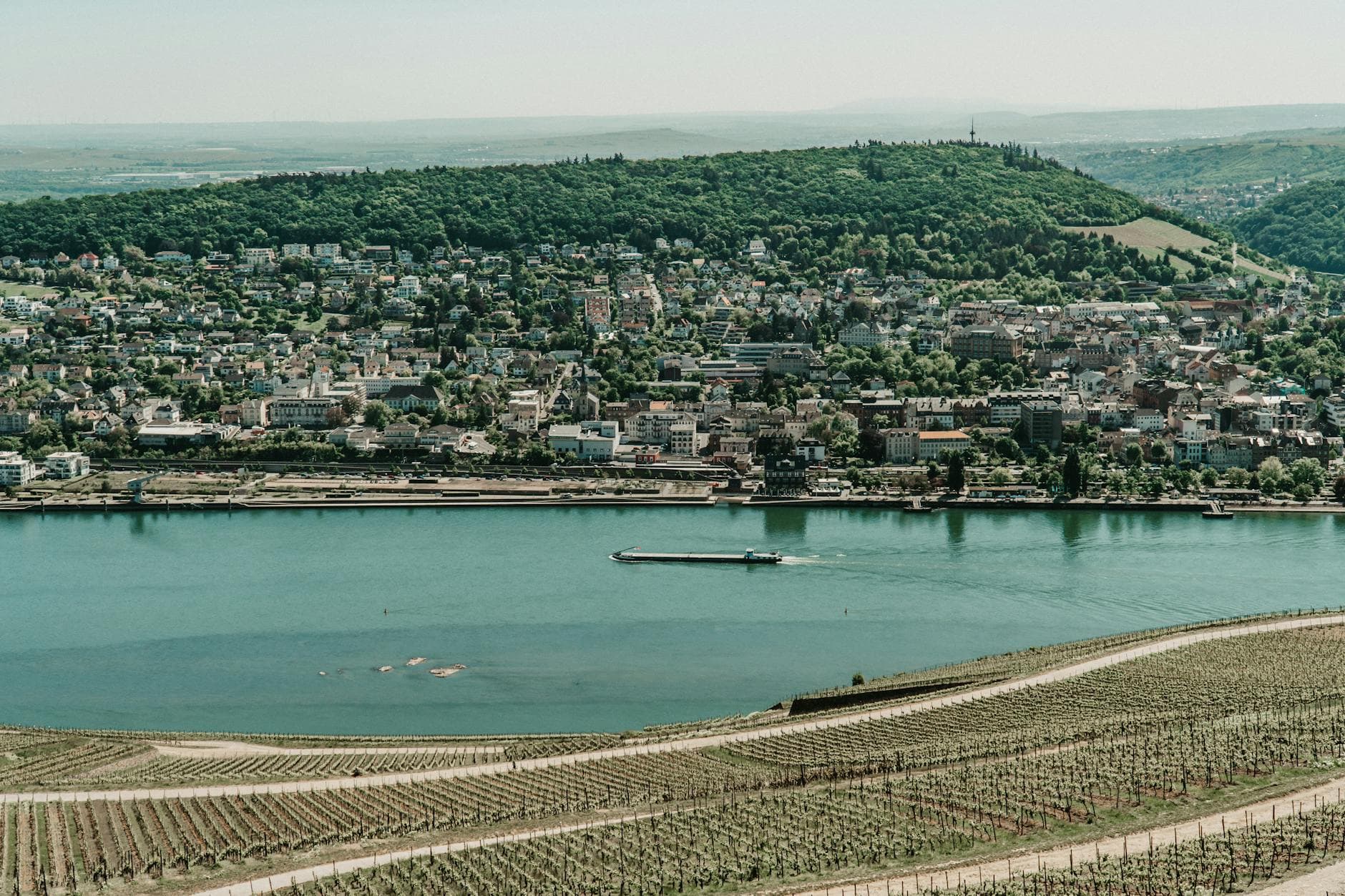
Germany's wine regions unfold along river valleys through some of Europe's most dramatic scenery. This 7-day route hits the Mosel, Rheingau, and Pfalz.
German Riesling is the most misunderstood great wine on earth. For decades it was dismissed as sweet or cheap; the reality is that Germany produces dry (Trocken and Spätlese Trocken), off-dry, and nobly sweet Rieslings of extraordinary age-worthiness — bottles from the 1990s are still improving, and the great GG (Grosses Gewächs) dry Rieslings from premier sites rank with the world's finest white wines.
This 7-day itinerary follows the river valleys that define German wine: the Rheingau (south-facing Rhine slopes), the Mosel (the steepest slate vineyards in the world), the Nahe (volcanic rock soils), and the Pfalz (Germany's warmest and most southerly major region). Budget: €130/day mid-range. Accommodation €60–110/night. Tastings €10–25.
Day 1 — Arrive Frankfurt, Drive to Rheingau

Frankfurt Airport (FRA) is the most convenient arrival point — just 45 minutes from the Rheingau. Rent a car and drive west along the A66. The Rheingau occupies a south-facing bend in the Rhine where the river runs east-west rather than north-south — the resulting solar exposure on the riverside slopes produces Germany's most powerful and structured Rieslings.
Schloss Johannisberg above Geisenheim is the oldest continuously producing Riesling estate in the world — records go back to 1130. The hilltop castle winery overlooks the entire Rhine valley and the guided tour (€12) explains the historic Spätlese discovery of 1775 (how late-harvest wines were accidentally discovered). The current wines are more reliable at the Gelblack and Grünlack (mid-range) levels than the flagship Schloss Johannisberg label. Check into a guesthouse in Rüdesheim or Geisenheim (€65–95/night).
Day 2 — Rheingau: Robert Weil and Georg Breuer
Weingut Robert Weil in Kiedrich is one of the Rheingau's most celebrated estates — the four Auslese, Beerenauslese, and Trockenbeerenauslese sweet wines produced in exceptional years are among Germany's most expensive, but their dry Kiedricher Gräfenberg Riesling Spätlese and the entry-level estate Riesling are excellent value at €15–25. Book a guided tasting (€20–30).
Georg Breuer in Rüdesheim produces benchmark Berg Schlossberg Riesling from the estate's steepest riverside slopes. The estate is committed to the VDP classification system (Germany's unofficial quality hierarchy) and makes an excellent starting point for understanding the GG concept. The village of Rüdesheim has a famous (if touristy) wine street (Drosselgasse) — avoid it in favour of the terrace restaurant at Hotel Jagdschloss Niederwald above the town.
Evening option: take the Niederwalddenkmal cable car for Rhine panorama views, then return to the old town for wine-by-the-glass at Weinstube Drosselhof.
Day 3 — Drive the Mosel: Arrive Bernkastel-Kues
Drive west from the Rheingau along the B42 (Rhine Valley Road) to Koblenz (1.5 hours), then southwest along the Mosel River to Bernkastel-Kues (another 1.5 hours). This drive is one of Germany's most scenic: the Mosel winds through 200km of hairpin bends, with medieval castle ruins above every second bend and south-facing slate vineyards at impossibly steep angles (60-degree gradients in places).
Bernkastel-Kues is the Mosel's most visited wine town — the half-timbered marketplace is perfectly preserved and the estates cluster along the river bank and on the slopes above. Check in to a riverside hotel (€70–100/night) and spend the afternoon walking. The Bernkasteler Doctor vineyard above the town is Germany's most famous — and its steep slate and sandstone soils produce Riesling of piercing minerality.
Tastings in Bernkastel: Weingut Studert-Prüm on the promenade has a relaxed cellar door and affordable Spätlese. For a more formal experience, Weingut Joh. Jos. Prüm in Wehlen (5 minutes south) is one of the Mosel's most revered estates — the Wehlener Sonnenuhr Riesling Auslesen are legendary. Book well ahead.
Day 4 — Mosel: Dr. Loosen, Egon Müller, and the Villages

Dr. Loosen in Bernkastel is both one of the Mosel's finest producers and its best ambassador abroad — proprietor Ernst Loosen has done more than anyone to explain German Riesling to international markets. The estate owns vines in several of the Mosel's greatest sites including Wehlener Sonnenuhr, Ürziger Würzgarten (Urzig Spice Garden), and Erdener Prälat. Tastings are available by appointment; the entry-level "L" wines are sold at the winery shop.
Drive upriver to Egon Müller-Scharzhof in Wiltingen on the Saar tributary — arguably Germany's most prestigious Riesling producer. The Scharzhofberger vineyard produces wines of glacial purity and extraordinary longevity. Auction prices rival Grand Cru Burgundy. Cellar visits are rarely offered but the wines can be tasted at the estate shop.
Afternoon: drive the Mittelmosel villages of Graach, Zeltingen, and Ürzig — all with riverside half-timbered towns and south-facing vineyards overhead. Ürzig has the most dramatic setting: the Würzgarten (Spice Garden) vineyard is carved from red volcanic rock above the river bend.
Day 5 — Drive via Cochem, Nahe Valley
Drive downstream from Bernkastel to Cochem (45 minutes) for lunch — the castle above the bend in the river is one of Germany's most photographed and the old town below has excellent wine bars and restaurants. The Weinstube at Hotel Alte Thorschenke has been serving Mosel wines since 1332.
Drive south on the A61 to the Nahe Valley (1.5 hours). The Nahe is less visited than Mosel or Rheingau but produces Rieslings of extraordinary diversity — the volcanic, porphyry, and slate soils in the Bad Kreuznach area create wines with more mineral complexity and texture than anywhere else in Germany.
Dönnhoff in Oberhausen is the Nahe's benchmark estate — the Niederhäuser Hermannshöhle and Norheimer Dellchen GG Rieslings are among Germany's finest dry whites. Book a tasting well ahead (€20–30). Check into accommodation in Bad Kreuznach or Nahe valley guesthouse (€60–90/night).
Day 6 — Nahe and Pfalz: Emrich-Schönleber
Emrich-Schönleber in Monzingen makes Riesling from the Frühlingsplätzchen and Halenberg sites — biodynamically farmed vines on blue-and-grey slate producing wines of textured, mineral intensity. The estate represents the Nahe at its most distinctive and least compromised.
Drive south to the Pfalz (45 minutes via the A61) — Germany's warmest and second-largest wine region. The Haardt mountains protect the eastern plains from Atlantic weather, creating a quasi-Mediterranean microclimate where fig trees, lemons, and almond blossoms appear in February. The German Wine Route (Deutsche Weinstraße) runs 85km from Bockenheim to Schweigen — one of Germany's great scenic drives.
Bassermann-Jordan in Deidesheim is the Pfalz's most historically significant estate — the cellar contains German wine history in its archives. The village of Deidesheim itself is one of the country's most charming wine towns: half-timbered houses, excellent restaurants, and multiple cellar doors within 200 metres of the marketplace. Stay in Deidesheim (€75–110/night).
Day 7 — Pfalz: Müller-Catoir and Return Frankfurt

Müller-Catoir in Haardt is one of the Pfalz's most individual producers — their Rieslaner (a rare Riesling × Silvaner cross), Scheurebe, and Muskateller alongside the flagship Rieslings demonstrate the Pfalz's variety of expression. The estate allows walk-in tastings at their shop.
Drive north on the A6/A5 back to Frankfurt (2.5 hours) for afternoon or evening departure. The Bürklin-Wolf estate in Wachenheim makes a convenient final stop en route — their Drei Grosses Lagen Rieslings from the Kirchenstück, Gaisböhl, and Pechstein sites are among the Pfalz's greatest. The estate shop sells library vintages.
Budget Breakdown (7 Days, Mid-Range)
- Accommodation: €60–110/night (€420–770 total)
- Wine tastings: €10–25 per visit, 2–3 per day (€140–525 total)
- Meals: €30–55/day (€210–385 total)
- Car rental + fuel + tolls: €350–550 for 7 days
- Total: approx €1,120–2,230 per person
Practical Tips
- German wine labels are complex. Key terms: Trocken (dry), Halbtrocken (off-dry), Spätlese (late harvest), GG (Grosses Gewächs = premier cru equivalent).
- Most family estates are closed Monday and have limited hours. Call or email ahead.
- The Mosel's best villages for dining: Bernkastel-Kues, Traben-Trarbach, Cochem.
- Wine festivals: Rüdesheimer Weinfest (August), Deidesheimer Weinlese (September).
- Full regional guides: Mosel | Pfalz
Wines of 7 Days on the German Wine Route — Mosel, Rhine & Pfalz
Key grape varieties and wine styles produced in the region
Primary Grape Varieties
Wine Styles
Ready to visit Germany?
Build your personalised day-by-day itinerary — choose your travel style and trip length, get accommodation and tour picks per day, and email it to yourself to take along.
Upcoming Wine Festivals in Germany
See all festivalsHidden Gems Nearby
Discover more hidden gemsWeingut Oekonomierat Rebholz
WTG PickPfalz, Germany
Pfalz's most intellectually rigorous producer — dry Riesling and Pinot Noir Grosses Gewachs from the Sudliche Weinstrasse that challenge Mosel and Burgundy benchmarks.
Riesling · Pinot Noir · Chardonnay
Weingut von Winning
Pfalz, Germany
Historic Deidesheim estate making some of Germany's most precise single-vineyard Rieslings — the grand Weingut building and gardens are an event in themselves.
Riesling · Pinot Gris · Pinot Noir
Weingut Juliusspital
WTG PickFranken, Germany
A 500-year-old charitable wine foundation beneath the streets of Wurzburg — the baroque cellar tour is one of Germany's most extraordinary wine experiences.
Silvaner · Riesling · Pinot Noir
Book Your Germany Wine Country Stay
Compare hotels, vineyard B&Bs and rentals across Booking, Airbnb and more in one search.
Compare stays near the vineyardsStay22
Plan Your 7 Days on the German Wine Route — Mosel, Rhine & Pfalz Trip
Estimate your 7 Days on the German Wine Route — Mosel, Rhine & Pfalz trip cost
Budget calculator with accommodation, food, wine, and transport estimates.
Try itCompare 7 Days on the German Wine Route — Mosel, Rhine & Pfalz with other regions
Side-by-side comparison of cost, climate, wine styles, and more.
Try itWhen to visit 7 Days on the German Wine Route — Mosel, Rhine & Pfalz
Harvest dates, peak season, and the best months for wine travel.
Try itThis page contains affiliate links. We may earn a commission at no extra cost to you.