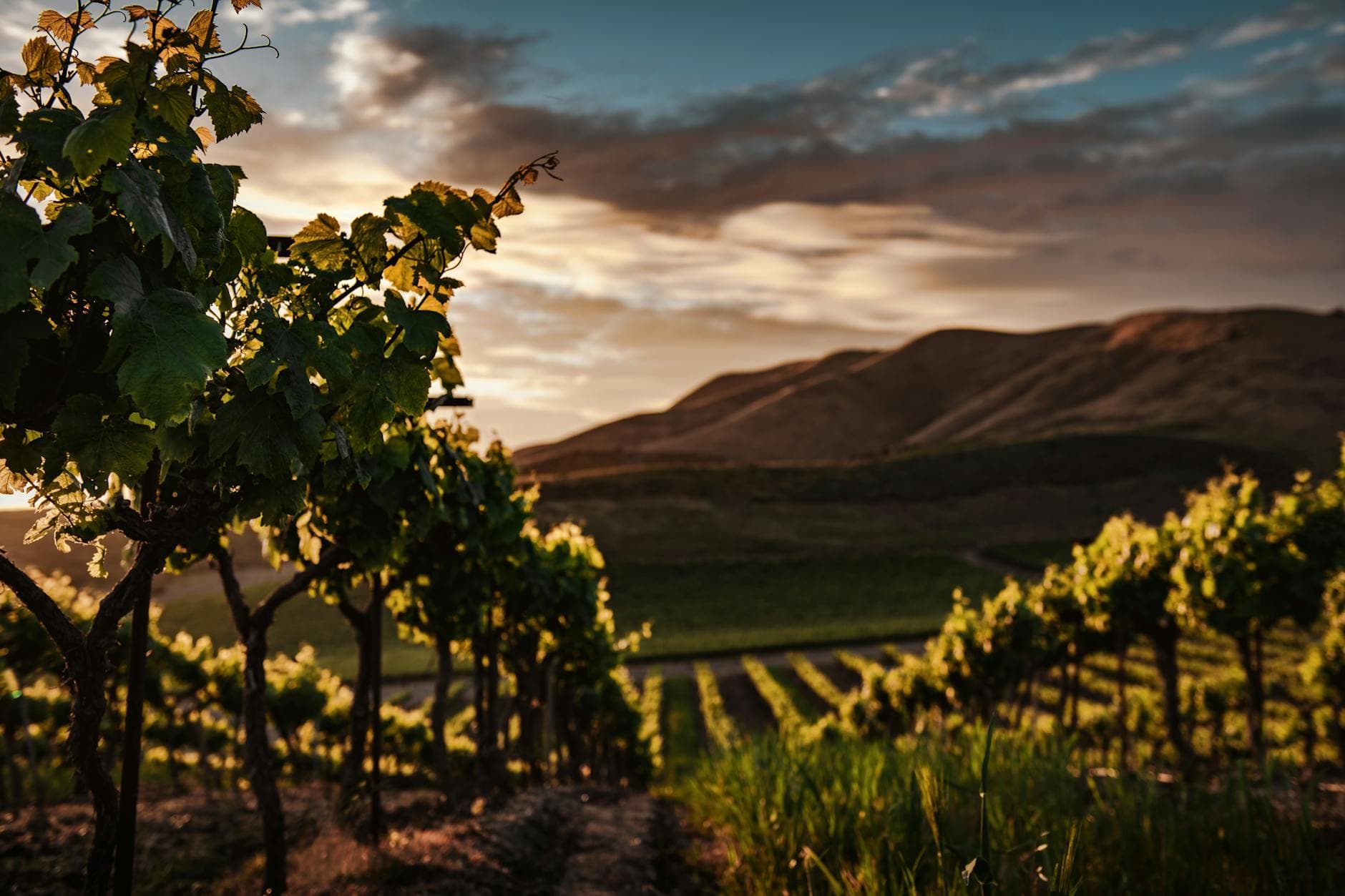
Willamette Valley Wine Region: Guide to Oregon's Pinot Noir Country
Willamette Valley Wine Region: Guide to Oregon's Pinot Noir Country
The Willamette Valley runs more than 150 miles south from Portland to Eugene, and it contains over 700 wineries producing some of the most interesting Pinot Noir and Chardonnay made outside of Burgundy. The comparison is not accidental — when Oregon's wine pioneers arrived in the 1960s, they were looking specifically for a climate where Burgundy varieties could thrive, and they found it.
The valley sits at 45–47° north latitude, the same band as Burgundy's Côte d'Or. Marine air flows in from the Pacific through gaps in the Coast Range, keeping summers cool and extending the growing season. Winters are wet and mild rather than cold and severe. The soils are diverse — ancient marine sediment, volcanic basalt, windblown loess — which creates meaningfully different wine characters across a relatively short distance.
The founding story matters here because it explains the character of the region. In 1965, David Lett of Eyrie Vineyards planted the first Pinot Noir vines in the Willamette Valley. He was largely dismissed — California's wine establishment thought Oregon too cold and wet for serious wine. When Eyrie's 1975 Pinot Noir placed in the top ten at a 1979 Paris tasting organized by Burgundy négociant Robert Drouhin, the dismissal became more complicated. Drouhin staged a rematch in 1980, and Eyrie again placed second — behind one of Drouhin's own wines, but ahead of most Burgundy. The following year, Drouhin's daughter Véronique came to Oregon to look for land. The family bought in Dundee Hills in 1987.
That sequence — skepticism, vindication, Burgundian endorsement — gives the Willamette Valley its particular self-confidence. The region knows what it is and is no longer trying to prove anything.
Willamette Valley Sub-AVAs
The Willamette Valley is divided into six main sub-appellations, each with distinct soils and microclimate characteristics that show up in the wines. Understanding them helps you navigate a wine list or choose which part of the valley to explore.
Chehalem Mountains
The largest sub-AVA in the valley, covering about 67,000 acres north of Dundee. The soils are notably diverse — you find volcanic basalt, wind-deposited loess (silt), and marine sediment all within a few miles of each other. That diversity means Chehalem Mountains wines don't have a single signature style; instead, the best producers lean into whichever soil type their specific vineyard sits on. Adelsheim and Rex Hill are the best-known producers here. Adelsheim has been farming since 1971 and produces some of the valley's most consistent Chardonnay alongside its Pinot Noirs.
Ribbon Ridge
A small sub-AVA within Chehalem Mountains, covering only about 1,000 acres. Ribbon Ridge is a low ridge of ancient marine basalt entirely surrounded by the larger appellation, and the basaltic soils give the wines a different character — darker fruit, more structured, with a mineral quality that distinguishes them from loess-based Pinots grown nearby. Beaux Frères (founded with involvement from wine critic Robert Parker's brother-in-law Michael Etzel) is the most famous producer here. Brick House Wines, farmed organically since the 1990s, is equally compelling.
Dundee Hills
The most recognizable name in Oregon wine, the Dundee Hills form a series of rolling hills above the town of Dundee. The key is Jory soil — a deep red clay with volcanic origins (basalt weathered over millions of years) that drains well while retaining enough moisture for vines to function without irrigation through dry summers. Jory gives Dundee Hills Pinots their characteristic combination of dark fruit, earthy depth, and structural backbone. Archery Summit, Ponzi, Sokol Blosser, and Domaine Drouhin Oregon are all located here. Domaine Drouhin's Laurène Pinot Noir — named for Robert Drouhin's granddaughter — consistently ranks among Oregon's finest.
McMinnville
Named for the city that serves as the valley's commercial center, the McMinnville AVA sits on the western edge of the valley with both basaltic and seafloor sedimentary soils. The marine influence is stronger here, making it one of the cooler sub-AVAs and extending ripening later into autumn. That longer hang time can add aromatic complexity, though it also increases the risk of harvest rain. McMinnville is home to Eyrie Vineyards — the historical starting point for the whole Oregon wine story.
Yamhill-Carlton
The Yamhill-Carlton AVA occupies the northwest corner of the valley, with marine sedimentary soils predominating — ancient seabed uplifted and exposed. These soils are warmer and drier than the volcanic soils of Dundee Hills, which produces wines with a somewhat different personality: more openly fruity, with softer tannins. Penner-Ash, ADEA Wine Company, and Soter Vineyards are based here. Soter's Mineral Springs Ranch, a biodynamic estate, produces wines that have built a serious reputation.
Eola-Amity Hills
The Eola-Amity Hills run along the western edge of the valley, and they benefit from one of the Willamette Valley's most distinctive geographic features: the Van Duzer Corridor, a gap in the Coast Range that funnels cool Pacific air into the valley every afternoon. On summer days, temperatures in the Eola-Amity Hills can drop 10–15°F in the hour after the corridor winds arrive. This dramatic cooling preserves acidity and aromatic compounds in the grapes, producing wines with noticeably bright, lifted characters. Bethel Heights, Cristom, and Evening Land Vineyards all farm here. Cristom's named single-vineyard Pinots — Louise, Marjorie, Jessie, and Eileen — are benchmarks for what Eola-Amity Pinot can do.
Upper Willamette Valley
The southernmost portion of the valley, around Eugene, is warmer and receives less marine influence than the northern sub-AVAs. Wine production here is smaller and less established, but several producers are demonstrating that the area can ripen varieties that struggle further north. The region is still finding its identity.
Best Wineries to Visit in Willamette Valley
The Willamette Valley is much more visitor-friendly than Burgundy — tasting rooms are built for the public, most are open daily during the season, and the culture is welcoming rather than gatekept. That said, the best small producers still require reservations, and the most allocated wines sell through mailing lists before reaching retail.
Domaine Drouhin Oregon (Dundee Hills)
When Robert Drouhin's family decided to make wine in Oregon, they built a proper Burgundian-style winery: four stories carved into the hillside using gravity flow, no pumping. Winemaker Véronique Drouhin-Boss has made the wine since the first vintage in 1988. The estate Pinot Noir is reliable and serious; the single-vineyard Laurène is outstanding. The tasting room at the top of the winery gives views over the Dundee Hills, and the visit feels considered rather than commercial. Appointments required for estate visits; the tasting room is walk-in friendly.
Ponzi Vineyards (Beaverton/Sherwood)
Dick and Nancy Ponzi planted their first vines in 1970, making them one of Oregon's founding producers. The family still runs the estate, now with second-generation Luisa Ponzi as winemaker. Beyond Pinot Noir, Ponzi's Pinot Gris deserves attention — it is one of the more serious versions made in the state. The tasting room in Sherwood is attractive and organized, with both seated and walk-in tasting options.
Eyrie Vineyards (McMinnville)
The historical anchor of Oregon wine. David Lett founded Eyrie in 1965; his son Jason now makes the wine. The wines are made in a deliberately non-interventionist style — minimal additions, native yeasts, long élevage — that can produce wines needing bottle age before they open up. The Original Vines Pinot Noir, made from vines planted in the 1960s, is a genuinely distinctive wine with no equivalent in the valley. The tasting room is in downtown McMinnville, not at the vineyard, which makes it easily accessible.
Archery Summit (Dundee Hills)
The estate focuses exclusively on Pinot Noir from Dundee Hills Jory soils, and the lineup is organized around a clear hierarchy: estate-level wines, then premier cru designations, then single-vineyard bottlings. The Premier Cuvée and Premier Cru collections express the Jory soil character reliably. The winery itself, carved into the hillside, runs appointment-based cave tours that give access to the barrel aging facility and a tasting of the full range.
Rex Hill (Chehalem Mountains)
A=Rex Hill has been producing Pinot Noir since 1982, making it one of the longer-established estates in the valley. The winery is housed in a converted nut-processing facility on Highway 99W — a practical building that opens up into an unexpectedly pleasant tasting room. The wines cover Chehalem Mountains fruit primarily, with some sourcing from other sub-AVAs. Good for first-time valley visitors who want an accessible, informative experience without the intensity of a small producer appointment.
Adelsheim Vineyard (Chehalem Mountains)
David Adelsheim founded the estate in 1971 and spent decades advocating for Oregon wine at an industry level as well as producing it. The winery is now run by a broader team, but the quality commitment remains. Adelsheim's Chardonnay — especially the Caitlin's Reserve from Chehalem Mountains — is one of Oregon's best: restrained, textured, and age-worthy. The Pinot Noirs are also well made. The tasting room is professionally organized with a good range of options.
Cristom Vineyards (Eola-Amity Hills)
Tom Gerrie and Steve Doerner (formerly of Calera Wine Company in California) established Cristom in 1992. Doerner's winemaking philosophy is Burgundian in its attention to individual vineyard expression, and the named single-vineyard Pinots — Louise, Marjorie, Jessie, Eileen — each have distinct characters that reflect different blocks on the estate. The Eola-Amity Hills site also means these wines show the bright acidity that the Van Duzer Corridor promotes. Appointments required; the estate sits on a ridge with good views across the valley.
Bethel Heights Vineyard (Eola-Amity Hills)
The twin brothers Ted and Terry Casteel planted the vineyard in 1977 on Jory soils in the Eola-Amity Hills. The estate is farmed organically and biodynamically. Bethel Heights makes both a reliable estate Pinot Noir and several single-block designates. The hilltop site offers some of the valley's better views, and the tasting experience is relaxed and unhurried. A solid choice for a half-day visit combining a tasting with a walk through the vineyard.
Sokol Blosser (Dundee Hills)
Founded in 1971, Sokol Blosser is one of Oregon's original estates and one of the most visitor-friendly. The winery achieved B Corporation certification for sustainable practices and runs a well-organized tasting room with indoor and outdoor seating. The Evolution line (multi-varietal, non-vintage) is useful for introducing non-wine-geeks to the winery; the Dundee Hills Estate Pinot Noirs are where the serious quality sits. No appointment needed.
Beaux Frères (Ribbon Ridge)
Michael Etzel established Beaux Frères in the early 1990s, with Robert Parker (his brother-in-law) becoming a partner. Parker's enthusiasm for the wines helped build the reputation quickly, though the wines have always stood on their own. The Beaux Frères Vineyard Pinot Noir, from the home estate on Ribbon Ridge basalt, is consistently one of the valley's most distinctive wines. Allocation-heavy, mailing list-driven, but the tasting room is open to visitors with reservations.
Brick House Wines (Ribbon Ridge)
Doug Tunnell farmed organically from the start — unusual in 1990 when he planted — and converted to biodynamic certification in subsequent years. The estate is small, the wines are estate-grown exclusively, and the production is limited. Ribbon Ridge basalt soils give the wines a particular structure and mineral quality. Tasting by appointment, and the visits are personal and informative rather than corporate.
Evening Land Vineyards (Eola-Amity Hills)
Evening Land farms the Seven Springs Vineyard in the Eola-Amity Hills, a site that has attracted attention from winemakers including Dominique Lafon of Domaine des Comtes Lafon in Meursault — another Burgundian connection. The estate produces both Pinot Noir and Chardonnay from Jory soils, with the Chardonnay particularly notable for its restraint and precision. The Summum Pinot Noir is the flagship single-vineyard wine.
A to Z Wineworks (multiple sourcing)
A to Z sources fruit from across Oregon — Willamette Valley and beyond — and produces wine at significant volume. The Pinot Noir and Rosé of Pinot Noir are reliable, affordable, and widely available. For someone exploring Oregon wine without wanting to navigate the reservation system of top estates, A to Z represents an honest entry point. No single-estate experience here, but a useful introduction to Oregon Pinot character at accessible prices.
Willamette Valley Vineyards (Salem/Turner)
One of the few publicly traded wineries in America, Willamette Valley Vineyards built a large, purpose-built facility south of Salem that handles substantial visitor traffic efficiently. The tasting room has multiple tiers of experience, from walk-in tastings to reserve flights. Quality covers a wide range — the entry wines are value-priced, the estate-level Pinots and Chardonnays are more serious. Good option if you are traveling with mixed-interest companions who need good facilities rather than a boutique experience.
ROCO Winery (Chehalem Mountains)
Rollin Soles spent years as winemaker at Argyle Winery (Oregon's most respected sparkling wine producer) before founding ROCO with his wife Corby in 2002. The estate produces both still Pinot Noir and Chardonnay and sparkling wines — the Brut RMS Blanc de Blancs is among Oregon's better traditional-method sparkling wines. The tasting room is in the Chehalem Mountains with a relaxed atmosphere.
Willamette Valley vs Napa vs Sonoma
Choosing between Oregon and California's major wine regions depends almost entirely on what you want to drink.
Willamette Valley is the right choice if your interest is Pinot Noir and Chardonnay in a cooler-climate, more Burgundian style. The wines tend toward red fruit characters (cherry, raspberry, cranberry), high acidity, earthy complexity, and moderate alcohol — typically 12.5–13.5% ABV. The winemaking culture is smaller-scale and more hands-off than most of California. Tasting fees are generally lower ($20–40), crowds are thinner outside summer weekends, and the atmosphere is more agricultural than resort-like.
Napa Valley is the right choice for Cabernet Sauvignon, Merlot, and other Bordeaux varieties. The climate is warmer, the wines are fuller-bodied with more obvious oak and higher alcohol (often 14.5–15.5%). The experience is more polished and more expensive — tasting fees at prestige estates run $75–150+ per person. If big, structured red wines are what you love, Napa delivers something Oregon cannot.
Sonoma County (particularly Russian River Valley) sits between the two in character: cooler than Napa, producing excellent Pinot Noir and Chardonnay alongside Zinfandel and Cabernet. Russian River Pinot Noirs tend to have more body than Willamette Valley versions — richer fruit, deeper colour, more Californian in style. Sonoma is closer to San Francisco (45 minutes to Healdsburg), which makes it logistically easier if you are based in the Bay Area.
The honest answer for Burgundy lovers: the Willamette Valley wins on similarity of style and the quality of the top producers. If you want to understand what Oregon wine is doing with Pinot Noir, there is no better place to start.
Wine Tour Itineraries
One Day from Portland
A single day is enough to visit three or four wineries in the Dundee Hills, the closest quality sub-AVA to Portland. Take Highway 99W south through Newberg and Dundee (around 45 minutes in light traffic). Visit Sokol Blosser or Rex Hill without appointments, add a reservation at Archery Summit or Domaine Drouhin for a more structured experience. Finish with lunch or dinner in McMinnville (a 20-minute drive west), which has a concentration of good restaurants around its downtown.
Two-Day Weekend
Day 1: Dundee Hills and Chehalem Mountains. Start with Ponzi or Adelsheim in the morning, move to Dundee Hills for lunch and afternoon tastings at Domaine Drouhin and Sokol Blosser. Stay overnight in Newberg or McMinnville.
Day 2: Eola-Amity Hills. Drive south to the hills and visit Cristom and Bethel Heights — both require appointments but are worth the planning. Finish the afternoon at Evening Land. Return to Portland via Salem.
Three-Day Exploration
Add a dedicated day for Ribbon Ridge and Yamhill-Carlton — Beaux Frères, Brick House, and a Yamhill-Carlton producer like Soter or Penner-Ash. This third day takes you off the main wine highway into quieter back roads where the vineyards feel less trafficked and the appointments more personal. If you are interested in sparkling wine, include ROCO in the Chehalem Mountains.
Getting to Willamette Valley
From Portland: The Dundee Hills and main tasting corridor along Highway 99W are 35–50 minutes from downtown Portland by car — under an hour from Portland International Airport in normal traffic. The highway connects Newberg, Dundee, Lafayette, and McMinnville in a straightforward line.
Highway 99W is the primary wine route. It runs through the heart of the valley, passing vineyard entrances and tasting room signs along most of its length. It is slower than the I-5 interstate but much more interesting — plan extra time on weekend afternoons when traffic through Newberg can back up.
Designated driver or shuttle: There is no Lyft or Uber service in the Willamette Valley wine country proper (outside of McMinnville and Newberg towns). If you are visiting multiple wineries and tasting at each, you need either a designated driver or a wine tour shuttle. Several companies in Portland and McMinnville offer organized day tours; booking at least a few days ahead is advisable in summer.
Bicycles: The flat terrain around Dundee and Carlton makes cycling between wineries genuinely feasible. Several operators rent bikes from McMinnville; the Yamhill Valley Scenic Bikeway is a marked route connecting tasting rooms.
Best Time to Visit
Harvest (mid-September to mid-October) is when the valley is most alive. Picking crews move through the vineyards, gondolas of grapes wait outside winery loading docks, and the cellars smell of fermenting juice. Winemakers are focused and sometimes less available than at other times of year, but the energy is worth experiencing. Late September is usually the sweet spot: Pinot Noir harvest is underway, weather is often warm and dry, and the vineyards look their best.
International Pinot Noir Celebration takes place every year in late July or early August at Linfield University in McMinnville. The three-day event brings together Pinot producers from around the world — Burgundy, New Zealand, Germany, California, Oregon — for seminars, tastings, and dinners. It is by-invitation and ticketed, but worth pursuing for serious wine travelers; details on the IPNC website.
Thanksgiving weekend in November has become a valley-wide open house: most wineries release their newest wines and offer complimentary or discounted tastings over the four-day period. It is one of the busiest times of year — book accommodation months ahead — but also one of the most accessible ways to taste a wide range in a short time.
Spring (April–June) is the quietest and in some ways the most pleasant: the vineyards are budding, the valley is green from winter rains, and most wineries are open for appointments without the summer crowds. Weather is variable — rain is possible — but days with sun are genuinely beautiful.
Practical Tips
Tasting fees run $20–50 per person at most estates. Large walk-in facilities like Sokol Blosser and Willamette Valley Vineyards charge toward the lower end of this range; smaller appointment-based producers often charge more and apply the fee toward purchases.
Reservations: Beaux Frères, Cristom, Bethel Heights, and Evening Land all require them; check individual websites. For major négociant-style operations (A to Z, King Estate), walk-ins are generally welcome during opening hours.
Buying wine: The Willamette Valley has a direct-to-consumer culture — many producers sell wine at the tasting room at prices equivalent to or below retail, and you can often access allocations of wines not available outside the mailing list. If you taste something exceptional, ask whether you can purchase it and how to get on their list.
Accommodation: McMinnville is the most convenient base — centrally located, with a concentration of independent restaurants and accommodation ranging from the historic Hotel Oregon to boutique bed-and-breakfasts in the surrounding countryside. Newberg has the Allison Inn & Spa, the valley's most polished luxury accommodation, with its own vineyard and tasting room. Smaller vacation rentals throughout the valley are worth considering if you plan multiple days.
Food: McMinnville's downtown has an unusually good restaurant scene for a town its size. Nick's Italian Café has been a wine-country institution since 1977. The Joel Palmer House in Dayton specializes in local mushrooms paired with Oregon wine. The Dundee Bistro (Ponzi family) in Dundee offers a more casual option for lunch between tastings.
FAQ
What is the Willamette Valley known for?
Primarily Pinot Noir. The valley produces about 70% of Oregon's wine, and Pinot Noir accounts for roughly 60% of valley plantings. Chardonnay and Pinot Gris are also significant, and sparkling wine production has grown steadily. The valley's reputation rests on its ability to produce Pinot Noir with the kind of savory complexity, natural acidity, and site expression usually associated with Burgundy.
Is Willamette Valley wine country worth visiting?
Yes, with the caveat that the experience differs significantly from Napa Valley. There are no grand château gate experiences, no velvet-roped celebrity chef restaurants at every turn. The scale is more human — farm stands, family wineries, small-town restaurants. For people who want to focus on wine rather than spectacle, that is a feature, not a limitation.
How do I get to Willamette Valley from Portland?
By car on Highway 99W (the scenic route, 45–60 minutes to Dundee), or via I-5 south to Highway 99W west. There is no direct wine-country transit from Portland. If you are visiting without a car, book a tour shuttle from Portland — several operators run half-day and full-day valley tours.
What is the best wine in Willamette Valley?
No single answer: the "best" wine depends on the vintage, the producer, and what you are looking for. Among the consistently cited top producers: Cristom (single-vineyard Pinots from Eola-Amity Hills), Beaux Frères (Ribbon Ridge basalt), Domaine Drouhin Oregon (Laurène), Eyrie (Original Vines), and Evening Land (Seven Springs). All have waiting lists or allocation systems. For great wine without the allocation challenge, Bethel Heights, Sokol Blosser, and Adelsheim offer consistent quality that is more readily purchased.
How does Oregon Pinot Noir differ from California Pinot Noir?
Oregon Pinot — particularly from the Willamette Valley — tends to be lighter in body, higher in acidity, lower in alcohol, and more focused on savory and earthy notes than most California Pinot. California Pinot (especially from Sonoma's Russian River Valley) often shows richer fruit, more body, and a riper profile. Neither is superior — they suit different palates and different food pairings. Oregon works well with duck, salmon, and mushroom-based dishes; California Pinot handles richer preparations more comfortably.
What should I eat in McMinnville?
Dungeness crab and Pacific salmon show up on local menus throughout the season. Oregon hazelnuts, Tillamook cheese, and Walla Walla onions all appear regularly. Pinot Noir pairs particularly well with salmon — the pairing is a local cliché for good reason.
Can I visit on a budget?
Yes. Tasting fees are generally lower than Napa. Many producers offer a free or reduced flight if you buy a bottle. The larger walk-in tasting rooms (Willamette Valley Vineyards, A to Z in McMinnville) have accessible pricing. Staying in a rental house outside town and cooking local produce is cheaper than valley resort hotels. A two-day trip without luxury accommodation is manageable on a modest wine-travel budget.
How far apart are the sub-AVAs?
The main tasting corridor — from Chehalem Mountains through Dundee Hills to McMinnville — covers about 25 miles and can be navigated in a morning by car. Eola-Amity Hills is a 20-minute drive south from McMinnville. Ribbon Ridge is tucked into the Chehalem Mountains, close to the Chehalem Mountains tasting rooms. You can realistically visit two or three sub-AVAs in a day without excessive driving, though you will spend more time in each if you slow down and take the back roads.
Related guides: Best Wineries in California | Where to Stay in Willamette Valley | Where to Stay in Oregon Wine Country | Willamette Valley Vineyard Map


Wines of Willamette Valley Wine Region: Guide to Oregon's Pinot Noir Country
Key grape varieties and wine styles produced in the region
Primary Grape Varieties
Wine Styles
Ready to visit Willamette Valley?
Build your personalised day-by-day itinerary — choose your travel style and trip length, get accommodation and tour picks per day, and email it to yourself to take along.
Upcoming Wine Festivals in United States
See all festivalsHidden Gems Nearby
Discover more hidden gemsMontinore Estate
Willamette Valley, United States
America's largest Demeter-certified biodynamic estate, hiding in plain sight with Pinot Noir that punches way above its price.
Pinot Noir · Pinot Gris · Riesling
Ravines Wine Cellars
WTG PickFinger Lakes, United States
A French-trained winemaker producing America's most underrated Rieslings on a glacial lake that most wine lovers have never visited.
Riesling · Cabernet Franc · Pinot Noir
Barboursville Vineyards
Virginia, United States
Thomas Jefferson's vision of Virginia wine fulfilled — world-class Bordeaux blends and Italian varieties on a historic plantation most oenophiles overlook.
Bordeaux Blend · Vermentino · Nebbiolo
Book Your Willamette Valley Wine Country Stay
Compare hotels, vineyard B&Bs and rentals across Booking, Airbnb and more in one search.
Compare stays near the vineyardsStay22
Plan Your Willamette Valley Wine Region: Guide to Oregon's Pinot Noir Country Trip
Estimate your Willamette Valley Wine Region: Guide to Oregon's Pinot Noir Country trip cost
Budget calculator with accommodation, food, wine, and transport estimates.
Try itCompare Willamette Valley Wine Region: Guide to Oregon's Pinot Noir Country with other regions
Side-by-side comparison of cost, climate, wine styles, and more.
Try itWhen to visit Willamette Valley Wine Region: Guide to Oregon's Pinot Noir Country
Harvest dates, peak season, and the best months for wine travel.
Try itThis page contains affiliate links. We may earn a commission at no extra cost to you.