Burgundy Wine Region: Complete Guide to Wineries, Appellations & Wine Tours
Burgundy Wine Region: Complete Guide to Wineries, Appellations & Wine Tours
Burgundy sits roughly halfway between Paris and Lyon, running south from Dijon along the A6 motorway. It is a small region by French standards — about 29,000 hectares of vines — yet it sets the global reference point for two grape varieties: Pinot Noir and Chardonnay. When winemakers in Oregon, New Zealand, or South Africa talk about what they are aiming for, they usually mean Burgundy.
The region's organizing principle is the climat — a precisely defined plot of land with its own soil, drainage, slope, and microclimate. UNESCO recognized 1,247 individual climats when it granted Burgundy World Heritage status in 2015. These plots sit within a four-tier quality hierarchy: regional appellations at the base, then village-level, then premier cru, then grand cru at the top. A bottle labeled "Gevrey-Chambertin Premier Cru Les Cazetiers" tells you the village (Gevrey-Chambertin), the tier (premier cru), and the specific climat (Les Cazetiers). No grape variety appears on the label — you are expected to know that red Burgundy is Pinot Noir and white Burgundy is Chardonnay.
That system, layered onto 2,000 years of viticulture, explains why Burgundy is both maddening and magnificent. Getting to grips with it takes time, but even a single well-chosen bottle makes the effort worthwhile.
Burgundy's Five Wine Regions
Burgundy is not one continuous wine zone — it is a collection of sub-regions spread across about 200 kilometres from north to south.
Chablis
Chablis sits in the far north, closer to Paris (180km) than to Beaune. It produces only white wine from Chardonnay, and its character is unlike anything else in Burgundy: lean, high-acid, mineral, with almost no oak influence in the entry-level bottlings. The soil is Kimmeridgian limestone, a type named after a village in Dorset, England, where the same seabed geology appears. It was literally a seabed 150 million years ago, and you can find fossilised oyster shells in the clay.
There are seven Chablis Grand Crus, all on a single south-facing slope east of town: Blanchot, Bougros, Les Clos, Grenouilles, Preuses, Valmur, and Vaudésir. Among the premier crus, Montée de Tonnerre and Fourchaume are consistently the best, showing more body than standard Chablis but keeping that distinctive salty, almost flinty quality.
Côte de Nuits
The Côte de Nuits runs from Dijon south to Nuits-Saint-Georges, roughly 20 kilometres. This is the heartland of red Burgundy. The villages here — Gevrey-Chambertin, Morey-Saint-Denis, Chambolle-Musigny, Vougeot, Vosne-Romanée, Nuits-Saint-Georges — read like a list of the most expensive wine postcodes on earth.
Gevrey-Chambertin has more grand crus than any other village: nine in total, with Chambertin and Chambertin Clos de Bèze at the top. Napoleon famously insisted on Chambertin at his table, reportedly diluting it with water, which says more about his hydration habits than his wine taste.
Vosne-Romanée contains Romanée-Conti — a 1.8-hectare plot that produces around 6,000 bottles per year and commands auction prices north of €15,000 a bottle. Romanée-Conti, along with La Tâche, Richebourg, Romanée-Saint-Vivant, Grands Échézeaux, and Échézeaux, constitute the portfolio of Domaine de la Romanée-Conti (DRC). No other single estate has such concentration of grand crus in one village.
Chambolle-Musigny produces perhaps the most elegant Pinot Noirs in the Côte — the soil has more limestone here, which gives the wines a floral, delicate structure. Musigny and Bonnes Mares are the two grand crus.
Clos Vougeot is a 50-hectare walled vineyard — a single grand cru climat — with around 80 different owners. Quality varies dramatically across those 80 domaines; the bottom of the slope (clay-heavy, more water-retentive) tends to produce coarser wine than the upslope sections near the château.
Côte de Beaune
The Côte de Beaune begins south of Nuits-Saint-Georges and runs through to Santenay. It produces both red and white wine of serious quality.
On the red side: Aloxe-Corton is home to Corton (the only red grand cru in the Côte de Beaune), Pommard produces powerful, tannic Pinots — Rugiens and Épenots are the top premier crus — while Volnay makes wines of a more silky, Chambolle-like character.
The whites are where the Côte de Beaune truly dominates. Meursault, Puligny-Montrachet, and Chassagne-Montrachet form a triangle of exceptional Chardonnay villages. Meursault is richest and most overtly nutty and creamy; Puligny is more precise and mineral; Chassagne spans both styles and also makes good red Burgundy.
Le Montrachet — a single 8-hectare vineyard split between Puligny and Chassagne — is considered the world's greatest white wine site. A bottle of Domaine de la Romanée-Conti Montrachet or Domaine Leflaive Montrachet, when you can find one, costs €2,000 or more. The surrounding premier crus — Chevalier-Montrachet, Bâtard-Montrachet, Bienvenues-Bâtard-Montrachet — are more accessible but still exceptional.
Corton-Charlemagne is the other important white grand cru, sitting on the hill above Aloxe-Corton. The legend holds that Charlemagne planted white grapes here because his wife complained his red wine stained his beard.
Côte Chalonnaise
South of the Côte de Beaune, the vineyards become more scattered and the appellation names less famous — but quality is genuinely good and prices are considerably lower. Mercurey produces solid red Burgundy from Pinot Noir. Givry is similarly reliable. Rully makes both red and white, and also produces good sparkling Crémant de Bourgogne. Montagny is a white-only appellation producing Chardonnay with more body than Chablis but less complexity than the Côte de Beaune. For value-seeking Burgundy lovers, the Côte Chalonnaise deserves more attention than it usually gets.
Mâconnais
The Mâconnais is the southernmost Burgundy sub-region, and it is where the region transitions from Burgundy to the very different world of Beaujolais. The landscape is dramatic — limestone cliffs, the village of Vergisson, the distinctive rock of Solutré. The wines are almost exclusively white Chardonnay.
Pouilly-Fuissé is the flagship appellation, producing rich, mineral whites from the clay-limestone soils around the villages of Fuissé, Solutré, Pouilly, Vergisson, and Chaintré. Premier cru classifications were introduced in Pouilly-Fuissé in 2020, a first for the Mâconnais. Saint-Véran and Viré-Clessé are reliable alternatives at lower prices. The entry-level Mâcon-Villages category covers a large area and ranges from thin and dilute to genuinely good, depending on the producer.
Best Wineries to Visit in Burgundy
Burgundy is not an easy region for casual visitors. Many of the best producers are tiny family domaines that sell their wine by allocation to négociants and loyal customers before a single bottle reaches the export market. Showing up at the door of a famous domaine without an appointment will get you nowhere. That said, there is a structured route through Burgundy that gives serious wine travellers access to excellent producers.
Domaine de la Romanée-Conti (Vosne-Romanée)
DRC does not offer public visits or tastings. The estate is privately held by the Leroy and de Villaine families, and access is restricted to journalists, distributors, and a handful of long-standing customers. But the vineyard itself — Romanée-Conti, the 1.8-hectare plot on the slope of Vosne-Romanée — is freely accessible. You can walk to it, stand at the stone cross at its edge, and look at the rows of old vines that produce the most discussed wine on earth. The cross marks the plot's boundary and is a standard pilgrimage point for wine tourists.

Maison Louis Jadot (Beaune)
Jadot is one of Burgundy's most important négociants, meaning it sources grapes and wine from across the region in addition to owning its own estate vineyards. Quality is consistently reliable across the range, and Jadot operates a proper visitor center in Beaune, making it one of the most accessible introductions to Burgundy for first-time visitors. Tastings cover both the négociant range and the estate wines, including their Côte de Beaune premiers crus.
Drouhin (Beaune)
Maison Joseph Drouhin is another top-tier négociant with deep roots in Beaune. The Drouhin family also owns Domaine Drouhin Oregon in the Willamette Valley, which makes for an interesting comparative conversation during a tasting. Their Beaune Clos des Mouches — a premier cru they own outright — is one of the most consistent wines in Burgundy, available in both red and white. Tours of the historic cellars, some running under the Beaune ramparts, are bookable.
Bouchard Père & Fils (Beaune)
One of Burgundy's oldest négociants, founded in 1731, Bouchard Père & Fils operates from a medieval château in Beaune and owns substantial grand cru holdings. The cellars hold over 10 million bottles and are genuinely impressive to walk through. The visitor program is well organized, with guided tastings across a range that spans village appellations to grand crus including Chevalier-Montrachet and Chambertin.
Château de Meursault (Meursault)
The château itself is a 14th-century estate in the heart of Meursault, and it runs one of Burgundy's most visitor-friendly tasting programs: you take a self-guided tour through the historic cellars and barrel rooms, then taste through a range of village and premier cru Meursaults in an atmosphere that feels both prestigious and relaxed. The wines are solidly made — not the cutting edge of Meursault, but a reliable and enjoyable experience.
Domaine Faiveley (Nuits-Saint-Georges)
Faiveley is a family-owned estate and négociant that produces wines across the Côte de Nuits and Côte de Beaune. Their Latricières-Chambertin is one of the better values among the Gevrey grand crus, and their Nuits-Saint-Georges premier cru holdings are extensive. The domaine has become more visitor-oriented in recent years. Appointments are required but can be arranged through their website.
Domaine Leflaive (Puligny-Montrachet)
The late Anne-Claude Leflaive converted this estate to biodynamic viticulture in the 1990s, and the domaine now defines what Puligny-Montrachet should taste like. The wines — Puligny village, three premier crus (Pucelles, Combettes, Folatières), and grand crus Chevalier-Montrachet and Bâtard-Montrachet — are allocated globally and sell for significant sums. There is a tasting program, but it requires advance planning. This is not a walk-in destination; contact the domaine months ahead.
Jean-Marc Roulot (Meursault)
Roulot makes wines that serious Burgundy collectors chase obsessively. The domaine is small, the allocations tiny, and demand far exceeds supply. That said, Roulot does offer tastings by appointment — but book at least six months ahead, and accept that availability depends on vintage production levels. The village and premier cru Meursaults (Charmes, Perrières, Tessons, Tillets, Luchets) are among the best expressions of the village in any given year.
Clos de Tart (Morey-Saint-Denis)
A monopole grand cru — meaning the entire 7.5-hectare climat is owned by a single producer. Clos de Tart was owned by the Mommessin family for decades before being sold to François Pinault (also owner of Château Latour) in 2017. Quality has always been high; winemaking has become even more precise since the acquisition. The walled vineyard and cellar are accessible by appointment, and the visits are well structured.
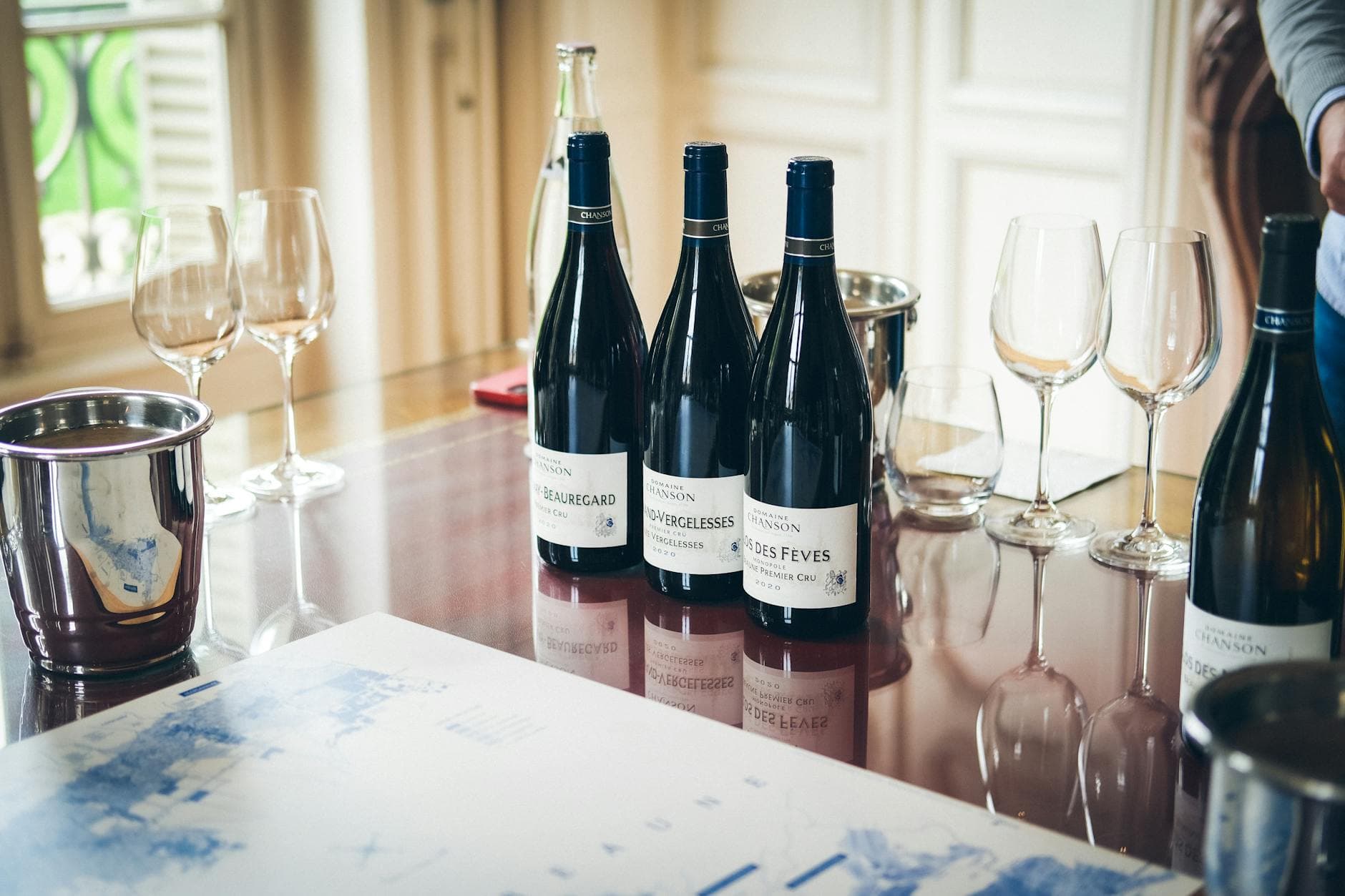
Domaine Chanson (Beaune)
Chanson offers one of the most historically interesting visits in Beaune — the cellars are built into the 15th-century ramparts of the old town, and the buildings are genuinely atmospheric. The estate produces wines across multiple appellations and runs regular tasting sessions. It is one of the better choices if you want a well-organized, English-friendly introduction to both red and white Burgundy without the pressure of trying to access a tiny cult producer.
Maison Verget (Solutré, Mâconnais)
Jean-Marie Guffens founded Verget in 1990 specifically to source and bottle white Burgundy from across the region — Chablis, Mâcon, and the Côte de Beaune — with a focus on sites that overdeliver relative to their appellation. The wines represent some of the best value in white Burgundy, particularly the Chablis range. Verget is based in Solutré, near the famous cliff, and tastings are available by appointment.
Olivier Leflaive (Puligny-Montrachet)
A cousin of the Leflaive domaine, Olivier Leflaive operates as a négociant and has built one of Burgundy's most visitor-friendly experiences. The restaurant in Puligny-Montrachet serves a working lunch paired systematically with the estate's wines — you work through a range of Côte de Beaune whites and reds over a two-hour meal. It is the most structured and approachable way to taste across multiple appellations in one sitting, and booking a month or two ahead is usually sufficient.
Burgundy Wine Classification Explained
The four-tier hierarchy is the key to understanding any Burgundy label.
Grand Cru sits at the top. There are 33 grand cru appellations in Burgundy, covering just 1.4% of total production. The grand cru name appears on the label without the village name — "Chambertin" or "Montrachet" or "Chablis Grand Cru Valmur" stand alone. Prices range from roughly €80 for a straightforward Chablis grand cru to several thousand euros for the most prestigious Côte de Nuits reds.

Premier Cru covers about 11% of production. Hundreds of individual climats carry premier cru status. The label shows the village name plus "Premier Cru" plus (usually) the climat name: "Gevrey-Chambertin 1er Cru Les Cazetiers." Prices typically run €40–150, though famous premiers crus like Meursault Perrières or Chambolle-Musigny Les Amoureuses command more.
Village wines are labeled by commune name only — "Meursault," "Pommard," "Nuits-Saint-Georges." These account for around 37% of production and offer the most realistic entry point to quality Burgundy. Expect to pay €25–60 for good village wines from reputable producers.
Régionale covers about 51% of production under broad appellations: Bourgogne Rouge, Bourgogne Blanc, Bourgogne Aligoté, Crémant de Bourgogne. These are where you look for everyday drinking at under €20.
Reading the label: Burgundy labels do not list the grape variety. "Bourgogne Rouge" means Pinot Noir. "Bourgogne Blanc" means Chardonnay. Any red wine from the Côte de Nuits or Côte de Beaune is Pinot Noir. Any white wine from the Côte de Beaune, Chablis, or Mâconnais is Chardonnay. Aligoté is the exception — Bourgogne Aligoté names the grape.
Négociant vs Domaine: A domaine grows its own grapes and makes wine from its own vineyards. A négociant (or maison) buys grapes, juice, or wine from growers and produces wine under its own label. Historically, négociants were considered inferior — they used to blend and sometimes thin wine. Today, the best négociants (Jadot, Drouhin, Faiveley, Verget) make outstanding wine and often own premier cru and grand cru vineyards themselves.
Price variance: A village Meursault from a good producer might cost €35. A premier cru Meursault Perrières from the same producer might cost €90. The same producer's Meursault Perrières from a great vintage might trade on the secondary market for €180. Quality differences between these levels are real, but the primary driver of Burgundy price is scarcity — there is simply very little of the good stuff.
The Route des Grands Crus
The Route des Grands Crus is an 60-kilometre signposted wine road running from Dijon south through the Côte de Nuits and Côte de Beaune to Santenay. You can drive the whole thing in under two hours, or turn it into a full-day exploration.
Starting in Dijon: The city is worth an hour or two before heading south. The Dukes of Burgundy had their palace here; the main market (Les Halles, designed by Gustave Eiffel) is excellent for regional produce including Époisses cheese, Dijon mustard, and pain d'épices.

The road south runs through Marsannay (known for rosé Pinot Noir — a rarity in Burgundy), then into Gevrey-Chambertin. Stop and walk the main street — there are small tasting rooms and wine shops, and you can stand at the edge of Chambertin itself, looking up at the slope. The village itself is workaday, the vineyards extraordinary.
Morey-Saint-Denis has five grand crus in a small space: Clos de la Roche, Clos Saint-Denis, Clos des Lambrays, Clos de Tart, and the southern portion of Bonnes Mares. The village is quiet and rarely visited, which means those who seek it out get a more contemplative experience.
Chambolle-Musigny sits above its vineyards in a way that makes the relationship between village and climat immediately visible. Walk down through the vines toward Musigny and Bonnes Mares — the difference in soil color and texture between the plots is apparent even to a non-geologist.
Clos Vougeot: The château at the center of the vineyard offers public visits. The building itself dates to the 12th century when Cistercian monks developed the vineyard. The Tour des Chevaliers du Tastevin, a ceremonial wine brotherhood, holds its events here.
Vosne-Romanée is the quietest of the major villages — no restaurants, almost no tourism infrastructure. The village square, the church, the modest domaine entrances (including DRC's unremarkable doorway on the main street) are the attraction. The vineyard sign for Romanée-Conti is a short walk from the village.
Nuits-Saint-Georges is the commercial center of the Côte de Nuits, a proper market town with restaurants, wine shops, and négociant cellars. From here, the route crosses into the Côte de Beaune.
Beaune is the practical capital of the whole region — a medieval walled town with excellent restaurants, dozens of wine shops, producer tastings, and the Hospices de Beaune (the 15th-century charitable hospital whose annual November wine auction sets benchmark prices for the vintage). Spend at least a full evening here.
Getting to Burgundy
By train from Paris: The TGV from Paris Gare de Lyon to Dijon takes 1 hour 40 minutes. From Dijon, regional trains connect to Beaune in about 20 minutes. Some TGV services also stop at Mâcon-Loché and serve the Mâconnais directly. Beaune can be reached in around 2 hours 10 minutes from Paris with a connection at Dijon.
By car from Paris: The A6 motorway (the Autoroute du Soleil) connects Paris to Beaune in about 3 hours without stops. The road cuts right through the region, with exits at Dijon, Nuits-Saint-Georges, Beaune, and further south toward Mâcon. Hiring a car from Dijon gives you the flexibility to stop at vineyards on your own schedule — essential if you want to explore beyond the main towns.

From Lyon: Beaune is about 1 hour 20 minutes north of Lyon by TGV, or 1 hour 30 minutes by car via the A6.
Best Time to Visit
Harvest (late September to mid-October) is the most atmospheric time. Tractors pulling bins of grapes move through the villages, the press houses smell of fermenting juice, and the domaines are at their most alive — though also at their most distracted. Tasting appointments may be harder to arrange during harvest week itself.
Les Trois Glorieuses is the annual wine celebration held on the third weekend of November, centered on the Hospices de Beaune charity auction on the Saturday. This is the biggest event in the Burgundy calendar: the Friday dinner at Clos Vougeot, the Saturday auction in Beaune, the Sunday tasting ("La Paulée") in Meursault draw wine professionals, buyers, and enthusiasts from across the world. Book accommodation many months ahead.
Spring (April–June) is quieter and beautiful — vines are budding, the landscape is green, and domaines are generally available for appointments. Frosts in April can be a topic of anxious conversation among producers, and late April in particular can feel nervous if the vines have already started growing.
July and August bring the most tourists and the warmest weather. Beaune is lively but crowded. If you are coming in summer, book everything well in advance.
Burgundy Wine Prices & Buying
Burgundy covers a wide price range depending on appellation tier and producer reputation.
Village level typically runs €15–35 per bottle for well-made wine from reliable producers. A Bourgogne Blanc from a good domaine in Meursault — often made from the same vines but classified as regional rather than village — can be excellent value at €20–25.
Premier Cru starts around €40 and climbs steeply. Famous premiers crus from top producers (Meursault Perrières from Coche-Dury, Chambolle-Musigny Les Amoureuses from Georges Roumier) exceed €500 per bottle.
Grand Cru bottlings range from roughly €80 for Chablis grand crus to over €5,000 for DRC Romanée-Conti, Rousseau Chambertin, and similar cult wines. The median grand cru price from a solid but non-celebrity producer is around €150–300.
Buying in Beaune: The main streets of Beaune have multiple wine shops (Athenaeum, Beaune Wine Shop, various domaine boutiques) where you can buy directly. Prices are similar to retail elsewhere, but the selection is deep and you can sometimes find allocations not available outside the region.
Buying direct from domaines: Many domaines sell a portion of their production ex-cave to visitors. Prices are typically at or slightly above French retail. You will often need to have made an appointment and tasted before purchasing.
En primeur: Some négociants and domaines offer wine en primeur — buying before bottling at a discount to eventual release price. This is more common in Bordeaux but exists in Burgundy. The main advantage is securing allocation of limited wines; the discount is usually modest.
FAQ
Where is Burgundy located?
Burgundy (Bourgogne in French) is in east-central France, running from Dijon in the north to Mâcon in the south. It sits roughly between Paris (300km north) and Lyon (75km south). The main wine areas are in the Côte d'Or department, which stretches between Dijon and Chagny.
What is Burgundy wine?
Burgundy wine is either red Pinot Noir or white Chardonnay (with a small amount of Aligoté and sparkling Crémant). The region does not produce Cabernet Sauvignon, Merlot, or any of the major Bordeaux varieties. Red Burgundy is typically lighter in colour than Bordeaux or Barossa Shiraz, with flavours of red cherry, earth, and dried herbs; white Burgundy ranges from the steely, mineral style of Chablis to the richer, more buttery style of Meursault.
What is the difference between Chablis and Burgundy?
Chablis is a sub-region of Burgundy, located in the far north near Auxerre. It produces only white wine from Chardonnay on Kimmeridgian limestone soils. The wines are leaner, higher in acidity, and less oaked than Côte de Beaune whites like Meursault or Puligny-Montrachet. Calling Chablis "Burgundy" is technically correct, but most wine conversations use "Burgundy" to refer to the Côte d'Or (Côte de Nuits + Côte de Beaune).
What is a climat?
A climat is a precisely delimited vineyard plot in Burgundy, defined by its specific combination of soil, subsoil, slope, drainage, and exposure. The 1,247 registered climats were granted UNESCO World Heritage status in 2015 as a cultural landscape. The word captures the French concept that place — not just viticulture — determines a wine's character.
Is Burgundy worth visiting?
For anyone seriously interested in wine, yes. The scale is small enough to be manageable, the landscape is beautiful without being dramatic, and the concentration of historically important vineyards in a small area is unmatched anywhere. If you are not particularly interested in wine, the Côte d'Or offers less tourist infrastructure than, say, Bordeaux's châteaux circuit. Beaune itself is a genuinely attractive medieval town worth visiting regardless.
How long do I need?
A long weekend (3 nights) is enough for a good introduction to Beaune, the Route des Grands Crus, and three or four winery visits. A full week allows you to cover Chablis and the Mâconnais as well, with time for unhurried meals and impromptu discoveries.
When should I book winery visits?
For top domaines (Leflaive, Roulot, Coche-Dury, DRC — which does not offer visits), book 6–12 months ahead. For larger négociants (Jadot, Drouhin, Bouchard), 4–8 weeks ahead is usually sufficient. For the Côte Chalonnaise and Mâconnais, a week's notice is often enough outside of harvest and Les Trois Glorieuses weekend.
What should I eat in Burgundy?
Boeuf bourguignon (beef braised in Pinot Noir) is the obvious answer, but the region also produces excellent coq au vin, escargots (snails are a Burgundy specialty), jambon persillé (parslied ham terrine), and Époisses — a washed-rind cow's milk cheese pungent enough to be banned on French public transport. The mustard from Dijon is not a marketing invention; the Fallot family mill still makes it in Beaune from stone-ground Burgundy seeds.
Related guides: Best Wineries in France | Where to Stay in Burgundy | Wine Tasting Dress Code | Tuscany vs Bordeaux: Which Wine Region to Visit
Wines of Burgundy Wine Region: Complete Guide to Wineries, Appellations & Wine Tours
Key grape varieties and wine styles produced in the region
Primary Grape Varieties
Wine Styles
Ready to visit Burgundy?
Build your personalised day-by-day itinerary — choose your travel style and trip length, get accommodation and tour picks per day, and email it to yourself to take along.
Upcoming Wine Festivals in France
See all festivalsHidden Gems Nearby
Discover more hidden gemsDomaine de la Bongran
WTG PickBurgundy, France
A Burgundy rebel who makes Chardonnay on their own terms, far from the tourist trail of Beaune and Puligny.
Chardonnay
Domaine Huet
WTG PickLoire Valley, France
World-class Chenin Blanc with no queues, no hype, just pure Loire magic in a village setting.
Chenin Blanc
Mas de Daumas Gassac
Languedoc, France
Grand cru quality at a fraction of Bordeaux prices, in a wild, beautiful valley most tourists never find.
Cabernet Sauvignon · Rosé · White Blend
Book Your Burgundy Wine Country Stay
Compare hotels, vineyard B&Bs and rentals across Booking, Airbnb and more in one search.
Compare stays near the vineyardsStay22
Plan Your Burgundy Wine Region: Complete Guide to Wineries, Appellations & Wine Tours Trip
Estimate your Burgundy Wine Region: Complete Guide to Wineries, Appellations & Wine Tours trip cost
Budget calculator with accommodation, food, wine, and transport estimates.
Try itCompare Burgundy Wine Region: Complete Guide to Wineries, Appellations & Wine Tours with other regions
Side-by-side comparison of cost, climate, wine styles, and more.
Try itWhen to visit Burgundy Wine Region: Complete Guide to Wineries, Appellations & Wine Tours
Harvest dates, peak season, and the best months for wine travel.
Try itThis page contains affiliate links. We may earn a commission at no extra cost to you.