Colmar Wine Guide: Wine Tasting, Cellar Visits & the Alsace Wine Route
Colmar is the wine capital of Alsace, surrounded by Riesling, Gewurztraminer, and Pinot Gris vineyards. A complete guide to wine tasting in and around Colmar.
Colmar Wine Guide: Wine Tasting, Cellar Visits & the Alsace Wine Route
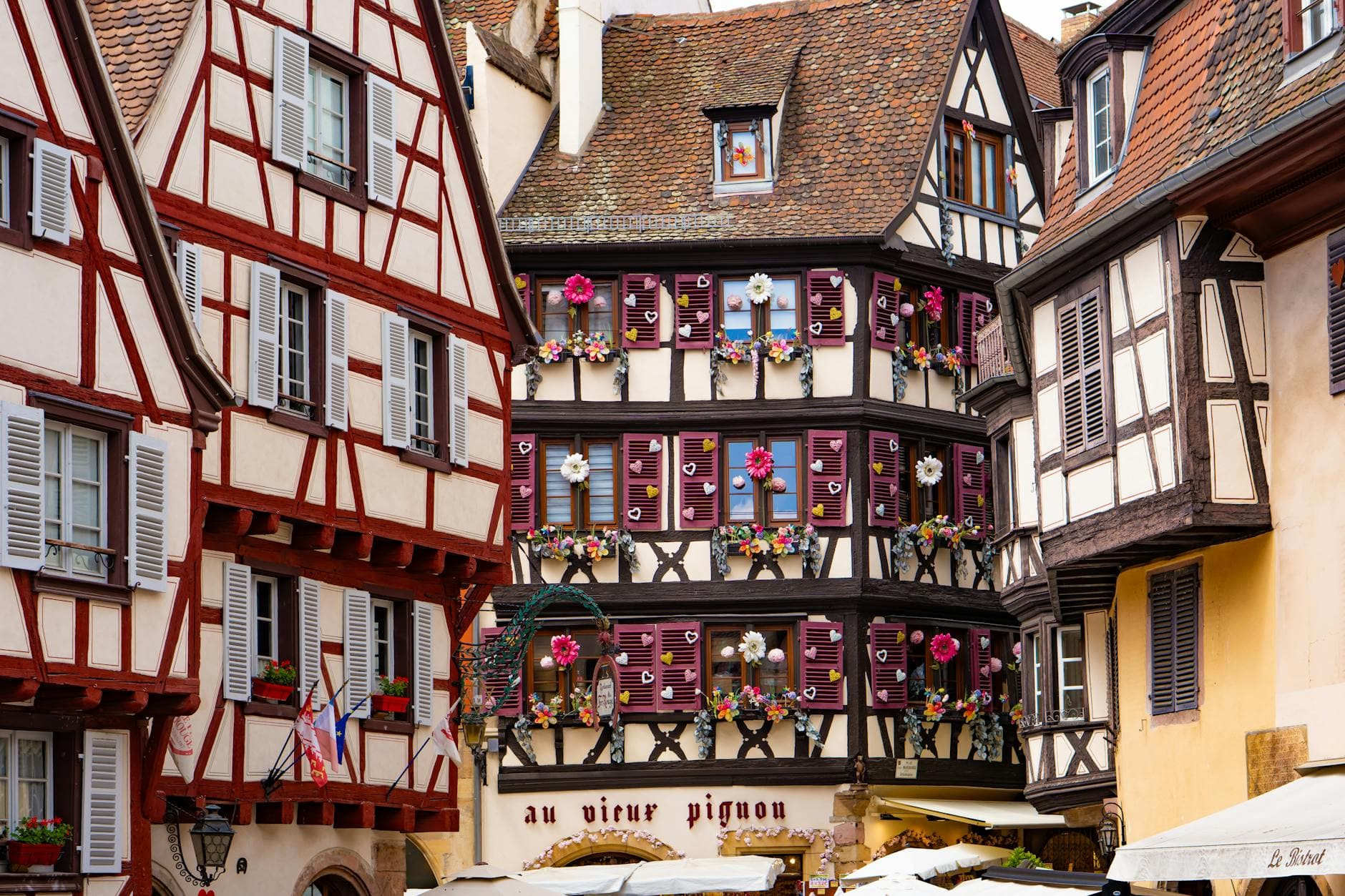
Colmar sits at the centre of the Alsace wine world. It is the largest town on the southern stretch of the Route des Vins d'Alsace and serves as the natural base for anyone exploring the vineyards that run along the eastern slopes of the Vosges mountains. The old town — a dense grid of medieval and Renaissance buildings along canals dug centuries ago for the tanning and dyeing trades — is one of the most intact historic town centres in France. Wine cellars, producer showrooms, and wine bars are woven into the fabric of the streets.
This is a wine region that does things differently from most of France. Alsace bottles its wines by grape variety, not by appellation. The terroir speaks through the variety on the label — Riesling from the steep granite slopes of Schlossberg, Gewurztraminer from the heavy clay-limestone of Goldert, Pinot Gris from the volcanic soils around Rouffach. The Grand Cru system, introduced formally in 1983, brought some order to this, designating 51 specific vineyard sites across the region. A large concentration of those Grand Crus sits within a short drive of Colmar.
Whether you are spending a weekend or a full week, Colmar wine tasting rewards time and curiosity. This guide covers where to taste, what to drink, which villages to visit, and when to come.
The Alsace Wine Route Through Southern Alsace
The Route des Vins d'Alsace runs for roughly 170 kilometres from Marlenheim in the north to Thann in the south. Colmar sits roughly two-thirds of the way down, and the southern section — from Colmar to Thann — concentrates some of the most celebrated Grand Cru sites and the most rewarding wine villages for visitors.
Ammerschwihr lies eight kilometres northwest of Colmar in the foothills of the Vosges. It was heavily damaged during the Second World War and rebuilt in the 1950s, but the surrounding vineyard landscape is intact. The Grand Cru Kaefferkopf — a granite and limestone mixed site that was controversially authorised as a multi-variety Grand Cru, unique in Alsace — produces wines of real complexity. The village has a number of producer cellars open for tastings by appointment.
Kaysersberg is a short drive further north. The fortified village at the confluence of two rivers is one of the most attractive on the entire Route des Vins. Albert Schweitzer was born here. The wine cooperative and several independent domaines operate tasting rooms within walking distance of the castle ruins. The Grand Cru Schlossberg begins just outside the village — the steep, south-facing granite slope produces some of the finest dry Riesling in Alsace.
Riquewihr, 12 kilometres north of Colmar, has been a significant wine trading centre since the 16th century. It is heavily visited, particularly in summer and during the December Christmas market season, but the concentration of tasting rooms and the quality of producers operating there — including Hugel, Dopff et Irion, and the Cave de Ribeauvillé cooperative — makes it worth navigating the crowds. The village is almost entirely car-free within its medieval walls.
Ribeauvillé, just north of Riquewihr, has a slightly less touristic feel and a serious wine identity. Three ruined castle towers overlook the village and its surrounding vineyards. The Cave de Ribeauvillé cooperative, founded in 1895, is headquartered here and operates one of the largest and most respected cellars in Alsace.
Colmar itself has more wine infrastructure than most visitors expect. The main Cave de Ribeauvillé tasting room operates in the centre of town on Route de Rouffach, alongside several independent producers and a wine bar scene concentrated around Place de l'Ancienne Douane. The Unterlinden Museum, one of Alsace's most important cultural institutions, sits minutes from the town's wine quarter.
Key Alsace Grape Varieties
Alsace is one of the few French wine regions where the grape variety is the primary information on the label. Understanding the key varieties is essential to navigating a cellar visit.
Riesling is widely considered the signature grape of Alsace. It is versatile enough to produce wines across a full spectrum from bone-dry to lusciously sweet, and it is the variety most commonly associated with the Grand Cru sites around Colmar. At its best — from steep granite sites like Schlossberg or Rangen de Thann — Alsace Riesling is intensely mineral, high in acid, and built to age for decades. Do not expect sweetness as a default. The majority of Alsace Riesling produced today is dry or off-dry.
Gewurztraminer is the variety that surprises visitors who have never encountered it before. Deeply aromatic — lychee, rose petal, ginger, and spice in the more expressive examples — it produces wines that are lower in acid and often fuller-bodied than Riesling. The soils around Guebwiller and Eguisheim, with their heavy clay-limestone, suit it particularly well. Vendange Tardive (late harvest) versions are among the most extraordinary dessert wines produced in France.
Pinot Gris occupies a middle ground. It shares some of Gewurztraminer's richness but tends toward smoke, honey, and stone fruit rather than the exuberant aromatic register of its neighbour. It is the go-to variety for pairing with richer Alsace dishes — pork, foie gras, and the creamy gratins of winter cooking. The Grand Cru Rangen de Thann, on volcanic soils at the very southern tip of the wine route, produces exceptional Pinot Gris.
Muscat is produced in two distinct forms in Alsace: Muscat Blanc a Petits Grains and Muscat Ottonel. Both make wines that smell intensely of fresh grapes and fresh flowers, but that are almost invariably dry on the palate. It is a rare combination and one that confuses visitors expecting sweetness. Muscat works well as an aperitif wine and is one of Alsace's most distinctive offerings.
Pinot Blanc is the everyday wine of Alsace — approachable, relatively light, and available at most producer tastings at very reasonable prices. It often forms the base of Crémant d'Alsace, the region's traditional-method sparkling wine, which deserves more attention than it typically receives outside France.
Pinot Noir is the only red grape permitted in Alsace AOC. Its profile here tends toward lighter red fruit and higher acidity compared to Burgundy, reflecting the cooler climate. A small number of producers — working specific hillside sites — produce serious Pinot Noir with real depth, but these are the exception rather than the rule.
Wine Tasting Experiences in and Around Colmar
The infrastructure for wine tasting in Colmar is better developed than in most French wine towns. You can walk between multiple tasting venues in the old town without transport.
Cave de Ribeauvillé operates a tasting room at 6 Route de Rouffach in Colmar, separate from its production cellar in Ribeauvillé. The cooperative represents over 40 grower families and covers the full range of Alsace varieties and appellations including several Grand Crus. It is an efficient way to taste widely without committing to individual producer visits. The staff are accustomed to English-speaking visitors and the tasting formats are flexible.
Domaine Weinbach, based in Kaysersberg, is one of the most celebrated independent producers in Alsace. The domaine is built around a walled vineyard — the Clos des Capucins — that was farmed by Capuchin monks before the Revolution. Visits are by appointment. The Faller family (now the fourth generation) farms biodynamically. Tasting their range from basic Cuvée Théo to single-vineyard Schlossberg Riesling gives a clear picture of how dramatically terroir shifts the wine.
Maison Hugel in Riquewihr operates one of the most visited cellars on the wine route. Founded in 1639, the house is known internationally for its Jubilee and Tradition ranges. The cellar beneath the house dates from the same period. Walk-in tastings are possible in the showroom; barrel cellar tours require advance booking.
Domaine Zind-Humbrecht in Turckheim is considered by many critics to be the reference point for Grand Cru Alsace winemaking. Olivier Humbrecht was the first Frenchman to pass the Master of Wine examination. The domaine farms biodynamically across several Grand Cru parcels including Brand, Rangen, Goldert, and Hengst. Visits are by appointment and tend to be serious affairs focused on the wines rather than tourism.
For wine bars in Colmar's old town, the concentration around Place de l'Ancienne Douane offers the most options. A number of establishments specialise in Alsace wines by the glass, and it is worth asking specifically for producers you have not encountered in cellar visits rather than defaulting to the cooperative labels.
For dress code guidance before your visits, see our wine tasting dress code guide and wine tasting etiquette guide.
Alsace Grand Cru Vineyards Near Colmar
Of the 51 Grand Cru vineyards designated across Alsace, a significant number are concentrated in the hills directly above and around Colmar. These four are the most relevant for visitors based in the city.
Schlossberg is the oldest legally defined Grand Cru site in Alsace, first delimited in 1975. It covers steep granite slopes above Kaysersberg and is almost exclusively planted to Riesling. The south-southeast facing incline generates wines with extraordinary mineral precision and the ability to age for 20 or more years. Domaine Weinbach's Schlossberg Riesling is the most well-known reference point.
Sporen sits above Riquewihr and is one of the rare Grand Crus where Gewurztraminer and Pinot Gris historically outperform Riesling. The deep marl and sandstone soils produce wines of more obvious weight and aromatic richness than the granite sites. Hugel has long produced Sporen bottlings from old vines in this vineyard.
Sonnenglanz at Beblenheim is one of the warmest Grand Cru sites in Alsace, a broad east-facing amphitheatre of marl and sandstone that accumulates heat effectively. It is particularly well suited to Pinot Gris and Gewurztraminer in late harvest expressions. The Beblenheim cooperative (now Cave de Beblenheim) produces notable Sonnenglanz bottlings.
Brand above Turckheim is a large granite site with a complicated internal geology — different parcels within Brand can produce wines of quite different character. It is considered one of the finest terroirs in the region for Riesling, though Pinot Gris and Gewurztraminer are also planted there. Zind-Humbrecht's Brand bottlings are the most frequently cited reference.
If you want to understand the Grand Crus from the ground up before your visit, read our guide to how to plan a wine tour which covers reading tasting notes and comparing producer styles.
Colmar Food and Wine Pairing
Alsace cooking has as much in common with the cuisine of German-speaking regions as it does with the rest of France. The food is substantial, winter-focused, and built around pork, sauerkraut, and freshwater fish. The local wine tradition aligns precisely with these dishes in ways that do not always translate to the wine-and-food pairing rules visitors arrive with.
Tarte flambée (Flammkuchen in Alsatian) is the regional answer to pizza: a thin flatbread topped with crème fraiche, onions, and lardons, cooked in a wood-fired oven until the edges blacken. The wine match is simple and obvious — young, crisp, unoaked Riesling or Pinot Blanc. The acidity cuts through the cream and the lightness of the wine balances the richness of the bacon.
Choucroute garnie is the dish that defines Alsace cooking outside the region. Slow-braised sauerkraut piled with sausages, pork belly, smoked pork shoulder, and sometimes smoked fish, served with potatoes. The match is Riesling, specifically the dry or off-dry styles rather than Grand Cru bottlings. The acidity of the wine and the acid in the fermented cabbage reinforce each other; the fruit cleans the palate between mouthfuls of very rich, fatty meat.
Baeckeoffe is a slow-cooked casserole of marinated pork, beef, and lamb layered with potatoes and vegetables, sealed in a ceramic pot. Tradition has it that the pot was left at the baker's oven overnight on washing day. The dish calls for Pinot Gris from a mid-weight producer rather than the very richest Vendange Tardive style — you want some grip and texture without overpowering the delicate meat flavours.
Munster cheese is the strong-smelling washed-rind cheese that Alsace has been producing for centuries, and it is one of the most demanding cheese-wine pairings in France. Gewurztraminer is the only wine that consistently works alongside it. The aromatic richness and relative sweetness of the wine meet the pungency of the cheese and, somewhat improbably, the match resolves into something coherent.
For freshwater fish dishes — perch, carp, pike from the Rhine and its tributaries — Pinot Blanc and Muscat work well, though dry Riesling from a lighter year is the most versatile option.
Day Trips from Colmar to Wine Villages
The villages within a 30-minute drive of Colmar are among the most rewarding wine destinations in France. A day trip itinerary that combines one or two village visits with vineyard walks and cellar appointments can be organised entirely without a tour operator.
Eguisheim, eight kilometres south of Colmar, is considered by many to be the most beautiful village in Alsace — a judgement it competes for with Riquewihr. The village is circular, arranged in concentric rings around a central castle square, and almost every building dates from the 16th or 17th century. Eguisheim is one of the birthplaces of Grand Cru Alsace winemaking and is surrounded by three classified Grand Crus: Eichberg, Pfersigberg, and Ollwiller (the last just outside the village boundary). The local cooperative, the Cave Vinicole d'Eguisheim, operates a tasting room in the village and represents the majority of local growers.
Turckheim is eight kilometres northwest of Colmar on the edge of a glacial plain that forms the floor of the Munster Valley. The old town retains three medieval gates and a historic wine quarter. It is home to Zind-Humbrecht and several smaller producers. The Grand Cru Brand looms above the village to the west. Turckheim is less visited than Riquewihr or Eguisheim and provides a quieter tasting experience as a result.
Hunawihr, between Ribeauvillé and Riquewihr, is a small village whose fortified church — built on a hillock and surrounded by a hexagonal rampart used as a cemetery — is one of the most photographed buildings in Alsace. The village is home to the Cave de Ribeauvillé's production cellars and to the Domaine Mittnacht Frères, which has built a reputation for biodynamic farming and precise Grand Cru expressions. The surrounding vineyards include the Grand Cru Rosacker, which produces Riesling of particular elegance.
For any of these day trips, see our guide to the Alsace wine route for a full overview of the northern and central sections of the route as well as the southern villages around Guebwiller and Thann.
When to Visit Colmar for Wine
Colmar and the surrounding villages receive visitors year-round, but the timing of your visit shapes the experience considerably.
Harvest season (late September to mid-October) is the most atmospheric time in the vineyards. The Vendange typically begins in Alsace in mid-September for the earliest varieties and can extend into November for Vendange Tardive (late harvest) and Sélection de Grains Nobles grapes affected by botrytis. Visiting during harvest means you may be able to observe picking and the early stages of winemaking, though cellar visits during this period require advance planning as producers are very busy. Vineyard walks in the foothills of the Vosges are spectacular in autumn light.
Christmas market season (late November to late December) draws very large crowds to Colmar. The market is one of the most significant in France and the old town genuinely transforms during the weeks leading up to Christmas. This is the time to taste vin chaud (mulled wine), crémant, and the richer white varieties alongside seasonal food. Book accommodation several months ahead.
Summer (June to August) is the peak tourist season but also the time when the most producers have regular opening hours and when walking the vineyards is most accessible. Temperatures in Alsace can be genuinely hot in July and August, which may push tasting appetites toward lighter, fresher styles. The Colmar International Music Festival runs throughout July and evening concerts provide an additional reason to stay.
Spring (April to May) is the quietest and arguably most pleasant season for wine travel. The vineyards are green with new growth, the Vosges foothills are accessible for walking, and producers have more time for unhurried cellar visits. Accommodation is available without advance planning and at lower rates than summer or Christmas.
If you want to compare this region with a neighbouring wine area, see our Jura wine region guide for wines produced just across the mountains to the south.
FAQ: Wine Tasting in Colmar and Alsace
Do you need to book cellar visits in Colmar in advance?
For the major cooperative cellars (Cave de Ribeauvillé in Colmar, Cave Vinicole d'Eguisheim) walk-in visits are generally possible during business hours. For visits to independent domaines — particularly well-known estates like Zind-Humbrecht, Weinbach, or Hugel — booking in advance is strongly recommended. During harvest season (September to October) and Christmas market season (November to December), advance booking is essential across the board.
Is Colmar wine tasting expensive?
Tasting fees in Alsace vary considerably. Cooperative tasting rooms often charge little or nothing for a standard tasting, particularly if you purchase wine. Independent domaine tastings typically cost between 5 and 15 euros per person for a selection of wines, with more for Grand Cru or special cuvée tastings. Compared to Burgundy or Bordeaux, Alsace offers excellent value for the quality on offer.
What is the difference between Alsace AOC and Alsace Grand Cru?
Alsace AOC is the general appellation covering the entire region. Wines labelled Alsace AOC can be made from grapes grown anywhere within the delimited zone. Alsace Grand Cru is a higher classification applying only to 51 named vineyard sites with specific soil types, aspects, and altitude ranges. Grand Cru wines must be made from Riesling, Gewurztraminer, Pinot Gris, or Muscat (with Schlossberg restricted to Riesling only). They have lower maximum yields and minimum alcohol requirements.
Are Alsace wines mostly sweet?
This is the most common misconception about Alsace. The majority of wines produced in the region are dry. Some producers add a small amount of residual sugar for balance without this making the wine formally "sweet," which can cause confusion on the palate. The only wines formally categorised as sweet are Vendange Tardive (VT) and Sélection de Grains Nobles (SGN), which are produced in small quantities and clearly labelled. If you want a dry Riesling, ask the producer directly — they will tell you the exact residual sugar.
What food is available in Colmar for a wine-focused visit?
Colmar has an excellent restaurant scene for a city of its size. Traditional Alsace cuisine (tarte flambée, choucroute garnie, baeckeoffe, Munster cheese) is available at winstubs — the Alsatian version of a wine tavern. A number of winstubs in the old town stock serious lists of Alsace producers alongside house wines. The city also has a covered market (Marché Couvert) operating several days a week where local charcuterie, cheese, and bread are available.
How far is Colmar from Strasbourg?
Colmar is 70 kilometres south of Strasbourg by road and approximately 30 minutes by TGV from Strasbourg railway station. Colmar station sits in the centre of the city. From Colmar, the wine villages of the Route des Vins are accessible by bicycle, local bus (in some cases), or car. Bicycle rental is available in the city and the flat valley floor between Colmar and the vine-covered foothills makes cycling a practical option for visiting nearby villages like Eguisheim or Turckheim.
Can I visit Alsace wine estates without a car?
Yes, with some planning. Colmar station connects to regular trains toward Strasbourg in the north and Mulhouse in the south. The villages immediately around Colmar (Eguisheim, Turckheim, Wintzenheim) are accessible by bicycle from the city. Organised wine tours by minibus operate from Colmar and Strasbourg for visitors who prefer not to drive. For the more remote Grand Cru sites above steep hillside villages, a car gives considerably more flexibility.


Ready to visit Alsace?
Build your personalised day-by-day itinerary — choose your travel style and trip length, get accommodation and tour picks per day, and email it to yourself to take along.
Upcoming Wine Festivals in France
See all festivalsHidden Gems Nearby
Discover more hidden gemsDomaine de la Bongran
WTG PickBurgundy, France
A Burgundy rebel who makes Chardonnay on their own terms, far from the tourist trail of Beaune and Puligny.
Chardonnay
Domaine Huet
WTG PickLoire Valley, France
World-class Chenin Blanc with no queues, no hype, just pure Loire magic in a village setting.
Chenin Blanc
Mas de Daumas Gassac
Languedoc, France
Grand cru quality at a fraction of Bordeaux prices, in a wild, beautiful valley most tourists never find.
Cabernet Sauvignon · Rosé · White Blend
Book Your Alsace Wine Country Stay
Compare hotels, vineyard B&Bs and rentals across Booking, Airbnb and more in one search.
Compare stays near the vineyardsStay22
Plan Your Colmar Wine Guide: Wine Tasting, Cellar Visits & the Alsace Wine Route Trip
Estimate your Colmar Wine Guide: Wine Tasting, Cellar Visits & the Alsace Wine Route trip cost
Budget calculator with accommodation, food, wine, and transport estimates.
Try itCompare Colmar Wine Guide: Wine Tasting, Cellar Visits & the Alsace Wine Route with other regions
Side-by-side comparison of cost, climate, wine styles, and more.
Try itWhen to visit Colmar Wine Guide: Wine Tasting, Cellar Visits & the Alsace Wine Route
Harvest dates, peak season, and the best months for wine travel.
Try itThis page contains affiliate links. We may earn a commission at no extra cost to you.