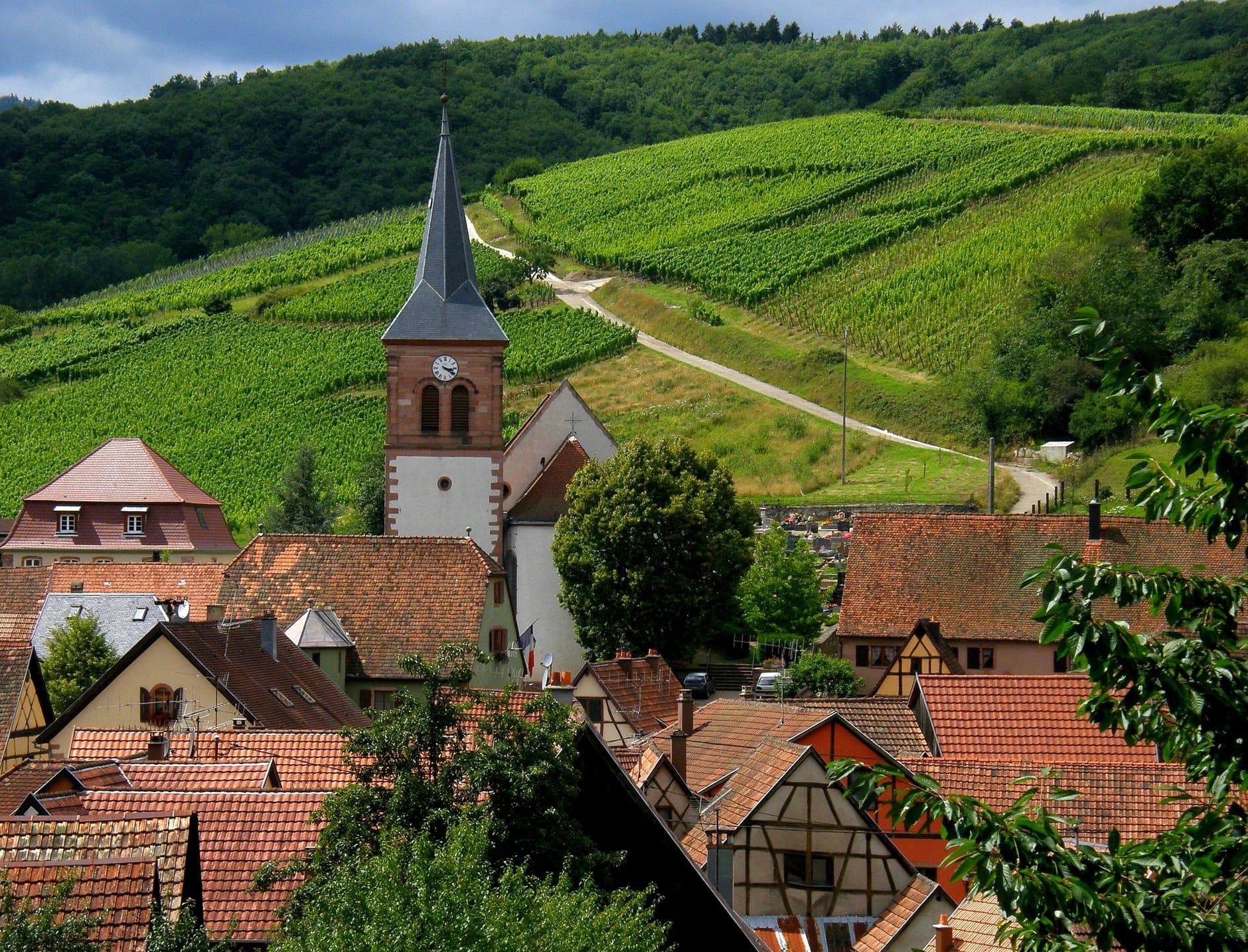
 Photo: Olivier from FRANCE / Wikimedia Commons
Alsace-France Wine Region Guide
Alsace produces France's most aromatic whites — powerful Riesling, spicy Gewurztraminer, rich Pinot Gris. Explore the wine route through medieval villages.
Key takeaways
- The Route des Vins d'Alsace runs 170 km through 67 wine villages from Marlenheim to Thann. You do not need to drive the full route — pick a 30–40 km stretch as your base, stay in one village (Riquewihr, Kaysersberg, or Eguisheim are the most scenic), and walk or cycle between cellar doors. Most villages are compact enough to walk across in 20 minutes.
- Most Alsatian estates welcome walk-in visitors during the day (typically 09:00–12:00 and 14:00–18:00). Hugel in Riquewihr and Cave de Beblenheim cooperative are the most walk-in-friendly. Domaine Zind-Humbrecht, Marcel Deiss, and Domaine Weinbach require email appointments — allow 2–4 weeks.
- The label tells you more than it might look: "Grand Cru" + vineyard name (Schlossberg, Rangen, Brand, Hengst) = single-vineyard classified site. "VT" (Vendanges Tardives) = late harvest, very ripe, off-dry to lightly sweet. "SGN" (Sélection de Grains Nobles) = noble rot, botrytised, extremely sweet and rare. These are important taste differences, not just ranking tiers.
- Colmar is the most practical base: largest city in Alsace wine country, direct train to Strasbourg (30 min) and Basel (45 min), rich old town with canals (the Petite Venise quarter), and within cycling distance of the Route des Vins villages. Stay here, day-trip into the wine villages.
Where to Stay in Alsace-France
Make the most of your Alsace-France wine trip by staying in the heart of wine country. From luxurious vineyard estates to cozy B&Bs, find the perfect accommodation near world-class wineries.
Top areas to stay
- Colmar€€
Petite Venise quarter, central to wine route
- Riquewihr€€-€€€
One of France's prettiest villages, winstubs on every corner
- Kaysersberg€€
Half-timbered charm, great Gewürztraminer producers
Christmas market season (late Nov-Dec) is peak — book 6+ months ahead
Stay22
Compare Booking, Airbnb, Hotels.com and more in one search
Editorial pick
Best chateaux to visit in Alsace-France — top 10 picks 2026
Read the listicle →
Sample itinerary
3 days in Alsace-France — full day-by-day plan
Read the itinerary →
Vineyard hotels
Vineyard hotels in Alsace-France — 10 estates where you can stay
Read the guide →
Plan your visit: Plan your Alsace trip — free printable planner for the Route des Vins and Grand Crus.
Alsace: A Wine Lover's Paradise
Nestled between the Vosges Mountains and the Rhine River, Alsace is a picturesque wine region known for its aromatic white wines and charming half-timbered villages. This unique corner of France offers a blend of French and German influences, creating a distinctive culture and cuisine.
Wine Regions
Towns and Villages
Colmar, the wine capital of Alsace, enchants visitors with its colorful medieval architecture and winding canals. Don't miss the famous "Little Venice" district.
Riquewihr is a fairytale-like village, seemingly frozen in time since the 16th century. Its well-preserved fortifications and wine cellars make it a must-visit destination.
Eguisheim, birthplace of Pope Leo IX, boasts concentric circular streets and numerous wine tasting cellars. Its picturesque setting has earned it the title of "One of the Most Beautiful Villages in France".
Wine Producers
Trimbach in Ribeauvillé is renowned for its Rieslings, particularly the legendary Clos Sainte Hune. Book a tasting to experience their exceptional wines.
Domaine Weinbach in Kaysersberg offers organic and biodynamic wines in a historic setting. Their Gewürztraminer and Riesling are particularly noteworthy.
Domaine Zind-Humbrecht in Turckheim is known for its terroir-driven approach and impressive range of Grand Cru wines. Their tasting room provides an educational experience for wine enthusiasts.
Accommodations
The Hostellerie des Châteaux & Spa in Ottrott offers luxurious rooms and a wine-themed spa, perfect for a romantic getaway. Their extensive wine cellar features local and international selections.
For a more intimate experience, try La Maison des Têtes in Colmar. This historic 5-star hotel houses a Michelin-starred restaurant and offers wine-pairing dinners.
Le Chambard in Kaysersberg combines rustic charm with modern amenities. Their two-star Michelin restaurant, 64° Le Restaurant, showcases local ingredients paired with Alsatian wines.
Dining
L'Auberge de l'Ill in Illhaeusern holds three Michelin stars and offers an unparalleled dining experience. Their wine list features an impressive selection of Alsatian wines.
For traditional Alsatian cuisine, visit Winstub S'Baecka Ofa in Strasbourg. Their tarte flambée and choucroute garnie pair perfectly with local Rieslings and Gewürztraminers.
JY'S in Colmar offers a modern twist on Alsatian flavors. Chef Jean-Yves Schillinger's innovative dishes are complemented by an extensive wine list focusing on local producers.
Wine Shops & Bars
La Cave de Turckheim offers an extensive selection of local wines. Their knowledgeable staff provides excellent recommendations for wine pairings.
Le Bistrot & Cave à Vins in Strasbourg combines a cozy wine bar atmosphere with a well-stocked shop. Enjoy wine by the glass or purchase bottles to take home.
Other Shops
La Maison du Fromage in Gunsbach specializes in local cheeses, perfect for pairing with Alsatian wines.
Visit La Boutique des Spécialités in Colmar for traditional Alsatian products like foie gras, kugelhopf, and artisanal jams.
Attractions

The Alsace Wine Route stretches 170 km, offering picturesque views of vineyards and charming villages. Stop at wineries along the way for tastings.
Visit the Unterlinden Museum in Colmar to see the famous Isenheim Altarpiece and learn about Alsatian history and culture.
Events
The Colmar Wine Fair in August showcases over 300 Alsatian wines. Enjoy tastings, food pairings, and live music.
Christmas markets in Strasbourg and Colmar offer mulled wine, local crafts, and festive atmosphere from late November to December.
Appellations
Alsace AOC covers most of the region's wine production, including varietal wines and blends.
Alsace Grand Cru AOC represents 51 exceptional vineyard sites, producing high-quality, terroir-driven wines.
Grape Varieties
Vine Cycle — Alsace
Full calendar →Alsace in autumn is fairy-tale beautiful — half-timbered villages against golden vineyards. The Route des Vins is compact enough to visit many producers in a day. Vendange tardive (late harvest) picking can extend into November.
Alsace is renowned for its aromatic white wines. The region's main grape varieties include:
- Riesling: Produces dry, elegant wines with high acidity
- Gewurztraminer: Known for its intense aromatics and spicy notes
- Pinot Gris: Offers rich, full-bodied wines with subtle fruitiness
- Muscat: Yields dry, fragrant wines with distinctive grape flavors
- Pinot Blanc: Creates light, refreshing wines with subtle apple notes
- Sylvaner: Produces crisp, light-bodied wines with herbal characteristics
Pinot Noir is the primary red grape variety in Alsace, typically used for light-bodied red wines and rosés.
Main Wine Styles
Alsace offers a diverse range of wine styles, each showcasing the region's unique terroir:
- Alsace AOC: Dry, single-varietal wines that express the grape's character
- Crémant d'Alsace: Sparkling wines made using the traditional method
- Vendanges Tardives: Late-harvest wines with rich, concentrated flavors
- Sélection de Grains Nobles: Noble rot-affected sweet wines of exceptional quality
- Alsace Grand Cru: Wines from specific, superior vineyard sites
Most Alsace wines are bottled in tall, slender flûte d'Alsace bottles, distinguishing them from other French wines.
Food Specialties
Alsatian cuisine blends French and German influences, offering hearty dishes that pair well with local wines:
- Choucroute garnie: Sauerkraut with various meats, perfect with Riesling
- Tarte flambée: Thin-crust pizza with crème fraîche, onions, and bacon

- Baeckeoffe: Meat and potato casserole, ideal with Pinot Gris
- Coq au Riesling: Chicken cooked in Riesling wine
- Kugelhopf: Sweet, ring-shaped cake, often enjoyed with Gewurztraminer
Many local restaurants offer wine pairings to complement traditional Alsatian dishes.
Drives & Walks
Explore Alsace's picturesque landscapes and charming villages:
Alsace Wine Route
This 170 km scenic drive connects quaint wine villages and offers stunning vineyard views. Stop at wineries for tastings and enjoy local cuisine along the way.
Hiking Trails
The Vosges Mountains provide numerous hiking opportunities. Try the Grand Ballon trail for panoramic views of the Rhine Valley and Black Forest.
Colmar City Walk
Discover Colmar's historic center, including the picturesque Little Venice quarter and the Unterlinden Museum, home to the Isenheim Altarpiece.
Itineraries
3-Day Wine Lover's Tour
- Day 1: Explore Colmar, visit Domaine Weinbach for a tasting
- Day 2: Drive to Riquewihr, tour Hugel & Fils winery, enjoy dinner at Winstub Au Tire Bouchon
- Day 3: Visit Strasbourg, take a wine cruise on the Ill River
5-Day Alsace Adventure
- Day 1-2: Strasbourg city tour, visit Cathedral, take a day trip to Obernai
- Day 3-4: Drive the Wine Route, stopping at Ribeauvillé, Kaysersberg, and Eguisheim
- Day 5: Explore Colmar, visit the Unterlinden Museum, enjoy a farewell dinner at JY'S restaurant
These itineraries combine wine experiences with cultural attractions, offering a well-rounded Alsace experience.
Getting There & Around
Alsace is easily accessible by various modes of transportation:
- Air: Fly into Strasbourg Airport or Basel-Mulhouse-Freiburg EuroAirport
- Train: High-speed TGV connections from Paris to Strasbourg (2h20)
- Car: Excellent road networks connect Alsace to major European cities
Within Alsace, consider these options:
- Rental car: Ideal for exploring the Wine Route and rural areas

- Bicycle: Extensive cycling paths connect wine villages
- Public transport: Reliable bus and train services between major towns
Best Time to Visit
Monthly Climate — Alsace
Full explorer →Alsace offers unique experiences year-round:
- Spring (April-May): Mild weather, fewer crowds, blooming vineyards
- Summer (June-August): Warm temperatures, outdoor festivals, busy season
- Fall (September-November): Harvest time, wine festivals, beautiful foliage
- Winter (December-March): Christmas markets, cozy wine tastings, potential for snow
For wine enthusiasts, plan your visit during the harvest season or attend the Alsace Wine Fair in August.
Sustainability Efforts
Alsace is committed to sustainable viticulture:
- Organic farming: Many vineyards have adopted organic practices
- Biodynamic winemaking: Producers like Zind-Humbrecht lead in biodynamic methods
- Water conservation: Innovative irrigation techniques reduce water usage
- Biodiversity: Planting cover crops and creating wildlife corridors in vineyards
Visit eco-friendly wineries like Domaine Ostertag or Josmeyer to learn about their sustainable practices.
Language Tips
While French is the official language, Alsatian dialect is still spoken:
- Basic French phrases: "Bonjour" (Hello), "Merci" (Thank you), "S'il vous plaît" (Please)
- Wine-related terms: "Dégustation" (Tasting), "Vin blanc/rouge" (White/red wine)
- Alsatian words: "Winstub" (Wine bar), "Schnaps" (Fruit brandy)
Most people in the wine industry speak English, but locals appreciate efforts to use French or Alsatian phrases.
Further Resources
Enhance your Alsace wine journey with these resources:
- Websites: Vins d'Alsace for official wine information
- Books: "Wines of Alsace" by Tom Stevenson for in-depth wine knowledge
- Apps: Download "Alsace Wine Route" for a self-guided tour
- Local tourist offices: Visit for up-to-date event information and maps
Consider joining a wine club or subscribing to wine publications for ongoing Alsace wine education.
Must-Visit Wineries in Alsace
Alsace rewards those who plan ahead. Most top producers welcome walk-ins, but the benchmark estates book up fast in summer and harvest season. Here are seven cellars that define the region, arranged from north to south along the Route des Vins.
Trimbach — Ribeauville (est. 1626)
Twelve generations of family winemaking have made Trimbach Alsace's most recognisable export name. Their Riesling Clos Sainte Hune — sourced from a single hectare within the Rosacker Grand Cru — is one of France's most age-worthy dry whites. Walk-in tastings are free at the Ribeauville tasting room; closed Sundays and 12:00-14:00 daily. Budget EUR 15-60 for the standard range.
Hugel & Fils — Riquewihr (est. 1639)
One of Alsace's most storied negociants, based in the medieval village of Riquewihr. Hugel produces everything from fresh Gentil blends to late-harvest Vendanges Tardives Riesling. Walk-ins welcome at the Riquewihr shop — no appointment needed. The Classic Riesling starts at EUR 9-12, making Hugel an ideal introduction. Their cave dates to the 12th century.
Domaine Weinbach — Kaysersberg
Set on the Schlossberg Grand Cru at the edge of Kaysersberg, Weinbach is the benchmark for biodynamic Alsace. The Faller family produces exceptional Gewurztraminer, Riesling, and Pinot Gris. Tasting fee EUR 15 per person, waived on purchases of EUR 100 or more. Appointment recommended. Their Cuvee Ste Catherine Riesling is unmissable.
Domaine Zind-Humbrecht — Turckheim
Olivier Humbrecht MW — the first Frenchman to hold the Master of Wine qualification — farms nearly 40 hectares across six communes and four Grand Cru sites, all biodynamic since the 1990s. Tasting fee EUR 25; appointment essential. Their Clos Windsbuhl Pinot Gris and Rangen de Thann Riesling are among Alsace's finest expressions. Wines reward cellaring 10-20 years.
Domaine Ostertag — Epfig
Andre Ostertag is Alsace's most philosophically restless producer — an early champion of natural winemaking. His Muenchberg Grand Cru Riesling is raised in acacia wood for texture and longevity. Appointment required; estate is in Epfig, a short drive east of the main route. Budget EUR 25-65 per bottle.
Josmeyer — Wintzenheim
Certified biodynamic since 2001. Josmeyer's Hengst Grand Cru Gewurztraminer is powerful and spicy; their Mise du Printemps Riesling is an elegant everyday bottle at EUR 12-15. Appointment preferred. Located 4km west of Colmar in Wintzenheim.
Cave de Turckheim (cooperative)
For walk-in access, excellent value bottles, and a broad overview of all Alsace varieties, the Cave de Turckheim cooperative is the region's most visitor-friendly cellar. No appointment, no tasting fee, 80+ wines including excellent Cremant d'Alsace and Brand Grand Cru Riesling. Open every day including weekends.
Most estates close 12:00-14:00 for lunch and on Sundays. Plan your winery visits with the WTG trip planner at /plan.
Route des Vins d'Alsace: Practical Guide
France's oldest wine route — inaugurated 30 May 1953 — runs 170 kilometres from Marlenheim west of Strasbourg to Thann in the south, threading through more than 70 wine-producing villages and five distinct zones. Most travellers drive it in 2-3 days; cyclists can complete it in 3-4 days on dedicated shared-use paths connecting every major village on largely flat terrain.
The Five Route Zones (North to South)
Marlenheim to Obernai: the gentler northern gateway. Good Auxerrois and Pinot Blanc, less-visited villages, lower prices.
Barr and the Andlau Valley: Sylvaner country, Kirchberg de Barr Grand Cru, and charming winstubs (Alsatian wine taverns).
Ribeauville to Riquewihr: the tourist epicentre. Grand Cru density is highest here — Osterberg, Geisberg, Rosacker, Sporen. Trimbach and Hugel both operate in this zone.
Kaysersberg to Eguisheim: Domaine Weinbach, Zind-Humbrecht, and Josmeyer all in this corridor. Eguisheim was named France's Favourite Village in 2013.
Guebwiller to Thann: the quieter south. Rangen de Thann is one of the steepest and most mineral Grand Cru sites in France. Fewer crowds, excellent value.
Car, Bike, or Tour?
By car: rent in Strasbourg or Basel (EuroAirport). The D35 Route du Vin is well-signposted with Alsace wine route markers. Allow 2-3 days for 4-5 cellar visits per day without rushing. Parking is easy in most villages.
By bike: the Velo du Vignoble cycling path (linked to EuroVelo 5 in sections) connects all major wine villages on flat terrain through the vineyards. E-bike hire is available in Colmar and Strasbourg from EUR 25-40 per day. 3-4 days is comfortable; optional hilly detours into the Vosges are available for fit riders.
By organised tour: Bicyclette Go Tours (operating since 1994) is the longest-running cycling wine tour operator in Alsace. Half-day van tours from Colmar and Strasbourg are offered through Viator and local operators — a good option if you prefer not to drive after tastings.
Key Villages in Route Order
Obernai, Barr, Andlau, Ribeauville, Hunawihr, Riquewihr, Beblenheim, Mittelwihr, Kaysersberg, Kientzheim, Turckheim, Eguisheim, Rouffach, Guebwiller. Most villages are 5-10km apart; allow 90 minutes per stop for a tasting plus a stroll through the medieval centre.
Download the official Alsace Wine Route app (iOS and Android) for GPS waypoints, cellar opening hours, and event listings. The tourist offices in Colmar and Strasbourg stock the free paper route map with Grand Cru site overlays.
How to Do Alsace: A Practical 3-Day Plan
This itinerary uses Colmar as a base — centrally located on the route, 3h10 from Paris by TGV to Strasbourg then regional train, and 20 minutes from Basel EuroAirport (served by easyJet and Ryanair from the UK, Spain, and Italy).
Day 1 — Strasbourg to Ribeauville
Arrive Strasbourg. Walk the Grande Ile UNESCO World Heritage district and have lunch at a winstub near the cathedral — order tarte flamee and a glass of Sylvaner (EUR 4-6). Drive south on the D35 through Obernai (fortified walls, Sainte-Odile pilgrimage route) and Barr. Arrive Ribeauville by late afternoon — book Trimbach for a free tasting (closes 17:00). Dinner at Winstub Zum Pfifferhus: choucroute garnie with a Hugel Riesling Tradition (EUR 30-35 for two courses plus a glass).
Day 2 — Riquewihr, Kaysersberg, and the Grand Cru Zone
Morning: stroll Riquewihr's medieval centre and visit Hugel & Fils (walk-in, free). Drive 8km to Kaysersberg — visit the Albert Schweitzer birthplace museum, then 90 minutes at Domaine Weinbach (book in advance, EUR 15 tasting fee). Afternoon: Turckheim for Cave de Turckheim (no appointment, no fee) and optional Zind-Humbrecht if pre-booked (EUR 25). Evening: dinner at a Kaysersberg winstub — try baeckeoffe with a Pinot Gris.
Day 3 — Eguisheim, Colmar, and Departure
Start at Eguisheim (15 minutes from Colmar) before 10:00, before coach tour groups arrive. The concentric medieval streets have independent vignerons selling direct from the cellar at EUR 8-15 per bottle. Then 2-3 hours in Colmar: the Unterlinden Museum (Isenheim Altarpiece), the Koifhus customs house, Petite Venise canal quarter. Depart via Basel or return to Strasbourg. Take home: a mixed case from Cave de Turckheim packs neatly into checked luggage at Basel airport.
Customise this itinerary for your pace, budget, and interests at the WTG trip planner (/plan).
Cremant d'Alsace: Alsace's Answer to Champagne
Cremant d'Alsace accounts for roughly 25% of all Alsace production and is the leading Cremant AOC in France by volume. Made using methode traditionnelle — the same technique as Champagne, with second fermentation in bottle, disgorgement, and dosage — it delivers a genuine sparkling wine experience at a fraction of the price: EUR 8-18 at the cellar door compared to EUR 35-60 for entry-level Champagne.
The dominant blend grapes are Pinot Blanc and Auxerrois, producing clean, fresh, lightly creamy bubbles. Pinot Gris adds body; Pinot Noir makes the rose Cremant. Expect fine persistent mousse, green apple, white pear, and a hint of brioche on aged bottles. Top producers include Dopff au Moulin (Riquewihr, one of the category's pioneers), Cave de Turckheim (excellent value, walk-in at Turckheim), and Wolfberger (Eguisheim cooperative, widely distributed). The quality ceiling is high — winning blind tastings against entry-level Champagne is not uncommon.
Cremant d'Alsace pairs brilliantly with tarte flamee, foie gras, Munster cheese (the earthy funk needs the bubbles to cut through), and freshwater trout from the Rhine. Order it as an aperitif at any winstub at EUR 4-6 a glass. In December, it appears in mulled form at the Colmar and Strasbourg Christmas markets. It is also the standard toast wine at Alsatian weddings and harvest celebrations.
Alsace Grand Cru: A Visitor's Guide
The 51 Grand Cru sites span 50 kilometres of the Vosges foothills from Altenberg de Bergheim in the north to Zinnkoepfle in the south. Only four grape varieties are permitted: Riesling, Gewurztraminer, Pinot Gris, and Muscat. Unlike Burgundy, where the vineyard name alone signals Grand Cru status, Alsace combines vineyard name with producer on the label — so the same Grand Cru site yields very different wines depending on who farms it.
What to look for on the label: the vineyard name appears prominently (Schlossberg, Hengst, Rosacker, Brand, Rangen). Wines must spend at least 18 months in bottle before release for standard Grand Cru, longer for Vendanges Tardives (VT) and Selection de Grains Nobles (SGN) sweet versions. Typical price premium: Grand Cru Riesling EUR 25-80 at the cellar door, versus EUR 8-20 for Alsace AOC Riesling from the same producer.
The most visitor-accessible Grand Cru vineyards sit immediately above wine villages on the route: Schlossberg above Kaysersberg (Weinbach), Brand at Turckheim (Zind-Humbrecht), Rosacker at Ribeauville (Trimbach's Clos Ste Hune), Hengst at Wintzenheim (Josmeyer). All four are walkable from the cellar door. See the dedicated /alsace-grand-cru-alsace page for the full 51-site breakdown with producer recommendations and tasting notes.
Alsace Wine Travel: Frequently Asked Questions
How many days do you need in Alsace?
Three days is the minimum to cover the Route des Vins properly — enough for 6-8 cellar door visits and the key villages of Ribeauville, Riquewihr, Kaysersberg, and Eguisheim. Five days allows you to add Strasbourg as a day trip and book dinner at L'Auberge de l'Ill (three Michelin stars, Illhaeusern). A long weekend (Friday evening to Monday midday) covers the Colmar-centred section and 3-4 top producers if the itinerary is focused.
What makes Alsace wine different from other French wine?
Three things set Alsace apart. First, it is the only major French region where the grape variety appears on the label — not a commune or AOC name. You buy Alsace Riesling, not Saint-Something. Second, nearly all Alsace wine is white, and almost all is dry despite the intense aromatics that beginners sometimes mistake for sweetness. Third, the tall slender Flute d'Alsace bottle is unique in France and reflects centuries of shared German heritage — the region changed hands between France and Germany four times between 1870 and 1945.
Do Alsace wineries require appointments?
Top family estates (Zind-Humbrecht, Ostertag, Josmeyer, Weinbach) require advance booking — typically by email 1-2 weeks ahead. Larger negociants (Trimbach, Hugel) and cooperatives (Cave de Turckheim, Wolfberger) welcome walk-ins during opening hours. Most cellars close 12:00-14:00 for lunch and all day Sunday. In July and August, book 3-4 weeks ahead for any benchmark producer.
Is Alsace wine expensive?
Alsace offers better value than Burgundy or Bordeaux at equivalent quality levels. Entry-level Riesling and Pinot Blanc start at EUR 7-12 at the cellar door. Appellation-level Gewurztraminer and Pinot Gris run EUR 12-22. Grand Cru from top producers is EUR 30-80. Late-harvest VT and SGN dessert wines can reach EUR 60-150 for half-bottles but are only made in ripe vintages. Cremant d'Alsace is the best-value purchase: EUR 8-15 for high-quality sparkling wine.
What food should I eat in Alsace?
Tarte flamee (flammekueche) — thin-crust flatbread with creme fraiche, onions, and lardons — is the regional fast food and pairs perfectly with Pinot Blanc or Cremant. Choucroute garnie (sauerkraut with charcuterie) is the hearty classic, matched to dry Riesling. Baeckeoffe is a slow-cooked meat and potato casserole; coq au Riesling is the chicken version. Kugelhopf (brioche-style cake with almonds and raisins) is the breakfast pastry, sometimes served with a glass of late-harvest Muscat at dessert.
When is the best time to visit Alsace?
Late September to mid-October is peak for harvest activity — vendanges are underway, producers offer cellar visits, and the vineyard light is exceptional for photography. May and June offer fewer crowds and spring vine growth. December is magical for the Christmas markets in Colmar (France's oldest, dating to 1570) and Strasbourg, with mulled wine and Cremant at every stall. Avoid August for cellar access — many small estates reduce hours or close completely during the French grandes vacances.
Can you cycle the Alsace Wine Route?
Yes. The Route des Vins has dedicated cycle paths connecting every major wine village on largely flat terrain at 200-400m altitude through the vineyards. E-bike hire is available in Colmar and Strasbourg from EUR 25-40 per day. A 3-day cycling itinerary is feasible: Day 1 Strasbourg to Ribeauville (60km), Day 2 Ribeauville to Colmar (35km with village detours), Day 3 Colmar to Guebwiller (40km). Luggage transfer services are available so you can ride light.
The Four Alsace Wine Zones: What to Expect
While the Alsace AOC covers the entire region, four geographic zones offer different wine characters and visitor experiences. Understanding the zones helps you decide which section of the route to prioritise.
Strasbourg and the Northern Route
The northern gateway (Marlenheim to Obernai) produces lighter-bodied wines — Auxerrois, Pinot Blanc, Sylvaner — on loess and alluvial soils. Less visited and more affordable than the central route. Obernai is the main cultural draw: a well-preserved medieval town with fortified walls and a lively market square. Good for visitors combining a Strasbourg city visit with a half-day wine excursion.
North of Colmar (Ribeauville to Riquewihr)
The tourist heartland. Grand Cru density is highest here — Osterberg, Geisberg, Kirchberg de Ribeauville, Rosacker, Sporen, Schoenenbourg — and so is foot traffic in July and August. Trimbach (Ribeauville) and Hugel (Riquewihr) anchor the zone. Weekday visits avoid coach-tour crowds. See the /north-of-colmar-alsace guide for village-by-village producer listings.
South of Colmar (Eguisheim to Guebwiller)
Eguisheim, Husseren-les-Chateaux, Rouffach, and Guebwiller form the southern concentration of Gewurztraminer and Pinot Gris Grand Cru. Josmeyer (Wintzenheim), Zind-Humbrecht (Turckheim), and Weinbach (Kaysersberg) all operate in this corridor. Quieter than the northern section, with more estate-direct buying opportunities and fewer tourists. See /south-of-colmar-alsace for full producer listings.
The Grand Cru Circuit (both zones)
The 51 Grand Cru vineyards are distributed across both northern and southern zones rather than concentrated in one area. Visitors seeking Grand Cru experiences should plan a 2-zone itinerary covering both Ribeauville (Rosacker, Osterberg) and the Colmar corridor (Brand, Schlossberg, Hengst, Rangen). See /alsace-grand-cru-alsace for the complete 51-site breakdown.
The Route des Vins: Village by Village
The Route des Vins d'Alsace runs 170km from Marlenheim in the north to Thann in the south, with Strasbourg a 30-minute drive from the northern end and Colmar roughly midway. The route is signposted throughout — brown wine-glass signs at every junction — so navigation is manageable without a dedicated wine-region app. Driving the full route takes two to three days; most visitors target a 60–80km central section anchored around Colmar.
Key stops north to south: Obernai is a well-preserved medieval town sitting in the Alsace Mossig appellation — a useful base for the northern section and less crowded than the central villages. Barr is Riesling territory; Domaine Klipfel is the best-known name here, and the Saturday market is worth arriving for. Andlau has two Grand Cru sites — Wiebelsberg and Kastelberg — both on steep granite slopes that produce some of the region's most structured Rieslings. Ribeauvillé sits beneath three ruined castles and is the heartland for both Schlumberger and Trimbach; it's quieter than Riquewihr and the better choice if you want a proper restaurant lunch. Riquewihr is the most visited village in Alsace and the home of Hugel & Fils — visit early morning to beat the tour groups; the wine trail through the old town walls works well before 9am. Kaysersberg is the birthplace of Albert Schweitzer and now home to Albert Mann's estate; the village is relaxed, genuinely lived-in, and better for an overnight stop than for a single-hour visit.
Continuing south: Colmar is the regional capital, the best hotel base for the central and southern route, and home to the Unterlinden Museum (the Isenheim Altarpiece alone justifies a stop). Turckheim is where Zind-Humbrecht's estate sits at the foot of Grand Cru Brand — the volcanic basalt soils here produce wines with a minerality that's immediately distinct from the limestone and granite further north. Eguisheim is a circular walled village rated among the most beautiful in France; the tasting room circuit inside the walls is easy to walk and the village is less overwhelmed than Riquewihr by midday. Rouffach ends the central section — Grand Cru Vorbourg here has strong biodynamic viticulture and the town retains its working-market character. Drive time from Strasbourg to Colmar by motorway is one hour; following the route with stops adds 1.5–2 hours to that.
Planning Your Winery Visits in Alsace
Unlike Burgundy, many Alsace estates historically welcomed walk-in visitors — but the region's best domaines increasingly require or prefer appointments, especially for tastings beyond the entry-level range. Walk-in friendly estates include Hugel & Fils in Riquewihr (large tasting room, open daily in season), Gustave Lorentz in Bergheim, and Paul Blanck in Kientzheim. Trimbach in Ribeauvillé technically accepts walk-ins but email advance notice is appreciated and ensures you get more than a quick pour at the counter. The larger cooperative Cave de Ribeauvillé is open daily with no appointment needed and is a good starting point for comparing across several producers' ranges in one visit.
Appointment-only estates include the region's most acclaimed producers. Zind-Humbrecht in Turckheim requires a booking — the estate is often fully committed weeks ahead in peak season (July–October), so contact by email or phone at least two to three weeks out. Marcel Deiss in Bergheim runs structured visits covering a minimum of four wines arranged in advance; winemaker tours with Jean-Michel Deiss are available for serious groups. Domaine Ostertag in Epfig is a small-production estate where appointment is essential and drop-ins are turned away even when someone is physically present. Tasting fees across the region run from free to €10 for entry-level; €15–30 for Grand Cru and late-harvest ranges. Fees are typically credited against a bottle purchase. Standard tasting room hours are 9am–12pm and 2pm–6pm Monday to Saturday; Sunday openings are inconsistent and many smaller domaines close entirely. French is the working language at most estates — Hugel and Trimbach both speak good English. For other producers, a brief email in French (translated via Google Translate) goes a long way.
Vendanges Tardives and SGN: Alsace's Sweet Wines Explained
Alsace produces two legally defined categories of sweet wine, both clearly identified on the label. Vendanges Tardives (VT — Late Harvest) is made from grapes picked significantly later than the standard harvest date, allowing additional sugar concentration from extended ripening. VT wines are restricted to four noble varieties only: Gewurztraminer, Riesling, Pinot Gris, and Muscat. The result ranges from off-dry to decidedly sweet depending on the producer and vintage — Riesling VT tends toward the drier end with high natural acidity; Gewurztraminer VT can be intensely honeyed. Minimum potential alcohol regulations set a brix floor, but final residual sugar varies widely and is not disclosed on the label.
Sélection de Grains Nobles (SGN) is the upper tier, requiring botrytis cinerea (noble rot) to further concentrate sugars in individual berries — the same process used in Sauternes and Trockenbeerenauslese. SGN is rare, only produced in exceptional vintages when botrytis develops naturally; 2007, 2010, and 2019 are recent classics. The resulting wines are intensely sweet, with honey, dried apricot, and candied mandarin concentration, typically released four to eight years after harvest. Prices reflect both rarity and production complexity: SGN from Zind-Humbrecht or Hugel Jubilee regularly reaches €80–250 per bottle. Both VT and SGN designations are always printed explicitly and prominently on Alsace labels — "Vendanges Tardives" or "Sélection de Grains Nobles" in full, no abbreviation required to identify them. There is no numeric sweetness indicator on standard Alsace bottles, which is a separate consumer issue addressed in the label-reading section.
Reading an Alsace Wine Label
Alsace is the only major French appellation where the label names the grape variety first, rather than a village or sub-region. A Trimbach bottle reads "Trimbach — Riesling — Alsace AOC" rather than hiding the grape behind a geographic designation. This makes Alsace far more approachable for new drinkers than Burgundy or Rhône labels. The four noble varieties dominate quality production: Riesling (dry, high-acid, ages well — the region's benchmark); Gewurztraminer (intensely aromatic, lychee and rose petal, frequently off-dry to sweet); Pinot Gris (richer, fuller-bodied, can range from dry to very sweet); Muscat (highly aromatic, unusually dry in Alsace — one of the few dry Muscats produced in France). Pinot Blanc, Sylvaner, and Auxerrois are secondary varieties and do not qualify for Grand Cru classification.
The one genuine consumer frustration with Alsace labels is the absence of a standardised sweetness disclosure. Standard dry Riesling and a late-harvest Pinot Gris can sit side by side on a shelf with no visual signal of the difference in residual sugar. The Conseil Interprofessionnel des Vins d'Alsace (CIVA) introduced a voluntary sweetness scale — displayed as one to four bubbles — but adoption remains inconsistent and many producers opt out entirely. Rule of thumb: standard Riesling and Muscat are almost always dry; Gewurztraminer and Pinot Gris should prompt a direct question to the producer. The words "Vendanges Tardives" or "Sélection de Grains Nobles" indicate sweet wine unambiguously — see the VT and SGN section for detail.
Alsace Grand Cru is a separate designation permitted only on the four noble varieties from 51 classified vineyard sites. The Grand Cru vineyard name appears prominently on the label — "Brand", "Schlossberg", "Rangen" — and the words "Grand Cru" must appear in full. A Grand Cru Riesling from Schlossberg and a standard village Riesling from the same producer will look superficially similar; the presence of the vineyard name is the distinguishing marker. Crémant d'Alsace is the region's sparkling wine, made méthode traditionnelle from Auxerrois, Pinot Blanc, Pinot Gris, and Riesling. It is consistently underpriced relative to Champagne, food-friendly, and widely available at producer tasting rooms across the route for €8–14 per bottle.
Biodynamic Wine Culture in Alsace
Alsace has a higher proportion of certified biodynamic vineyard area than any other major French wine region — approximately 12.8% of total plantings. The combination of a pronounced rain shadow from the Vosges mountains to the west (Colmar records under 500mm of annual rainfall, making it one of France's driest cities), mineral-rich granite and limestone soils, and a long, warm growing season creates conditions where fungal pressure is low and chemical intervention is less necessary. The region became an early adopter of biodynamic principles by circumstance as much as philosophy.
Key producers: Zind-Humbrecht (Turckheim) is the most internationally recognised name in Alsace biodynamics. Olivier Humbrecht MW converted the estate in the early 1990s and was among the first Masters of Wine to also hold biodynamic certification. His wines from Grand Cru Brand (volcanic basalt), Grand Cru Rangen de Thann (volcanic soil, steep south-facing amphitheatre), and Clos Saint Urbain are benchmarks for both variety purity and terroir expression. Domaine Marcel Deiss (Bergheim) takes a contrarian approach — biodynamic viticulture combined with field blends (multiple varieties planted and harvested together, the same site that historically grew them all). The approach is philosophically consistent with Deiss's argument that terroir expression should override varietal branding; commercially controversial, genuinely distinctive. Domaine Ostertag (Epfig) is a biodynamic specialist in Riesling and Pinot Noir, with unusually linear wines for the variety. Domaine Weinbach (Kaysersberg) is certified organic, operating from a historic Capuchin convent property; the Faller family estate produces some of Alsace's most sought-after Riesling and Gewurztraminer, with allocation lists for top cuvées.
Navigating the 51 Grand Crus: Where to Start
Alsace has 51 classified Grand Cru vineyard sites — more than any other French appellation except Burgundy's Côte d'Or. Not all are equally accessible, scenic, or worth a day's detour. For a first visit, four are worth prioritising. Schlossberg (above Kaysersberg) is the most visitor-accessible Grand Cru in Alsace: granite soils, steep planted terraces, and marked hiking trails make it the best vineyard walk in the region. Start in the village, walk up through Domaine Weinbach's vines, and allow 90 minutes for the circuit. Brand (above Turckheim) sits on volcanic basalt and gneiss — Zind-Humbrecht's home ground. The vineyard is visible from the D10 road below Turckheim and the soil contrast with the surrounding limestone slopes is immediately evident up close. Hengst (above Wintzenheim) has mixed limestone and marlstone soils; Josmeyer is the landmark estate. Goldert (Gueberschwihr) is a Gewurztraminer specialist site walkable from the village.
Rangen de Thann is the most dramatic site in the appellation — a steep volcanic south-facing amphitheatre above the town of Thann at the southern end of the route, the warmest Grand Cru in Alsace. Only Zind-Humbrecht and Schoffit cultivate it in any meaningful quantity. It warrants a one-night stop in Thann for a day visit: the ascent through the vineyard is physically demanding (extreme gradients, no marked path) and best done with local guidance. Soil diversity across the 51 Grand Crus is unusually wide even by French standards: granite (Schlossberg, Kastelberg), limestone (Eichberg, Hengst), volcanic basalt (Brand), and schist (Frankstein). This accounts for more stylistic variation between sites than you find in comparably sized appellations — a Rangen Riesling and a Schlossberg Riesling from the same producer read as different wines in the same way that different Burgundy Premier Crus do.
A Three-Day Alsace Wine Itinerary
Day 1 — Northern Route (Strasbourg to Riquewihr): Arrive Strasbourg, spend an hour in the Petite France district and stock up on a road map from the tourist office near the Cathedral. Drive south on the Route des Vins, stopping in Obernai for coffee and the market if it's a Thursday or Saturday morning (30 minutes). Continue to Ribeauvillé — Trimbach's tasting room rewards advance notice; this is the best base for Riesling in the northern section. Lunch at Winstub zum Pfifferhüs in Ribeauvillé. Afternoon: drive to Riquewihr, visit Hugel & Fils (the old-town tasting room is large and walk-in friendly), and walk the walled village. Stay overnight in Riquewihr or Kaysersberg — both have small hotels and the Kaysersberg options are quieter and easier to park.
Day 2 — Central Route (Colmar and Grand Cru Brand): Morning in Colmar — the Unterlinden Museum contains the Isenheim Altarpiece, one of the great Northern European altarpieces, and deserves 90 minutes minimum. Drive to Turckheim to visit Zind-Humbrecht (appointment required — book three weeks ahead in peak season). The Grand Cru Brand viewpoint is accessible directly from the D10 below the village. Lunch at La Maison des Têtes in Colmar (traditional Alsatian, book ahead). Afternoon: drive to Eguisheim, walk the circular walled village and taste with one producer — Léon Beyer is the most established name. Evening: stay in Colmar, which has the widest hotel choice and the easiest access to both the day's drive and tomorrow's southern section.
Day 3 — Kaysersberg and Southern Route: Morning visit to Domaine Weinbach in Kaysersberg (organic estate, advance booking required — email in French at least two weeks ahead). Walk the village and visit the Albert Schweitzer Museum if time allows. Drive south toward Rouffach for Grand Cru Vorbourg, then continue to Schlossberg above Kaysersberg for the vineyard walk (allow 90 minutes). If returning to Strasbourg, the TGV from Colmar reaches Paris in 2h20 — a practical option for combining the trip with a Paris leg. If flying from Basel-Mulhouse, allow 45 minutes from Colmar to the airport. The /tools/trip-planner on this site allows you to build a custom itinerary with day-by-day accommodation and activity blocks if you want a different configuration or duration.
Best for
- Village-hopping culture travellersAlsace's wine route passes through some of Europe's most photographically intact medieval villages — Riquewihr (16th-century ramparts, intact town walls), Kaysersberg (half-timbered old town, Albert Schweitzer's birthplace), Eguisheim (circular medieval layout, voted France's favourite village 2013). The combination of elaborate window-box flower displays, stone alleyways, and cellar doors on every corner makes this the most aesthetically complete wine route in France.
- Germanic wine style seekers in FranceAlsace uses the same grape varieties as Germany — Riesling, Pinot Gris, Gewurztraminer, Muscat — but the style is fundamentally different: drier, richer, more alcoholic, and packaged in the tall green flute bottle. Tasting Trimbach's Clos Ste Hune Riesling or Zind-Humbrecht's Clos Windsbuhl Pinot Gris alongside their German counterparts in the same week is a comparative wine education available nowhere else in the world.
- Biodynamic and natural wine enthusiastsAlsace has one of the highest concentrations of certified biodynamic producers in France — Domaine Weinbach, Zind-Humbrecht, Marcel Deiss, Albert Mann, Domaine Ostertag, and Josmeyer all farm biodynamically or organically. Marcel Deiss's multi-varietal field blends (multiple varieties co-planted and co-fermented) represent some of the most radical terroir thinking in European winemaking and are genuinely unlike anything else produced in France.
- Sweet wine travellers (VT and SGN)Alsace's Vendanges Tardives and Sélection de Grains Nobles are among the world's greatest dessert wines — rich, complex, age-worthy, and produced in tiny quantities from the same varieties that make the region's dry whites. Hugel's Vendanges Tardives Gewurztraminer and Weinbach's SGN Riesling are benchmark examples that rarely leave the region at cellar-door prices. Buying them in Riquewihr or Kaysersberg is the most reliable way to access these wines at reasonable cost.
Getting There
SXB — Strasbourg
30min drive
1h50 TGV from Paris to Strasbourg
excellentCar rental recommended
Where to Eat
French-German — Alsatian
- €€€€
Auberge de l'Ill
fine dining
- €€€€
Le Chambard — Olivier Nasti
fine dining
Where to Stay in Alsace
- Colmar€€
Petite Venise quarter, central to wine route
- Riquewihr€€-€€€
One of France's prettiest villages, winstubs on every corner
- Kaysersberg€€
Half-timbered charm, great Gewürztraminer producers
Christmas market season (late Nov-Dec) is peak — book 6+ months ahead
Stay22
Tours & Experiences
Alsace, France
Alsace wine route tour
Drive the Route des Vins d'Alsace visiting 3-4 Grand Cru producers
Colmar old town & wine walk
Guided walking tour through Petite Venise with Alsatian wine tastings
Wine Experiences
Visiting Wineries
Most Alsace producers along the Route des Vins welcome walk-ins year-round. Larger estates and Michelin-starred wine experiences should be booked 1–2 weeks ahead in summer. Weinstrube (winery restaurants) fill up fast in harvest season.
Book ahead: Few days for popular producers
Planning tools & local info
Best for
- Village-hopping culture travellersAlsace's wine route passes through some of Europe's most photographically intact medieval villages — Riquewihr (16th-century ramparts, intact town walls), Kaysersberg (half-timbered old town, Albert Schweitzer's birthplace), Eguisheim (circular medieval layout, voted France's favourite village 2013). The combination of elaborate window-box flower displays, stone alleyways, and cellar doors on every corner makes this the most aesthetically complete wine route in France.
- Germanic wine style seekers in FranceAlsace uses the same grape varieties as Germany — Riesling, Pinot Gris, Gewurztraminer, Muscat — but the style is fundamentally different: drier, richer, more alcoholic, and packaged in the tall green flute bottle. Tasting Trimbach's Clos Ste Hune Riesling or Zind-Humbrecht's Clos Windsbuhl Pinot Gris alongside their German counterparts in the same week is a comparative wine education available nowhere else in the world.
- Biodynamic and natural wine enthusiastsAlsace has one of the highest concentrations of certified biodynamic producers in France — Domaine Weinbach, Zind-Humbrecht, Marcel Deiss, Albert Mann, Domaine Ostertag, and Josmeyer all farm biodynamically or organically. Marcel Deiss's multi-varietal field blends (multiple varieties co-planted and co-fermented) represent some of the most radical terroir thinking in European winemaking and are genuinely unlike anything else produced in France.
- Sweet wine travellers (VT and SGN)Alsace's Vendanges Tardives and Sélection de Grains Nobles are among the world's greatest dessert wines — rich, complex, age-worthy, and produced in tiny quantities from the same varieties that make the region's dry whites. Hugel's Vendanges Tardives Gewurztraminer and Weinbach's SGN Riesling are benchmark examples that rarely leave the region at cellar-door prices. Buying them in Riquewihr or Kaysersberg is the most reliable way to access these wines at reasonable cost.
Getting There
SXB — Strasbourg
30min drive
1h50 TGV from Paris to Strasbourg
excellentCar rental recommended
Where to Eat
French-German — Alsatian
- €€€€
Auberge de l'Ill
fine dining
- €€€€
Le Chambard — Olivier Nasti
fine dining
Where to Stay in Alsace
- Colmar€€
Petite Venise quarter, central to wine route
- Riquewihr€€-€€€
One of France's prettiest villages, winstubs on every corner
- Kaysersberg€€
Half-timbered charm, great Gewürztraminer producers
Christmas market season (late Nov-Dec) is peak — book 6+ months ahead
Stay22
Tours & Experiences
Alsace, France
Alsace wine route tour
Drive the Route des Vins d'Alsace visiting 3-4 Grand Cru producers
Colmar old town & wine walk
Guided walking tour through Petite Venise with Alsatian wine tastings
Wine Experiences
Visiting Wineries
Most Alsace producers along the Route des Vins welcome walk-ins year-round. Larger estates and Michelin-starred wine experiences should be booked 1–2 weeks ahead in summer. Weinstrube (winery restaurants) fill up fast in harvest season.
Book ahead: Few days for popular producers
Explore Wine Regions in Alsace-France
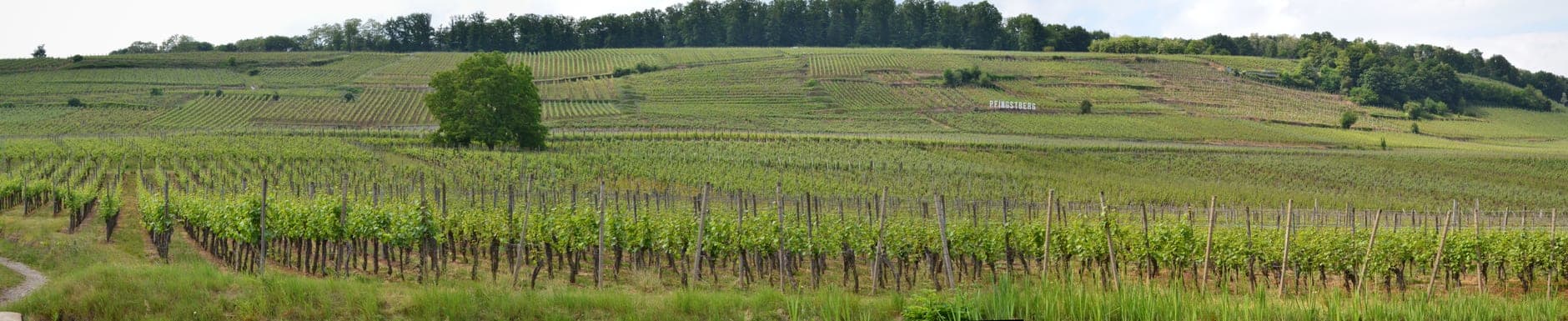
Alsace Grand Cru Wine Travel Guide (Alsace, France)
Explore all 51 Alsace Grand Cru vineyards — Riesling, Gewurztraminer, Pinot Gris, and Muscat from classified terroirs. B
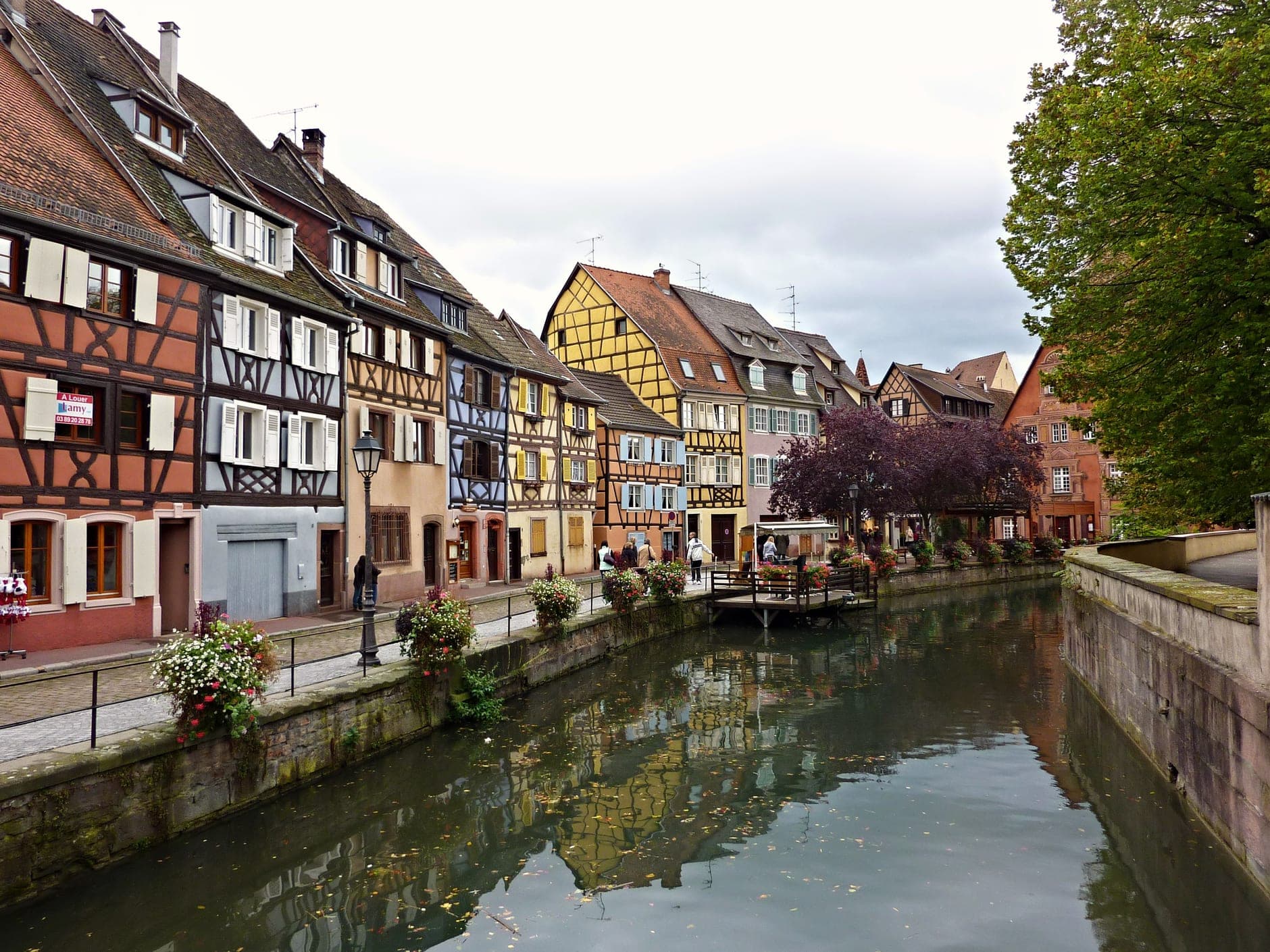
North of Colmar Wine Travel Guide (Alsace, France)
Discover the charming wine region north of Colmar in Alsace, France. This area is known for its picturesque villages, wo
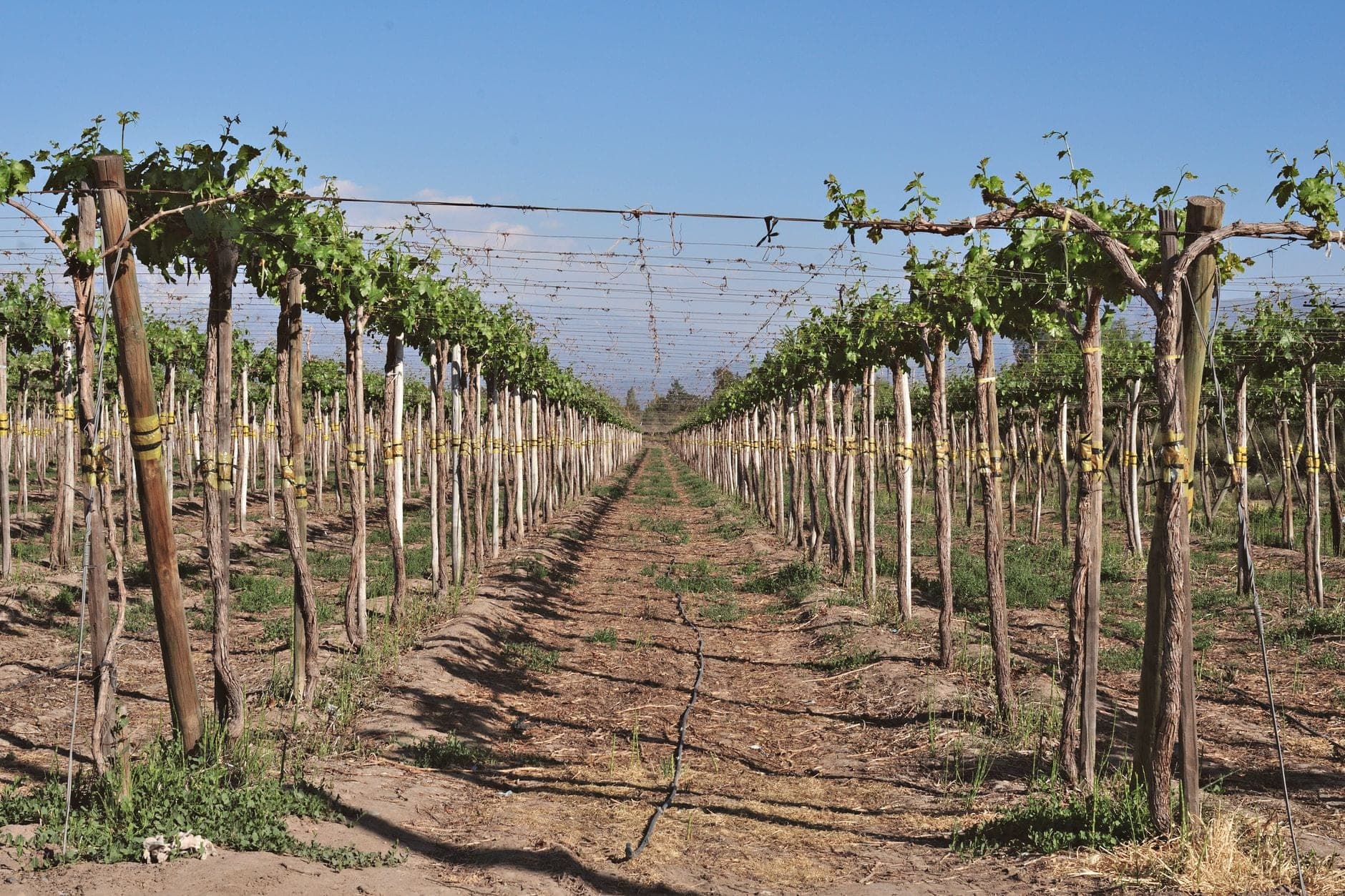
South of Colmar Wine Travel Guide (Alsace, France)
The southern part of Colmar in Alsace, France, is a wine lover's dream. This picturesque region boasts rolling vineyards
Strasbourg Wine Travel Guide (Alsace, France)
Strasbourg-Alsace offers a unique blend of French and German cultures, reflected in its wine, cuisine, and architecture.
Best Time to Visit Alsace-France
June-September
September-November
High during Christmas markets (Dec), moderate in summer
Average Monthly High (°C)
Low (550mm/year, rain shadow of Vosges)Wines of Alsace-France
Key grape varieties and wine styles produced in the region
Primary Grape Varieties
Wine Styles
Food & Dining in Alsace
French-German — AlsatianMust-Try Dishes
- Choucroute garnie (sauerkraut with charcuterie)
- Tarte flambée (Flammekueche)
- Baeckeoffe (meat and vegetable casserole)
Where to Eat
- €€€€
Auberge de l'Ill
Three Michelin stars in Illhaeusern, the Haeberlin family's legendary restaurant since 1882 beside the Ill river
- €€€€
Le Chambard — Olivier Nasti
Two Michelin stars in Kaysersberg (Alsace's prettiest village), modern Alsatian cuisine
Auberge de l'Ill needs months of advance booking. Christmas market season (Nov–Dec) is extremely busy — reserve everywhere early.
Where to stay in the vineyard
Sleep among the vines — our pick of vineyard hotels and estate stays in France.
View France vineyard hotelsUpcoming Wine Festivals in France
See all festivalsHidden Gems Nearby
Discover more hidden gemsDomaine de la Bongran
WTG PickBurgundy, France
A Burgundy rebel who makes Chardonnay on their own terms, far from the tourist trail of Beaune and Puligny.
Chardonnay
Domaine Huet
WTG PickLoire Valley, France
World-class Chenin Blanc with no queues, no hype, just pure Loire magic in a village setting.
Chenin Blanc
Mas de Daumas Gassac
Languedoc, France
Grand cru quality at a fraction of Bordeaux prices, in a wild, beautiful valley most tourists never find.
Cabernet Sauvignon · Rosé · White Blend
Continue Exploring
Did You Know?
51
Grands Crus — Alsace's ladder of top single vineyards
7
noble grapes, led by Riesling and Gewürztraminer
Driest
corner of France — the Vosges shelter Alsace from the rain
4×
Alsace changed between France and Germany four times since 1871
Ready to visit Alsace-France?
Build your personalised day-by-day itinerary — choose your travel style and trip length, get accommodation and tour picks per day, and email it to yourself to take along.
Plan Your Visit to Alsace-France
Tours & Experiences via GetYourGuide
This page contains affiliate links. We may earn a commission at no extra cost to you.