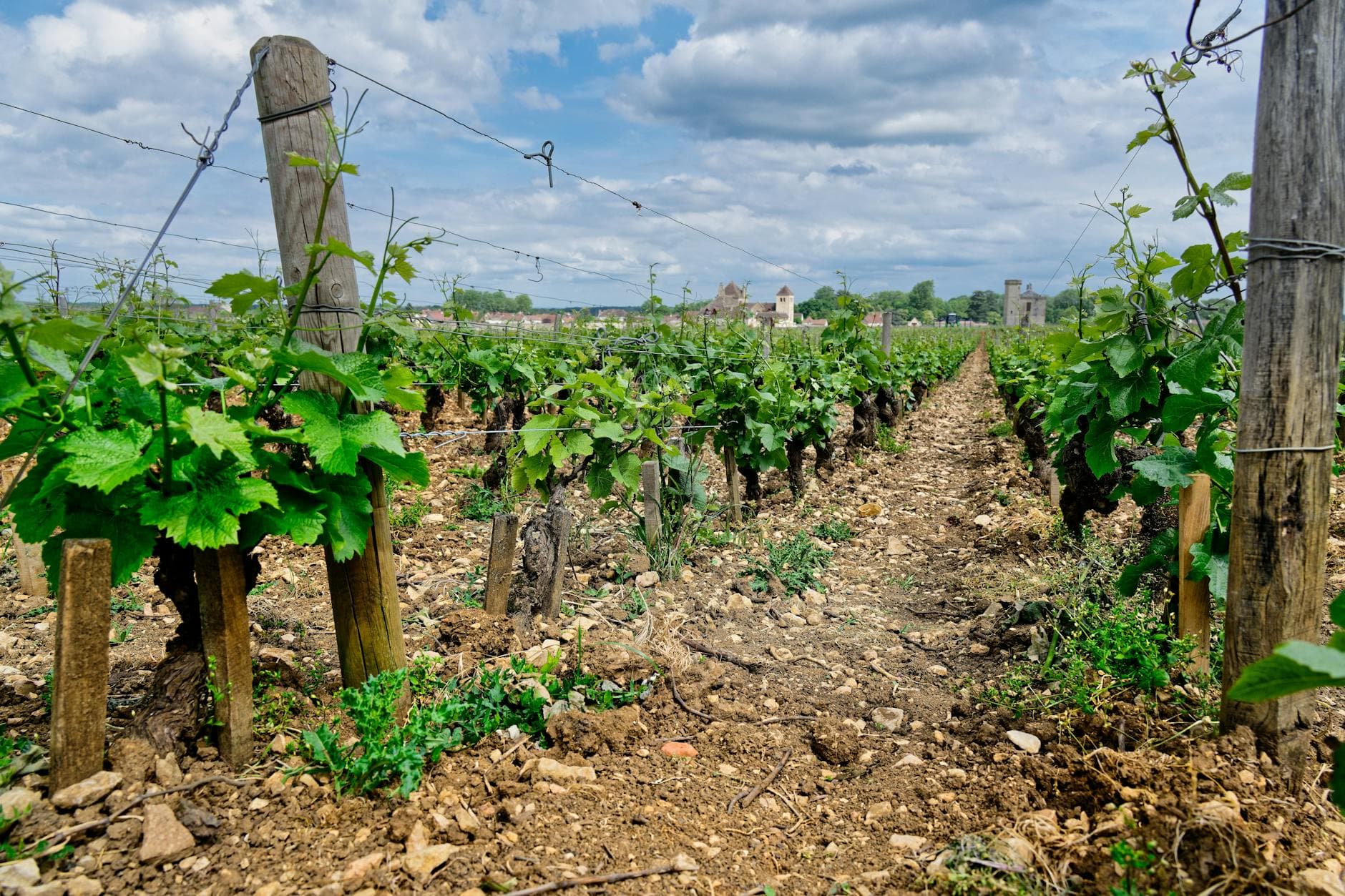
Jura Wine Region Guide: France's Most Distinctive Wine Country
Jura Wine Region Guide: France's Most Distinctive Wine Country
The Jura sits at the end of a long road that most French wine tourists never take. It is smaller than any serious Burgundy domaine would care to admit, produces wine styles the rest of France forgot to invent, and has spent the last twenty years becoming one of the most talked-about regions on earth. None of that was planned.
The wines here are unusual in the way that genuinely original things tend to be: not strange for effect, but strange because the place itself insists on it. A yeast veil grows on the surface of ageing white wine. Grapes dry on racks through winter. A bottle shape exists that was designed specifically for one wine and one wine only. The region chose its own path and then kept walking it, even while Burgundy — two hours west by car — was rewriting the international rulebook for French wine.
Today, those decisions look prescient. Sommeliers who spent the 2010s evangelising Jura wines now compete with a generation of wine drinkers who discovered the region through natural wine lists and word of mouth. Producers who farmed the same hillsides as their grandparents have become cult names in Tokyo, London and New York. And visitors are starting to make the trip specifically for the Jura — not as an afterthought to Beaune.
This guide covers the whole region: all five appellations, all five grape varieties, both key winemaking styles, how to visit, and what to drink when you get there. For detailed producer profiles in Arbois and a deep dive into vin jaune winemakers, see our detailed Arbois producer guide.
Where is the Jura?
The Jura wine region occupies a narrow strip of eastern France, running roughly north to south for about 80 kilometres along the lower slopes of the Jura mountains. It lies between Burgundy to the west and Switzerland to the east, with Geneva reachable in two hours and Dijon in one.
The vineyards sit mostly between 250 and 500 metres altitude on the foothills known as the Revermont — the first geological step up from the Bresse plain to the mountain plateau. The soils are a patchwork of blue and grey marls, limestone, and the distinctive red and black "lias" clays that mark the most prestigious vineyards. This variety of substrates, sometimes changing every few hundred metres, is part of why Jura wines resist easy generalisation.
The climate is semi-continental: warm summers, cold winters, high rainfall compared to Burgundy or the Rhône. Spring frost is a constant threat. The high rainfall supports a range of vine diseases that require careful canopy management, and the cooler temperatures allow for long, slow ripening that preserves acidity. This is not an easy climate for viticulture, which partly explains why the region covers only around 2,000 hectares — compared to Burgundy's 28,000 hectares and Bordeaux's 120,000.
The departmental capital, Lons-le-Saunier, sits at the southern end of the wine route. The town most visitors use as a base is Arbois, roughly in the middle — a handsome market town with wine caves, restaurants and good transport links to Paris via TGV to Dole.
The 5 Jura Appellations
The Jura wine map is more complex than the region's small size would suggest. Five appellations operate simultaneously, some overlapping geographically, each with its own rules on grape varieties and winemaking.
Arbois
Arbois received its AOC status in 1936 — the first appellation d'origine contrôlée in France. That distinction comes with a certain weight of history, reinforced by the town's connection to Louis Pasteur, who grew up here, owned vines here, and conducted some of his early microbiology experiments on local wines. (He was trying to understand fermentation, which the Jura provides in unusual abundance.)
As the largest Jura appellation by volume, Arbois covers all five of the region's permitted grape varieties and all major wine styles: red, white, rosé, vin jaune, vin de paille, and Crémant. It includes the village of Pupillin — sometimes called "the Burgundy of the Jura" — which has its own sub-appellation, Arbois-Pupillin, and a concentration of biodynamic and natural wine producers that punches well above its size.
For the full breakdown of Arbois producers, vineyard sites, and specific vin jaune recommendations, see our Arbois guide.
Château-Chalon
The most prestigious Jura wine comes not from a château but from a fortified village perched on a limestone bluff above the Seille valley. Château-Chalon produces only one wine: vin jaune. And it produces it only in years when the quality committee decides the harvest merits it.
That last point is unusual enough to be worth emphasising. In poor vintages, the Château-Chalon producers declassify their entire production to Côtes du Jura. There is no Château-Chalon produced from those years. The appellation effectively ceases to exist until conditions improve. This voluntary quality control — rare in the wine world — is part of why a bottle of Château-Chalon commands the prices it does.
The soils here are a specific mix of blue and black marls that some argue give Château-Chalon a particular intensity and structure absent from vin jaune made elsewhere. That argument is contested, but the wines' reputation is not.
L'Étoile
At the southern end of the wine route, the small appellation of L'Étoile takes its name from the star-shaped fossil crinoids found in its limestone soils. The area is warmer than Arbois and produces wines with slightly more roundness and weight, though still firmly in the mineral, precise style associated with Jura whites.
L'Étoile is known particularly for white wines — both still and sparkling — made from Chardonnay and Savagnin. It also produces vin jaune, though in smaller quantities than Arbois or Château-Chalon. Crémant du Jura from the L'Étoile area is worth seeking out.
Côtes du Jura
The broad regional appellation, Côtes du Jura, covers the entire wine-producing strip and serves as the entry point for visitors exploring the region for the first time. Wines range widely in quality and price, from basic cooperative bottlings to serious estate wines that choose the regional label for practical reasons.
If you are buying Jura wines to try at home before visiting, Côtes du Jura is the label most likely to appear in export markets. It covers all styles and all five grape varieties.
Crémant du Jura
The Jura's traditional-method sparkling wine appellation produces wines from Chardonnay, Pinot Noir, Poulsard, and Savagnin. Crémant du Jura is made using the same method as Champagne — secondary fermentation in bottle, minimum 12 months on lees — but at roughly half the price.
Quality has improved significantly over the past decade. The best examples show real depth, with a slightly earthier, more mineral character than Champagne and excellent acidity. Henri Maire produces large volumes; smaller producers make more character-driven bottles. Worth picking up a case to bring home.
Jura's 5 Grape Varieties
The Jura uses only five grape varieties across all appellations, a restriction that gives the region its coherent identity. Two are unique to the Jura (or nearly so); three are found elsewhere but behave differently here.
Savagnin is the Jura's most distinctive white grape — not related to Sauvignon Blanc despite the name. In its ouillé (non-oxidative) form it produces tight, mineral whites with citrus and herbal notes. Under the voile yeast veil (sous voile), it becomes vin jaune: walnut-scented, amber-tinted, with extraordinary ageing potential. Savagnin is genetically identical to Switzerland's Heida and Germany's Traminer — the Jura may be its ancestral home.
Chardonnay grows throughout the region and is made in both ouillé and sous voile styles. Jura Chardonnay in its ouillé form can resemble white Burgundy but with a more mineral, sometimes flintier edge. In oxidative style it takes on hazelnut and beeswax notes. Both styles are worth exploring.
Poulsard (sometimes called Plousard in the south of the region) is a thin-skinned red grape that produces wines more garnet than ruby, almost rosé-like in colour, with cherry, raspberry and floral notes. The tannins are barely perceptible. It is often described as the lightest serious red wine in France — and the best examples are genuinely special.
Trousseau produces darker, more structured reds with black fruit, pepper and an earthy mineral quality. It is more rare than Poulsard and often produced in small quantities from older vines. It responds well to both light extraction and more serious barrel ageing.
Pinot Noir completes the palette. Grown in the Jura since the medieval period, it is used both for still red wines and as a blending component in Crémant. Jura Pinot Noir tends to be leaner and more acidic than Burgundy examples, which in the current wine moment reads as a virtue.
The Two Signature Styles: Ouillé vs Sous Voile
No aspect of the Jura is more important for visitors to understand than the distinction between its two winemaking philosophies. This is not a technical footnote — it determines what you are drinking and why it tastes the way it does.
Ouillé means "topped up." In this approach, the winemaker regularly replenishes evaporated wine in the barrel to keep oxygen out. The result is fresh, clean, mineral-driven wine — white wines that show fruit, acidity and terroir without oxidative character. A Chardonnay made ouillé from Arbois is a different wine from one made sous voile, even if it comes from the same vineyard.
Sous voile means "under the veil." In this approach, the barrel is deliberately not topped up. A layer of yeast — the voile — forms on the surface of the wine as protection against harmful oxidation. The wine ages behind this living shield, slowly developing notes of walnut, dried fruit, curry and beeswax. This is the method used to produce vin jaune, and it can also be applied to Chardonnay to produce what is sometimes called "Chardonnay ouillé" or — more confusingly — "Chardonnay sous voile," which is not vin jaune because vin jaune is Savagnin only.
The distinction is unique to the Jura. Sherry uses a similar yeast veil (flor) but the wines are fortified. Jura sous voile wines are unfortified, making the biology more precarious and the results more variable — in the best possible sense. Many producers make both styles side by side. Visitors should try both.
A useful starting point: order ouillé first to understand the base fruit and terroir, then order the sous voile version of the same producer's wine to see what ageing under the voile adds.
Vin Jaune: The Jura's Most Famous Wine
Vin jaune — yellow wine — is the wine that defines the Jura internationally. It is made from Savagnin grapes aged under the voile yeast veil in old oak barrels (pièces) for a minimum of six years and three months from the harvest date. Not five years. Not six years. Six years and three months exactly, as specified by law.
During that time, the wine loses roughly 40% of its volume to evaporation. The yeast veil metabolises certain compounds in the wine, creating new aromatic molecules that give vin jaune its characteristic profile: walnut above all, then dried apricot, curry, beeswax, toast, and a kind of savoury mineral depth that no other wine in France quite replicates.
The wine is bottled in the clavelin: a 62cl bottle whose unusual volume is said to represent what remains of a standard 75cl litre after the voile has done its work over the ageing period. Whether that story is strictly accurate or somewhat mythologised, the clavelin is vin jaune's signature vessel, and you will not mistake it for anything else on a wine list or shop shelf.
Approaching vin jaune for the first time, the most important adjustment is temperature. Serve it cool, not cold — around 12°C — in a larger glass than you would use for a standard white. The wine needs air to open up. Expect the walnut note immediately; look for the citrus and mineral quality beneath it. Vin jaune is not a dessert wine — it is dry, firmly structured, and high in acidity. It pairs with food brilliantly and will age for decades.
The first pour can be disorienting if you expect something that tastes like other white wines. It does not. Give it ten minutes in the glass and it begins to make its own sense.
For specific producer recommendations, ageing vintages, and a detailed guide to the Arbois vin jaune producers, see our Arbois guide.
Vin de Paille: The Rarest Jura Wine
Vin de paille — straw wine — is made by drying harvested grapes on straw mats or hanging them from rafters for two to three months before pressing. During drying, the grapes lose water and their sugars concentrate. What results after fermentation and several years of barrel ageing is a wine of profound sweetness, high residual sugar, and relatively high acidity — a combination that creates extraordinary balance.
The flavours run to dried apricot, honey, orange peel, fig, and toasted brioche. Good vin de paille is not cloying: the acidity cuts through the sweetness and the finish is long and clean. It is sold in 37.5cl half-bottles, typically, because yields are so low that a full 75cl would require more grapes than most growers can justify drying. Prices reflect this: expect €40–80 for a half-bottle.
It is among the rarer serious dessert wines in France. The labour involved in drying and monitoring the grapes, combined with the uncertainty of fermentation (high-sugar musts can be unpredictable), means many producers make it irregularly or in very small quantities. When you find a good example on a restaurant list, order it.
The Route des Vins du Jura
The Route des Vins du Jura runs approximately 80 kilometres from Arbois in the north to Lons-le-Saunier in the south, following the D469 and related routes along the base of the Jura foothills. It is well-signposted, manageable as a two-day drive with stops, and remarkably free of the tourist infrastructure that can make the Burgundy wine routes feel curated rather than real.
Arbois is the natural starting point: two hours from Paris by TGV to Dole (then 20 minutes by car), with the greatest concentration of producer visits, restaurants and accommodation. The town centre has multiple caves where you can taste before committing to a visit, and the Maison de Louis Pasteur is worth a brief stop.
Pupillin, five minutes south of Arbois, is a village of fewer than 200 inhabitants that contains a disproportionate share of the region's most interesting producers. A sign at the village entrance claims it is "the world capital of Poulsard" — an accurate if modest boast. The cooperative here produces excellent entry-level wines. The natural wine producers are grouped on a hillside that you can walk between them.
Poligny, a pleasant market town south of Arbois, sits at the heart of Comté production territory. The relationship between Comté and Jura wine — particularly vin jaune — is close enough to be worth understanding: the same raw milk that makes Comté is fermented and pressed by the same farmers who tend vines. Stop at one of the affineurs (cheese agers) here.
Château-Chalon requires a small detour off the main route but is worth it purely for the view: the village sits on a dramatic limestone cliff above the Seille gorge, with vineyards falling steeply below. It is a small and quiet village with no wine bars, but several producers offer appointments.
Lons-le-Saunier, the departmental capital at the southern end, is a convenient lunch stop and houses the L'Étoile appellation to its east. The city itself is unremarkable by French standards but useful as an access point if you are travelling from Lyon or Geneva.
For trip planning context, including how to structure a multi-region French wine trip, see our wine tour planning guide.
The Jura and the Natural Wine Movement
The Jura's relationship with the natural wine world is both real and somewhat overstated, depending on who is talking. What is accurate: the region attracted a significant wave of winemakers from other parts of France — and from other countries entirely — who arrived in the 1990s and 2000s looking for affordable land, a pre-existing tradition of minimal intervention, and a culture that had not yet been colonised by the international wine press's preferred aesthetics.
What those arrivals found was a community of growers who had been farming the same way for generations not as a philosophical statement but because it was what you did here. The Jura's indigenous grape varieties had not been replaced by Chardonnay and Cabernet. The sous voile tradition was as old as the region itself. Farming with chemistry was more expensive than farming without it on marginal hillsides where margins were thin.
Jean-François Ganevat — whose domaine in Rotalier near Lons-le-Saunier became one of the most sought-after addresses in natural wine globally — represents this alignment between tradition and philosophy. His wines are expensive now and nearly impossible to buy at release. But the domaine pre-dates the natural wine conversation; it survived because the Ganevat family kept going when others left.
Stéphane Tissot in Arbois is a different story: a trained oenologist who converted to biodynamics and now farms over 50 hectares in certification, making wines across the full spectrum of Jura styles. His domaine is visitor-friendly, produces large enough volumes to be found in export markets, and makes an excellent starting point for understanding what the region can do at scale.
The natural wine dimension makes the Jura worth exploring even for drinkers who find natural wine debates tiresome. The wines here are interesting because the terroir and tradition are interesting — the philosophy followed the fact.
When to Visit
February brings the Percée du Vin Jaune, the Jura's most famous annual event. On the first weekend of February, a different village hosts the official tapping of the new vin jaune release — the current vintage being the wine that has completed its mandatory six years and three months ageing. Producers pour samples, the village fills with visitors, and the event has a genuine festival atmosphere rather than the commercial polish of, say, the Nuits-Saint-Georges sale. Tickets are inexpensive and sell out; book early. The 2026 event was held in Montigny-lès-Arsures.
September and October are the harvest months. The pace changes, the cellar doors are quieter (staff are busy with picking and sorting), but the vineyards are at their most visually compelling and you can sometimes arrange to see picking in progress. Call ahead rather than arriving unannounced.
Summer (June to August) is the practical choice for families and those with limited flexibility — the weather is reliable, the Route des Vins is navigable, and most producers are open. July and August bring some producer closures as families take holidays, and the best-known domaines will be busy. Midweek visits work better than weekends in August.
Spring (April to June) is often overlooked but excellent: post-frost anxiety from the producers makes them more communicative than usual, the landscape is green and dramatic, and accommodation is easier to secure.
Where to Stay
Arbois works as a base for the whole wine route. The town is small enough to walk across in twenty minutes but has enough restaurants, bars and wine shops to keep you occupied between producer visits. Accommodation ranges from basic chambres d'hôtes (farm stays offering rooms, typically including breakfast and often a glass of the house wine) to the Hôtel Jean-Paul Jeunet, which attaches the region's most serious restaurant — two Michelin stars, wine list built around Jura producers — to a comfortable boutique hotel. Book Jean-Paul Jeunet well in advance, particularly for weekends and the harvest period.
Chambres d'hôtes scattered through Pupillin and the surrounding villages offer a more immersive experience, often on working wine estates. This option suits visitors who want to talk to growers over breakfast rather than treat the region as a drive-through.
For visitors arriving from Switzerland or doing the Jura as a day trip from Dijon, same-day return is feasible but limits you to one or two stops. Two nights minimum is better.
How to Get There
By train: The fastest connection from Paris is the TGV to Dole-Ville (approximately 1 hour 20 minutes from Paris Gare de Lyon), then a 20-minute drive to Arbois. Car hire at Dole station is limited — book ahead. Alternatively, TGV to Besançon Franche-Comté TGV (new station, west of Besançon) then connect by regional train to Mouchard/Arbois, though this adds time.
By car from Dijon: The A39 motorway south from Dijon reaches Dole in around 30 minutes; Arbois is another 25 minutes east on the N83. Total journey approximately 60 minutes. This makes a Burgundy-to-Jura combination trip highly practical — many visitors use Beaune as a base and make the Jura a day trip, though overnight is better.
From Switzerland: Geneva to Arbois is approximately 1 hour 45 minutes to 2 hours on the A40 through France. The Swiss border is close enough that some Jura producers have significant Swiss customer bases. Zurich is around 2.5 hours by road.
From Lyon: Approximately 1 hour 30 minutes north on the A6/A39 toward Lons-le-Saunier. This makes a southern Jura and northern Rhône combination trip workable.
The Jura has no commercial airport. The nearest useful airport is Lyon-Saint Exupéry (international connections) or Geneva (Easyjet, Ryanair and full-service), with car hire from either.
Jura Food Pairings
The Jura has a food culture that was built around its wines, which makes the matching unusually intuitive once you understand the local ingredients.
Comté and vin jaune is the classic pairing: a good 24-month Comté — its nutty, caramel depth meeting the walnut and dried fruit of the wine — is one of the more convincing natural pairings in French gastronomy. Order both at any serious restaurant in the region and you will understand why neither needs much else on the plate.
Poulet au vin jaune — Bresse chicken braised with vin jaune, cream, and morel mushrooms — is the region's most celebrated dish. It appears on nearly every serious menu. The sauce requires a generous pour of vin jaune during cooking, which makes it either a commitment to the style or a test of willingness. It is worth ordering at least once.
Morteau sausage, smoked over pine and juniper, is the Jura's answer to charcuterie. It pairs best with Poulsard or Trousseau: the sausage's smoke and fat need the red's acidity and light tannin rather than a heavy Syrah or Cabernet.
River fish — particularly pike and perch from the Doubs and Loue rivers — appear on menus through spring and summer. An ouillé Savagnin or a more structured Chardonnay handles fish better than the sous voile style, which can overwhelm delicate freshwater fish.
Vin de paille with blue cheese — Bleu de Gex, a local blue with a mild, earthy character — follows a classic sweet-with-pungent logic. The acidity in the vin de paille cuts through the cheese; the sweetness flatters it.
For context on how to approach wine tasting at producer visits, see our wine tasting etiquette guide.
Recommended Producers
These are the producers worth knowing before you visit. For in-depth profiles of the Arbois producers and specific vintage recommendations, the Arbois guide has the detail.
Stéphane Tissot (Arbois): The region's most complete producer — biodynamic farming, full range of styles, international distribution, and a well-run visitor experience. Start here if you are new to the region.
Jean-François Ganevat (Rotalier): The Jura's most sought-after name in natural wine circles. Wines are allocated and hard to find, but the domaine's L'Étoile location makes it worth the detour if you can secure a visit.
Jacques Puffeney (Montigny-lès-Arsures): The "pope of Arbois" retired in 2014, but his wines — particularly his vin jaune and Trousseau — remain benchmarks. Look for older vintages on restaurant lists.
Domaine de la Pinte (Arbois): One of the larger biodynamic domaines, producing across the full range. Reliable quality and good export availability. An accessible entry point for vin jaune.
Frédéric Lornet (Montigny-lès-Arsures): Produces structured, age-worthy vin jaune from old Savagnin vines. Less well-known internationally than Tissot, which means easier cellar door access and better value.
Château d'Arlay (Arlay): The region's largest and most historic estate, with medieval fortifications and a working domaine. The full range covers Côtes du Jura across all styles. Good for large group visits.
Domaine Rolet (Arbois): A major producer by Jura standards — family-owned, consistent quality across a full range, good visitor facilities. Their Trousseau is a strong buy.
Henri Maire (Arbois): The region's largest négociant operation, important for building the Jura's reputation in export markets through the 20th century. The cellar door in Arbois town centre is the easiest tasting opportunity for casual visitors who haven't booked appointments.
Budget Guide
Jura wine represents genuine value compared to equivalent Burgundy bottlings, though the most prestigious wines carry corresponding prices.
Crémant du Jura: €8–15 at producer prices, €10–20 in shops. Some of the best value traditional-method sparkling wine in France.
Ouillé whites (Chardonnay, Savagnin): €15–30 for domaine bottlings from good producers. Entry-level Côtes du Jura whites from cooperatives start around €8–12.
Poulsard and Trousseau: €15–30 for estate wines. Light reds that suit current drinking rather than extended cellaring.
Vin jaune: €35–60 for the 62cl clavelin from respected Arbois producers. Château-Chalon commands €50–90 or more depending on vintage and producer. Older vintages from good years will exceed these figures.
Vin de paille: €40–80 for a 37.5cl half-bottle. Rarer and more expensive to make than vin jaune per litre; the half-bottle format masks the price per glass when ordered at a restaurant.
Cellar door prices are typically 10–20% below restaurant and retail prices. Many producers offer tasting fees that are waived on purchase.
Frequently Asked Questions
Is Jura wine suitable for beginners?
Yes, with some direction. The ouillé whites — fresh, mineral Chardonnay and Savagnin made without oxidative ageing — are approachable for anyone who likes white Burgundy or Alsace wines. Poulsard, the region's lightest red, works for drinkers who find Pinot Noir appealing. The sous voile styles, including vin jaune, require a willingness to engage with something genuinely unfamiliar; they are worth the effort but are not the obvious starting point if you have never tried the region.
What is the difference between vin jaune and Sherry?
Both use a yeast veil to protect wine during oxidative ageing, but the comparison ends there. Sherry is fortified — spirit is added to raise the alcohol before ageing — while vin jaune is unfortified, relying entirely on the voile yeast for protection. Vin jaune is a table wine (typically 13–14% ABV); dry Sherry (Fino, Manzanilla) is usually 15–17%. The flavour profiles overlap in the walnut and savoury dimensions, but vin jaune has a more pronounced acidity and mineral quality, and it comes from a single terroir rather than a solera blending system. For more on how wine styles from different traditions compare, see our old world vs new world guide.
Is the Jura worth a special trip, or is it better as a Burgundy add-on?
Both are legitimate. The Jura works as a two-night add-on to a Burgundy trip — Beaune to Arbois is 90 minutes — and many visitors discover the region this way. But the Jura also rewards a focused visit on its own terms: the terroir, the styles, and the producer culture are different enough from Burgundy that treating it as a side trip can leave you feeling you skimmed something that deserved more attention. A dedicated three-night stay, following the Route des Vins at a reasonable pace, gives the region what it merits.
Where can I buy Jura wine outside France?
Export availability has improved dramatically over the past decade. Stéphane Tissot wines appear in most major UK, US, and Australian wine merchants. Domaine de la Pinte and Domaine Rolet have broader distribution than smaller producers. In the UK, Caves de Pyrène specialises in Jura. In the US, Kermit Lynch Wine Merchant and Louis/Dressner are the key importers. For the cult natural wine producers — Ganevat in particular — your best option is a specialist natural wine retailer or restaurant list; most allocation goes through trade channels.
How does Jura Chardonnay compare to Burgundy Chardonnay?
Jura Chardonnay in its ouillé form is leaner, more mineral, and typically lower in alcohol than equivalent Burgundy. The oak treatment tends to be more restrained. There is often a flinty, almost smoky quality in the best Arbois and Côtes du Jura Chardonnay that distinguishes it from the more opulent, stone-fruit driven profile of Meursault or Puligny. In its sous voile form, Jura Chardonnay diverges entirely from Burgundy — the oxidative character is the point, not a flaw. Both styles are worth exploring alongside Burgundy comparisons; they illuminate each other well.
What is the Percée du Vin Jaune?
The Percée du Vin Jaune (tapping of the vin jaune) is an annual festival held on the first weekend of February in a different Jura village each year. The centrepiece is the ceremonial opening of the first bottles of the new vin jaune release — the wine that has completed its mandatory six-year-and-three-month ageing in the current year's cycle. Producers pour samples throughout the village, there are food stalls, and the event draws around 25,000 visitors over the weekend. Tickets (around €12–15) are sold in advance through the website and include a tasting glass. It is informal by French festival standards and worth attending if you are planning a winter visit to the region.
See Also
- Arbois Wine Guide: Producers, Vin Jaune and Visiting Tips — our detailed guide to the Jura's largest and most important appellation, with producer profiles and cellar door recommendations
- Wine Regions of France — overview of all major French wine regions
- Burgundy Wine Region Guide — the Jura's larger neighbour to the west, often paired with a Jura visit
- How to Plan a Wine Tour — practical guidance on structuring a wine travel itinerary
- Wine Tasting Etiquette Guide — how to conduct yourself at domaine visits, what to ask, and how to taste effectively
- Old World vs New World Wine Guide — context for understanding how Jura wines fit into the broader wine world


Wines of Jura Wine Region Guide: France's Most Distinctive Wine Country
Key grape varieties and wine styles produced in the region
Primary Grape Varieties
Wine Styles
Ready to visit Jura?
Build your personalised day-by-day itinerary — choose your travel style and trip length, get accommodation and tour picks per day, and email it to yourself to take along.
Upcoming Wine Festivals in France
See all festivalsHidden Gems Nearby
Discover more hidden gemsDomaine de la Bongran
WTG PickBurgundy, France
A Burgundy rebel who makes Chardonnay on their own terms, far from the tourist trail of Beaune and Puligny.
Chardonnay
Domaine Huet
WTG PickLoire Valley, France
World-class Chenin Blanc with no queues, no hype, just pure Loire magic in a village setting.
Chenin Blanc
Mas de Daumas Gassac
Languedoc, France
Grand cru quality at a fraction of Bordeaux prices, in a wild, beautiful valley most tourists never find.
Cabernet Sauvignon · Rosé · White Blend
Book Your Jura Wine Country Stay
Compare hotels, vineyard B&Bs and rentals across Booking, Airbnb and more in one search.
Compare stays near the vineyardsStay22
Plan Your Jura Wine Region Guide: France's Most Distinctive Wine Country Trip
Estimate your Jura Wine Region Guide: France's Most Distinctive Wine Country trip cost
Budget calculator with accommodation, food, wine, and transport estimates.
Try itCompare Jura Wine Region Guide: France's Most Distinctive Wine Country with other regions
Side-by-side comparison of cost, climate, wine styles, and more.
Try itWhen to visit Jura Wine Region Guide: France's Most Distinctive Wine Country
Harvest dates, peak season, and the best months for wine travel.
Try itThis page contains affiliate links. We may earn a commission at no extra cost to you.