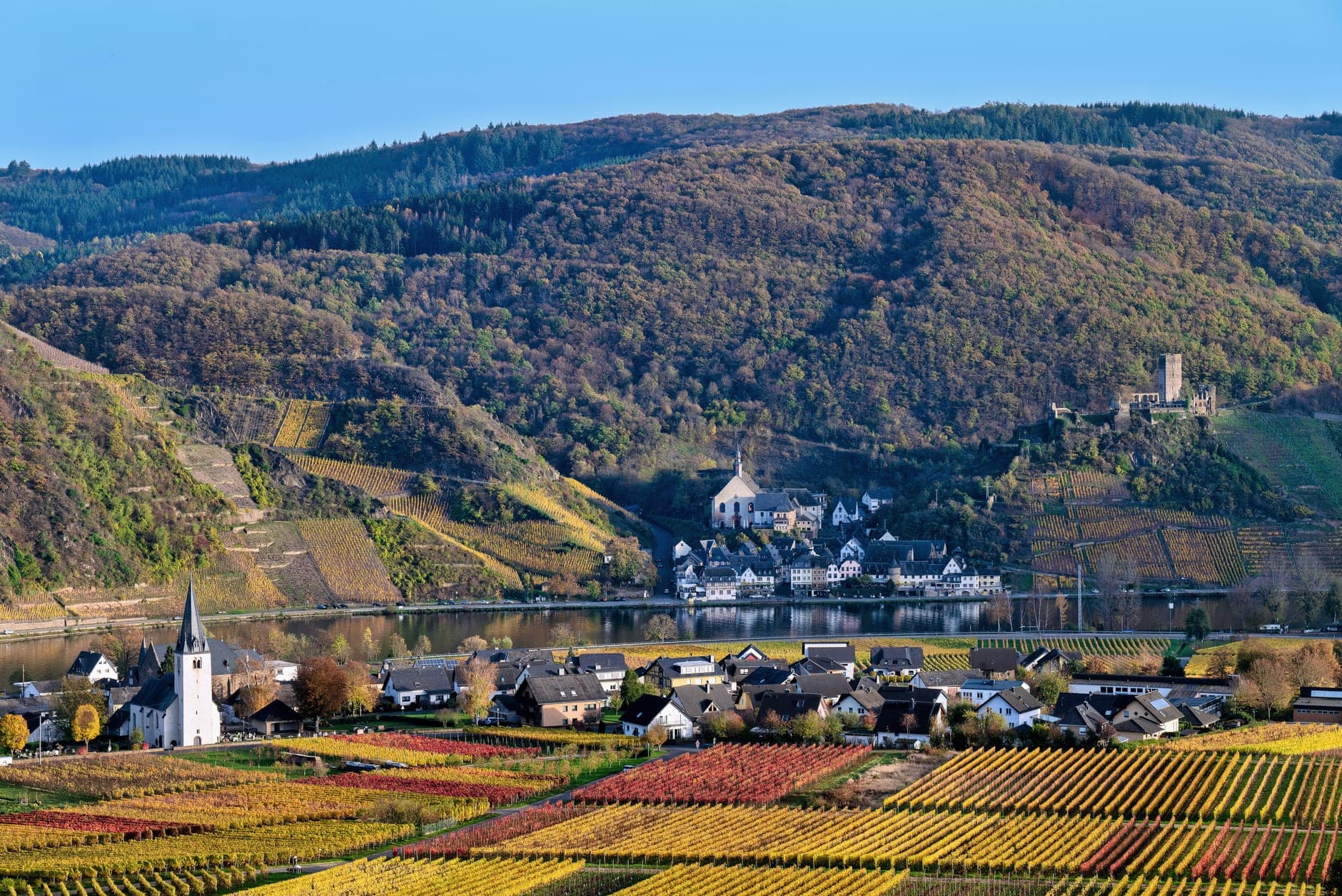
 Photo: Rolf Kranz / Wikimedia Commons
Mosel Wine Region Guide
The Mosel's steep slate terraces yield Germany's finest Rieslings — from crisp Kabinett to luscious Trockenbeerenauslese. Plan your German wine trip here.
Key takeaways
- The Mosel is almost entirely Riesling. Decide in advance which style you prefer — off-dry Spätlese (classic, ages 10–20 years) or bone-dry Grosses Gewächs from slate-heavy single vineyards. The same family estate often produces both. Tasting the contrast at one producer (Dr. Loosen or Selbach-Oster do this well) is the clearest way to settle the question.
- Most family estates in the Middle Mosel (Bernkastel, Graach, Wehlen, Zeltingen) accept email or phone appointments — lead time of 1–2 weeks is usually enough outside harvest. JJ Prüm and Egon Müller are the hardest doors; trade relationships or written credentials help significantly. Dr. Loosen is the most accessible major name and a solid first visit.
- Bernkastel-Kues is the best base: most central, best restaurant options (Alte Thorschenke and Weinstube Kesselstatt are reliable), and within 30 minutes of Wehlen, Graach, Zeltingen, and Ürzig. The Saar tributary (Egon Müller country) is 25 minutes south of Trier — a logical add-on if you enter via Trier from Luxembourg.
- The Mosel Radweg cycle path follows the river for 311 km from Perl to Koblenz — one of Germany's most celebrated cycling routes. The flat riverside sections are accessible to any level; the steep vineyard-ridge paths above Bernkastel or Zeltingen are more demanding. May to June and September are the best cycling months.
Where to Stay in Mosel
Make the most of your Mosel wine trip by staying in the heart of wine country. From luxurious vineyard estates to cozy B&Bs, find the perfect accommodation near world-class wineries.
Top areas to stay
- Bernkastel-Kues€€
Postcard-perfect half-timbered town, excellent Riesling tasting rooms
- Cochem€-€€
Castle town, Mosel cruise hub, lively wine bars
- Piesport€-€€
Famous Goldtröpfchen vineyard, quiet and scenic
Mosel wine festivals run May-October in different villages — check the calendar
Stay22
Compare Booking, Airbnb, Hotels.com and more in one search
Editorial pick
Best chateaux to visit in Mosel — top 10 picks 2026
Read the listicle →
Sample itinerary
3 days in Mosel — full day-by-day plan
Read the itinerary →
Vineyard hotels
Vineyard hotels in Mosel — 10 estates where you can stay
Read the guide →
Plan your visit: Plan your Mosel trip — free printable planner for the slate-slope Riesling villages.
Explore the Mosel Wine Map
Explore Mosel appellations, châteaux, and key towns on an interactive map.
Exploring Germany's Enchanting Mosel Wine Region

The Mosel wine region, nestled along the winding Mosel River in western Germany, is a paradise for wine lovers and travelers alike. Known for its steep vineyards, picturesque villages, and world-renowned Riesling wines, this area offers a perfect blend of natural beauty and viticultural excellence.
Mosel Sub-Regions: How to Navigate the Valley
The Mosel appellation divides into four distinct zones, each producing wines with a different character. Understanding them helps you target the right villages before you arrive.
Mittelmosel: The heart of Mosel Riesling, running from Trier northeast to Zell. This is where the greatest Grosses Gewächs and Prädikat wines come from — Piesport (famous for Goldtröpfchen vineyard), Bernkastel (Bernkasteler Doctor, the valley's most storied single plot), Wehlen (Sonnenuhr), Graach (Domprobst and Himmelreich), Zeltingen (Sonnenuhr), Ürzig (Würzgarten, noted for red volcanic soil amid the slate), and Erden (Treppchen and Prälat). If you only have time for one section of the Mosel, this is it.
Untere Mosel (Terrassenmosel): The lower valley around Cochem and Bremm. The visual drama here is extreme — the Bremmer Calmont vineyard above the village of Bremm is Germany's steepest at 68 degrees, accessible only on foot or by chairlift during harvest. Wines from this section tend to be lighter and less concentrated than Mittelmosel, though a handful of small producers (Franzen, Heymann-Löwenstein) make serious slate-driven wines from terraces that require rope access to harvest.
Saar: A cooler tributary south of Trier, the Saar produces bone-dry Rieslings with a steely, almost austere character distinct from the rounder Mittelmosel style. The benchmark estate is Egon Müller at Scharzhofberg — consistently one of Germany's most expensive Rieslings at auction. Van Volxem and Zilliken are the two most accessible producers for visitors. Saar Rieslings have a piercing minerality and require more patience in bottle than their Mittelmosel counterparts.
Ruwer: The smallest zone, a pair of tributaries south of Trier. Lighter-bodied Rieslings with delicate floral notes. Karlsmühle and Max Ferd. Richter are the reference producers. Rarely visited independently — most Mosel itineraries skip the Ruwer unless combining with a Trier city stay, in which case the drive is under thirty minutes.
Towns and Villages
Several charming towns dot the Mosel Valley, each with its own unique character:
- Bernkastel-Kues: A medieval gem famous for its half-timbered houses and the Doctors' wine.
- Cochem: Home to the iconic Reichsburg Castle overlooking the river.
- Traben-Trarbach: Known for its Art Nouveau architecture and underground wine cellars.
- Piesport: A small village renowned for its Roman wine press and excellent Rieslings.
Wine Producers
The Mosel boasts numerous exceptional wineries, many family-owned for generations:
- Dr. Loosen: Internationally acclaimed, producing top-quality Rieslings.
- Joh. Jos. Prüm: Known for elegant, long-lived wines from the Wehlen area.
- Markus Molitor: Offers a wide range of wines, including rare red varieties.
- Selbach-Oster: Produces excellent wines from steep slate slopes.
Many wineries offer tastings and tours, providing insight into the region's winemaking traditions.
Cellar Door Guide: Where to Taste on the Mosel
Dr. Loosen (Bernkastel-Kues): One of the Mosel's most internationally recognised estates. Walk-in tastings are available at their wine shop in Bernkastel's old town centre — no appointment needed for standard range. The focus is on single-vineyard Rieslings from Ürziger Würzgarten and Wehlener Sonnenuhr, available in Kabinett through Auslese Prädikat levels. Mid-premium pricing, excellent for an introduction to how slate terroir expresses across multiple ripeness grades.
JJ Prüm (Wehlen): Appointment only, and the wait is worth it. The Wehlener Sonnenuhr Spätlese is the benchmark Mosel Riesling — steel-bright acidity, peach and lime blossom, and a petrol note that emerges after a decade in bottle. Book at least six months ahead if you want a harvest-period visit; off-season appointments (November through March) are more available. The estate is on the river bank below the famous sundial vineyard, which is visible from the cellar terrace.
Markus Molitor (Traben-Trarbach area): Open cellar door, more accessible than JJ Prüm, and the label system tells you the sweetness level at a glance — white label is dry Riesling (Grosses Gewächs-eligible), black label is off-dry, gold label is noble sweet (Auslese and above). The estate produces across multiple top-rated vineyards including Brauneberger Juffer. Their Wehlener Sonnenuhr Auslese in gold-label years is one of the valley's finest.
Selbach-Oster (Zeltingen): Family estate open daily during the main season (April through October). Johannes Selbach is known for a warm approach to visitors and wines that consistently punch above their price. The estate's Zeltinger Sonnenuhr bottlings — from one of the Mittelmosel's great south-facing slate slopes — are the flagship. An excellent first cellar door for Mosel novices: tasting notes are given in plain language, and the range from entry-level Kabinett to Spätlese is sensibly priced.
Willi Schaefer (Graach): Tiny estate with a cult following, appointment only. Their Graacher Domprobst Auslese is consistently cited as a benchmark for the Mosel's ability to produce complex, long-lived sweet Rieslings with razor-fine acidity. Production is small and the mailing list is long — if you cannot get a tasting appointment, look for these on restaurant lists in Bernkastel or Traben-Trarbach. Weingut Kerpen in Wehlen (also appointment recommended) produces similarly precise Kabinett wines from Wehlener Sonnenuhr for those who prefer dry or off-dry styles.
Accommodations
From cozy guesthouses to luxury hotels, the Mosel caters to various preferences:
- Hotel Moselschloesschen (Traben-Trarbach): Riverside luxury with a wine-themed spa.
- Weingut Clemens (Pommern): A working winery offering comfortable rooms and tastings.
- Historische Weinwirtschaft (Bernkastel-Kues): Charming rooms in a 15th-century building.
For a unique experience, consider staying at a weingut (winery) to immerse yourself in the local wine culture.
Where to Stay on the Mosel
Bernkastel-Kues: The natural Mittelmosel base. Hotel Doctor Weinstuben occupies a half-timbered building in the old town centre, walking distance from the market square and several tasting rooms — mid-range, well-regarded breakfast. Hotel Moseltor sits right on the river bank with a good view across to the Bernkasteler Doctor vineyard above the town. For a producer stay, Weingut Loewen in the nearby village of Leiwen offers guesthouse rooms — book ahead, limited availability.
Cochem: Hotel Alte Thorschenke is a 14th-century building with castle views and is one of the Mosel's most photographed hotel facades — premium tier, worth booking for a special-occasion night. Multiple mid-range B&Bs are available in the town centre. Cochem is busier with day-trippers than Bernkastel-Kues; if you want quiet evenings, choose accommodation outside the central pedestrian zone.
Schloss Lieser (near Bernkastel-Kues): A 19th-century Rhineland Gothic castle converted into a luxury hotel, one of the Mosel's most photographed buildings and the most atmospheric single-property splurge on the river. The estate also has a winery. Premium tier — rates run €200–400 per night in season. Worth one or two nights on a special trip rather than as a base for extended cellar door touring.
Traben-Trarbach: The Art Nouveau town. Hotel Bellevue occupies a river-facing Belle Époque building with one of the best Mosel views from a hotel breakfast room — mid-range, central. Traben-Trarbach is a good base for tasting Markus Molitor and exploring the central Mittelmosel without the price premium of Bernkastel-Kues in high season.
Practical booking note: during Bernkasteler Weinfest (first weekend of September) and the main harvest period (late September through mid-October), properties across the entire valley fill weeks ahead. At harvest particularly, accommodation within 15 km of the top estates becomes scarce by mid-August. Book the harvest period no later than July, earlier if you want specific towns.
Dining
Mosel cuisine perfectly complements its wines, featuring local specialties and international fare:
- Schanz Restaurant (Piesport): Michelin-starred dining with an extensive wine list.
- Zeltinger Hof (Zeltingen): Traditional Mosel dishes with a modern twist.
- Weinstube Kesselstatt (Trier): Historic wine tavern serving regional specialties.
Don't miss trying local dishes like Riesling soup or Winzerschnitzel (schnitzel with a wine sauce).
Wine Shops & Bars
The Mosel region offers numerous options for wine enthusiasts to explore and taste local wines:
- Vinothek Bernkastel-Kues: Features over 150 regional wines for tasting and purchase.
- Vinothek im Weingut Markus Molitor (Wehlen): Offers tastings of their award-winning wines.
- Weinstube Kesselstatt (Trier): Historic wine bar with an extensive selection of Mosel wines.
- Weinhaus Porn (Bernkastel-Kues): Family-run wine shop with a cozy tasting room.
Many wineries also have on-site shops where you can taste and buy directly from the producer.
Other Shops
While wine dominates, the Mosel region offers other shopping experiences:
- Cochemer Weinmuseum (Cochem): Gift shop with wine-related souvenirs and local crafts.
- Heimat Shoppen (Bernkastel-Kues): Sells regional products and artisanal goods.
- Zauberwelt des Weines (Trittenheim): Unique wine accessories and gifts.
Local markets in towns like Cochem and Bernkastel-Kues offer fresh produce and regional specialties.
Attractions
Beyond wine, the Mosel Valley boasts numerous attractions:
- Burg Eltz: One of Germany's best-preserved medieval castles, near Münstermaifeld.
- Roman Wine Press (Piesport): Ancient winemaking site with informative displays.
- Mosel Cycle Route: 248-km path along the river, perfect for scenic rides.
- Calmont Klettersteig: Europe's steepest vineyard, offering hiking and climbing experiences.
Many towns also feature wine museums showcasing the region's viticultural history.
Events
The Mosel calendar is filled with wine-related festivities:
- Mosel Weinwoche (Bernkastel-Kues, September): Week-long wine festival with tastings and entertainment.
- Weinfest der Mittelmosel (Piesport, August): Celebrates the region's wines with fireworks and a parade.
- Traben-Trarbach Wine Festival (July): Features underground cellar tours and wine tastings.
- Cochem Harvest Festival (September): Traditional celebration of the grape harvest.
Check local event calendars for wine tastings and cellar tours throughout the year.
Mosel Wine Festivals: A Calendar
Bernkasteler Weinfest (first weekend of September, Bernkastel-Kues): Germany's most visited Mosel wine festival, held in the medieval market square of Bernkastel. More than eighty estates pour wines in temporary pavilions for four days. The old town is pedestrianised for the event and the atmosphere is genuinely festive rather than commercial — most of the exhibitors are growers, not négociants. Book accommodation at least three months ahead; the Bernkastel and Kues hotels fill quickly.
Mythos Mosel (late August or early September, venue varies annually): A prestige tasting event oriented more toward the wine trade and serious collectors. Ticketed, limited to a few hundred attendees, and focused on Grosse Gewächs and top Prädikat wines — often including rare older vintages that rarely appear outside auction. Check the VDP Mosel website for the current year's venue and ticket release date.
Cochem Wine Festival (last weekend of August, Cochem): The lower Mosel's main public festival, held in Cochem town square below the castle. Local and regional producers, traditional food stalls, and live music. More relaxed and less crowded than Bernkasteler Weinfest — an appropriate choice if you want a festival atmosphere without the logistical pressure of the major September event.
Moselfest Winningen (last week of August, Winningen): Germany's oldest wine festival by tradition, held since 1980 in the village of Winningen on the lower Mosel near Koblenz. Focused on Winningen producers and the steep Uhlen and Röttgen vineyards. Smaller village festivals in Ürzig, Zeltingen, and Rachtig (typically late August) are worth noting for their more authentic local character — these attract few tourists and are popular with German wine lovers making regional weekend trips.
Appellations
The Mosel wine region is divided into several appellations:
- Bernkastel: Known for its elegant, mineral-driven Rieslings.
- Piesport: Produces rich, full-bodied wines from steep slate slopes.
- Wehlen: Home to the famous Sonnenuhr (sundial) vineyard, producing top-quality Rieslings.
- Zeltingen: Renowned for its powerful, long-lived wines.
Each appellation has its unique terroir, influencing the character of its wines.
Grape Varieties
Vine Cycle — Mosel
Full calendar →Mosel harvest is late and dramatic — workers rappel down 60-degree slate slopes to hand-pick Riesling. Autumn mist rising from the river, golden vineyards, and Federweisser (partially fermented juice) at every Weinstube.
The Mosel region is renowned for its Riesling grapes, which thrive on steep slate slopes. These vines produce wines with exceptional acidity and minerality.
Other grape varieties grown in the Mosel include:
- Müller-Thurgau
- Elbling
- Kerner
- Spätburgunder (Pinot Noir)
Main Wine Styles
Mosel wines are characterized by their lightness, low alcohol content, and high acidity. The main styles include:
- Kabinett: Light and delicate
- Spätlese: Fuller-bodied with more sweetness
- Auslese: Rich and complex
- Beerenauslese and Trockenbeerenauslese: Rare, sweet dessert wines
Food Specialties
Mosel cuisine pairs perfectly with the region's wines. Local specialties include:
- Riesling Soup: A creamy soup made with the local wine
- Döppekooche: A potato casserole with bacon and onions
- Weinbergpfirsiche: Peaches grown on vineyard slopes
- Mosel-style Trout: Freshwater fish prepared with Riesling
Drives & Walks
Explore the Mosel's stunning landscapes through scenic drives and walks:
Cycling the Mosel: Practical Route Notes
The Moselradweg (Mosel Cycle Route) runs 248 km from Perl on the French and Luxembourg border to Koblenz at the Rhine confluence, following the river closely on a paved path for most of its length. This is not an athletic route — the valley is flat along the river, and the surface is accessible for casual cyclists and families. The full end-to-end takes five to seven days at a comfortable pace.
Three practical sections for wine-focused cyclists: Trier to Bernkastel-Kues is 60 km and takes one and a half days cycling — the route passes Piesport and the great Goldtröpfchen south-facing slope on the way. Bernkastel-Kues to Traben-Trarbach is 30 km, a comfortable half-day with multiple cellar door options en route. Traben-Trarbach to Zell is 28 km through some of the most dramatic lower-valley scenery.
Bike rental is available in Trier (multiple shops near the city centre), Bernkastel-Kues (near the ferry pier on the river bank), and Cochem (Fahrradverleih outlets near the train station). Expect €15–25 per day for a standard bike, €35–50 for an e-bike. The Mosel has several car ferries and pedestrian-and-bike ferries at key crossing points — useful for loop routes and for getting to cellar doors on the opposite bank.
One important caveat for wine visitors: the great Riesling estates sit on steep vineyard slopes above the valley floor, not on the cycle path. Reaching Dr. Loosen, Selbach-Oster, or Markus Molitor for a tasting means locking up the bike and climbing steep lanes — often unsignposted from the main path. Best cycling months are late April through early October. In September and October, expect to share the path with harvest traffic and tractor crossings near working estates.
Drives:
- Moselweinstraße: A 242 km route along the river, passing vineyards and picturesque towns
- Saar-Ruwer Drive: A scenic route through two tributary valleys
Walks:
- Moselsteig: A 365 km hiking trail offering breathtaking views of the river and vineyards
- Calmont Klettersteig: A challenging trail on Europe's steepest vineyard
Itineraries
Plan your Mosel wine adventure with these suggested itineraries:
3-Day Wine Tasting Tour:
- Day 1: Explore Trier and visit J.J. Prüm winery
- Day 2: Tour Bernkastel-Kues and taste at Dr. Loosen estate
- Day 3: Discover Cochem and enjoy wines at Reichsgraf von Kesselstatt
5-Day Mosel Experience:
- Day 1-2: Trier and surrounding wineries
- Day 3: Bernkastel-Kues and Middle Mosel vineyards
- Day 4: Hike the Moselsteig and visit Bremm
- Day 5: Explore Cochem and Burg Eltz
Getting There & Around
The Mosel region is easily accessible by various modes of transportation:
- By Air: Frankfurt Airport (2-3 hours drive) or Luxembourg Airport (1 hour drive)
- By Train: Regular services to Trier, Cochem, and other towns along the Mosel
- By Car: Well-connected road network, ideal for exploring vineyards
Within the region, consider these options:
- Rental Car: Best for flexibility and reaching remote wineries
- Bicycle: Excellent bike paths along the river for a scenic experience
- River Cruises: Relaxing way to view the vineyards and castles
Getting to the Mosel: Routes and Bases
Frankfurt Airport is the most common international entry point. Trier is 2h15 by car on the A60 and A48 motorways, or 2h30 to 3h by train (typically requiring a change at Koblenz or Mainz). From Trier, the wine route runs 250 km northeast to Koblenz — most visitors base in Trier for the first two nights before moving into the Mittelmosel.
Cologne and Düsseldorf airports are better entry points if you are focusing on Cochem and Bernkastel-Kues rather than Trier. Koblenz is two hours from Cologne by car, and from Koblenz you drive south along the Mosel. Frankfurt Hahn Airport — the Ryanair hub — is 45 minutes from Traben-Trarbach and is often the cheapest direct entry to the Mittelmosel, though route availability is limited to a handful of European cities.
A car is essential for serious cellar door visiting. The vineyards and producers that matter most are on steep rural lanes above the main valley road — none are reachable on public transport. Rail is viable between the main towns (Trier–Cochem–Koblenz runs on a regional line), but the train stops at valley-floor stations and misses every slope-side winery. Recommended base structure for five to seven days: two nights Trier (Roman history plus lower Mosel access), two nights Bernkastel-Kues (Mittelmosel heart), one night Cochem (scenic, accessible lower Mosel), with the remaining time in a Saar village if you want to explore Egon Müller territory.
Best Time to Visit
Monthly Climate — Mosel
Full explorer →The Mosel offers unique experiences year-round:
- Spring (April-May): Mild weather, blooming vineyards, fewer tourists
- Summer (June-August): Warm temperatures, outdoor festivals, bustling atmosphere
- Autumn (September-October): Harvest season, wine festivals, beautiful foliage
- Winter (November-March): Quiet period, Christmas markets, cozy wine tastings
Tip: Book accommodations in advance for summer and harvest season visits.
Sustainability Efforts
The Mosel region is committed to sustainable viticulture:
- Organic Farming: Many wineries adopting organic practices
- Energy Efficiency: Solar panels and geothermal energy in wineries
- Biodiversity: Planting cover crops and maintaining wildlife corridors
Eco-friendly Wineries: Visit Weingut Clemens Busch or Weingut Heymann-Löwenstein for sustainable wine tours.
Language Tips
While English is widely spoken in tourist areas, knowing some German can enhance your experience:
- Wein - Wine
- Weinprobe - Wine tasting
- Weingut - Winery
- Prost! - Cheers!
Tip: Download a translation app for on-the-go assistance.
Further Resources
Enhance your Mosel wine adventure with these resources:
- Websites: German Wine Institute, Mosel Tourism
- Books: "The Wines of Germany" by Anne Krebiehl MW
- Apps: Vivino for wine ratings, AllTrails for hiking routes
Local Tip: Join a guided tour with a certified German Wine Ambassador for expert insights.
Understanding the Pradikat System
The Mosel is ground zero for Germany's Pradikat classification — a ripeness-based ladder that determines both quality level and residual sugar. Understanding it transforms how you read a Mosel wine label and what to order at a Weinstube.
Kabinett: The lightest style — low alcohol (7.5–9% ABV), delicate residual sweetness, razor-sharp Mosel acidity. Ideal as an aperitif or with Asian cuisine. These are often the most elegant and age-worthy wines in the region at a fraction of the price of higher Pradikats.
Spätlese: Late-harvested grapes with more concentration and sweetness, yet still a lively mid-weight style. Pairs beautifully with pork, white fish, or spiced dishes. Expect stone fruit notes — white peach, apricot — undercut by a mineral, slaty finish.
Auslese: Selectively harvested overripe bunches, sometimes with noble rot (Botrytis). Rich and honeyed with high natural sugar, yet rarely cloying thanks to the Mosel's high acidity. Best enjoyed with blue cheese, foie gras, or fruit-forward desserts.
Beerenauslese (BA): Individual botrytis-affected berries selected by hand. Concentrated, luscious, and produced only in exceptional years. A 375ml half-bottle will cost €40–€150+. Drink on its own or with vanilla desserts.
Trockenbeerenauslese (TBA): The pinnacle — individually selected shrivelled, botrytised grapes dried almost to raisins on the vine. Intensely sweet, extraordinarily complex, extremely rare. Egon Müller's Scharzhofberger TBA is among the world's most expensive white wines. Yields can be less than one glass per vine.
Eiswein: Grapes harvested frozen on the vine, typically in January or February, concentrating sugar and acid to extraordinary levels. Electrifyingly tart-sweet — notes of crystallised citrus and tropical fruit. Must be tasted at least once if you're a serious Riesling traveller.
Saar and Ruwer: The Mosel's Hidden Tributaries
Most visitors focus on the main Mosel river between Trier and Koblenz — but the Saar and Ruwer tributaries produce some of the most thrilling Rieslings in the world. These are cooler, steeper, and more demanding sub-regions where great vintages yield wines of extraordinary mineral tension and restraint. In lesser years the wines can taste raw; in great years they are unmatched anywhere in Germany.
The Saar runs from Serrig in the west to Konz, where it joins the Mosel near Trier. Key villages include Wiltingen (home to the Scharzhofberg vineyard, one of Germany's greatest single sites), Ockfen, and Saarburg — a picturesque spa town with a 10-metre waterfall running through its centre. The flagship estate is Egon Müller, whose Scharzhofberger Rieslings are essentially impossible to buy without connections; a bottle of TBA at auction can exceed €10,000. More approachable names include Van Volxem, Weingut Peter Lauer (Ayl), and Zilliken.
The Ruwer is the smallest of the three rivers and the most delicate in character. Its wines — from estates like Karthäuserhof near Trier-Eitelsbach and Maximin Grünhaus — are featherlight, barely 8% ABV in lighter styles, with a haunting florality and fine-boned acidity. Karthäuserhof is easily visited; book ahead and taste through their Auslese line-up for a masterclass in Riesling finesse.
Practical notes: The Saar is 30 minutes by regional train or car from Trier. Combine with a visit to Trier's Roman sites (Porta Nigra, Constantine Basilica). The Saar cycle route (Saarradweg) runs the full length of the river from Saarbrücken to Konz — a largely flat ride through vineyards and river villages accessible to all fitness levels.
Bremm and the Calmont: The World's Steepest Vineyard
Near the village of Bremm in the Terrassen-Mosel, the Bremmer Calmont vineyard rises at a gradient of up to 65 degrees — the steepest commercially farmed vineyard in the world. There are no tractors here; every crate of grapes is carried by hand by workers wearing harnesses. The effort is reflected in the wines: concentrated, slate-driven Rieslings and the ancient Elbling grape, planted here since Roman times.
Hikers can tackle the Calmont Klettersteig (via ferrata), a 21-kilometre ridge trail that runs directly through the vineyard with fixed ropes and iron rungs on the steepest sections. The views over the horseshoe bend of the Mosel are among the most dramatic in western Germany. Allow 5–7 hours for the full circuit; start from Bremm village and finish in Ediger-Eller. Sturdy footwear and a head for heights are non-negotiable.
The village of Bremm itself is tiny — a few hundred residents — but has a couple of good Weinstuben where you can taste Calmont wines after the hike. Weingut Franzen is the most celebrated local producer. Bremm is accessible by car (45 minutes from Cochem) or by river boat; there is no direct train stop.
Mosel Wine Region: Frequently Asked Questions
What grape variety dominates the Mosel wine region?
Riesling accounts for around 62% of plantings. The steep slate soils and cool continental climate are uniquely suited to it — producing wines of electrifying acidity, low-to-moderate alcohol, and a mineral, petrol-tinged character that develops over decades in the bottle. Müller-Thurgau and Elbling are also planted, particularly on flatter or less prestigious sites.
What is the best time to visit the Mosel for wine tourism?
May and June offer warm days, green vineyards, and thinner crowds. July and August are peak season — river cruises, cycling, and outdoor tastings all running. September and October bring harvest (Lese) season, the most atmospheric time to visit: grapes coming in, Weinfeste in Bernkastel-Kues and other villages, and the chance to taste young Riesling from the barrel. Avoid peak August if you want accommodation without booking 3+ months ahead.
Can I just walk into wineries in the Mosel, or do I need appointments?
Most village producers and Weinschenken (farm wine bars) welcome walk-ins, especially in summer and harvest season. The Mosel has excellent wine trail infrastructure and is generally very visitor-friendly. However, the top estates require advance planning: Egon Müller (Scharzhof) is essentially invitation-only; Joh. Jos. Prüm (Wehlen) requires 4–6 weeks notice; Dr. Loosen in Bernkastel can sometimes accommodate same-week requests. Always email ahead for appointment-based estates — many have English-speaking staff.
What is the difference between Mosel, Saar, and Ruwer wines?
All three rivers sit within the official Mosel wine region (Weinbaugebiet), but each produces a distinct character. Main Mosel wines — from Middle Mosel villages like Piesport, Bernkastel, and Wehlen — tend to be the most approachable: peachy, aromatic, reliably ripe. Saar Rieslings (Wiltingen, Ockfen, Ayl) are leaner and more austere, with steely mineral tension and piercing acidity — sublime in top vintages. Ruwer wines (Karthäuserhof, Maximin Grünhaus) are the most delicate: lighter-bodied, floral, and gossamer-fine.
How much does it cost to visit the Mosel wine region?
Budget travellers can manage on €60–80/day (hostel or guesthouse, supermarket picnic lunches, Weinstube dinners). Mid-range — comfortable riverside hotel, two restaurant meals, a tasting fee or two — runs €120–160/day per person. Luxury hotels and castle properties push €300+ per night. Wine tastings typically cost €10–30 per session; many village wine bars charge nothing for a single glass if you buy a bottle. The German regional train network connects Koblenz to Trier through all major Mosel villages for under €20 each way.
Is a river cruise the best way to explore the Mosel valley?
It is one of the best ways, but not the only one. A river cruise puts the slate terraces in full dramatic context and eliminates driving logistics. However, cyclists argue that the Moselradweg (Mosel Cycle Path) from Trier to Koblenz gives a more intimate experience: stop at any village, dip into any Weinstube, see the vineyards at their own pace. Car touring remains the most flexible option for serious winery visits, especially for appointments in the Saar and Ruwer. Avoid hiring a car if you plan to drink seriously — Germany's drink-drive enforcement is strict.
Two Thousand Years of Wine: Roman Roots of the Mosel
Trier (Augusta Treverorum) was founded by the Romans around 16 BCE and served as a capital of the Western Roman Empire during the 3rd and 4th centuries — one of the oldest continuously inhabited cities in Germany. The Romans planted the first Mosel vineyards; the Latin name for the river was Mosella, and the 4th-century poet Ausonius wrote a celebrated poem of that name (composed around 371 CE) describing the vine-covered slopes in terms that are instantly recognisable today. The slate soils those Roman farmers worked are the same slopes on which Dr. Loosen and JJ Prüm grow their Rieslings now.
Trier's Roman remains are on a scale that surprises most visitors. The Porta Nigra is the best-preserved Roman gate in the world, built from grey sandstone around 170 CE without mortar — the blocks are held together by iron clamps. The Roman amphitheatre (seating 20,000) still stands on the city's eastern edge. The Konstantinbasilika is an intact throne room of Emperor Constantine, now a Lutheran church, with nave dimensions that exceed those of most medieval cathedrals. The city's nickname, "Rome of the North," is not hyperbole.
For wine visitors, the Roman legacy is not merely decorative context. The appellation the Romans developed — steep south-facing slate slopes on river bends, maximising reflected heat and mineral drainage — is precisely the logic VDP producers articulate today when explaining why their Grosse Gewächs plots command a premium. A walk through the Porta Nigra, a glass of Goldtröpfchen Spätlese in the evening, and the two-thousand-year continuity of the Mosel wine landscape is about as complete a wine-history experience as exists anywhere in the world.
Best for
- Riesling lovers making a wine pilgrimageThe Mosel is the canonical address for great Riesling. JJ Prüm's Wehlener Sonnenuhr Spätlese, Egon Müller's Scharzhofberger, Willi Schaefer's Graacher Domprobst — the vineyard names on these labels are the foundation of everything written about German wine in the past 60 years. Even if the famous estates don't open their cellar doors, tasting these wines at estate-adjacent restaurants on the river is a fundamentally different experience to drinking them at home.
- Cyclists and slow-travel walkersThe Mosel Radweg cycle path runs 311 km from Perl to Koblenz along the river — one of Germany's most celebrated routes and genuinely flat on the riverside sections. No car is needed for the core Middle Mosel stretch. The steep Weinbergswege (vineyard paths) above Bernkastel and Zeltingen add altitude and panoramic river bends for walkers who want more than the flat path.
- Roman history and wine culture combinersTrier is the best-preserved Roman city north of the Alps (UNESCO World Heritage), with the Porta Nigra, Roman imperial baths, and the Rheinisches Landesmuseum's 2,000-year wine history collection all within walking distance. It is the natural gateway to the Mosel wine route, and the combination — Roman vine history, then living Riesling estates — runs from the 2nd century AD to the present in a single day's drive.
- Serious collectors seeking long-lived off-dry stylesGermany's greatest off-dry Rieslings — JJ Prüm Auslesen, Reinhold Haart's Piesporter Goldtröpfchen, Fritz Haag's Brauneberger Juffer-Sonnenuhr — are wines that improve for 20–30 years and sell for €30–€80 per bottle direct from the estate. Visiting these small family producers gives access to library vintages and direct allocation that rarely appears in retail channels outside Germany.
Getting There
HHN — Frankfurt-Hahn
50min drive
Regional trains follow the Mosel Valley; scenic but slow
goodCar rental recommended
Where to Eat
German — Moselländisch
- €€€
Weinhaus Trier
fine dining
- €€
Gutsschänke Weingut Dr. Loosen
winery restaurant
Where to Stay in Mosel
- Bernkastel-Kues€€
Postcard-perfect half-timbered town, excellent Riesling tasting rooms
- Cochem€-€€
Castle town, Mosel cruise hub, lively wine bars
- Piesport€-€€
Famous Goldtröpfchen vineyard, quiet and scenic
Mosel wine festivals run May-October in different villages — check the calendar
Stay22
Tours & Experiences
Mosel, Germany
Mosel Riesling tasting tour
Visit 3 family weingüter tasting Riesling from dry to sweet
Mosel River wine cruise
Scenic river cruise past steep vineyards with onboard Riesling tasting
Wine Experiences
Visiting Wineries
The Mosel is very visitor-friendly with excellent wine trail infrastructure. Most village producers and Weinschenken welcome drop-in visitors. Top estates (Egon Müller, Joh. Jos. Prüm) are appointment-only. October harvest festival season is very busy.
Book ahead: 1–2 weeks for top estates · Top estates: Egon Müller (Scharzhof): essentially invitation only. J.J. Prüm: 4–6 weeks. Most others: 1–2 weeks.
Planning tools & local info
Best for
- Riesling lovers making a wine pilgrimageThe Mosel is the canonical address for great Riesling. JJ Prüm's Wehlener Sonnenuhr Spätlese, Egon Müller's Scharzhofberger, Willi Schaefer's Graacher Domprobst — the vineyard names on these labels are the foundation of everything written about German wine in the past 60 years. Even if the famous estates don't open their cellar doors, tasting these wines at estate-adjacent restaurants on the river is a fundamentally different experience to drinking them at home.
- Cyclists and slow-travel walkersThe Mosel Radweg cycle path runs 311 km from Perl to Koblenz along the river — one of Germany's most celebrated routes and genuinely flat on the riverside sections. No car is needed for the core Middle Mosel stretch. The steep Weinbergswege (vineyard paths) above Bernkastel and Zeltingen add altitude and panoramic river bends for walkers who want more than the flat path.
- Roman history and wine culture combinersTrier is the best-preserved Roman city north of the Alps (UNESCO World Heritage), with the Porta Nigra, Roman imperial baths, and the Rheinisches Landesmuseum's 2,000-year wine history collection all within walking distance. It is the natural gateway to the Mosel wine route, and the combination — Roman vine history, then living Riesling estates — runs from the 2nd century AD to the present in a single day's drive.
- Serious collectors seeking long-lived off-dry stylesGermany's greatest off-dry Rieslings — JJ Prüm Auslesen, Reinhold Haart's Piesporter Goldtröpfchen, Fritz Haag's Brauneberger Juffer-Sonnenuhr — are wines that improve for 20–30 years and sell for €30–€80 per bottle direct from the estate. Visiting these small family producers gives access to library vintages and direct allocation that rarely appears in retail channels outside Germany.
Getting There
HHN — Frankfurt-Hahn
50min drive
Regional trains follow the Mosel Valley; scenic but slow
goodCar rental recommended
Where to Eat
German — Moselländisch
- €€€
Weinhaus Trier
fine dining
- €€
Gutsschänke Weingut Dr. Loosen
winery restaurant
Where to Stay in Mosel
- Bernkastel-Kues€€
Postcard-perfect half-timbered town, excellent Riesling tasting rooms
- Cochem€-€€
Castle town, Mosel cruise hub, lively wine bars
- Piesport€-€€
Famous Goldtröpfchen vineyard, quiet and scenic
Mosel wine festivals run May-October in different villages — check the calendar
Stay22
Tours & Experiences
Mosel, Germany
Mosel Riesling tasting tour
Visit 3 family weingüter tasting Riesling from dry to sweet
Mosel River wine cruise
Scenic river cruise past steep vineyards with onboard Riesling tasting
Wine Experiences
Visiting Wineries
The Mosel is very visitor-friendly with excellent wine trail infrastructure. Most village producers and Weinschenken welcome drop-in visitors. Top estates (Egon Müller, Joh. Jos. Prüm) are appointment-only. October harvest festival season is very busy.
Book ahead: 1–2 weeks for top estates · Top estates: Egon Müller (Scharzhof): essentially invitation only. J.J. Prüm: 4–6 weeks. Most others: 1–2 weeks.
Explore Wine Regions in Mosel (Germany)
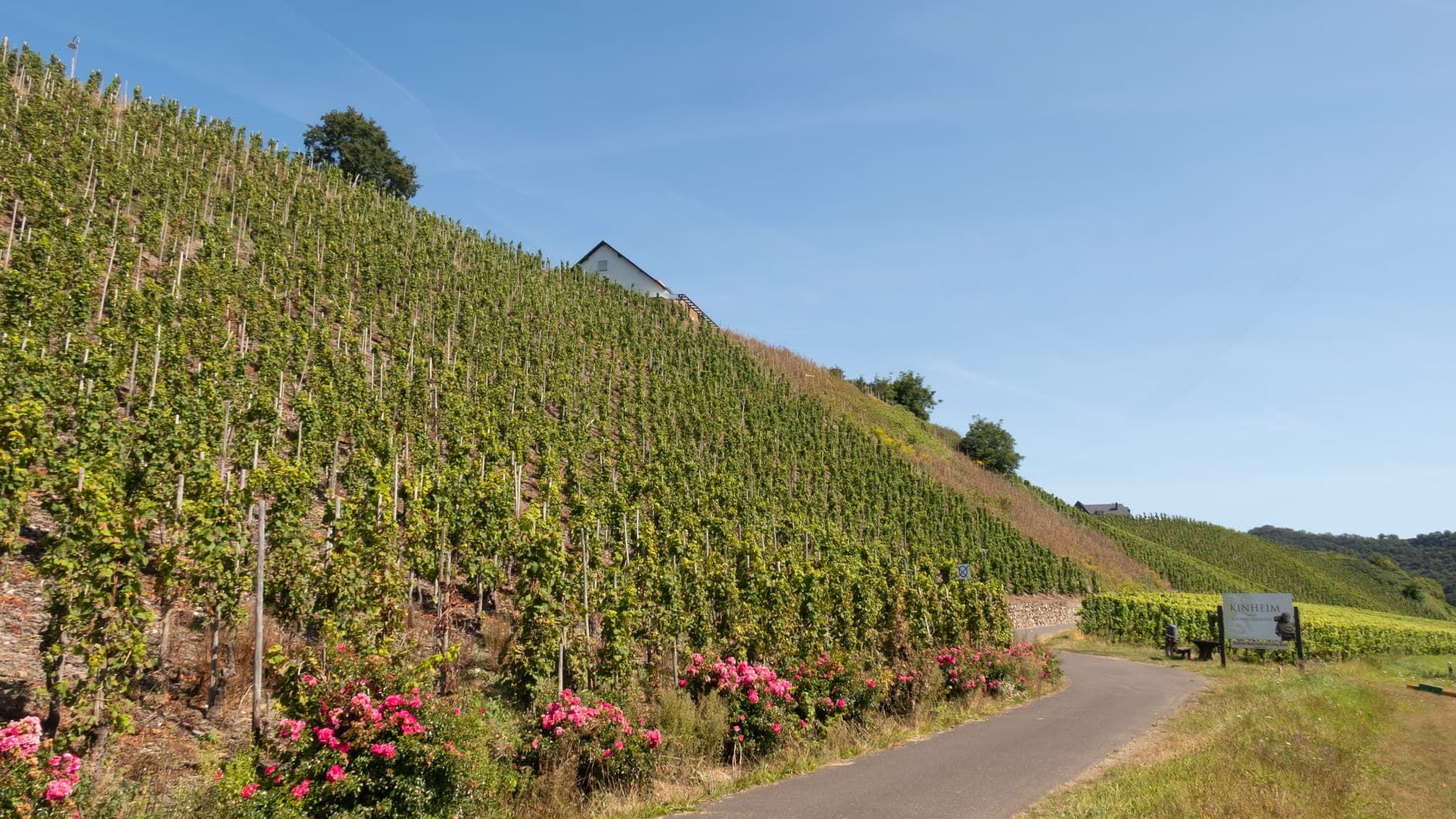
Bernkastel Wine Travel Guide (Mosel, Germany)
Nestled along the picturesque Mosel River, Bernkastel-Mosel is a charming German wine region. This area boasts stunning
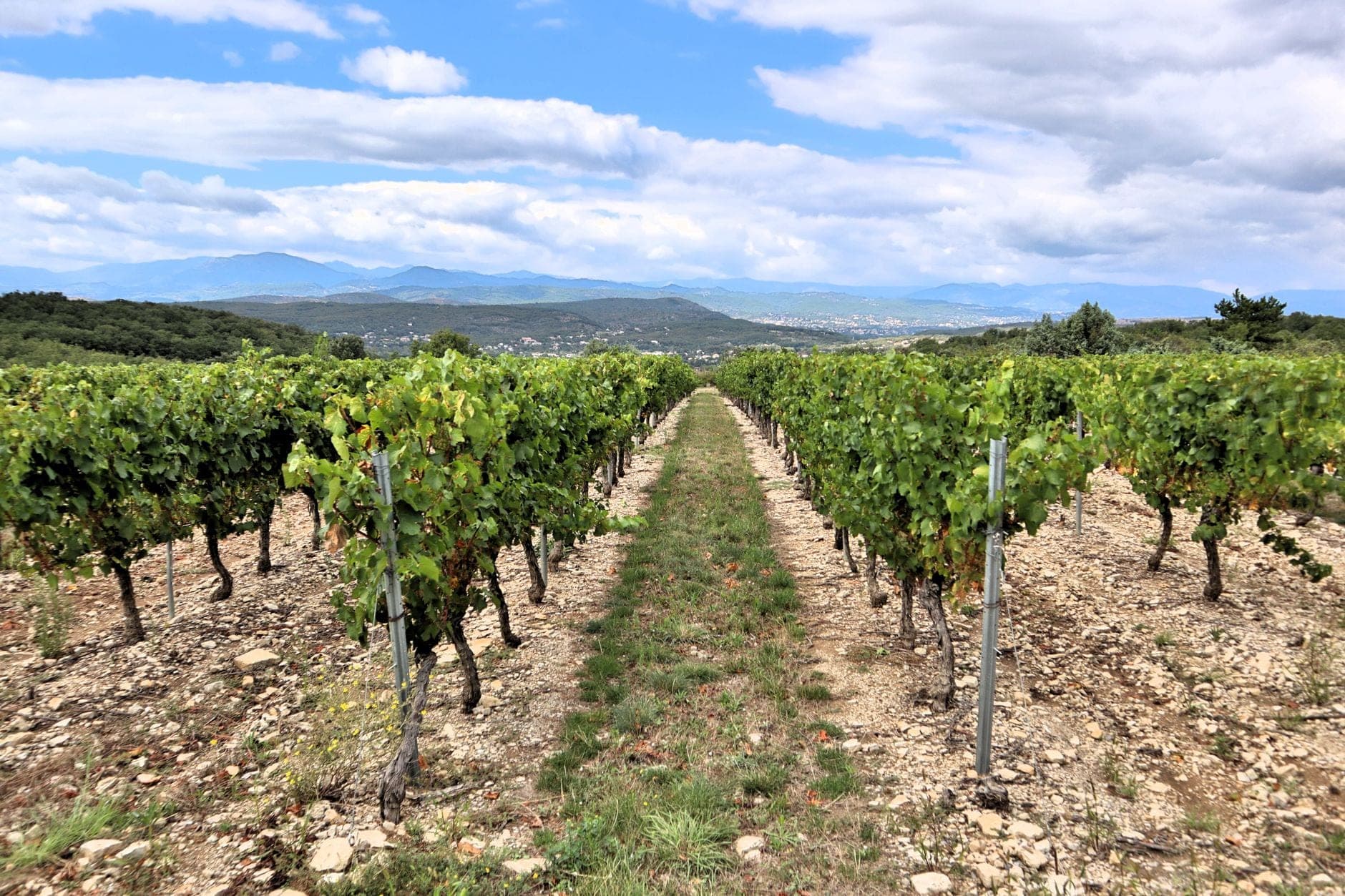
Piesport Wine Travel Guide (Mosel, Germany)
Piesport and its famous Goldtröpfchen vineyard produce some of Germany's most elegant Rieslings. Visit cellar doors, wal
Best Time to Visit Mosel
June-September
October-November
Moderate, higher during wine festivals
Average Monthly High (°C)
Moderate (700mm/year)Wines of Mosel
Key grape varieties and wine styles produced in the region
Primary Grape Varieties
Wine Styles
Food & Dining in Mosel
German — MoselländischMust-Try Dishes
- Mosel-Forelle (trout)
- Kartoffelsuppe (potato soup)
- Reibekuchen (potato pancakes)
Where to Eat
- €€€
Weinhaus Trier
Refined regional cuisine in Germany's oldest city with curated Mosel Riesling selection
- €€
Gutsschänke Weingut Dr. Loosen
Dining at one of the Mosel's most celebrated Riesling estates in Bernkastel
Weinstuben (wine taverns) are often walk-in. Book fine dining on weekends.
Where to stay in the vineyard
Sleep among the vines — our pick of vineyard hotels and estate stays in Germany.
View Germany vineyard hotelsUpcoming Events in Mosel
Upcoming Wine Festivals in Germany
See all festivalsBernkastel-Kues Weinfest
Sep
Bernkastel-Kues, Germany
Weinfest der Mittelmosel — Bernkastel-Kues
Sep 3
Bernkastel-Kues, Germany
Mosel-Wein-Woche Cochem
Jun 18
Cochem, Germany
Trier Wine Festival 2027
Aug
Trier, Germany
Winningen Moselfest 2027
Aug
Winningen, Germany
Zeller Schwarze Katz Festival 2027
Jun
Zell, Germany
Hidden Gems Nearby
Discover more hidden gemsWeingut Oekonomierat Rebholz
WTG PickPfalz, Germany
Pfalz's most intellectually rigorous producer — dry Riesling and Pinot Noir Grosses Gewachs from the Sudliche Weinstrasse that challenge Mosel and Burgundy benchmarks.
Riesling · Pinot Noir · Chardonnay
Weingut von Winning
Pfalz, Germany
Historic Deidesheim estate making some of Germany's most precise single-vineyard Rieslings — the grand Weingut building and gardens are an event in themselves.
Riesling · Pinot Gris · Pinot Noir
Weingut Juliusspital
WTG PickFranken, Germany
A 500-year-old charitable wine foundation beneath the streets of Wurzburg — the baroque cellar tour is one of Germany's most extraordinary wine experiences.
Silvaner · Riesling · Pinot Noir
Continue Exploring
Did You Know?
We’re still gathering facts about Mosel. Tell us what makes it special
Ready to visit Mosel?
Build your personalised day-by-day itinerary — choose your travel style and trip length, get accommodation and tour picks per day, and email it to yourself to take along.
Plan Your Visit to Mosel
Tours & Experiences via GetYourGuide
This page contains affiliate links. We may earn a commission at no extra cost to you.