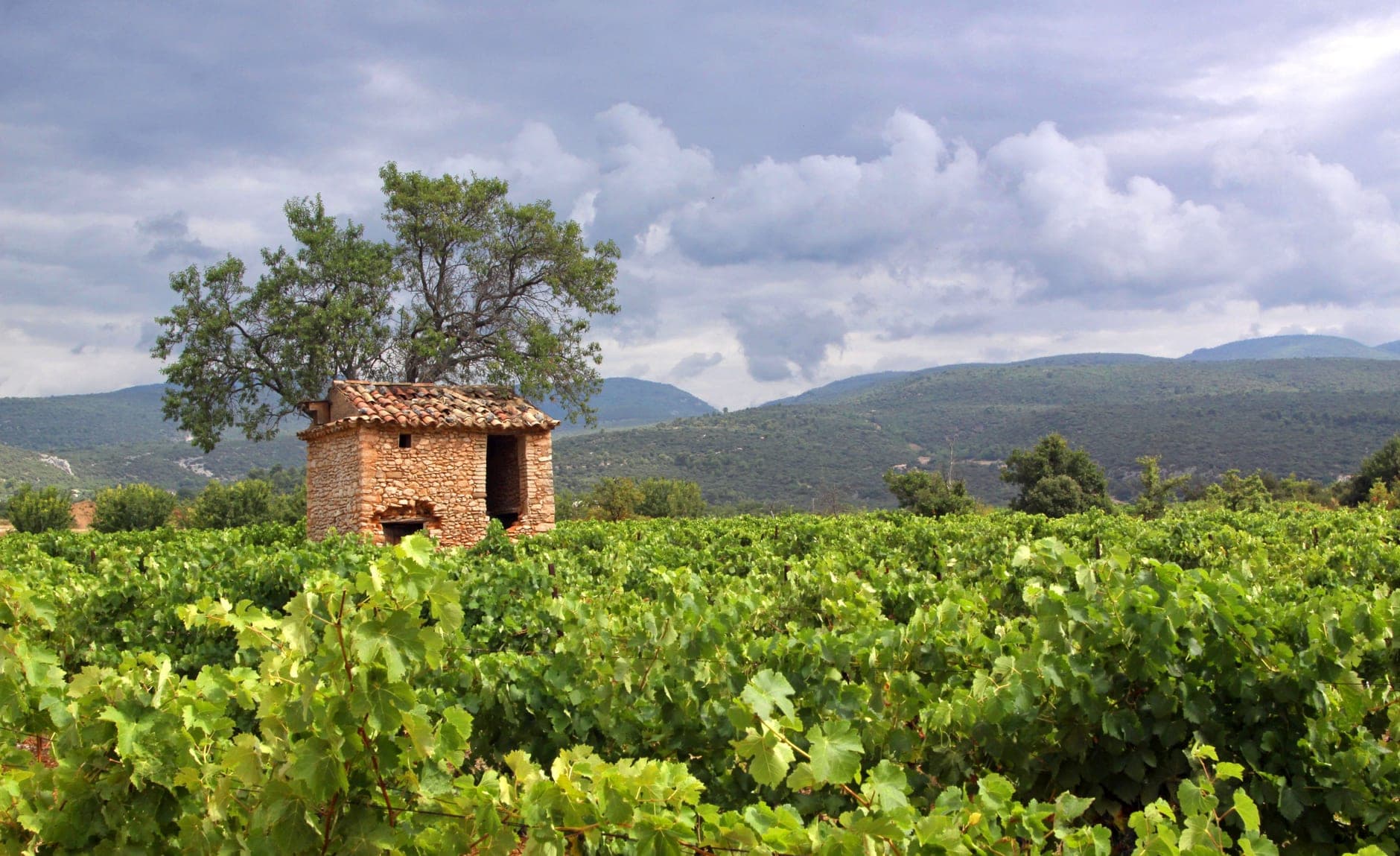
 Photo: Guillaume Baviere / Wikimedia Commons
Rhone-Valley Wine Region Guide
Plan your Rhone Valley wine trip -- Northern Syrah from Hermitage and Cote Rotie, Southern Grenache from Chateauneuf-du-Pape. Best wineries, when to visit, tasting fees.
Key takeaways
- Best months: April–June and September–October. Avoid August (heat + closures) and harvest weeks (mid-Sept) when estates are too busy for casual visits.
- Two distinct zones: Northern Rhône = single-varietal Syrah (Hermitage, Côte-Rôtie) and Viognier (Condrieu); Southern Rhône = Grenache-led blends (Gigondas, Vacqueyras, Châteauneuf-du-Pape). Pick a zone or commit to 4–5 days for both.
- Minimum 3 days: 1 Northern (Tain-l'Hermitage base), 1 Southern (Gigondas area), 1 flex. Five days covers the full sweep from Côte-Rôtie to Avignon. Tain-l'Hermitage is the best single base for a short trip.
- Book Guigal, Chapoutier and Jaboulet 2–3 weeks ahead via their estate websites. Smaller domaines (Vernay, Cuilleron, Voge) are more flexible — 1–2 weeks usually fine. Château Rayas is trade-allocation only; no public visits.
Where to Stay in Rhone-Valley
Make the most of your Rhone-Valley wine trip by staying in the heart of wine country. From luxurious vineyard estates to cozy B&Bs, find the perfect accommodation near world-class wineries.
Top areas to stay
- Châteauneuf-du-Pape€€-€€€
Iconic Southern Rhône village surrounded by galets roulés vineyards
- Tain-l'Hermitage€€
Northern Rhône base below the Hermitage hill, Jaboulet & Chapoutier
- Avignon€€
Walled city with TGV station, 30 min to Châteauneuf-du-Pape
Festival d'Avignon (July) drives prices up — book early or avoid that week
Stay22
Compare Booking, Airbnb, Hotels.com and more in one search
Editorial pick
Best chateaux to visit in Rhone-Valley — top 10 picks 2026
Read the listicle →
Sample itinerary
3 days in Rhone-Valley — full day-by-day plan
Read the itinerary →
The Rhone Valley is France's second most important wine region by reputation -- and arguably its most dramatically split. Stretching 300 kilometres from Lyon in the north to Avignon in the south, the Rhone divides into two zones so different in grape varieties, geology, and visitor experience that many wine travellers treat them as separate destinations entirely.
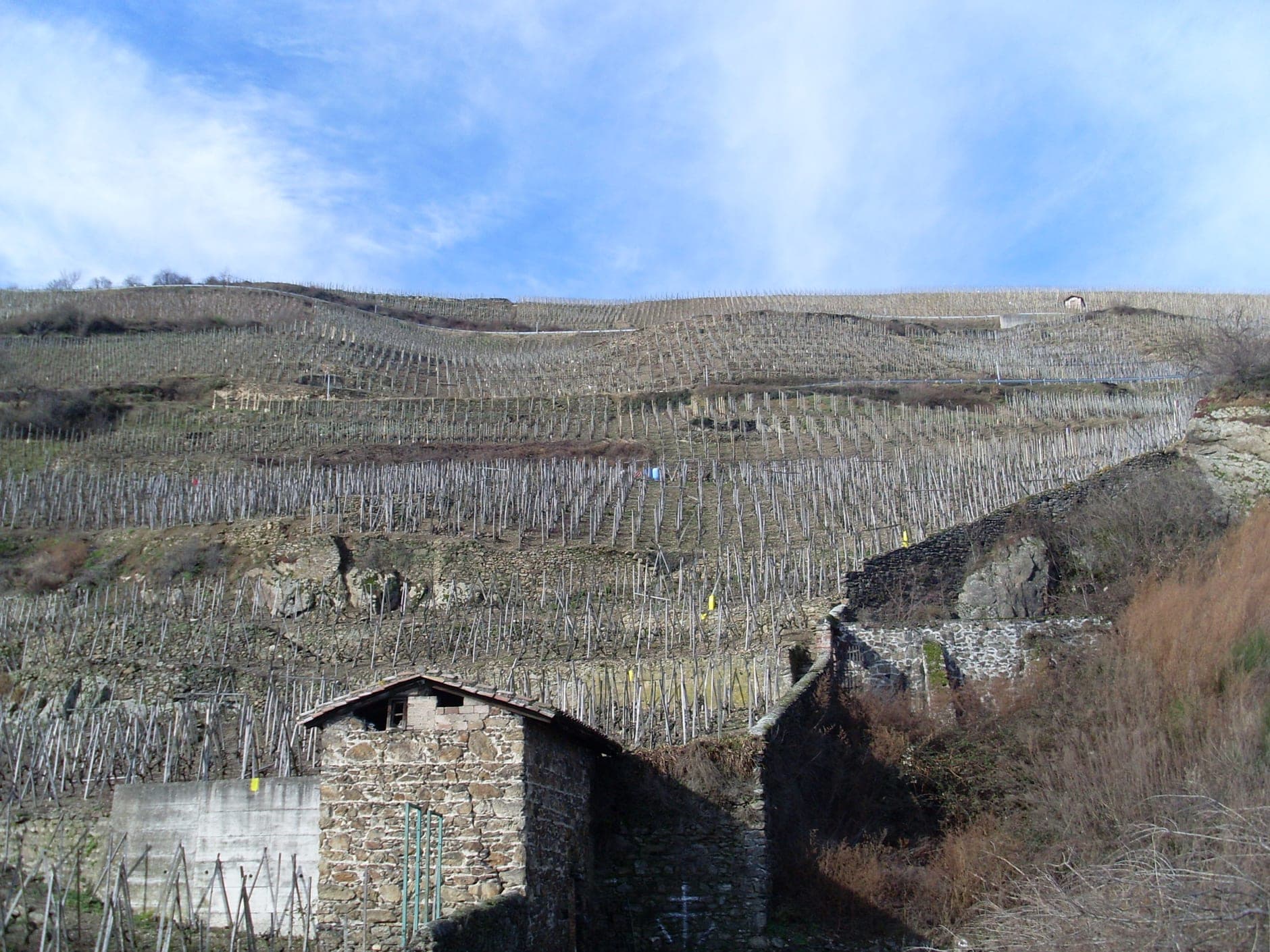
The Northern Rhone is dominated by a single red grape: Syrah. Here, on impossibly steep granite terraces above the river, small family estates produce Cote Rotie, Hermitage, and Cornas -- some of the most age-worthy and singular red wines in France. Cellars are tiny, access requires planning, and the landscape feels more Alpine foothills than Mediterranean. The Northern zone covers roughly 40 kilometres between Vienne and Valence, with fewer than 2,000 hectares under vine.
The Southern Rhone begins again near Montelimar, roughly 50 kilometres south of Valence -- a gap where no classified vineyards exist. South of this divide, the landscape opens onto a sprawling garrigue plain. Grenache dominates the blends. The Mediterranean climate arrives in full: lavender, rosemary, wild thyme, and olive trees along the roadsides. Chateauneuf-du-Pape, the most famous appellation, covers over 3,000 hectares alone. Avignon -- a world-class city with a papal palace and direct TGV service from Paris in 2 hours 40 minutes -- anchors the southern experience.
Northern Rhone: 2 principal white appellations (Condrieu for Viognier, Saint-Peray for sparkling Marsanne), 6 red and mixed appellations. Southern Rhone: 8 major appellations plus the sprawling Cotes du Rhone Villages system. Together they produce wines from a ten-euro weeknight Cotes du Rhone to a 500-euro bottle of Chateau Rayas -- all from the same 300-kilometre valley.
Northern vs Southern Rhone: Two Different Trips

The 50-kilometre gap between Valence and Montelimar is not just geographic -- it marks the end of one wine culture and the beginning of another. Understanding which half to visit (or how to combine both) is the most important planning decision on a Rhone wine trip.
Northern Rhone: For the Serious Enthusiast
Small appellations, tiny domaines, steep granite hillsides. Most Northern Rhone producers farm under 10 hectares. Appointment culture is non-negotiable -- only a handful of negociants (Chapoutier, Delas Freres) have walk-in visitor facilities. Serious wine travellers should plan 4 to 6 weeks ahead for top estates; E. Guigal in Ampuis requires 6 to 8 weeks minimum. The best base is Tain-l'Hermitage: a quiet town with the Hermitage hill rising directly from the high street, Chapoutier's tasting room, Jaboulet's offices, and Valrhona's Cite du Chocolat all within a short walk. A car is essential -- the appellations run along a narrow 40-kilometre corridor and public transport links between them are sparse. Harvest peaks in October, later than the South.
Southern Rhone: For First-Timers and Mixed Groups
Sprawling, accessible, and anchored by one of France's great cities. Avignon offers everything: direct TGV from Paris, UNESCO-listed papal palace, outstanding restaurants, and wine bars stocking the full southern appellation range. Many southern estates welcome walk-ins, particularly in Chateauneuf-du-Pape village (where cave de degustation shops line the main street), Gigondas, and Vacqueyras. The Mediterranean atmosphere -- lavender fields, garrigue hillsides, outdoor markets -- makes this destination suitable for groups where not everyone is a dedicated wine traveller. Harvest comes 2 to 3 weeks earlier than the North, typically mid-September.
The Combined Itinerary
Many Rhone wine travellers split their trip: 2 nights in Tain-l'Hermitage (Northern Rhone) then drive south via Montelimar to base 2 to 3 nights in Avignon or a village rental in Vacqueyras or Gigondas. The drive between the two bases takes about 90 minutes on the A7 autoroute. This structure captures both the intensity of Northern granite Syrah and the generosity of Southern Mediterranean Grenache -- two of France's most distinctive wine personalities -- in a single trip.
Tain-l'Hermitage: Beyond the Wine
Two minutes from the main winery strip in Tain, Valrhona has been making chocolate in this same building since 1922. Its Cite du Chocolat visitor centre (open daily, around 12 euros entry) runs a short factory tour and tasting that pairs surprisingly well with the Hermitage wines you have just tried -- 70% dark chocolate and Syrah share the same grippy tannins and mineral edge. The centre is a practical non-wine anchor for mixed-interest groups, and the boutique sells single-origin bars that ship easily. Add 2 hours to any Tain visit to make use of it.
Key Appellations
Northern Rhone
Cote Rotie
The name means roasted slope -- named for the punishing south-facing granite terraces above the village of Ampuis, which reach gradients of 40 to 60 degrees. Cote Rotie produces 100% Syrah, with up to 20% Viognier co-fermented in the tank to soften the wine and add perfume. This is the only appellation in France where co-fermentation with a white grape is traditional and controlled by the appellation rules.
E. Guigal's single-vineyard wines -- La Mouline, La Landonne, and La Turque, collectively called the Lala -- are considered the apex of the appellation and among the most sought-after bottles in the world. Other key producers: Jamet, Rene Rostaing, Stephane Ogier. Visiting Guigal requires 6 to 8 weeks advance booking. Prices: 30 to 60 euros for entry Cote Rotie; 200 to 800 euros and above for La Mouline/La Landonne/La Turque.
Condrieu
100% Viognier. No other grape is permitted. Condrieu is the world's greatest Viognier appellation and the reference point against which all other Viognier is judged. The wine is aromatic (apricot, peach blossom, white pepper), full-bodied, and produced in tiny quantities from steep granitic terraces above the town of Condrieu. Key producers: Yves Cuilleron, Pierre Gaillard, Georges Vernay. Drink young -- within 3 to 5 years of vintage. Prices: 35 to 80 euros.
Hermitage
The single most famous appellation in the Northern Rhone: a 136-hectare granite hill rising directly above Tain-l'Hermitage, visible from the train line. The name is said to derive from Gaspard de Sterimberg, a knight who retired to the hill as a hermit after returning from the Crusades in 1225. Hermitage produces both reds (100% Syrah, among France's most age-worthy) and whites (Marsanne and Roussanne -- unusual rich, waxy whites that live 20 to 40 years).
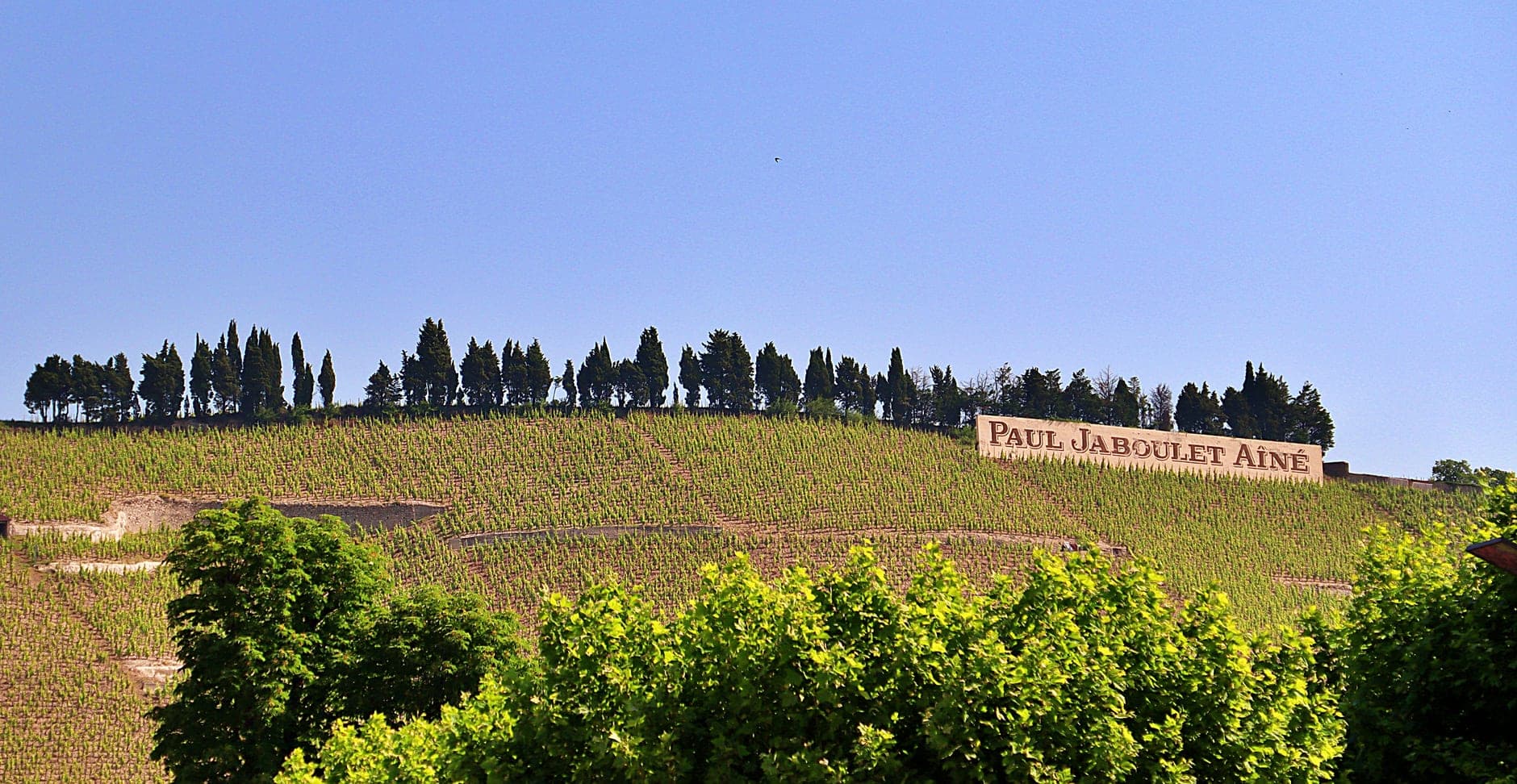
The three dominant estates -- Chapoutier, M. Jaboulet Aine (La Chapelle is iconic), and Jean-Louis Chave -- each interpret the hill's multiple soil types differently. Chapoutier is the most accessible for visitors: tasting room in Tain-l'Hermitage, open Mon to Sat, tasting from 25 to 45 euros. Prices: 50 to 150 euros for current-release Hermitage; old vintages on the secondary market reach 400 euros and beyond.
Crozes-Hermitage
Surrounds the Hermitage hill on all sides but does not include the classified hill itself. Produces 14 times more wine than Hermitage and offers the best value entry point into the Northern Rhone style -- similar Syrah character, more accessible prices (12 to 30 euros), more immediately drinkable. Alain Graillot and Domaine Combier are the benchmark quality references. This is the appellation to buy if you want Northern Rhone Syrah without the premium.
Saint-Joseph
A 55-kilometre north-south corridor of Syrah running along the right bank of the Rhone. Saint-Joseph is the most approachable of the Northern appellations -- lighter in body than Hermitage or Cote Rotie, with more immediate red fruit and a more accessible structure. Also produces Marsanne and Roussanne whites. Key producers: Pierre Gaillard, Courbis, Alain Graillot. Prices: 15 to 35 euros. The most visitor-friendly Northern appellation for walk-in purchases.
Southern Rhone
Chateauneuf-du-Pape
The powerhouse of the Southern Rhone. Chateauneuf-du-Pape permits up to 13 grape varieties in the blend (dominated by Grenache, Syrah, and Mourvedre -- the GSM blend), and its famous galets roules -- large river-washed quartzite stones covering much of the plateau -- absorb heat during the day and release it at night, essential for Grenache ripening. The papal connection is real: the Avignon papacy (1309 to 1377) established the vineyards, and the ruined Chateau des Papes overlooks the village.
Over 300 estates produce Chateauneuf. The most famous: Chateau Rayas (sandy soils, minimal intervention, cult status -- bottles allocated years in advance, no signage at the estate, Grenache only), Chateau Beaucastel (biodynamic, all 13 varieties, regular visitor programme), Domaine du Vieux Telegraphe (appointment required, 25 euros tasting). Most estates welcome visitors Tues to Sat, tasting 15 to 25 euros. The village itself is worth an hour: 15-minute walk circuit, medieval streets, the ruined chateau with vineyard views. Prices: 25 to 120 euros for estate wines; Chateau Rayas can reach 400 to 800 euros on the secondary market.
Gigondas

Frequently called the poor man's Chateauneuf-du-Pape -- meaning excellent quality at 30 to 40 percent less cost, with the dramatic Dentelles de Montmirail limestone ridge as a backdrop. Grenache-dominant blends with Syrah and Mourvedre. The village is charming and very walk-in friendly. Prices: 18 to 45 euros. Excellent value for Southern Rhone character without Chateauneuf-du-Pape prices.
Vacqueyras
Neighbouring Gigondas, similar terroir, similar blend structure, even more underrated. The appellation received its own AOC status in 1990 (previously sold as Cotes du Rhone Villages). Prices: 12 to 30 euros -- among the best value in the entire Southern Rhone. Worth buying a case before leaving the region.
Cotes du Rhone Villages
95 communes entitled to use the Villages designation (18 can add their village name). This is the Rhone's workhorse quality tier: Grenache-dominant blends with regional character, consistent quality, and genuine value at 8 to 20 euros. The named-village bottlings (Cairanne, Rasteau, Seguret, Visan) often punch well above their price point. Cave cooperatives throughout the Southern Rhone produce excellent Cotes du Rhone Villages at cave prices -- buy here rather than at supermarkets.
Terroir and Soils: The Geological Divide
The Rhone Valley's two halves rest on completely different geological foundations -- and this is the root cause of why Northern and Southern Rhone wines taste so different despite sharing a river.
Northern Rhone Geology
Granite and gneiss bedrock. The ancient Massif Central pushes up through the landscape here, creating steep hillsides with shallow, poor soils that force vine roots downward 8 to 12 metres to reach moisture and nutrients. Low yields are the result -- and concentrated, structured wines are the consequence. The granite crumbles into decomposed sandy-granite gravel (called arene granitique) which anchors the vines on slopes that can exceed 45 degrees. At this gradient, mechanical harvesting is impossible. Every harvest in Cote Rotie and Hermitage is done by hand, basket by basket, with pickers working gradients that require ropes and footholds.
Aspect is everything in the Northern Rhone. South and south-east facing slopes are the classified land; north-facing hillsides are excluded. The Rhone river itself acts as a thermal regulator, moderating the coldest nights and creating a microclimate 2 to 3 degrees Celsius warmer than the surrounding plateau.
Southern Rhone Geology
Completely different. The ancient Rhone deposited alluvial material across a broad plain as it descended from the Alps over millions of years. The famous galets roules of Chateauneuf-du-Pape -- rounded quartzite stones up to 25 centimetres in diameter, smoothed by the ancient river -- act as a natural thermal battery: absorbing solar heat through the day and releasing it around the vines at night, extending Grenache's ripening window. Under the stones, clay-limestone subsoils provide moisture retention through the dry summer months.
The Dentelles de Montmirail (the jagged limestone ridge above Gigondas) introduces a different soil signature for that appellation -- limestone and clay give Gigondas more structure and freshness than the flatter Chateauneuf plain. Sandy soils appear in pockets: Chateau Rayas's unique plot has almost no galets, only sand, producing the most elegant and atypical Chateauneuf in the appellation -- one reason it commands such mythical status.
The Mistral Wind
The Mistral is a cold, dry northwesterly wind that funnels down the Rhone corridor at speeds of 90 to 130 km/h during strong events, blowing over 100 days per year. For Southern Rhone viticulture, it is both a challenge and a gift: the constant air circulation desiccates any developing botrytis and fungal pressure, thickens grape skins (concentrating tannin and colour), and concentrates sugars. Southern Rhone has the highest sunshine hours in mainland France partly because the Mistral clears cloud cover.
For wine travellers: the Mistral reshapes the visitor experience in ways that are not always obvious from guidebooks. Outdoor dining terraces may close with no warning. Hillside estate visits become physically demanding in strong gusts. Shutters are mandatory features of every house in the region -- you will notice that traditional Chateauneuf and Gigondas village buildings have no north-facing windows, built specifically against the Mistral over centuries. Even the papal palace in Avignon (built 1309 to 1377) is essentially a Mistral fortress: thick walls, minimal windows on the north and west facades. Worst Mistral season: March to April. Harvest months (September to October) see fewer events, but pack wind layers even in warm weather.
The garrigue -- the wild herb scrubland of lavender, rosemary, thyme, and cistus covering the hillsides between vineyards -- is another product of the Mistral-shaped microclimate. Its scent permeates Southern Rhone Grenache wines and is visible (and smellable) along every roadside in the Dentelles area. Tying wine flavour to landscape is one of the great pleasures of Southern Rhone travel.
Grape Varieties
Northern Rhone Varieties
Syrah is the only red variety permitted in Northern Rhone appellations. On granite soils, it produces wines of remarkable complexity: black olive, smoked meat, violets, and crushed black pepper in youth; after 10 to 15 years, the granite character emerges as something mineral, even saline, entirely unlike Syrah grown elsewhere. Viognier is the only white variety in Condrieu and Chateau-Grillet. Marsanne and Roussanne produce the whites of Hermitage, Saint-Joseph, and Crozes-Hermitage -- unusual, weighty whites with waxy texture that require patience.
Southern Rhone Varieties
Grenache dominates all major Southern blends: warm climate, garrigue character, high natural alcohol (often 14 to 15% ABV), red fruit generosity. Syrah adds structure and colour. Mourvedre adds depth and age-worthiness, particularly in Chateauneuf-du-Pape. Viognier, Marsanne, Roussanne, and Clairette appear in white and rose blends. Tavel -- France's most famous rose-only appellation -- uses Grenache and Cinsault predominantly. Chateauneuf-du-Pape permits all 13 varieties including Counoise, Clairette, Bourboulenc, Vaccarese, and Muscardin -- historical relics mostly retained for complexity.
Wine Producers to Visit
Walk-In or Easy Booking
Maison Chapoutier, Tain-l'Hermitage -- biodynamic producer covering appellations from Hermitage to Chateauneuf-du-Pape. The tasting room on Avenue du Dr Paul Durand opens Monday to Saturday, no appointment required. Full range tastings from 25 to 45 euros. An excellent first stop in the Northern Rhone: knowledgeable staff, wide range from entry-level Crozes-Hermitage through single-vineyard Hermitage, clear Braille labels on every bottle (a Chapoutier trademark since the 1990s).
Delas Freres, Saint-Jean-de-Muzols -- historic Tain negociant (founded 1835, now owned by Champagne Deutz). Guided cellar tours available, produces wines across Northern and Southern appellations. Good introduction to the full Rhone range without requiring multiple separate estate visits.
Cave de Tain -- the local cooperative that farms parcels on the Hermitage hill itself. Walk-in tasting room, open daily. Sells co-op wines at accessible prices plus selected negociant bottlings. Good entry-level Crozes-Hermitage and an honest introduction to the region before visiting private estates.
Chateauneuf-du-Pape village -- the Southern equivalent of a walk-in tour. The village main street (Route de Sorgues, Avenue du Baron Le Roy) has a cave de degustation every 50 metres. Walk in, taste 4 to 8 wines, buy direct from the producer at estate pricing. No appointment required at most. Tasting fees 10 to 20 euros at cave shops, sometimes waived with a purchase.
Book 2 to 4 Weeks Ahead
Paul Jaboulet Aine, La Roche-de-Glun -- Hermitage estate famous for La Chapelle (100% Syrah from the Hermitage hill). Private visits include the historic cellars and a structured tasting of current and library vintages. Book by email at least 2 to 3 weeks ahead. Tasting: 20 to 40 euros per person.
Chateau Beaucastel, Courthezone (Chateauneuf-du-Pape) -- one of the world's great estates: biodynamic, all 13 permitted Chateauneuf varieties blended, and home to the legendary Hommage a Jacques Perrin wine. Regular visitor programme with morning and afternoon tour-plus-tasting slots. Book via website 2 to 4 weeks ahead. Tasting: 20 to 30 euros. An essential Southern Rhone visit for serious wine travellers.
Domaine du Vieux Telegraphe, Chateauneuf-du-Pape -- family estate (Brunier family since 1895), named after the 19th-century Chappe optical telegraph tower visible on the estate. Appointment required, book 2 to 3 weeks ahead. Tasting: 25 euros.
Plan 6 to 8 Weeks Ahead
E. Guigal, Ampuis -- the most celebrated Northern Rhone producer. The Chateau d'Ampuis tasting experience is one of the great wine visits in France: historic cellars, barrel room containing La Mouline, La Landonne, and La Turque (aged 3 to 4 years in new oak), and a structured tasting of the full Guigal range. Minimum 6 to 8 weeks lead time. Contact by email in French or through their website. This is not a casual drop-in -- it rewards the advance planning.
Chateau Rayas, Chateauneuf-du-Pape -- the mythic ghost chateau. No signage, no visitor centre, no website. The Reynaud family produces one of France's most allocated wines from a single plot of old-vine Grenache on sandy soils -- unique in Chateauneuf. Visits are only granted to serious collectors or trade, arranged through negociants. For most travellers: seek Rayas bottles in good Avignon wine shops or on restaurant lists at 200 to 600 euros and above.
Planning Your Tasting Visits
Booking Lead Times
Northern Rhone lead times are the most important logistical fact for any Rhone wine trip. The region's family domaines are small, staffed by the owners themselves, and appointments take priority over walk-ins -- which are rarely possible. E. Guigal: 6 to 8 weeks. Jean-Louis Chave: 8 to 12 weeks (often fully booked 6 months ahead). Paul Jaboulet Aine, Delas Freres: 2 to 4 weeks. Contact in French where possible -- a brief polite email requesting a visit on a specific date gets better response than English-language booking platforms.
Southern Rhone is dramatically more accessible. Most Chateauneuf-du-Pape estates welcome visitors Tuesday to Saturday, 9:00 to 12:00 and 14:00 to 18:00, no appointment needed outside August peak season. Cooperatives (Cave des Vignerons de Gigondas, Cave de Tain) always open. Village cave de degustation shops in Chateauneuf, Gigondas, and Vacqueyras: walk-in, seven days a week in summer.
Tasting Fees

Northern Rhone estate tastings: 25 to 50 euros for 4 to 6 wines, often credited against purchase. Chapoutier: free to 20 euros depending on selection. Negociant tastings (Jaboulet, Delas): 20 to 40 euros with cellar tour. Southern Rhone estate tastings: 15 to 25 euros for 4 to 6 wines. Cave de degustation shops: often free or 5 to 10 euros, no purchase obligation. Cooperative tastings: 8 to 15 euros for structured 6-wine flights. The average across all Rhone estates verified by Wine Paths data: 36 euros.
Using a local guide or an operator (Cellar Tours, Wine Paths, Winalist) removes the appointment friction for Northern Rhone estates entirely -- guides have existing relationships and can access producers that do not respond to individual requests. Cost: 100 to 200 euros per person per day, all-inclusive. Worth considering for anyone whose Northern Rhone list includes Guigal or Chave.
Notable Vintages and When to Drink
Rhone vintages vary significantly between North and South -- and between current drinking and cellar potential. The region rewards those who buy ahead, particularly in the Northern appellations where top wines need a decade to show their full character.
2022 -- Exceptional across both zones. Hot, dry summer, low yields, highly concentrated wines. Northern Rhone Syrah is at peak extraction -- these bottles need 8 to 12 years minimum. Southern Grenache from Chateauneuf and Gigondas is generous and structured; mid-term drinking (2028 to 2038). Currently expensive at release but correct to buy.
2020 -- Another great year. Approachable earlier than 2022, especially Southern Rhone. Chateauneuf from good estates showing beautifully now through 2030. Northern Rhone 2020s need 5 to 8 more years. Buy and hold.
2019 -- Southern Rhone highlight. Generous, opulent Grenache-based wines from Chateauneuf and Gigondas drinking well now through 2032. Northern Rhone 2019s are excellent but demand patience -- Hermitage and Cote Rotie need another decade.
2016 -- Northern Rhone peak. Cote Rotie and Hermitage from this vintage are drinking beautifully from 2024 through 2040. Seek on restaurant wine lists or secondary market. Worth paying the premium.
2015, 2010, 2009 -- Southern Rhone classics. Chateauneuf from 2010 is frequently cited as one of the great vintages of the century; if you encounter it at retail, buy. 2009 Gigondas and Vacqueyras at auction offer exceptional value for mature Southern Rhone.
Buying guidance: Northern Rhone Syrah (Hermitage, Cote Rotie) requires 10 to 20 years for top estates -- buy 2016 or 2020 now and cellar. Chateauneuf-du-Pape top estates: 8 to 15 years. Crozes-Hermitage and Saint-Joseph: drink 4 to 8 years from vintage. Cotes du Rhone Villages: 2 to 5 years.
Getting There and Around
By Air
Northern Rhone gateway: Lyon-Saint Exupery Airport (LYS) -- 60 minutes by car to Tain-l'Hermitage, with direct TGV rail connection to Lyon Part-Dieu station (then 45 minutes south to Valence by TER regional train). Southern Rhone gateway: Marseille Provence Airport (MRS) -- approximately 90 minutes by car to Avignon, or Aeroport d'Avignon Provence (AVN) with limited service from Paris and London Heathrow seasonally.
By Train
Paris Gare de Lyon to Valence TGV: 2 hours 20 minutes. Paris to Avignon TGV: 2 hours 40 minutes. Both are on the same TGV Mediterranee line, making a combined trip feasible: arrive Valence (Northern Rhone), then continue south to Avignon (Southern Rhone) 3 to 4 days later by TGV (40 minutes) or rental car via the A7 autoroute. The train works well for the two city bases (Tain via Valence, Avignon directly) but a car is essential for reaching individual estates.
By Car
A car is non-negotiable for visiting Northern Rhone domaines -- most are on rural routes between Ampuis, Condrieu, and Tain-l'Hermitage that have no public transport. The A7 autoroute runs the length of the Rhone corridor. Key route: Lyon (A7 south) through Vienne through Ampuis (Cote Rotie) through Condrieu through Saint-Jean-de-Muzols through Tain-l'Hermitage through Valence. From Valence south: Montelimar through Orange through Chateauneuf-du-Pape through Avignon.
Best Time to Visit
Spring (April to June)
Ideal for vineyard walks and lower-season estate visits. March and April bring the most intense Mistral wind events -- pack layers. Vineyards are budding; the Northern Rhone hillsides begin turning green from late April. Fewer tourists at estates, easier appointments. Northern Rhone estates often hold barrel tastings of the previous year's vintage in spring.
Summer (July to August)
High season. Chateauneuf and Gigondas village are busy. August is the French holiday month -- Southern Rhone estates can be booked weeks ahead by domestic tourists. The garrigue smells extraordinary in summer heat. Lavender peaks in Provence (late June to early July). Harvest is not yet underway but the vineyards are at maximum canopy. Book all appointments 6 to 8 weeks ahead for this period.
Autumn (September to October)
Harvest season and the best time for most wine travellers. Southern Rhone harvest begins mid-September; Northern Rhone peaks in October. Walking vineyard paths during harvest is possible and memorable -- ask at estates if you can observe picking. Autumn colour arrives in the Northern Rhone hills in October. Tourist numbers drop after mid-September; appointment availability improves. The Fete de la Veraison in Chateauneuf-du-Pape (first weekend of August, celebrating veraison -- the moment grapes change colour) is worth timing a visit around.
Winter (November to March)
Low season. Estates are racking wines and doing cellar work -- some welcome visitors for barrel tastings but availability is unpredictable. The Mistral is most active November through March. Avignon is worth visiting in winter for the city itself: the papal palace and village markets without summer crowds. Christmas markets in Avignon are among Provence's finest.
Language Tips
Essential Wine Vocabulary
Degustation: wine tasting. Vin blanc/rouge/rose: white/red/rose wine. Cave: wine cellar or tasting room. Millesime: vintage year. Domaine: wine estate. Chateau: estate (usually with a manor house). Negoce/negociant: merchant who buys grapes or wine and bottles under their own label. Rendez-vous: appointment (required at most Northern Rhone estates). Sante: cheers.
Useful Phrases for Estate Visits
Je voudrais prendre rendez-vous pour une degustation: I would like to make an appointment for a tasting. Est-ce que vous etes ouvert ce samedi: Are you open this Saturday? Pouvez-vous me recommander un vin de garde: Can you recommend a wine for ageing? C'est delicieux: It's delicious. Merci beaucoup: Thank you very much.
Sustainable and Organic Viticulture
The Rhone Valley -- particularly the Southern Rhone -- has one of the highest concentrations of organic and biodynamic vineyards in France, and the Mistral is the primary reason. The constant dry wind ventilation means fungal pressure is naturally lower than in Bordeaux or Burgundy, making organic certification achievable without the yield losses that deter adoption elsewhere. Chateau Beaucastel (biodynamic since the 1950s), Chapoutier (biodynamic across its entire range), and Domaine Gramenon (natural wine pioneer in Cotes du Rhone) are the most prominent advocates.
Look for Agriculture Biologique (AB) certification on labels, or the EU organic leaf logo. Demeter certification indicates biodynamic practices. The Rhone appellation bodies have not mandated organic conversion, but estate-by-estate adoption is accelerating -- roughly 30% of Chateauneuf-du-Pape estates have organic certification as of 2024.
Further Resources
Inter Rhone is the official trade organisation covering all Rhone Valley appellations: their website (vins-rhone.com) provides producer directories, appellation maps, and harvest reports. Decanter's Matt Walls publishes the most comprehensive English-language Rhone coverage, including annual vintage reports. Wine-Searcher is the reference for current pricing and stock availability across all Rhone appellations and vintages. The Tain-l'Hermitage Tourism Office (tain-hermitage-tourisme.com) coordinates Northern Rhone estate visits and can assist with appointment logistics for French-language contacts.
Best for
- Syrah loversHermitage and Côte-Rôtie are two of the world's benchmark single-varietal Syrah appellations. Guigal's La Mouline, La Landonne, and La Turque and Chapoutier's Méal — wines of legendary depth grown on steep granite terraces above the Rhône.
- Blend explorersSouthern Rhône's Grenache-Syrah-Mourvèdre blends at Gigondas, Vacqueyras, and Beaucastel show how a multi-grape assemblage can rival Burgundy's complexity. Beaucastel's Mourvèdre-heavy style versus Santa Duc's terroir-driven Gigondas is a masterclass in one afternoon.
- Value huntersCrozes-Hermitage (the larger appellation surrounding Hermitage hill) produces wines from the same Syrah clone at 30–40% lower prices. Jaboulet's Domaine de Thalabert and Chapoutier's Meysonniers are the entry points.
- History and landscapeThe stepped granite terraces above Tain-l'Hermitage are among France's most dramatic vineyard landscapes. Pair with Orange's Roman amphitheatre (20 min south) and the Palais des Papes in Avignon (1.5 hr) for a deep southern France circuit.
Getting There
LYS — Lyon-Saint Exupéry
60min drive
2h20 TGV from Paris to Valence (Northern Rhône); 2h40 to Avignon (Southern)
goodCar rental recommended
Where to Eat
French — Lyonnaise & Rhodanienne
- €€€€
Paul Bocuse — L'Auberge du Pont de Collonges
fine dining
- €€€
La Maison Gambert
winery restaurant
Where to Stay in Rhone Valley
- Châteauneuf-du-Pape€€-€€€
Iconic Southern Rhône village surrounded by galets roulés vineyards
- Tain-l'Hermitage€€
Northern Rhône base below the Hermitage hill, Jaboulet & Chapoutier
- Avignon€€
Walled city with TGV station, 30 min to Châteauneuf-du-Pape
Festival d'Avignon (July) drives prices up — book early or avoid that week
Stay22
Tours & Experiences
Rhone Valley, France
Châteauneuf-du-Pape appellation tour
Visit 3 estates and taste the signature Grenache-Syrah-Mourvèdre blends
Northern Rhône Syrah discovery
Côte-Rôtie and Hermitage estate visits with vertical tasting
Wine Experiences
Visiting Wineries
Southern Rhône (Châteauneuf-du-Pape, Gigondas) is generally walk-in friendly at smaller estates. Northern Rhône top producers (Guigal, Chapoutier flag estates) require appointments. Many Grenache-focused estates in the south welcome visitors directly.
Book ahead: 1–3 weeks for top estates · Top estates: E. Guigal La Mouline/Landonne/Turque: 4–6 weeks. Chapoutier: 2–3 weeks.
Planning tools & local info
Best for
- Syrah loversHermitage and Côte-Rôtie are two of the world's benchmark single-varietal Syrah appellations. Guigal's La Mouline, La Landonne, and La Turque and Chapoutier's Méal — wines of legendary depth grown on steep granite terraces above the Rhône.
- Blend explorersSouthern Rhône's Grenache-Syrah-Mourvèdre blends at Gigondas, Vacqueyras, and Beaucastel show how a multi-grape assemblage can rival Burgundy's complexity. Beaucastel's Mourvèdre-heavy style versus Santa Duc's terroir-driven Gigondas is a masterclass in one afternoon.
- Value huntersCrozes-Hermitage (the larger appellation surrounding Hermitage hill) produces wines from the same Syrah clone at 30–40% lower prices. Jaboulet's Domaine de Thalabert and Chapoutier's Meysonniers are the entry points.
- History and landscapeThe stepped granite terraces above Tain-l'Hermitage are among France's most dramatic vineyard landscapes. Pair with Orange's Roman amphitheatre (20 min south) and the Palais des Papes in Avignon (1.5 hr) for a deep southern France circuit.
Getting There
LYS — Lyon-Saint Exupéry
60min drive
2h20 TGV from Paris to Valence (Northern Rhône); 2h40 to Avignon (Southern)
goodCar rental recommended
Where to Eat
French — Lyonnaise & Rhodanienne
- €€€€
Paul Bocuse — L'Auberge du Pont de Collonges
fine dining
- €€€
La Maison Gambert
winery restaurant
Where to Stay in Rhone Valley
- Châteauneuf-du-Pape€€-€€€
Iconic Southern Rhône village surrounded by galets roulés vineyards
- Tain-l'Hermitage€€
Northern Rhône base below the Hermitage hill, Jaboulet & Chapoutier
- Avignon€€
Walled city with TGV station, 30 min to Châteauneuf-du-Pape
Festival d'Avignon (July) drives prices up — book early or avoid that week
Stay22
Tours & Experiences
Rhone Valley, France
Châteauneuf-du-Pape appellation tour
Visit 3 estates and taste the signature Grenache-Syrah-Mourvèdre blends
Northern Rhône Syrah discovery
Côte-Rôtie and Hermitage estate visits with vertical tasting
Wine Experiences
Visiting Wineries
Southern Rhône (Châteauneuf-du-Pape, Gigondas) is generally walk-in friendly at smaller estates. Northern Rhône top producers (Guigal, Chapoutier flag estates) require appointments. Many Grenache-focused estates in the south welcome visitors directly.
Book ahead: 1–3 weeks for top estates · Top estates: E. Guigal La Mouline/Landonne/Turque: 4–6 weeks. Chapoutier: 2–3 weeks.
Explore Wine Regions in Rhone-Valley (France)
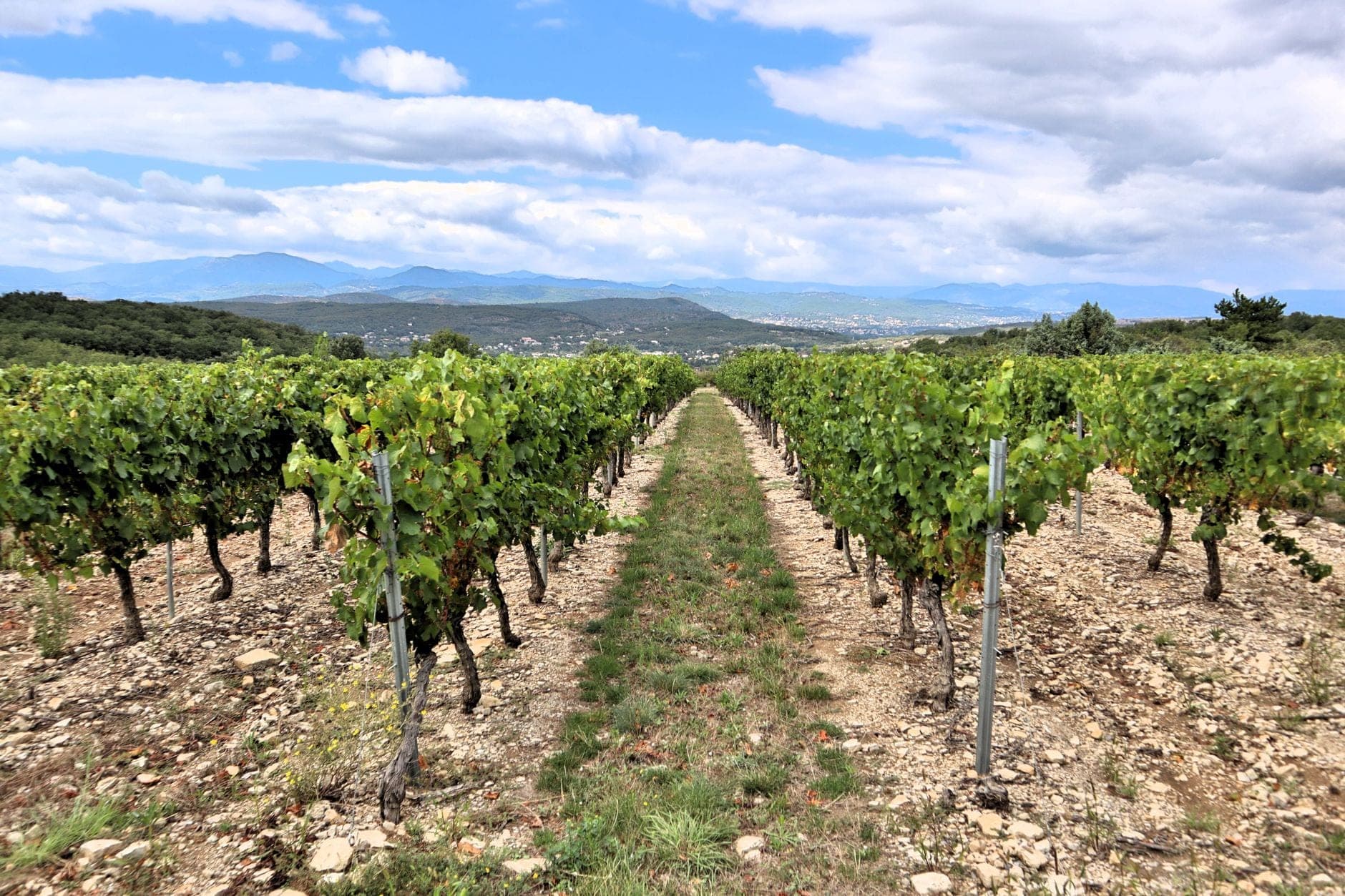
Ampuis and Condrieu Wine Travel Guide (Rhône Valley, France)
Home of Cote-Rotie and Viognier. Steep terraced vineyards, small-producer tastings, and riverside dining in the Northern
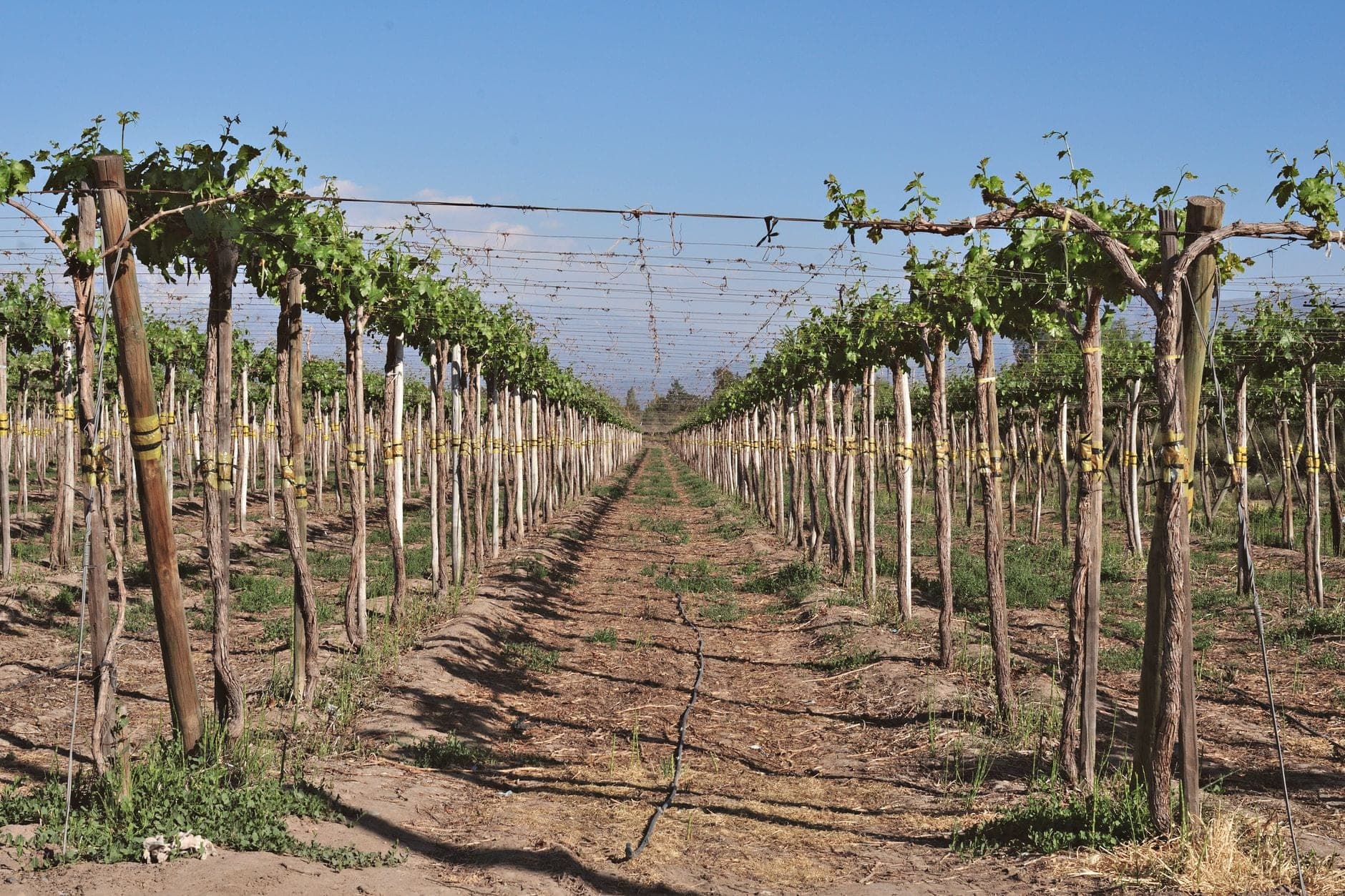
Between Montélimar and Orange Wine Travel Guide (Rhône Valley, France)
The Rhône between Montélimar and Orange is Grenache country: Gigondas, Vacqueyras, and Châteauneuf-du-Pape estates line
Châteauneuf-du-Pape
Plan your Châteauneuf-du-Pape wine trip — visit the papal vineyards, galets roulés terroir, and top estates like Beaucas
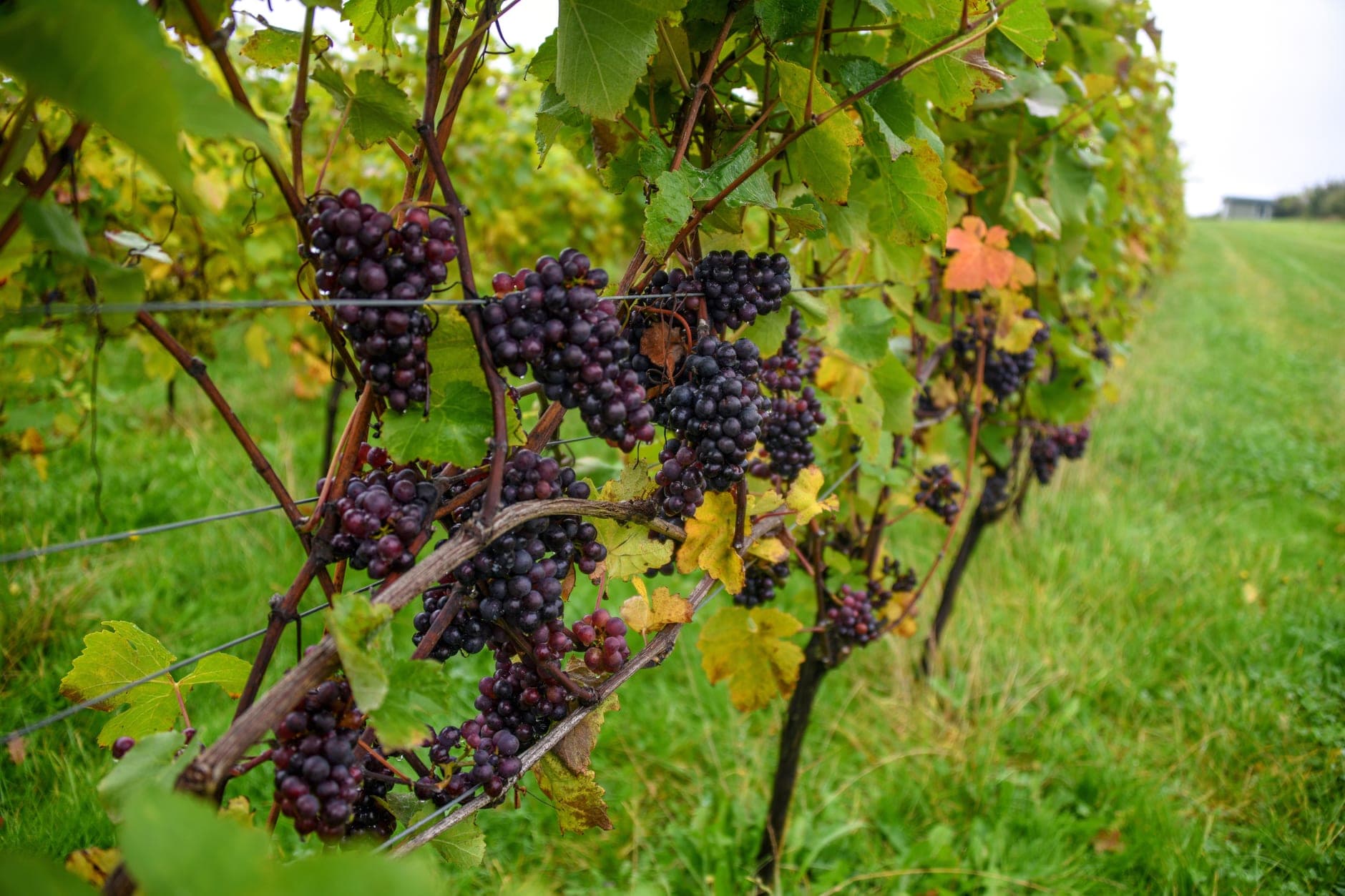
East and South of Orange Wine Travel Guide (Rhône Valley, France)
The eastern and southern regions of Orange in France's Rhône Valley offer a captivating blend of rich wine heritage and
North and West of Avignon Wine Travel Guide (Rhône Valley, France)
The region north and west of Avignon in France's Rhône Valley is a wine lover's dream. This area boasts world-renowned v
Northern Rhône Wine Travel Guide (Rhône Valley, France)
The Northern Rhône Valley in France is a wine lover's paradise. This region boasts steep hillside vineyards, producing w
Southern Rhône Wine Travel Guide (Rhône Valley, France)
The Southern Rhône Valley in France is a wine lover's paradise. This region boasts sun-drenched vineyards, charming vill
Tain-l'Hermitage Wine Travel Guide (Rhône Valley, France)
Tain-l'Hermitage, nestled in the heart of the Rhône Valley, is a wine enthusiast's dream destination. This charming town
Best Time to Visit Rhone-Valley
June-August
September-October
Moderate year-round, higher during festivals
Average Monthly High (°C)
Low to moderate (650mm/year)Wines of Rhone-Valley
Key grape varieties and wine styles produced in the region
Primary Grape Varieties
Wine Styles
Food & Dining in Rhône Valley
French — Lyonnaise & RhodanienneMust-Try Dishes
- Quenelles de brochet
- Saucisson de Lyon
- Gratin dauphinois
Where to Eat
- €€€€
Paul Bocuse — L'Auberge du Pont de Collonges
The legendary three Michelin star restaurant near Lyon, temple of French cuisine since 1965
- €€€
La Maison Gambert
Chateauneuf-du-Pape estate dining with Southern Rhône wine pairings
Lyon bouchons are walk-in (go at opening). Michelin restaurants need 2–4 weeks' notice.
Where to stay in the vineyard
Sleep among the vines — our pick of vineyard hotels and estate stays in France.
View France vineyard hotelsUpcoming Wine Festivals in France
See all festivalsHidden Gems Nearby
Discover more hidden gemsChâteau Rayas
WTG PickRhône Valley, France
No signage, no marketing, and intentionally limited access — yet the wines trade at Burgundy Grand Cru prices. The antithesis of every other Châteauneuf estate.
Grenache-dominant Châteauneuf-du-Pape
Domaine Gramenon
Rhône Valley, France
A founding name in French natural wine, operating in an appellation (Côtes du Rhône) most wine tourists skip entirely in favour of Châteauneuf and Gigondas.
Grenache · Syrah · Viognier
Domaine Richaud
WTG PickRhône Valley, France
The man who made Cairanne an appellation. His wines punch well above their price point — Grenache that competes with much more expensive Châteauneuf.
Grenache · Carignan · Counoise
Continue Exploring
Did You Know?
We’re still gathering facts about Rhone-Valley. Tell us what makes it special
Ready to visit Rhone-Valley?
Build your personalised day-by-day itinerary — choose your travel style and trip length, get accommodation and tour picks per day, and email it to yourself to take along.
Plan Your Visit to Rhone-Valley
Tours & Experiences via GetYourGuide
This page contains affiliate links. We may earn a commission at no extra cost to you.